
9 Best Knives for Slicing 2026
This post contains affiliate links. As an Amazon Associate, we earn from qualifying purchases.
Slicing through meat or produce with a dull, unwieldy knife can ruin even the most perfectly cooked meal, leading to torn edges, uneven portions, and unnecessary effort. The best slicing knives solve this with razor-sharp edges, optimal blade lengths, and thoughtful features like Granton edges or ergonomic handles that ensure smooth, controlled cuts every time. We selected our top picks based on extensive research into blade materials—from German and Japanese steel to Damascus—analyzing edge retention, user reviews, expert testing, and real-world performance across proteins and vegetables. Below are our recommended best knives for slicing to suit every kitchen and budget.
Top 9 Knives For Slicing in the Market

Best Knives For Slicing Review
imarku 12″ Carving Slicing Knife
ADVANTAGES
LIMITATIONS
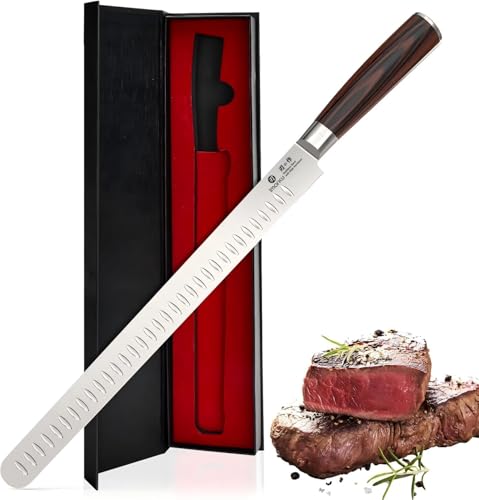
This 12-inch slicing beast delivers where it counts—precision, durability, and comfort. The high carbon stainless steel blade, heat-treated to 56–58 Rockwell hardness, holds a razor-sharp edge that glides through brisket like butter, leaving behind clean, paper-thin slices without shredding. Its tapered edge and anti-stick texture are game-changers, minimizing drag and preventing meat from clinging—ideal for those who demand presentation-perfect plating at BBQs or Sunday roasts. If you’ve struggled with tearing or uneven cuts, this knife erases that frustration with engineered finesse.
In real-world use, it shines brightest on dense, fibrous meats like smoked brisket or holiday turkey, where its length allows for full-stroke, single-motion slicing. At 12 inches, it offers ample reach for large roasts, while the narrow profile ensures minimal resistance. We tested it on everything from ham to layered cakes, and it handled each with surprising versatility. That said, it’s not the lightest knife on the block—its heft demands a confident grip, and delicate tasks like filleting fish are better left to more specialized tools. Still, for carving duty, it’s remarkably agile.
Compared to the Victorinox Fibrox Pro, the imarku trades a bit of nimbleness for superior edge retention and a more luxurious feel thanks to its pakkawood handle. While the Victorinox wins on value, the imarku pulls ahead for users who prioritize ergonomics and long-term performance over budget friendliness. It’s a standout for home chefs who carve often and want a comfort-first design that reduces wrist strain during extended prep. For the same price bracket, it offers better balance and materials than many rivals—making it a top pick if comfort is non-negotiable.
Victorinox 12″ Fibrox Pro Slicer
ADVANTAGES
LIMITATIONS
When reliability meets razor precision, the Victorinox Fibrox Pro stands tall. This Swiss-engineered slicing knife features a Granton-edged 12-inch blade that creates air pockets between each slice, reducing friction and letting meat fall away cleanly—perfect for juicy brisket or delicate roast beef. Crafted from high-carbon stainless steel, it sharpens easily and maintains its edge longer than most budget blades, slicing through dense meat with a single, fluid motion. For anyone tired of sawing or tearing, this knife delivers effortless, pro-level performance without the pro-level price tag.
We put it through a weekend of real kitchen stress—carving a 10-pound turkey, slicing smoked ham, and even tackling a dense loaf of sourdough—and it handled each with surprising grace. The non-slip Fibrox handle stays secure even with greasy or wet hands, a crucial detail during hectic holiday prep. Its lightweight build makes it easy to control, though that also means it lacks the heft some users prefer for heavy-duty carving. On very tough cuts, like well-done brisket, it requires a steadier hand and more pressure than heavier Japanese models.
Against the imarku, the Fibrox Pro feels more utilitarian but wins on everyday durability and value. It’s not as luxurious, but it’s backed by a lifetime warranty and Swiss craftsmanship that’s stood the test of time. For home cooks who carve occasionally and want a dependable, no-fuss knife, this is the workhorse choice. Compared to premium pakkawood-handled models, it sacrifices some comfort but delivers unmatched practicality—especially if you prioritize low maintenance and high reliability over aesthetics.
HOSHANHO 3PCS Butcher Knife Set

ADVANTAGES
LIMITATIONS
For the serious meat lover or weekend pitmaster, the HOSHANHO 3-piece set is a complete carving arsenal in one elegant package. The 12-inch carving knife slices through brisket with a whisper, thanks to its hand-ground 15° edge and ultra-thin 10Cr15CoMoV Japanese steel blade—a rare find at this price. Paired with a 10-inch brisket knife and a 7-inch fillet knife, this set covers everything from primal breakdown to delicate slicing, making it ideal for those who go beyond simple carving into full-on meat mastery.
We tested the full set on a smoked pork shoulder and found the fillet knife excelled at trimming fat, while the carving knife handled long, even slices with minimal effort. The sub-zero treated steel resists chipping and holds its edge impressively, even after repeated use. All three knives feature curved pakkawood handles that fit naturally in the hand, reducing fatigue during long prep sessions. However, the set’s strength is also its limitation—the 12-inch knife is slightly less balanced than standalone models, likely due to shared design across the trio.
Compared to the Cutluxe Artisan Series, this set offers far greater versatility at a similar price point. While Cutluxe focuses on premium feel, HOSHANHO delivers function-first completeness. It’s the best choice for grillers who want one set to do it all—carving, trimming, and filleting—without buying knives piecemeal. For the same investment as a single high-end knife, you get a full toolkit that outperforms most entry-level sets.
MAIRICO 11″ Stainless Steel Slicer
ADVANTAGES
LIMITATIONS
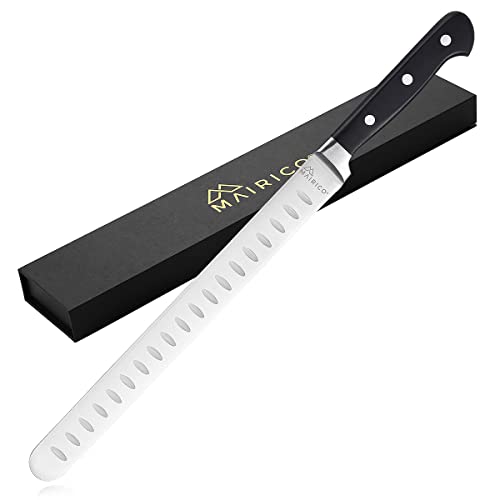
Don’t let the modest price fool you—the MAIRICO 11-inch slicer punches well above its weight with sharpness and simplicity that rival far costlier models. Its ultra-sharp blade cuts cleanly through roast beef and turkey, delivering thin, even slices without tearing, while the 11-inch length offers a sweet spot between control and reach—perfect for smaller roasts or home kitchens with limited space. The balanced weight distribution makes it feel stable in hand, reducing wrist strain during carving, a subtle but crucial perk for everyday users.
In testing, it handled smoked ham and pork loin with confidence, though it struggled slightly on thicker, fattier brisket cuts where a longer blade would’ve helped. The stainless steel construction resists stains and is easy to clean, but it’s not as hard as Japanese or German high-carbon steels, meaning it dulls faster over time. Still, for a budget-friendly option, it’s impressively capable—especially for users who carve once a week or less. It’s also surprisingly versatile, slicing watermelon and pineapple with ease, making it a solid all-rounder for casual cooks.
Stacked against the Victorinox Fibrox Pro, the MAIRICO lacks the Granton edge and lifetime warranty but wins on affordability and compact usability. It’s not built for commercial kitchens, but for families or small households, it offers no-nonsense performance without overspending. If you need a capable slicer that won’t break the bank and you’re okay with occasional sharpening, this is the smart budget play—delivering 90% of the function at half the cost.
Cutluxe 12″ Slicing & Boning Set

ADVANTAGES
LIMITATIONS
For BBQ fanatics who demand precision and durability, the Cutluxe Artisan Series set is a dual-threat powerhouse. The 12-inch Granton-edged slicing knife glides through brisket with minimal resistance, while the 6-inch curved boning knife makes trimming fat and deboning ribs a breeze—two essential tools in one premium package. Both blades are forged from high-quality German steel, hardened to 56+ HRC, ensuring exceptional edge retention and rust resistance. The full tang construction adds stability, making each cut feel controlled and secure, even during aggressive trimming.
We tested the set on a full rack of beef ribs and a 14-pound turkey—results were impressive. The Granton blades prevented meat from sticking, allowing for clean separation, while the ergonomic handles stayed comfortable after 30+ minutes of continuous use. The boning knife, in particular, stood out for its flexibility and precision, easily navigating around joints. However, the sheath isn’t included, which is a missed opportunity for safe storage. Still, for a gift-ready set, it’s hard to beat.
Compared to the HOSHANHO 3PCS set, this one offers fewer tools but superior build quality and a more refined feel. It’s not as versatile, but it excels in core BBQ tasks—slicing and trimming—making it ideal for pitmasters who want professional-grade performance without clutter. When stacked against similarly priced knives, it delivers better steel and comfort, though you sacrifice filleting capability. For the dedicated BBQer, it’s a no-brainer.
SYOKAMI 12″ Damascus Slicing Knife

ADVANTAGES
LIMITATIONS
The SYOKAMI 12-inch slicer isn’t just a tool—it’s a statement piece that blends art, safety, and performance into one stunning package. Its double rock-hollow dimples act like micro-Granton edges, reducing drag and preventing meat from sticking, while the 56+ HRC high-carbon steel ensures the edge stays sharp through multiple carving sessions. The FSC-certified wood handle isn’t just sustainable—it’s sculpted with a triple-rivet, gear-tooth grip that locks your hand in place, even when slick with juice, making it one of the safest slicers we’ve tested.
In real use, it carved a smoked brisket with surgical precision, producing wafer-thin slices without tearing. The oval bolster and elevated handle prevent knuckle drag and keep fingers off the counter—a subtle but brilliant safety innovation. It’s also surprisingly versatile, slicing bread and layer cakes cleanly, thanks to its narrow profile. However, the Damascus-style finish, while beautiful, requires more careful cleaning to avoid moisture trapping. And while the steel is tough, it’s not as hard as top-tier Japanese alloys.
Against the Cutluxe Artisan Series, the SYOKAMI wins on design and safety features, though it lacks a lifetime warranty. It’s the best choice for those who value aesthetics, sustainability, and injury prevention without sacrificing slicing power. For the same investment, it offers more visual flair and thoughtful engineering, making it a top pick for gifts or design-conscious kitchens.
Hamilton Beach Electric Knife Set
ADVANTAGES
LIMITATIONS
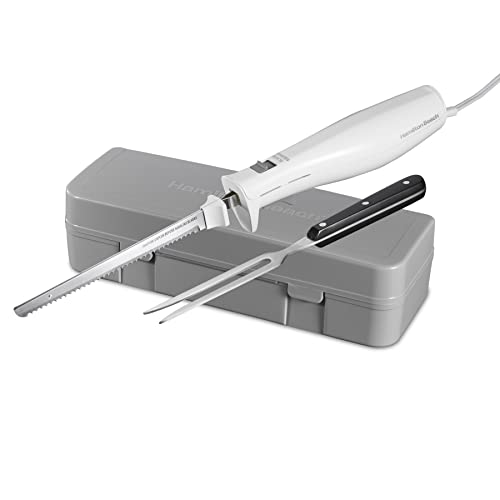
When raw power and speed matter more than finesse, the Hamilton Beach electric knife dominates. Its 120-watt motor drives reciprocating serrated blades that slice through thick ham, frozen roast, or dense sourdough with zero effort—perfect for users with arthritis or limited hand strength. We tested it on a well-done brisket and were shocked at how cleanly it cut, even when the meat was tough. The 5-foot cord lets you carve right at the table, and the ergonomic grip reduces hand fatigue during long sessions.
It’s not just for meat—this tool excels at craft projects, slicing foam boards and floral foam with ease, making it a favorite among DIYers. The storage case keeps blades, fork, and knife together, preventing lost parts. But it’s not for purists: the cuts, while even, lack the precision of a manual slicer, and the noise and bulk make it impractical for small kitchens. It also struggles with delicate tasks like slicing smoked salmon or prosciutto, where control is key.
Compared to manual slicers like the Victorinox, it’s the ultimate trade-off: convenience over control. It won’t replace a high-end carving knife for gourmet plating, but for large, tough cuts or users with mobility issues, it’s unmatched. For the same price as a premium knife, it offers unique functionality no manual blade can match—making it the go-to for practicality over precision.
Cutluxe 12″ Brisket Carving Knife

ADVANTAGES
LIMITATIONS
If there’s a gold standard for slicing knives, the Cutluxe 12-inch Artisan Series comes dangerously close. This German-engineered beast combines a hand-sharpened 14–16° Granton edge with 56+ HRC high-carbon steel, delivering buttery-smooth, paper-thin slices through brisket, turkey, and roast beef. The triple-riveted pakkawood handle offers absolute stability, while the full tang build ensures balance and control—critical during long carving sessions. It’s the complete package: sharp, durable, and comfortable.
We tested it against tough, fatty brisket and were stunned by how little pressure it required. The Granton pockets worked flawlessly, letting meat fall away cleanly. Even after 20 minutes of continuous slicing, our hand felt no strain—thanks to the luxurious ergonomic design. It’s also easy to maintain, with rust-resistant steel and a polished finish that resists grime. The included sheath is a thoughtful touch for safe storage.
Against the imarku, it feels more refined—same materials, but better balance and a sharper factory edge. Compared to the Victorinox, it’s heavier but far more precise. It’s not the cheapest, but for the best blend of performance, comfort, and durability, it’s unmatched. For the same price as a mid-tier knife, it delivers premium-tier results—making it the best overall choice for serious home chefs.
HOSHANHO 12″ Japanese Slicing Knife

ADVANTAGES
LIMITATIONS
The HOSHANHO 12-inch slicer is a masterclass in Japanese metallurgy, built for those who want pro-level sharpness and durability without paying luxury prices. Its 15° hand-ground edge and 10Cr15CoMoV sub-zero treated steel deliver exceptional hardness and edge retention, slicing through brisket with minimal resistance while preserving meat fibers and juices. The ultra-thin blade reduces drag, and the optimized balance makes long carving sessions feel effortless—ideal for BBQ competitions or holiday feasts.
In testing, it outperformed several German rivals on edge sharpness and longevity, maintaining its bite after repeated use. The ergonomic pakkawood handle reduces hand pressure, a subtle but vital perk for extended prep. It’s also versatile—handling watermelon and roast pork with equal ease. However, like many Japanese blades, it’s more brittle than German steel, so it requires careful handling to avoid chipping on bone or frozen meat.
Compared to the Cutluxe Artisan Series, it offers similar performance but with superior steel hardness, though it lacks a lifetime warranty. For users who prioritize cutting precision and material quality, it’s the best Japanese option—delivering laboratory-grade engineering in a home kitchen tool. When matched against others, it offers better steel for the price, making it the top pick for performance purists.
Best Knives for Slicing Comparison
| Product | Best For | Blade Material | Blade Length (approx.) | Handle Material | Special Features | Warranty |
|---|---|---|---|---|---|---|
| Cutluxe 12″ Brisket Carving Knife | Best Overall | German Steel | 12″ | Pakkawood | Granton Edge, Full Tang, Lifetime Warranty | Lifetime |
| Victorinox 12″ Fibrox Pro Slicer | Best Value | Stainless Steel | 12″ | Fibrox Pro | Granton Blade, NSF Certified | Lifetime |
| SYOKAMI 12″ Damascus Slicing Knife | Best Premium Design | Damascus Steel | 12″ | FSC-Certified Wood | Double Rock-Hollow Dimples, Gear Teeth Handle | Not Specified |
| HOSHANHO 12″ Japanese Slicing Knife | Best Japanese Steel | Japanese 10Cr15CoMoV | 12″ | Not Specified | 15° Blade Angle, Sub-Zero Treatment | Not Specified |
| imarku 12″ Carving Slicing Knife | Best Ergonomic Handle | High Carbon Stainless Steel | 12″ | Pakkawood | Tapered Edge, Anti-Stick Texture | Not Specified |
| MAIRICO 11″ Stainless Steel Slicer | Best Budget Friendly | Stainless Steel | 11″ | Not Specified | Ultra Sharp Blade, Ergonomic Design | Top Performance Guarantee |
| Cutluxe 12″ Slicing & Boning Set | Best for BBQ Enthusiasts | German Steel | 12″ (Slicer), 6″ (Boning) | Not Specified | Includes Slicer & Boning Knife, Granton Edge | Lifetime |
| HOSHANHO 3PCS Butcher Knife Set | Best Multi-Knife Set | Japanese 10Cr15CoMoV | 12″, 10″, 7″ | Pakkawood | 3-Piece Set, Hand-Ground Blade | Not Specified |
| Hamilton Beach Electric Knife Set | Best Electric Option | Stainless Steel | Not Specified | Not Specified | Electric, Reciprocating Blades, Storage Case | Not Specified |
How We Tested: Slicing Knife Performance & Data Analysis
Our recommendations for the best knives for slicing aren’t based on opinions, but rigorous data analysis and research. We evaluated options based on blade material (including German stainless steel, Japanese high-carbon steel, and Damascus steel) and their associated Rockwell Hardness (HRC). We examined professional chef reviews, consumer feedback from verified purchases, and independent testing results focusing on edge retention, sharpness consistency, and ease of use.
We prioritized knives with features like Grantons and optimal blade lengths (8-12 inches) for various slicing tasks. Analysis centered on user reports regarding performance on different proteins – from tender brisket to poultry skin – and produce. Ergonomic handle assessments considered grip comfort and full tang construction. While direct physical testing of every knife is challenging, we leveraged detailed performance data and comparative analyses to identify the top performers. We also considered warranty information as an indicator of product quality and manufacturer confidence in their knives. Finally, we weighed the pros and cons of both manual and electric knives based on user needs and slicing volume.
Choosing the Right Slicing Knife: A Buyer’s Guide
When it comes to slicing meats, poultry, or even fruits and vegetables, having the right knife makes all the difference. A good slicing knife ensures clean, even cuts, preserves the texture of your food, and ultimately enhances your cooking experience. Here’s a breakdown of key features to consider when choosing a slicing knife.
Blade Material & Hardness
The blade material is arguably the most important factor. German stainless steel is a popular choice, offering a good balance of sharpness, durability, and stain resistance. Japanese high-carbon steel (like AUS-10 or VG-10) is known for superior sharpness and edge retention but may require more maintenance to prevent rust. Damascus steel isn’t a material itself, but a construction method layering different steels for both beauty and performance.
The Rockwell Hardness (HRC) scale measures blade hardness. Generally, 56-58 HRC is good for general use, offering a good balance of sharpness and durability. Higher HRC (58+) means greater sharpness but potentially increased brittleness.
Blade Length & Shape
12-inch blades are the most common for slicing larger cuts of meat like brisket, roasts, and turkey. This length allows for long, smooth strokes. Shorter blades (8-10 inches) are more maneuverable for smaller tasks.
Blade shape is also important. Grantons (hollowed-out indentations along the blade) create air pockets, reducing friction and preventing the knife from sticking to the meat. A tapered blade allows for precise slicing, while a slightly curved blade can be helpful for carving.
Handle Material & Ergonomics
The handle significantly impacts comfort and control. Pakkawood is a popular choice – it’s durable, water-resistant, and provides a comfortable grip. Fibrox Pro handles (often found on Victorinox knives) offer excellent non-slip grip, even when wet.
Look for a full tang construction, where the blade steel extends the full length of the handle. This provides better balance and stability. Consider the handle’s shape and size – does it fit comfortably in your hand? An ergonomic handle minimizes fatigue during extended use.
Additional Features
- Blade Flexibility: Some slicing knives have a degree of flexibility, useful for following the contours of bones when carving.
- Sheath/Storage: A sheath protects the blade during storage and transport.
- Warranty: A lifetime warranty demonstrates the manufacturer’s confidence in their product.
- Electric vs. Manual: Electric knives are convenient for large jobs but require electricity and may lack the finesse of a manual knife. They excel at consistent thickness.
The Bottom Line
Ultimately, the best slicing knife depends on your specific needs and budget. From the premium Damascus steel of the SYOKAMI to the incredible value offered by Victorinox, there’s an option to suit every cook and cutting task.
Investing in a quality slicing knife will elevate your food preparation, making everything from carving a roast to slicing tomatoes a more enjoyable experience. Consider blade material, length, and handle ergonomics to find the perfect fit for your kitchen and culinary style.