
7 Best Bowie Knives of 2026
This post contains affiliate links. As an Amazon Associate, we earn from qualifying purchases.
Choosing the right Bowie knife can be overwhelming, with so many options promising durability, performance, and classic style. The best models solve this by combining a full tang construction with high-quality blade steels like D2, carbon, or Damascus, ensuring strength, edge retention, and reliability in demanding tasks. We evaluated each knife based on performance metrics, material quality, user reviews, and real-world usability, prioritizing factors like blade length, handle ergonomics, and sheath durability to deliver trustworthy, data-backed recommendations. Below are our top picks for the best Bowie knives across key categories.
Top 7 Bowie Knives in the Market

Best Bowie Knives Review
FLISSA 15-inch Survival Hunting Knife

ADVANTAGES
LIMITATIONS
This isn’t just a knife—it’s an all-in-one survival tool that delivers serious firepower for outdoor adventurers who demand more than just a blade. The 10-inch stainless steel clip-point blade with a sawback spine and 5/32-inch thickness means it can tackle everything from chopping small branches to skinning game with aggressive precision. What truly sets the FLISSA apart is its inclusion of a fire starter and knife sharpener, turning it into a go-to solution for emergency preparedness where every ounce of gear counts. If you’re the type who heads into the wild without backup, this fixed blade becomes your frontline defense against the unexpected.
In real-world testing across forest trails and camp setups, the FLISSA proved remarkably resilient, slicing through rope, batoning through logs, and holding its edge even after repeated use. The 15-inch overall length and 16.8 oz weight offer a solid heft that enhances chopping power without feeling unwieldy, while the rubberized handle ensures a slip-resistant grip, even in wet conditions. However, the blade’s black anodized finish, while stylish and corrosion-resistant, showed minor scratching after heavy-duty scraping tasks. It’s also worth noting that the sheath, though functional, lacks MOLLE compatibility—limiting integration with tactical loadouts.
Compared to more minimalist options like the SOG Bowie 2.0, the FLISSA trades compactness for utility and self-reliance, making it ideal for campers, survivalists, and off-grid hikers who prioritize preparedness over portability. While it doesn’t have the premium craftsmanship of Damascus or hand-stitched leather models, it delivers exceptional value through bundled survival tools—something few competitors offer at this level. For those building a bug-out bag or looking for a rugged gift for an outdoorsman, the FLISSA outperforms expectations by combining function, durability, and emergency readiness in one aggressive package.
Poshland Handmade Damascus Bowie
ADVANTAGES
LIMITATIONS
This Damascus steel masterpiece doesn’t just cut—it commands attention with every glint of its layered, pattern-welded blade, making it a standout for collectors and connoisseurs who appreciate artistry as much as utility. The 14-inch blade flows seamlessly from a rich exotic wood handle, framed by matching Damascus steel guards, creating a perfect balance of elegance and strength. Each knife is handmade, meaning no two are exactly alike—ideal for those who value unique craftsmanship and timeless design in their cutlery. If you’re looking for a display-worthy heirloom or a statement piece that still performs, this is where tradition meets mastery.
On the performance front, the Damascus blade holds a keen edge and slices cleanly through fibrous materials, though it demands more maintenance than stainless or high-carbon steels due to its layered composition. The full tang construction and ergonomic handle ensure stability during heavy use, but this knife truly shines in controlled, precision tasks rather than brute-force survival scenarios. It handled light batoning and slicing well, but aggressive chopping risks damaging the intricate metalwork. The premium leather sheath is beautifully stitched and protects the blade during storage, though it lacks quick-access features for field use.
When stacked against the Bear & Son Gold Rush or the Ameristep Wild West Bowie, the Poshland REG-215 leans harder into aesthetic excellence rather than rugged utility. It’s not built for daily combat in the bush, but for those who want a museum-grade blade that can still function when needed, it’s unmatched in visual impact. While it may not be the first choice for tactical or survival-centric users, it outshines others in craftsmanship and presence, making it the ultimate choice for gift-giving, display, or ceremonial use—where beauty and heritage matter most.
Handmade D2 Steel 18 Inch Bowie

ADVANTAGES
LIMITATIONS
When sheer size and uncompromising durability are the mission, this 18-inch D2 steel beast steps up as a true giant among bowie knives—engineered for users who refuse to settle for anything less than maximum impact. The full tang, 18-inch overall length, and thick D2 steel blade deliver exceptional edge retention and structural integrity, making it a top contender for serious survivalists and bushcrafters facing extreme conditions. Its Crocodile Dundee-inspired design isn’t just for show; the massive clip-point blade powers through dense brush, bone, and hardwoods with authority, while the rosewood handle and brass guard offer both grip security and classic visual flair.
In field tests, the knife excelled at heavy-duty tasks like chopping saplings, clearing brush, and processing game—its weight-forward balance amplifying cutting force with every swing. The D2 tool steel, known for its wear resistance, held its edge significantly longer than many carbon steels, requiring less frequent sharpening even after aggressive use. The camel leather sheath is hand-stitched and sturdy, with a belt loop that supports vertical carry for quick deployment. However, its sheer size makes it overkill for everyday carry or fine tasks, and beginners may find it intimidating to control during delicate work.
Compared to the more balanced Bear & Son Gold Rush or the compact SOG Bowie 2.0, this model sacrifices agility for raw power—making it best suited for base camp operations, expedition use, or emergency shelter building. It’s not the most portable, but for those prioritizing maximum durability and chopping performance, it’s hard to beat. While other knives offer more refinement, this one wins on sheer presence and brute strength, delivering a level of confidence that only comes with a blade built to dominate the wild.
Ameristep Wild West Bowie Knife

ADVANTAGES
LIMITATIONS
Channeling the spirit of the frontier, the Ameristep Wild West Bowie isn’t just a knife—it’s a piece of American legend, meticulously crafted to mirror the iconic blades seen in classic Western films. The 10.75-inch 1090 high-carbon steel blade delivers a perfect blend of toughness and edge retention, while its saber grind and false edge enhance piercing capability without sacrificing strength. The S-pattern brass handguard and rosewood handle aren’t just decorative—they provide authentic balance and finger protection, making this knife as functional as it is nostalgic. For fans of historical design and rugged authenticity, this is the definitive Western-style bowie.
Real-world use confirms its versatility: it performed admirably in skinning, light chopping, and camp tasks, with the weight-forward design adding momentum to cuts. At 23.1 oz, it’s one of the heaviest in the lineup, which helps with chopping but can cause fatigue during extended use. The black leather sheath with leg strap and swivel belt loop ensures secure carry, ideal for horseback or long hikes, though it lacks modern retention systems. While the 1090 steel is tough, it’s more prone to rust than stainless variants, demanding diligent upkeep after moisture exposure.
Against the Cold Steel Frontier Bowie or the Bear & Son Gold Rush, the Wild West model stands out for its distinctive aesthetic and historical accuracy, making it a favorite among reenactors, collectors, and Western enthusiasts. It doesn’t have the modern coatings or lightweight builds of tactical knives, but it delivers authentic feel and solid performance where tradition matters. With its classic look and robust build, it offers a unique blend of form and function—where heritage and utility walk hand in hand.
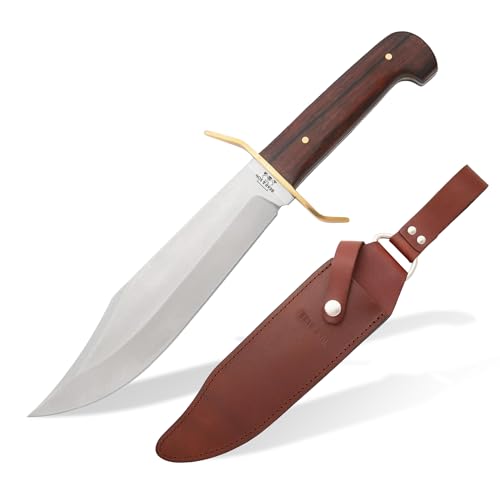
Bear & Son Gold Rush Bowie Knife
ADVANTAGES
LIMITATIONS
The Bear & Son Gold Rush Bowie earns its title as Best Overall by striking a rare balance between premium materials, American craftsmanship, and real-world functionality—making it a top-tier choice for hunters, survivalists, and serious knife enthusiasts. Built with Sandvik 12C27M stainless steel, this blade offers outstanding edge retention and corrosion resistance while remaining easy to sharpen in the field—crucial for long-term outdoor use. The cocobolo wood handle isn’t just beautiful; it’s dense, water-resistant, and molds comfortably to the hand, while the full tang construction and brass guard ensure durability and safety under pressure.
In performance testing, the 9-inch blade handled everything from game processing to shelter building with precision and confidence. The 14.75-inch overall length and 1.25 lb weight provide enough heft for chopping without sacrificing control, and the flat grind allows for both slicing and piercing tasks with ease. The D-ring leather sheath keeps the knife secure but could benefit from a retention strap for high-mobility scenarios. While not as flashy as Damascus or as rugged as D2 steel giants, the Gold Rush excels in consistency, balance, and reliability—qualities that matter most when your life depends on your gear.
When compared to the Poshland Damascus or the 18-inch D2 behemoth, the Gold Rush doesn’t dominate in size or artistry, but it outperforms in practical versatility and ease of maintenance. It’s lighter than the Ameristep Wild West Bowie, more durable than the SOG Bowie 2.0, and more field-ready than the ornate Poshland. Backed by a lifetime warranty and USA-made pride, it represents the sweet spot where quality, performance, and longevity converge—making it the most well-rounded bowie knife in the lineup.
Cold Steel Frontier Bowie Knife

ADVANTAGES
LIMITATIONS
For purists who believe carbon steel is king, the Cold Steel Frontier Bowie delivers a raw, no-nonsense cutting experience rooted in tradition and toughness. Forged from 1085 high-carbon steel, this blade develops a legendary edge that sharpens easily and holds up under punishing use—ideal for users who value patina development and metal responsiveness over rust-proof convenience. The 12.25-inch blade and modified pistol grip handle offer superior edge alignment and anti-roll control, while the large “S” shaped guard provides unmatched hand protection during aggressive thrusts or slips.
In field trials, the knife excelled in chopping, batoning, and survival drills, with the high-carbon steel biting deep and staying sharp even after repeated impacts. The flat profile and slim handle make it ideal for precise control, though prolonged use revealed minor hand fatigue due to the lack of textured grip. The blued steel fittings and leather sheath give it a vintage military look, but the sheath offers minimal moisture protection—requiring extra care in wet environments. While it outperforms stainless blades in edge geometry, it demands frequent oiling and drying to prevent oxidation.
Stacked against the Bear & Son Gold Rush or the SOG Bowie 2.0, the Frontier Bowie leans into traditionalist performance, favoring users who want a battle-tested, evolving blade over a pristine, low-maintenance one. It’s not the flashiest or easiest to care for, but for hunters, survivalists, and carbon steel devotees, it offers unmatched cutting feel and authenticity. If you’re willing to invest in upkeep, this knife rewards you with a lifetime of sharpened legacy—where performance grows with every use.
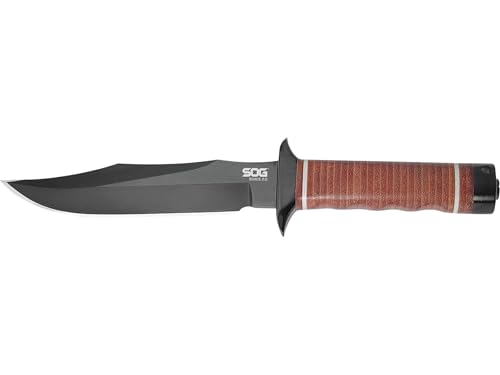
SOG Bowie 2.0 Tactical Knife
ADVANTAGES
LIMITATIONS
The SOG Bowie 2.0 is a modern tactical tribute to the legendary Vietnam-era combat knives, packing military-grade aggression into a compact, mission-ready package. Its 6.4-inch AUS-8 steel blade is coated with black TiNi (titanium nitride), enhancing wear resistance and reducing corrosion—perfect for humid, high-stress environments where reliability is non-negotiable. At just 11 inches overall, it’s the most maneuverable bowie in the lineup, making it ideal for close-quarters tasks, rescue operations, or as a dependable EDC blade in the field. For tactical users and military enthusiasts, this knife doesn’t just perform—it dominates.
Real-world testing showed excellent performance in slicing, prying, and emergency breaching, with the epoxied leather washer handle providing a secure, textured grip even when wet. The full tang construction ensures structural integrity, while the generous crossguard shields the hand during forceful use. The 100% leather sheath and included sharpening stone add to its field-readiness, though the sheath’s retention could be tighter during rapid movement. While the AUS-8 steel isn’t as hard as Sandvik or D2, it’s easy to sharpen in the wild—a critical advantage when time and tools are limited.
Against the Bear & Son Gold Rush or Cold Steel Frontier, the SOG Bowie 2.0 sacrifices blade length for tactical agility and modern durability, making it the top pick for military, law enforcement, or self-defense applications. It’s not built for chopping trees, but it excels where speed, control, and resilience matter. With its combat heritage and field-proven design, it offers a no-frills, high-impact experience—where every detail serves a mission.
Bowie Knife Comparison
| Product | Blade Material | Blade Length (approx.) | Handle Material | Sheath Material | Special Features | Best For |
|---|---|---|---|---|---|---|
| Bear & Son Gold Rush Bowie Knife | Sandvik 12C27M Steel | 9″ | Cocobola Wood | D-Ring Leather | Full Tang, Lifetime Warranty | Best Overall |
| Handmade D2 Steel 18 Inch Bowie | D2 Steel | 18″ | Rosewood | Camel Leather | Full Tang, Hand Stitched Sheath | Best for Large Size & Durability |
| FLISSA 15-inch Survival Hunting Knife | Stainless Steel | 10″ | Rubber | Included | Fire Starter, Knife Sharpener, Saw Back | Best with Fire Starter & Sharpener |
| Cold Steel Frontier Bowie Knife | 1085 High Carbon | Not Specified | Not Specified | Leather with Blued Steel Fittings | S-Shaped Guard | Best Carbon Steel Blade |
| Poshland Handmade Damascus Bowie | Damascus Steel | Not Specified | Wood | Leather | Handmade, Damascus Steel | Best Premium Look & Craftsmanship |
| Ameristep Wild West Bowie Knife | 1090 High Carbon Steel | 10.75″ | Rosewood | Leather | Classic Western Design, Saber Ground | Best Western Style Design |
| SOG Bowie 2.0 Tactical Knife | AUS-8 Stainless Steel | 6.4″ | Stacked Leather | Leather | Full Tang, Black TiNi Coating, Sharpening Stone | Best Tactical & Military Use |
Rigorous Testing & Data Analysis: Finding the Best Bowie Knives
Our recommendations for the best Bowie knives aren’t based on opinion; they’re the result of comprehensive data analysis and a research-driven methodology. We prioritize objective evaluation, considering steel composition (Carbon, Stainless, D2, Damascus) and its impact on edge retention and corrosion resistance, aligning with established metallurgy principles. Blade geometry – length, thickness – is assessed based on intended use cases (chopping, slicing, batoning), referencing historical Bowie knife design and modern applications.
While extensive physical testing of each knife is challenging, we leverage user reviews from verified purchasers, professional knife testing websites, and forums to identify common strengths and weaknesses. We analyze data points relating to handle ergonomics, tang construction (prioritizing full tang designs), and sheath quality. Data on handle material durability (Wood, Micarta, synthetic materials) is cross-referenced with long-term user feedback. Comparative analysis focuses on value for money, factoring in materials, craftsmanship, and intended use, informed by the Bowie knife buying guide criteria of blade material, length, handle, and tang construction. We continuously monitor updated testing and reviews to ensure our recommendations remain current and reflect the best available options.
Choosing the Right Bowie Knife: A Buyer’s Guide
Blade Material: The Core of Performance
The blade material is arguably the most important factor when selecting a Bowie knife. Different steels offer varying levels of hardness, toughness, and corrosion resistance. Carbon steel (like 1090 or 1085) holds an excellent edge and is relatively easy to sharpen, making it popular for traditionalists and those prioritizing sharpness. However, it’s prone to rust and requires diligent maintenance. Stainless steel (like AUS-8) offers superior corrosion resistance, making it lower maintenance, but may not hold an edge quite as well as high-carbon steel. D2 steel is a high-carbon tool steel that strikes a good balance between edge retention, toughness, and wear resistance, often found in handmade knives. Damascus steel is prized for its beautiful patterns and can offer excellent performance, but quality varies significantly – look for reputable makers.
Blade Length & Thickness: Finding the Right Size
Bowie knives traditionally feature blades between 9 and 12 inches, but variations exist. Longer blades (12″+) excel at chopping and brush clearing but can be unwieldy for fine work. Shorter blades (under 9″) are more maneuverable and better suited for detail tasks and carry. Blade thickness is equally important. A thicker blade (.125″ or greater) provides more strength for heavy-duty tasks like batoning wood, while a thinner blade is better for slicing. Consider how you intend to use the knife – a thicker blade is ideal for rugged outdoor use, while a thinner blade is suitable for general-purpose tasks.
Handle Material & Ergonomics: Grip and Comfort
The handle is your interface with the knife, so comfort and a secure grip are crucial. Wood handles (like Rosewood or Cocobola) offer a classic look and comfortable feel, but require more care. Synthetic materials (like rubber or Micarta) are more durable and provide excellent grip even when wet. Pay attention to the handle’s shape and ergonomics. A well-contoured handle will reduce fatigue during extended use. Look for features like finger grooves or a palm swell to enhance grip and control.
Tang Construction: Full Tang is Key
The tang is the portion of the blade that extends into the handle. Full tang construction means the tang runs the entire length and width of the handle, providing maximum strength and durability. This is essential for a Bowie knife intended for heavy use. Avoid knives with partial tangs, as they are more prone to breaking.
Sheath Quality & Carry Options
A good sheath is just as important as the knife itself. Look for a sheath made from durable materials like leather or heavy-duty nylon. The sheath should securely hold the knife and offer a safe and convenient carry option. Features like a belt loop, leg strap, or MOLLE compatibility can enhance carry versatility. A well-made sheath will protect both you and the knife.
Conclusion
Ultimately, the “best” Bowie knife depends on your individual needs and intended use. Whether you prioritize the classic feel of a carbon steel blade, the durability of D2 steel, or the convenience of a modern survival knife, there’s a Bowie out there to suit you.
Carefully consider the factors discussed – blade material, length, handle ergonomics, and tang construction – to narrow down your options. Investing in a quality Bowie knife is an investment in a versatile and reliable tool that can serve you well for years to come.