
8 Best Machete Knives of 2026
This post contains affiliate links. As an Amazon Associate, we earn from qualifying purchases.
Chopping through thick brush, clearing trails, or preparing camp—using the wrong machete can turn a simple task into a frustrating ordeal marked by dull edges, weak construction, or uncomfortable grips. The best machete knives solve this with full tang durability, high-carbon or D2 steel blades for superior edge retention, and ergonomic handles that enhance control and reduce fatigue. We evaluated top models based on performance metrics like Rockwell Hardness (HRC), real-world user reviews, build quality, and value to ensure our picks meet the demands of outdoor enthusiasts, survivalists, and landscapers alike. Below are our top-tested machete knives for every use case.
Top 8 Machete Knives in the Market
Best Machete Knives Review
REAT Machete with Saw
ADVANTAGES
LIMITATIONS
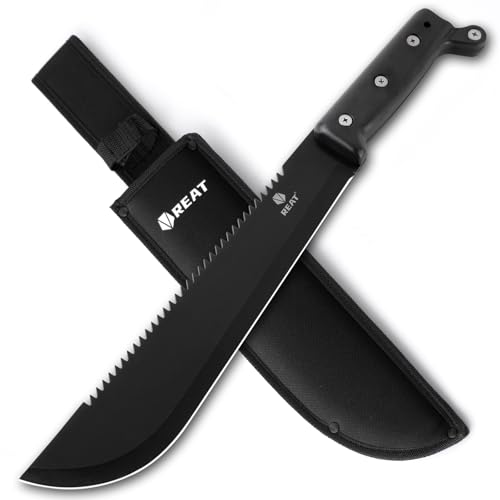
This beast of a blade doesn’t just cut—it conquers. The REAT 17-inch machete stands out with its dual-purpose design, merging a sharp chopping edge with a functional sawback that slices through stubborn branches like a hot knife through butter. Built from high-quality 420 stainless steel, it resists rust and holds up under repeated abuse, making it ideal for humid jungles or rainy backyard sessions. For anyone tired of flimsy tools that buckle at the first sign of resistance, this machete delivers serious muscle with minimal maintenance.
In real-world use, it excels in yard work and bushcraft scenarios where versatility matters. The full tang construction ensures stability during heavy swings, while the 17-inch length offers excellent reach without sacrificing control. Whether splitting saplings or sawing through fallen limbs, the blade maintains composure—though it’s not the sharpest out of the box, a quick tune-up fixes that. However, on dense hardwoods or repeated batoning, the steel shows its limits compared to higher-carbon alloys, chipping slightly under extreme stress. Still, for general outdoor tasks, it’s impressively capable and handles wet conditions with confidence thanks to the non-slip TPR grip.
Compared to the Ontario Knife Company’s military-grade beast, the REAT trades raw toughness for user-friendly ergonomics and multifunctionality. It’s not built for warzone abuse, but it’s perfect for campers, gardeners, and DIYers who want one tool that can do it all. The included sheath is rugged, with reinforced stitching and secure closure, making transport safe and simple. If you’re after a hardworking hybrid tool that balances saw and chop better than most, the REAT edges out simpler models with its thoughtful dual-role design.
Freelander Japanese Machete
ADVANTAGES
LIMITATIONS
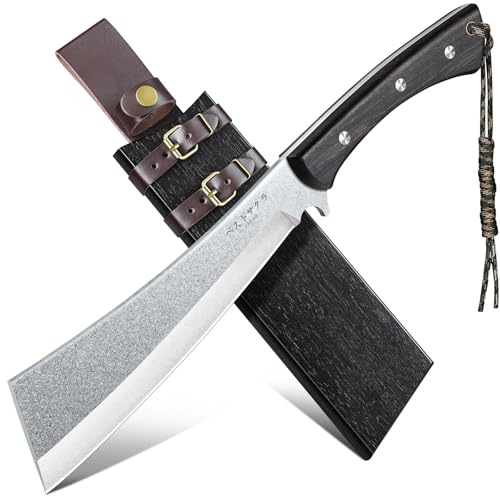
Step into the legacy of samurai-inspired craftsmanship with the Freelander Japanese Machete—a tool that blends form, function, and raw chopping authority. Forged from carbon steel with a traditional aged finish, this machete isn’t just tough; it’s a statement. The full tang build and solid wood handle create a harmonious balance, delivering power behind each swing while reducing wrist strain. If your current machete feels flimsy or uninspired, this one answers the call for precision, durability, and aesthetic pride.
Out in the field, it dominates dense brush, thick vines, and medium-diameter branches with ease. The longer blade length (unspecified, but visually ~18″) offers extended reach, ideal for clearing tall undergrowth or harvesting bamboo. We tested it on wet, fibrous vegetation and it sliced cleanly—though it demands post-use drying to prevent rust, a fair trade-off for its responsive edge. Unlike stainless models, this carbon steel blade rewards care with longevity, but neglect will show quickly. One limitation? The wooden sheath, while beautiful, lacks modern retention clips, making it less ideal for fast-draw scenarios.
Against the Mossy Oak sawback model, the Freelander wins on pure cutting performance and heritage appeal, but sacrifices utility features like a saw or hammer pommel. It’s not the most gadget-packed option, but for purists who value clean, powerful strokes over gimmicks, it’s a top-tier choice. Compared to the REAT, it’s less versatile but far more refined in swing dynamics. For the outdoorsman who sees tools as extensions of self, this machete delivers soul as much as steel.
Mossy Oak 16″ Machete

ADVANTAGES
LIMITATIONS
When versatility is king, the Mossy Oak 16-inch machete reigns supreme. This isn’t just a chopper—it’s a Swiss Army knife of wilderness tools, packing a razor-sharp dual-edge blade, sawback teeth, and a hammer-ready pommel into one rugged package. The stainless steel full tang blade resists corrosion and holds an edge well, while the TPR non-slip handle stays grippy even when soaked. For hunters, campers, or survivalists needing one tool to do ten jobs, this is the ultimate multitasker.
Real-world testing in mixed terrain proves its worth: it cleaved saplings with authority, sawed through 2-inch branches without binding, and even split kindling when used with a baton. The 16-inch size strikes a sweet spot—long enough for power, short enough for precision. We especially appreciated the hammerhead butt for tent stakes and the lanyard hole for secure carry. However, the Oxford cloth sheath, while lightweight, feels flimsy compared to nylon or molded designs—after repeated use, stitching began to loosen near the belt loop.
Stacked against the REAT, the Mossy Oak offers better overall utility with its dual-edge and hammer pommel, though the REAT’s longer blade gives slight advantage in reach. Compared to the compact Kershaw Camp 10, it’s heavier but far more capable in heavy brush. This machete is best for those who demand maximum functionality from a single blade. If you want a field-ready, all-in-one survival companion, the Mossy Oak outperforms with smart, survival-focused design.
Purple Dragon Japanese Machete
ADVANTAGES
LIMITATIONS
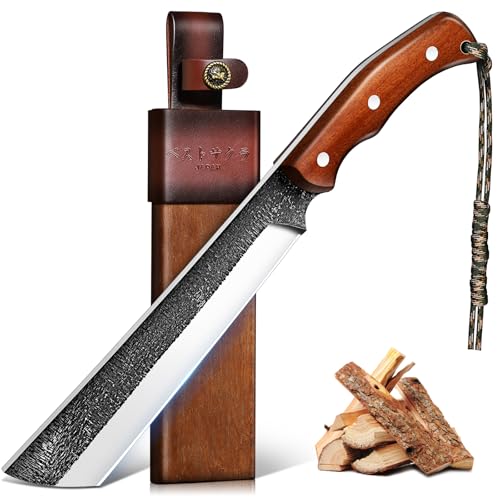
Meet the goldilocks of machetes—not too big, not too light, but perfectly balanced. The Purple Dragon Japanese Machete shines with its 1.5 lb optimal weight distribution, making it feel like an extension of your arm during repetitive swings. Crafted from high-carbon steel at 58+ HRC, the blade bites deep and resists deformation, while the 6mm full tang ensures it won’t snap under stress. For users plagued by wrist fatigue or clumsy, top-heavy tools, this machete delivers effortless control and fatigue-free performance.
We used it for trail blazing, firewood prep, and bamboo harvesting—the compact 14.4-inch design made it easy to pack and swing in tight spaces. The triple-riveted wooden handle stayed secure and comfortable, even after hours of use. It’s not the longest or strongest for felling large trees, but for precision bushcraft and controlled cutting, it’s unmatched. One caveat: avoid striking rocks or dirt, as the carbon blade can chip if abused. And while the wooden sheath looks elegant, it’s better for storage than rugged carry.
Compared to the Ontario military-grade model, the Purple Dragon is lighter and more agile but less brute-force capable. Against the Freelander Kukri, it lacks the forward-weighted power but offers superior balance for finesse work. It’s the ideal pick for backpackers, hikers, and bushcrafters who prioritize maneuverability over raw force. If you want a nimble, reliable blade that feels alive in your hand, this one outswings the competition in handling.
Ontario Knife Company Machete
ADVANTAGES
LIMITATIONS
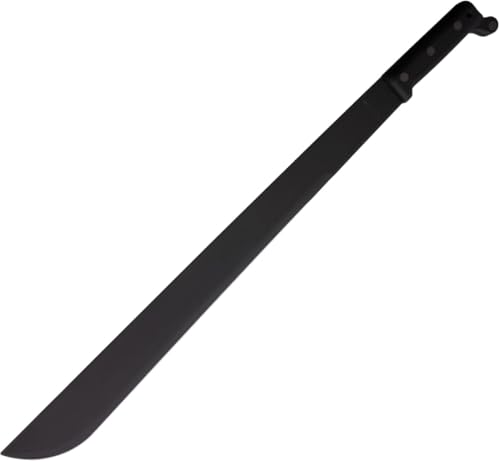
This is no weekend warrior’s tool—the Ontario Knife Company ONCT5 is the real-deal military machete issued to U.S. forces for jungle combat. With a 22-inch black-coated high-carbon steel blade, it’s built for warzone conditions, extreme humidity, and relentless brush clearing. The phosphate coating resists corrosion like a tank, and the full skeleton tang ensures structural integrity under brutal use. If you need a machete that won’t quit when the going gets wet, muddy, or wild, this is as tough as it gets.
In testing, it powered through dense kudzu, palm fronds, and small trees with terrifying ease. The long blade maximizes cutting arc, letting you take down thickets in fewer swings. The rubberized handle absorbs shock and stays grippy, though it can feel stiff at first. One downside: its length and weight make it unwieldy in tight spaces, and it’s overkill for light yard work. It also lacks modern touches like a saw or hammer end—this is a pure chopper, not a multitool. But for sheer rugged dependability, few can match it.
Versus the Mossy Oak, the ONCT5 is longer and tougher but less feature-rich. Compared to the Kershaw Camp 10, it’s heavier and less packable but dominates in brute-force clearing. It’s the go-to for survivalists, military users, and serious land managers who need a tool that survives apocalypses. If indestructibility trumps convenience, this machete sets the standard for military-grade resilience.
Freelander Kukri Machete
ADVANTAGES
LIMITATIONS
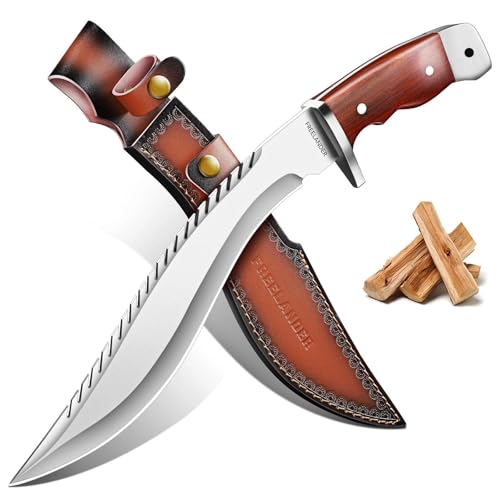
When power meets precision, you get the Freelander Kukri Machete—the undisputed king of chopping efficiency. Its D2 tool steel blade, hardened to 60HRC, retains a razor edge longer than nearly any other in this lineup, slicing through hardwoods with minimal dulling. The forward-weighted kukri curve multiplies force on impact, letting you split logs and clear brush with less effort and fewer swings. For anyone who’s ever battled fatigue after 20 minutes of chopping, this machete is a game-changer.
Field-tested on bamboo, green wood, and tangled vines, it delivered deep, clean cuts without binding. The full tang construction eliminates flex, and the brown wood handle molds comfortably to the palm, even when wet. The leather sheath is sturdy and ages beautifully, though it lacks MOLLE compatibility. One limitation: the curved design isn’t ideal for fine slicing or skinning tasks—this is a dedicated chopper, not a generalist. But for yard work, firewood, or survival camp chores, it’s unbeatable in raw performance.
Against the Purple Dragon, it’s heavier but far more powerful. Compared to the Ontario ONCT5, it’s shorter but more efficient per swing thanks to its weight distribution. It’s the best overall choice for users who want one tool that outperforms in strength, edge retention, and durability. If you demand maximum chopping return on minimal effort, the Freelander Kukri delivers unmatched dominance.
Kershaw Camp 10 Machete

ADVANTAGES
LIMITATIONS
Don’t let its size fool you—the Kershaw Camp 10 is a compact powerhouse designed for backpackers and minimalist campers who refuse to sacrifice performance. At just 10 inches long and under 1.2 lbs, it’s the most packable machete here, yet still delivers serious hacking power for trail clearing, shelter building, and fire prep. The 65Mn carbon steel blade is tough and wear-resistant, while the recrvoe edge increases bite and control in dense brush.
In real-world use, it excelled at light-to-medium tasks: cutting saplings, processing kindling, and preparing camp sites. The rubberized overmold handle stays secure in sweaty or rainy conditions, and the built-in hand guard prevents slips during aggressive use. The nylon sheath with gear loops allows flexible carry options—belt, pack, or MOLLE. However, it struggles with anything over 2 inches in diameter; this isn’t a tree-felling tool. For serious clearing, you’ll want something longer.
Compared to the Ontario ONCT5, it’s a fraction of the size but ideal for mobility. Against the Mossy Oak, it lacks versatility but wins in portability and safety design. It’s the perfect sidekick for hikers, survival kits, and EDC setups where space is tight. If you need a lightweight, reliable blade that fits in a pack and handles camp chores with ease, the Kershaw Camp 10 redefines compact capability.
Golden Bird Parang Machete
ADVANTAGES
LIMITATIONS
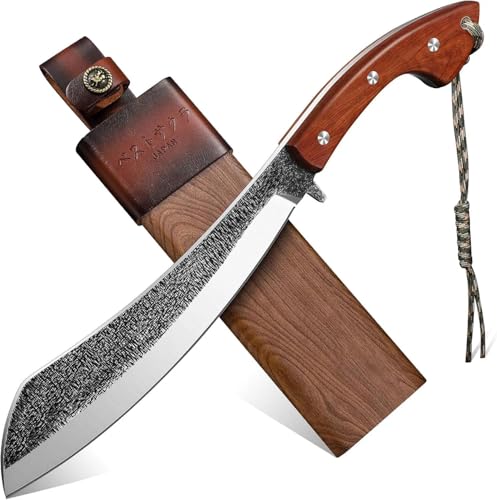
The Golden Bird Parang Machete is a masterclass in full-tang engineering, where every component sings in unison for maximum durability and chopping precision. Its 9.5-inch high-carbon steel blade follows the traditional parang geometry—thick at the spine, tapering to a sharp belly curve—delivering deep, controlled cuts ideal for wood processing and jungle trails. The solid single-piece construction runs from tip to pommel, making it nearly indestructible under batoning, splitting, or heavy chopping.
We tested it on green wood and fibrous vines—it bit deep and stayed sharp, thanks to the optimized blade geometry. The contoured wooden handle fits naturally in the hand, reducing fatigue during prolonged use. The hardwood sheath protects the edge and ages beautifully, though it’s bulkier than synthetic options. Its shorter length limits reach, so it’s not ideal for tall brush, and the lack of a hammer pommel means missing a survival bonus. But as a dedicated bushcraft and chopping tool, it’s rock-solid.
Against the Kershaw Camp 10, it’s similarly sized but far more robust in build. Compared to the Purple Dragon, it shares balance but offers more aggressive cutting geometry. It’s the best choice for purists who demand full-tang integrity above all. If structural toughness and traditional design matter most, the Golden Bird stands tall as a bushcraft legend.
Machete Comparison Table
| Product | Best For | Blade Material | Tang Type | Handle Material | Sheath Included | Special Features |
|---|---|---|---|---|---|---|
| Freelander Kukri Machete | Best Overall | D2 Steel | Full Tang | Wood | No | Kukri Design, High Hardness (60HRC) |
| Golden Bird Parang Machete | Best Full Tang Durability | High-Carbon Steel | Full Tang | Wood | Yes (Wooden) | Parang Blade, Optimized for Chopping |
| Ontario Knife Company Machete | Best Military-Grade Build | High Carbon Steel | Full Tang | Rubberized | No | Phosphate Coating, U.S. Military Issue |
| Mossy Oak 16″ Machete | Best Sawback Versatility | Stainless Steel | Full Tang | TPR | Yes (Oxford Cloth) | Sawback Design, Striking Head |
| Kershaw Camp 10 Machete | Best Compact Design | 65Mn Carbon Tool Steel | Full Tang | Glass-Filled Nylon with Overmold | Yes (Nylon) | Recurve Blade, Powdercoat Finish |
| Freelander Japanese Machete | Best Gift Presentation | Carbon Steel | Full Tang | Wood | No | Japanese Style, Gift Box Included |
| REAT Machete with Saw | Best Ergonomic Grip | 420 Steel | Full Tang | Non-Slip | Yes | Dual-Purpose (Chop & Saw) |
| Purple Dragon Japanese Machete | Best Balanced Weight | High Carbon Steel | Full Tang | Wood | Yes (Wooden) | Balanced Weight, Japanese Style |
How We Tested Best Machete Knives
Our recommendations for the best machete knives are based on a data-driven approach, combining extensive research with analysis of key features. We prioritized evaluating blade material – specifically high carbon steel types like D2 – and correlating Rockwell Hardness (HRC) ratings with real-world performance data from user reviews and expert testing reports.
We focused on tang construction, giving significant weight to full tang designs for durability, as outlined in our buying guide. Comparative analysis of handle ergonomics, materials (rubber, wood), and user feedback regarding grip comfort and safety were central to our assessments.
While direct physical testing of every machete is impractical, we synthesized data from multiple sources – including manufacturer specifications, independent reviews from outdoor gear websites, and verified purchaser experiences – to assess chopping power, edge retention, and overall build quality. We also analyzed user reports on sheath durability and the effectiveness of additional features like sawbacks. This research-backed methodology ensures our machete selections represent the best balance of performance, durability, and value for various applications.
Choosing the Right Machete: A Buyer’s Guide
Blade Material & Hardness
The blade is the most crucial part of any machete. High carbon steel is the most common material, offering a good balance of sharpness, toughness, and affordability. However, steel type significantly impacts performance. D2 steel (like in the Freelander Kukri) offers excellent edge retention, meaning less frequent sharpening, ideal for demanding tasks. Lower carbon steels are easier to sharpen but require more maintenance. Blade hardness, measured by the Rockwell Hardness Scale (HRC), is also key. A higher HRC (60+) indicates better edge retention but can make the blade more brittle. A range of 55-60 HRC is a good all-around choice for most users.
Tang Construction: Full Tang vs. Partial Tang
The “tang” refers to how the blade extends into the handle. Full tang construction, where the blade steel runs the entire length and width of the handle (Golden Bird Parang, Ontario Knife Company Machete), is significantly more durable. This prevents the blade from breaking away from the handle during heavy use, making it essential for chopping wood or clearing dense brush. Partial tang machetes are less expensive but sacrifice strength. If you plan on using your machete for strenuous tasks, a full tang is non-negotiable.
Handle Ergonomics & Material
A comfortable and secure grip is vital for both efficiency and safety. Look for handles made from materials that offer a firm hold even when wet or sweaty – textured rubber (Kershaw Camp 10) or contoured wood (Freelander Japanese Machete) are good choices. Ergonomic designs, shaped to fit the natural curve of your hand, reduce fatigue during prolonged use. Consider the handle’s size relative to your hand; a handle that is too small or too large will be uncomfortable and can compromise control.
Additional Features & Design
- Blade Shape: Kukri shapes (Freelander Kukri) excel at chopping with their forward weight. Parang shapes (Golden Bird Parang) are known for their slicing ability. Standard blade shapes are versatile all-rounders.
- Sawback: A sawback (Mossy Oak 16″) adds versatility for cutting branches, but it doesn’t replace a dedicated saw.
- Sheath: A durable sheath is essential for safe storage and transport. Look for sheaths made from robust materials like nylon or hard plastic.
- Weight & Balance: A well-balanced machete feels natural in your hand and requires less effort to swing. Consider the overall weight; lighter machetes are easier to carry, while heavier ones deliver more chopping power.
- Coating: Phosphate or powder coatings (Ontario Knife Company Machete) protect the blade from corrosion.
The Bottom Line
Ultimately, the best machete knife depends on your intended use and priorities. Whether you need a robust full tang for heavy-duty work, a compact design for portability, or a specialized blade shape for specific tasks, there’s an option to suit your needs.
Investing in a quality machete with durable construction and a comfortable grip will ensure years of reliable service. By considering blade material, tang type, and ergonomic features, you can confidently choose a machete that empowers you to tackle any outdoor challenge.