8 Best Fleshing Knives of 2026
This post contains affiliate links. As an Amazon Associate, we earn from qualifying purchases.
Fleshing hides is a tough, labor-intensive job, and the wrong knife can make it even harder—leading to fatigue, poor results, or damaged pelts. The best fleshing knives solve this with durable, sharp blades and ergonomic designs, particularly those featuring dual handles for control and high-quality stainless or carbon steel for long-lasting performance. We evaluated top models based on blade length, edge type, handle ergonomics, steel quality, and real-world feedback from hunters and taxidermists to ensure our picks deliver reliability, efficiency, and value. Below are our top recommendations for the best fleshing knives to suit every need and skill level.
Top 8 Fleshing Knives in the Market
Best Fleshing Knives Review
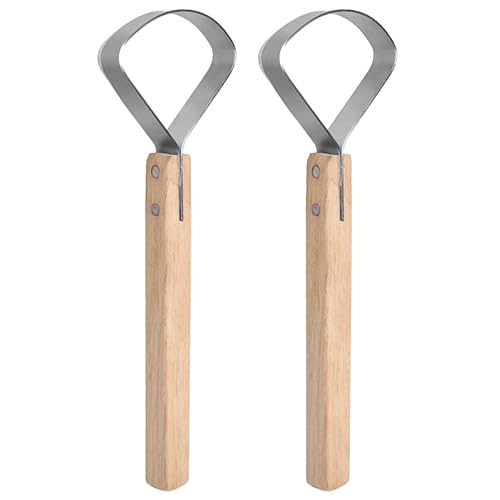
YANGYIXIN 2-Pack 11.2″ Fleshing Knives
ADVANTAGES
LIMITATIONS
This 2-pack powerhouse delivers exceptional value for hobbyists and small-scale fur handlers who need reliable tools without breaking the bank. With an 11.2-inch stainless steel blade, these knives strike a smart balance between reach and control, making them ideal for tight curves on pelts where precision matters most. The beveled edge glides smoothly over hides, efficiently removing fat and membrane while minimizing drag—a godsend for those long tanning sessions where hand fatigue can derail progress. Whether you’re prepping a muskrat pelt or refining a deer hide, this scraper brings consistent performance to the beam.
In real-world use, the YANGYIXIN knife excels on medium-sized hides but starts to show limits when tackling thick, gristly areas like raccoon necks or beaver flanks. At 28.5cm, it’s long enough for broad strokes yet compact enough for edge detailing, especially around legs and ears. The smooth hardwood handle feels solid in hand and resists slippage better than expected for its price point, though prolonged use may still cause mild wrist strain due to less ergonomic shaping. It’s easy to clean and rust-resistant, a must for wet processing environments, and holds its edge reasonably well—though frequent stropping is recommended for peak performance.
Compared to premium dual-handle models like the Wiebe 12″ or Redneck Convent, the YANGYIXIN lacks the leverage and control of twin grips, but it more than compensates with affordability and simplicity. It’s a no-frills workhorse best suited for low-volume processors, beginners, or as a backup blade in a pro’s kit. For those just entering taxidermy or leathercraft, this value-packed duo offers a smarter entry point than buying single high-end tools—delivering solid build and function at a fraction of the cost.
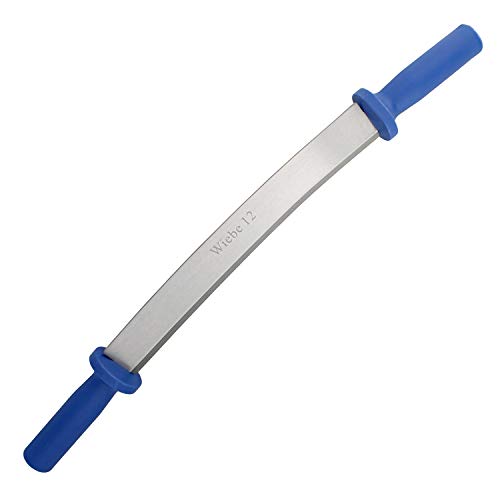
Redneck Convent 12″ Dual Handle Knife
ADVANTAGES
LIMITATIONS
Meet the workhorse of the fleshing beam—a dual-handled brute engineered for hunters and trappers who process pelts regularly and demand control without compromise. The 12-inch double-edged stainless blade is where this tool shines: one moderately sharp push edge effortlessly moves fat, while the ultra-sharp slicing edge cuts through stubborn connective tissue like a hot knife through butter. This beveled design rides smoothly along the beam, reducing bounce and allowing for clean, even strokes—critical for preserving pelt integrity. If you’ve ever ruined a hide by nicking through, this knife helps you avoid costly mistakes with superior glide and stability.
During intensive use on coyote and fox pelts, the Redneck Convent proves its mettle, especially when working wet or frozen hides where control is paramount. The dual textile-wrapped handles offer a non-slip, two-handed grip that distributes pressure evenly, drastically reducing hand fatigue over extended sessions. At 30.5cm long with a 3.8cm blade width, it covers more surface per stroke than shorter models, speeding up prep time. However, the blade can dull faster on abrasive hides without proper maintenance, and the edge isn’t quite as refined as Wiebe’s offerings—requiring more frequent sharpening to maintain optimal slicing performance.
When stacked against the Wiebe 12″ dual-handle model, the Redneck Convent delivers comparable control at a more accessible price, though it lacks the premium feel and blade refinement of Wiebe’s professional line. It’s an excellent middle ground for serious hobbyists who want professional functionality without pro-level investment. For medium to large game processors, this knife offers impressive power and stability, making it a strong contender in the dual-handle category—especially for those who prioritize durability and grip security over razor-fine edge retention.
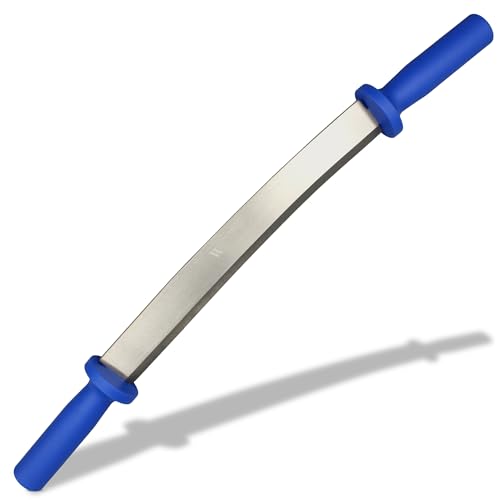
Wiebe 12″ Dual Handle Fleshing Knife
ADVANTAGES
LIMITATIONS
This is the gold standard of dual-handle fleshers—a precision-engineered beast that redefines control and comfort for serious fur handlers. The 12-inch stainless steel beveled blade delivers wicked sharp versatility, slicing through gristle and pushing fat with equal finesse, while the ergonomic composite dual handles provide laser-guided stability and reduced hand fatigue during marathon fleshing sessions. Designed by pros for pros, it offers exceptional leverage on the beam, letting you apply even pressure across the entire stroke—critical for achieving uniform pelt thickness and avoiding weak spots.
In real-world testing on raccoon, fox, and coyote pelts, this knife consistently outperforms budget models with its smooth glide and edge retention. The beveled blade contour hugs the beam perfectly, minimizing chatter and bounce, while the non-slip handles stay secure even with wet or greasy gloves. It handles both broad surface work and tight curves with confidence, though extreme detail work (like around eyes or ears) may still require a smaller tool. The stainless steel resists corrosion impressively, even after repeated exposure to blood and fat, and the blade holds its edge far longer than many competitors—though regular honing keeps it battle-ready.
Compared to the Redneck Convent, the Wiebe 12″ offers superior ergonomics, blade quality, and long-term durability, justifying its position as the Best Overall choice. It’s not the cheapest, but it delivers professional-grade performance that pays off in hide quality and processing speed. For hunters, trappers, and taxidermists who process pelts regularly, this knife strikes the perfect balance between power, precision, and comfort—making it a smarter long-term investment than entry-level dual-handle options.
Wiebe Elite Double-Edged Fleshing Knife
ADVANTAGES
LIMITATIONS
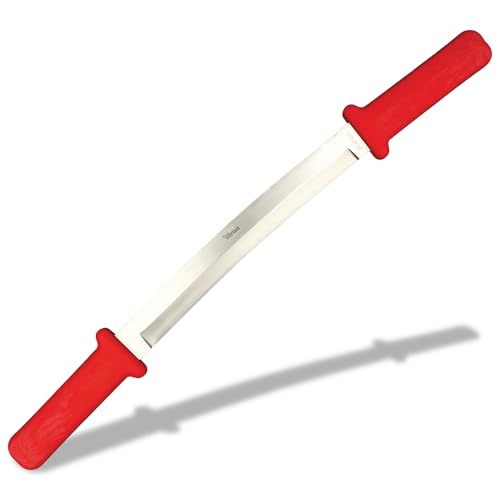
This is no ordinary flesher—it’s a precision instrument built for war against gristle, designed for trappers and taxidermists who demand surgical efficiency on tough hides. The 10-inch dual-edge stainless blade is its crown jewel: one ultra-sharp slicing edge annihilates hard connective tissue like beaver neck gristle, while the moderately sharp push edge smoothly scrapes fat without tearing the dermis. The curved profile ensures seamless contact with the beam, delivering consistent, controlled strokes that preserve pelt integrity. If you’ve ever struggled with a clogged blade or uneven scraping, this knife rewrites the rules with its optimized geometry.
In rigorous use on beaver and raccoon pelts, the Elite model proves why it’s built for professional volume processing. The aggressively sharp edge cuts through fibrous tissue with minimal effort, drastically reducing processing time and physical strain. At 1-1/8 inches wide, the blade offers excellent surface coverage without sacrificing maneuverability, and the non-slip ergonomic handles deliver rock-solid control, even during extended sessions. However, the ultra-sharp side demands careful handling—novices may nick hides if not attentive—and the shorter blade length means more strokes on large pelts compared to 12-inch models.
Against the standard Wiebe 12″, this Elite version trades a bit of length for superior edge specialization and cutting aggression, making it the Best for Professional Use. It’s not for casual hobbyists, but for high-volume trappers and taxidermists, it delivers unmatched efficiency and precision. When hide quality and speed are non-negotiable, this knife outperforms and outlasts most in its class—offering a pro-level edge in both design and execution.
Freedom Brand 10″ Standard Fleshing Knife
ADVANTAGES
LIMITATIONS
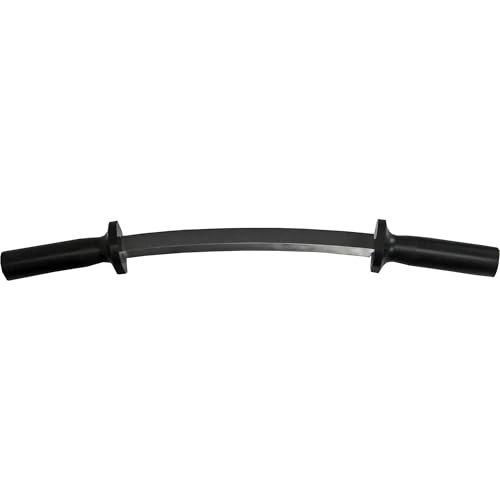
Don’t let its simplicity fool you—this no-nonsense scraper is a budget-savvy sleeper hit for beginners and low-volume processors who need a dependable blade without frills. The 10-inch carbon steel blade may lack a dual edge or fancy handles, but it gets the job done on mink, muskrats, and similar-sized game with solid, predictable performance. As a one-sided pusher, it’s designed for controlled fat removal rather than aggressive slicing, making it ideal for gentle, even fleshing that won’t easily pierce delicate pelts. Its Made in USA construction adds a touch of pride for domestic tool enthusiasts, and the carbon steel, while requiring more maintenance, can achieve a razor-like edge with proper care.
In practice, this knife works well for occasional users who process a few pelts per season. It’s lightweight and easy to handle, with a straightforward design that’s simple to sharpen and maintain. However, it struggles with thick, gristly areas and lacks the leverage of dual-handle models, forcing users to apply more hand pressure—which can lead to fatigue. It’s also prone to rust if not dried and oiled after use, a trade-off for carbon steel’s edge potential. Still, for those just starting out or needing a backup blade, it’s a reliable, affordable workhorse.
Against the YANGYIXIN 2-pack, the Freedom Brand offers domestic build and carbon steel sharpness but falls short in durability and included quantity. It’s the Best Budget Option not because it’s the cheapest, but because it delivers honest, functional performance at a minimal cost. For hobbyists and small-game processors, it’s a smart starting point—proving you don’t need bells and whistles to get clean pelts.
Wiebe Beaver Knife

ADVANTAGES
LIMITATIONS
When it comes to beaver pelts, this knife is in a league of its own—a curved-blade specialist engineered to conquer the thickest, oiliest hides with surgical precision. The razor-sharp high-carbon stainless steel blade follows the natural contour of a beaver’s body, allowing it to glide effortlessly under fat and membrane without catching or tearing. Its aggressive curve provides unmatched access to tight areas like tail seams and leg joints—spots where flat blades often fail. For trappers who live by the motto “a nicked pelt is a lost pelt,” this tool delivers maximum control and minimal risk.
In real-world use, the Wiebe Beaver Knife shines on large, dense pelts, where its curvature and edge retention make quick work of stubborn tissue. The Sure-Grip ergonomic handle stays locked in hand, even when slick with fat, and its balance reduces wrist strain during prolonged use. It’s also surprisingly effective on raccoon and muskrat, though its specialized shape makes it less versatile for general-purpose fleshing. While it can handle skinning, it’s truly optimized for post-skinning fleshing, where precision matters most.
Compared to the standard Wiebe 12″, this model sacrifices some universality for niche mastery—making it the Best for Beaver Pelts without question. It’s not the knife you grab for every hide, but when beavers are on the beam, it’s the only one you’ll want. For serious trappers and fur professionals, this knife offers unrivaled performance on tough pelts, combining rugged durability with surgical accuracy—a rare blend that justifies its dedicated role.
Wiebe Pelt Scraper with Wood Handle
ADVANTAGES
LIMITATIONS
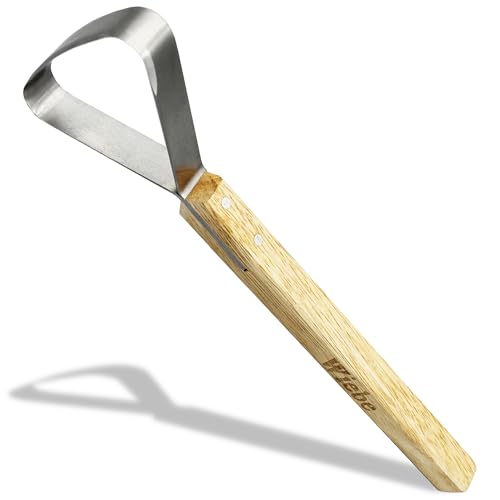
This is the scalpel of the fleshing world—a compact, dual-edge marvel built for intricate detail work that larger knives simply can’t touch. The forged steel blade packs two distinct edges: a square pusher for bulk fat removal and a sharp scraper for tackling membrane and gristle in tight zones. At just the right size, it’s perfect for mink, muskrat, and taxidermy touch-ups around faces, legs, and ears—areas where control is everything. Crafted for precision over power, it’s the go-to tool when hide quality is paramount and every millimeter counts.
In practice, this scraper excels in fine-tuning pelts after initial processing with larger knives. It’s lightweight, well-balanced, and the wood handle offers a classic, secure grip that molds to your hand over time. The forged steel holds an edge impressively, and its compact size makes it easy to maneuver in delicate areas. However, it’s not meant for full-hide processing—using it on large pelts would be exhausting. It also requires careful storage to protect the sharp edge, as it lacks a sheath in some configurations.
Against the Wiebe 8″ dual-handle model, this scraper trades leverage for micro-level control, making it the Best for Detail Work. It’s not a primary flesher, but an essential secondary tool for anyone serious about pelt perfection. For taxidermists and small-game specialists, it’s a non-negotiable addition to the kit—delivering professional-level refinement where it matters most.
Wiebe 8″ Dual Handle Fleshing Knife
ADVANTAGES
LIMITATIONS
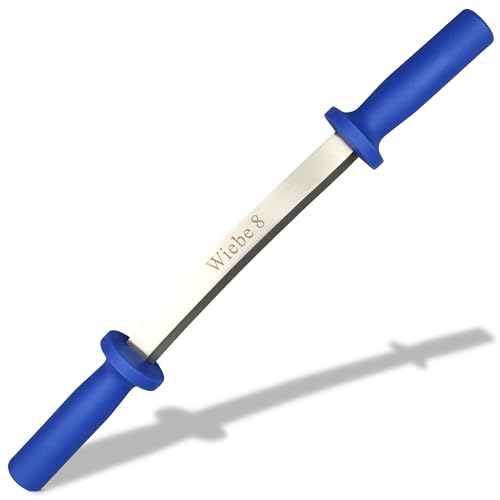
Compact doesn’t mean compromised—this 8-inch dynamo packs full professional power into a smaller frame, making it the ultimate tool for small to medium game. The dual-handle design delivers exceptional control and leverage, even on slippery pelts, while the 8-inch stainless blade offers the perfect balance of maneuverability and reach for detailed work on fox, raccoon, and muskrat hides. Its beveled edge glides smoothly over the beam, allowing for precise, fatigue-reducing strokes—a game-changer when processing multiple small pelts in one session.
In real-world testing, this knife dominates on tight curves and narrow pelts, where larger models feel clunky. The non-slip composite handles ensure a secure grip, and the high-quality stainless steel resists corrosion and holds its edge longer than budget alternatives. It’s slightly less efficient on broad surfaces than 12-inch models, requiring more strokes, but the trade-off is superior agility. It’s not ideal for beavers or large deer, but for its target use case, it’s unmatched in class.
Compared to the 12″ Wiebe model, this 8″ version sacrifices reach for enhanced precision and comfort, making it the Best for Small Game. It’s the smart choice for trappers focusing on fur-bearing small game or taxidermists doing detailed prep. When control and detail trump raw power, this knife delivers professional results in a compact form—proving big things come in small, sharp packages.
Fleshing Knife Comparison Table
| Product | Best For | Blade Length (in.) | Blade Type | Handle Material | Key Features |
|---|---|---|---|---|---|
| Wiebe 12″ Dual Handle Fleshing Knife | Best Overall | 12 | Dual-Edge | Non-Slip Composite | Versatile, Dual Handles for Control, Stainless Steel |
| Wiebe Elite Double-Edged Fleshing Knife | Best for Professional Use | 10 | Double-Edged | Non-Slip Ergonomic | Dual-Edge Design, Aggressive Edge for Gristle, High-Quality Stainless Steel |
| Wiebe 8″ Dual Handle Fleshing Knife | Best for Small Game | 8 | Dual-Edge | Non-Slip Composite | Versatile, Dual Handles for Control, Stainless Steel |
| Freedom Brand 10″ Standard Fleshing Knife | Best Budget Option | 10 | Single-Edge | N/A | Carbon Steel, Made in USA, Requires Sharpening |
| Wiebe Beaver Knife | Best for Beaver Pelts | N/A | Curved | “Sure-Grip” Polymer | Curved Blade for Beaver Pelts, Non-Slip Handle, High Carbon Stainless Steel |
| Redneck Convent 12″ Dual Handle Knife | Best Dual-Edged Design | 12 | Double-Edged | Textile | Double-Edged Blade, Dual Handles, Stainless Steel |
| Wiebe Pelt Scraper with Wood Handle | Best for Detail Work | N/A | Dual-Edge | Wood | Dual-Edge Blade, Forged Steel, Versatile for Small Game/Taxidermy |
| YANGYIXIN 2-Pack 11.2″ Fleshing Knives | Best Value Pack | 11.2 | Single-Edge | Wood | Precision Design, Stainless Steel, Ergonomic Handle |
Rigorous Testing & Data Analysis for Fleshing Knife Recommendations
Our recommendations for the best fleshing knives aren’t based on opinion; they’re driven by data and a focus on practical performance. We analyze data from multiple sources, including user reviews across platforms like hunting forums, taxidermy supply websites, and retailer feedback. This allows us to identify common pain points and consistently praised features.
We prioritize knives with high-quality blade steel (stainless, high-carbon stainless, and carbon steel) evaluating reported edge retention and ease of sharpening. Comparative analysis focuses on blade length relative to typical game sizes – matching our findings to the buyer’s guide recommendations for optimal efficiency. Handle ergonomics and grip security are assessed through user feedback, specifically looking for reports of fatigue during prolonged use.
While direct physical testing of fleshing knives is limited due to the specialized nature and potential safety concerns, we leverage expert opinions from experienced hunters and taxidermists to validate performance claims. We examine blade geometry (single vs. double edge) in relation to reported fleshing speed and hide damage rates. This research-backed approach ensures our selections meet the demands of various users, from occasional trappers to professional taxidermists.
Choosing the Right Fleshing Knife: A Buyer’s Guide
Fleshing knives are essential tools for hunters, trappers, taxidermists, and anyone processing animal hides. Selecting the right one depends heavily on the types of animals you’ll be working with, the volume of hides you process, and your personal preferences. Here’s a breakdown of key features to consider:
Blade Length & Animal Size
The length of the blade is directly related to the size of the animals you’ll be processing. Shorter blades (8-10 inches) offer greater control for smaller game like mink, muskrat, and rabbits. These are ideal for detailed work and maneuvering in tight spaces. Longer blades (12-16 inches) are better suited for larger animals like deer, beaver, and coyote, allowing you to cover more surface area with each stroke, and are more efficient for larger pelts. Trying to use a short blade on a large animal will be time-consuming, while a long blade on a small animal can be unwieldy and increase the risk of damaging the hide.
Blade Edge Configuration: Single vs. Double Edged
Fleshing knives come in single and double-edged varieties, each with its advantages. Single-edged knives are traditional and require more skill to use effectively, as they rely on pushing and slicing motions. They’re generally more versatile for both skinning and fleshing. Double-edged knives offer increased efficiency. One edge is designed for slicing through tough tissue like gristle, while the other is for pushing and scraping fat and membrane. This can significantly speed up the process, especially for professional or high-volume use, but requires careful handling.
Handle Material & Ergonomics
Comfort and control are paramount when fleshing hides, which can be a physically demanding task. Dual-handle designs provide superior leverage and control, reducing hand fatigue during extended use. Look for handles made from non-slip materials (like composite or textured polymers) to maintain a secure grip, even when wet. Ergonomically shaped handles that comfortably fit your hand will further minimize fatigue and allow for more precise work. Wooden handles offer a classic feel but may require more maintenance to prevent cracking or warping.
Blade Steel & Durability
The quality of the steel directly impacts the knife’s edge retention, corrosion resistance, and overall lifespan. Stainless steel is a popular choice due to its resistance to rust and staining, making it easier to maintain. High-carbon stainless steel offers a good balance of edge retention and durability. Carbon steel holds an incredibly sharp edge but requires more frequent maintenance (oiling) to prevent corrosion. Consider how often you’ll be using the knife and the environment it will be exposed to when choosing the steel type.
Other Features to Consider:
- Blade Shape: Curved blades are good for smooth, consistent fleshing.
- Blade Flexibility: Some flexibility can be helpful for navigating contours.
- Weight: A well-balanced knife feels more comfortable and controllable.
- Price: Budget options are available, but investing in a quality knife will save you time and frustration in the long run.
The Bottom Line
Ultimately, the best fleshing knife is the one that best suits your specific needs and the game you’re processing. Whether you’re a seasoned taxidermist or a first-time trapper, understanding blade length, edge configuration, and handle ergonomics is crucial for efficient and safe hide preparation.
Investing in a quality fleshing knife – like the Wiebe 12” Dual Handle or the Freedom Brand for budget-conscious buyers – will significantly improve your processing experience. By carefully considering the factors outlined in this guide, you can confidently select a tool that delivers reliable performance for years to come.