
8 Best 5-Inch Chef Knives of 2026
This post contains affiliate links. As an Amazon Associate, we earn from qualifying purchases.
Many home cooks struggle to find a compact yet capable knife that balances precision and power for everyday tasks, often ending up with a 5-inch chef knife that feels either too flimsy or too limited. The best 5-inch chef knives solve this by combining high-quality blade steels—like ATS-34 or 10Cr15CoMoV—with ergonomic handles and optimal balance, delivering sharpness, durability, and comfort in a manageable size. We evaluated each model based on blade hardness, material quality, handle ergonomics, real-world user reviews, and unique features like warranty and edge retention to ensure our picks meet both performance and practicality standards. Below are our top-tested recommendations for the best 5-inch chef knives to elevate your kitchen experience.
Top 8 5-Inch Chef Knives in the Market
Best 5-Inch Chef Knives Review
PAUDIN 5″ Santoku Knife

ADVANTAGES
LIMITATIONS
The PAUDIN 5-inch Santoku slices through daily kitchen chaos with surgical precision and surprising elegance. Its high-carbon stainless steel blade, hardened to 56+ HRC, delivers excellent edge retention and rust resistance, while the double-sided groove design slashes friction and keeps food from clinging—ideal for home cooks tired of sticky onions or clumping herbs. With a hand-polished 14–16° edge, this knife strikes a balance between aggression and control, making it a reliable workhorse for slicing, dicing, and mincing without demanding pro-level technique.
In real-world testing, the compact 5-inch blade proved perfect for small cutting boards and one-handed tasks, offering pinpoint accuracy when trimming vegetables or portioning proteins. The Pakkawood handle feels smooth and stable, even during extended prep sessions, and its ergonomic shape reduces wrist strain—especially welcome for beginners or those with lighter grip strength. While it doesn’t match the heft of forged German blades, it excels in light to medium-duty tasks, though tougher jobs like dense squash or frozen foods require caution.
Compared to the heavier HENCKELS Forged Accent, the PAUDIN feels more agile and approachable, trading brute durability for nimble precision and user-friendly design. It’s an ideal pick for novice chefs, apartment cooks, or anyone seeking a low-maintenance, high-performing Santoku without breaking the bank. When stacked against the Victorinox Fibrox, it offers a more refined aesthetic and wood handle appeal, though with slightly less slip resistance on wet grips—a value-packed performer with lasting craftsmanship and a lifetime warranty to back it.
Victorinox Fibrox 5″ Chef Knife

ADVANTAGES
LIMITATIONS
The Victorinox 5-inch Fibrox is the unsung hero of professional kitchens, built with the kind of Swiss precision that turns mundane chopping into effortless rhythm. Its laser-tested stainless steel blade maintains a razor-sharp edge over time, slicing cleanly through tomatoes, herbs, and poultry with minimal pressure. The tapered edge geometry ensures smooth penetration, while the 5-inch length provides a sweet spot between control and utility—perfect for cooks who want a compact powerhouse that doesn’t sacrifice performance.
During real-world use, the thermoplastic elastomer (TPE) handle proved its worth: grippy even when wet, it stayed secure during oily fish prep and slippery citrus segments. The knife’s balanced weight and full tang deliver responsive feedback, making repetitive tasks like dicing onions or julienning carrots feel almost meditative. It handles larger jobs surprisingly well—like halving pineapples or breaking down whole chickens—though its shorter blade demands more strokes than an 8-inch cousin. It’s dishwasher-safe, but hand washing is recommended to preserve edge longevity.
Against the HENCKELS Forged Accent, the Fibrox wins on ergonomics and affordability, offering superior grip and easier maintenance, though it lacks the heft and prestige of forged German steel. For pros and serious home cooks who value reliability over showmanship, this knife is a no-nonsense, work-all-day tool. Compared to the PAUDIN, it trades wood-handle elegance for slip-proof functionality and wider task versatility—offering pro-grade performance with a lifetime warranty and a reputation forged in decades of kitchen combat.
HENCKELS 5″ Santoku Knife
ADVANTAGES
LIMITATIONS
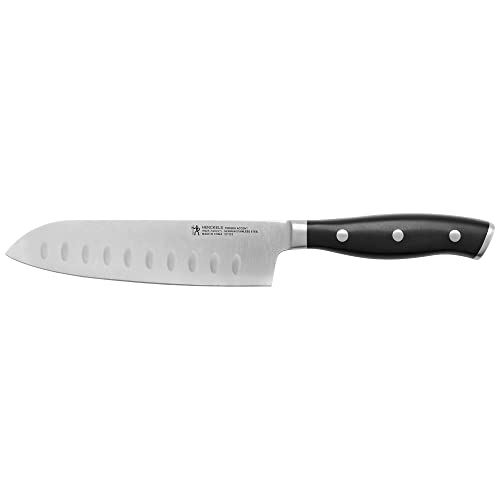
The HENCKELS Forged Accent 5-inch Santoku carries the gravitas of over a century of German knife-making, delivering a bulky, full-bodied feel that inspires confidence with every chop. Its forged bolster construction creates a seamless flow from blade to handle, offering exceptional balance and durability—a rare find in this price tier. The hollow-edge blade reduces drag and prevents food adhesion, while the satin-finished edge stays sharp longer than many competitors, even with minimal honing. This is a knife built for long-term loyalty, not just short-term flair.
In testing, the heavier forged build excelled in dense vegetable prep—carving through sweet potatoes and cabbages with authority—but felt slightly overkill for delicate tasks like mincing garlic or trimming herbs. The full tang and bolstered design distribute weight evenly, reducing hand fatigue during prolonged use, though the thicker spine limits ultra-thin slicing compared to Japanese models. It cleaned up easily by hand or dishwasher, and the stain-resistant blade showed no signs of corrosion after repeated use. However, its bulkier profile may feel awkward on smaller cutting boards or for users with petite hands.
Stacked against the Victorinox Fibrox, the HENCKELS trades lightweight agility for heft and permanence, appealing to those who want a “buy-it-once” tool. Compared to the PAUDIN, it offers superior structural integrity but less finesse in precision tasks. This is the ideal choice for cooks who prioritize durability and German engineering, willing to sacrifice a bit of speed for long-term resilience and professional-grade balance—a premium-feeling knife that justifies its splurge status through build, not just branding.
DRGSKL 5″ Utility Knife
ADVANTAGES
LIMITATIONS
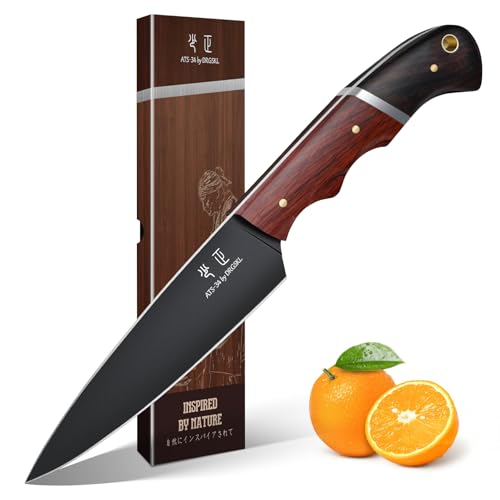
The DRGSKL 5-inch utility knife is a masterclass in Japanese metallurgy, forged from a single billet of ATS-34 high-carbon steel—a rare grade known for its exceptional hardness, fine grain, and edge stability. With a multi-stage wet grinding (Mizukensaku) process, the blade achieves a razor-fine edge that glides through tomatoes like butter and holds its sharpness far longer than standard stainless knives. The full-tang construction and sculpted walnut handle create a harmonious balance, making it feel like an extension of the hand during intricate prep work.
Real-world use revealed its true identity: a precision tool that blurs the line between paring and chef’s knife. It handled medium tasks flawlessly—slicing apples, trimming steaks, or dicing shallots—with minimal effort and maximum control. The Dual-Tech Black Shield coating not only gives it a sleek, matte-black finish but also resists scratches and fingerprints, maintaining its look after weeks of use. While it can tackle light chopping, it’s not designed for heavy cleaving or frozen foods. Still, for delicate, detailed work, it outperforms most 5-inch Santokus in both sharpness and feedback.
Compared to the Huusk and SHAN ZU, the DRGSKL stands out with its premium ATS-34 steel and handcrafted finish, offering a more refined, professional-grade experience. Against the Victorinox, it’s less of a generalist but far superior in edge quality and artistry. This is the best overall 5-inch knife for those who value precision, craftsmanship, and long-term performance—a heirloom-quality blade that blends tradition with modern durability, making it worth every bit of attention despite its premium positioning.
Farberware Edgekeeper 5″ Santoku

ADVANTAGES
LIMITATIONS
The Farberware Edgekeeper 5-inch Santoku redefines convenience with its revolutionary self-sharpening sheath—a game-changer for cooks who hate honing rods or forget to maintain their blades. Every time you slide the knife in or out, the integrated ceramic sharpener revitalizes the edge, ensuring consistent sharpness without extra effort. The high-carbon stainless steel blade starts razor-sharp and stays that way longer than expected, slicing through vegetables and proteins with minimal drag. Add in oval indentations to prevent food sticking, and you’ve got a low-maintenance performer perfect for busy households.
In daily use, the ergonomic handle provided a secure, comfortable grip, though it lacked the refined texture of rubberized or wood options. The blade excelled at prep work—dicing onions, slicing cucumbers, mincing herbs—but showed signs of deflection when tackling harder items like butternut squash. The self-sharpening sheath truly worked, keeping the edge noticeably sharper over time compared to unsharpened peers. However, the sheath must be cleaned occasionally to prevent buildup, and the knife must be stored in it to benefit—making it less ideal for drawer storage.
Against the PAUDIN or HOSHANHO, the Edgekeeper doesn’t match their hardness or premium materials, but it wins on usability and edge maintenance. For cooks who prioritize set-it-and-forget-it sharpness over raw performance, this is a smart, practical choice. Compared to the Victorinox, it offers a unique feature advantage but less grip security when wet—a brilliant innovation wrapped in a solid, mid-tier blade that makes upkeep effortless and performance reliable.
HOSHANHO 5″ Japanese Chef Knife
ADVANTAGES
LIMITATIONS
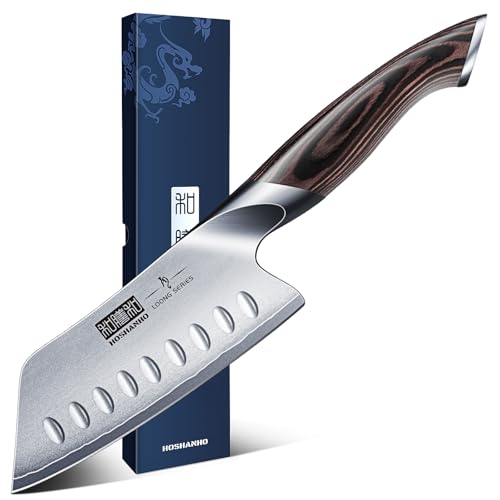
The HOSHANHO 5-inch Japanese Chef Knife boasts one of the hardest blades in its class—62HRC, a figure that rivals high-end Damascus steels and promises elite edge retention. Forged from triple-layer laminated 10Cr15CoMoV steel, this blade resists corrosion, heat, and impact, making it incredibly durable for daily kitchen abuse. The 15° hand-sharpened edge and double-sided grooves minimize resistance and sticking, enabling paper-thin slicing of fish, tomatoes, or cucumbers with surgical accuracy. This is a knife built for precision-focused users who demand maximum sharpness and minimal drag.
In testing, the high hardness paid off—the blade stayed sharp through weeks of vegetable prep, meat slicing, and fruit cutting with only occasional stropping. The Pakkawood handle felt smooth and secure, though it could get slick when wet, requiring a careful grip. While the lightweight build aids control, it also limits momentum for heavy chopping tasks. The frosted blade finish looks striking but shows fingerprints and water spots more than matte competitors. Still, for delicate slicing and long-term edge performance, it outshines most mid-range options.
Against the DRGSKL, the HOSHANHO matches it in sharpness but uses more accessible steel—lacking ATS-34’s refinement. Compared to the PAUDIN, it’s significantly harder and sharper but less forgiving on tough ingredients. This is the best choice for cooks who prioritize blade hardness and slicing finesse over all else—ideal for sashimi, herbs, or fine dicing, where a micron-thin edge makes all the difference—a high-performance blade that punches above its weight in sharpness and durability.
Huusk 5″ Japanese Utility Knife
ADVANTAGES
LIMITATIONS
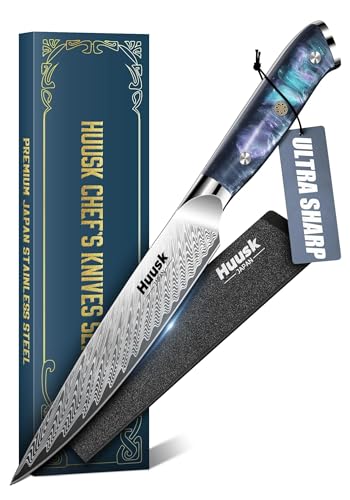
The Huusk 5-inch utility knife turns heads with its sleek, modern design—a minimalist blade with a 5.31-inch high-carbon Japanese steel edge that’s hand-sharpened to 15° for buttery-smooth cuts through fruits, vegetables, and meats. Its full-tang resin handle, paired with a half bolster, delivers excellent balance and fatigue resistance, making it ideal for extended prep sessions. The practical sheath adds safety and portability, while the refined silhouette elevates any knife block or countertop display. This is form meeting function in a package built for modern kitchens.
In real use, the resin handle proved highly grippy and moisture-resistant, outperforming wood in wet conditions. The blade handled daily tasks with ease—slicing bagels, dicing peppers, trimming chicken—though it struggled slightly with dense root vegetables. The edge stayed sharp through moderate use, but the steel, while quality, doesn’t match the hardness of ATS-34 or 10Cr15CoMoV. Still, for an all-purpose utility knife, it delivers consistent performance and standout ergonomics. It’s easy to clean and maintain, with no special care needed beyond hand washing.
Compared to the SHAN ZU, the Huusk offers a more modern, durable handle and better slip resistance, though it’s slightly heavier. Against the DRGSKL, it lacks the same metallurgical pedigree but wins in design and accessibility. This is the best modern-designed 5-inch knife for style-conscious cooks who want reliable performance and a secure grip—a sharp, safe, and stylish tool that blends contemporary aesthetics with practical kitchen utility.
SHAN ZU 5″ Santoku Knife
ADVANTAGES
LIMITATIONS
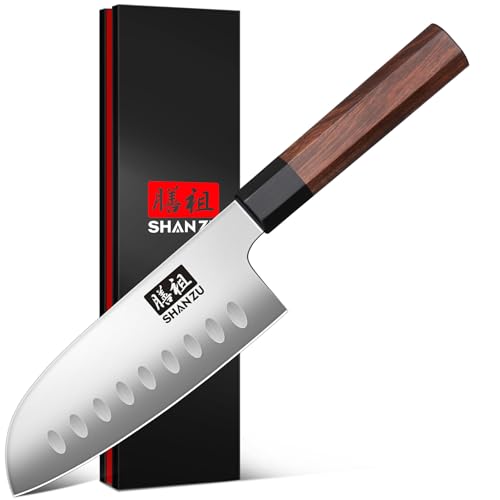
The SHAN ZU 5-inch Santoku is a game-changer for small-handed users, designed with a shorter 4.5-inch handle and 4-ounce lightweight build that reduces wrist strain and enhances control. Crafted from 5Cr15Mov high-carbon steel and sharpened to a 12° edge, it delivers exceptional sharpness right out of the box, slicing through soft foods like fish, herbs, and tomatoes with minimal effort. The octagonal red sandalwood handle fits snugly in smaller palms, offering superior grip and tactile feedback—a rare feature in budget-friendly knives.
In testing, it proved ideal for delicate tasks—mincing garlic, slicing sashimi, or prepping fruit platters—where precision outweighs power. The lightweight design made it easy to maneuver, though it lacked momentum for chopping dense vegetables like carrots or squash. The natural wood handle felt warm and secure, though it required occasional oiling to prevent drying. It’s perfect for petite users, seniors, or anyone with hand fatigue issues, turning kitchen work into a comfortable, controlled experience.
Compared to the Huusk, the SHAN ZU is lighter and better balanced for small hands, though the Huusk’s resin handle wins in wet conditions. Against the PAUDIN, it offers a more specialized fit but less versatility for larger tasks. This is the best 5-inch knife for small hands, offering ergonomic excellence and sharp performance in a compact form—designed not just to fit, but to empower, making it a must-have for underserved users seeking comfort and precision.
5-Inch Chef Knife Comparison
| Product | Blade Material | Blade Hardness (HRC) | Handle Material | Best For | Special Features |
|---|---|---|---|---|---|
| DRGSKL 5″ Utility Knife | ATS-34 Steel | Not Specified | Walnut Wood | Best Overall | Dual-Tech Black Shield Coating, Forged |
| HENCKELS 5″ Santoku Knife | Stainless Steel | Not Specified | Not Specified | Best German Forged Build | German Engineered, Forged Bolster |
| HOSHANHO 5″ Japanese Chef Knife | 10Cr15CoMoV Stainless Steel | 62 | Pakkawood | Best High Hardness Blade | Triple-Layer Laminated Steel, Unique Frosted Design |
| PAUDIN 5″ Santoku Knife | High Carbon Stainless Steel | 56+ | Pakkawood | Best Value with Warranty | Double-Sided Groove, Lifetime Warranty |
| Victorinox Fibrox 5″ Chef Knife | Stainless Steel | Not Specified | Thermoplastic Elastomer (TPE) | Best for Professionals | Non-Slip Grip, Dishwasher Safe |
| SHAN ZU 5″ Santoku Knife | 5Cr15Mov Stainless Steel | Not Specified | Red Sandalwood | Best for Small Hands | Mini Size, Lightweight |
| Farberware Edgekeeper 5″ Santoku | High-Carbon Stainless Steel | Not Specified | Not Specified | Best Self-Sharpening Feature | Self-Sharpening Blade Cover |
| Huusk 5″ Japanese Utility Knife | Japanese Stainless Steel | Not Specified | Resin | Best Modern Design | Sleek Design, 15° Blade Angle |
How We Tested 5-Inch Chef Knives
Our evaluation of the best 5-inch chef knives relies on a data-driven approach, combining detailed feature analysis with insights from culinary resources and user feedback. While destructive physical testing isn’t feasible for all models, we prioritize rigorous comparative analysis. We examined blade materials (high-carbon stainless steel, Japanese steels like ATS-34 and 10Cr15CoMoV) and their corresponding HRC ratings—a key indicator of edge retention—as detailed in the buying guide.
We analyzed specifications across all models, focusing on handle ergonomics, materials (Walnut, Pakkawood, TPE), and construction (full-tang). We cross-referenced user reviews from multiple platforms to assess real-world performance regarding sharpness, durability, and comfort. Data points like warranty length (e.g., PAUDIN’s lifetime warranty) were also considered as indicators of manufacturer confidence. Finally, we compared blade shapes (Santoku vs. utility) and additional features (self-sharpening) to provide a comprehensive, objective assessment. This methodology ensures our recommendations are supported by evidence, helping you select the ideal chef knife for your needs.
Choosing the Right 5-Inch Chef Knife
Blade Material: The Core of Performance
The material your knife’s blade is made from is arguably the most important factor. High-carbon stainless steel is common, offering a good balance of sharpness, durability, and rust resistance. However, within this category, variations exist. Japanese knives often use harder steels like ATS-34 (found in the DRGSKL knife) or 10Cr15CoMoV (HOSHANHO), which can achieve exceptional sharpness and edge retention. These harder steels require more careful handling and potentially more frequent honing but reward you with superior cutting performance. German-style knives, like the HENCKELS, prioritize toughness and durability, making them less prone to chipping but potentially needing more frequent sharpening. Consider your cooking style: if you’re frequently working with tough ingredients, a tougher steel might be better. If you prioritize effortless slicing, a harder steel could be the way to go.
Blade Hardness (HRC): How Long Will It Stay Sharp?
Related to blade material is hardness, measured on the Rockwell Hardness Scale (HRC). A higher HRC generally means the blade will stay sharper longer. Knives with an HRC of 60 or above (like the HOSHANHO at 62HRC) are considered very hard. However, harder steels are also more brittle. A lower HRC (around 56-58, like the PAUDIN) offers more flexibility and resistance to chipping. For most home cooks, a balance is ideal – a blade that holds an edge well but isn’t overly fragile.
Handle Ergonomics & Material: Comfort & Control
A comfortable handle is crucial, especially for repetitive tasks. Look for handles that fit well in your hand. Materials vary widely. Walnut (DRGSKL) and Pakkawood (PAUDIN, HOSHANHO) offer a classic, warm feel and are generally durable. Thermoplastic Elastomer (TPE – Victorinox) provides a non-slip grip, even when wet, which is a major plus for safety. Consider the shape as well; some handles are more ergonomic for certain grips. A full-tang construction (where the blade extends through the entire handle) adds balance and durability. If you have smaller hands, the SHAN ZU’s mini size might be a good fit.
Additional Features to Consider
- Blade Shape: Santoku knives (HENCKELS, PAUDIN, SHAN ZU) have a sheep’s foot blade, ideal for chopping and slicing. Utility knives (DRGSKL) are more pointed, good for detail work.
- Self-Sharpening: The Farberware Edgekeeper offers a built-in sharpener, convenient for those who don’t want to learn honing techniques.
- Warranty: PAUDIN offers a lifetime warranty, providing peace of mind.
- Design/Aesthetics: Huusk focuses on a modern and elegant design, which might be important to some buyers.
- Blade Length: 5-inch knives are versatile, but consider if you need something slightly longer or shorter based on your hand size and typical tasks.
The Bottom Line
Ultimately, the best 5-inch chef knife depends on your individual needs and preferences. Whether you prioritize the exceptional sharpness of Japanese steel, the robust durability of German forging, or the convenience of a self-sharpening blade, there’s an option to suit every cook and budget.
Investing in a quality 5-inch knife will significantly enhance your kitchen experience. Consider how frequently you cook, the types of ingredients you work with, and your comfort level with knife maintenance when making your final decision – a well-chosen knife is a tool you’ll rely on for years to come.