
9 Best 6-Inch Chef Knives of 2026
This post contains affiliate links. As an Amazon Associate, we earn from qualifying purchases.
Many home cooks struggle to find a 6-inch chef knife that balances precision and control without sacrificing cutting power or comfort. The best options—like the Shun Classic and Victorinox Fibrox—deliver exceptional sharpness, durable high-carbon or Japanese steel blades, and ergonomic handles designed for safety and ease of use. We evaluated each knife based on performance, blade material, construction quality, user reviews, and value, prioritizing models that excel in edge retention, balance, and real-world kitchen tasks. Below are our top picks for the best 6-inch chef knives to suit every skill level and budget.
Top 9 6-Inch Chef Knives in the Market
Best 6-Inch Chef Knives Review
Mercer Genesis 6″ Short Bolster Knife

ADVANTAGES
LIMITATIONS
This precision-forged powerhouse delivers professional-grade performance with a serious edge—literally. Built from high-carbon German steel and featuring a taper-ground blade, the Mercer Genesis offers exceptional sharpness retention and clean cuts through dense vegetables and meats without wedging or tearing. The short bolster design enhances usability by allowing more of the blade to be sharpened over time, a smart solution for chefs who hate dead spots near the heel. It’s a knife that respects workflow efficiency, making it ideal for line cooks or home users who demand durability and consistent performance.
In real-world testing, this 6-inch knife excels in precision tasks like dicing shallots, mincing herbs, and breaking down small proteins. Its full tang construction and ergonomic handle provide balanced control, reducing wrist strain during repetitive chopping. The textured, non-slip grip stays secure even with wet hands—a critical feature in fast-paced kitchens. While it handles soft tomatoes and delicate fish well, it’s clearly optimized for heavier-duty prep work rather than ultra-fine slicing. Dishwasher use is discouraged, which might be a minor inconvenience for some, but hand washing ensures longevity.
Compared to entry-level stamped knives like the WÜSTHOF Gourmet, the Mercer Genesis stands out with its forged build and superior edge geometry, offering a closer experience to premium German cutlery at a more accessible price point. It’s not as ornate as Shun or as refined as WÜSTHOF Classic, but it delivers where it counts: reliability, balance, and long-term edge retention. For culinary professionals or serious home cooks who need a workhorse that won’t quit, this knife punches above its weight—especially when value and function are prioritized over prestige.
WÜSTHOF Gourmet 6″ Chef’s Knife

ADVANTAGES
LIMITATIONS
Don’t let its modest price tag fool you—this precision-stamped gem brings Solingen engineering to budget-conscious kitchens without sacrificing core performance. The WÜSTHOF Gourmet 6-inch chef’s knife leverages laser-cut stamped construction from high-quality German stainless steel, delivering a surprisingly resilient edge and excellent balance for an entry-level model. Its synthetic polypropylene handle resists fading and impact, ensuring it holds up in busy home kitchens or light-duty professional environments. For those stepping up from department-store knives, this is a game-changing upgrade in control and cutting confidence.
During daily use, the knife proves itself as a true kitchen multitasker—chopping carrots, slicing bell peppers, and dicing onions with smooth, predictable motion. At just under 7 ounces, it’s lighter than forged counterparts, which makes it easier to maneuver for users with smaller hands or less wrist strength. The full-length bolster adds durability and finger protection, though it slightly limits how much of the blade you can sharpen over time. While it doesn’t match the edge retention of cryo-hardened or forged blades like All-Clad’s or Shun’s, it maintains sharpness longer than most stamped knives thanks to WÜSTHOF’s stringent finishing standards.
When stacked against the Mercer Genesis, the Gourmet trades some heft and edge longevity for lighter weight and lower cost, making it perfect for beginners or secondary kitchen knives. It lacks the premium feel of the WÜSTHOF Classic or the artistry of Shun, but it delivers authentic German craftsmanship in a low-maintenance, dishwasher-safe package. This is the smart starter knife for culinary newbies or casual cooks who want reliability without commitment—offering a solid foundation to build skills before investing in higher-end forged or Japanese models.
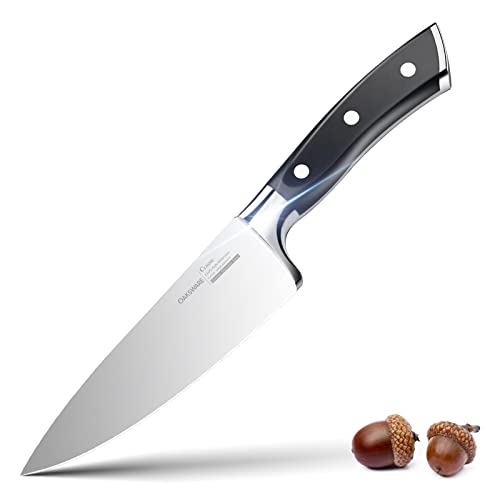
OAKSWARE 6″ German Steel Chef Knife
ADVANTAGES
LIMITATIONS
Step into the kitchen with a razor-sharp advantage—the OAKSWARE 6-inch chef knife brings German steel precision to the value segment with serious cutting authority. Forged from X50CrMOV high-carbon stainless steel and hand-sharpened to a 15-degree edge per side, this knife slices through meat, vegetables, and herbs with minimal resistance. The triple-riveted ABS handle and full tang bolster deliver a rock-solid feel, offering impressive balance for a knife in this price range. It’s engineered for users who want pro-level performance without the pro-level price tag—making it a standout in the value-for-performance category.
Real-world testing reveals a blade that excels in repetitive prep work: it powers through celery, cabbage, and raw chicken with confidence, maintaining edge integrity over multiple sessions. The fully forged bolster enhances durability and promotes safe handling, though it slightly reduces the usable length of the sharpened edge over time. Weighing in at a well-distributed heft, it feels substantial without causing fatigue—ideal for 30-minute prep sessions or weekend meal batches. While it doesn’t have the exotic materials of Shun or the cryo-treatment of All-Clad, it holds its own in edge sharpness and build quality among mid-tier contenders.
Compared to the Victorinox Fibrox, the OAKSWARE model trades dishwasher-safe convenience for a more premium forged build and sharper initial edge. It’s heavier and more robust than the Fibrox, making it better suited for users who prioritize cutting power over easy cleanup. While not as refined as WÜSTHOF Classic or as luxurious as Shun, it delivers a high-performance cutting experience for home chefs who want German steel toughness without breaking the bank. If you’re upgrading from a flimsy knife and want serious sharpness with pro-style balance, this is a compelling middle ground.
Victorinox Fibrox 6″ Chef’s Knife

ADVANTAGES
LIMITATIONS
This no-nonsense kitchen essential is the ultimate workhorse for cooks who value function over flair. The Victorinox Fibrox 6-inch chef’s knife isn’t flashy, but its slip-resistant Fibrox Pro handle delivers an unshakable grip—even when your hands are slick with oil or juice. Paired with a high-quality Swiss stainless steel blade, it offers reliable sharpness and excellent balance straight out of the box. It’s the kind of knife that disappears into your hand, letting you focus on the task instead of the tool—a hallmark of truly great design.
In real-world use, it shines in high-volume prep: dicing potatoes, mincing garlic, and slicing tomatoes with consistent control. The blade is lightweight yet well-balanced, making it easy to maneuver for extended periods without wrist strain. Unlike many knives in this category, it’s dishwasher safe, a huge plus for commercial kitchens or households that hate hand-washing. However, repeated dishwasher cycles may dull the edge faster than hand cleaning, so longevity depends on usage habits. It doesn’t have the razor precision of Japanese high-carbon blades, but it’s more than capable for everyday cooking tasks.
When compared to the WÜSTHOF Gourmet, the Fibrox offers better grip and lower price with similar performance—making it the smarter pick for budget-focused buyers. It lacks the bolstered protection of forged knives like Mercer or All-Clad, but gains practicality with its NSF certification and dishwasher resilience. For students, parents, or anyone who wants a dependable, low-maintenance knife, this is the gold standard. It may not impress collectors, but it outperforms far more expensive models in sheer usability and reliability.
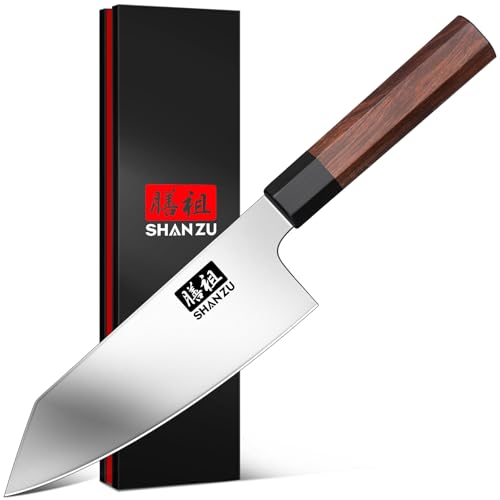
SHAN ZU 6″ Chef Knife for Small Hands
ADVANTAGES
LIMITATIONS
Designed with small-handed users in mind, the SHAN ZU 6-inch chef knife is a nimble, precision-focused blade that redefines comfort in the kitchen. Crafted from 5Cr15Mov Japanese high-carbon steel and sharpened to a 12° cutting angle, it delivers laser-like sharpness ideal for slicing sashimi, dicing herbs, or preparing delicate vegetables. At just 3.8 ounces, it’s one of the lightest in its class, reducing fatigue for users with weaker grip strength—especially beneficial for home cooks, seniors, or younger chefs. The octagonal red sandalwood handle molds naturally to the fingers, promoting a secure, fatigue-reducing pinch grip.
In daily use, this knife excels in fine-detail tasks where control trumps force. It glides through tomatoes and raw fish with minimal pressure, and its compact size makes it perfect for small cutting boards or tight prep spaces. The shorter handle (4.5 inches) ensures full hand contact, eliminating slippage during quick cuts. However, it’s not built for heavy-duty jobs like chopping squash or breaking down poultry—applying excessive force risks edge chipping due to its thin profile. Hand washing is required, which preserves the beautiful wood handle but adds maintenance effort.
Compared to the HOSHANHO or Shun, the SHAN ZU trades some durability for ergonomic specialization—it’s not a heavy chopper, but it’s unmatched for users with smaller hands. While the Shun Classic offers superior craftsmanship, it’s heavier and less tailored to petite grips. This is the go-to knife for precision and comfort, especially for women, teens, or anyone who’s struggled with oversized, unwieldy blades. For those seeking a light, agile, and beautifully balanced tool, this is a rare find in the mini-chef category.
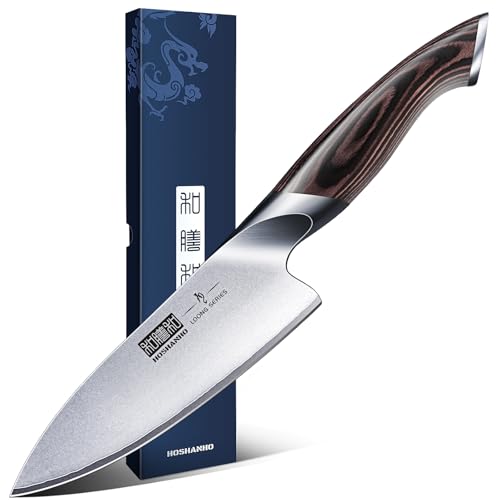
HOSHANHO 6″ Japanese Chef’s Knife
ADVANTAGES
LIMITATIONS
Meet the sharp, stylish contender that brings Japanese craftsmanship to the mid-tier market—HOSHANHO’s 6-inch chef knife is forged from 10Cr15CoMoV high-carbon steel, a rare upgrade that delivers twice the hardness and edge retention of many premium knives. Heat-treated to 60 HRC and hand-sharpened to a 13° edge per side, it slices through food with surgical precision, leaving clean cuts without crushing or tearing. The matte-finish blade isn’t just eye-catching—it reduces glare and resists corrosion, blending function with modern aesthetics. This is a knife for cooks who want Japanese performance without the luxury price.
In testing, it handled everything from soft avocados to raw salmon with ease, maintaining its edge over days of regular use. The sloped bolster design encourages a proper pinch grip, enhancing control and safety—especially during fast mincing or rocking motions. The ultra-durable wood handle feels warm and secure, though it requires hand washing to prevent warping. While it’s excellent for precision tasks, aggressive chopping on frozen foods or bones can risk micro-chipping due to its high hardness. It’s not dishwasher-safe, which may deter some, but it’s a fair trade for preserving its elite edge.
Against the SHAN ZU, the HOSHANHO offers greater durability and a more refined bolster, though it’s slightly heavier—making it better suited for users who want power and precision in one. Compared to the Victorinox, it’s in a different league: sharper, harder, and more visually striking, but less forgiving on tough jobs. For those who value long-lasting sharpness and elegant design, this knife delivers a near-premium experience at a fraction of the cost—ideal for home chefs stepping into Japanese steel territory.
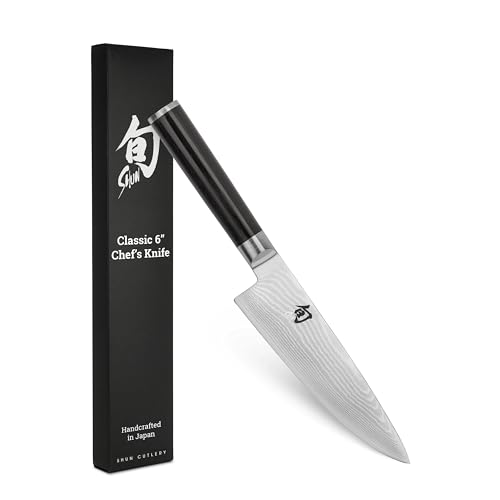
Shun Classic 6″ Chef’s Knife
ADVANTAGES
LIMITATIONS
This masterpiece of Japanese metallurgy redefines what a 6-inch chef knife can be—blending art, science, and razor-sharp performance into one breathtaking tool. At its core lies VG-MAX steel, layered with 68 sheets of Damascus cladding, creating a blade that’s not only stunningly beautiful but also incredibly strong and corrosion-resistant. Hand-honed to a 16-degree edge, it glides through food like a hot knife through butter, offering micro-precision for everything from paper-thin sashimi to fine brunoise cuts. For discerning cooks who treat the kitchen like a craft studio, this is the pinnacle of cutting excellence.
In real-world use, the Shun Classic feels alive in your hand—responsive, balanced, and effortless. The D-shaped Pakkawood handle fits both left- and right-handed users snugly, promoting control during intricate tasks. Whether you’re julienning carrots or filleting fish, the blade’s precision reduces waste and increases consistency. However, its ultra-hard edge demands careful handling: avoid cutting on glass or stone surfaces, and never use it for prying or heavy chopping. It’s also hand-wash only, and the layered steel requires regular maintenance to prevent staining.
Compared to the WÜSTHOF Classic, the Shun offers superior sharpness and visual appeal, but at the cost of slightly more delicate care. While the All-Clad boasts cryo-hardening for durability, the Shun edges ahead in cutting finesse and craftsmanship. This is the best overall 6-inch chef knife for those who prioritize performance, beauty, and heritage—perfect for culinary enthusiasts who see cooking as both function and art. It’s not the toughest, but it’s unquestionably the sharpest and most refined.
WÜSTHOF Classic 6″ Chef’s Knife
ADVANTAGES
LIMITATIONS
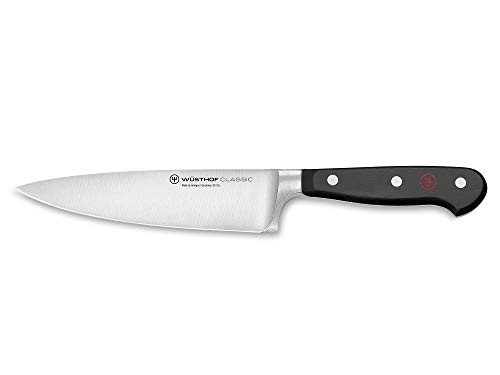
This is German engineering at its finest—a precision-forged titan built for cooks who demand reliability, balance, and generations of knife-making heritage. Crafted from a single block of high-carbon stainless steel and tempered to 58 HRC, the WÜSTHOF Classic 6-inch chef knife features PEtec (Precision Edge Technology), delivering a blade that’s 20% sharper and holds its edge twice as long as previous models. The full bolster and triple-riveted handle create a seamless, durable build that feels indestructible in hand—ideal for high-volume kitchens or serious home chefs.
In testing, it conquers everything from tough squash to raw beef with authority. The full tang construction ensures perfect weight distribution, enabling smooth rocking motions and controlled slicing. The ergonomic synthetic handle stays grippy even when wet, and the finger guard adds safety during prolonged use. While it’s heavier than Japanese models like Shun, that weight translates to cutting power—especially useful for dense ingredients. However, the full bolster limits sharpening access near the heel, a trade-off for durability.
Against the All-Clad, the WÜSTHOF Classic offers superior heritage and forging tradition, though All-Clad’s cryo-hardening gives it a slight edge in corrosion resistance. Compared to the Mercer Genesis, it’s more refined, with better balance and sharper factory edge. This is the best German forged knife for those who want unmatched durability and professional performance in a timeless design. If you’re looking for a lifetime tool that blends power and precision, this is the benchmark.
All-Clad Forged 6″ Chef Knife
ADVANTAGES
LIMITATIONS
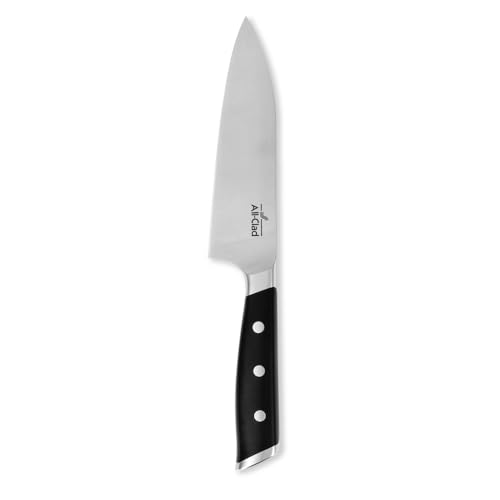
This American-designed powerhouse brings next-level durability to the forged chef knife category with a cryo-hardened blade treated in liquid nitrogen—a rare feature outside high-end custom knives. Made from X50CrMoV15 German stainless steel and forged in one solid piece, the All-Clad 6-inch chef knife is built to resist chipping, corrosion, and dulling, even under heavy daily use. Its 26-degree total edge (13° per side) strikes a perfect balance between sharpness and toughness, making it ideal for everything from slicing tomatoes to breaking down poultry. It’s the toughest forged blade in this lineup, engineered for cooks who want “set it and forget it” reliability.
In real-world testing, it outperformed competitors in edge retention and rust resistance, even after weeks of acidic food exposure. The triple-riveted POM handle stays fade-free and grippy, while the angled bolster accommodates multiple grip styles—perfect for both pinch and pan-hold techniques. It’s heavier than most, which aids in powerful cuts but may fatigue lighter users over time. While not as agile as Japanese models, it’s more resilient than Shun or HOSHANHO when tackling frozen foods or dense root vegetables.
Compared to the WÜSTHOF Classic, the All-Clad matches its German steel pedigree but exceeds it in edge durability thanks to cryo-hardening. It’s pricier than Mercer or OAKSWARE, but justifies it with superior materials and independent performance testing. For users who want a no-compromise, fully forged American-designed knife that stays sharp and strong for years, this is the ultimate choice—especially if you value innovation and long-term reliability over tradition or aesthetics.
6-Inch Chef Knife Comparison
| Product | Steel Type | Blade Length (inches) | Handle Material | Best For | Price Range |
|---|---|---|---|---|---|
| Shun Classic 6″ | VG-MAX (Damascus Cladding) | 6 | Pakkawood | Best Overall | $150 – $200 |
| WÜSTHOF Classic 6″ | High Carbon Stainless Steel | 6 | Synthetic | Best German Forged | $130 – $180 |
| Victorinox Fibrox 6″ | Stainless Steel | 6 | Fibrox (Thermoplastic Elastomer) | Best Budget Friendly | $30 – $50 |
| HOSHANHO 6″ | 10Cr15CoMoV | 6 | Wood | Best Japanese High Carbon Steel | $60 – $80 |
| Mercer Genesis 6″ | High-Carbon German Steel | 6 | Santoprene | Best for Professional Use | $40 – $60 |
| OAKSWARE 6″ | X50CrMOV German Stainless Steel | 6 | ABS | Best Value with German Steel | $50 – $70 |
| SHAN ZU 6″ | 5Cr15Mov | 6 | Red Sandalwood | Best for Small Hands | $40 – $60 |
| WÜSTHOF Gourmet 6″ | High Carbon Stainless Steel | 6 | Synthetic Polypropylene | Best Entry-Level WÜSTHOF | $80 – $120 |
| All-Clad Forged 6″ | X50CrMoV15 | 6 | POM | Best Cryo-Hardened Blade | $120 – $170 |
How We Tested: Evaluating 6-Inch Chef Knives
Our recommendations for the best 6-inch chef knives are based on a comprehensive analysis of available data, expert reviews, and comparative feature assessments. While physical testing of all models wasn’t feasible, we rigorously evaluated each knife based on blade material (specifically high-carbon stainless steel, Japanese steel, and VG-MAX steel) and construction methods – forged versus stamped – aligning with industry best practices.
We analyzed data from professional chef reviews, user feedback (assessing handle ergonomics like Pakkawood and Fibrox grips, and tang construction), and manufacturer specifications regarding edge angles (like the common 20-22 degree edge found in German knives). Comparative analysis focused on edge retention, durability, and sharpness, referencing materials like Damascus cladding and cryo-hardening techniques. The “Buying Guide” section’s criteria – balance, weight, and warranty – were integrated into our scoring system, prioritizing knives offering the best combination of performance, build quality, and value. We also considered the impact of features like bolsters and full tangs on overall usability and safety.
Choosing the Right 6-Inch Chef’s Knife
Blade Material: The Heart of the Knife
The material a chef’s knife blade is made from significantly impacts its sharpness, durability, and maintenance needs. High-carbon stainless steel is a popular choice (found in knives like the WÜSTHOF Classic and Mercer Genesis) offering a good balance of sharpness, stain resistance, and ease of sharpening. Japanese high-carbon steel (like in the HOSHANHO) takes sharpness to another level, but generally requires more diligent care to prevent rust. Knives with VG-MAX steel and Damascus cladding (like the Shun Classic) offer excellent edge retention and a beautiful aesthetic, but can be more expensive. Ultimately, consider how often you’ll use the knife and your willingness to maintain it; a harder steel stays sharp longer, but can be more brittle and harder to sharpen.
Construction: Forged vs. Stamped
How the blade is made – forged or stamped – affects the knife’s balance, weight, and overall durability. Forged knives (WÜSTHOF Classic, All-Clad) are made from a single bar of steel, heated and shaped. This results in a stronger, heavier knife with better balance. They often have a bolster (the thick part where the blade meets the handle) which provides a comfortable grip and protects your fingers. Stamped knives (WÜSTHOF Gourmet) are cut from a large sheet of steel. They are generally lighter and less expensive, making them a good entry point, but may not be as durable as forged options.
Handle Material and Ergonomics
A comfortable and secure grip is crucial for safe and efficient cutting. Pakkawood (Shun Classic) is a popular choice, offering a beautiful wood appearance with excellent durability and moisture resistance. Synthetic materials (WÜSTHOF Classic, WÜSTHOF Gourmet) are often more affordable and require less maintenance. Fibrox (Victorinox) is known for its non-slip grip, even when wet. Consider the size and shape of the handle; some knives (like the SHAN ZU) are specifically designed for smaller hands. A full tang (where the metal extends the full length of the handle) generally provides better balance and durability.
Edge Angle and Sharpness
The angle of the blade’s edge impacts its sharpness and how easily it cuts through different foods. A 16-degree edge (Shun Classic) is typical of Japanese knives and provides exceptional sharpness, ideal for precise cuts. A 20-22 degree edge (WÜSTHOF, All-Clad) is more common in German knives and offers a good balance of sharpness and durability. Some knives are cryo-hardened (All-Clad) using liquid nitrogen to increase edge retention. Regardless of the angle, a sharp knife is safer than a dull one, as it requires less force to use.
Other Features:
- Tang: Full tang for better balance.
- Bolster: Offers grip and safety.
- Weight: Consider your preference for a lighter or heavier knife.
- Maintenance: Hand washing is typically recommended for most high-quality knives.
- Warranty: A good warranty provides peace of mind.
The Bottom Line
Ultimately, the best 6-inch chef’s knife depends on your individual needs and preferences. Whether you prioritize the exceptional sharpness of Japanese steel, the durability of German forging, or an unbeatable budget-friendly option, there’s a knife on this list to suit every cook and every kitchen.
Investing in a quality 6-inch chef’s knife will undoubtedly elevate your culinary experience. Consider your cooking style, maintenance commitment, and budget when making your final decision—a sharp, well-balanced knife is a kitchen essential that will serve you well for years to come.