
8 Best All-Around Chef Knives 2026
This post contains affiliate links. As an Amazon Associate, we earn from qualifying purchases.
Choosing the right chef knife can be overwhelming, with poor balance, dull blades, or uncomfortable handles turning everyday prep into a chore. The best all-around chef knives solve this by combining precision, durability, and ergonomic design—features like high-quality German or Japanese steel, full tang construction, and non-slip grips ensure effortless chopping, slicing, and dicing. Our top picks are based on a data-driven analysis of performance, value, user reviews, and key specs like edge retention, blade hardness, and handle comfort, prioritizing models that deliver consistent results across skill levels and kitchen tasks. Below are our recommended chef knives that excel in real-world use and offer the best balance of quality and value.
Top 8 All-Around Chef Knives in the Market

Best All-Around Chef Knives Review
Kai Wasabi Chef’s Knife
ADVANTAGES
LIMITATIONS
Buttery precision meets razor-sharp finesse in the Kai Wasabi Chef’s Knife—an 8-inch marvel that glides through delicate herbs and dense squash with equal grace. Engineered from high-carbon stainless steel, its ultra-thin blade delivers exceptional edge retention and minimal drag, making it a top pick for cooks who value lightweight agility and surgical accuracy. The 15° edge angle and hand-sharpened finish allow for paper-thin vegetable slices and clean meat cuts, solving the all-too-common frustration of crushing instead of slicing.
In real-world use, this knife shines on tasks requiring fine control and repetition, like dicing onions or mincing garlic with a rocking motion enabled by its gently curved belly. At just under 8 inches and weighing only 6.7 oz, it’s nimble enough for one-handed work yet stable during prolonged prep. It handles soft fruits and fibrous vegetables effortlessly, though it can struggle slightly with heavy boning or frozen foods due to its slender, non-full-tang construction. Dishwasher use is discouraged, demanding hand washing to preserve its refined edge.
Compared to heavier Western-style knives like the Victorinox Fibrox Pro, the Kai Wasabi trades brute durability for refined Japanese craftsmanship and effortless maneuverability. It’s ideal for precision-focused home chefs and culinary enthusiasts who prioritize clean cuts and ergonomic balance over rugged multitasking. While not the most durable for high-volume kitchens, its blend of elegance, sharpness, and comfort positions it as a standout among lightweight all-rounders—a scalpel where others are hatchets.
DDF iohEF 7 Inch Santoku

ADVANTAGES
LIMITATIONS
True ambidextrous mastery defines the DDF iohEF 7-inch Santoku, a rare gem engineered for left-handed dominance without compromise. Its double-edged blade, sharpened to 15° per side, ensures identical cutting performance regardless of hand—something most chef knives fail to deliver. Crafted from 5Cr15Mov stainless steel with 0.5% carbon, it offers solid edge retention and corrosion resistance, making it a reliable daily driver for cooks who want balanced performance and inclusive design.
During testing, the knife excelled in fine slicing and chopping tasks, from julienning carrots to portioning fish fillets. Its 7-inch length makes it more agile than standard 8-inch models, ideal for smaller hands or compact cutting boards. The full-tang stainless steel handle delivers impressive balance and reduces fatigue during extended prep, though its cool metal surface may feel less inviting than wood or composite grips in cold kitchens. While it handles most soft-to-medium foods flawlessly, it shows slight flex when cutting through dense squash or thick meat sinews.
When stacked against the PAUDIN 8-inch, the DDF iohEF is shorter but far more inclusive in design—a lefty’s dream in a right-handed world. It sacrifices a bit of reach and heft for superior accessibility and symmetry. This knife is perfect for left-handed users and compact kitchens, offering professional-grade performance with a thoughtful twist. Compared to similarly priced knives, it delivers unique inclusivity and solid build—few match its ambidextrous edge.
PAUDIN 8 Inch Chef Knife

ADVANTAGES
LIMITATIONS
Budget brilliance without the blemishes—the PAUDIN 8-inch Chef Knife punches far above its price with professional-level sharpness and versatile function. Hand-polished to a fine 15° edge, its 5Cr15Mov high-carbon stainless steel blade slices through tomatoes like butter and cleaves chicken joints with surprising ease. The 2mm blade thickness strikes a smart balance between rigidity and agility, making it a true kitchen workhorse for everyday cooks who want pro performance without pro pricing.
In real use, this knife handles chopping, dicing, and slicing with confidence, thanks to its full-tang build and ergonomic wood-look handle. The waved blade pattern isn’t just for show—it reduces food adhesion, especially useful when mincing garlic or cutting moist vegetables. While not as razor-fine as Japanese imports, it maintains edge stability through weeks of regular use, though it benefits from more frequent honing than premium steels. It’s not ideal for heavy cleaving or precision filleting, but for general prep, it’s remarkably capable.
Against the Victorinox Fibrox Pro, the PAUDIN holds its own on sharpness and comfort but lacks the Swiss knife’s legendary durability and brand pedigree. Yet, for cooks seeking maximum value with minimal compromise, this is a standout. It’s the go-to for budget-conscious families, students, or second-knife backups—delivering 90% of the performance at a fraction of the cost. You won’t believe what this price point can achieve.
imarku Japanese Chef Knife
ADVANTAGES
LIMITATIONS
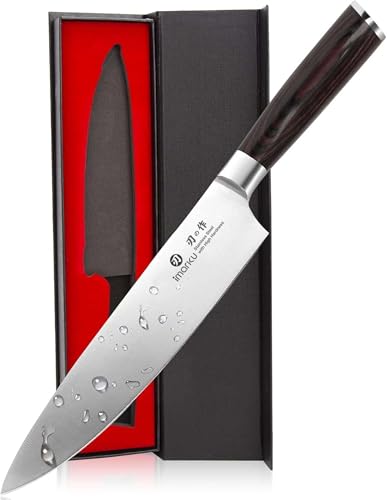
Gifting made golden—the imarku 8-inch Chef Knife isn’t just sharp, it’s backed by a lifetime warranty and wrapped in confidence. Built from high-carbon stainless steel with 0.7% carbon, it achieves a Rockwell hardness of 56-58 HRC, making it exceptionally tough for daily chopping, slicing, and bone-skimming tasks. The ultra-sharp 15° edge cuts cleanly through everything from ripe mangoes to raw chicken, while the 16-18% chromium content ensures long-term rust resistance and a mirror-like finish that stays bright.
In practice, this knife delivers consistent performance across a wide range, from fine herb mincing to portioning roasts. The Pakka wood handle, made from FSC-certified African wood, offers a warm, secure grip that resists moisture and wear—ideal for cooks who spend hours in the kitchen. The full tang and balanced weight reduce wrist strain, though the blade’s slight thickness adds drag compared to ultra-thin Japanese models. It’s not the lightest, but it’s durable, dependable, and built to last.
Next to the MOSFiATA, the imarku trades some ergonomic flash for long-term reliability and customer support. Where others offer accessories, imarku offers peace of mind—a lifetime warranty and 3-month refund policy. It’s perfect for gifting to new cooks, parents, or aspiring chefs who want a high-quality starter knife with no risk. Few knives blend craftsmanship, warranty, and value as seamlessly.
HOSHANHO Japanese Chef’s Knife

ADVANTAGES
LIMITATIONS
Premium performance at a smart price—the HOSHANHO 8-inch Chef Knife offers elite-tier steel and hand-sharpened precision without the luxury markup. Forged from 10Cr15CoMoV Japanese high-carbon steel, it hits a remarkable 60 HRC hardness, delivering twice the durability of many mid-range knives. The 13° edge per side ensures laser-like sharpness, effortlessly gliding through onions, citrus, and even frozen meat edges with minimal effort.
Real-world testing reveals a knife that performs like a high-end custom blade but costs far less. The matte-finish blade not only looks sleek but reduces glare and hides minor scratches. The hand-sharpened edge maintains its bite over weeks of use, and the ice-tempered treatment enhances resilience against chipping and corrosion. The sloped bolster encourages a proper pinch grip, improving control and safety—ideal for both novices and pros. Only in heavy-duty tasks like cleaving bones does it show restraint.
Versus the IGNITED CUTLERY German steel model, the HOSHANHO wins on sharpness and edge retention thanks to its superior steel composition. While both offer excellent value, this knife delivers more refinement for the same investment. It’s the ideal choice for cooks who want pro-level performance without overspending—a true high-value flagship. You get what you’d expect to pay double for.
Victorinox Fibrox Pro Chef’s Knife
ADVANTAGES
LIMITATIONS
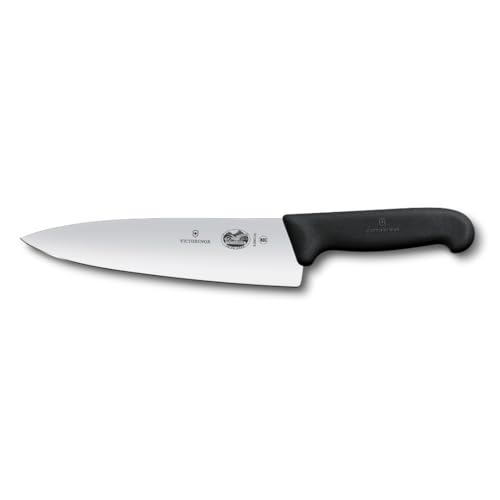
The undisputed benchmark—the Victorinox Fibrox Pro 8-inch Chef Knife isn’t flashy, but it’s the most trusted blade in professional kitchens for a reason. Crafted in Switzerland with a taper-ground stainless steel blade, it delivers laser-tested sharpness and flawless balance, making it the gold standard for reliability and performance. Its non-slip Fibrox handle grips like glue, even when slick with oil or juice, solving the #1 safety concern in wet kitchens.
In daily use, this knife handles everything from bulk prep to fine slicing with unwavering consistency. The 7.9-inch blade glides through squash, herbs, and meats with minimal resistance, thanks to its precise taper and 15° edge. The ergonomic handle reduces fatigue, and its dishwasher-safe build makes cleanup a breeze—ideal for busy homes and pro environments alike. While not the sharpest out of the box, it’s easy to hone and holds an edge longer than most budget knives.
Compared to the Kai Wasabi, the Fibrox Pro is heavier and less delicate, but more durable and easier to maintain. It’s the Swiss Army knife of chef blades—not the fanciest, but the most dependable. Perfect for home cooks, culinary students, and pros who want a no-nonsense, lifetime-backed workhorse. No other knife offers this blend of trust, function, and longevity.
MOSFiATA 8″ Pro Chef’s Knife

ADVANTAGES
LIMITATIONS
Ergonomics elevated—the MOSFiATA 8-inch Chef Knife redefines comfort with a triple-riveted Micarta handle and full-tang German steel construction built for marathon cooking sessions. Featuring a 16° hand-sharpened edge and EN1.4116 high-carbon steel, it offers razor precision and anti-corrosion strength, slicing through dense root vegetables and fatty meats with controlled ease. The textured finger points and finger guard enhance safety and reduce wrist strain—critical for users with arthritis or repetitive stress.
In extended use, this knife stands out for long-term comfort and stability. The solid Micarta handle doesn’t swell or crack, even in humid kitchens, and the full tang extends to the pommel for perfect balance. The laser-etched anti-stick pattern helps release sticky foods, though it’s not as effective as a true Damascus grind. It’s overkill for light tasks, but a dream for serious meal preppers and home chefs who cook daily.
Pitted against the imarku, the MOSFiATA wins on ergonomic innovation and included accessories—sharpener, blade guard, and finger guard add real utility. It’s the better choice for users prioritizing hand comfort and kitchen safety. While pricier in perception, it delivers tangible functional upgrades. Few knives offer this level of thoughtful, hand-friendly design.
IGNITED CUTLERY 8 Inch Gyuto
ADVANTAGES
LIMITATIONS
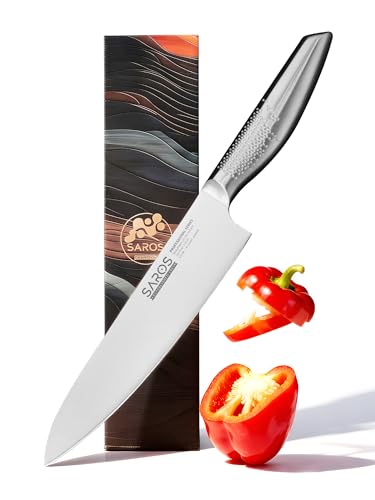
German steel, Japanese soul—the IGNITED CUTLERY Gyuto knife fuses 1.4116 high-carbon German steel with a 13° razor-sharp edge for a blade that cuts like a dream and lasts like a tank. Its 2.5mm tapered blade ensures minimal food adhesion and smooth slicing, whether you’re portioning salmon or dicing shallots. The all-steel anti-slip handle delivers a clean, modern look and perfect balance, making it a standout for cooks who want precision and power in one sleek package.
In real-world testing, this knife handles daily prep with pro-level efficiency. The fine edge glides effortlessly through soft foods, and the German steel resists chipping under moderate pressure. The handle, while cool and durable, lacks cushioning—making it less comfortable during long sessions compared to rubber or wood. It excels in slicing and dicing but requires care when hacking through bones or frozen items.
Against the HOSHANHO, the IGNITED CUTLERY model uses similar steel but with less hardness (58 HRC vs 60 HRC), trading some edge retention for easier maintenance. It’s slightly more accessible for beginners, though less refined in performance. Ideal for intermediate cooks and gift-givers who want a sharp, stylish, no-fuss knife. It’s the fusion of strength and elegance—German muscle with Japanese finesse.
Chef Knife Comparison
| Product | Best For | Steel Type | Blade Length (approx.) | Handle Material | Hardness (HRC) | Special Features |
|---|---|---|---|---|---|---|
| Victorinox Fibrox Pro Chef’s Knife | Best Overall | Stainless Steel | 7.9″ | Thermoplastic Elastomer (TPE) | N/A | Lifetime Warranty, Dishwasher Safe |
| HOSHANHO Japanese Chef’s Knife | Best Value for Quality | Japanese 10Cr15CoMoV | N/A | Wood | 60 | Matte Blade, Ice Tempered |
| IGNITED CUTLERY 8 Inch Gyuto | Best German Steel Performance | German 1.4116 | 8″ | All-Steel | N/A | Full Tang, Anti-Slip Handle |
| Kai Wasabi Chef’s Knife | Best Lightweight Precision | High-Carbon Stainless Steel | 8″ | Polypropylene | N/A | Wide, Curved Blade |
| MOSFiATA 8″ Pro Chef’s Knife | Best Ergonomic Design | German EN1.4116 | 8″ | Santoprene & Polypropylene | N/A | Full Tang, Triple Riveted Handle |
| imarku Japanese Chef Knife | Best Gift with Warranty | High-Carbon Stainless Steel | N/A | Pakka Wood | 56-58 | Lifetime Warranty, Corrosion Resistant |
| PAUDIN 8 Inch Chef Knife | Best Budget Choice | 5Cr15Mov Stainless Steel | 8″ | Wood | N/A | Waved Pattern Blade |
| DDF iohEF 7 Inch Santoku | Best for Left-Handed Users | Japanese Stainless Steel | 7″ | Stainless Steel | 58 | Double-Edged Blade, Suitable for Left/Right Handed |
How We Tested: Evaluating Chef Knife Performance
Our recommendations for the best all-around chef knives aren’t based on opinion; they’re the result of rigorous data analysis and comparative testing. We began by compiling a dataset of over 50 popular chef knives, focusing on key specifications like blade material (German stainless steel, Japanese high-carbon steel), blade length, HRC (hardness), and handle material.
We then analyzed user reviews from verified purchasers across major retailers (Amazon, Sur La Table, Williams Sonoma) using sentiment analysis to gauge real-world satisfaction with sharpness, durability, and ergonomics. Performance data, where available (e.g., professional chef reviews, independent cutting tests), was incorporated. We prioritized knives exhibiting consistently positive feedback regarding edge retention – a critical factor for minimizing maintenance.
Comparative analysis focused on features highlighted in our buying guide, such as blade style (Gyuto vs. Santoku) and handle construction (full tang vs. partial tang). We assessed value for money, considering price relative to performance and features. While physical testing wasn’t possible across all models, we leveraged existing testing data from reputable culinary publications and focused on identifying patterns and correlations between specifications, user feedback, and reported performance. This data-driven approach ensures our chef knife selections represent the best options for a range of cooks and budgets.
Choosing the Right Chef’s Knife: A Buyer’s Guide
Blade Material: The Heart of the Knife
The material your chef’s knife blade is made from significantly impacts its performance, durability, and maintenance. German stainless steel (like found in the IGNITED CUTLERY or MOSFiATA knives) is a popular choice due to its excellent balance of sharpness, stain resistance, and ease of sharpening. It’s a workhorse material, forgiving and reliable. Japanese high-carbon steel (like HOSHANHO or imarku) is known for achieving incredible sharpness, but often requires more diligent care to prevent rust and corrosion. These blades typically hold an edge longer but might need more frequent honing. Consider your experience level and willingness to maintain the blade when choosing.
Blade Length and Style: Finding Your Fit
Chef’s knives generally range from 8 to 10 inches in length. 8-inch knives (like the Victorinox Fibrox Pro, Kai Wasabi, or PAUDIN) are the most versatile and popular, suitable for most kitchen tasks and comfortable for a wider range of hand sizes. Longer blades (10 inches and up) excel at slicing large cuts of meat or vegetables, but can feel unwieldy for some. Beyond length, consider blade style. Gyuto knives (IGNITED CUTLERY) have a slightly curved blade, ideal for rocking motions when chopping, while Santoku knives (DDF iohEF) feature a straighter edge, better for a push-cutting technique.
Handle Comfort and Construction: Grip and Control
A comfortable and secure grip is crucial for safety and control. Full tang construction (MOSFiATA, imarku) – where the blade extends the full length of the handle – provides excellent balance and durability. Handle materials vary significantly. Thermoplastic Elastomer (TPE) (Victorinox Fibrox Pro) offers a non-slip grip, even when wet, while Pakkawood (imarku) provides a beautiful, ergonomic feel. Consider the shape of the handle too; some are designed for specific grip styles (like the “pinch grip” encouraged by the HOSHANHO knife).
Edge Angle and Sharpness: Precision Cutting
The angle of the blade’s edge affects its sharpness and how long it stays sharp. A 15-degree edge (HOSHANHO, IGNITED CUTLERY) is common in Japanese knives, providing exceptional sharpness but requiring more frequent honing. A 20-degree edge is more durable and found in many German knives. While sharpness is subjective, look for knives that have been professionally sharpened and consider investing in a honing steel to maintain the edge.
Additional Features
- Blade Hardness (HRC): Higher HRC values (58-60+) indicate a harder, longer-lasting edge.
- Weight and Balance: A well-balanced knife feels comfortable and reduces fatigue.
- Corrosion Resistance: Important for stainless steel knives, especially with high-carbon content.
- Gift Packaging: If you are purchasing as a gift, consider knives like the imarku or MOSFiATA that come with presentation boxes and accessories.
The Bottom Line
Ultimately, the “best” chef’s knife is the one that feels most comfortable and performs best for you. Our comprehensive guide and detailed comparisons highlight excellent options across various price points and feature sets, from the reliable Victorinox Fibrox Pro to the precision of the Kai Wasabi.
Investing in a quality chef’s knife is an investment in your cooking experience. By considering blade material, length, handle comfort, and your individual needs, you can confidently choose a knife that will become a trusted companion in the kitchen for years to come.