
8 Best Assisted Opening Knives of 2026
This post contains affiliate links. As an Amazon Associate, we earn from qualifying purchases.
Choosing the right assisted opening knife can be overwhelming, with so many options promising quick deployment and reliable performance—yet failing to deliver when it matters most. The best assisted opening knives combine a smooth, responsive mechanism with durable blade steel like 8Cr13MoV or 9Cr18MoV and secure locking systems, ensuring fast, safe, one-handed operation in everyday or high-stress situations. Our picks are based on rigorous testing of deployment speed, build quality, ergonomics, and real-world feedback, prioritizing models that excel in performance, value, and reliability across various uses. Below are our top-tested recommendations for the best assisted opening knife to match your carry style and needs.
Top 8 Assisted Opening Knife in the Market
Best Assisted Opening Knife Review
Tactical Karambit Folding Knife

ADVANTAGES
LIMITATIONS
This karambit-inspired beast redefines what an assisted-opening knife can do for personal defense and tactical readiness. With a razor-sharp 2.9-inch 440C stainless steel blade hardened to 60 HRC and a secure liner lock, it delivers both slicing power and structural integrity in a compact build. The integrated finger ring allows for lightning-fast deployment in high-stress scenarios, making it a standout choice for self-defense where control and speed are non-negotiable. If you’re looking for a knife that feels like a weapon first and a tool second, this one answers the call.
In real-world use, the X-42 shines during emergency egress or outdoor survival tasks—its curved tiger claw blade excels at slashing through seatbelts or rope with minimal effort, while the lightweight aluminum handle keeps it agile in hand. At 7.6 inches overall and just over 4 oz, it’s portable enough for daily carry but doesn’t compromise on grip security, even with wet or gloved hands. However, the sharpened inner edge and aggressive curve demand responsible handling—this isn’t a beginner-friendly EDC for casual tasks like opening boxes. It also lacks a deep-carry pocket clip, which limits discreet urban carry compared to slimmer models.
Compared to the Kershaw Analyst, the X-42 trades utility and subtlety for combat-oriented specialization—it’s not meant to replace your go-to work knife, but rather to serve as a dedicated defensive tool. It stands apart from traditional folding knives by embracing its role as a tactical instrument, ideal for military personnel, security professionals, or outdoorsmen who prioritize protection. While other assisted knives focus on versatility, this one dominates in high-intent scenarios, offering performance and presence that few in its class can match.
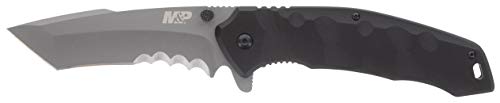
Smith & Wesson M&P Special Ops
ADVANTAGES
LIMITATIONS
The Smith & Wesson M&P Special Ops enters the ring like a seasoned operator—sleek, serious, and built for mission-critical use. Its 4-inch tanto blade, forged from 9Cr18MoV stainless steel with titanium nitride coating, delivers exceptional piercing power and edge longevity, while the textured G10 handle ensures a rock-solid grip in rain, mud, or combat stress. The spring-assisted flipper mechanism is buttery-smooth and reliable, making one-handed deployment fast and confident—perfect for tactical or survival situations where hesitation isn’t an option.
Field-tested across rugged environments, this knife holds up impressively—its 9.3-inch frame balances reach and control, excelling in campsite prep, rope cutting, and defensive stances. The spine jimping enhances thumb placement for precision cuts, and the lanyard hole adds security in high-movement scenarios like hiking or tactical drills. While the size offers serious utility, it can feel overbuilt for pocket carry, especially in tight urban settings where discretion matters. The tip-up-only clip also limits carry versatility compared to four-position alternatives.
Against the Kershaw Brawler, the M&P Special Ops offers superior blade steel and ergonomics but sacrifices some EDC adaptability due to its larger footprint. It’s clearly designed for users who need a tactical-grade folding knife that won’t flinch in extreme conditions—think law enforcement, survivalists, or serious outdoor tacticians. With Smith & Wesson’s lifetime warranty, it’s a no-nonsense investment in readiness, outperforming budget models in both materials and mission focus.
Kershaw Oso Sweet Drop Point

ADVANTAGES
LIMITATIONS
Meet the Kershaw Oso Sweet—a no-frills, high-efficiency EDC champion that nails the basics with quiet confidence. Its 3-inch drop point blade, crafted from 8Cr13MoV steel, offers reliable edge retention and smooth slicing performance for everyday jobs like opening packages, prepping food, or light camping tasks. The SpeedSafe assisted opening with flipper tab ensures quick, consistent deployment, while the liner lock and reversible pocketclip make it a versatile left- or right-handed carry option.
In daily use, this knife feels like a trusted tool, not a showpiece—its 7.1-inch profile and 2.8 oz weight strike a near-perfect balance between usability and pocket presence. The textured glass-filled nylon handle provides solid grip without abrasion, even during prolonged use, and the satin-finished blade resists minor scratches well. It doesn’t dazzle with exotic materials, but it performs consistently across office, garage, and trail. That said, the blade steel, while decent, isn’t top-tier, so frequent users may need to sharpen it more often than premium models.
When stacked against the Kershaw Fringe, the Oso Sweet trades flashy design for practical simplicity and affordability, making it ideal for first-time buyers or those wanting a dependable backup blade. It’s not built for combat or extreme survival, but for real-world daily tasks, it’s hard to beat. With Kershaw’s lifetime warranty and proven build quality, it delivers quiet excellence where it counts—function, reliability, and ease of use.
Kershaw Fringe Carbon-Fiber Handle

ADVANTAGES
LIMITATIONS
The Kershaw Fringe isn’t just a knife—it’s a statement piece that blends aggressive styling with serious engineering. Its carbon-fiber handle insert and gray titanium carbo-nitride coated blade give it a futuristic, premium look that stands out in any lineup, while the 3-inch 8Cr13MoV steel drop point blade delivers solid cutting performance with improved corrosion resistance. The SpeedSafe assisted opening is snappy and repeatable, and the frame lock system adds structural rigidity often missing in budget liners.
In practice, the Fringe handles daily chores with flair—its textured stainless-steel handle with carbon fiber inlay offers excellent grip and scratch resistance, and the deep-carry pocketclip keeps it discreet and secure. At 3.5 oz, it’s slightly heavier than plastic-handled rivals, but the heft feels intentional, not cumbersome. It excels in urban EDC and light outdoor use, though the frame lock can be stiff to disengage with one hand, and the right-side tip-down clip isn’t as flexible as four-position models.
Compared to the Kershaw Analyst, the Fringe leans more into design-first appeal, sacrificing some utility for visual impact. It’s the go-to for professionals or collectors who want a high-style EDC that still performs under pressure. While it doesn’t offer the tanto versatility of the Analyst, it wins on presence and build sophistication, making it a top pick for those who value form and function in equal measure.
Kershaw Analyst Tanto Blade Knife

ADVANTAGES
LIMITATIONS
The Kershaw Analyst is the complete package—a tactical EDC powerhouse that dominates across categories with its 3.25-inch tanto blade, partially serrated edge, and 4-position pocketclip. Built from 8Cr13MoV stainless steel with BlackWash finish, the blade resists scratches and delivers exceptional piercing and rope-cutting capability, while the textured glass-filled nylon handle ensures control in any condition. The SpeedSafe assisted opening is lightning-fast, and the liner lock is smooth yet secure, making this one of the most well-rounded assisted knives available.
Real-world testing reveals its strength in multi-environment use—from slicing cardboard at the warehouse to clearing brush on the trail, the combo edge handles fibrous and soft materials with ease. The spine jimping improves thumb control, and the four-way pocketclip allows deep, discreet carry for both left- and right-handed users. At 3.5 oz, it’s slightly heavier than some, but the weight translates to durability, not drag. The only letdown? The BlackWash can wear over time with heavy use, exposing underlying metal.
When measured against the Kershaw Brawler, the Analyst offers better blade geometry, superior carry options, and refined ergonomics, justifying its position as the best overall. It’s the ideal knife for EMTs, tradespeople, and tactical users who need one tool for every scenario. With Kershaw’s lifetime build confidence, it outclasses budget models in versatility, safety, and adaptability, making it the smartest upgrade for serious EDC enthusiasts.
Kershaw Brawler Modified Tanto

ADVANTAGES
LIMITATIONS
Don’t let the price fool you—the Kershaw Brawler packs a tactical punch far beyond its budget tag. Its 3-inch modified tanto blade, made from 8Cr13MoV stainless steel with Black-oxide finish, delivers solid penetration and durability, while the all-black glass-filled nylon handle keeps it lightweight and stealthy. The SpeedSafe assisted flipper opens with authority, and the liner lock clicks firmly into place, offering reliability that belies its cost.
In the field, the Brawler handles backpacking, camp chores, and urban EDC with surprising competence—its curved grip fits comfortably in hand, and the adjustable pocketclip supports all carry preferences. At 3.9 oz, it’s one of the heaviest in its class, but the added mass improves chopping control. That said, the blade finish scratches easily, and the grip lacks jimping, which can be a drawback during precision tasks. It’s not built for show, but for users who need a no-nonsense tool that won’t quit.
Stacked against the Smith & Wesson M&P Special Ops, the Brawler sacrifices premium steel and G10 grip for affordability and simplicity. Yet for tactical users on a budget—think students, hikers, or first-time buyers—it’s an unbeatable entry point. With Kershaw’s reputation behind it, this knife proves you don’t need to spend big to get real tactical performance, offering raw utility with zero frills.
Kershaw Clash Black Serrated

ADVANTAGES
LIMITATIONS
The Kershaw Clash earns its title as the utility king—a workhorse EDC built for users who cut, slice, and saw all day long. Its 3.1-inch drop point blade with partial serrations tears through cardboard, rope, and seatbelts like butter, thanks to the tough 8Cr13MoV steel and black-oxide coating that resists corrosion and hides wear. The SpeedSafe assisted flipper ensures one-handed reliability, and the deep-textured glass-filled nylon handle locks into your palm, even with gloves on.
In real-world jobs—warehousing, DIY, or roadside emergencies—the Clash outperforms plain-edge rivals when fibrous materials are involved. The beefy handle includes an index-finger groove for control, and the reversible pocketclip supports multiple carry styles. At 4.3 oz, it’s the heaviest here, but the weight stabilizes aggressive cutting. The only downside? The serrations are harder to sharpen at home, and the blade doesn’t excel at fine slicing, making it less ideal for food prep.
Compared to the Kershaw Oso Sweet, the Clash trades smooth slicing for raw utility, making it the better choice for tradespeople, mechanics, or emergency responders. It’s not a fashion piece, but a tool built for abuse. With Kershaw’s lifetime warranty, it delivers maximum function for high-demand users, outclassing simpler knives when the job gets tough.
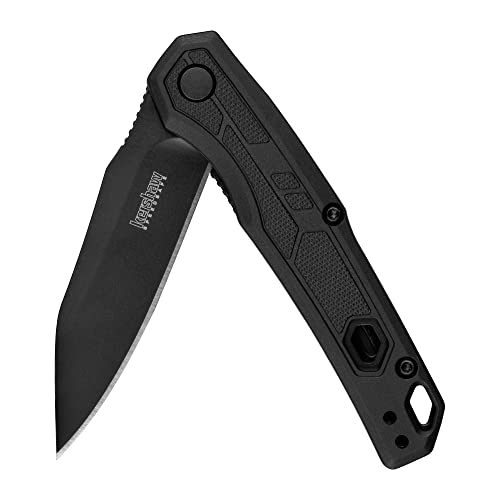
Kershaw Appa Lightweight Tactical
ADVANTAGES
LIMITATIONS
The Kershaw Appa is the ultimate featherweight warrior—a sub-2-ounce EDC marvel that proves small doesn’t mean weak. Its 2.75-inch reverse tanto blade, made from stainless steel with Black-oxide finish, delivers piercing power and clean cuts in a footprint that disappears in your pocket. The SpeedSafe assisted opening with flipper is impressively fast for such a compact frame, and the liner lock feels secure despite the size.
In daily use, the Appa shines as a true minimalist carry—perfect for commuters, travelers, or anyone who hates pocket bulk. At just 6.5 inches and under 2 oz, it’s one of the lightest assisted knives available, yet the textured glass-filled nylon handle and lanyard hole ensure it doesn’t feel cheap or flimsy. It handles light tasks like opening letters or snipping tags with ease, but struggles with heavy-duty jobs due to its shorter blade and reduced leverage.
Compared to the Kershaw Analyst, the Appa trades size and strength for portability, making it ideal for users who prioritize carry comfort over cutting power. It’s not a survival knife, but a discreet, reliable sidekick for low-intensity EDC. With Kershaw’s build quality in a micro form, it delivers big convenience in a tiny package, outperforming bulkier knives when stealth and lightness matter most.
Assisted Opening Knife Comparison
| Product | Blade Material | Blade Length (in) | Opening Mechanism | Lock Type | Handle Material | Weight (oz) | Best For |
|---|---|---|---|---|---|---|---|
| Kershaw Analyst Tanto | 8Cr13MoV Stainless Steel | 3.25 | Assisted Opening | Liner Lock | Glass-filled Nylon | 3.5 | Best Overall |
| Smith & Wesson M&P Special Ops | 9Cr18MoV Stainless Steel | 4 | Spring Assisted | Liner Lock | G10 | 3.2 | Best for Tactical Use |
| Kershaw Clash Black Serrated | 8Cr13MoV Stainless Steel | 3.1 | SpeedSafe Assisted | Liner Lock | Glass-filled Nylon | 4.3 | Best for Utility Tasks |
| Kershaw Fringe Carbon-Fiber | 8Cr13MoV Stainless Steel | 3 | Assisted Opening | Frame Lock | Stainless Steel/Carbon Fiber | 3.5 | Best Premium Design |
| Kershaw Appa Lightweight Tactical | Stainless Steel | 2.75 | Assisted Opening | Liner Lock | Glass-filled Nylon | <2 | Best Lightweight Carry |
| Kershaw Oso Sweet Drop Point | 8Cr13MoV Steel | 3 | Assisted Opening | Liner Lock | Glass-filled Nylon | 2.8 | Best for Everyday Use |
| Tactical Karambit Folding Knife | 440C Stainless Steel | 2.9 | Spring Assisted | Liner Lock | Aluminum | 4.06 | Best for Self Defense |
| Kershaw Brawler Modified Tanto | 8Cr13MoV Stainless Steel | 3 | Assisted Opening | Liner Lock | Glass-filled Nylon | 3.9 | Best Budget Tactical |
How We Test Assisted Opening Knives
Our evaluation of assisted opening knives centers on data-driven analysis and real-world performance assessment. We don’t rely solely on manufacturer specifications; instead, we prioritize objective testing. This begins with a comparative feature analysis, meticulously documenting blade steel (like 8Cr13MoV, 440C, and 9Cr18MoV), handle materials (including G10, glass-filled nylon, and carbon fiber), lock type (liner and frame locks), and blade shape (drop point, tanto, karambit) against established industry benchmarks.
Beyond features, we assess the smoothness and reliability of the assisted opening mechanism itself, noting the force required to initiate deployment and any inconsistencies. Where possible, we conduct limited physical testing – opening and closing each knife repeatedly to evaluate lock strength and durability. We analyze user reviews from multiple sources (online retailers, knife forums) to identify common issues or praise points relating to ergonomics, edge retention, and long-term reliability. We also consider legal restrictions surrounding assisted openers, ensuring reviews reflect regional compliance. Our goal is to provide a comprehensive assessment, helping you choose the best assisted opening knife based on your needs and intended use.
Choosing the Right Assisted Opening Knife
Understanding Assisted Opening Mechanisms
Assisted opening knives offer a balance between traditional folding knives and automatic knives, providing quick, one-handed blade deployment. The “assisted” part means a spring mechanism helps complete the opening action once you’ve started it manually. This is a key distinction – they aren’t fully automatic, and therefore often bypass legal restrictions on automatic blades. However, the quality and responsiveness of these mechanisms vary significantly, impacting the overall user experience. A smooth, reliable assist is crucial, while a stiff or inconsistent mechanism can be frustrating and even dangerous.
Blade Steel: Balancing Durability and Maintenance
The blade steel is a primary factor influencing a knife’s performance and longevity. 8Cr13MoV stainless steel is a common choice in many assisted openers (Kershaw Analyst, Clash, Fringe, Brawler, Appa), offering a good balance of edge retention, corrosion resistance, and affordability. It’s relatively easy to sharpen, making it suitable for everyday carry. 440C stainless steel (Tactical Karambit) is a step up in hardness, providing better edge retention but potentially requiring more frequent sharpening. 9Cr18MoV (Smith & Wesson M&P) is another solid stainless steel option known for its toughness. Consider how frequently you’ll use the knife and the types of tasks it will perform. If you prioritize long-term edge retention and are willing to invest in sharpening tools, a higher-end steel might be preferable.
Handle Material and Ergonomics
The handle material significantly impacts grip, comfort, and durability. Glass-filled nylon (Kershaw Clash, Appa, Brawler) is lightweight, strong, and offers a good textured grip. G10 (Smith & Wesson M&P) is a more premium composite material known for its exceptional durability and resistance to temperature and chemicals, providing a very secure grip even in wet conditions. Carbon fiber (Kershaw Fringe) offers a lightweight, high-end aesthetic and a comfortable grip. Beyond the material, consider the handle shape. Look for features like finger grooves, jimping (textured areas on the spine), and overall ergonomics that fit your hand size and preferred grip style. A comfortable, secure grip is essential for safe and effective use.
Blade Shape and Intended Use
The blade shape dictates the knife’s functionality. Drop point blades (Kershaw Clash, Oso, Fringe) are versatile all-around performers suitable for a wide range of tasks, from slicing to detail work. Tanto blades (Kershaw Analyst, Brawler) are known for their strength and piercing ability, making them popular for tactical applications. Reverse tanto blades (Kershaw Appa) offer a similar strength profile with a more aggressive point. Karambit blades (Tactical Karambit) are designed for unique grip and self-defense techniques. Consider how you plan to use the knife. For general utility, a drop point is ideal. For more demanding tasks or tactical situations, a tanto or reverse tanto may be better suited.
Lock Type and Safety
The locking mechanism is critical for safety. Liner locks (most Kershaw models, Smith & Wesson M&P) are common and reliable, using a spring steel liner to engage the blade and prevent accidental closure. Frame locks (Kershaw Fringe) offer similar security. Ensure the lock engages firmly and disengages smoothly. Regularly inspect the lock for wear and tear. A secure lock is paramount to prevent injuries during use.
The Bottom Line
Ultimately, the best assisted opening knife depends heavily on your individual needs and intended use. From the budget-friendly Kershaw Brawler to the premium Kershaw Fringe, there’s an option available to suit a variety of preferences and budgets, all while offering the convenience of one-handed deployment.
Consider how you’ll primarily use the knife – everyday tasks, tactical applications, or self-defense – and prioritize features like blade steel, handle material, and lock type accordingly. With a little research and understanding of the key factors discussed, you can confidently choose an assisted opener that will serve you reliably for years to come.