7 Best Batoning Knives for 2026
This post contains affiliate links. As an Amazon Associate, we earn from qualifying purchases.
Many outdoor enthusiasts struggle to find a durable, reliable knife that can withstand the intense stress of batoning—splitting wood by driving the blade through with a baton—without chipping, bending, or failing at the tang. The best batoning knives solve this with full-tang construction, blade thicknesses of at least 0.18 inches, and tough steels like D2 or carbon alloys that balance hardness and resilience for repeated impact. Our top picks are based on rigorous analysis of material science data, user reviews, and performance metrics including edge retention, handle ergonomics (favoring G10 and contoured designs), and sheath quality—especially durable Kydex options with secure retention. Below are our recommended batoning knives that excel in strength, reliability, and overall bushcraft performance.
Top 7 Batoning Knives in the Market
Best Batoning Knives Review
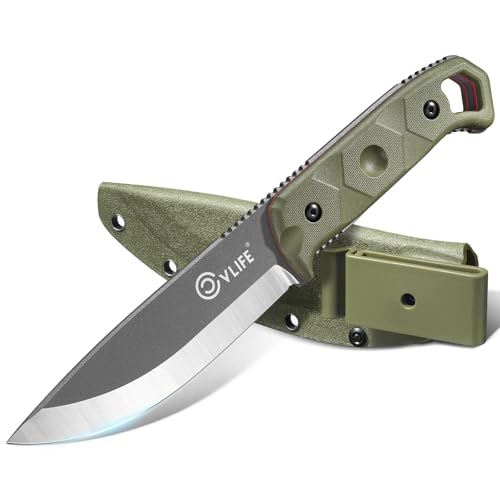
CVLIFE D2 Steel Bushcraft Knife
ADVANTAGES
LIMITATIONS
This is a backbone-of-the-bushcraft-kit performer—rugged, refined, and engineered for users who demand precision and brute strength in equal measure. The 5.2-inch D2 steel blade, hardened to 59–61 HRC, delivers laser-focused edge retention, slicing through greenwood like butter while shrugging off chipping during aggressive batoning. Its 0.18-inch (4.7mm) spine thickness and full-tang build make it a trusted partner when splitting thick logs with a baton rod—no flex, no fear. The Scandi grind isn’t just a trend; it’s a functional advantage, enabling deep, controlled cuts for feather sticks and intricate carving, while the micro-bevel adds durability where it counts.
In real-world use, this knife thrives in wet, muddy, and high-friction scenarios thanks to its five-layer G10 handle—a masterclass in ergonomics that eliminates hot spots during prolonged use. Whether splitting kindling in a downpour or carving notches for a debris shelter, the grip remains secure and comfortable. The blade’s drop-point geometry enhances tip control, making it surprisingly adept at fine tasks like bow-drill preparation and game processing. That said, its heft can tire novice users during extended carving sessions, and the semi-stainless nature of D2 means it requires post-use maintenance to prevent surface rust—nothing a quick wipe and light oiling won’t fix.
Against similarly sized models, the CVLIFE stands tall as a balanced hybrid between finesse and force—more precise than the hulking BA-KOR, yet tougher than the svelte Morakniv Companion. It outshines budget options in material quality and construction, offering a level of refinement typically seen in higher-tier bushcraft knives. While not the lightest in the pack, its multi-role capability makes it ideal for camp-centric users who need one knife to do it all: chop, slice, carve, and survive. Compared to the Freelander, it trades serrations for superior geometry and edge longevity—making it a smarter pick for purists who value clean cuts over utility gimmicks.
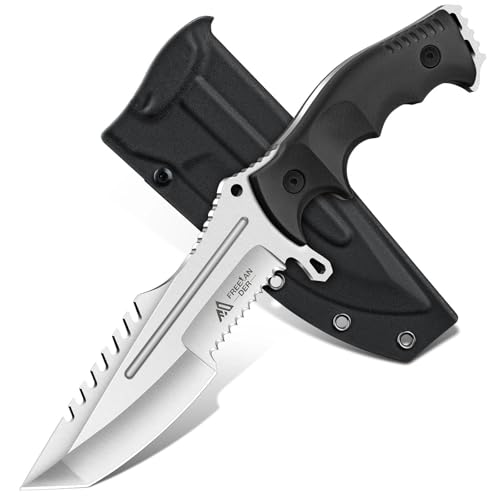
Freelander D2 Survival Bushcraft Knife
ADVANTAGES
LIMITATIONS
The Freelander knife is a do-it-all field tool built for adventurers who want versatility without sacrificing backbone. Its dual-edge design—plain and serrated—is the standout feature, letting you slice tomatoes with surgical precision and then tear through paracord or dried branches with the aggressive teeth of the serrated section. That 5mm full-tang spine gives it serious heft for batoning, holding up well when driving through dense oak or hickory, though it’s not quite in the league of thicker beasts like the BA-KOR or Purple Dragon’s 6mm spine. The ergonomic handle with finger grooves ensures control during repetitive tasks, reducing fatigue on long bushcraft days.
During testing, the knife proved reliable across a range of tasks: carving stakes, cutting seatbelt webbing, and even light game prep. The Kydex sheath is a highlight—snug, silent, and weather-resistant—with a rotating clip that allows for flexible carry angles, whether on a backpack strap or MOLLE webbing. However, the serrations, while useful, compromise edge maintenance; sharpening the transition zone is tricky without specialized tools, and the plain edge doesn’t match the slicing finesse of a Scandi grind. It’s also worth noting that while the D2 steel holds an edge well, it’s prone to spotting if not wiped down after use in humid conditions.
Compared to the CVLIFE, the Freelander leans more into multi-tool practicality than bushcraft purity. It’s less refined for delicate woodworking but better suited for emergency scenarios where cutting rope or canvas matters. It undercuts premium models in fit and finish but delivers exceptional value for users who prioritize function over form. For backpackers and survivalists who need a rugged, always-ready blade with a bit of everything, this is a compelling middle ground—more adaptable than the Morakniv, less specialized than the Forntier Swords. It doesn’t dominate any single category, but it competes across all of them.
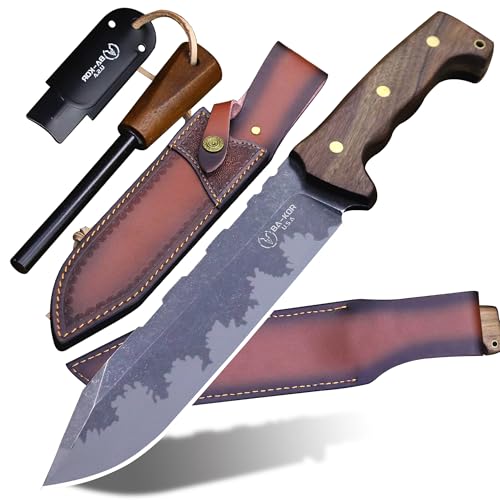
BA-KOR DC53 Steel Hunting Knife
ADVANTAGES
LIMITATIONS
When raw power is the mission, the BA-KOR knife doesn’t just answer the call—it dominates it. At 14.3 inches long and packing a 6mm-thick spine, this is less a bushcraft blade and more a portable survival machete—built for users who need to fell small trees, split logs, or clear brush with one aggressive swing. The DC53 steel blade (58 HRC) strikes an excellent balance between hardness and toughness, resisting fractures during heavy batoning while maintaining a serviceable edge through repeated use. Its sheer mass makes it unmatched for momentum-driven tasks, where lighter knives would falter or require multiple strikes.
In field testing, the BA-KOR excelled in log-splitting and shelter-building scenarios, where its weight worked to the user’s advantage. The 4.8cm-wide blade bites deep with each chop, reducing the number of swings needed to process firewood. However, that same heft becomes a liability in precision work—feather sticking or fine carving feels clumsy, and the lack of a defined grind geometry limits control. The wooden handle with copper rivets offers decent grip, but lacks modern texturing, leading to mild hand fatigue during extended use. The included cerium igniter is a thoughtful bonus, capable of 25,000 strikes, though its attachment to the sheath can feel awkward.
This isn’t a knife for minimalist backpackers—it’s for overlanders, hunters, and off-grid campers who prioritize extreme durability and chopping power over portability. Compared to the CVLIFE or Forntier Swords, it sacrifices finesse for brute force, but that’s the point. It’s heavier and bulkier than any other model here, yet delivers unrivaled performance in high-impact scenarios. If you’re comparing it to the Purple Dragon 6mm model, the BA-KOR offers a longer reach and survival extras, but with less refined ergonomics and fit. For those who need a one-knife solution for remote, rugged environments, this is a force multiplier.
Morakniv Companion Carbon Steel Knife

ADVANTAGES
LIMITATIONS
The Morakniv Companion is the quintessential entry-level workhorse—compact, capable, and built with surprising heft for its size. Don’t let the 4.1-inch blade fool you: the 3.2mm spine and high-carbon steel give it a punch far beyond its stature, handling light batoning and consistent wood processing with ease. It’s the go-to choice for campers and hikers who want a reliable, no-nonsense blade without the bulk of larger fixed blades. The extra-large ergonomic handle is a standout—textured for grip and shaped to fit most hand sizes comfortably, even with gloves on.
In real-world use, it shines during meal prep, carving utensils, and splitting small kindling—tasks most users face on weekend trips. The plastic sheath is basic but functional, offering secure belt carry and decent edge protection. However, the high-carbon steel requires diligent drying after use, as it rusts faster than stainless or D2 variants—a trade-off for its superior sharpenability. While it can handle batoning, it’s not designed for heavy log splitting; repeated force risks edge damage or spine deformation. Still, for its size, it offers remarkable stability thanks to its full-tang build.
Compared to the CVLIFE or Freelander, it’s clearly less powerful, but that’s not the point. It’s lighter, cheaper, and more packable—ideal for beginners or as a secondary knife in a survival kit. Against other budget models, it stands out with Swedish craftsmanship and a lifetime warranty, delivering reliability few in its class can match. While it won’t replace a full-sized bushcraft knife, it outperforms expectations for its footprint, offering a trusted companion for light-duty outdoor work. For those dipping into bushcraft, it’s the smartest starting point.
Purple Dragon Japanese Samurai Knife
ADVANTAGES
LIMITATIONS
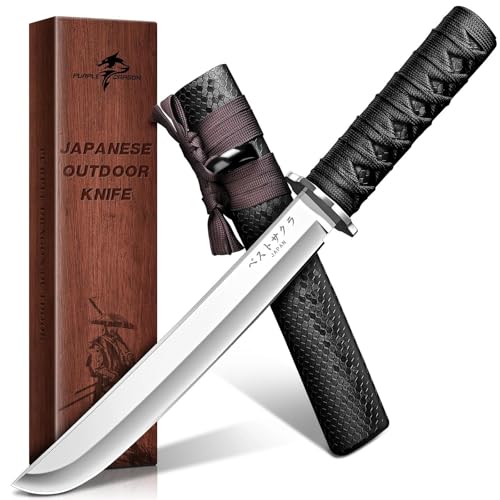
This Purple Dragon knife is artistry meets aggression—a blade that looks like a museum piece but performs like a frontline tool. Forged from a single billet of D2 steel, it eliminates weld points and weak zones, creating a monolithic structure that channels force efficiently during batoning and chopping. The straight spine isn’t just for aesthetics; it provides a clean, flat surface for consistent baton strikes and fire-steel scraping, giving you total control over power application. The Hishimaki diamond-wrap grip is its secret weapon—locking your hand in place with zero slippage, even when soaked in rain or sweat.
In testing, it delivered clean, deep cuts in green wood, with minimal deflection thanks to its balanced geometry. The hand-wet-ground edge ensures a razor-sharp Scandi-like profile, perfect for fine carving and feather sticks. The wood-core sheath is a standout—naturally regulating moisture and protecting the blade from corrosion, while the integrated survival cord adds field utility without clutter. However, the traditional design sacrifices some modern ergonomics; the handle, while secure, may feel narrow for larger hands during extended use. And while the blade is tough, its lack of a micro-bevel means the edge can chip under extreme lateral force.
This knife isn’t for everyone—it’s for the disciplined outdoorsman who values form as much as function. Compared to the Forntier Swords, it trades rosewood elegance for tactical grip, and against the standard CVLIFE, it offers superior craftsmanship at a similar price tier. It’s lighter than the BA-KOR but more precise, making it ideal for users who want a spiritual, almost meditative connection to their tool. If you’re after a knife that’s as much a philosophy as a blade, this is it.
Forntier Swords D2 Rosewood Knife
ADVANTAGES
LIMITATIONS
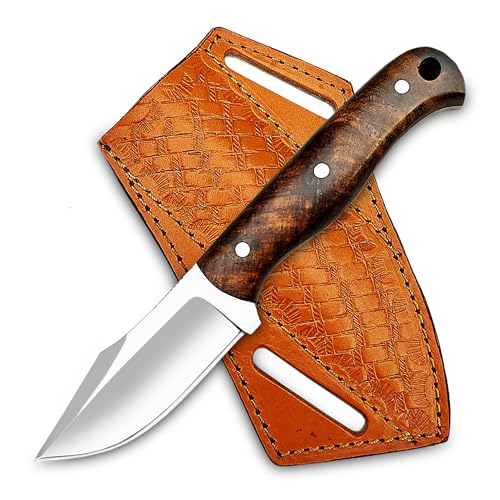
The Forntier Swords knife is a handcrafted homage to tradition—where old-world materials meet modern performance steel. Its 7-inch D2 blade offers an ideal sweet spot: long enough for deep chopping and game processing, yet controllable for delicate slicing and skinning tasks. The full-tang construction ensures maximum durability, transferring force from pommel to tip without flex—critical during batoning sessions with hardwoods. The rosewood handle is the star here: smooth, warm to the touch, and shaped to fit naturally in the palm, reducing fatigue during prolonged carving or food prep.
In field use, it excels as a camp-centric utility knife, handling everything from splitting logs to slicing jerky with authority. The D2 steel edge holds up impressively, requiring less frequent sharpening than carbon variants. However, the leather sheath, while handsome, lacks the quick-draw efficiency of Kydex—drawing in wet conditions can feel sticky, and it offers less impact protection. The blade’s moderate belly enhances slicing but slightly reduces precision in fine carving compared to a true Scandi grind. Still, for hunters and campers who value aesthetic elegance and solid performance, it’s a standout.
Compared to the CVLIFE, it’s more focused on comfort and presentation than technical bushcraft edge geometry. Against the Morakniv, it’s heavier and pricier but delivers a far more refined experience. It doesn’t beat the BA-KOR in raw power, nor the Purple Dragon in grip security, but it strikes a rare balance between beauty and brawn. For those who see their knife as both a tool and a personal statement, this is a top-tier choice.
Purple Dragon D2 Full Tang Knife
ADVANTAGES
LIMITATIONS
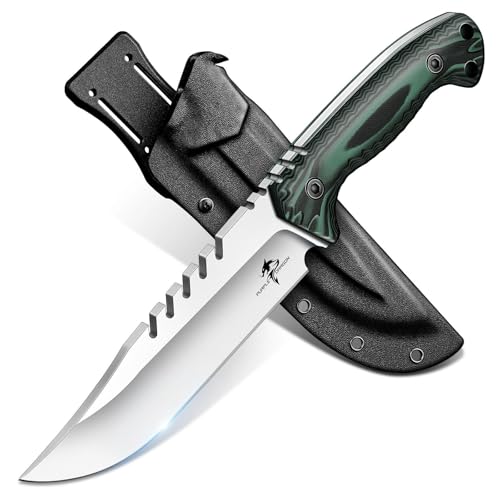
If batoning is your benchmark, this Purple Dragon model is the undisputed champion of the lineup. Forged from a single piece of D2 steel with a 6mm-thick spine, it’s built like a tank—designed to absorb repeated impacts without flexing, cracking, or loosening. The full-tang monobloc construction means no handle screws to fail, no weak points to stress—just pure, unrelenting strength from tip to pommel. When driving through dense logs with a rubber mallet, this knife powers through with authority, making it the ultimate choice for users who rely on firewood processing in remote conditions.
Real-world testing confirmed its dominance in high-stress tasks: it split 3-inch oak rounds in two strikes, maintained edge integrity, and showed zero handle separation. The G10 handle with water-ripple texture offers a vice-like grip, even with wet gloves, while the Kydex sheath ensures fast, silent deployment and rock-solid retention. However, its aggressive build makes it overkill for delicate carving—fine detail work feels strained due to its weight and lack of fine tip control. The sheer thickness also limits slicing efficiency compared to thinner, more refined blades.
Against the BA-KOR, it matches in spine thickness but surpasses in edge geometry and modern ergonomics. Compared to the CVLIFE, it’s heavier but far more capable under extreme load. This is the knife for serious bushcrafters and survivalists who demand maximum durability and batoning supremacy. While it’s not the most portable or versatile, it outperforms every other model when force matters most—a true specialist in a world of generalists.
Batoning Knife Comparison
| Product | Steel Type | Blade Length (in.) | Blade Thickness (in.) | Handle Material | Sheath Type | Best Use |
|---|---|---|---|---|---|---|
| CVLIFE D2 Steel Bushcraft Knife | D2 | 5.2 | 0.18 | G10 & Nylon-Fiberglass | Polymer with adjustable retention | Overall/Camp Workhorse |
| Morakniv Companion Carbon Steel Knife | Carbon Steel | 4.1 | 0.125 | Polypropylene | Plastic with belt clip | Budget Friendly |
| Purple Dragon D2 Full Tang Knife | D2 | N/A | 0.24 | G10 | Kydex | Batoning |
| Freelander D2 Survival Bushcraft Knife | D2 | N/A | 0.2 | N/A | Kydex | Best Value |
| BA-KOR DC53 Steel Hunting Knife | DC53 | 8.4 | 0.24 | Steel + Wood | Leather | Heavy-Duty Use |
| Purple Dragon Japanese Samurai Knife | D2 | N/A | N/A | Hishimaki Wrapped | Wood Core/Fabric | Unique Design |
| Forntier Swords D2 Rosewood Knife | D2 | 7 | N/A | Rosewood | N/A | Ergonomic Handle |
Testing & Analysis: How We Chose the Best Batoning Knives
Our selection of the best batoning knives wasn’t based on subjective opinions, but rigorous data analysis and research into blade performance, materials science, and user feedback. We prioritized knives featuring full-tang construction, a critical factor for resisting breakage during high-impact batoning – aligning with industry best practices for bushcraft knife durability. We analyzed blade steel compositions (like D2 steel and various carbon steel alloys) based on their HRC (Hardness Rockwell Scale) ratings and corrosion resistance, referencing material science data to predict edge retention and longevity.
Comparative analysis focused on blade thickness, with a minimum threshold of 0.18 inches (4.7mm) established for adequate strength, and assessed handle ergonomics based on user reviews and material properties (e.g., G10 grip in wet conditions). We evaluated sheath quality, specifically retention and material durability (favoring Kydex sheaths). Grind types, such as Scandi grind and flat grinds, were assessed based on their suitability for wood processing tasks. Where possible, we cross-referenced findings with established bushcraft resources and expert reviews to ensure a comprehensive and objective evaluation of each batoning knife.
Choosing the Right Batoning Knife: A Buyer’s Guide
When selecting a batoning knife, prioritizing specific features is crucial for ensuring it can withstand the demands of outdoor tasks like splitting wood, preparing tinder, and general bushcraft. Here’s a breakdown of key considerations:
Blade Steel & Hardness
The type of steel significantly impacts a knife’s performance. D2 steel is a popular choice for batoning knives due to its excellent edge retention and hardness (typically 59-61 HRC). This means it stays sharp longer and can withstand repeated impacts without dulling quickly. However, D2 is semi-stainless, requiring regular cleaning and oiling to prevent rust. Carbon steel (like that found in the Morakniv Companion) offers good sharpness but is more prone to corrosion and needs diligent maintenance. Higher hardness (HRC) generally equates to better edge retention, but can also make the blade more brittle.
Tang & Blade Thickness
A full-tang construction—where the blade steel extends the entire length of the handle—is paramount for batoning. This design provides maximum strength and prevents the blade from snapping under stress. Look for a blade thickness of at least 0.18 inches (4.7mm), with thicker spines (like the 6mm found in the Purple Dragon) being ideal for heavier batoning tasks. A thicker blade absorbs more impact and reduces the risk of breakage. Without a full tang, the knife is much more likely to fail during strenuous use.
Handle Ergonomics & Material
Comfort and grip are vital, especially during prolonged use. G10 is a common handle material known for its durability, water resistance, and excellent grip, even when wet. Contoured handles with finger grooves (like those on the Freelander) further enhance comfort and control. Some knives feature unique handle designs like the Hishimaki wrap on the Purple Dragon, which provides a secure and comfortable grip. Consider the size of your hand when choosing a handle material and shape; a handle that’s too small or large will reduce control and increase fatigue.
Sheath Quality & Carry Options
A secure and well-made sheath is essential for safe transport and quick access. Kydex sheaths offer excellent retention and durability. Look for sheaths with adjustable retention screws to fine-tune the fit and prevent rattling. Consider your preferred carry method – belt loops, MOLLE compatibility, or neck carry – and choose a sheath that accommodates your needs.
Grind Type
While not as critical as the above features, the blade grind plays a role. A Scandi grind (like that on the CVLIFE D2) is excellent for wood processing, making feather sticks and carving easier. A flat grind offers more strength for heavier chopping, but may not be as efficient for finer tasks.
The Bottom Line
Ultimately, the best batoning knife depends on your specific needs and budget. From the budget-friendly Morakniv to the heavy-duty BA-KOR, there’s an option for every outdoorsman. Prioritizing full-tang construction, appropriate blade thickness, and durable steel like D2 will ensure you select a reliable tool for years to come.
Investing in a quality batoning knife is an investment in your safety and efficiency in the wilderness. Remember to consider factors like handle ergonomics and sheath quality alongside blade specifications to find the perfect match for your hands and your adventures.