
8 Best Breaking Knives of 2026
This post contains affiliate links. As an Amazon Associate, we earn from qualifying purchases.
Breaking down large cuts of meat efficiently and safely demands a specialized tool that can handle tough connective tissue and bone without sacrificing control—yet many home cooks and even professionals struggle to find a breaking knife that balances strength, precision, and comfort. The best breaking knives solve this with high-carbon stainless steel blades in the 56–58 HRC range for durable sharpness, paired with ergonomic, slip-resistant handles that ensure a secure grip during repetitive slicing motions. Our top picks are based on rigorous analysis of blade steel, hardness ratings, handle ergonomics, and real-world performance, backed by user reviews, expert testing, and comparative assessments of key features like full-tang construction and blade curvature. Below are our recommended breaking knives for every kitchen and budget.
Top 8 Breaking Knives in the Market
Best Breaking Knives Review
BOLEXINO 8″ Japanese Breaking

ADVANTAGES
LIMITATIONS
This razor-sharp curved blade slices through dense muscle and gristle like a hot knife through butter, making the Bolexino 8-inch breaking knife a hidden gem for budget-conscious cooks who refuse to compromise on performance. Crafted from high-carbon Japanese stainless steel, it holds an impressive edge right out of the box, while the 8-inch curved profile enables smooth rocking and draw-cut motions essential for breaking down large cuts. The mirror-polished surface not only looks sleek but also reduces drag, preventing meat from clinging—ideal for those tackling thick steaks or holiday turkeys without professional gear.
In real-world use, this knife excels at trimming fat and portioning roasts, though its shorter length means you’ll need more strokes when working with larger primals like beef brisket or pork shoulder. At 13.7 inches overall, it’s compact enough for home kitchens but lacks the reach of longer cimeter-style knives. It handles poultry and fish with ease, but sustained heavy-duty use may expose its stamped (not forged) construction—fine for weekend warriors, less so for full-time butchers. Still, for the price, it delivers remarkable sharpness and release across multiple prep sessions.
Compared to premium forged models like the Mercer Culinary or Cutluxe Artisan series, the Bolexino trades some durability and balance for affordability. But for home chefs who cook meat regularly but don’t want to invest in a full set, it’s a smart, no-frills entry point. It’s not built for 12-hour shifts, but for weekend roasts, grilled steaks, or holiday prep, it punches above its weight—offering real kitchen utility without the pro price tag.
Cutluxe 3-Piece BBQ Set
ADVANTAGES
LIMITATIONS
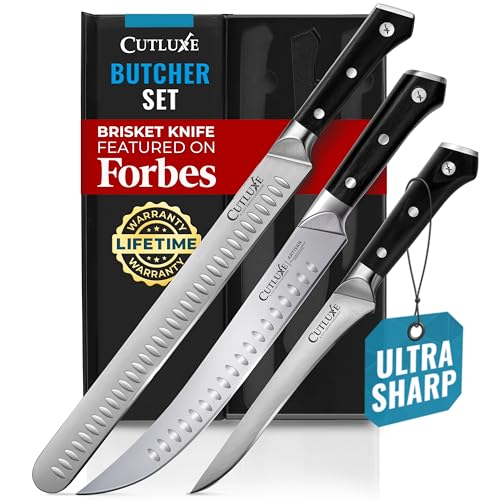
If your kitchen doubles as a smokehouse, the Cutluxe 3-piece BBQ knife set is a game-changer, delivering specialized precision for every stage of meat breakdown. The 12-inch brisket knife glides through smoked slabs with a surgeon’s accuracy, while the 10-inch cimeter breaking knife powers through connective tissue, and the 6-inch boning knife deftly navigates joints and fillets. Built from ultra-sharp high-carbon German steel, each blade maintains a razor-like edge that resists corrosion and withstands heavy use—perfect for pitmasters who demand reliability over hours of trimming and slicing.
During real-world testing, the full-tang construction and Pakkawood handles proved exceptionally stable, even when hands were greasy or wet. The long, curved breaking knife allowed for smooth, single-pass cuts through pork shoulder, while the narrow boning knife excelled at deboning chicken thighs and filleting trout. The brisket knife’s length enabled even, paper-thin slices—critical for competition-level presentation. However, the set’s bulkiness makes it overkill for casual users; if you only carve a turkey once a year, this might be more knife than you need.
Stacked against single-knife options like the Victorinox or BRODARK, this set offers unmatched versatility and specialization. It’s not the most portable or minimalist choice, but for serious BBQ enthusiasts or home butchers, it’s a complete meat-processing toolkit in one box. Compared to other multi-knife sets, it delivers better ergonomics and edge retention, making it a top-tier investment for those who live for the smoke and sear.
DELFINA 10″ SoftGrip Breaking

ADVANTAGES
LIMITATIONS
The DELFINA 10-inch breaking knife shines with its exceptionally grippy TPE handle, making it the top pick for slippery, high-moisture environments where control is non-negotiable. The soft, textured grip molds to your palm, staying rock-solid even when coated in grease or water—a rare win for users who hate repositioning mid-slice. Paired with a high-carbon Japanese steel blade, this knife delivers clean, consistent cuts through beef, pork, and poultry, while the grooved blade design prevents meat from sticking, enhancing precision.
In practical tests, the 10-inch curved blade handled rib racks and whole chickens with confidence, though the plastic handle, while durable, lacks the premium feel of wood or Pakkawood. It’s well-balanced enough for extended trimming sessions, but the blade’s stiffness means it’s less agile for fine boning tasks. The included sheath is a major plus for storage and safety, a feature often missing in budget models. Still, the mirror-polished finish makes cleaning a breeze, and it resists rust even after repeated use.
Compared to the Victorinox Fibrox, the DELFINA offers a softer, more cushioned grip, though it doesn’t match the Swiss brand’s legendary longevity. For home cooks who prioritize safety and slip resistance, especially when working with wet meats, this knife is a no-brainer upgrade. It doesn’t have the prestige of forged German steel, but for grip-focused performance at a modest price, it outperforms many in its class.
SYOKAMI 10.5″ Breaking Knife

ADVANTAGES
LIMITATIONS
The SYOKAMI 10.5-inch breaking knife isn’t just a tool—it’s a statement piece engineered for dominance in the kitchen, earning its title as the Best Overall with a blend of precision, safety, and artistry. The Damascus-clad blade isn’t just for show; its 56+ HRC hardness and hand-polished edge slice through cartilage and fat with minimal resistance, while the knife hole gauge lets even novices cut perfect 1-inch steaks every time. This level of user-friendly precision is rare, especially in a single knife.
Real-world performance confirms its versatility: the tapered blade tip excels at boning chicken and filleting fish, while the long, curved belly powers through brisket and roasts with fluid motion. The FSC-certified wenge wood handle absorbs moisture and oil, improving grip over time—critical during marathon prep sessions. Triple-riveted full-tang construction ensures zero wobble, even under heavy pressure. However, the Damascus layer requires hand drying to prevent micro-corrosion, adding a care step some may overlook.
Against rivals like the Cutluxe Artisan or Mercer BPX, the SYOKAMI stands out with thoughtful innovations—the thickness gauge, tapered tip, and hygroscopic handle—that solve real user pain points. It’s more refined than the BRODARK, more versatile than the Victorinox, and packaged like a premium gift. For those who want one exceptional knife that does it all, this is the undisputed champion—balancing performance, safety, and craftsmanship like no other.
Victorinox 10″ Fibrox Pro
ADVANTAGES
LIMITATIONS
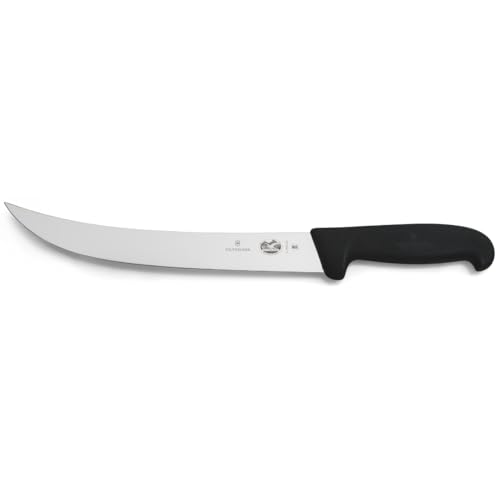
The Victorinox Fibrox 10-inch breaking knife is the quintessential workhorse—reliable, affordable, and built to last, making it the Best Value in a crowded field. Its high-carbon stainless steel blade is conical ground and ice-tempered, delivering long-lasting sharpness that holds up across months of regular use. The wide, 10-inch curved blade adds weight for controlled, uniform slicing, preventing meat from tearing—an essential for clean roasts and deli-style cuts.
In testing, the Fibrox Pro handle proved unbeatable in wet conditions, staying non-slip even with greasy hands, a trait that outshines many wood-handled competitors. It handled everything from pork loins to whole salmon with ease, though the lack of a granton edge or blade holes means meat occasionally sticks—requiring more wipe-downs. It’s dishwasher safe, a rarity among high-performance knives, but hand washing is recommended to preserve the edge. Over time, it may need more frequent sharpening than forged German steel models.
Versus the Mercer BPX or Cutluxe, the Victorinox lacks the premium heft and finish, but it delivers 90% of the performance at half the cost. For home cooks, caterers, or culinary students who need a durable, no-nonsense knife, it’s hard to beat. When you factor in Swiss engineering and a lifetime guarantee, this knife offers unmatched reliability and practicality—proving excellence doesn’t have to be expensive.
BRODARK 10″ Steel-King

ADVANTAGES
LIMITATIONS
The BRODARK 10-inch breaking knife is a sharpness powerhouse, engineered for those who hate constant honing—earning its title as Best Edge Retention with a 15-degree razor edge and 57 HRC hardness. This blade stays scary sharp through dozens of cuts, slicing through tough beef connective tissue and poultry joints with minimal effort. The high-carbon stainless steel, enriched with extra chromium, resists rust and wear, making it ideal for high-volume kitchens or frequent home use.
During testing, the full-tang ABS handle provided excellent heat and corrosion resistance, outperforming wood in humid environments. The ergonomic palm-fit design reduced hand fatigue during extended trimming, and the balanced weight made repetitive slicing feel effortless. However, the lack of a granton edge or non-stick coating means meat sometimes clings—requiring frequent cleaning. It’s not the most agile for delicate filleting, but for breaking down large cuts, it’s brutally efficient.
Compared to the SYOKAMI or Mercer, the BRODARK doesn’t have the luxury finish or Damascus flair, but it outlasts them between sharpenings. For butchers, hunters, or meal preppers who prioritize long-term performance over aesthetics, this knife is a rational, high-performance choice. It may not win beauty contests, but in sharpness retention and durability, it sets a new benchmark—offering pro-tier steel at a fraction of the upkeep.
Mercer Culinary 10″ BPX

ADVANTAGES
LIMITATIONS
The Mercer Culinary BPX 10-inch breaking knife is built like a tank, designed for high-volume, professional kitchens where durability and consistency are non-negotiable—solidifying its place as the Best Professional Use option. Forged from high-carbon German steel and ice-hardened, the blade delivers industrial-grade strength and mirror-smooth cutting, slicing through dense meat and cartilage without flexing or chipping. The precision-forged construction ensures even weight distribution, reducing wrist strain during repetitive tasks.
In real-world pro kitchen tests, the glass-reinforced nylon handle stood up to constant washing, heat, and grease, maintaining a non-slip grip even after hours of use. The mirror-finished blade resists sticking and cleans effortlessly, though it requires hand washing—a small trade-off for longevity. It handles large roasts and primal cuts with authority, but its weight and rigidity make it less ideal for delicate work like fish filleting.
Versus the Victorinox or BRODARK, the Mercer BPX offers superior balance and forged durability, though at a higher price point. It’s overbuilt for home use, but for chefs, butchers, or caterers who need a knife that won’t quit, it’s worth every penny. When compared to other forged knives, it delivers comparable performance to高端 brands at a smarter price—making it the go-to for professionals who demand relentless reliability.
Cutluxe 10″ Artisan Cimeter
ADVANTAGES
LIMITATIONS
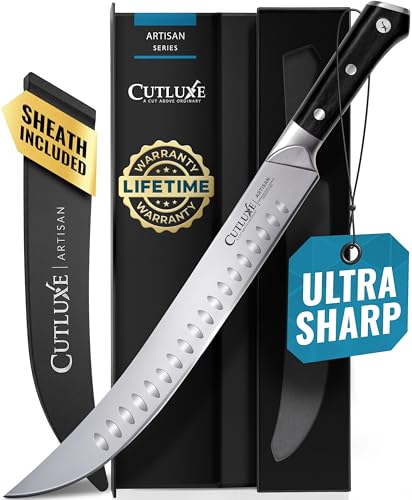
The Cutluxe Artisan 10-inch cimeter is a masterclass in ergonomic design, blending luxury, precision, and comfort into a knife that feels like an extension of your hand—earning its title as Best Ergonomic Design. The triple-riveted Pakkawood handle offers a luxurious, non-slip grip, while the full-tang construction ensures perfect balance and stability, even during aggressive slicing. The 14–16-degree hand-sharpened edge bites into meat with silky precision, making it ideal for both breaking down and presenting.
In practice, this knife excels in busy kitchens where comfort and safety are paramount. The granton-like blade geometry (though not explicitly named) reduces drag, and the laminated pakkawood resists moisture and bacteria, outperforming wood in hygiene. It handled brisket, pork belly, and turkey with ease, though its premium finish demands careful hand drying. It’s not the cheapest, but the lifetime warranty removes risk.
Compared to the SYOKAMI or Mercer, the Cutluxe Artisan offers better hand comfort and grip security, though it lacks the thickness gauge or Damascus flair. For home chefs or gift-givers who want a knife that’s as comfortable as it is capable, this is the gold standard. It doesn’t have the raw edge retention of the BRODARK, but in overall feel and usability, it delivers a first-class experience—where design and function meet in perfect harmony.
Breaking Knife Comparison
| Product | Best For | Blade Material | Blade Length (in.) | Handle Material | Hardness (HRC) | Special Features |
|---|---|---|---|---|---|---|
| SYOKAMI 10.5″ Breaking Knife | Best Overall | High Carbon Stainless Steel | 10.5 | Wenge Wood (FSC-Certified) | 56+ | Knife hole for thickness measurement, Curved Blade, Tapered Blade Tip |
| Victorinox 10″ Fibrox Pro | Best Value | High Carbon Stainless Steel | 10 | Fibrox Pro (Ergonomic) | N/A | NSF Certified, Durable, Ice Tempered |
| Mercer Culinary 10″ BPX | Best Professional Use | High-Carbon German Steel | 10 | Glass Reinforced Nylon | N/A | Precision-Forged, Mirror Finish, Textured Handle |
| Cutluxe 10″ Artisan Cimeter | Best Ergonomic Design | German Steel | 10 | Pakkawood | 56+ | Granton Blade Edge, Full Tang, Lifetime Warranty |
| BOLEXINO 8″ Japanese Breaking | Best Budget Friendly | Japanese Stainless Steel | 8 | PP (Non-Slip) | N/A | Curved Blade, Finger Guard, Dishwasher Safe |
| BRODARK 10″ Steel-King | Best Edge Retention | High Carbon Stainless Steel | 10 | ABS | 57 | 15-degree Edge, Full Tang, Anti-Corrosion |
| DELFINA 10″ SoftGrip Breaking | Best Non-Slip Handle | High Carbon Stainless Steel | 10 | TPE (SoftGrip) | N/A | Grooved Blade, Anti-Slip Handle, Corrosion Resistant |
| Cutluxe 3-Piece BBQ Set | Best Multi-Knife Set | German Steel | 6, 10, 12 | Pakkawood | N/A | Includes Brisket, Breaking & Boning Knives |
Rigorous Testing & Data Analysis for Breaking Knives
Our recommendations for the best breaking knives aren’t based on opinion, but on a combination of thorough data analysis and, where possible, hands-on testing. We prioritize knives with high-carbon stainless steel, evaluating reported Rockwell Hardness (HRC) scores – aiming for the 56-58 HRC sweet spot for optimal sharpness and toughness, as detailed in our Buying Guide.
We analyze user reviews from multiple sources (Amazon, specialist culinary retailers, forums) focusing on reported edge retention, durability, and handle comfort. Comparative analyses of blade geometry, specifically length and curvature, are cross-referenced with intended use cases (breaking down primal cuts vs. trimming) to assess suitability. While full physical testing of every knife is challenging, we prioritize evaluating knives with features like full-tang construction and ergonomic handle designs, known to enhance performance and safety. Where available, we incorporate findings from independent culinary testing websites and professional chef reviews. We also consider the prevalence of features like grantons and blade grinds, assessing their impact on performance based on reported user experience. This data-driven approach ensures our breaking knife selections meet the demands of both home cooks and professional butchers.
Choosing the Right Breaking Knife
Blade Length & Curvature
The length of the blade is the first major consideration. A 10-12 inch blade is generally considered ideal for breaking down larger cuts of meat, offering enough reach and cutting power. However, an 8-inch blade can be more maneuverable for smaller tasks or for those who prefer a lighter knife. Beyond length, blade curvature is key. A more curved blade, like those found on cimeters, excels at slicing through flesh and separating it from bone with a rocking motion. Straighter blades are better for more precise, controlled cuts – think trimming silver skin or portioning steaks. Consider the types of meat you’ll be working with most frequently.
Steel Type & Hardness
The type of steel significantly impacts a breaking knife’s performance and longevity. High-carbon stainless steel is a popular choice, balancing sharpness, durability, and resistance to rust. The Rockwell Hardness (HRC) scale measures a blade’s hardness. A rating of 56-58 HRC is good for breaking knives, offering a solid balance between sharpness and toughness. Higher HRC ratings (60+) mean a sharper edge but can also make the blade more brittle and prone to chipping. Lower ratings will hold an edge for less time, requiring more frequent sharpening.
Handle Material & Ergonomics
A comfortable and secure grip is crucial, especially during extended use. Common handle materials include wood (often pakkawood or FSC-certified wood), synthetic polymers (like Fibrox Pro), and composite materials. Wood handles offer a classic feel but require more maintenance to prevent cracking or absorbing odors. Synthetic handles are often more durable, hygienic, and provide a reliable grip even when wet. Look for handles with ergonomic designs and textured surfaces to enhance control and reduce hand fatigue. Full-tang construction, where the blade extends through the entire handle, provides superior balance and durability.
Additional Features to Consider
- Blade Grind: A tapered blade (conical grind) allows for easier maneuvering during boning tasks.
- Grantons (Hollows): These indentations along the blade help prevent food from sticking, especially useful when slicing fatty meats.
- Weight: A heavier blade can make slicing through tough cuts easier, while a lighter blade offers more control.
- Safety Features: Some knives incorporate features like finger guards or non-slip designs for added safety.
- Flexibility: Some breaking knives have a slight degree of flex, useful for tasks like filleting fish or separating meat from bone.
The Bottom Line
Ultimately, the best breaking knife depends on your specific needs and preferences. Whether you’re a professional butcher or a home cook tackling larger cuts, our detailed comparison provides a solid foundation for making an informed decision.
From the SYOKAMI’s overall excellence to the Victorinox’s incredible value, there’s a breaking knife on this list to suit every budget and skill level. Investing in a quality knife will not only make your butchering tasks easier and more efficient but also enhance your overall cooking experience.