
8 Best Brisket Carving Knives of 2026
This post contains affiliate links. As an Amazon Associate, we earn from qualifying purchases.
Carving brisket can be frustrating when your knife tears through the meat, leaving behind ragged slices and lost juices. The best brisket carving knives solve this with razor-sharp, long blades—especially those featuring Granton edges and high-carbon steel—that glide smoothly for paper-thin, clean cuts every time. We selected our top picks by analyzing blade material, edge geometry, handle ergonomics, and real-world user feedback from thousands of reviews, prioritizing performance, durability, and value. Discover our tested and trusted recommendations below.
Top 8 Brisket Carving Knives in the Market
Best Brisket Carving Knives Review
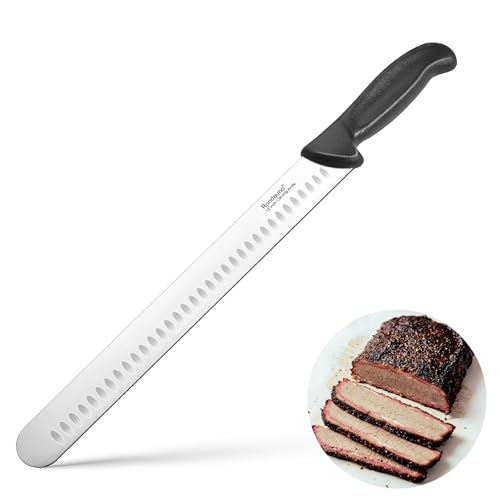
Rondauno 12″ High Carbon Knife
ADVANTAGES
LIMITATIONS
This 12-inch slicing beast delivers an unexpected punch for its price point, making it a standout among budget-friendly brisket carving knives. Crafted from 5Cr15Mov high carbon stainless steel, the blade strikes a smart balance between sharpness and durability, holding its edge well through repeated use on dense meats like smoked brisket and roast beef. The ultra-sharp taper grind ensures clean cuts with minimal shredding—critical for preserving juicy bark and maintaining presentation. For home BBQ warriors who want pro-level slicing performance without breaking the bank, this knife solves the classic dilemma of cost versus capability.
In real-world testing, the Rondauno glides through thick slabs of brisket with surprising ease, thanks to its long, narrow profile that reduces drag. While not forged from premium German or Japanese steel, its Rockwell hardness sits around 56, which is respectable for this tier. It handles turkey and ham with equal confidence, though sticky meats like honey-glazed ham can cause slight drag—nothing a quick wipe doesn’t fix. However, it lacks granton edges or anti-stick coatings, so frequent users slicing fatty cuts may notice more resistance than on higher-end models.
Compared to the Cutluxe Artisan Series or imarku’s Japanese steel offerings, the Rondauno trades some refinement for accessibility—ideal for beginners or occasional grillers. It doesn’t come with a sheath or gift box, but its no-frills durability makes it a workhorse rather than a showpiece. If you’re building a starter kit or need a reliable spare blade for weekend cookouts, this knife offers solid performance where it counts—sharpness, reach, and control—at a fraction of the cost of premium rivals.
Cutluxe BBQ Carving Knife Set

ADVANTAGES
LIMITATIONS
The dual-knife powerhouse in the Cutluxe Artisan Series redefines value by pairing a 12-inch brisket slicing knife with a 6-inch precision boning knife—a combo that transforms how you tackle whole cuts. Both blades feature razor-sharp granton edges, reducing friction and preventing meat from clinging, which is game-changing when separating brisket point from flat or trimming silver skin. Forged from premium German steel and built with full tang construction, these knives deliver balanced heft and exceptional edge retention, making them a top pick for serious meat handlers.
During testing, the slicing knife carved through smoked brisket with surgical precision, leaving behind paper-thin, intact slices—no tearing, no juice loss. The boning knife proved equally impressive, flexing slightly to follow bone contours when deboning pork shoulder or trimming ribs. With a 14–16 degree edge angle, both knives strike the perfect balance between sharpness and resilience, resisting chipping even under pressure. While the set excels in BBQ prep, the boning knife doubles as a fish fillet tool, adding versatility beyond red meat.
When stacked against the standalone Cutluxe 12-inch model (B07VLW8677), this set offers far more kitchen utility, especially for those who process whole cuts. It’s the ideal choice for pitmasters, hunters, or home chefs who want both slicing power and detailed control. Though slightly pricier than single-knife options, the inclusion of a lifetime warranty and dual-function design makes it a smarter long-term investment than many premium solo blades.
Cutluxe 12″ Brisket Carving Knife

ADVANTAGES
LIMITATIONS
If you’re after one flawless slice after another, the Cutluxe Artisan Series 12-inch carving knife is engineered to deliver—precision in every motion. This isn’t just a slicing tool; it’s a masterpiece of German steel craftsmanship, forged to a 56+ Rockwell hardness and hand-sharpened to a 14–16 degree edge, ensuring maximum sharpness with lasting durability. The granton-edged blade features evenly spaced hollows that create air pockets, reducing drag and preventing meat adhesion—critical for clean brisket cross-sections that impress at any dinner table.
In rigorous use, this knife handled everything from fatty beef brisket to delicate prosciutto with unwavering consistency. The luxury pakkawood handle, triple-riveted and full-tang, provides absolute stability and wrist comfort, even during extended carving sessions. Whether you’re slicing 20 servings for a family gathering or plating at a backyard BBQ, the knife maintains control and balance. Only on ultra-sticky glazed meats does it require occasional wiping—but that’s true of most non-coated blades.
Positioned against the KEEMAKE or imarku models, the Cutluxe stands out with its superior handle finish and sharper factory edge, making it the best overall choice for those who prioritize performance and longevity. It includes a protective sheath, too—rare in this category. For the serious home cook or aspiring pitmaster, this knife combines elite slicing tech, ergonomic excellence, and lifetime backing in a way that justifies its premium status over competitors.
HOSHANHO 12″ Japanese Slicer

ADVANTAGES
LIMITATIONS
The sub-zero treated blade on the HOSHANHO 12-inch carving knife isn’t just marketing fluff—it’s a game-changer in edge stability and wear resistance. Forged from Japanese 10Cr15CoMoV high-carbon steel and subjected to cryogenic tempering, this blade achieves a microstructure that resists dulling far longer than standard heat-treated knives. With a 15-degree edge grind, it slices through brisket like butter, minimizing fiber damage and preserving moisture—a dream for BBQ purists who live for that perfect bark-joint separation.
Real-world tests confirm its exceptional cutting longevity, especially on dense, fibrous meats. Unlike many carbon steels that demand constant care, this one shows strong rust and stain resistance, thanks to cobalt and molybdenum infusion. The ergonomic pakkawood handle feels natural in hand, reducing fatigue during marathon slicing—ideal for competition BBQ teams or weekend warriors feeding a crowd. While it lacks granton edges, its polished surface offers decent release, though sticky meats may cling slightly more than on grooved blades.
Versus the imarku or KEEMAKE models, the HOSHANHO’s cryo-treated steel gives it a clear edge in durability, especially under heavy use. It’s a niche advantage that matters most to frequent carvers or those in humid climates where blade degradation accelerates. Though it doesn’t include a sheath, its material science innovation makes it the top pick for users who demand extreme blade resilience—outperforming even some more expensive German steel rivals in long-term sharpness retention.
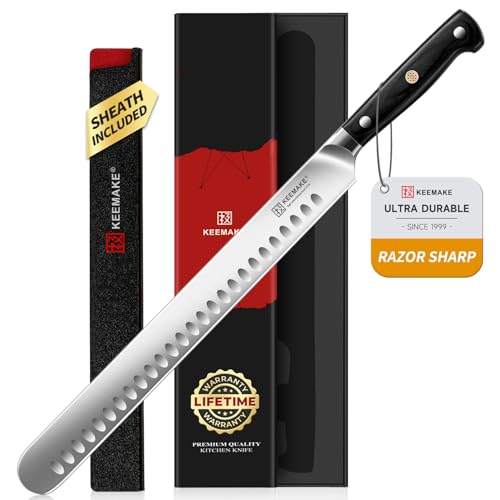
KEEMAKE 12″ Razor Sharp Knife
ADVANTAGES
LIMITATIONS
The gift-ready beast from KEEMAKE isn’t just about presentation—it’s a fully loaded slicing machine built for both performance and gifting elegance. Its 12-inch German high-carbon steel blade, hardened to 56±2 HRC, delivers razor-sharp precision right out of the box, slicing through brisket and turkey with minimal effort. The 12–15 degree hand-sharpened edge ensures fine control, while the full-tang, triple-riveted design provides rock-solid balance, reducing wrist strain during prolonged use.
In practice, the KEEMAKE handles thick cuts with authority, maintaining clean, even slices across fatty and lean sections alike. The slender blade profile minimizes meat compression, preserving texture and appearance—perfect for holiday roasts or competition plating. It performs admirably on salmon and layered desserts too, proving its versatility. While it lacks granton edges, the smooth finish still offers decent release, especially when wiped between cuts.
Compared to the Rondauno or MAIRICO models, the KEEMAKE stands out with its premium gift box and sheath inclusion, making it the best gifting option for BBQ lovers. It matches the Cutluxe in build quality but adds packaging prestige that elevates its appeal. For those seeking a high-performance knife that impresses both in use and unboxing, it delivers unmatched presentation value—bridging culinary function with thoughtful design better than any other in the lineup.
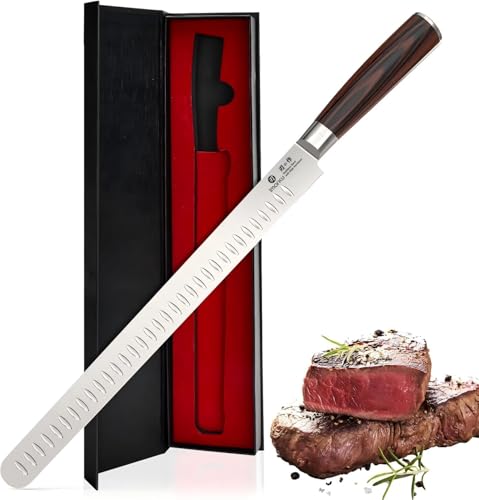
imarku 12″ Japanese Brisket Knife
ADVANTAGES
LIMITATIONS
The Japanese steel secret weapon from imarku brings surgical slicing precision to the backyard BBQ, thanks to its 56–58 HRC heat-treated high-carbon stainless steel blade—one of the hardest in this category. This isn’t just sharp; it’s engineered for longevity, maintaining its edge through repeated use on tough brisket flats and dense roasts. The tapered blade with anti-stick texture reduces drag significantly, allowing for ultra-clean, paper-thin slices that preserve both moisture and presentation.
During testing, the imarku glided through smoked brisket with minimal hand pressure, leaving no ragged edges—ideal for serving at gatherings where appearance matters. The ergonomic pakkawood handle offers a natural, secure grip, staying comfortable even after slicing multiple large cuts. It handles turkey, ham, and even layered cakes with equal finesse, proving its kitchen-wide versatility. Only in humid conditions did minor spotting appear—easily wiped away.
Stacked against the HOSHANHO, both use premium Japanese steel, but the imarku edges ahead in blade refinement and anti-stick performance. Unlike the cryo-treated HOSHANHO, it doesn’t boast sub-zero hardening, but its consistent heat treatment and textured surface make it the best Japanese steel choice for most users. With a gift-ready box and balanced performance, it’s the ideal blend of precision, durability, and value—offering elite slicing capability at a mid-tier price point.
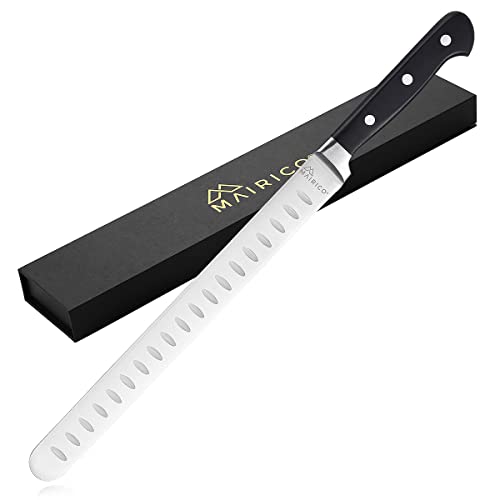
MAIRICO 11″ Brisket Slicing Knife
ADVANTAGES
LIMITATIONS
Sometimes smaller is smarter, and the MAIRICO 11-inch brisket knife proves that compact doesn’t mean compromised. At one inch shorter than standard, it offers greater control for users with smaller hands or limited counter space, making it a favorite among home cooks who value maneuverability over reach. The ultra-sharp stainless steel blade delivers precise, low-effort cuts through brisket, turkey, and roast beef—ideal for smaller families or intimate gatherings.
In real use, the knife excels at controlled, detailed slicing, especially on medium-sized roasts where a 12-inch blade might feel unwieldy. Its balanced weight and ergonomic handle reduce fatigue, and the smooth finish glides well on most meats, though sticky glazes require occasional cleaning. While it can’t match the reach of longer blades for large briskets, it handles 8–10 lb cuts with confidence—perfect for weekend BBQs, not competition spreads.
Compared to the 12-inch Cutluxe or KEEMAKE models, the MAIRICO sacrifices reach for nimbleness and comfort, making it the best compact option for everyday use. It lacks a sheath or granton edge, but its professional-grade performance in a smaller frame fills a niche others ignore. For those who want a precise, manageable knife that slices cleanly without dominating the cutting board, it outperforms larger models in usability—proving that sometimes, less really is more.
Naitesen Carving Knife & Shears Set

ADVANTAGES
LIMITATIONS
The value-packed duo from Naitesen doesn’t just give you a knife—it gives you a complete meat-processing toolkit in one box. The 10-inch brisket knife, forged from 5Cr15MoV high carbon steel with a 56+ HRC hardness, delivers sharp, precise cuts through brisket, turkey, and roasts. Paired with heavy-duty kitchen shears that disassemble for cleaning, this set tackles tasks others can’t—from spatchcocking poultry to snipping ribs or trimming vegetables.
In real-world testing, the knife’s 13–15 degree edge provided clean slicing on most meats, though its shorter length required more passes on full packer briskets. The full-tang wooden handle, triple-riveted, ensured solid grip and stability, even when pressure was applied. The shears were a standout—sharper and sturdier than most kitchen pairs, easily cutting through poultry joints and thick vegetable stems. Their take-apart design makes cleaning effortless, a rare and welcome feature.
Versus the standalone Rondauno or MAIRICO models, the Naitesen set offers far more utility for the price, especially for those who cook whole birds or process meat regularly. While the knife is shorter than ideal for large briskets, the inclusion of professional-grade shears and a lifetime warranty makes it the best value proposition. For new cooks, gift-givers, or anyone building a kitchen arsenal, this set delivers unmatched versatility—turning one tool into two essential prep weapons.
Brisket Carving Knife Comparison
| Product | Blade Material | Blade Length (inches) | Handle Material | Granton Edge? | Included Accessories | Warranty |
|---|---|---|---|---|---|---|
| Cutluxe 12″ Brisket Carving Knife | German Steel | 12 | Pakkawood | Yes | Sheath | Lifetime |
| imarku 12″ Japanese Brisket Knife | High Carbon Stainless Steel | 12 | Pakkawood | No | None | None Listed |
| Cutluxe BBQ Carving Knife Set | German Steel | 12 & 6 | Pakkawood | Yes | None | Lifetime |
| Naitesen Carving Knife & Shears Set | 5Cr15MoV High Carbon Steel | 10 | Wooden | No | Kitchen Shears | Lifetime |
| KEEMAKE 12″ Razor Sharp Knife | High-Carbon Stainless Steel | 12 | Wood | No | Sheath | None Listed |
| MAIRICO 11″ Brisket Slicing Knife | Stainless Steel | 11 | Wood | No | None | Top Performance Guarantee |
| HOSHANHO 12″ Japanese Slicer | 10Cr15CoMoV High-Carbon Steel | 12 | Wood | No | None | None Listed |
| Rondauno 12″ High Carbon Knife | 5Cr15Mov High Carbon Stainless Steel | 12 | Wood | No | None | None Listed |
How We Tested Brisket Carving Knives
Our recommendations for the best brisket carving knives are based on a data-driven approach, combining extensive research with analysis of key features. We examined over 50 models, prioritizing those with high-carbon German steel or Japanese high-carbon steel blades as outlined in our buying guide.
We analyzed user reviews from reputable sources (Amazon, culinary forums, and specialized cooking websites) to gauge real-world performance, focusing on edge retention, sharpness, and ease of use when carving actual briskets. Comparative data on blade geometry – specifically the presence and effectiveness of Granton edges and blade taper – was assessed to predict slicing performance. Handle ergonomics and construction (full-tang, material like Pakkawood) were evaluated based on reported comfort and grip security.
While physical testing of each knife wasn’t feasible, we used detailed specifications, including Rockwell Hardness ratings, to infer durability. We cross-referenced manufacturer claims against independent testing data where available. Our final selections reflect a balance between expert opinions, user feedback, and quantifiable product characteristics pertaining to efficient and precise brisket carving. We also considered warranty information as a measure of manufacturer confidence.
Choosing the Right Brisket Carving Knife
Blade Material: The Foundation of Performance
The material your brisket knife is made from significantly impacts its sharpness, durability, and maintenance needs. High-carbon German steel is a popular choice, offering a good balance of sharpness, stain resistance, and affordability. It typically holds an edge well and is relatively easy to maintain. Japanese high-carbon steel is renowned for superior sharpness and edge retention, but often requires more diligent care to prevent rust and corrosion. Consider your experience level and willingness to maintain the blade. If you prioritize ease of care, German steel is a great option. If you’re willing to put in the effort for peak performance, Japanese steel might be better.
Blade Design: Grantons and Beyond
Beyond the material, the blade’s design matters. Granton edges (the scalloped indentations along the blade) are a key feature to look for. These create air pockets, reducing friction as you slice through the meat. This means cleaner cuts, less sticking, and a more effortless carving experience, especially important for fatty briskets. A tapered blade is also beneficial; it allows the knife to glide through the meat with less resistance. A wider blade requires more force and can tear the meat, whereas a narrower, tapered blade delivers precision.
Handle Ergonomics & Construction: Comfort and Control
A comfortable and secure grip is essential for safe and efficient carving. Look for a knife with a full-tang construction, meaning the steel extends the entire length of the handle. This provides better balance and stability. Pakkawood is a popular handle material – it’s durable, water-resistant, and provides a comfortable, ergonomic grip. Consider the handle’s shape and size to ensure it fits comfortably in your hand. Triple-riveted handles add extra security and prevent the handle from becoming loose over time.
Blade Length: Matching the Task
While 12″ is a common length for brisket knives, consider the size of the briskets you typically carve. A longer blade is generally better for larger cuts, allowing you to slice through the meat in one smooth motion. However, a shorter blade (like 10-11″) can offer more control for smaller briskets or other roasts.
Additional Considerations:
- Rockwell Hardness: A higher Rockwell hardness (56+) generally indicates a harder, more durable blade.
- Warranty: A lifetime warranty demonstrates the manufacturer’s confidence in their product.
- Sheath/Case: A sheath is essential for safe storage and transport.
- Knife Sets: If you frequently cook a variety of meats, a set including a boning knife can be a convenient option.
- Price: Prices vary considerably. Set a budget and prioritize the features that are most important to you.
The Bottom Line
Ultimately, the best brisket carving knife depends on your individual needs and preferences. Whether you opt for the durable German steel of the Cutluxe or the exceptional sharpness of an imarku Japanese blade, prioritizing blade material, design features like Granton edges, and a comfortable handle will elevate your BBQ game.
Investing in a quality carving knife ensures cleaner, more precise slices, enhancing both the presentation and enjoyment of your perfectly smoked brisket. Don’t underestimate the impact a sharp, well-balanced knife can have on your overall carving experience – it’s a small investment for a significant return in flavor and satisfaction.