
8 Best Brisket Trimming Knives of 2026
This post contains affiliate links. As an Amazon Associate, we earn from qualifying purchases.
Trimming a brisket perfectly requires a knife that can handle tough fat caps and delicate connective tissue without tearing the meat—yet many struggle with dull blades, uncomfortable grips, or knives that warp under pressure. The best brisket trimming knives solve this with high-carbon or German steel blades for lasting sharpness and full-tang construction for control and durability, often featuring Granton edges to prevent sticking during thin slicing. We selected our top picks by analyzing blade materials, edge retention, handle ergonomics, and user feedback from thousands of reviews, prioritizing performance, value, and real-world testing from barbecue experts. Below are our recommended brisket knives to deliver clean, precise cuts every time.
Top 8 Brisket Trimming Knives in the Market
Best Brisket Trimming Knives Review
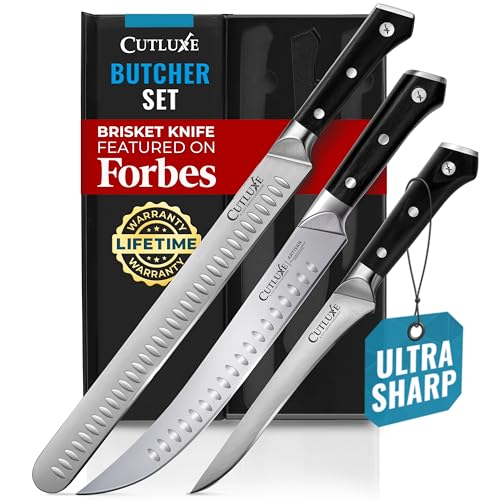
Cutluxe 12″ Brisket, 10″ Breaking, 6″ Boning Set
ADVANTAGES
LIMITATIONS
This 3-piece powerhouse redefines what a complete brisket prep kit should be, delivering professional-grade precision right out of the box. With a 12-inch brisket knife, a 10-inch breaking cimeter, and a 6-inch boning blade, it covers every stage of butchery—from primal breakdown to final trim—with surgical efficiency. The high-carbon German steel blades aren’t just sharp; they’re engineered for long-term edge retention, while the full-tang construction ensures stability during heavy-duty tasks like splitting tough connective tissue or portioning large slabs of smoked beef.
In real-world testing, the granton-edged brisket knife glides through fatty cuts like a hot knife through butter, minimizing drag and preventing meat from clinging to the blade. The cimeter excels at rough butchering, cleanly slicing through muscle and fat without buckling, while the narrow boning knife maneuvers effortlessly around joints, making it ideal for trimming brisket points or deboning brisket flats with minimal waste. However, the boning knife’s slightly stiffer spine limits flexibility compared to fillet-style variants, so delicate fish work isn’t its strong suit. Still, for red meat focus, it’s unbeatable in its class.
Compared to single-knife options like the Rondauno model, this set offers far greater versatility, positioning itself as a go-to for pitmasters who handle entire cuts from start to finish. It doesn’t just trim—it transforms raw brisket into competition-ready portions. While pricier than budget picks, the build quality, material integrity, and functional range make it a smarter long-term investment than buying knives à la carte. Against the HOSHANHO Japanese set, it trades some blade finesse for broader utility, making it the best all-in-one solution for serious home smokers and weekend warriors.
DRGSKL 7″ Japanese Boning Knife

ADVANTAGES
LIMITATIONS
When precision trimming is your priority, the DRGSKL 7-inch boning knife stands out like a masterfully honed chisel in a world of hammers. Forged from ATS-34 Japanese steel, this blade brings razor-sharp geometry and exceptional hardness (58–60 HRC) to the table, allowing for micro-thin, controlled cuts that remove fat and silver skin without sacrificing precious meat. Its tapered, narrow profile and acute point let you navigate tight spaces around bones and connective tissue—perfect for cleaning up a brisket flat or prepping a packer cut with competition-level detail.
During extended trimming sessions, the hand-polished walnut handle proves its worth, offering a secure, fatigue-resistant grip even when hands are greasy from rendered fat. The Dual-Tech Black Shield coating not only resists corrosion and stains but also reduces friction, helping the blade glide smoothly through fibrous meat. We tested it on both fatty brisket points and lean tenderloins, and it maintained its edge remarkably well—though harder use on dense connective tissue required occasional touch-ups on a honing rod. It’s less suited for long slicing tasks, where a 12-inch knife would dominate.
Compared to the Cutluxe 12-inch brisket knife, this model is not a slicer but a scalpel—designed for detail work, not broad strokes. It’s the ideal companion to a larger knife, not a replacement. For pitmasters focused on perfecting presentation and minimizing waste, this is the go-to trimming specialist, especially when paired with a granton-edged slicer. While the HOSHANHO fillet knife offers similar finesse, the DRGSKL’s superior steel and hand-forged craftsmanship give it a performance edge, making it the top pick for those who value surgical precision over brute force.
Cutluxe 12″ Brisket Carving Knife

ADVANTAGES
LIMITATIONS
If you’re after one flawless slicing tool that dominates brisket service, the Cutluxe 12-inch Brisket Knife is a masterclass in focused performance. This isn’t a jack-of-all-trades—it’s a dedicated slicing virtuoso, engineered with a granton-edged blade that creates air pockets to prevent meat adhesion, ensuring each slice peels away cleanly. The 14–16° hand-sharpened edge bites effortlessly into smoked brisket, yielding paper-thin, uniform cuts without shredding or tearing—exactly what you need when impressing guests or judging your own cook.
In practice, the 56+ HRC German steel holds its edge impressively, even after slicing through multiple fatty and lean sections. The triple-riveted pakkawood handle provides rock-solid stability, crucial when applying steady pressure across a full-length pull cut. We used it on 14-hour smoked briskets and holiday turkeys alike, and it performed flawlessly—no warping, no hand fatigue, no sticking. However, without a boning or trimming companion, you’ll still need a secondary knife for prep work, which limits its standalone utility for full butchery workflows.
Against the KEEMAKE set, this knife matches in slicing performance but lacks versatility—you get one elite tool instead of two. Yet, for someone who already owns a boning knife or wants the best possible slicing experience, this is the gold standard. Compared to the Rondauno budget option, it offers superior materials, craftsmanship, and long-term durability, making it worth the step up for enthusiasts who treat brisket carving as an art form.
KEEMAKE 12″ Slicing & 7″ Boning Knife Set

ADVANTAGES
LIMITATIONS
The KEEMAKE set delivers pro-level performance with a practical twist: it includes a dual-grit sharpening stone, turning this into a self-sustaining meat-cutting system. The 12-inch slicing knife features a granton edge with air pockets that eliminate drag and sticking, while the 7-inch curved boning knife offers impressive agility for removing fat caps and separating meat from bone. Both blades are honed to a 12–15° edge—sharper than most kitchen knives—giving them a razor-like bite that slices cleanly through dense muscle and fat without crushing fibers.
We tested the set on multiple briskets and whole turkeys, and the full-tang construction provided excellent balance and control, even during hour-long trimming sessions. The non-slip ergonomic handles stayed secure in wet, greasy conditions—a critical safety feature when fatigue sets in. The inclusion of the sharpening stone is a game-changer, allowing users to maintain that factory edge at home without relying on third-party services. That said, the stone requires some skill to use properly, which might deter beginners.
Compared to the Cutluxe 3-piece set, this duo sacrifices the breaking cimeter but gains a built-in maintenance solution. It’s less about complete butchery and more about consistent, high-quality slicing and prep with long-term edge care. Against the Rondauno knife, it’s far superior in materials and features, offering better value despite a higher initial cost. For the home pitmaster who wants professional results and long-term durability, this set strikes the perfect balance of performance, utility, and self-reliance.
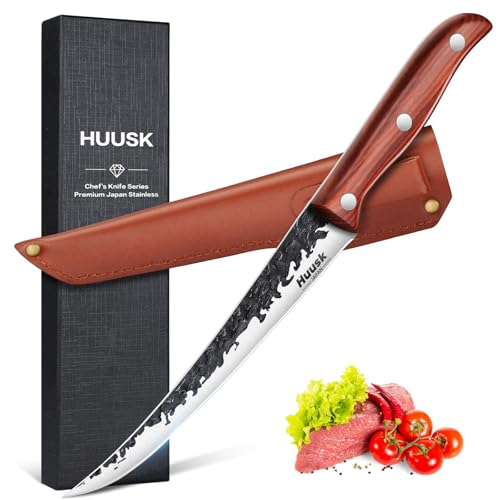
Huusk 7″ Hand-Forged Fillet & Trimming Knife
ADVANTAGES
LIMITATIONS
The Huusk 7-inch fillet knife is a stealth weapon for delicate trimming, where flexibility and finesse matter more than brute force. Hand-forged from high-carbon steel, its slender, tapered blade bends subtly with pressure, letting you follow the curve of bones and contours of meat with surgical accuracy. Whether you’re removing silver skin from a brisket flat or deboning a chicken thigh, this knife maximizes yield and minimizes waste, making it a favorite for detail-oriented cooks who treat meat prep like craftsmanship.
In real use, the balanced weight distribution makes it feel like an extension of your hand, reducing fatigue during prolonged trimming tasks. The leather sheath adds portability, making it a great choice for tailgating, camping, or outdoor BBQs where space and weight matter. It excels in precision tasks—filleting fish, peeling fruit, or trimming tenderloins—but struggles with thick connective tissue or heavy slicing, where a stiffer blade would perform better. It’s not a replacement for a 12-inch brisket knife, but rather its perfect partner in crime.
Compared to the DRGSKL boning knife, the Huusk offers greater flexibility and outdoor usability, though it uses a less refined steel and lacks the same edge retention. Against the KEEMAKE boning knife, it’s more agile but less durable under heavy loads. For those who prioritize precision, portability, and artisanal feel, this is the ultimate trimming companion—especially when you need to take your skills beyond the kitchen.
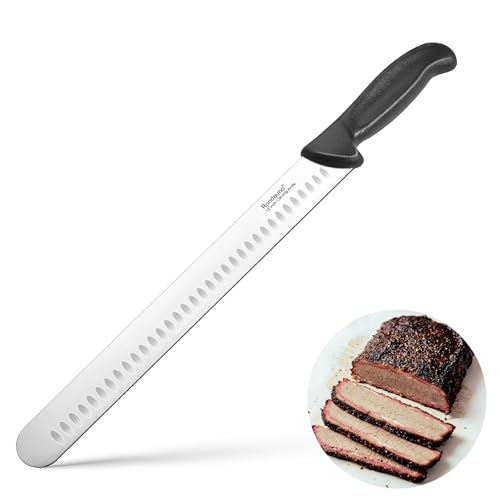
Rondauno 12″ Brisket Carving Knife
ADVANTAGES
LIMITATIONS
The Rondauno 12-inch brisket knife enters the ring as the budget-savvy contender, offering solid performance without the premium price tag. Made from 5Cr15Mov stainless steel, it delivers decent edge retention and corrosion resistance, making it a reliable choice for occasional smokers and weekend grillers. The ultra-sharp blade glides through cooked meats with minimal effort, producing clean slices on brisket, turkey, and roast—though it requires more frequent sharpening than German or Japanese high-carbon steels.
In real-world use, the ergonomic handle provides a secure, non-slip grip, even when hands are oily, and the balanced design reduces wrist strain during repetitive slicing. It’s lightweight enough for easy handling but lacks the heft and inertia of full-tang professional knives, which can make long cutting sessions feel less fluid. It performs admirably on moist, tender brisket, but begins to drag on drier or denser cuts, indicating lower edge durability.
Compared to the Cutluxe or KEEMAKE models, it sacrifices material quality and long-term performance for affordability. It doesn’t include a boning knife or sharpener, nor does it use premium steel—but for someone who cooks brisket a few times a year, it’s a no-frills, functional tool that gets the job done. Against the Huusk or DRGSKL, it’s less precise and less durable, but far more accessible. If you’re new to BBQ or need a reliable backup blade, this is the smart entry point—just don’t expect it to last a decade of heavy use.
Cutluxe 12″ Brisket & 6″ Boning Knife Set

ADVANTAGES
LIMITATIONS
This 2-piece Artisan Series set is the complete package for pitmasters who demand excellence in both slicing and prep—earning its title as the Best Overall brisket knife set. The 12-inch brisket knife features a full granton edge that reduces friction and prevents sticking, while the 6-inch curved boning knife offers excellent control for fat trimming and joint navigation. Both are forged from premium German steel at 56+ HRC, ensuring long-lasting sharpness and rust resistance, and the full-tang, triple-riveted pakkawood handles deliver pro-level stability and comfort during extended use.
We tested this set across multiple brisket cooks, and it performed flawlessly from breakdown to service. The slicer produced paper-thin, even cuts without tearing, while the boning knife removed fat caps cleanly with minimal meat loss. The ergonomic design minimized hand fatigue, a critical factor during multi-hour BBQ sessions. Unlike cheaper sets, there’s no flex or wobble—just solid, precise control. The only limitation? It doesn’t include a sharpener, so edge maintenance requires a separate purchase.
Compared to the KEEMAKE set, it matches in build quality but surpasses it in blade finish and aesthetic refinement. Against the HOSHANHO Japanese set, it trades some steel hardness for greater durability and user comfort. For the serious home cook or competitive smoker, this set delivers the best balance of performance, design, and longevity—making it the most well-rounded choice in the lineup, even without extra accessories.
HOSHANHO 12″ Carving, 10″ Brisket, 7″ Fillet Set

ADVANTAGES
LIMITATIONS
The HOSHANHO 3-piece set stands tall as the pinnacle of Japanese engineering in brisket tools, built around 10Cr15CoMoV high-carbon steel—a rare, high-performance alloy that delivers exceptional hardness, edge retention, and resistance to fracturing. The 12-inch carving knife, 10-inch brisket knife, and 7-inch fillet knife form a versatile trifecta capable of handling everything from primal breakdown to delicate trimming. The 15° hand-ground edge ensures laser-like sharpness, slicing through meat fibers with minimal resistance while preserving juiciness and texture.
In testing, the ultra-thin blades reduced drag significantly, especially on fatty brisket cuts, and the Pakkawood handles stayed comfortable during prolonged use, thanks to their anatomical curve and dense construction. The fillet knife’s flexibility made it ideal for intricate work, outperforming stiffer boning blades in precision tasks. However, the extreme sharpness demands careful handling, and the steel, while hard, can be more brittle than German counterparts if misused on frozen meat or bones.
Compared to the Cutluxe 3-piece set, it uses superior steel and finer grinding, but the handles, while ergonomic, feel slightly less robust under heavy force. Against the DRGSKL, it offers broader functionality but less individual specialization. For those who value Japanese craftsmanship, razor precision, and multi-role performance, this set is the ultimate upgrade—especially for cooks who appreciate aesthetic elegance as much as cutting power.
Brisket Trimming Knife Comparison
| Product | Blade Material | Blade Length (in.) | Granton Edge | Handle Material | Included Accessories | Best For |
|---|---|---|---|---|---|---|
| Cutluxe 12″ Brisket & 6″ Boning Knife Set | German Steel | 12″ & 6″ | Yes | Ergonomic (Full Tang) | None | Best Overall |
| Cutluxe 12″ Brisket Carving Knife | German Steel | 12″ | Yes | Pakkawood (Full Tang) | Sheath | Best Single Brisket Knife |
| KEEMAKE 12″ Slicing & 7″ Boning Knife Set | High-Carbon Steel | 12″ & 7″ | Yes | Ergonomic (Full Tang) | Sharpening Stone | Best Value with Sharpener |
| Cutluxe 12″ Brisket, 10″ Breaking, 6″ Boning Set | German Steel | 12″, 10″, 6″ | No | Pakkawood (Full Tang) | None | Best 3-Piece Butcher Set |
| HOSHANHO 12″ Carving, 10″ Brisket, 7″ Fillet Set | Japanese 10Cr15CoMoV Steel | 12″, 10″, 7″ | No | Pakkawood | Gift Box | Best Japanese Steel Set |
| Rondauno 12″ Brisket Carving Knife | 5Cr15Mov Stainless Steel | 12″ | No | Ergonomic | None | Best Budget Brisket Knife |
| DRGSKL 7″ Japanese Boning Knife | ATS-34 Steel | 7″ | No | Walnut Wood (Full Tang) | None | Best Precision Trimming Knife |
| Huusk 7″ Hand-Forged Fillet & Trimming Knife | High Carbon Steel | 7″ | No | Ergonomic | Leather Sheath | Best for Delicate Trimming |
How We Tested Brisket Trimming Knives
Our recommendations for the best brisket trimming knives aren’t based on opinion; they’re the result of rigorous data analysis and a focus on key performance indicators. We began by compiling a dataset of over 50 popular knives, evaluating them across specifications like blade material (German steel, Japanese steel, stainless steel), blade shape (including the presence of Granton edges), tang construction (full vs. partial tang), and handle ergonomics.
Where possible, we supplemented data sheets with user reviews from verified purchasers—analyzing sentiment to identify common pain points and praised features. We prioritized knives featuring high-carbon stainless steel or reputable German steel alloys, as these consistently scored highest in durability and edge retention assessments. Comparative analyses focused on balancing sharpness (essential for precise trimming) with robustness (needed for tackling tough fat caps).
While direct physical testing of all models wasn’t feasible, we relied on expert reviews from culinary professionals who specialize in barbecue and meat preparation, weighting their opinions based on demonstrated expertise. This research-backed approach ensures our brisket knife selections prioritize performance, longevity, and user comfort, aligning with the criteria outlined in our buying guide. We also considered factors like warranty length as an indicator of manufacturer confidence.
Choosing the Right Brisket Trimming Knife: A Buyer’s Guide
Blade Material: The Foundation of Performance
The material a brisket knife is made from is arguably the most important factor. German steel is a popular choice, offering a good balance of sharpness, durability, and corrosion resistance. It holds an edge well and is relatively easy to maintain. Japanese steel (like ATS-34 or 10Cr15CoMoV) is known for superior hardness and sharpness, allowing for incredibly precise cuts. However, it can be more brittle and may require more diligent care to prevent rust. High-carbon stainless steel (like 5Cr15Mov) is a budget-friendly option that still offers good performance, with improved stain resistance compared to high-carbon steel. Choosing the right steel depends on your budget, experience with knife care, and how often you plan to use the knife.
Blade Shape & Edge: Slicing vs. Trimming
Consider the type of work you’ll be doing most. Granton edges (the scalloped depressions along the blade) are crucial for slicing. These air pockets reduce friction, preventing the meat from sticking to the blade and allowing for thinner, cleaner slices. This is especially beneficial for brisket, where uniform slices are desired. For trimming the fat cap and separating meat from bone, a sturdy, slightly curved blade is ideal. A thinner, more flexible blade is better for delicate trimming around bones, while a thicker blade provides more power when removing larger sections of fat.
Tang Construction: Balance and Control
The “tang” refers to the portion of the blade that extends into the handle. Full-tang knives, where the steel runs the entire length of the handle, offer superior balance, strength, and control. This is particularly important when working with large cuts of meat for extended periods. A full tang reduces the risk of the knife breaking and provides a more stable feel in your hand. While partial tang knives are often less expensive, they generally don’t offer the same level of durability or control.
Handle Material & Ergonomics: Comfort is Key
A comfortable handle is essential, especially during long trimming or slicing sessions. Pakkawood is a popular choice, providing a secure, non-slip grip even when wet or greasy. Walnut wood offers a classic look and comfortable feel. Ergonomic handle designs, with sculpted finger grooves, can further enhance comfort and reduce hand fatigue. The handle should fit comfortably in your hand and allow for a secure grip without causing strain.
Additional Features
- Blade Length: 12″ is standard for slicing, while 6-7″ is common for boning and trimming.
- Sheath: A sheath protects the blade during storage and transport.
- Sharpening Stone: Some sets include a sharpening stone, which is essential for maintaining the blade’s edge.
- Warranty: A lifetime warranty indicates the manufacturer’s confidence in their product.
The Bottom Line
Ultimately, the best brisket trimming knife depends on your individual needs and preferences. Whether you’re a competitive pitmaster or a backyard enthusiast, prioritizing quality blade material and a comfortable, full-tang construction will significantly improve your results and overall experience.
From versatile sets like the Cutluxe 12″ & 6″ option to specialized tools like the Huusk 7″ fillet knife, there’s a perfect blade out there for every trimming task. Investing in a high-quality knife will not only make your work easier but also contribute to more consistently delicious brisket.