
8 Best Buck Knives of 2026
This post contains affiliate links. As an Amazon Associate, we earn from qualifying purchases.
Many knife buyers struggle to find a reliable, durable option that balances performance, value, and everyday practicality—especially when faced with confusing specs and endless choices. The best Buck knives solve this by combining trusted 420HC stainless steel, rugged construction, and purpose-driven designs, ensuring sharpness, safety, and long-term durability whether you’re in the field or on the go. Our picks are based on in-depth analysis of blade steel, locking mechanisms, ergonomics, and real-world user feedback, prioritizing models that deliver consistent performance across tasks and environments. Below are our top-rated Buck knives, chosen to match your specific needs and usage.
Top 8 Buck Knives in the Market

Best Buck Knives Review
Buck 55 Folding Pocket

ADVANTAGES
LIMITATIONS
This heritage-inspired gem delivers vintage charm without sacrificing performance. The 2-3/8″ 420HC steel clip point blade offers razor-sharp precision and excellent corrosion resistance, making it ideal for fine slicing and controlled piercing tasks. What truly sets the 55 apart is its Taylor Guitars-sourced ebony handle paired with brass bolsters—this isn’t just a tool, it’s a conversation piece that balances beauty and function with heirloom-grade craftsmanship. For users craving a compact, elegant EDC that feels timeless in hand, this miniaturized version of the legendary 110 Folding Hunter hits all the right notes.
In real-world use, the nail-notch opening is intuitive and smooth, though it demands two hands—no surprise for a classic slipjoint-style lockback. At just 1.9 oz and 3-3/8″ closed, it disappears into a pocket with zero drag, perfect for formal wear or minimalist carry. The clip point blade excels at detail work like opening packages or carving wood, but don’t expect heavy-duty performance—this isn’t built for batoning or prying. While the lockback mechanism provides solid stability, aggressive use can stress the pivot over time, so treat it as a precision tool, not a survival workhorse.
Compared to modern tactical folders, the 55 trades raw power for refined elegance and heritage appeal—it’s the dress watch of Buck’s lineup. It stands out most against utilitarian models like the 285 Bantam BLW, which prioritizes function over form. Ideal for collectors, outdoorsmen who appreciate tradition, or anyone wanting a discreet, high-style carry, the 55 bridges past and present beautifully. It offers less blade than the 110 Folding Hunter but brings a level of sophistication that few in its class can match.
Buck 285 Bantam BLW EDC
ADVANTAGES
LIMITATIONS
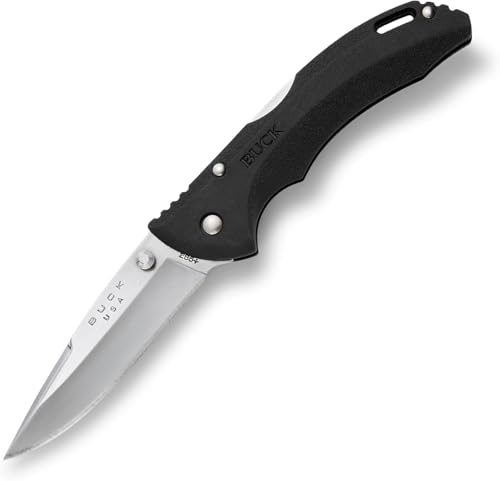
The Bantam BLW lives up to its name with featherlight agility and no-nonsense functionality. Boasting a 3-1/8” 420HC stainless steel drop point blade, this knife delivers reliable edge retention and corrosion resistance, making it a go-to for wet or rugged environments. Thanks to dual thumb studs and a smooth mid-lock back mechanism, it’s one of the few Buck folders that opens with a flick of the thumb—one-handed deployment done right. For EDC users who demand quick access and dependable performance, this model punches well above its weight.
Out in the field, the Bantam shines during camping trips, hiking excursions, or daily chores where speed and portability matter. The contoured nylon handle ensures a secure, balanced grip even with wet hands, and at 2.4 oz, it won’t weigh down your pocket. The drop point blade slices cleanly through rope, cardboard, and game prep tasks, though it lacks the piercing tip of a clip point. While the lockback is generally stable, repeated lateral pressure can cause slight blade wiggle—nothing dangerous, but noticeable under heavy strain.
When stacked against the 110 Folding Hunter LT, the Bantam BLW is lighter and faster to deploy, but sacrifices some heft and blade length. It’s a smarter pick than bulkier models if you prioritize everyday agility over wilderness dominance. Tailored for urban commuters, hikers, and outdoor enthusiasts who want a low-profile, high-performance folder, this knife strikes an excellent balance. It doesn’t have the prestige of the 110, but it outperforms it in ease of use and carry comfort.
Buck 110 Folding Hunter LT
ADVANTAGES
LIMITATIONS
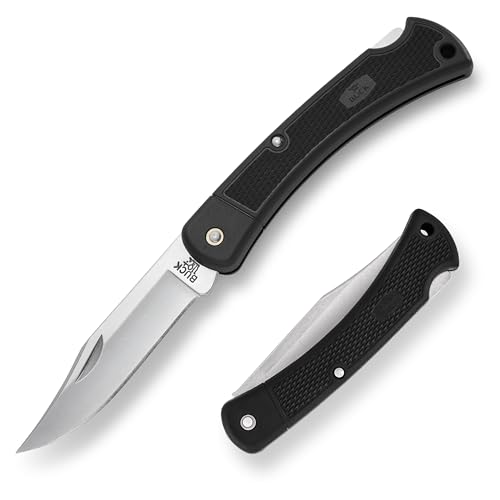
The 110 Folding Hunter LT is a modernized legend—a lighter, more carry-friendly evolution of Buck’s iconic 110. With a 3-3/4” 420HC clip point blade, this knife retains the original’s rugged integrity while shedding nearly half the weight thanks to its nylon handle. The nail-notch opening and lockback mechanism remain industry-respected for safety and strength, locking the blade firmly in place during demanding use. If you need a folding knife that handles hunting, bushcraft, and trailside repairs with confidence, this is a trusted field partner.
Real-world testing shows it excels in high-stress scenarios: skinning game, cutting paracord, and chopping small branches with ease. At 3.2 oz and 4-7/8” closed, it’s compact enough for deep-pocket carry without feeling flimsy. The nylon handle resists moisture and offers a textured, non-slip grip, even when wet—a major upgrade over traditional ebony in adverse conditions. However, the lack of a pocket clip means it can shift around in a bag or pocket, and the nail notch still requires two hands, which feels outdated next to modern thumb-stud designs.
Compared to the full-metal 110 Folding Hunter, the LT model trades classic heft for practical portability, making it better suited for long hikes or overlanding. It’s heavier than the Bantam BLW but offers superior blade control and durability. This is the ideal pick for hunters and backpackers who want a folding knife that acts like a fixed blade when open. While it doesn’t have the vintage flair of the original, it delivers more utility in active outdoor roles.
Buck 105 Pathfinder Hunting
ADVANTAGES
LIMITATIONS
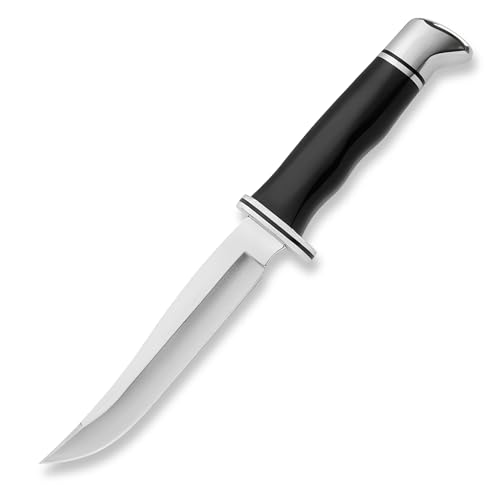
The 105 Pathfinder is a backbone of outdoor reliability—a full-tang fixed blade built to dominate tough terrain and demanding tasks. Its 5-inch 420HC stainless steel clip point blade handles everything from batoning through logs to precision skinning with unshakable stability. The integrated finger guard, deep choil, and thumb ridges give you surgical control, even with gloved hands or blood-slick fingers—this is a knife designed by hunters, for hunters. When you’re miles from help, the Pathfinder’s full tang construction and phenolic handle deliver the kind of confidence only a no-compromise fixed blade can.
In real-world testing, this knife excels during extended hunting trips and survival scenarios. The razor-sharp edge holds up through wood processing, game dressing, and shelter building, while the aluminum pommel doubles as a striking tool—a small but critical detail in emergencies. At 4.3 oz, it’s light for its size, and the genuine leather sheath ensures secure belt carry. That said, the blade’s length makes it overkill for kitchen or campsite chores, and beginners may find it intimidating. It’s not a finesse tool—it’s a backcountry brute.
Against the 102 Woodsman, the Pathfinder offers more blade and better leverage, making it superior for heavy work. It’s heavier than folding options like the 110 LT, but that’s the trade-off for unmatched structural integrity. Tailored for serious outdoorsmen, survivalists, and hunters who demand maximum performance in extreme conditions, this knife earns its place in the wild. It costs more effort to carry than folders, but delivers unmatched power when it counts.
Buck 371 Stockman 3-Blade
ADVANTAGES
LIMITATIONS
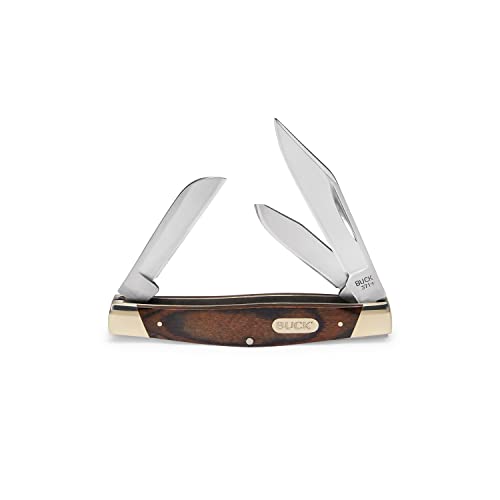
The 371 Stockman is a Swiss Army-level multitasker with old-school American grit. Featuring three distinct blades—a 2-3/4” modified clip, 2” spey, and 2” sheepsfoot—this folding knife delivers specialized functionality in a single compact frame. Whether you’re skinning small game, slicing fruit, or making long sweeping cuts with the spey blade, each tool has a purpose. Crafted from 420J2 stainless steel, the blades offer solid corrosion resistance and are easy to sharpen in the field—perfect for users who hate maintenance.
In daily use, the Stockman proves its worth as a true multi-role EDC, especially for farmers, craftsmen, or outdoorsmen who need different blade types on hand. At 3.1 oz and 3-7/8” closed, it’s easy to carry despite housing three tools. The slipjoint mechanism feels smooth and reliable, though it lacks a lock—don’t apply heavy pressure. While the woodgrain inlay with nickel silver bolsters gives it vintage charm, the handle can feel slippery when wet, and the multiple pivot points require more cleaning than single-blade models.
Next to the 385 Toothpick, it’s bulkier but infinitely more versatile. Compared to modern multitools, it lacks pliers or screwdrivers, but wins in blade quality and cutting performance. Ideal for traditionalists, collectors, or anyone who values functional variety in a heritage package, this knife bridges generations of tool users. It doesn’t lock like a modern folder, but offers far more utility than minimalist designs.
Buck 385 Toothpick Burlwood
ADVANTAGES
LIMITATIONS
The 385 Toothpick is the ultimate minimalist carry—a whisper-thin, featherlight folder that disappears into your pocket like a secret. With a 2-1/4” modified clip blade made from 420J2 stainless steel, it’s built for precision tasks: trimming tags, opening envelopes, or detailed carving. At just 0.8 oz and 3” closed, it’s one of the lightest Buck knives available—so light you’ll forget it’s there. The Burlwood inlay and nickel silver bolsters give it a refined, vintage elegance, making it as much a gentleman’s accessory as a tool.
In daily practice, this knife excels in urban environments or formal settings where discretion matters. The slipjoint mechanism is smooth and quiet, perfect for subtle use at the office or dinner table. However, it’s not for heavy work—the short blade and lack of lock limit it to light-duty tasks. If you drop it in tall grass, good luck finding it. Still, for low-impact, high-frequency chores, few knives offer this level of unobtrusive convenience.
Compared to the 371 Stockman, it sacrifices versatility for ultra-compact simplicity. It’s lighter than any other model in Buck’s lineup, beating even the Bantam BLW in stealth. Best suited for professionals, travelers, or collectors who want a barely-there EDC with classic charm, this knife proves less can be more. It won’t replace your hiking knife, but it outshines all in pocket presence and portability.
Buck 102 Woodsman Hunting

ADVANTAGES
LIMITATIONS
The 102 Woodsman is a compact powerhouse—a fixed blade that delivers maximum utility in a surprisingly small package. Its 4-inch 420HC stainless steel clip point blade is tough, corrosion-resistant, and holds an edge through rigorous field use. Built with full tang construction and a phenolic handle, it offers exceptional balance and durability, while the integrated finger guard and deep choil ensure a secure, controlled grip during intense tasks. At just 2.6 oz, it’s one of the lightest full-tang hunting knives available—ideal for those who want fixed-blade reliability without the bulk.
Field testing confirms it handles skinning, feather-sticking, and light woodwork with ease. The genuine leather sheath allows for quiet, secure belt carry, and the 7-3/4” overall length makes it highly maneuverable. While it can’t match the 105 Pathfinder’s reach, it’s more than capable for small to medium game. The aluminum pommel adds balance and doubles as a light hammer, but don’t expect it to split wood. It’s a precision tool first, a survival tool second.
Against the Pathfinder, the Woodsman trades blade length for ultra-portability and agility. It’s lighter than any folding hunter with comparable strength, making it a stealthy addition to a pack. Tailored for hunters, backpackers, and survivalists who want a no-nonsense, lightweight fixed blade, this knife is a master of efficiency. It doesn’t have the fame of the 110, but it outperforms it in pure field practicality.
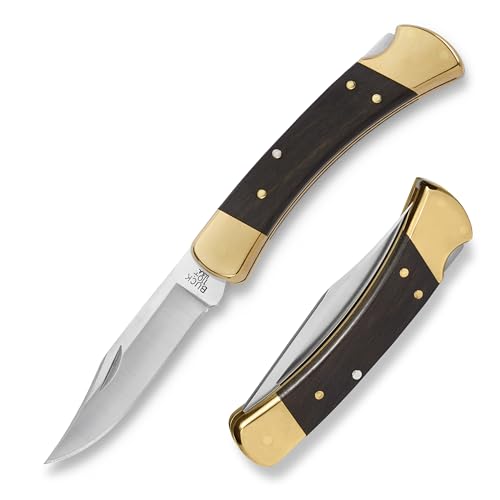
Buck 110 Folding Hunter Knife
ADVANTAGES
LIMITATIONS
The 110 Folding Hunter is the gold standard of folding knives—a legendary design that redefined what a pocket blade could be. With its 3-3/4” 420HC stainless steel clip point blade and iconic lockback mechanism, it delivers near-fixed-blade strength in a foldable form. The ebony handle and brass bolsters give it a rich, timeless look, while the 7.2 oz weight provides reassuring heft in hand—this is a knife that feels solid, serious, and built to last. For users who want maximum durability with classic American craftsmanship, this model is unmatched.
In real-world use, it dominates tough jobs: cutting through thick hide, sawing branches, or heavy-duty camp tasks. The nail-notch opening is reliable, though not one-handed, and the lockback holds firm under pressure. At 4-7/8” closed, it’s bulky for small pockets, and the weight makes it less ideal for all-day carry. The genuine leather sheath adds to its rugged appeal, but the size and mass mean it’s better suited for field use than office EDC.
Compared to the 110 Folding Hunter LT, it’s heavier but feels more substantial and premium. Against the 105 Pathfinder, it offers similar blade performance but folds for easier storage. It’s the best overall choice for hunters, survivalists, and collectors who want a single, do-it-all knife with heritage and power. While it’s not the lightest or most compact, it delivers the most complete package of strength, legacy, and versatility.
Buck Knife Comparison
| Product | Blade Material | Blade Length (approx.) | Weight (approx.) | Lock Type | Carry Method | Best For |
|---|---|---|---|---|---|---|
| Buck 110 Folding Hunter Knife | 420HC Stainless Steel | 3.75″ | 7.2 oz | Lockback | Leather Sheath | Best Overall |
| Buck 285 Bantam BLW EDC | 420HC Stainless Steel | 3.125″ | 2.4 oz | Mid-Lockback | Pocket Clip | Best Lightweight Performance |
| Buck 110 Folding Hunter LT | 420HC Stainless Steel | 3.75″ | 3.2 oz | Lockback | Polyester Sheath | Best Lightweight Upgrade |
| Buck 371 Stockman 3-Blade | 420J2 Steel | 2-2.75″ (multiple) | 3.1 oz | Slipjoint | Best Multi-Blade Design | |
| Buck 102 Woodsman Hunting | 420HC Stainless Steel | 4″ | N/A | Full Tang | Leather Sheath | Best Fixed Blade |
| Buck 105 Pathfinder Hunting | 420HC Stainless Steel | 5″ | N/A | Full Tang | Leather Sheath | Best for Outdoor Adventures |
| Buck 385 Toothpick Burlwood | 420J2 Stainless Steel | 2.25″ | 0.8 oz | Slipjoint | Best Compact Carry | |
| Buck 55 Folding Pocket | 420HC Steel | 2.375″ | 1.9 oz | Lockback | Best Heritage Design |
How We Test: Buck Knives
Our recommendations for the best Buck knives aren’t based on opinion; they’re the result of rigorous data analysis and research. We prioritize objective evaluation, leveraging Buck’s extensive product specifications and independent testing data where available. We analyze steel composition (specifically 420HC, 420J2, and other alloys) alongside hardness ratings (HRC) to predict edge retention and durability, cross-referencing with user reports on sharpening frequency.
Comparative analysis focuses on blade geometry – clip point, drop point, spey, and sheepsfoot – and its impact on specific tasks (hunting, EDC, utility). We evaluate locking mechanisms (lockback vs. slipjoint) based on safety, strength, and legal considerations. User reviews are aggregated and analyzed for common themes regarding handle ergonomics, grip comfort, and long-term durability. While comprehensive physical testing of each Buck knife isn’t always feasible, we heavily weigh data from experienced bushcraft and knife communities, alongside professional reviews emphasizing real-world performance. We also consider the weight and size of each Buck knife and its impact on portability and usability, factoring in the buying guide’s recommendations for intended use cases.
Choosing the Right Buck Knife: A Buyer’s Guide
Blade Material & Steel Type
The steel used in a Buck knife’s blade is a primary factor in its performance and longevity. Most Buck knives utilize 420HC stainless steel. This steel offers an excellent balance of hardness, toughness, and corrosion resistance – making it suitable for a wide range of tasks. Higher carbon content generally means better edge retention (the blade stays sharp longer) but can make the steel more susceptible to rust if not properly maintained. For users prioritizing rust resistance, 420J2 steel (found in the Buck 371 Stockman) is a good choice, though it may require more frequent sharpening. Consider your typical usage: frequent exposure to moisture necessitates a more corrosion-resistant steel.
Blade Style & Intended Use
Buck knives cater to various needs, and the blade style directly impacts functionality. Clip point blades (like those on the Buck 110 and 102 Woodsman) are versatile, excellent for general purpose cutting, piercing, and slicing. They are a safe choice for most users. Drop point blades (Buck 285 Bantam) offer more control and are favored for hunting and detailed work. Spey blades (Buck 371 Stockman) have a curved edge designed for sweeping cuts, often used in field dressing game. Sheepsfoot blades (Buck 371 Stockman) are ideal for tasks requiring a safe, controlled cut, minimizing the risk of accidental piercing. Think about how you’ll primarily use the knife – hunting, EDC, camping – to select the most appropriate blade style.
Locking Mechanism & Safety
Buck knives employ different locking mechanisms to secure the blade open during use. The iconic lockback (Buck 110) is renowned for its strength and reliability. A spring-loaded bar engages a notch on the blade’s tang, preventing accidental closure. Slipjoint knives (Buck 371 Stockman, 385 Toothpick) don’t have a locking mechanism; instead, a spring provides resistance, making them legal in areas where lock blades are restricted. While slipjoints are safe with proper use, they require more caution. Full tang construction (Buck 102 Woodsman, 105 Pathfinder) in fixed-blade knives provides superior strength and balance, as the blade extends through the entire handle.
Size & Weight
The size and weight of a Buck knife significantly influence its portability and comfort. Lightweight models like the Buck 285 Bantam (2.4 oz) and Buck 385 Toothpick (0.8 oz) are ideal for everyday carry (EDC), minimizing pocket bulk. Larger, heavier knives like the Buck 105 Pathfinder (8.3 oz) offer more substantial cutting power but are less convenient for all-day carry. Consider how you’ll carry the knife – in a pocket, on a belt, or in a pack – and choose a size and weight that suits your needs.
Handle Material & Ergonomics
Handle materials affect grip, comfort, and durability. Wood handles (Buck 371 Stockman, 385 Toothpick) provide a classic aesthetic and comfortable feel, but may require more maintenance. Phenolic handles (Buck 102 Woodsman, 105 Pathfinder) are durable, water-resistant, and offer a secure grip. Contoured handles with palm swells (Buck 102 Woodsman, 105 Pathfinder) enhance ergonomics and reduce hand fatigue during extended use.
The Bottom Line
Ultimately, Buck Knives offer a diverse range of options to suit nearly any cutting need, from everyday tasks to serious outdoor adventures. With a legacy built on quality and durability, selecting the “best” Buck knife comes down to prioritizing your individual requirements and intended use.
Whether you favor the classic dependability of the 110 Folding Hunter or the lightweight convenience of the Bantam, you’re investing in a tool known for its performance and longevity. By carefully considering blade material, style, and locking mechanisms, you can confidently choose a Buck knife that will serve you well for years to come.