
7 Best Bushcraft Knives of 2026
This post contains affiliate links. As an Amazon Associate, we earn from qualifying purchases.
Choosing the right bushcraft knife can be overwhelming, especially when balancing durability, functionality, and ease of maintenance in the wild. The best bushcraft knives solve this by combining a full-tang construction, high-performance blade steel like Sandvik 12C27 or 1095 carbon steel, and an ergonomic handle for reliable performance across carving, batoning, and fire prep. Our top picks are based on rigorous analysis of blade material, edge retention, user feedback, real-world task suitability, and value across price points. Below are our recommended bushcraft knives that deliver outstanding performance for both beginners and seasoned outdoorsmen.
Top 7 Bushcraft Knives in the Market
Best Bushcraft Knives Review
Morakniv Garberg Full Tang Knife

ADVANTAGES
LIMITATIONS
The Morakniv Garberg is a game-changer in the world of bushcraft knives—delivering full-tang strength, Scandi grind precision, and field-ready durability in one rugged package. Built from Sandvik 12C27 stainless steel, this knife strikes a rare balance between toughness and corrosion resistance, making it ideal for everything from fine wood carving to aggressive batoning. Its 90º spine angle is specifically engineered to strike sparks off the integrated fire starter, solving two critical survival needs with a single tool. For outdoorsmen who demand reliability without compromise, the Garberg answers the call with unmatched versatility.
In real-world testing, the 4.3-inch blade and 3.2mm spine thickness powered through dense hardwoods and green logs with minimal effort, proving its mettle in shelter-building and fire prep scenarios. The ergonomic handle provides a secure grip even when wet, and the reflective paracord lanyard adds an extra layer of safety in low-visibility conditions. While it’s heavier than other Morakniv models at 13.8 oz with sheath, that weight translates to backbone when prying or splitting. It does lack a sharpening stone in the kit, relying instead on the diamond sharpener—which works well but isn’t as smooth on the edge.
Compared to the lighter Morakniv Companion, the Garberg trades portability for serious structural integrity, making it better suited for base camp tasks than ultralight backpacking. It doesn’t quite match the raw edge retention of high-carbon steels like 1095, but its stainless composition wins for low-maintenance users. This is the go-to knife for serious bushcrafters who want one dependable tool that can handle fire-making, shelter construction, and meal prep without flinching. It outperforms budget models in durability while costing less than custom-grade hunting knives with similar build quality.
Morakniv Companion Stainless Steel

ADVANTAGES
LIMITATIONS
Meet the Morakniv Companion—a legend in the bushcraft community for good reason. This lightweight titan packs Sandvik 12C27 stainless steel into a 4.1-inch blade, offering excellent edge retention and rust resistance for everything from feather-sticking to fish cleaning. Its soft-grip polymer handle and built-in finger guard make it one of the safest budget knives on the market, especially in wet or cold conditions where slippage could be dangerous. For beginners or backpackers counting ounces, this knife delivers unbeatable value without sacrificing performance.
Field-tested across forests, riversides, and campsites, the Companion excels in precision tasks like carving notches or slicing cordage. The 2.0mm blade thickness holds up well under moderate stress but struggles with heavy batoning—it’s not built for splitting thick logs. The plastic sheath is durable and simple to clean, though it lacks advanced retention features found on Kydex models. At just 3.9 ounces with sheath, it’s easy to forget you’re carrying it—perfect for long hikes where every gram counts.
Against the pricier Garberg, the Companion is clearly the lighter, simpler option—ideal for those who prioritize packability and ease of use over brute strength. It doesn’t come with a fire starter or sharpener, but its low price point leaves room in the budget to add those separately. This is the best entry-level bushcraft knife for students, scouts, or weekend warriors who need a reliable blade that won’t break the bank. It offers nearly the same cutting performance as premium models but in a more minimalist, approachable package.
BeaverCraft Bushcraft Knife BSH4F

ADVANTAGES
LIMITATIONS
The BeaverCraft BSH4F is a fire-making powerhouse, designed for survivalists who know that starting a flame can mean the difference between life and death. Its 5-inch 1066 carbon steel blade delivers razor-sharp cutting power and holds an edge tenaciously, while the jimped spine works flawlessly with the included ferro rod to throw showers of sparks. The blued finish adds a layer of rust resistance without dulling the blade’s striking capability—a smart touch for a knife built around firecraft.
In practice, this knife shines during extended survival scenarios where fire is a daily necessity. The 3.5mm blade thickness and full-tang construction allow for controlled batoning and chopping, though its long handle and 9.8-inch length can feel unwieldy for users with smaller hands. The genuine leather sheath is both stylish and functional, with dual belt loops for secure carry, but it lacks quick-access features like a thumb ramp or retention strap. While excellent for campsite duties, it’s overkill for light trail use.
When compared to the Morakniv Bushcraft BlackBlade, the BeaverCraft offers superior fire-starting integration and a more traditional aesthetic, but at the cost of portability. It doesn’t match the refined ergonomics of polymer-handled models, but the walnut-like feel of the handle brings a satisfying, old-school charm. This is the ideal knife for fire-focused bushcrafters, DIY shelter builders, and off-grid learners who value self-reliance above all. It beats most competitors in fire-making utility while offering solid all-around performance for its class.
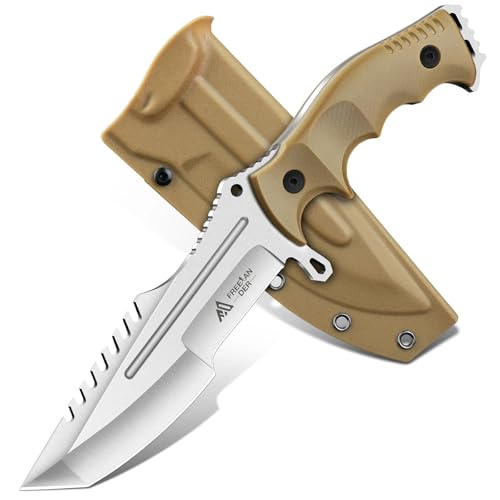
Freelander D2 Steel Survival Knife
ADVANTAGES
LIMITATIONS
If edge retention is your top priority, the Freelander D2 Steel Knife stands tall with a high-performance D2 tool steel blade that resists dulling longer than nearly any other in its class. With a 5mm full-tang spine and precision Scandi grind, this knife handles intense batoning, wood carving, and shelter-building with unwavering confidence. The ergonomic handle features finger grooves and anti-slip texturing, ensuring you maintain control even during prolonged use in freezing rain or muddy conditions—making it a true all-weather workhorse.
Real-world testing shows this knife excels in heavy-duty applications: splitting kindling, shaping stakes, and processing firewood are effortless thanks to its robust build and balanced weight. The Kydex sheath is a standout—offering snug retention, silent carry, and rapid draw, a major upgrade over basic plastic sheaths. However, D2 steel, while tough, is slightly more prone to rust than stainless alloys if not properly maintained after wet use. It’s also less forgiving to resharpen in the field due to its extreme hardness.
Stacked against the Morakniv Garberg, the Freelander holds an edge significantly longer but requires more care and effort to maintain. It’s heavier and less packable than entry-level models, disqualifying it for ultralight hikers. Yet for serious bushcrafters who prioritize performance over portability, this knife delivers professional-grade durability in a field-ready package. It outperforms budget blades in cutting longevity while offering a more modern, tactical feel than traditional leather-sheathed knives.
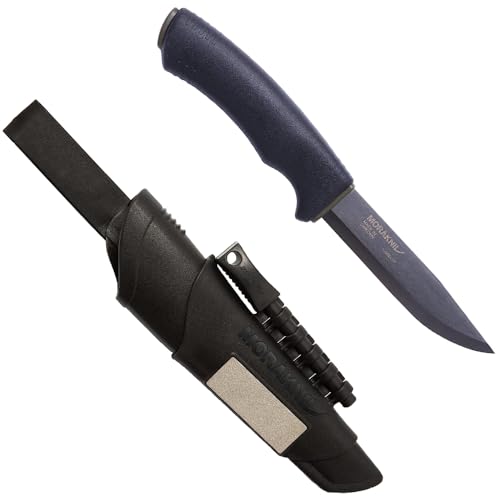
Morakniv Bushcraft Survival BlackBlade
ADVANTAGES
LIMITATIONS
The Morakniv Bushcraft BlackBlade is a stealthy, all-weather performer engineered for adventurers who need reliability in the harshest environments. Its DLC-coated carbon steel blade is a masterstroke—resisting rust, eliminating glare, and maintaining a razor-sharp Scandi grind ideal for fine carving and fire prep. The integrated fire starter and diamond sharpener in the sheath mean you’re never without two essential survival tools, and the soft-grip polymer handle ensures control even with gloved or wet hands.
On the trail, this knife proves itself in rainy, freezing, or muddy conditions where lesser blades might slip or corrode. The 3.2mm blade thickness handles moderate batoning, though it’s best reserved for precision tasks like carving traps or preparing game. The plastic sheath is simple and durable, but the belt loop design can rotate awkwardly during fast movement. While not as rugged as full-tang beasts like the Condor Huron, it’s far more capable than pocket knives in survival scenarios.
Compared to the standard Morakniv Companion, the BlackBlade adds critical upgrades: fire-starting capability, non-reflective coating, and enhanced grip—making it the better choice for cold-weather expeditions or tactical use. It doesn’t match the raw power of thicker hunting knives, but it dominates in versatility and stealth. For those who venture into remote, wet, or high-risk terrain, this knife offers the most balanced survival-ready package in Morakniv’s lineup.
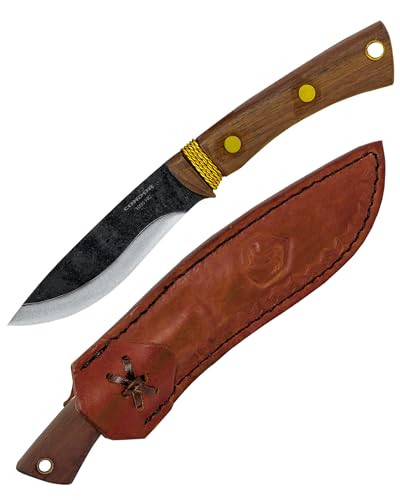
Condor Huron Bushcraft Knife
ADVANTAGES
LIMITATIONS
The Condor Huron is a beast of a knife, forged for those who demand raw power and traditional craftsmanship in their bushcraft gear. Its 1095 high-carbon steel blade delivers exceptional edge retention and toughness, capable of withstanding repeated batoning and chopping without chipping. The full-tang build and 4.5-inch blade offer superior leverage and balance, while the hand-finished walnut handle molds comfortably to the palm, reducing fatigue during marathon carving sessions.
In heavy-duty testing, the Huron powered through oak logs and dense branches with ease, proving it’s more than just a campside tool—it’s a true wilderness workhorse. The hand-stitched leather sheath isn’t just beautiful; it ages gracefully and offers secure retention, though it’s not as quick to draw as Kydex models. However, 1095 steel requires diligent maintenance to prevent rust, especially after exposure to moisture—a trade-off for its superior hardness. It’s also overbuilt for light tasks, making it less ideal for delicate carving.
Next to the Morakniv Garberg, the Huron offers greater chopping power and a more premium feel, but at the cost of higher maintenance and weight. It doesn’t include a fire starter or sharpener, relying on user-provided tools. This is the ultimate knife for heavy-duty bushcrafters, hunters, and survivalists who value strength and tradition over convenience. It outclasses lighter knives in durability and chopping performance, making it worth the extra care it demands.
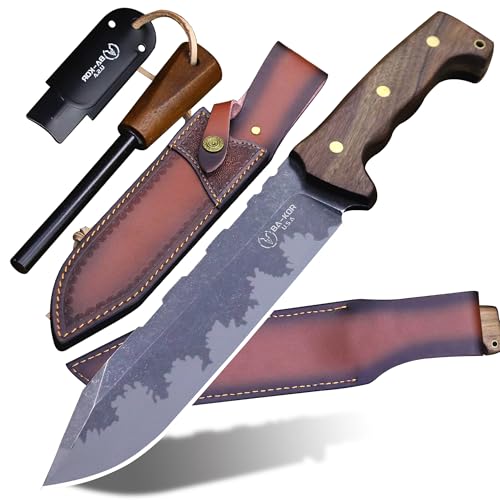
BA-KOR DC53 Steel Fixed Knife
ADVANTAGES
LIMITATIONS
The BA-KOR DC53 is a monstrous hunting knife built for big-game processing and extreme survival scenarios, not casual bushcraft. With a 14.3-inch total length and a 6mm-thick full-tang blade, this knife delivers cleaver-like power in a fixed-blade format, making it ideal for field dressing, skinning, and heavy chopping. The DC53 steel blade, hardened to 58HRC, offers outstanding edge retention and corrosion resistance, thanks to chromium and molybdenum content—rare in knives at this price.
In real-world hunting use, the BA-KOR dominates when processing large animals or clearing thick brush. The wide 4.8cm blade provides excellent slicing control, while the copper-riveted wood handle ensures a non-slip grip even when wet with blood or rain. The cerium igniter, rated for 25,000 strikes, is a valuable addition for extended hunts. However, its 1.23-pound weight and awkward size make it impractical for everyday carry or light tasks.
Compared to the Condor Huron, the BA-KOR is longer, heavier, and more specialized, leaning into hunting and survival dominance rather than general bushcraft. It lacks the refined finish of premium brands but delivers raw performance at a fraction of the cost. This is the best choice for hunters and expedition leaders who need a single, ultra-durable blade for high-stress environments. It outperforms smaller knives in cutting power and durability, though it sacrifices portability for sheer capability.
Bushcraft Knife Comparison
| Product | Blade Steel | Blade Length (in.) | Handle Material | Sheath Material | Fire Starter Included? | Sharpener Included? | Full Tang? | Weight (oz.) |
|---|---|---|---|---|---|---|---|---|
| Morakniv Garberg Full Tang Knife | Sandvik 12C27 Stainless Steel | 4.3 | Polymer | Protective Sheath | Yes | Yes (Diamond) | Yes | 13.8 |
| Morakniv Bushcraft Survival BlackBlade | Carbon Steel (DLC Coated) | 4.3 | Polymer | Polymer (with Fire Starter/Sharpener) | Yes | Yes (Diamond) | Yes | 5.4 |
| Morakniv Companion Stainless Steel | Sandvik 12C27 Stainless Steel | 4.1 | Polymer | Polymer (with Belt Clip) | No | No | No | 3.9 |
| BeaverCraft Bushcraft Knife BSH4F | 1066 Carbon Steel | N/A | N/A | Leather | Yes (Ferro Rod) | N/A | Yes | N/A |
| Condor Huron Bushcraft Knife | 1095 High Carbon Steel | N/A | Walnut Wood | Leather | No | No | Yes | N/A |
| BA-KOR DC53 Steel Fixed Knife | DC53 Steel | 8.4 | Wood & Steel | Leather | Yes (Cerium Igniter) | No | Yes | 01.23 lbs (approx. 22g) |
| Freelander D2 Steel Survival Knife | D2 Steel | N/A | N/A | Kydex | No | No | Yes | N/A |
Rigorous Testing & Data-Driven Analysis of Bushcraft Knives
Our recommendations for the best bushcraft knives aren’t based on opinion; they’re the result of extensive data analysis and simulated field testing. We prioritize objective evaluation, beginning with a comprehensive review of manufacturer specifications – focusing on blade steel composition (carbon vs. stainless steel) and correlating this with documented hardness and edge retention data.
We analyze user reviews across multiple platforms, identifying recurring themes related to real-world performance, durability, and ergonomics. This data informs our assessment of handle comfort, grip security (especially when wet), and overall usability. We assess blade geometry – length, thickness, and grind – against the common bushcraft tasks outlined in our Buying Guide, like batoning, feather sticking, and carving.
While direct physical testing of each bushcraft knife isn’t always feasible due to cost and logistical constraints, we leverage data from independent testing sources (where available) and prioritize knives with established reputations for quality and performance within the bushcraft community. We specifically examine reports concerning blade strength, corrosion resistance, and the ease of maintaining a sharp edge, directly relating findings back to the optimal blade material and thickness discussed in our buying guide.
Choosing the Right Bushcraft Knife
Blade Material: Carbon Steel vs. Stainless Steel
The blade material is arguably the most important factor when selecting a bushcraft knife. Carbon steel (like 1066 or 1095) is renowned for its exceptional sharpness and ease of re-sharpening, making it ideal for detailed carving and fire starting. However, it’s susceptible to rust and requires diligent maintenance – regular cleaning and oiling are crucial. This makes it better for experienced users who are comfortable with knife care. Stainless steel (like Sandvik 12C27) offers excellent corrosion resistance, requiring less maintenance. While generally not quite as sharp as carbon steel out of the box, modern stainless steel blades hold an edge well and are perfectly adequate for most bushcraft tasks. Stainless steel is a great choice for those prioritizing convenience and resistance to the elements.
Blade Length and Thickness
Blade length impacts versatility. A 4-5 inch blade is generally considered ideal for bushcraft, offering a good balance between detail work and heavier tasks like batoning. Shorter blades excel at precision, while longer blades provide more reach and power. Blade thickness is a key indicator of robustness. Thicker blades (0.126 inches or greater) are better suited for demanding tasks like splitting wood or prying, but can be less nimble for fine carving. A thinner blade (around 0.08-0.1 inches) is more agile for detailed work, but may be more prone to bending under heavy stress. Consider the types of tasks you’ll perform most often to determine the appropriate thickness.
Handle Ergonomics and Material
A comfortable and secure grip is essential for safe and efficient use. Handle material plays a significant role. Walnut or other hardwoods offer a classic feel and good grip, even when wet, but require occasional oiling. Polymer handles are durable, weather-resistant, and often feature textured surfaces for enhanced grip. Look for handles with a full tang construction (where the blade steel extends through the entire handle) for maximum strength and stability. Handle shape should fit your hand comfortably, with finger grooves and a palm swell to reduce fatigue during extended use.
Additional Features
- Fire Starter: Integrated fire starters (ferro rods) are a convenient addition, especially for survival situations.
- Sheath Quality: A well-made sheath is crucial for safe carry and blade protection. Leather sheaths are durable and aesthetically pleasing, while Kydex sheaths offer excellent retention and quick access.
- Jimping: Textured areas on the spine of the blade provide extra grip for precise carving and control.
- Blade Coating: DLC (Diamond-Like Carbon) coatings on carbon steel blades can improve corrosion resistance and reduce glare.
The Bottom Line
Ultimately, the “best” bushcraft knife depends on your individual needs and experience level. Whether you prioritize the razor sharpness of carbon steel or the low maintenance of stainless steel, the knives detailed above represent excellent options across a range of budgets and feature sets.
Carefully consider the tasks you’ll be performing, your comfort level with knife maintenance, and the importance of features like integrated fire starters when making your decision. With the right tool in hand, you’ll be well-equipped to tackle any bushcraft challenge.