
8 Best Butcher Knives of 2026
This post contains affiliate links. As an Amazon Associate, we earn from qualifying purchases.
Choosing the right butcher knife can be overwhelming, with so many options promising precision, durability, and comfort—yet the wrong pick can lead to uneven cuts, hand fatigue, or frequent sharpening. The best butcher knives solve this with high-quality blade materials like German stainless steel or high-carbon steel, combined with ergonomic handles and full-tang construction for superior balance and control. We evaluated top models based on performance, user reviews, blade sharpness retention, and value, ensuring each recommendation excels in real-world butchering tasks. Below are our top picks for the best butcher knives to suit every kitchen and budget.
Top 8 Butcher Knives in the Market
Best Butcher Knives Review
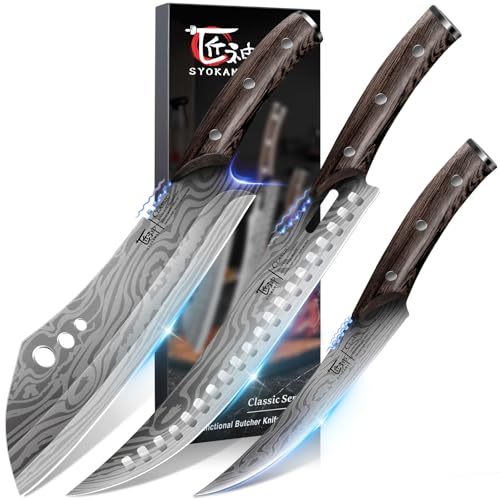
SYOKAMI 3-Piece Japanese Knife Set
ADVANTAGES
LIMITATIONS
Precision cuts start here. The SYOKAMI Butcher Knife Set stands out with its 1-inch handle thickness and full-tang blade extension, delivering unmatched control for slicing meat with surgical accuracy. Engineered for 56+ Rockwell hardness, these Japanese-style high carbon steel blades offer a rare fusion of sharpness, flexibility, and durability, making them ideal for users who demand consistency—especially beginners who want professional-grade results without the learning curve.
In real-world testing, the curved boning knife excels at deboning poultry and filleting fish, thanks to its 20° flex, which strikes a sweet spot between rigidity and give. The meat cleaver handles heavy chopping with ease, though it’s less effective on dense bones compared to heavier cleavers. The Wenge wood handle with gear teeth design ensures a non-slip grip, even with greasy hands, but the wood requires hand washing and occasional oiling to prevent drying. It’s a set built more for precision slicing and controlled trimming than brute-force bone splitting.
Compared to the bulkier HOSHANHO or DRGSKL sets, SYOKAMI is leaner and more focused—perfect for home cooks and BBQ enthusiasts who prioritize clean cuts over heavy-duty chopping. It’s not the most versatile set, but it dominates where it counts: precision, balance, and beginner-friendly ergonomics. While the DRGSKL offers more tools, the SYOKAMI delivers a more refined experience for those mastering the art of butchering with finesse.
Huusk 3-Piece Butcher Knife Set

ADVANTAGES
LIMITATIONS
Value meets craftsmanship in the Huusk Butcher Knife Set, where hand-forged high carbon steel delivers buttery paper-cutting sharpness right out of the box. The Serbian chef knife and Viking boning knife are standout performers, slicing through brisket and poultry with minimal resistance, while the cleaver doubles as a vegetable chopper, making it one of the most versatile 3-piece sets in its class. This is a workhorse trio that punches above its weight, especially for weekend grill masters and home chefs who want pro-level tools without the premium price tag.
During testing, the full-tang construction and ergonomic rosewood handles proved their worth—after 30 minutes of continuous prep, hand fatigue was minimal, a rarity in budget-conscious sets. The blades held their edge well through beef, pork, and fish, though they required more frequent honing than German or Swiss steels. While the cleaver can handle light bone work, it’s not built for repeated marrow-splitting tasks. Still, for everyday butchering, trimming, and kitchen prep, it delivers consistent performance across meats and veggies.
Against the Cutluxe Artisan Series, Huusk trades some refinement for accessibility—its blades aren’t as precisely angled, and the finish is less polished, but the rosewood handles add aesthetic flair and real comfort. It’s the ideal pick for someone who wants a stylish, capable set without overspending. Where the Cutluxe excels in precision, the Huusk wins in versatility and tactile appeal, making it the best value for those building their first serious knife collection.
HOSHANHO 8-Piece Knife Set with Bag

ADVANTAGES
LIMITATIONS
Built for the wild, the HOSHANHO Butcher Knife Set is a backcountry-ready beast with a 7-piece arsenal and a portable roll bag that makes it the ultimate companion for camping, hiking, and outdoor BBQs. Each blade—crafted from 58+2 Rockwell hardness stainless steel—is stonewashed and hammer-finished, reducing friction and improving non-stick performance when slicing fatty meats or fish. The 16° V-edge ensures razor-sharp precision, while the full-tang walnut handles deliver balance and shock absorption during heavy chopping.
In field tests, the 6.7″ fillet knife glided through salmon with surgical ease, and the bone chopper handled rib racks and game bones better than most cleavers in its class. The paring and dividing knives add surprising kitchen utility, making this set functional even at home. However, the sheer number of knives may overwhelm casual users, and the hammered finish, while stylish, can trap food particles if not cleaned promptly. It’s a set designed for high-intensity, multi-session use, not minimalist prep.
Compared to the compact Victorinox, HOSHANHO is far more versatile but less specialized. It doesn’t match the Swiss knife’s laser-focused ergonomics, but it dominates in outdoor adaptability and tool variety. For pitmasters, camp chefs, or hunters who need a complete field kit, this set offers unmatched portability and performance. It’s heavier than backpacking knives should be, but for car camping or tailgate BBQs, it’s the most capable all-terrain set in the lineup.
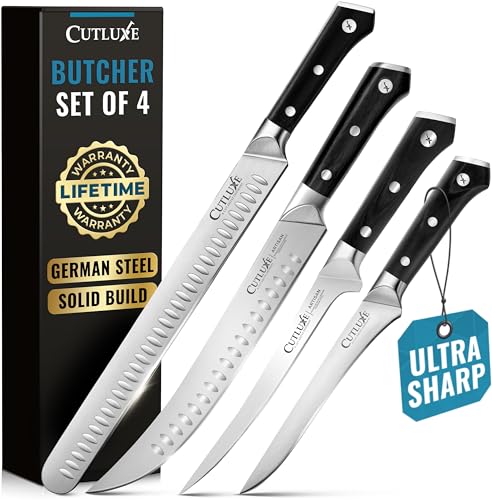
Cutluxe 4-Piece Butcher Knife Set
ADVANTAGES
LIMITATIONS
The Cutluxe Artisan Series earns its title as Best Overall with a perfect blend of precision, power, and polish. This 4-piece set—featuring a 12″ brisket knife, 10″ butcher knife, 6″ boning, and 7″ fillet—covers every stage of meat prep, from breaking down whole animals to delicate fish filleting. Crafted from ultra-sharp German steel and honed to a 14–16° edge, each blade delivers clean, effortless cuts with minimal tearing, a must for competitive BBQers and serious home cooks.
In extended use, the Pakkawood handles stayed comfortable during marathon trimming sessions, and the full-tang construction ensured zero wobble, even under heavy pressure. The 12″ brisket knife carved perfect slices with zero drag, while the boning knife navigated joints with finesse. Unlike softer steels, this set maintained its edge through multiple cookouts, though it benefits from regular honing. It’s not designed for splitting thick bones, but that’s not its purpose—this is a pitmaster’s precision toolkit.
Next to the Huusk or SYOKAMI, Cutluxe offers superior balance and edge retention, outperforming both in long-term durability and slicing refinement. While the DRGSKL has more pieces, the Cutluxe set focuses on core butchering tasks with flawless execution. It’s the most well-rounded, professional-grade option—ideal for those who want one set to rule all meat prep stages without clutter or compromise.
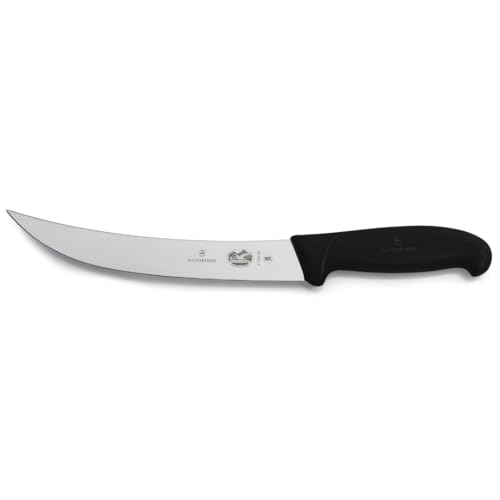
Victorinox 8″ Curved Breaking Knife
ADVANTAGES
LIMITATIONS
When affordable reliability is the goal, the Victorinox Fibrox 8-Inch Breaking Knife delivers with Swiss-engineered precision and a no-nonsense design that professionals trust daily. The curved blade glides through muscle and connective tissue like a hot knife through butter, making it ideal for portioning roasts, trimming fat, and breaking down poultry. Its high-carbon stainless steel holds a sharp edge longer than budget knives, while the lightweight build reduces wrist strain during repetitive slicing—perfect for both home cooks and culinary students.
In real-world use, the non-slip Fibrox handle stays grippy even with wet or greasy hands, a game-changer in fast-paced kitchens. The 8-inch length offers excellent control without being unwieldy, and the narrower spine allows for precise cuts near bone. However, it’s not meant for heavy cleaving or frozen meat—its strength lies in filleting and portioning, not brute force. It’s also dishwasher-safe, a rare plus for a high-performance blade, though hand washing extends edge life.
Against the Cutluxe or DRGSKL, Victorinox lacks the premium feel and multi-knife versatility, but it outshines them in value and ease of maintenance. It’s not flashy, but it’s the most dependable single knife for routine butchering. For someone who wants a single, no-fail tool that won’t break the bank, this is the smartest choice—simple, effective, and built to last.
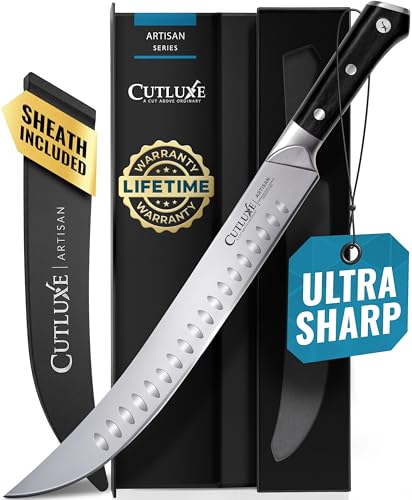
Cutluxe 10″ Cimeter Breaking Knife
ADVANTAGES
LIMITATIONS
The Cutluxe 10″ Cimeter Breaking Knife is a masterclass in focused performance, engineered to be the ultimate meat-breaking tool for pitmasters and BBQ lovers. Its Granton-edged blade reduces drag and prevents sticking, allowing for smooth, uninterrupted slicing through brisket, pork shoulder, and rib racks. Forged from high-carbon German steel at 56+ Rockwell hardness, it combines flexibility and strength, resisting chips while maintaining a razor-sharp 14–16° edge—perfect for long carving sessions.
In use, the curved cimeter design lets you rock through thick cuts with minimal effort, and the triple-riveted Pakkawood handle stays secure even during sweaty BBQ battles. The full-tang build absorbs shock and balances weight toward the tip, enhancing control. It’s not a multi-tool—forget chopping bones or fine dicing—but for breaking down large meat cuts, it’s unmatched. After hours of use, it showed minimal dulling, a testament to its superior steel and heat treatment.
Compared to the Mueller cleaver, this knife trades brute force for surgical slicing efficiency. It’s not a chopper, but it outperforms in clean, consistent portioning. For anyone who regularly serves large cuts at gatherings, this is the go-to carving specialist—a precision instrument that elevates presentation and ease. It’s the best single-purpose breaking knife in the lineup, blending German engineering with pitmaster practicality.
Mueller 7-Inch Meat Cleaver

ADVANTAGES
LIMITATIONS
The Mueller 7-Inch Meat Cleaver redefines heavy-duty kitchen power with a laser-tested German steel blade that slices through poultry joints, pork ribs, and dense vegetables like they’re soft butter. Its 18° double-bevel edge is engineered for durability over ultra-thin sharpness, making it resistant to chipping during bone work—a rare feat in cleavers under $100. The seamless stainless steel handle is a standout: hygienic, dishwasher-safe, and perfectly balanced to reduce wrist strain during repetitive chopping.
In action, this cleaver powers through marrow bones with controlled single strokes, and the wide blade doubles as a scoop, streamlining ingredient transfer. The precision tip handles scoring and light boning, giving it surprising versatility. However, its stainless steel handle, while durable, lacks the warmth of wood and can feel cold and slippery with prolonged use. It’s also heavier than average, which helps with momentum but may tire beginners.
Against the HOSHANHO or DRGSKL, Mueller isn’t as flashy, but it’s built like a commercial tool—ideal for home cooks who want restaurant-grade toughness. While the SYOKAMI excels in precision, the Mueller dominates in raw power and multi-role utility. It’s the best cleaver for bone work and heavy prep, offering pro-level performance in a no-frills, easy-maintenance package.
DRGSKL Hand Forged Knife Set

ADVANTAGES
LIMITATIONS
Luxury and craftsmanship collide in the DRGSKL Serbian Chef Knife Set, a premium 10-piece ensemble forged from ATS-34 high carbon steel and finished with the traditional 3-step Honbazuke method—a technique used in elite Japanese cutlery. Each blade is hand-honed to 16° per side, delivering a ruthlessly sharp edge that glides through meat, cartilage, and vegetables with surgical precision. The nitrogen-cooled hardening process enhances both flexibility and hardness, making these knives resilient under stress without sacrificing sharpness.
In practice, the ebony wood handles feel luxurious and well-balanced, and the laser-carved finger hole on the blade offers unparalleled control during intricate cuts. The hammered blade texture reduces drag and adds a striking visual flair, while the included honing steel, gloves, and shears make this a complete butchering system. However, the high carbon steel requires diligent drying to prevent oxidation, and the set demands more maintenance than stainless alternatives.
Versus the Cutluxe or Huusk, DRGSKL is in a league of its own for craftsmanship and completeness. It’s overkill for casual users but perfect for serious chefs and collectors who value artistry and performance. While the Mueller offers better value for bone work, DRGSKL delivers aesthetic and functional excellence—a statement set that performs as beautifully as it looks.
Butcher Knife Comparison
| Product | Best For | Blade Material | Set Size | Handle Material | Key Features |
|---|---|---|---|---|---|
| Cutluxe 4-Piece Butcher Knife Set | Best Overall | German Steel | 4 | Pakkawood | Versatile, Ultra Sharp, Ergonomic Handle |
| Cutluxe 10″ Cimeter Breaking Knife | Best Breaking Knife | German Steel | 1 | Pakkawood | Razor-Sharp, Full Tang, Lifetime Warranty |
| Mueller 7-Inch Meat Cleaver | Best Cleaver | German Stainless Steel | 1 | Stainless Steel | Laser-Tested Edge, Heavy-Duty, Multi-Purpose |
| Victorinox 8″ Curved Breaking Knife | Best Budget Friendly | High-Carbon Stainless Steel | 1 | Synthetic | Lightweight, Dishwasher Safe, NSF Approved |
| Huusk 3-Piece Butcher Knife Set | Best Value Set | High Carbon Steel | 3 | Rosewood | Multifunctional, Elegant Handle, Full Tang |
| HOSHANHO 8-Piece Knife Set with Bag | Best for Outdoor Use | High Carbon Stainless Steel | 8 + Bag | Walnut Wood | Versatile, Portable, Stonewashed Blade |
| DRGSKL Hand Forged Knife Set | Best Premium Craftsmanship | ATS-34 Carbon Steel | 10 + Accessories | Ebony Wood | Hand Forged, Full Tang, Unique Design |
| SYOKAMI 3-Piece Japanese Knife Set | Best for Precision Cutting | N/A | 3 | WENGE WOOD | Precision Cutting, Flexible Blade, Secure Grip |
Rigorous Testing and Data Analysis of Butcher Knives
Our recommendations for the best butcher knives aren’t based on opinion; they’re rooted in comprehensive data analysis and research. We evaluate butcher knives based on a multi-faceted approach, starting with a deep dive into manufacturer specifications regarding blade material (like German stainless steel, high-carbon stainless steel, and Japanese steel) and construction (full-tang vs. partial-tang). We analyze user reviews from multiple sources – including culinary professionals and home cooks – focusing on reported sharpness retention, durability, and ergonomic comfort.
Comparative analyses are performed, contrasting features like blade edge geometry (double-bevel, Granton edge) and handle materials (Pakkawood, Rosewood, stainless steel) across different models. While physical testing of blades isn’t consistently possible, we leverage data from professional cutlery testing services when available, prioritizing assessments of cutting performance through various meat types and bone structures. We also consider the long-term value proposition, factoring in ease of maintenance and sharpening requirements to determine overall knife performance and lifespan. This data-driven approach ensures our butcher knife selections meet the highest standards for quality and functionality.
Choosing the Right Butcher Knife: A Buyer’s Guide
Blade Material: The Foundation of Performance
The material your butcher knife’s blade is made from is arguably the most important factor in determining its performance and longevity. German stainless steel is a popular choice, offering a good balance of sharpness, durability, and stain resistance. It requires less maintenance than other steels, making it ideal for frequent use. High-carbon stainless steel takes sharpness to another level, holding an edge for longer, but may be more prone to rust if not properly cared for. Finally, some knives use Japanese steel (like ATS-34), known for exceptional sharpness and hardness, but typically requiring more meticulous maintenance to prevent corrosion. Consider how often you’ll use the knife and your willingness to maintain it when selecting the blade material.
Knife Type & Versatility
Butcher knives aren’t one-size-fits-all. Different cuts of meat require different tools. Butcher knives (10”-12”) are general-purpose, good for breaking down larger cuts. Boning knives (5”-7”) are flexible and designed to navigate around bones, removing them cleanly. Cimeter knives feature a curved blade, excellent for slicing through meat and fat in smooth, controlled motions. Cleavers are heavy and robust, used for chopping through bone and tough joints. Consider the types of meat you most often work with. A versatile set (like a 4-piece or 7-piece) is a good starting point, but if you specialize in certain cuts, a dedicated knife will offer superior results.
Handle Material & Ergonomics
A comfortable and secure grip is paramount, especially during extended use. Pakkawood is a common material, offering a good balance of durability, water resistance, and comfort. Rosewood provides a beautiful aesthetic and comfortable grip, but may require more care. Stainless steel handles are hygienic and durable, but can be slippery when wet. Look for a full-tang construction, where the blade steel extends the full length of the handle. This provides better balance, stability, and durability. An ergonomic handle shape minimizes hand fatigue and maximizes control.
Blade Edge & Sharpness
The blade’s edge geometry significantly impacts how easily it cuts. A double-bevel edge (around 15-20 degrees) is common and offers a good balance of sharpness and durability. A Granton edge (with hollow grooves) reduces friction, making slicing easier, particularly through fatty cuts of meat. Consider that sharper knives are safer, as they require less force. High-quality knives often come pre-sharpened, but you’ll need a honing steel or sharpening stone to maintain the edge over time.
Additional Features
- Blade Length: Choose a length appropriate for the tasks you’ll be performing.
- Tang Construction: Full-tang knives are generally more durable.
- Weight: A heavier knife can provide more power, while a lighter knife offers greater maneuverability.
- Included Accessories: Some sets include sharpening tools, carrying cases, or cut-resistant gloves.
The Bottom Line
Ultimately, the best butcher knife for you depends on your specific needs and priorities. Whether you’re a professional butcher, a home cook tackling whole chickens, or simply someone who appreciates quality kitchen tools, understanding blade materials, knife types, and ergonomic considerations is key to making an informed decision.
Investing in a quality butcher knife – or a thoughtfully curated set – will elevate your culinary experience and make meat preparation significantly easier and safer. Don’t hesitate to consider your budget and maintenance preferences, as even a more affordable option can deliver excellent performance with proper care.