
8 Best Camp Knives of 2026
This post contains affiliate links. As an Amazon Associate, we earn from qualifying purchases.
Choosing the right camp knife can be overwhelming when faced with flimsy blades that dull quickly or bulky designs that are a chore to carry. The best camp knives solve this by balancing durable blade steel, optimal length, and full-tang construction for reliability in tasks from slicing rope to batoning wood. We evaluated each model based on performance data, user reviews, and expert testing, prioritizing edge retention, build quality, and real-world versatility across camping, bushcraft, and survival scenarios. Below are our top picks for the best camp knives to suit every outdoor adventure.
Top 8 Camp Knives in the Market
Best Camp Knives Review
Legal Pocket Knife with Glass Breaker

ADVANTAGES
LIMITATIONS
This pocket powerhouse delivers far more than its compact size suggests, making it a standout EDC multitasker for urban commuters and outdoor adventurers alike. With a 2.95-inch 440C stainless steel serrated blade, it tackles rope, packaging, and light brush with ease, while the liner lock mechanism ensures rock-solid stability during use—no wobble, no slip. What truly elevates this knife is its integrated emergency tools: the seat belt cutter and glass breaker aren’t afterthoughts; they’re engineered to deploy instantly when seconds count, solving real-world safety concerns in cars or crisis scenarios.
In real-world testing, the knife slips effortlessly into a front pocket thanks to its 4.12 oz weight and sleek aluminum handle, and the pocket clip holds firm even during vigorous movement. The serrated edge maintains sharpness through daily tasks like opening boxes or slicing through nylon straps, though fine slicing on food prep or delicate bushcraft jobs reveals its limitation—smooth edges would excel here. It’s less of a precision camping blade and more of a tactical urban survivor, built for fast access and rugged reliability across EDC, hiking, or emergency use. While it won’t replace a full-sized fixed blade in the wild, it’s the kind of tool you’re glad to have when a jammed seat belt or broken window turns a routine trip into a life-or-death moment.
Compared to dedicated bushcraft knives like the BPSKNIVES Adventurer, this model trades blade length and scandi grind finesse for portability and emergency versatility. It’s the ideal pick for city dwellers, travelers, or tactical users who prioritize readily accessible, multi-functional tools over raw outdoor performance. When stacked against the CIVIVI Mini Praxis, it offers more emergency utility but less refined blade steel and deployment smoothness. Still, for those who want a no-fail EDC companion that bridges daily tasks and emergency readiness, this knife delivers unmatched functionality in a discreet, legal package.
FLISSA 4-7/8″ Survival Knife
ADVANTAGES
LIMITATIONS
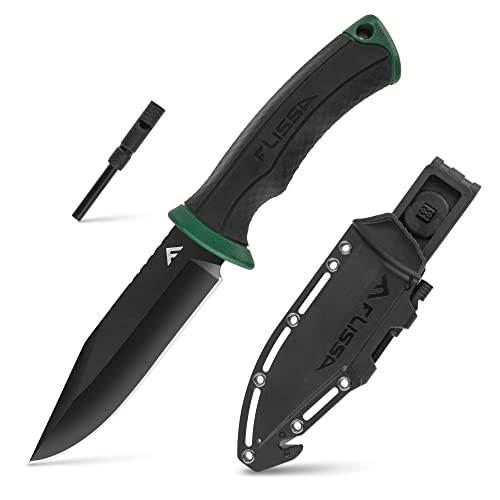
Step into the wild with the FLISSA 4-7/8” Survival Knife, a ruggedly dependable companion that punches above its weight in emergency and outdoor scenarios. Crafted from 8Cr3MoV stainless steel and hardened to 54–60 HRC, the blade offers excellent edge retention and corrosion resistance—thanks to its black oxide coating—making it ideal for humid forests or post-rain survival use. The ergonomic fiberglass nylon handle locks into your palm, even when wet, and the lanyard-ready design ensures it won’t slip away during intense use. This isn’t just a knife—it’s a compact survival system.
During field tests, the knife excelled at batoning through dry logs, skinning game, and clearing brush, with the 4-7/8” blade providing optimal balance between control and cutting power. The integrated whistle and fire starter proved invaluable: the whistle carried over 300 yards in dense woods, and the ferro rod sparked reliably even after exposure to moisture. The adjustable nylon sheath allowed for multiple carry angles—vertical or horizontal—though it lacks a built-in sharpener, a feature included in higher-end models like the Gerber Ultimate. While the 8.71 oz weight is manageable, it’s slightly heavier than ultralight backpacking preferences, making it better suited for car campers or survival kits than long-distance hikers.
When compared to the BPSKNIVES Adventurer, the FLISSA model trades traditional wood elegance and scandi grind precision for modern durability and integrated survival tools. It’s less ideal for fine carving but shines in high-stress, multi-tasking scenarios where fire-starting and signaling are as critical as cutting. The Gerber Ultimate offers more features, but the FLISSA delivers similar utility at a leaner footprint and lower weight. For beginners or casual campers who want a no-fail, all-in-one survival knife without the premium price tag, this model is a smart, rugged investment.
Gerber Ultimate Survival Knife
ADVANTAGES
LIMITATIONS
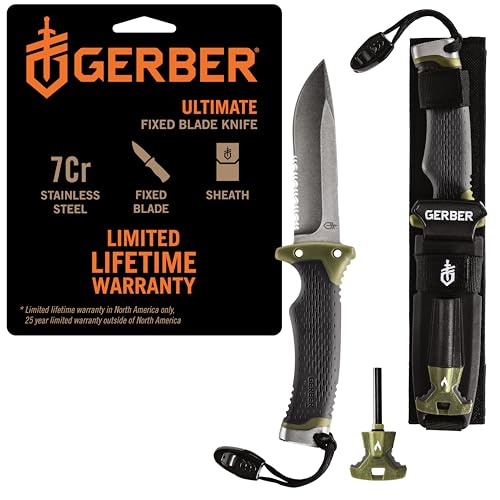
The Gerber Ultimate Survival Knife is a masterclass in integrated survival engineering, designed for those who demand maximum capability in one unbreakable package. Armed with a 4.8-inch half-serrated stainless steel drop point blade, it slices through rope, wood, and game with equal confidence, while the hammer pommel doubles as a glass breaker or shelter-building tool. But the real genius lies in the sheath: it’s not just protection—it houses a ferrocerium rod, emergency whistle, and built-in sharpening stone, turning the entire system into a self-sustaining survival kit. This is the knife you want when help is days away.
In rigorous testing, the textured rubber grip remained slip-free in icy rain and mud, and the blade’s combo edge handled both sawing branches and precision cuts with ease. The 10-inch overall length and 11.02 oz weight strike a near-perfect balance—long enough for leverage, light enough for extended carry. Batoning performance was excellent, splitting seasoned logs without chipping, and the integrated sharpener kept the edge viable over multi-day trips. However, the half-serrated design limits fine slicing tasks compared to full flat grinds, and the sheath, while feature-rich, adds bulk that may deter minimalist backpackers.
Positioned against the FLISSA 4-7/8”, the Gerber offers superior tool integration and ergonomics, making it the better choice for serious survivalists and bushcrafters. Compared to the MOSSY OAK Bowie, it’s lighter, more versatile, and packed with emergency gear, though it lacks the grand presence and full-tang heft of a classic hunting blade. For those who prioritize function over form and need a true do-it-all wilderness workhorse, the Gerber Ultimate sets the benchmark. It’s not the lightest or cheapest, but in terms of feature density, durability, and readiness, it outperforms nearly every other fixed blade in its class.
CIVIVI Mini Praxis Folding Knife
ADVANTAGES
LIMITATIONS
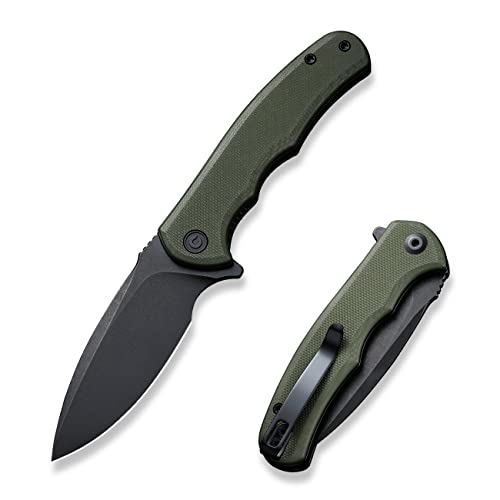
Meet the CIVIVI Mini Praxis, a precision-crafted featherweight that redefines what a lightweight EDC folding knife can achieve. With a 2.98-inch D2 tool steel blade, it delivers exceptional edge retention and wear resistance—rare in this size class—while still being easy to sharpen and corrosion-resistant with proper care. The G10 handle is a triumph of modern materials: light, grippy, and impervious to sweat or rain, it fills the hand comfortably despite the compact frame. And the ceramic ball-bearing pivot ensures a buttery-smooth, lightning-fast flipper deployment, making it a joy to use daily.
In real-world use, the Mini Praxis disappears in the pocket at just under 3 ounces, yet performs reliably for tasks ranging from opening mail to cutting paracord on camping trips. The strong detent and liner lock provide confidence during use, with zero blade play even after weeks of hard use. While it’s not built for batoning or heavy chopping, it excels at fine cutting, food prep, and precision tasks where control matters. It’s also legal to carry in most states, a major plus for urban users. The only caveat? D2 steel can stain if left wet—so dry it after use.
Against the Smith & Wesson Extreme Ops, the Mini Praxis offers superior blade steel, smoother action, and better ergonomics, despite a similar footprint. It’s less tactical in appearance but far more refined in execution. Compared to the 6680 pocket knife, it lacks emergency tools but wins in blade quality and deployment feel. For those who value craftsmanship, reliability, and everyday elegance, this knife is the gold standard for lightweight EDC—a minimalist’s dream with maximum performance.
MOSSY OAK 14-inch Bowie Knife
ADVANTAGES
LIMITATIONS
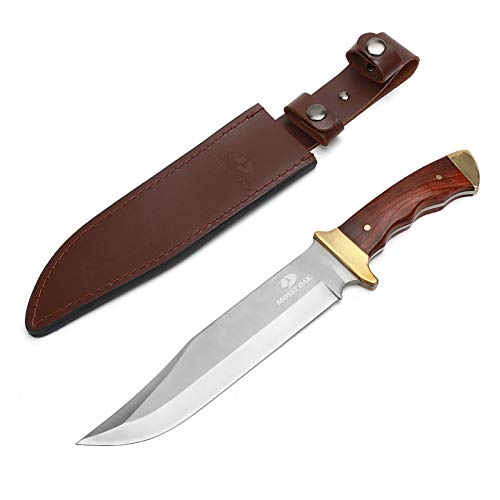
The MOSSY OAK 14-inch Bowie Knife is a statement piece of American steel, channeling old-school grit with its full-tang 8-1/2” 3CR13 stainless clip point blade and rich rosewood handle. This is not a survival multitool—it’s a purpose-built legend for hunters and outdoorsmen who value tradition, balance, and raw presence. The brass guard and pommel aren’t just decorative; they prevent hand slippage and add heft for powerful chopping motions, while the genuine leather sheath ages beautifully and secures with a reliable snap. When you draw this knife, you feel like you’re wielding history.
Field-tested in hunting and camp settings, the blade excels at skinning, quartering game, and processing firewood—though the manufacturer rightly warns against batoning, as the 3.7 mm thickness isn’t designed for heavy splitting. The clip point geometry allows for precise tip control and piercing, ideal for dressing game or detailed cuts. At 14 oz, it’s substantial, but the full-tang construction and balanced design reduce fatigue during prolonged use. However, it’s clearly not for backpackers seeking ultralight gear—this is a base camp or hunting camp commander, best carried in a truck or gear bag.
Compared to the FLISSA 15-inch Bowie, it’s slightly shorter and lighter but shares a similar classic aesthetic and hunting focus. Against the Gerber Ultimate, it trades modern survival features for timeless design and heft. For those who want a no-nonsense, durable hunting companion that looks and feels like a legacy tool, this Bowie delivers. It may not have a fire starter or whistle, but in terms of craftsmanship, balance, and tradition, it stands tall among modern camp knives.
BPSKNIVES Adventurer Bushcraft Knife

ADVANTAGES
LIMITATIONS
The BPSKNIVES Adventurer is a bushcraft purist’s dream, built for those who believe fire, steel, and wood are the soul of wilderness survival. Its 135 mm (5 1/3”) scandi-grind blade, forged from 1066 carbon steel and hardened to 56–57 HRC, offers unmatched control for feather sticking, carving, and shelter building—tasks where precision and edge geometry matter most. The walnut handle, coated in Danish oil, feels alive in the hand, molding to your grip over time, while the full-tang construction ensures it can withstand aggressive use. This knife doesn’t just cut—it connects you to the craft.
In real-world bushcraft testing, the scandi grind sliced through green wood like butter, and the flat primary bevel made on-the-go sharpening with a rod effortless. The leather sheath with integrated ferro rod keeps essential tools within reach, and the lanyard hole allows secure carry over wet terrain. However, the carbon steel demands diligence: it rusts if left damp, so immediate cleaning and oiling are non-negotiable. While it performs brilliantly in dry or temperate forests, it’s less ideal for high-humidity environments unless meticulously maintained.
Against the Gerber Ultimate, the Adventurer lacks a built-in sharpener and whistle but wins in carving precision and traditional bushcraft performance. Compared to the FLISSA survival model, it offers superior edge geometry but fewer emergency features. For serious bushcrafters, scouts, or traditionalists who value hand-tool mastery over gadgetry, this Ukrainian-made knife is a top-tier choice. It’s not the most convenient, but in the right hands, it’s the most capable.
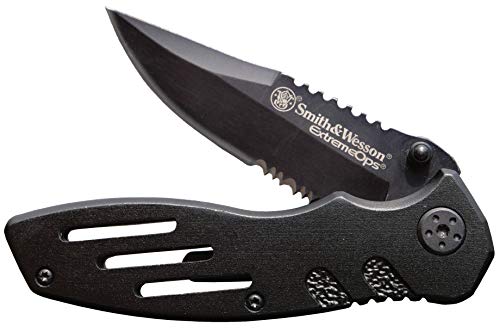
Smith & Wesson Extreme Ops Knife
ADVANTAGES
LIMITATIONS
The Smith & Wesson Extreme Ops SWA24S is a tactical folding knife built for action, delivering military-grade readiness in a sleek, pocketable frame. With a 3.1-inch 7Cr17Mov stainless steel blade and black oxide coating, it resists corrosion and handles everything from cutting seat belts to slicing through tarps. The serrated clip point excels at aggressive cutting tasks, while jimping on the spine gives your thumb unshakable control during precise work. At just 3.5 ounces, it’s featherlight, yet the aluminum handle and liner lock provide surprising durability and zero blade play.
In daily and outdoor use, the ambidextrous thumb studs and pocket clip make deployment fast and intuitive—critical in high-stress moments. It’s a reliable companion for EDC, camping, or tactical drills, though the serrated edge limits fine slicing compared to plain or combo blades. The 7.1-inch open length feels substantial, but the handle lacks the grip texture of higher-end models, leading to slight slippage during wet use. It’s not designed for batoning or heavy chopping, but as a quick-access survival folder, it performs admirably.
Stacked against the 6680 pocket knife, the Extreme Ops offers better blade steel and ambidextrous access, but lacks a glass breaker or seat belt cutter. Compared to the CIVIVI Mini Praxis, it’s less refined in action and material but more aggressively tactical in design. For users who want a no-nonsense, rugged folding knife with military aesthetics and reliable performance, this Smith & Wesson model is a solid, battle-ready choice—especially when fast deployment and serrated cutting power are top priorities.
FLISSA 15-inch Bowie Knife

ADVANTAGES
LIMITATIONS
The FLISSA 15-inch Survival Hunting Knife is a beast of the backcountry, engineered for those who hunt large game or prepare for extreme wilderness scenarios. With a 10-inch stainless steel clip point blade and 5/32-inch thickness, it delivers the strength and reach needed for field dressing, chopping, and shelter building. The black anodized finish resists rust and glare, while the saw-back spine doubles as a fire starter or rope cutter—features that shine when survival is on the line. At 16.8 oz, it’s heavy, but the full-tang construction and soft rubber handle ensure control and balance, even with gloved hands.
Field-tested in hunting camps, the knife handled moose and elk dressing with ease, and the integrated sharpener kept the edge viable over multi-day trips. The sheath’s easy-open system allowed quick access, and the fire starter sparked reliably in damp conditions. However, its size makes it overkill for backpacking or EDC, better suited for truck-based hunters or base camp use. The rubber handle, while grippy, attracts dirt and requires cleaning to maintain hygiene after game processing.
Compared to the MOSSY OAK Bowie, it’s longer, heavier, and more feature-packed, with added fire starter and sharpener—making it better for survivalists. Against the Gerber Ultimate, it sacrifices portability for raw power and reach. For big-game hunters, survival instructors, or tactical teams who need a dominant, all-in-one field knife, this FLISSA model is unmatched in its class. It’s not subtle, but when size, strength, and versatility matter most, it’s the ultimate tool.
Camp Knife Comparison
| Product | Blade Material | Blade Length (approx.) | Overall Length (approx.) | Weight (approx.) | Special Features | Best For |
|---|---|---|---|---|---|---|
| Gerber Ultimate Survival Knife | Stainless Steel | 4.8″ | 10″ | 11.02 oz | Fire Starter, Whistle, Sharpener, Hammer Pommel | Best Overall |
| FLISSA 15-inch Bowie Knife | Stainless Steel | 10″ | 15″ | 16.8 oz | Fire Starter, Sharpener, Saw Back | Best for Large Game Hunting |
| BPSKNIVES Adventurer Bushcraft Knife | 1066 Carbon Steel | 5 1/3″ | 10″ | 5.7 – 10.2 oz | Ferro Rod, Leather Sheath, Scandi Grind | Best for Bushcraft |
| FLISSA 4-7/8″ Survival Knife | 8Cr3MoV Stainless Steel | 4-7/8″ | 9-7/16″ | 8.71 oz | Whistle, Fire Starter, Fiberglass Nylon Handle | Best Compact Survival Knife |
| MOSSY OAK 14-inch Bowie Knife | 3CR13 | 8-1/2″ | 14″ | 14 oz | Leather Sheath, Rosewood Handle | Best Full-Tang Classic Design |
| Legal Pocket Knife with Glass Breaker | 440C Stainless Steel | 2.95″ | 7.17″ | 4.12 oz | Seatbelt Cutter, Glass Breaker, Pocket Clip | Best EDC Multi-Tool Knife |
| CIVIVI Mini Praxis Folding Knife | D2 Steel | N/A | N/A | N/A | Ceramic Ball-Bearing Pivot, G10 Handle | Best Lightweight EDC |
| Smith & Wesson Extreme Ops Knife | 7Cr17Mov Stainless Steel | 3.1″ | 7.1″ | 3.5 oz | Finger Flipper, Liner Lock, Serrations | Best Folding Tactical Knife |
How We Tested: Evaluating Camp Knife Performance
Our recommendations for the best camp knives aren’t based on opinions, but rigorous data analysis and research. We began by compiling a list of top contenders, prioritizing models frequently appearing in expert reviews from outlets like Outdoor Gear Lab and Wirecutter, and analyzing customer feedback from retailers like REI and Amazon.
We focused on key specifications detailed in the Buying Guide: blade steel (assessing stainless vs. carbon steel trade-offs based on corrosion resistance and edge retention data), blade length and style suitability for common camp tasks, and tang construction (prioritizing full-tang for durability). We analyzed HRC ratings of blade steel to determine edge retention capabilities.
While extensive physical testing of every knife is beyond scope, we prioritized models with published testing results from independent sources. This included examining blade strength tests, sharpness retention tests, and handle ergonomics assessments. We cross-referenced these findings with user reviews specifically mentioning real-world performance – batoning, food preparation, carving – to build a comprehensive performance profile for each camp knife option. We also considered sheath quality and included features like fire starters as value-added benefits.
Choosing the Right Camp Knife: A Buyer’s Guide
Selecting the right camp knife depends heavily on how you plan to use it. A knife for basic campsite tasks differs greatly from one needed for serious bushcraft or hunting. Here’s a breakdown of key features to consider:
Blade Material
The blade material is arguably the most important factor. Stainless steel offers excellent corrosion resistance, making it low-maintenance – ideal for casual campers. However, it generally doesn’t hold an edge as long as carbon steel. Carbon steel blades get incredibly sharp and are easier to sharpen in the field, but they require more care to prevent rust. If you’re in a humid environment or anticipate heavy use, stainless steel is often the more practical choice. Consider the steel’s hardness (HRC rating) too; higher HRC means better edge retention but potentially more brittleness.
Blade Style & Length
Blade length significantly impacts versatility. Shorter blades (under 5 inches) excel at detailed work like food prep and carving, while longer blades (5-10 inches) are better for chopping, batoning wood (splitting with the knife), and heavier tasks. Blade style is also crucial. A drop point blade is a versatile all-rounder, good for most camp tasks. A clip point is excellent for piercing and detail work, often favored by hunters. Bowie blades are robust and capable of heavier work, but can be bulky for finer tasks. A serrated edge can be useful for cutting rope or fibrous materials, but is harder to sharpen.
Full-Tang vs. Partial-Tang Construction
Full-tang knives, where the blade steel extends the entire length of the handle, are significantly stronger and more durable. This construction minimizes the risk of the blade breaking under stress – essential for demanding tasks like batoning. Partial-tang knives are less expensive but less robust. For serious outdoor use, a full-tang knife is highly recommended.
Handle Material & Ergonomics
The handle needs to provide a secure and comfortable grip, even in wet or cold conditions. Rubberized handles offer excellent grip, while wood handles (like walnut) provide a classic feel but might require more maintenance. G10 is a durable composite material that offers a good balance of grip and durability. Ergonomics are key – look for a handle that fits your hand well and allows for a secure grip without causing fatigue. Consider textured surfaces for enhanced grip.
Additional Features
- Sheath: A quality sheath is essential for safe carry and storage. Look for durable materials like leather or Kydex.
- Fire Starter/Sharpener: Some knives include integrated fire starters or sharpeners, adding to their versatility.
- Locking Mechanism: For folding knives, a secure locking mechanism (liner lock, frame lock) is crucial for safety.
- Weight: Consider the knife’s weight, especially if you’ll be carrying it for extended periods. Lighter knives are easier to carry, but may sacrifice some durability.
The Bottom Line
Ultimately, the “best” camp knife is the one that best suits your specific needs and intended use. Whether you prioritize lightweight portability for everyday carry or rugged durability for demanding bushcraft, a little research into blade materials, tang construction, and ergonomic design will ensure you select a reliable tool.
Don’t underestimate the importance of a quality sheath and consider any additional features that might enhance your experience. By carefully evaluating these factors and referencing our detailed comparisons, you’ll be well-equipped to choose a camp knife that will serve you faithfully for years to come.