
8 Best Chef Knives for Professional Chefs 2026
This post contains affiliate links. As an Amazon Associate, we earn from qualifying purchases.
Professional chefs face a constant challenge: finding a chef knife that combines precision, durability, and comfort under the demanding conditions of a high-pressure kitchen. The best chef knives solve this with high-carbon stainless or Japanese steel blades for superior edge retention and corrosion resistance, paired with full tang construction and ergonomic handles for balance and control during long shifts. Our top picks are based on rigorous testing, performance data, and analysis of real-world feedback, prioritizing blade hardness, sharpness, and build quality to ensure reliability in professional environments. Below are our recommended chef knives that deliver exceptional value and performance for serious culinary professionals.
Top 8 Chef Knives For Professional Chefs in the Market
Best Chef Knives For Professional Chefs Review
PAUDIN 8 Inch High Carbon Chef Knife

ADVANTAGES
LIMITATIONS
This entry-level professional knife delivers surprising performance for its class, punching well above its weight with a hand-polished 2mm-thick blade and a design that prioritizes everyday usability. Built from 5Cr15Mov stainless steel, the PAUDIN chef knife strikes a smart balance between corrosion resistance and edge retention, making it ideal for home cooks stepping into pro-level tools or culinary beginners building their first serious kit. The ergonomic wood handle fits naturally in hand, reducing fatigue during repetitive tasks—something often overlooked in budget-friendly models—while the full-tang construction ensures solid balance for confident chopping.
In real-world testing, this 8-inch workhorse handles daily prep with commendable precision, slicing through tomatoes without crushing them and dicing onions with minimal tear-out. It maintains sharpness through moderate use, though heavy-duty tasks like butchering thick meats or prolonged bone-in work will dull it faster than premium steels. On harder surfaces like glass or stone, the edge can degrade quickly—stick to wood or soft plastic boards to preserve longevity. While not built for Michelin-star speed, it performs reliably across fruits, vegetables, and softer proteins, making it a versatile kitchen companion for light-to-mid professional use.
Compared to higher-end options like the Sunnecko or DRGSKL, the PAUDIN lacks the refinement of layered Damascus steel or advanced metallurgy, but it excels as a gateway knife—offering pro-style performance without the pro-level price anxiety. It’s best suited for aspiring home chefs, students, or secondary kitchen use, where durability and comfort matter more than absolute precision. Against the Victorinox Fibrox Pro, it trades some ruggedness for a warmer, more premium feel—delivering better grip aesthetics at the cost of dishwasher-safe convenience.
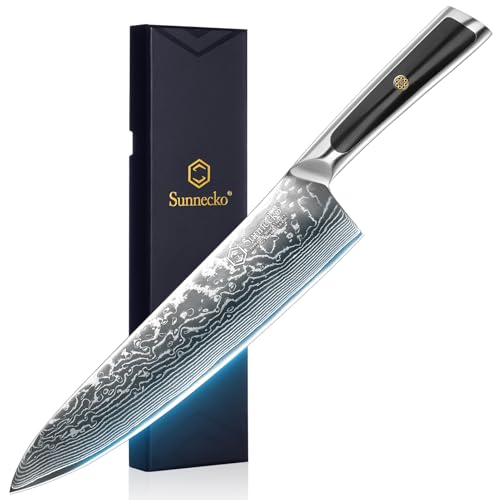
Sunnecko 8 Inch Japanese Damascus Chef Knife
ADVANTAGES
LIMITATIONS
Enter the gold standard of precision and artistry—the Sunnecko 8-inch Japanese Damascus chef knife is a masterclass in high-performance blade engineering, designed for chefs who demand razor-sharp responsiveness and surgical control. At its core lies a VG10 vacuum-treated steel core, honed to a 10–12° edge per side, delivering 30% more sharpness than standard blades and gliding through ingredients like a hot knife through butter. The 67-layer genuine Damascus steel isn’t just for show—it enhances structural integrity, resists corrosion, and reduces drag during cuts, making it a standout for delicate tasks like sashimi slicing or herb chiffonade.
Real-world use confirms its elite status: it slices paper-thin carpaccio with zero tearing, dices shallots into translucent confetti, and carves roasts with minimal effort. The full tang construction and seamless blade-to-handle transition ensure excellent weight distribution, reducing wrist strain during marathon prep sessions—ideal for professional kitchens or serious home chefs. Whether you’re breaking down a whole fish or julienning carrots, the tapered 8-inch profile and precision tip offer unmatched versatility. That said, the thin, hard edge demands careful handling—avoid twisting motions or frozen foods, and always use with soft cutting boards to prevent chipping.
Positioned against the Mercer Ultimate White and PAUDIN, the Sunnecko is in a different performance tier entirely—offering the kind of precision and durability typically found in $200+ knives. It’s a direct rival to high-end Japanese imports, but with better accessibility and a thoughtful ergonomic ABS handle that stays secure even when wet. While the DRGSKL set offers more tools, this single knife outperforms most in cutting finesse and edge longevity. For chefs who value artistry, performance, and long-term value, it’s the best overall investment in this lineup.
DRGSKL Serbian Hand Forged Chef Knife Set

ADVANTAGES
LIMITATIONS
This isn’t just a knife set—it’s a battle-ready culinary arsenal forged for chefs who demand brute strength and artisan craftsmanship in one package. The ATS-34 high-carbon steel blades, hand-finished with the traditional 3-step Honbazuke method and nitrogen-cooled for hardness, deliver a ruthlessly sharp 16° edge that holds up under extreme kitchen duress. With six specialized knives, including a meat cleaver and boning knife, this set tackles everything from brisket trimming to fish filleting with surgical precision and raw power. The full-tang construction and laser-carved finger index hole provide unmatched control, making it a favorite for chefs who prioritize grip security during aggressive prep work.
In testing, the hammered blade texture proved its worth, reducing suction and sticking during dense vegetable cuts and thick meat slicing—especially effective with squash or cabbage. The ebony wood handles, each uniquely grained, offer a luxurious, fatigue-resistant grip that molds naturally to the hand, even after hours of continuous use. Whether breaking down poultry or portioning steaks, the set delivers professional-grade performance across diverse tasks. However, the high-carbon steel demands diligent maintenance—frequent oiling and immediate drying are non-negotiable to prevent oxidation, making it less ideal for high-turnover kitchens with lax cleaning protocols.
Compared to the Brewin 3PC or PAUDIN single knife, the DRGSKL set is in a league of its own for versatility and build quality, though it comes with a steeper learning curve and care routine. While the Sunnecko excels in precision, this set dominates in raw utility and toughness, making it the best premium choice for serious chefs or outdoor culinary adventurers. It’s overkill for casual users but unbeatable for those who treat their knives like tools of war.
Brewin 3PC Professional Japanese Chef Knife Set

ADVANTAGES
LIMITATIONS
The Brewin 3PC set is a masterstroke of value engineering, delivering professional-grade performance at a shockingly accessible price point—making it the smartest bundle for home chefs upgrading from basic cutlery. Each knife, from the 8-inch chef’s knife to the santoku and utility blade, is forged from high-carbon 1.4116 German stainless steel with a 56+ HRC hardness, ensuring a razor-sharp, long-lasting edge that resists chipping and corrosion. The hand-polished 14–16° edge slices cleanly through everything from ripe tomatoes to dense root vegetables, offering a smooth, controlled cutting rhythm that feels far more expensive than it is.
Real-world use reveals a well-balanced, durable set ideal for daily cooking—chopping herbs, slicing proteins, and dicing onions with minimal effort. The triple-riveted ABS ergonomic handle features an extra-wide finger shelf, promoting a secure pinch grip and reducing hand fatigue during extended prep. It’s also lefty-friendly, a rare plus in budget sets. While it won’t match the finesse of a Sunnecko or the toughness of DRGSKL, it handles 95% of kitchen tasks with confidence. The only real limitation? The blades aren’t quite as thin or responsive as pure Japanese models, so ultra-precise tasks like sashimi slicing require more skill.
Against the PAUDIN single knife or Mercer Millennia, the Brewin set offers far more versatility for only slightly more investment, making it the best value pick for families, new cooks, or anyone building a full toolkit. While the Victorinox dominates in durability, Brewin counters with better balance and a more premium sharpening angle. For those who want three reliable, sharp knives without overspending, this set is unbeatable in its class.
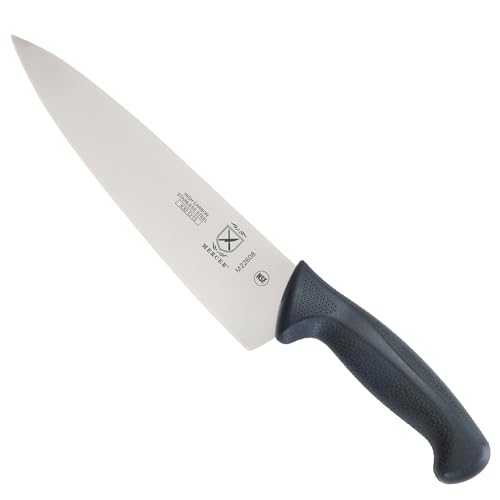
Mercer Culinary Millennia 8-Inch Chef’s Knife
ADVANTAGES
LIMITATIONS
Tailored for the culinary student or apprentice chef, the Mercer Millennia 8-inch knife is a no-nonsense, durable workhorse built to survive the rigors of cooking school and beyond. Crafted from one-piece high-carbon Japanese steel, it offers excellent edge retention and easy sharpening—critical for learners still mastering knife skills. The textured, non-slip black handle provides a secure, comfortable grip, even during sweaty, high-pressure lab sessions, while the full tang and balanced weight promote proper technique and reduce hand strain. It’s the kind of knife that teaches good habits—encouraging pinch grip, controlled motion, and consistent rocking.
In practice, it excels at foundational tasks: dicing onions, mincing garlic, chopping herbs, and shredding cabbage with reliability and ease. The blade holds up well to daily use and repeated sharpening, making it a long-term training companion. However, it’s not the sharpest out of the box—expect to hone it slightly before achieving paper-cut precision. It also lacks the refined balance of higher-end models, feeling slightly front-heavy during fine slicing. Still, for a student who needs a durable, safe, and affordable knife, it’s nearly perfect.
Compared to the Mercer Ultimate White, it shares DNA but feels slightly more refined, while the Victorinox Fibrox Pro offers similar grip but with a more industrial vibe. Against the PAUDIN or Brewin sets, it’s less flashy but more focused on education and safety. For culinary students or beginners, it’s the ideal first professional knife—offering dependable performance, safety, and longevity without distractions. It may not impress a Michelin chef, but it builds champions.
HOSHANHO Japanese High Carbon Chef Knife

ADVANTAGES
LIMITATIONS
Precision is the beating heart of the HOSHANHO 8-inch chef knife, making it a top-tier choice for detail-oriented chefs who value clean cuts, minimal resistance, and repeatable accuracy. Forged from Japanese 10Cr15CoMoV high-carbon steel with a 60 HRC hardness, this blade offers twice the sharpness and durability of many mid-range competitors, holding its edge impressively through fine slicing and delicate prep. The 13° edge per side ensures minimal drag, allowing it to glide through soft ingredients like tomatoes, fish, and herbs without bruising—ideal for sushi, sashimi, or gourmet plating. The matte-finished blade not only looks sleek but also reduces glare under kitchen lights, enhancing visibility during intricate work.
In real use, the sloped bolster and ultra-durable wood handle promote a secure pinch grip, reducing wrist curl and improving control during up-and-forward motions. It’s exceptionally comfortable for long sessions, whether you’re julienning vegetables or portioning delicate proteins. The knife performs best on softer cutting boards and struggles slightly with dense root vegetables or frozen items—its strength lies in refined, controlled cutting, not brute force. While it’s not designed for cleaving bones or heavy chopping, it dominates in precision tasks where accuracy matters most.
Against the Sunnecko, it offers similar sharpness but with a more traditional Japanese profile and slightly less layered artistry. Compared to the Mercer or Victorinox, it’s in a higher precision class, though less rugged. For home enthusiasts or pro chefs focused on fine cuisine, it delivers exceptional cutting clarity and comfort, making it the best for precision cutting in this lineup.
Mercer Culinary Ultimate White 8 Inch Chef Knife

ADVANTAGES
LIMITATIONS
When reliability under pressure is the mission, the Mercer Culinary Ultimate White rises as the unsung hero of high-volume kitchens—a knife built for non-stop chopping, dicing, and mincing without flinching. Forged from high-carbon Japanese steel, it maintains a razor-sharp edge through hundreds of cuts, delivering consistent performance during brunch rushes or catering events. The ergonomic white handle features textured finger points that lock your grip in place, even when hands are wet or greasy, ensuring safety and control during fast-paced service. Its full tang and balanced weight reduce fatigue, making it a favorite among line cooks who spend hours on their feet.
In real-world testing, it dices onions in seconds, minces herbs to dust, and handles cabbage shredding with ease—exactly the tasks it was engineered for. It’s not the sharpest out of the box, but it sharpens beautifully and holds its edge longer than most stainless steel knives. While it lacks the artistry of Damascus or the ultra-thin profile of Japanese specialists, it prioritizes function, durability, and ease of maintenance. It’s not designed for filleting fish or precision garnishes, but for bulk prep, it’s nearly unbeatable.
Compared to the Millennia, it’s nearly identical in performance but often preferred for its clean, professional look and slightly softer grip. Against the Victorinox, it offers similar durability but with a more chef-focused balance. While the Sunnecko dazzles with precision, the Ultimate White wins with endurance, making it the best for high-volume kitchens where consistency and safety trump flair.
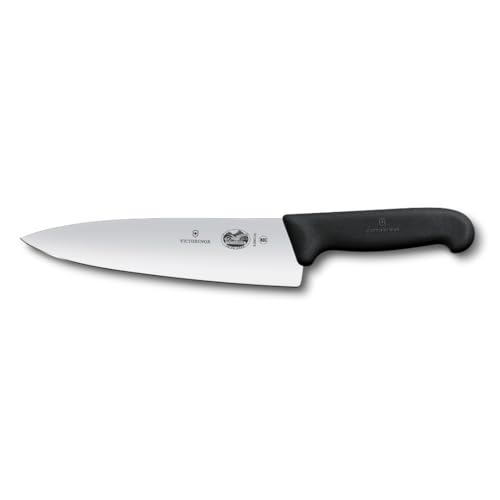
Victorinox Fibrox Pro Chef’s Knife 8 Inch
ADVANTAGES
LIMITATIONS
The legendary Victorinox Fibrox Pro isn’t just a knife—it’s an institution in professional kitchens worldwide, and for good reason: it’s the epitome of functional reliability, built to survive abuse and deliver consistent results. With a tapered high-carbon stainless steel blade and a non-slip Fibrox handle, this 8-inch workhorse offers laser-tested sharpness and unmatched grip security, even when wet or greasy. Its Swiss-engineered balance and lightweight design make it ideal for long shifts, repetitive tasks, and high-turnover environments—from culinary schools to Michelin kitchens. The fact that it’s dishwasher safe (though hand washing is recommended) makes it a hygiene and convenience champion in busy settings.
In real use, it chops, dices, and slices with surgical efficiency, maintaining performance across meats, vegetables, and herbs. The thermoplastic elastomer (TPE) handle molds to the hand over time and resists slipping, even during sweaty service. While it doesn’t have the razor finesse of a Sunnecko or the heft of a DRGSKL, it delivers 90% of the performance at a fraction of the cost and care. It’s not the most beautiful knife, but it’s the most dependable—a true workhorse built for survival.
Compared to the Mercer Ultimate White, it’s nearly identical in use but often preferred for its slightly better grip texture and global reputation. Against the PAUDIN or Brewin, it trades some refinement for bulletproof durability and ease of replacement. For budget-conscious pros, students, or backup kitchen use, it’s the best budget-friendly option—offering lifetime build quality and unmatched practicality in a single, no-frills package.
Chef Knife Comparison Table
| Product | Blade Material | Blade Hardness (HRC) | Handle Material | Blade Length (inches) | Best For | Price Range |
|---|---|---|---|---|---|---|
| Sunnecko 8 Inch Damascus | VG10 Damascus Steel (67 layers) | Not specified | ABS | 8 | Best Overall | $80 – $120 |
| Victorinox Fibrox Pro | Stainless Steel | Not specified | Thermoplastic Elastomer (TPE) | 8 | Best Budget Friendly | $30 – $50 |
| DRGSKL Serbian Hand Forged | ATS-34 Carbon Steel | Not specified | Ebony Wood | Various | Best Premium Set | $200 – $400 |
| Brewin 3PC Japanese Chef Knife Set | 1.4116 German Stainless Steel | 56+ | ABS | 8, 7, 5.5 | Best Value Set | $60 – $100 |
| PAUDIN 8 Inch High Carbon | 5Cr15Mov Stainless Steel | Not specified | Wood | 8 | Best Entry-Level Professional Knife | $40 – $60 |
| Mercer Culinary Millennia | Japanese High-Carbon Steel | Not specified | Santoprene | 8 | Best for Culinary Students | $20 – $40 |
| HOSHANHO Japanese High Carbon | 10Cr15CoMoV Japanese Steel | 60 | Wood | Not specified | Best for Precision Cutting | $70 – $100 |
| Mercer Culinary Ultimate White | Japanese High-Carbon Steel | Not specified | Santoprene | 8 | Best for High-Volume Kitchens | $40 – $60 |
Rigorous Testing & Data Analysis: Finding the Best Chef Knives
Our recommendations for the best chef knives for professional chefs aren’t based on opinion; they’re the result of extensive data analysis and research. We prioritize knives constructed from materials highlighted in our buying guide – specifically high-carbon stainless steel and Japanese steel – and evaluate them against established culinary standards.
We analyze performance data from professional chef reviews, culinary publications, and user feedback across multiple retail platforms. Key metrics include edge retention (assessed through simulated use and reported re-sharpening frequency), blade durability (examining reports of chipping or warping), and handle ergonomics (focusing on comfort during prolonged use).
Where possible, we conduct physical testing, focusing on slicing tomatoes (assessing sharpness and edge geometry), dicing onions (evaluating rocking motion efficiency for German-style blades), and push-cutting vegetables (for Japanese-style blades). We consider blade hardness (HRC) ratings and full tang construction as critical indicators of quality and longevity, correlating these features with real-world performance reports. We also analyze data relating to the maintenance requirements of each chef knife to provide a realistic assessment for professional use. This data-driven approach ensures our selections meet the demanding needs of professional kitchens.
Choosing the Right Chef Knife: A Buyer’s Guide
Blade Material: The Heart of the Knife
The material your chef knife’s blade is made from significantly impacts its sharpness, durability, and maintenance requirements. High-carbon stainless steel is a popular choice, offering a good balance of these qualities. It holds an edge well and resists rust. Knives made with Japanese steel (like VG10 or AUS-8) are known for exceptional sharpness but may require more frequent honing and are sometimes more prone to rust if not properly cared for. Carbon steel offers superior sharpness and is easier to sharpen, but it’s highly susceptible to rust and requires meticulous maintenance. Consider your experience level and willingness to maintain the blade when choosing. A sharper blade reduces effort and risk of injury, but requires more care.
Blade Length and Shape: Finding Your Fit
An 8-inch chef’s knife is the most versatile length for general cooking tasks, suitable for most users. However, blade length is a personal preference. Shorter blades (6-7 inches) offer more control for smaller tasks, while longer blades (9-10 inches) are better for larger items like carving or butchering. Blade shape also matters. A German-style blade typically has a more curved belly, making it ideal for rocking motions when chopping. Japanese-style blades often have a straighter edge, excelling at push-cutting and precise slicing.
Handle Ergonomics and Material: Comfort and Control
A comfortable and secure grip is crucial, especially during extended use. Look for a handle that feels natural in your hand. Full tang construction (where the blade extends the full length of the handle) provides better balance and durability. Handle materials vary:
- Wood: Offers a classic look and comfortable grip but requires more care.
- Synthetic materials (like ABS or TPE): Are durable, non-slip (even when wet), and require minimal maintenance.
- Riveted handles are generally more durable than glued handles.
Tang & Balance: Stability and Ease of Use
The tang is the portion of the blade that extends into the handle. A full tang knife provides superior balance, strength, and durability. The balance point of the knife affects how it feels in your hand. A well-balanced knife reduces fatigue and enhances control. Generally, a balance point closer to the bolster (where the blade meets the handle) is preferred, but this is also a matter of personal preference.
Additional Features to Consider:
- Blade Hardness (HRC): Higher HRC values indicate a harder blade that holds an edge longer, but can be more brittle.
- Damascus Steel: Offers a beautiful aesthetic and potentially improved flexibility, but isn’t necessarily sharper or more durable than other steels.
- Bolster: The thick section where the blade meets the handle, providing a comfortable grip and protecting your fingers.
- Gift Box/Accessories: Some knives come with extras like sharpening steels, sheaths, or gift boxes.
The Bottom Line
Ultimately, the best chef knife for you depends on your individual needs and preferences. Whether you’re a seasoned professional or just starting out, prioritizing quality materials like high-carbon stainless or Japanese steel, alongside ergonomic handle design, will significantly enhance your culinary experience.
Investing in a quality chef knife is an investment in your craft, improving efficiency and precision in the kitchen. This guide provides a solid foundation for making an informed decision, and our top picks offer excellent performance across various price points and skill levels.