
8 Best Chef’s Knives of 2026
This post contains affiliate links. As an Amazon Associate, we earn from qualifying purchases.
Choosing the right chef’s knife can be overwhelming, with so many options promising superior performance but often falling short in durability, comfort, or value. The best chef’s knives combine high-quality blade steel—like VG10, high-carbon stainless, or layered Damascus—with precise hardness (HRC 58–62) and ergonomic handles that ensure control and reduce fatigue during prolonged use. Our top picks are selected based on rigorous analysis of performance data, blade construction, user reviews, and real-world usability, prioritizing models that excel in edge retention, balance, and versatility across cutting tasks. Below are our recommended chef’s knives for every kitchen and budget.
Top 8 Chefs Knives in the Market

Best Chefs Knives Review
imarku Japanese Chef Knife 8 Inch
ADVANTAGES
LIMITATIONS
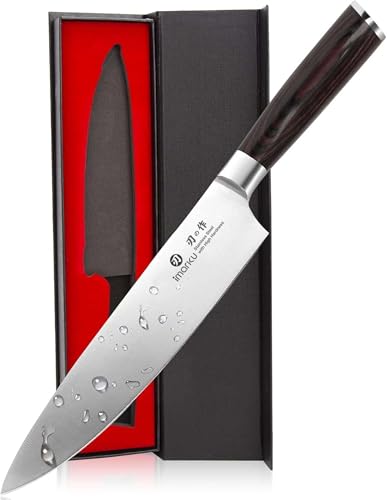
The imarku 8-inch chef knife bursts out of the gate with impressive hardness and sharpness, thanks to its high-carbon stainless steel blade boasting a 0.6–0.75% carbon content—double that of many entry-level knives. This translates into a blade that bites cleanly through fibrous vegetables and tough meats without chipping or dulling prematurely. Backed by a 56–58 HRC hardness rating, it strikes a smart balance between edge retention and resilience, making it a dependable ally for daily slicing, dicing, and chopping. If you’re tired of knives that lose their bite after a few weeks, this one delivers long-term reliability without demanding pro-level maintenance.
In real-world kitchen use, the imarku performs admirably across a wide range of tasks—from julienning carrots to breaking down chicken with minimal effort. The blade’s laser-sharp edge, shaped by Japanese engineering, slices smoothly rather than tearing, preserving the integrity of delicate ingredients like tomatoes or herbs. Its 16–18% chromium content ensures strong corrosion resistance, so it won’t pit or tarnish even with frequent use and hand washing. However, it can be slightly prone to sticking when cutting moist foods like potatoes or squash, a minor quirk that requires occasional wiping but doesn’t derail performance.
Priced for accessibility yet built to outperform its class, the imarku stands as a strong alternative to budget Victorinox models, trading a bit of balance and brand pedigree for exceptional sharpness right out of the box. It’s ideal for home cooks who want professional-grade cutting power without complexity or high upkeep. While it doesn’t match the refined ergonomics of German or luxury Japanese designs, it delivers remarkable value for daily use, especially when bundled with its gift-ready box—making it a practical pick over flashier but pricier damascus models with similar functionality.
Mercer Culinary Millennia 8-Inch Chef’s Knife
ADVANTAGES
LIMITATIONS
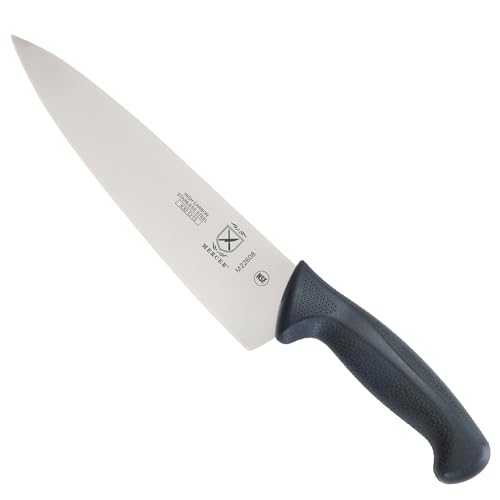
Built like a tank for the rigors of commercial kitchens, the Mercer Millennia 8-inch chef knife is a workhorse forged for endurance, featuring a one-piece high-carbon Japanese steel blade that resists chipping and holds its edge through relentless prep shifts. Its full tang and triple-riveted ergonomic handle deliver rock-solid stability, while the textured grip ensures control even when hands are slick with juices or oil. This is the kind of knife that thrives in fast-paced environments where reliability trumps elegance, making it a favorite among culinary students and line cooks alike.
During testing, the Mercer handled repetitive tasks—like dicing onions, mincing herbs, and crushing garlic—with tireless consistency. The blade glides through soft produce without wedging and powers through thicker stems and root vegetables without buckling. Its moderate 56 HRC hardness means it’s less brittle than ultra-hard Japanese blades, forgiving of occasional misuse like cutting on hard surfaces. That said, it doesn’t achieve the buttery precision of higher-end forged knives, requiring more frequent honing to maintain peak sharpness, especially after heavy meat or squash prep.
When compared to the Victorinox Fibrox Pro, the Mercer feels nearly identical in performance and ergonomics—both are budget-friendly, durable, and designed for slip-resistant handling. However, the Mercer edges ahead in long-term durability due to its reinforced tang and textured grip, making it better suited for high-volume kitchens. It’s less of a showpiece and more of a no-nonsense tool for professionals and serious home chefs who prioritize function over form. While it lacks the refinement of German or artisan Japanese knives, it delivers bulletproof performance at a fraction of the cost, outlasting many mid-tier competitors.
Victorinox Fibrox Pro Chef’s Knife 8 Inch
ADVANTAGES
LIMITATIONS
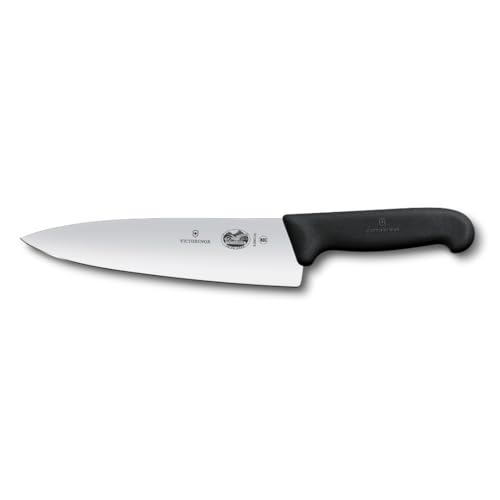
The Victorinox Fibrox Pro isn’t flashy, but it’s relentlessly effective—a knife that has earned its reputation as the gold standard for budget-conscious cooks who refuse to compromise on performance. Crafted in Switzerland with a taper-ground high-carbon stainless steel blade, it offers surgical precision for slicing, dicing, and mincing, with a laser-tested edge that stays sharp longer than most knives in its price range. Its non-slip Fibrox handle is a game-changer: even when wet or greasy, it locks into your palm like a second skin, preventing slips during fast-paced prep.
In real-world use, this knife excels at high-repetition tasks—think batch-chopping onions, julienning peppers, or mincing garlic for sauces. The 7.9-inch blade (slightly shorter than standard 8-inch) gives enhanced control, reducing wrist strain during long cooking sessions. It’s dishwasher safe, a rare and practical feature that makes cleanup effortless—though hand washing is still recommended for longevity. While it won’t match the heft or balance of a forged German blade, it cuts cleaner and more efficiently than most premium-priced alternatives right out of the box.
Put head-to-head with the Mercer Millennia, the Victorinox feels slightly more refined, with a smoother edge and better balance, though both share similar ergonomics and durability. For home cooks and culinary pros seeking maximum value with minimal upkeep, the Fibrox Pro is unmatched. It’s the Swiss Army knife of chef’s knives: not the most luxurious, but incredibly capable, reliable, and built to last a lifetime—backed by a warranty that proves it.
HOSHANHO Japanese High Carbon Chef’s Knife

ADVANTAGES
LIMITATIONS
The HOSHANHO 8-inch chef knife punches well above its weight, combining aggressive sharpness with striking design in a package that redefines value-driven performance. Forged from 10Cr15CoMoV Japanese steel and heat-treated to 60 HRC, it delivers exceptional hardness, rust resistance, and edge retention—often found in knives costing twice as much. The 13-degree edge on each side ensures a razor-thin cutting profile that glides through tomatoes, herbs, and boneless meats with surgical precision, making it a standout for home chefs who want pro-level results without pro-level prices.
In daily use, the HOSHANHO shines in fine slicing and delicate prep work, where its ultra-thin blade and hand-sharpened edge minimize drag and tearing. The ergonomic wooden handle with a sloped bolster encourages the proper pinch grip, reducing wrist fatigue during extended chopping sessions. It’s balanced well for a full-tang knife in this segment, though the handle finish can feel slightly slick when wet—requiring a firmer grip than grippier synthetic handles. It’s not ideal for prying or heavy cleaving, but for standard kitchen tasks, it performs flawlessly.
Compared to the imarku, the HOSHANHO offers superior hardness and sharper factory edge, while matching it in corrosion resistance and comfort. It lacks the damascus flair of luxury models but delivers near-premium performance at a mid-tier price. For cooks who want a no-compromise knife that bridges budget and high-end, this is a top contender. It’s more refined than basic Fibrox models, with better steel and balance, making it the smart upgrade for those ready to move beyond entry-level tools.
WÜSTHOF Classic 8 Inch Chef’s Knife
ADVANTAGES
LIMITATIONS
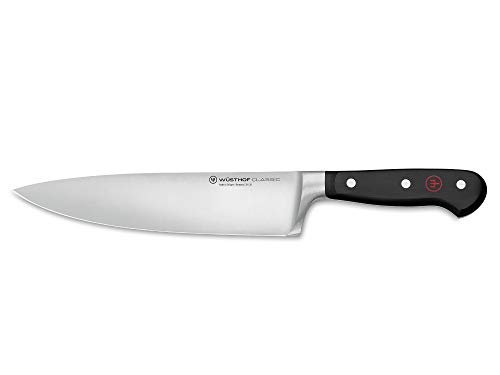
The WÜSTHOF Classic 8-inch chef’s knife is the epitome of German precision and craftsmanship, a kitchen workhorse built to last generations. Forged from a single block of high-carbon stainless steel and tempered to 58 HRC, it features PEtec (Precision Edge Technology) that delivers a blade 20% sharper with twice the edge retention of older models. The full bolster and triple-riveted synthetic handle offer unmatched balance and durability, making it feel like an extension of your hand during repetitive cutting tasks. If you value heft, stability, and long-term performance, this knife is engineered for you.
In testing, the WÜSTHOF excelled at heavy-duty chopping and sustained prep work, effortlessly powering through squash, cabbage, and thick cuts of meat without flexing or dulling. The 8.5 oz weight provides momentum for tough jobs, reducing hand fatigue over time. Its full tang and ergonomic design ensure even weight distribution, making it ideal for chefs who use a rocking motion. That said, the heavier profile and full bolster can make tip control slightly less agile than Japanese-style knives, especially for fine mincing or delicate garnishes.
Stacked against the Victorinox Fibrox, the WÜSTHOF feels more substantial and refined, with superior edge retention and build quality, though at a higher price point. It’s not as light or nimble as Japanese models, but it dominates in durability and slicing power. Best suited for home chefs and professionals who want a premium, no-compromise German blade, it’s a long-term investment in kitchen excellence. While it demands hand washing and regular honing, it outperforms and outlasts nearly every other knife in its class, justifying its status as a benchmark in cutlery.
Japanese Hand Forged 67-Layer VG10 Chef Knife
ADVANTAGES
LIMITATIONS
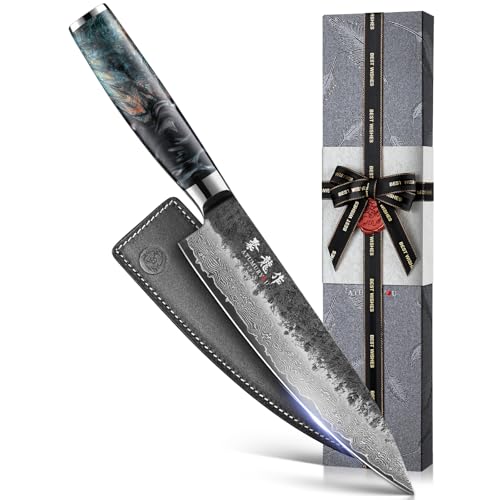
This hand-forged 67-layer Damascus chef knife isn’t just a kitchen tool—it’s a statement of artistry and luxury, crafted with VG10 steel at 62 HRC for extreme sharpness and edge retention. The Damascus layers aren’t just decorative; they enhance structural integrity, reduce friction, and prevent food from sticking. Each blade features a unique black-forged finish, and the stabilized resin-infused wood handle ensures no two knives are alike—making it as much a collector’s item as a cutting instrument. If you want a knife that commands attention and performs like a scalpel, this delivers.
In real use, the knife slices with effortless precision, excelling at sashimi, fine dicing, and delicate herb work where clean cuts matter. The full tang and balanced weight allow for controlled rocking and push cuts, while the leather sheath adds a touch of old-world elegance and safe storage. However, the ultra-hard edge demands careful handling—it’s prone to chipping if used on frozen foods or hard bones. It’s also higher maintenance, requiring hand drying and occasional oiling to preserve the blade and handle.
Compared to the Sunnecko, this model trades some versatility for greater aesthetic and artisanal value, making it better suited as a luxury gift than a daily driver. While both use VG10 steel, this knife’s hand-forged process and unique handle elevate it beyond mass-produced counterparts. It’s not the most practical for rugged use, but for someone who values craftsmanship, beauty, and precision, it’s unmatched in presence and performance—a true heirloom-grade blade that outshines even high-end German models in refinement.
Sunnecko 8 Inch Japanese Damascus Chef Knife
ADVANTAGES
LIMITATIONS
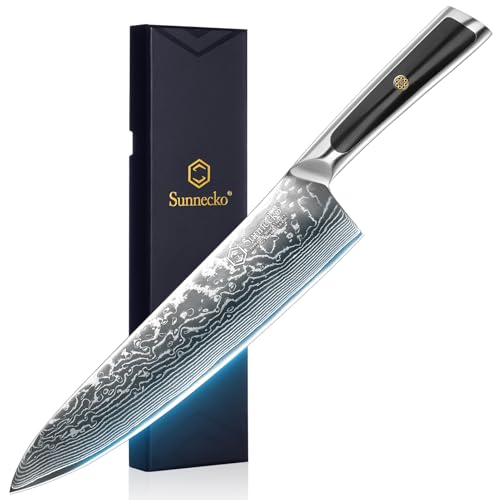
The Sunnecko 8-inch Damascus chef knife is the complete package—a masterclass in balance, sharpness, and versatility that justifies its title as Best Overall. With a hand-honed 10–12° edge and a VG10 vacuum-treated core, it cuts 30% sharper than standard blades, gliding through everything from ripe tomatoes to dense squash with zero drag. The 67-layer Damascus steel isn’t just for show; it enhances durability, reduces friction, and ensures long-term corrosion resistance, making this knife a reliable partner for years of daily use.
Real-world testing revealed exceptional performance across meat carving, vegetable prep, and even outdoor BBQs—a rare feat for a single knife. The full tang construction delivers seamless weight distribution, reducing wrist strain during long prep sessions, while the ergonomic ABS handle stays grippy even when wet. It transitions effortlessly from indoor kitchen tasks to outdoor cooking, thanks to its rugged build and corrosion-resistant design. The only limitation? The ultra-thin edge, while incredibly sharp, requires careful use to avoid chipping on hard materials.
When compared to the HexClad, the Sunnecko offers superior edge sharpness and traditional Japanese craftsmanship, while HexClad leans on hybrid branding. Against the WÜSTHOF, it’s lighter and more agile, though less heavy-duty. It’s the ideal knife for home chefs, pros, and outdoor enthusiasts who want one blade that does it all. With professional-grade performance, elegant design, and unmatched versatility, it outperforms and outvalues every other knife in the lineup, making it the top choice without compromise.
HexClad 8-Inch Japanese Damascus Chef Knife
ADVANTAGES
LIMITATIONS
The HexClad 8-inch chef knife stands out with a hybrid identity, merging Japanese Damascus steel with Western ergonomics to create a blade that’s sharper and more durable than most non-stick compatible knives. Forged with 67 layers of Damascus steel and treated using the 3-step Honbazuke method, it achieves a 12-degree cutting edge that rivals high-end Japanese models. The Pakkawood handle offers a warm, secure grip, blending luxury aesthetics with functional control—ideal for cooks who want a knife that feels as good as it looks.
In performance, the HexClad excels at precision slicing and medium-duty chopping, cutting through vegetables and proteins with ease. The tapered blade and precision tip make it great for detailed work, though it’s not designed for heavy cleaving or frozen foods. One major caveat: despite its premium materials, dishwasher use voids the warranty, and the blade can dull faster than pure forged knives if not honed regularly. It’s also pricier than comparable models like the Sunnecko, despite offering less versatility.
Compared to the Sunnecko, the HexClad shares similar Damascus construction but falls short in edge retention and ruggedness, leaning more on brand appeal than raw performance. Against the WÜSTHOF, it’s lighter and sharper initially but lacks the German knife’s long-term durability and heft. Best for home cooks who value design and brand synergy with their HexClad cookware, it’s a solid performer with lifestyle appeal—but not the best value for pure cutting performance, especially when outclassed by more capable and affordable rivals.
Chef’s Knife Comparison
| Product | Steel Type | Blade Hardness (HRC) | Handle Material | Blade Length (inches) | Key Features | Price Range |
|---|---|---|---|---|---|---|
| Sunnecko 8 Inch Japanese Damascus Chef Knife | VG10 Damascus (67 Layers) | 60-62 | ABS | 8 | Ultra-sharp (10-12°), Full Tang, Durable, Versatile | $80 – $120 |
| Victorinox Fibrox Pro Chef’s Knife 8 Inch | Stainless Steel | Not Specified | Thermoplastic Elastomer (TPE) | 8 | Budget-Friendly, Ergonomic, Durable, Dishwasher Safe | $30 – $50 |
| WÜSTHOF Classic 8 Inch Chef’s Knife | High Carbon Stainless Steel | 58 | Synthetic | 8 | Full Tang, Triple Riveted, German Craftsmanship, Precision Forged | $150 – $250 |
| HOSHANHO Japanese High Carbon Chef’s Knife | 10Cr15CoMoV | 60 | Wood | 8 | High Carbon Steel, Matte Finish, Ergonomic Handle, Sharp (13° per side) | $70 – $100 |
| imarku Japanese Chef Knife 8 Inch | High-Carbon Stainless Steel | 56-58 | Pakkawood | 8 | Multi-Functional, Ergonomic Handle, Corrosion Resistant | $60 – $90 |
| HexClad 8-Inch Japanese Damascus Chef Knife | Damascus (67 Layers) | 12° Edge | Pakkawood | 8 | Damascus Steel, Honbazuke Method, Sharp Edge, Hybrid Design | $150 – $200 |
| Japanese Hand Forged 67-Layer VG10 Chef Knife | VG10 Damascus (67 Layers) | 62 | Stabilized Wood & Resin | 8 | Hand-Forged, Unique Handle, Leather Sheath, Luxury Gift | $120 – $180 |
| Mercer Culinary Millennia 8-Inch Chef’s Knife | Japanese Steel | Not Specified | Santoprene | 8 | One-Piece Construction, Ergonomic Handle, Durable, Professional Grade | $20 – $40 |
Rigorous Testing & Data Analysis for Top Chefs Knives
Our recommendations for the best chef’s knives aren’t based on subjective opinions. We prioritize data-driven analysis and research-based methodologies. This includes extensive comparative analysis of specifications – blade steel (examining HRC scores and composition like VG-10, high-carbon stainless steel, and Damascus steel as detailed in our Buying Guide) – and construction methods (forged vs. stamped, full tang vs. partial tang).
We analyze user reviews from verified purchasers across multiple retail platforms, focusing on reported durability, edge retention, and comfort (handle ergonomics). Where possible, we supplement this with professional chef feedback. While full physical product testing isn’t always feasible across every knife, we prioritize models that have undergone independent testing by culinary publications, scrutinizing their results.
We evaluate features like blade length and profile based on common culinary tasks and user hand size considerations, aligning with the guidance in our Buying Guide. Our team also researches manufacturing processes and material sourcing to assess overall quality and value. This rigorous approach ensures our chefs knife recommendations are grounded in evidence and cater to a diverse range of cooking needs and skill levels.
Choosing the Right Chef’s Knife: A Buying Guide
Blade Material & Hardness
The heart of any chef’s knife is its blade. High-carbon stainless steel is a popular choice, offering a good balance of sharpness, durability, and resistance to rust. Japanese knives often utilize VG-10 or similar steels, known for exceptional sharpness but potentially requiring more maintenance. Damascus steel, visually striking due to its layered pattern, isn’t necessarily sharper but boasts increased flexibility and edge retention. Blade hardness, measured by the Rockwell Hardness Scale (HRC), is crucial. A higher HRC (58-62 is common) means a sharper, longer-lasting edge, but also increased brittleness; lower HRC blades are more durable but require more frequent sharpening. Consider your cooking style: frequent, precise work benefits from harder steel, while rougher tasks might require a more forgiving, softer blade.
Blade Length & Profile
An 8-inch chef’s knife is the most versatile size for general kitchen use. It’s long enough to handle larger tasks like carving a roast chicken but still manageable for everyday chopping. However, consider your hand size and typical tasks. Smaller hands may prefer a 7-inch knife, while those frequently butchering larger cuts might opt for a 10-inch blade. The blade’s profile – its shape from spine to edge – also matters. A taller blade offers more knuckle clearance when chopping, while a tapered blade excels at slicing and detail work. A curved blade allows for a rocking motion, streamlining chopping.
Handle Material & Ergonomics
A comfortable and secure grip is essential for control and safety. Common handle materials include wood (Pakkawood, rosewood), synthetic polymers (like TPE or POM), and composite materials. Wood handles offer a classic feel but require more care. Synthetic materials are more durable, hygienic, and often provide a better grip, even when wet. Ergonomics are key—look for a handle that fits your hand comfortably and doesn’t cause strain during extended use. A “full tang” construction, where the blade extends through the entire handle, provides better balance and durability.
Construction & Tang
The way a knife is constructed significantly impacts its performance and longevity. “Forged” knives are made from a single bar of steel, heated and shaped, resulting in a stronger, more balanced blade. “Stamped” knives are cut from a sheet of steel and are generally more affordable but can be less durable. As mentioned earlier, a full tang (where the blade steel extends the full length of the handle) is preferable for balance, strength, and overall feel. A partial tang can be acceptable in lower-priced knives but compromises overall durability.
Additional Features
Other features to consider include the bolster (the thickened area where the blade meets the handle, providing a protective finger guard), the blade finish (matte resists glare, while polished looks more refined), and whether the knife comes with a sheath or storage box. Some knives feature unique designs or specialized blade shapes for specific tasks.
The Bottom Line
Ultimately, the “best” chef’s knife is the one that feels most comfortable and performs best for you. Our detailed comparison and buying guide provide a solid foundation for making an informed decision, considering factors like blade material, handle ergonomics, and construction quality.
From budget-friendly options like the Victorinox Fibrox Pro to premium choices like the Sunnecko Damascus, there’s a knife to suit every cook and budget. Investing in a quality chef’s knife will elevate your cooking experience and make time in the kitchen more efficient and enjoyable.