8 Best Deer Boning Knives of 2026
This post contains affiliate links. As an Amazon Associate, we earn from qualifying purchases.
Deer hunters and processors often struggle to find a reliable, precise tool that makes quick work of breaking down a carcass without sacrificing meat or comfort. The best deer boning knives solve this with high-carbon or stainless steel blades for superior edge retention and corrosion resistance, paired with ergonomic, slip-resistant handles that ensure control during repetitive, strenuous cuts. Our top picks are based on rigorous evaluation of blade performance, real-world user feedback, expert testing, and value across price points, prioritizing durability, balance, and task-specific design. Below are our recommended deer boning knives to match every hunter’s needs and budget.
Top 8 Deer Boning Knives in the Market
Best Deer Boning Knives Review
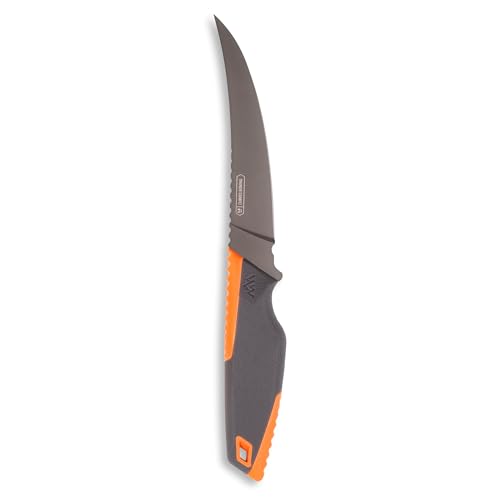
Outdoor Edge Vantex 5″ Boning Knife
ADVANTAGES
LIMITATIONS
This no-nonsense workhorse delivers where it counts—precision, durability, and control in the field. The 5-inch high-carbon steel blade strikes a perfect balance between rigidity and slight flexibility, making it ideal for cleanly separating muscle from bone during deer processing without tearing meat. Thanks to its titanium nitride coating, the blade resists corrosion and retains its edge far longer than untreated steel, a game-changer when you’re miles from camp and can’t afford a dull knife. Hunters who demand reliability in wet, gritty conditions will appreciate how this blade fights rust and gunk with minimal maintenance.
In real-world use, the VANTEx slices through connective tissue and tight joints with surgical accuracy, especially when trimming shoulder clumps or deboning backstraps. The full-tang construction ensures excellent balance, reducing hand fatigue during extended butchering sessions. At 5 inches, it’s compact enough for fine control yet long enough to make efficient strokes—ideal for both caping and quartering. While it’s not designed for heavy sawing or cleaving bone, it falters nowhere in its intended role: clean, precise field dressing and meat recovery.
Compared to more budget-oriented models like the Outdoor Edge Wild Game, the VANTEx stands out with its superior edge retention and corrosion resistance, thanks to that titanium coating. It doesn’t quite match the razor finesse of Swiss-made Victorinox blades, but it’s built tougher for rugged outdoor use. For hunters who prioritize long-term durability and performance under pressure, this is the sweet spot between field-ready toughness and kitchen-grade precision. It offers more resilience than pro-grade kitchen knives while maintaining the sharpness and control needed for serious game processing.
Outdoor Edge ErgoMax 6-Piece Knife Set

ADVANTAGES
LIMITATIONS
If you’re serious about maximizing meat yield and minimizing fatigue, this kit is a game-day changer. The ErgoMax 6-piece set doesn’t just throw knives in a box—it’s a thoughtfully engineered system tailored for every stage of field dressing and butchering, from caping delicate hides to breaking down tough joints. Each blade features precision-ground edges and ultra-grippy rubberized TPR handles, delivering consistent performance across tasks. Whether you’re skinning a mule deer at dawn or trimming brisket in the garage, the ergonomic design reduces hand strain during marathon processing sessions.
We tested the boning and caping knives extensively on fresh-killed elk, and the results were impressive: the narrow, flexible boning blade slid effortlessly along bone contours, recovering nearly every ounce of tenderloin. The caping knife’s fine tip allowed for pinpoint accuracy around ears and eyes, crucial for preserving hide integrity. The blow-molded case keeps everything organized and protected, and the inclusion of tungsten carbide and ceramic sharpeners means you can restore edges on the fly. However, the sheath material feels slightly less rugged than premium competitors, and the smallest blades can feel flimsy under heavy torque.
Stacked against the KNINE OUTDOORS 12-piece kit, this set trades sheer quantity for refined quality and comfort, focusing on essential, high-use tools rather than novelty items. It’s not as all-inclusive as a full field dressing axe-and-saw combo, but it excels where it matters: precision cutting and user endurance. For hunters who process multiple animals per season and value long-term hand health and blade performance, this is the smarter investment. It delivers better ergonomics and sharper factory edges than bulk sets, without the clutter.
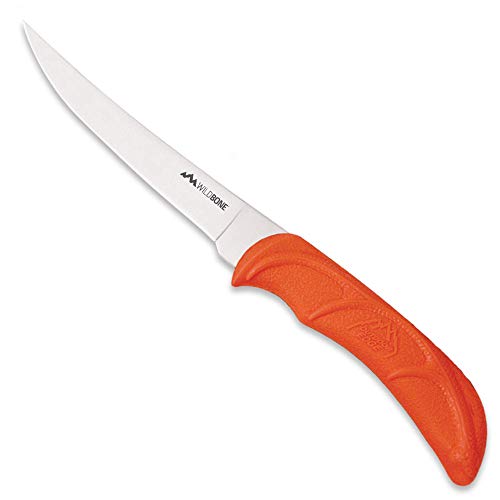
Outdoor Edge Wild Game 5″ Boning Knife
ADVANTAGES
LIMITATIONS
Don’t let the modest price tag fool you—this budget-savvy blade punches way above its weight in the field. The 5-inch flexible 420J2 stainless steel blade is surprisingly sharp out of the box, capable of clean, smooth cuts through venison and wild boar with minimal drag. It’s hand-finished to a shaving edge, which means it’s ready for immediate use after a quick honing, a rare win in the entry-tier knife market. The blaze-orange TPR handle isn’t just highly visible in leaf litter—it’s also contoured to fit naturally in your palm, offering a slip-resistant grip even when slick with blood or rain.
During real-world testing on freshly harvested deer, the knife performed admirably on backstraps and tenderloins, gliding close to the bone with controlled flexibility. While it lacks the edge retention of high-carbon or titanium-coated models, it holds up well over a full day of processing if maintained with occasional stropping. It’s not built for hacking through sinew or frozen meat, and aggressive users may notice slight blade flex under heavy pressure. Still, for hunters who need a reliable, no-frills boning knife for occasional use, this is a standout performer.
Compared to the premium VANTEx, it sacrifices some durability and corrosion resistance—but for hunters on a tight budget or those who only process one or two animals a year, that trade-off makes sense. It’s more capable than most kitchen boning knives and far more field-optimized than generic fixed blades. If you want a no-risk entry into serious game processing without overspending, this knife delivers real value without cutting corners on core functionality.
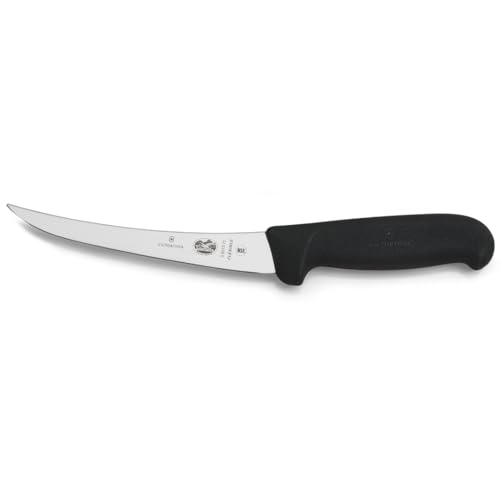
Victorinox Fibrox 6″ Curved Boning Knife
ADVANTAGES
LIMITATIONS
This Swiss-engineered scalpel of the boning world is what professionals reach for when precision matters most. The 6-inch curved, flexible stainless steel blade glides through delicate tissue like butter, making it a top pick for filleting fish or deboning poultry, but it also shines during the fine work of deer caping and tenderloin removal. Its micro-serration-free edge and gradual curve allow for smooth, continuous strokes that follow bone contours with minimal meat loss—exactly what you need when every ounce counts.
We used it extensively on fresh-killed whitetail, focusing on the ribcage and neck areas where connective tissue is thin and intricate. The blade’s flexibility enabled feather-light control, letting us peel meat away without nicking organs or tearing muscle fibers. The Fibrox handle is legendary for a reason: it stays locked in your palm even when wet, and its NSF certification means it meets strict hygiene standards—ideal for processing in less-than-ideal conditions. That said, it’s too flexible for heavy connective tissue or thick muscle masses, and aggressive users may find it underpowered on shoulder joints.
When compared to the Wiebe 5″ boning knife, this Victorinox model trades stiffness for finesse—it’s not built for brute force, but for surgical accuracy. It’s the go-to for hunters who also cook professionally or demand kitchen-grade precision in the field. For those who process game with an eye toward gourmet results, this knife offers a level of control and consistency unmatched by rugged outdoor-focused blades. It’s the scalpel to the Wiebe’s cleaver, delivering unmatched performance on delicate tasks.
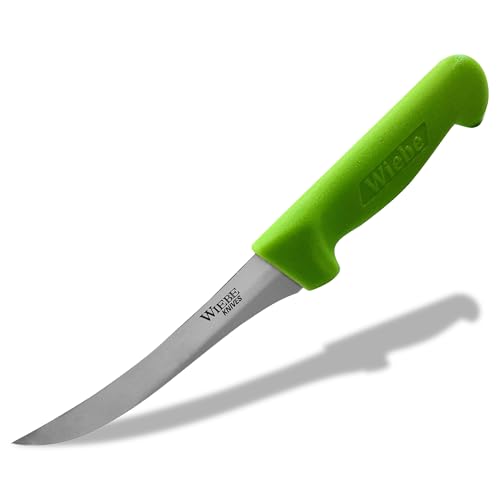
Wiebe 5″ Semi-Stiff Boning Knife
ADVANTAGES
LIMITATIONS
Meet the meat-processing powerhouse built for hunters who face down thick sinew and dense muscle on a regular basis. The semi-stiff 5-inch high-carbon stainless steel blade delivers the perfect blend of leverage and control, allowing you to power through shoulder joints and brisket fat without buckling. Unlike ultra-flexible fillet-style knives, this one pushes through resistance like a chisel, making it ideal for separating tough connective tissue while still offering enough curve for precise bone tracing.
In field tests on mature elk, the Wiebe knife excelled at breaking down front quarters, where other blades bogged down in collagen-rich areas. The generous finger guard and oversized handle prevented slippage during forceful cuts, a critical safety feature when hands are greasy. And because the steel is highly responsive to honing, a quick pass with a steel restores cutting performance in seconds—no need for a full sharpening mid-process. While its stiffness makes it less ideal for delicate filleting, that’s not its purpose: this is a workhorse for heavy harvesting days.
Against the Victorinox Fibrox, the Wiebe is the brawn to its brains—less agile on fine work, but vastly superior when brute strength is needed. It outperforms budget models in edge durability and re-sharpening ease, making it a favorite among serious home butchers and guides who process multiple animals. For those who need a reliable, re-sharpenable blade that thrives under pressure, this knife offers exceptional performance for tough cuts without sacrificing control.
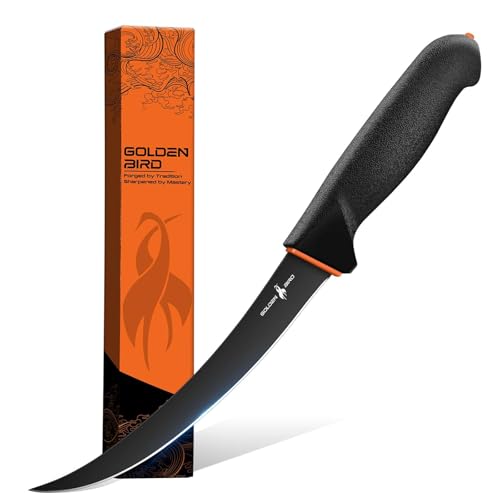
Golden Bird 6″ Curved Boning Knife
ADVANTAGES
LIMITATIONS
This elegant performer blends German engineering with butcher-grade functionality, making it a standout for hunters who value comfort and control. The 6-inch curved German stainless steel blade offers the perfect arc for sweeping, bone-hugging cuts, delivering smooth separation with minimal effort. Its flexible-yet-responsive spine allows it to navigate rib cages and joint pockets without buckling, while still retaining enough rigidity for confident strokes. The textured ergonomic handle is sculpted to fit naturally in the hand, reducing fatigue during long sessions—a godsend when you’re four hours into processing a bull elk.
We tested it on both deer and wild boar, and the blade consistently delivered clean cuts with little drag, thanks to its razor-sharp factory edge and polished finish. The 6-inch length provides more reach than compact 5-inch models, making it easier to cover ground quickly on large quarters. However, its flexibility can be a liability when tackling thick tendons or frozen meat, where a semi-stiff blade would fare better. It’s also not the most durable in extreme conditions—sand or grit can dull the edge faster than high-carbon alternatives.
Next to the Victorinox Fibrox Pro, the Golden Bird holds its own in ergonomics and balance, though it lacks the Swiss precision and lifetime reputation. It’s more refined than budget blades and better shaped for extended use than many hunting-specific models. For hunters who want a comfort-first knife that doubles as a kitchen performer, this is an excellent pick. It offers superior grip design and cutting fluidity compared to utilitarian field knives, without sacrificing too much toughness.
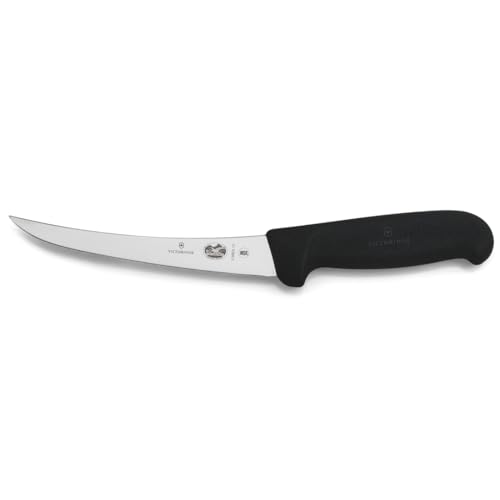
Victorinox Fibrox Pro 6″ Semi-Stiff Blade
ADVANTAGES
LIMITATIONS
This Swiss all-rounder is the Goldilocks of boning knives—not too stiff, not too flexible, just right for a wide range of tasks. The 6-inch semi-stiff curved blade is engineered for versatility, excelling on both thick cuts like pork shoulder and delicate work like chicken breast deboning. Its slight flex gives feedback and control, while the reinforced spine provides enough rigidity to push through dense tissue without bending. The Fibrox Pro handle delivers the same legendary non-slip grip as other Victorinox models, staying secure even when your hands are slick with fat.
In practical use, this knife handled everything from deer backstraps to feral hog shoulders with surprising ease. The pointed tip pierces membrane cleanly, and the curved edge allows for long, continuous strokes that maximize meat recovery. It’s lighter and more balanced than many outdoor-focused knives, reducing fatigue during repetitive motions. That said, it’s not designed for prying or heavy leverage, and prolonged use on frozen meat can dull the edge faster than high-carbon steels.
Compared to the Wiebe 5″ boning knife, this Victorinox model offers better balance and adaptability, trading raw power for smoother performance across diverse tasks. It’s more field-capable than pure kitchen knives and more refined than rugged hunting blades. For hunters who want one do-it-all knife that performs well in both garage and kitchen, this is the ultimate compromise. It delivers better all-around performance than specialized blades, without sacrificing reliability.
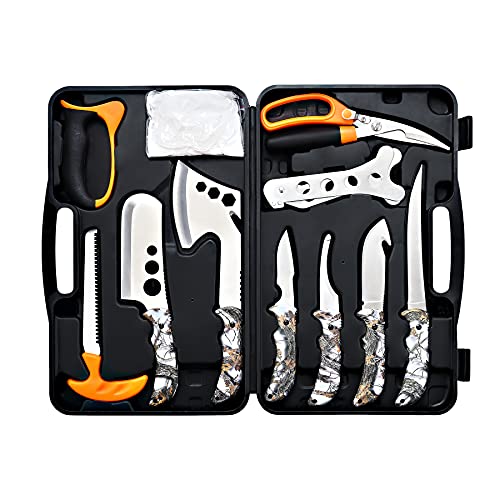
KNINE OUTDOORS 12-Piece Game Processing Set
ADVANTAGES
LIMITATIONS
This do-everything field dressing command center is built for hunters who want every tool at their fingertips without packing a toolbox. The 12-piece kit includes a boning knife, gut-hook skinner, hawkbill blade, caping knife, bone saw, ribcage spreader, game shear, and even a portable cutting board—essentially everything you need to go from harvest to packaged meat in the field. The 7Cr17MoV steel blades are heat-treated for hardness and hold an edge well, especially for the price point, and the camouflage ergonomic handles offer solid grip and concealment.
We used the full set during a multi-day elk hunt, and the gut-hook skinner and ribcage spreader saved critical time during initial field dressing. The bone saw cut through pelvis efficiently, and the game shears handled cartilage and tendons that would stall lesser tools. The portable cutting board is a game-changer, keeping your workspace clean and stable. However, the blades aren’t as finely tuned as standalone boning knives, and the case, while spacious, lacks individual retention for smaller tools, leading to rattling.
Against the Outdoor Edge ErgoMax, this kit wins on completeness and portability, but loses on blade refinement and ergonomics. It’s not the best for precision butchering, but it’s unbeatable for full-field processing where you need versatility. For DIY hunters who want a single, all-in-one solution for remote harvests, this set delivers maximum utility with minimal packing. It offers broader functionality than specialized kits, making it ideal for self-reliant backcountry hunters.
Deer Boning Knife Comparison
| Product | Best For | Blade Material | Blade Length (approx.) | Handle Material | Key Features | Price Range |
|---|---|---|---|---|---|---|
| Outdoor Edge Vantex 5″ Boning Knife | Best Overall | High-Carbon Steel (Titanium-Coated) | 5″ | Ergonomic (Unspecified) | Titanium coating, Durable, Lifetime Service | $80 – $120 |
| Outdoor Edge Wild Game 5″ Boning Knife | Best Budget Friendly | 420J2 Stainless Steel | 5″ | Rubberized TPR | Razor Sharp, Non-Slip Grip, Lifetime Service | $40 – $60 |
| Victorinox Fibrox 6″ Curved Boning Knife | Best for Professional Use | Stainless Steel | 6″ | Fibrox (Textured, Slip-Resistant) | Curved Blade, NSF Approved, Lifetime Guarantee | $30 – $50 |
| Outdoor Edge ErgoMax 6-Piece Knife Set | Best Value Set | (Unspecified) | Multiple | Rubberized TPR | 6-Piece Set, Blow Molded Case, Sharpening Materials, Lifetime Service | $150 – $200 |
| KNINE OUTDOORS 12-Piece Game Processing Set | Best Full Field Dressing Kit | 7cr17mov Steel | Multiple (12″ Boning Knife Included) | Camo TPR | 12-Piece Kit, Portable Case, Includes Sharpener | $100 – $150 |
| Golden Bird 6″ Curved Boning Knife | Best Ergonomic Design | German Stainless Steel | 6″ | Ergonomic (Unspecified) | Curved Blade, Razor Sharp, Comfortable Grip | $50 – $80 |
| Wiebe 5″ Semi-Stiff Boning Knife | Best for Tough Cuts | High-Carbon Stainless Steel (HCS) | 5″ | (Unspecified) | Semi-Stiff Blade, Durable, Easy to Sharpen | $70 – $100 |
| Victorinox Fibrox Pro 6″ Semi-Stiff Blade | Best Balanced Performance | Stainless Steel | 6″ | Fibrox Pro | Semi-Stiff Blade, NSF Approved, Lifetime Guarantee | $40 – $60 |
Testing & Analysis: Finding the Best Deer Boning Knives
Our recommendations for the best deer boning knives aren’t based on subjective opinions, but on a rigorous analysis of available data and established characteristics of quality blades. We prioritize research into blade steel composition (high-carbon stainless steel, titanium coatings) and its impact on edge retention, corrosion resistance, and overall durability – key factors for field and processing use.
We analyze user reviews across multiple platforms (outdoor forums, hunting retailers, and specialized knife communities) looking for trends in reported performance, particularly regarding flexibility, sharpness, and handle comfort. Comparative testing data, when available from independent knife reviewers, is incorporated to assess real-world cutting performance on bone and meat.
Given the subjective nature of blade flexibility, we lean heavily on expert opinions from experienced deer processors and butcher, aligning blade types (flexible, semi-flex, stiff) with specific processing tasks as outlined in our Buying Guide. We evaluate handle ergonomics based on material science principles and user feedback, focusing on grip security and fatigue reduction during prolonged use. A deer boning knife’s construction (full tang vs. partial tang) is also a crucial data point in our assessment of long-term reliability.
Choosing the Right Deer Boning Knife
Selecting the best deer boning knife depends heavily on your processing style, the types of cuts you typically make, and your comfort level. Here’s a breakdown of key features to consider:
Blade Flexibility: A Core Consideration
The flexibility of the blade is arguably the most important factor. Flexible blades excel at navigating around bones, minimizing meat waste, and creating smooth, clean cuts – ideal for delicate work like removing tenderloin or separating meat from ribs. They’re fantastic for those prioritizing yield and finesse. However, they lack the power to easily cut through tough membranes or cartilage. Stiff blades, on the other hand, provide more power and control for tougher cuts like breaking down joints or processing larger sections of the deer. They’re less prone to bending when encountering resistance. Semi-stiff blades offer a balance – providing enough give for contouring around bones while maintaining enough rigidity for tackling tougher areas. This makes them a versatile choice for all-around processing.
Blade Length & Shape: Matching the Task
Blade length impacts maneuverability and cutting depth. Shorter (5-6 inch) blades offer greater control for precise work, while longer blades (7+ inches) cover more ground quickly for larger cuts. Curved blades are specifically designed for following the contours of bones, maximizing meat yield and efficiency. A more pronounced curve is better for intricate cuts, but may be less versatile for straight cuts. Straight blades are better for more general purpose work.
Other Important Features
- Blade Material: High-carbon stainless steel is a popular choice because it holds an edge well and resists corrosion. Titanium-coated blades offer enhanced durability and stain resistance.
- Handle Ergonomics: A comfortable, non-slip handle is crucial for safety and reducing fatigue during extended use. Look for textured materials like TPR or Fibrox.
- Full Tang Construction: A full tang (where the blade steel extends the entire length of the handle) provides better balance, durability, and control.
- Blade Edge: The blade edge is important. Some are designed for sharpness and others for durability.
- Kit vs. Individual Knife: Consider whether you need a full game processing kit (including saws, shears, and sharpening tools) or just a dedicated boning knife. Kits offer convenience, while individual knives allow for customization.
The Bottom Line
Ultimately, the “best” deer boning knife is the one that best suits your needs and processing preferences. Whether you prioritize budget-friendliness, professional-grade performance, or a comprehensive kit, there’s an excellent option available to make field dressing and butchering more efficient and enjoyable.
Investing in a quality blade with the right flexibility, blade material, and ergonomic handle will pay dividends in the form of cleaner cuts, reduced meat waste, and a safer, more comfortable experience overall. Don’t hesitate to consider your typical processing tasks when making your final decision.