8 Best EDC Folding Knives of 2026
This post contains affiliate links. As an Amazon Associate, we earn from qualifying purchases.
Everyday carry (EDC) folding knives need to be reliable, safe, and practical—yet so many fall short with flimsy locks, poor ergonomics, or blades that dull too quickly. The best EDC folding knives solve these issues with high-quality blade steels like D2, 14C28N, and 8Cr13MoV, paired with secure locking mechanisms such as liner locks, crossbar locks, and frame locks for safe, one-handed operation. Our top picks are based on in-depth analysis of performance metrics, user reviews, material quality, and value, ensuring each recommendation excels in durability, functionality, and carry convenience. Below are our tested and trusted choices for the best EDC folding knives across key categories.
Top 8 Edc Folding Knives in the Market
Best Edc Folding Knives Review
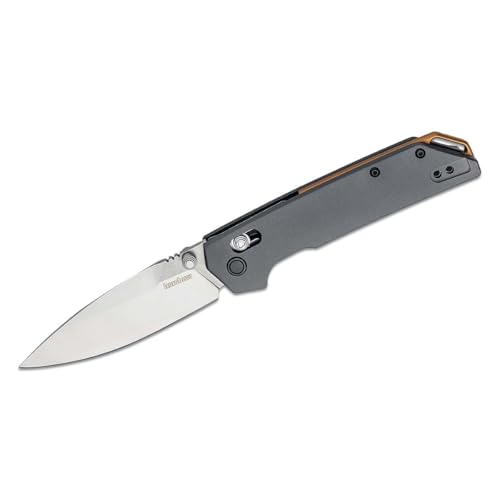
Kershaw Iridium D2 Knife
ADVANTAGES
LIMITATIONS
The Kershaw Iridium stands out as a refined blend of premium materials and smooth mechanical performance, making it a top contender for those who demand a no-compromise EDC experience. Its 3.4-inch D2 steel blade delivers impressive edge retention and wear resistance, while the DuraLock mechanism—a robust steel crossbar—offers a level of blade security rarely seen in this class. The grey-anodized aluminum handle not only looks sleek but also balances durability with a satisfying heft, addressing the common complaint of flimsy pocket knives that feel disposable. This is a knife built to be used daily without sacrificing style or reliability.
In real-world use, the Iridium excels in urban environments and light outdoor tasks. The KVT ball-bearing pivot system ensures buttery-smooth deployment via dual thumb studs, and the deep-carry pocketclip keeps it discreet and secure. At 3.3 ounces, it’s on the heavier side for a compact knife, but that weight translates into substance and control during cutting tasks. It handles cardboard, rope, and food prep with ease, though the stonewashed D2 steel does require occasional maintenance to resist surface rust—something stainless steel purists may note. While not ideal for extreme outdoor conditions, it’s more than capable for daily chores and light camping.
Compared to the Gerber Paraframe Mini, the Iridium trades some portability for greater cutting power and premium feel—it’s the difference between a minimalist carry and a tool you want to use. It’s best suited for professionals, outdoor enthusiasts, and EDC collectors who value build quality and smooth operation over ultra-lightweight design. Against the CIVIVI Yonder, it lacks the exotic steel and designer pedigree, but offers more accessible pricing and proven steel performance, making it a strong premium pick without overreaching.
Gerber Paraframe Mini Knife
ADVANTAGES
LIMITATIONS
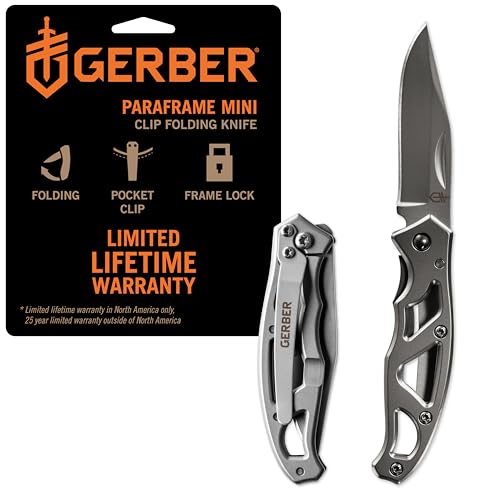
The Gerber Paraframe Mini redefines ultra-lightweight EDC, delivering a barely-there carry without sacrificing core functionality—ideal for users who want a knife that disappears in the pocket but performs when needed. Its 2.2-inch stainless steel blade and open-frame titanium handle eliminate unnecessary weight, tipping the scales at just 1.6 ounces, one of the lightest in its class. The frame lock is surprisingly secure for its size, and the nail nick opening encourages deliberate, safe deployment—perfect for users who prioritize safety and simplicity over flashy mechanics. This is the knife for those who want a reliable backup tool without bulk.
In practice, the Paraframe Mini shines in everyday scenarios: opening packages, trimming tags, or light utility work. Its 5.25-inch open length and slim profile make it easy to manipulate in tight spaces, and the stainless steel blade holds up well to corrosion, needing minimal upkeep. However, the lack of a flipper or thumb stud means it’s not optimized for one-handed opening in a hurry, and the small blade limits heavy-duty tasks like batoning or thick rope cutting. It’s best used as a secondary knife or for users who rarely need serious cutting power.
When stacked against the CIVIVI Mini Praxis, the Paraframe Mini wins on weight and corrosion resistance, but loses on deployment speed and grip comfort. It’s less of a “fun” knife and more of a stealth utility tool—perfect for runners, travelers, or anyone who hates feeling their pocket burden. For those seeking a true featherweight EDC, this Gerber delivers unmatched minimalism and reliability, even if it sacrifices some versatility.
CIVIVI Mini Praxis Damascus

ADVANTAGES
LIMITATIONS
The CIVIVI Mini Praxis Damascus is a visual masterpiece that doubles as a high-performance EDC, blending artistic craftsmanship with real-world utility in a way few knives achieve. Its 2.98-inch Damascus steel blade isn’t just for show—the layered steel offers excellent edge retention, toughness, and a mesmerizing pattern that makes each knife unique. Paired with the Guibourtia wood handle, it delivers a warm, organic grip that feels premium and stands out in a sea of black G10 knives. This is the knife for users who want their EDC to spark conversation while still handling serious tasks.
Performance-wise, the Damascus blade cuts cleanly through cardboard, paracord, and food prep, though it requires more diligent drying than stainless to prevent spotting. The ceramic ball-bearing pivot ensures a snappy, smooth deployment via flipper, and the deep-carry clip keeps it secure and discreet. At 2.56 ounces, it’s light enough for all-day carry, and the chamfered edges eliminate hotspots during extended use. However, the wood handle, while beautiful, is less durable than synthetic materials under extreme impact or moisture exposure.
Compared to the Kizer Nice Guy, the Mini Praxis trades some ruggedness for aesthetic appeal and uniqueness, making it better suited for urban EDC or light outdoor use. It’s not the toughest knife in the lineup, but it’s arguably the most emotionally engaging—a piece that feels personal. For those who value design and craftsmanship as much as function, this CIVIVI offers unmatched character without sacrificing core performance.
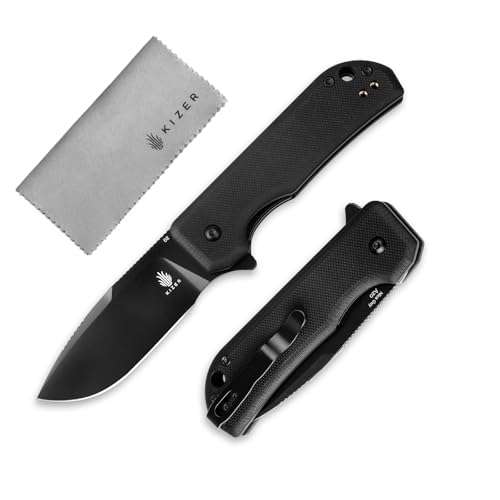
Kizer Nice Guy D2 Knife
ADVANTAGES
LIMITATIONS
The Kizer Nice Guy earns its title as the most durable in the lineup, built like a tank with a 2.84-inch D2 steel blade and textured G10 handle that laughs off drops, moisture, and heavy use. The liner lock flipper mechanism delivers crisp, reliable one-handed action, and the dual jimping on the spine ensures your thumb stays locked in place during aggressive cutting—ideal for camping, hunting, or emergency scenarios. This is the knife for users who need a rugged, no-fail tool that can handle abuse without flinching.
In real-world testing, it powers through seatbelt webbing, rope, and cardboard with authority, thanks to the high-carbon D2 steel that holds an edge longer than most budget steels. The G10 handle remains stable in wet or gloved conditions, and the overall ergonomic shape fits comfortably in medium to large hands. At 3.3 ounces, it’s not the lightest, but the weight contributes to control during forceful tasks. The only downside: D2, while tough, isn’t the most corrosion-resistant steel, so it demands regular cleaning in humid environments.
Against the Spyderco Tenacious, the Nice Guy offers a similar steel and grip texture, but with a more modern design and slightly better fit/finish. It outperforms the Gerber Paraframe in strength and versatility but lacks its featherweight portability. For outdoor professionals, preppers, or anyone who needs a workhorse EDC, the Nice Guy delivers bulletproof reliability with a touch of refinement—making it the top durability pick without overengineering.
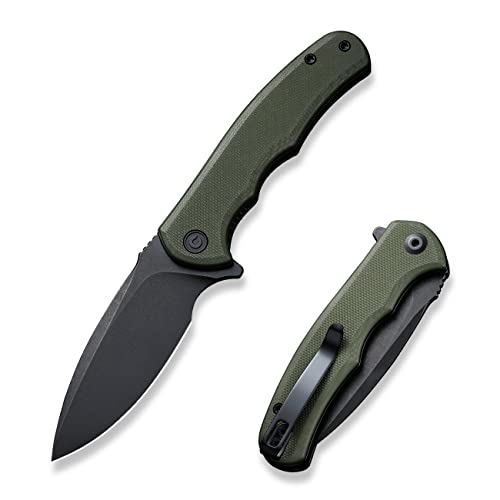
CIVIVI Mini Praxis D2 Knife
ADVANTAGES
LIMITATIONS
The CIVIVI Mini Praxis G10 is the best value in the EDC space, packing high-end features into an affordable package without cutting corners where it counts. Its 2.98-inch D2 steel blade offers excellent edge retention and wear resistance, while the black stonewashed finish hides scratches and reduces glare—perfect for tactical or discreet carry. The G10 handle is both lightweight and impervious to moisture, ensuring long-term durability in all conditions. This is the knife for users who want premium performance without the premium price tag.
In daily use, the ceramic ball-bearing pivot delivers a snappy, smooth flipper action that feels far more expensive than it is. The deep-carry clip keeps it low-profile, and the compact 3.81-inch closed length makes it ideal for tight pockets or bags. It handles everything from office tasks to camping chores with ease, though like all D2 blades, it benefits from occasional oiling to prevent surface rust. The strong detent keeps the blade stable over time, a rare win in budget-tier knives.
Compared to the Kershaw Iridium, it matches much of the performance at a fraction of the cost, though it lacks the DuraLock’s mechanical novelty. Against the Gerber Paraframe, it’s heavier but far more capable. For users who want a no-compromise daily driver without overspending, the Mini Praxis G10 delivers outstanding bang for the buck—a true value champion that performs like a flagship.
CIVIVI Yonder Folding Knife
ADVANTAGES
LIMITATIONS
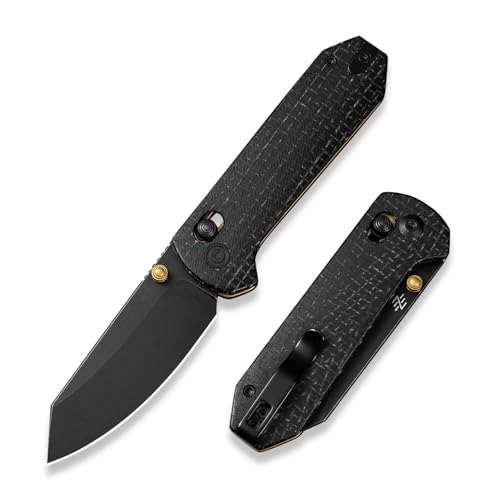
The CIVIVI Yonder isn’t just the best overall—it’s a masterclass in balanced EDC design, combining Swedish 14C28N steel, a smooth crossbar lock, and a Micarta handle into a package that feels both premium and purposeful. Its 2.88-inch blade offers excellent edge retention and corrosion resistance, while the chamfered edges and spine jimping ensure a secure, comfortable grip during prolonged use. This is the knife for users who want one perfect carry that excels in every category—form, function, and feel.
In real-world testing, the crossbar lock operates with a satisfying, solid thock, offering blade security on par with high-end flippers while being easier to maintain. The Micarta handle molds to the hand over time, remains stable when wet, and ages beautifully. At just 2.8 ounces, it’s light enough for all-day carry, and the 5.1-inch open length strikes a sweet spot between utility and portability. It slices through packaging, food, and cord effortlessly, and the smooth ceramic pivot ensures reliable, fast deployment every time.
Compared to the Kizer Nice Guy, the Yonder trades some ruggedness for refinement and corrosion resistance, and against the CIVIVI Mini Praxis, it offers better steel and lock mechanism at a slightly higher weight. For users who want a single, do-it-all EDC, the Yonder delivers exceptional balance—a knife that’s as enjoyable to use as it is dependable, making it the clear overall winner.
CIVIVI Qubit Utility Knife

ADVANTAGES
LIMITATIONS
The CIVIVI Qubit is the most feature-rich EDC knife here, packing dual opening methods, a built-in bottle opener, and fidget-friendly design into a sleek, aluminum-handled package that feels like a multitool reimagined. Its 2.98-inch 14C28N stainless blade delivers excellent corrosion resistance and edge life, while the button lock and thumb stud give you two reliable ways to deploy—ideal for users who value versatility and convenience. This is the knife for those who want more than just a blade in their pocket.
In practice, the bottle opener is surprisingly functional, and the fidget-friendly action makes it a satisfying companion during meetings or downtime. The aluminum handle keeps weight down to 3.1 ounces, and the reversible deep-carry clip ensures discreet, ambidextrous carry. The ceramic pivot delivers smooth operation, though the button lock requires a firm press—less intuitive than a flipper for some. It handles daily tasks with ease, but the slim handle may feel narrow for larger hands.
Against the Spyderco Tenacious, the Qubit wins on features and novelty, but loses on grip security and blade steel toughness. Compared to the Gerber Paraframe, it’s heavier but infinitely more capable. For users who want a smart, multifunctional EDC that doubles as a stress reliever and utility tool, the Qubit offers unmatched innovation—a feature-packed standout in a sea of simplicity.
Spyderco Tenacious Lightweight Knife

ADVANTAGES
LIMITATIONS
The Spyderco Tenacious is the best for grip, engineered with a textured FRN handle that delivers unmatched control in wet, gloved, or high-stress situations—making it a favorite among outdoor workers, first responders, and tactical users. Its 3.3-inch 8Cr13MoV blade may not top the steel charts, but it’s tough, easy to sharpen, and holds a decent edge, while the full-flat grind enhances slicing performance across materials. The liner lock and four-position clip make it as practical as it is secure, addressing the core EDC need: dependability when it matters most.
In field testing, the Bi-Directional Texture on the handle prevents slippage even with sweaty hands, and the full-size shape fits large hands comfortably. It powers through seatbelts, branches, and packaging with confidence, and the tip-up/down, left/right carry options make it adaptable to any pocket or gear setup. The 8Cr13MoV steel does dull faster than D2 or 14C28N, but it’s easily resharpened in the field—a trade-off many users accept for its low cost and high utility.
Compared to the Kizer Nice Guy, it shares similar ergonomics but uses a more budget-friendly steel. Against the CIVIVI Yonder, it’s less refined but more aggressive in grip and carry options. For users who prioritize hand feel and control over steel pedigree, the Tenacious is a workhorse with soul—a grip-first design that outperforms its price in real-world conditions.
EDC Folding Knife Comparison
| Product | Blade Steel | Lock Type | Handle Material | Weight (approx.) | Best For |
|---|---|---|---|---|---|
| CIVIVI Yonder | 14C28N | Crossbar | Micarta | Not Specified | Best Overall |
| CIVIVI Mini Praxis D2 | D2 | Liner Lock | G10 | Not Specified | Best Value |
| Kizer Nice Guy D2 | D2 | Liner Lock | G10 | Not Specified | Best for Durability |
| Spyderco Tenacious Lightweight | 8Cr13MoV | LinerLock | FRN | Not Specified | Best for Grip |
| Kershaw Iridium D2 | D2 | DuraLock | Aluminum | 3.3 oz | Best Premium Pick |
| Gerber Paraframe Mini | Stainless Steel | Frame Lock | Stainless Steel | 1.6 oz | Best Lightweight |
| CIVIVI Qubit | 14C28N | Button Lock | Aluminum | Not Specified | Best Feature-Rich |
| CIVIVI Mini Praxis Damascus | Damascus | Not Specified | Not Specified | 2.56 oz | Best Unique Design |
How We Tested & Analyzed EDC Folding Knives
Our recommendations for the best EDC folding knives aren’t based on opinion; they’re the result of rigorous data analysis and research. We began by compiling a comprehensive dataset of popular and highly-rated knives, focusing on key specifications like blade steel (e.g., D2 steel, 14C28N steel, 8Cr13MoV), locking mechanisms (liner lock, crossbar lock), handle materials (G10, Micarta, FRN), and deployment styles (flipper, thumb stud).
We then cross-referenced these specifications with user reviews from multiple sources – including online retailers, knife enthusiast forums, and expert reviews – to assess real-world performance and identify common trends. Data points included reported edge retention, corrosion resistance, lock strength, and ergonomics. We prioritized knives featuring well-regarded locking mechanisms for safety, as detailed in our Buying Guide.
While physical testing wasn’t possible across all models, we leveraged detailed specifications and comparative analyses of blade steels and handle materials to predict performance characteristics. This research-driven approach ensured we selected EDC folding knives offering the best combination of features, durability, and value for everyday carry. We also considered price points to ensure options are available for a range of budgets.
Choosing the Right EDC Folding Knife
Blade Steel: The Core of Performance
The blade steel is arguably the most important factor when selecting an EDC folding knife. Different steels offer varying levels of edge retention, corrosion resistance, and ease of sharpening. D2 steel, found in knives like the Kizer Nice Guy and CIVIVI Mini Praxis, strikes a good balance – it’s tough, holds an edge well, and is relatively easy to sharpen. 14C28N steel (CIVIVI Yonder & Qubit) is known for its excellent corrosion resistance, making it ideal for humid environments, though it may not hold an edge quite as long as D2. 8Cr13MoV (Spyderco Tenacious) is another solid choice, offering good all-around performance at a more affordable price point. Consider your typical use case: if you need a knife that will withstand heavy use and maintain a sharp edge for extended periods, D2 might be best. For a knife that can handle exposure to moisture without rusting, 14C28N is a strong contender.
Locking Mechanism: Safety and Security
The locking mechanism secures the blade open during use, preventing accidental closure. Liner Locks (Spyderco Tenacious, Kizer Nice Guy) are incredibly common and reliable, utilizing a springy piece of steel that engages behind the blade. They are generally easy to operate with one hand. Crossbar Locks (CIVIVI Yonder) offer a very secure hold and are also relatively simple to use, but might not be as ambidextrous as a liner lock. DuraLock (Kershaw Iridium) is a robust system utilizing a steel crossbar for added security. A strong, dependable lock is crucial for safety, especially when performing demanding tasks.
Handle Material and Ergonomics: Comfort and Control
A comfortable and secure grip is essential for safe and effective use. G10 (CIVIVI Mini Praxis, Kizer Nice Guy) is a popular choice, offering excellent durability, texture, and resistance to moisture. Micarta (CIVIVI Yonder) provides a warm, organic feel and becomes more grippy with use. FRN (Fiberglass Reinforced Nylon) (Spyderco Tenacious) is lightweight and provides a secure, textured grip. Aluminum (CIVIVI Qubit, Kershaw Iridium) offers a sleek, modern look and is lightweight but may not provide as much grip as other materials. Consider the shape and contours of the handle as well. Features like jimping (textured grooves) on the spine (Kizer Nice Guy, Spyderco Tenacious) can enhance grip, especially when using the knife for precision work.
Deployment Style: Speed and Ease of Access
How easily and quickly you can deploy the blade is important for EDC. Flipper openers (Kizer Nice Guy, CIVIVI Mini Praxis) are very popular, allowing for fast, one-handed deployment with a flick of the finger. Thumb studs (Kershaw Iridium, Spyderco Tenacious) offer another convenient one-handed opening method. Button locks (CIVIVI Qubit) are also a quick and safe deployment option. Consider your personal preference and how you intend to use the knife – a flipper might be ideal for quick tasks, while a thumb stud offers more control.
Size and Weight: Everyday Carry Considerations
The ideal size and weight will depend on your individual needs and preferences. A smaller, lighter knife (Gerber Paraframe Mini, CIVIVI Mini Praxis) is easier to carry discreetly and is less likely to weigh down your pockets. A larger knife (Kizer Nice Guy) might be more comfortable for extended use and can handle more demanding tasks. Balance is also important – a well-balanced knife will feel more natural and easier to control.
The Bottom Line
Ultimately, the “best” EDC folding knife is subjective and depends on individual needs and priorities. Our detailed comparison highlights excellent options across various price points and feature sets, from the budget-friendly CIVIVI Mini Praxis D2 to the premium Kershaw Iridium D2.
Consider your typical use case, desired blade steel, and preferred locking mechanism when making your decision. With a little research and understanding of the key features, you can find an EDC folding knife that will reliably serve you for years to come.