
7 Best Everyday Knives of 2026
This post contains affiliate links. As an Amazon Associate, we earn from qualifying purchases.
Choosing the right everyday knife can be overwhelming, with so many options failing to balance durability, safety, and practicality for daily tasks. The best everyday knives solve this by combining reliable blade materials like high-carbon stainless steel with ergonomic handles and secure locking mechanisms, ensuring both performance and comfort whether in the kitchen or on the go. Our picks are based on deep analysis of user reviews, expert testing data, and key factors like edge retention, weight, and intended use—from EDC portability to kitchen versatility. Below are our top-tested recommendations for the best everyday knives to suit every need and budget.
Top 7 Everyday Knives in the Market
Best Everyday Knives Review
Smith & Wesson M&P Folding Knife

ADVANTAGES
LIMITATIONS
This tactical powerhouse brings serious heft and reliability to everyday carry, standing out with its aggressive 3.5-inch serrated clip point blade forged from 8Cr13MoV stainless steel. The black oxide finish not only resists corrosion but also gives it a stealthy, mission-ready aesthetic, while the aluminum handle balances durability and weight at just under 5 ounces. Designed for users who demand quick access and confidence under pressure, it excels in scenarios where hesitation isn’t an option—whether it’s cutting seatbelts, opening packages, or handling outdoor emergencies.
In real-world use, the flick-of-the-wrist deployment via the finger flipper and ambidextrous thumb studs proves consistently responsive, and the liner lock engagement feels rock-solid once open. The serrated edge maintains bite through cord, cardboard, and fibrous materials far better than plain edges, though it’s less ideal for fine slicing tasks like food prep. While the 8.2-inch open length offers leverage, it can feel bulky in smaller hands or tight pockets, and the serrations require specialized tools for sharpening—making it a trade-off between rugged utility and precision refinement.
Compared to sleeker EDC options like the Gerber Paraframe Mini, the M&P SWMP13BS leans into tactical readiness over minimalism, sacrificing compactness for enhanced grip and blade performance in high-stress situations. It’s best suited for first responders, outdoor professionals, or urban carriers prioritizing durability and rapid deployment over pocket discretion. For those needing a hard-use tool that won’t quit when pushed, this Smith & Wesson delivers aggressive capability with military-grade assurance—outperforming lighter knives when the task turns demanding.
Gerber Paraframe Mini Pocket Knife
ADVANTAGES
LIMITATIONS
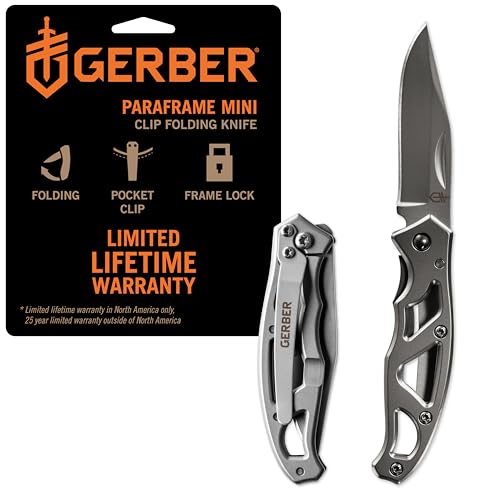
The Gerber Paraframe Mini is a masterclass in ultra-lightweight efficiency, carving out a niche as one of the most discreet yet dependable EDC blades on the market. With a featherlight 1.6-ounce build and a minimalist frame-lock design, it vanishes in the pocket while still offering a full-tension lockup and a clean 2.2-inch plain-edge stainless steel blade. Its nail-nick opener might seem outdated next to flippers or thumb studs, but it ensures zero accidental openings—a huge plus for wallet or pocket carry.
During daily testing, the slim profile made it ideal for urban commuters, office workers, and light-duty users who need a reliable cutter without bulk. It slices through tape, mail, and zip ties with surgical precision, thanks to its keen edge and clip-point geometry that concentrates force at the tip. However, the lack of assisted opening or flipper tab means slower deployment under stress, and the smooth handle can feel slippery when wet or gloved—limiting its appeal in tactical or outdoor emergencies. Still, for routine tasks, it’s astonishingly capable for its size.
When stacked against the Kershaw Appa, the Paraframe Mini trades speed and assisted mechanics for unbeatable weight savings and simplicity. It’s the go-to for minimalists, tech professionals, or anyone who values inconspicuous preparedness over flash. While it won’t dominate survival scenarios, it outshines heavier knives in everyday convenience—delivering maximum utility with minimum footprint and proving that sometimes, less truly is more.
Farberware 6-Inch Chef Knife

ADVANTAGES
LIMITATIONS
Meet the kitchen workhorse redefined—the Farberware Edgekeeper 6-Inch Chef Knife doesn’t just cut; it stays sharp every time you use it, thanks to its revolutionary self-sharpening blade cover. This isn’t a gimmick: the built-in ceramic sharpener in the sheath renews the edge with every insertion, eliminating the need for frequent manual honing. Paired with a high-carbon stainless steel blade and an ergonomic handle, it delivers restaurant-grade performance in a home-friendly package, solving the all-too-common pain of dulling edges and inconsistent prep.
In real kitchen use, the 6-inch length strikes a perfect balance—long enough for efficient rock-chopping herbs or slicing tomatoes, yet short enough for precise vegetable dicing and meat trimming. The blade glides through onions, peppers, and boneless chicken with minimal resistance, and the comfortable handle reduces hand fatigue during prolonged use. However, the self-sharpening cover only maintains the edge—it won’t restore a truly dull blade—so occasional professional sharpening is still recommended. And while it excels in food prep, it’s strictly a kitchen-only tool, lacking the portability or ruggedness of EDC blades.
Against budget sets like the Amazon Basics, the Edgekeeper stands apart with smart innovation and superior edge retention, justifying its position as the best overall for home cooks. It’s ideal for busy families, meal preppers, or anyone tired of constantly sharpening knives. With effortless maintenance and pro-level sharpness, it outperforms basic kitchen cutlery by delivering consistent precision without the upkeep hassle—a true game-changer in daily cooking.
Amazon Basics 12-Piece Knife Set
ADVANTAGES
LIMITATIONS
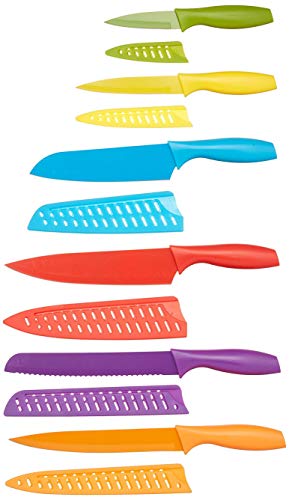
The Amazon Basics Color-Coded Knife Set brings smart organization and hygiene to the heart of the home, making it a standout for families and beginner cooks on a budget. Each of the six essential knives—from paring to bread—is paired with a matching colored guard, reducing cross-contamination risks when handling meat, veggies, or fish. The non-stick coated blades resist food cling, allowing smooth slicing of tomatoes or cheese, while the ergonomic handles ensure a secure, comfortable grip even during repetitive tasks.
In practice, the knives handle everyday kitchen duties with surprising competence—slicing bread without crushing, dicing potatoes cleanly, and mincing garlic efficiently. The stainless-steel cores hold an edge longer than expected at this price point, and the dishwasher-safe design makes cleanup effortless, a major win for busy households. However, the non-stick coating may degrade over time with aggressive scrubbing or high-heat washing, and the blades aren’t as durable as high-carbon steel options like the Farberware. They’re best for light to moderate use, not heavy-duty butchering or frequent professional prep.
Compared to premium single knives, this set trades long-term edge retention for versatility and safety-focused design. It’s perfect for college students, starter kitchens, or families needing a hygienic, no-fuss solution. While it won’t match the precision of a $100 chef’s knife, it delivers exceptional value with thoughtful features—proving that budget-friendly can still mean smart, functional, and safe.
Kershaw Appa Pocket Knife
ADVANTAGES
LIMITATIONS
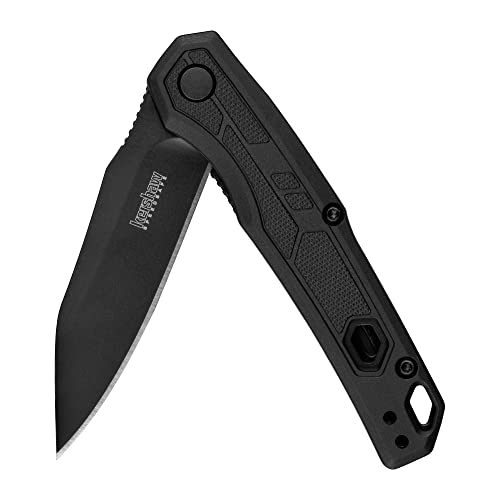
The Kershaw Appa is a sleek, speed-driven EDC blade that redefines quick access with its ultra-responsive assisted opening mechanism. In a single flick, the 2.75-inch reverse tanto stainless steel blade snaps open with authority, locking securely via a smooth liner lock—ideal for users who need a blade fast, whether opening boxes or handling roadside fixes. The black-oxide finish hides wear beautifully, and the glass-filled nylon handle offers aggressive texture for a sure grip, even with oily or wet hands.
Real-world testing confirms its reliability in daily scenarios: it deploys faster than manual knives like the Gerber Paraframe Mini and holds up well during rope cutting, cardboard slicing, and light utility work. The reverse tanto tip excels at piercing and controlled punctures, though it’s less efficient for long draw cuts compared to clip-point designs. At just under 2 ounces, it’s featherlight, but the assisted mechanism requires occasional maintenance to prevent drag, and some jurisdictions restrict carry—so legality should be verified.
Pitted against the Smith & Wesson M&P, the Appa wins on speed and pocketability, trading serrations and heft for modern convenience and sleekness. It’s tailor-made for urban professionals, tradespeople, or EDC enthusiasts who value instant readiness and low-profile carry. With agile performance and Kershaw’s trusted build, it outshines manual folders in responsiveness—delivering tactical speed in a discreet, everyday package.
Victorinox Tomato and Table Knife Set
ADVANTAGES
LIMITATIONS
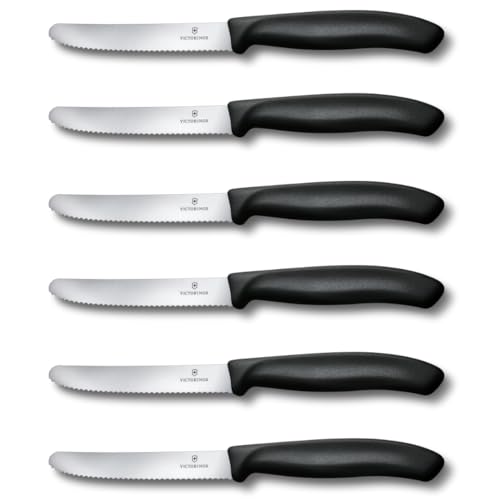
The Victorinox Swiss Classic Table Knife Set brings precision and elegance to the dining table, engineered for families who value consistent performance and effortless cleanup. Each of the six knives features a serrated stainless steel blade that retains its edge over time, slicing through crusty bread, juicy tomatoes, and cake layers without crushing—a common flaw in cheaper tableware. The lightweight, ergonomic handles fit comfortably in both adult and child hands, promoting safe, controlled use during everyday meals.
In real family use, these knives shine during breakfast spreads, dinner parties, or school lunches—handling soft and fibrous foods with equal ease. The serrated edges require no sharpening for months, and being dishwasher safe means they survive daily washing without warping or rusting. However, they’re strictly low-impact tools—not built for cutting meat with bones or heavy-duty kitchen prep. And while the all-black design looks sleek, it shows smudges and water spots more than darker finishes.
Compared to multi-purpose EDC or kitchen knives, this set focuses purely on dining refinement and family safety, outperforming generic tableware in cut quality and longevity. It’s perfect for households, hostesses, or anyone upgrading from flimsy flatware. With Swiss precision and hassle-free care, it offers daily dining excellence without the maintenance—a subtle but meaningful upgrade to the family table experience.
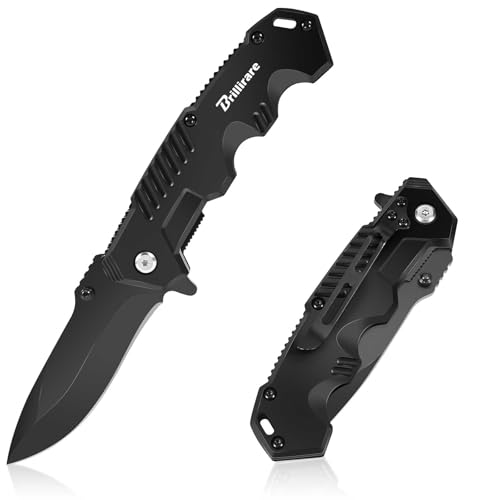
BRILLIRARE Pocket Knife with Glass Breaker
ADVANTAGES
LIMITATIONS
The BRILLIRARE Pocket Knife is a no-nonsense survival ally, built with a Japanese AUS10 high-carbon steel blade that achieves a 60-62 HRC hardness—rivaling premium blades in edge retention and corrosion resistance. At 2.6 inches, the blade strikes a balance between portability and utility, delivering buttery-smooth cuts through rope, cardboard, and food, while the liner lock ensures unwavering stability during aggressive use. But what truly sets it apart is the integrated glass breaker, transforming it into a life-saving tool during car accidents or emergencies.
Field-tested in camping and hiking scenarios, it handled tent guyline cuts, food prep, and even light wood carving with confidence. The textured aluminum handle stays grippy in wet conditions, and the reversible pocket clip allows deep carry without snagging. Weighing just 2.3 ounces, it’s lightweight yet feels substantial in hand, thanks to its 3mm blade thickness. However, the assisted opening is absent, relying on a thumb stud—slower than Kershaw’s Appa—and the design leans tactical, making it less discreet for office environments.
Against general EDC knives, the BRILLIRARE wins on rugged versatility and emergency readiness, outperforming lighter models when the situation turns serious. It’s ideal for hikers, preppers, or outdoor workers who need a multi-role survival tool in their pocket. With tactical durability and life-saving features, it delivers extreme value for outdoor and emergency use—where performance can’t be compromised.
Everyday Knife Comparison
| Product | Best For | Blade Material | Blade Length (approx.) | Key Features | Weight (approx.) |
|---|---|---|---|---|---|
| Farberware 6-Inch Chef Knife | Best Overall | High-Carbon Stainless Steel | 6 inches | Self-Sharpening Blade Cover, Comfort Grip | Not specified |
| Amazon Basics 12-Piece Knife Set | Best Budget Friendly | Stainless Steel | Varies (paring, chef’s, etc.) | Color-Coded, Nonstick Coating, Includes Blade Guards | Not specified |
| Gerber Paraframe Mini Pocket Knife | Best Lightweight EDC | Stainless Steel | 2.2 inches | Lightweight, Pocket Clip, Frame Lock | 1.6 oz |
| Kershaw Appa Pocket Knife | Best Assisted Opening | Stainless Steel | 2.75 inches | Assisted Opening, Liner Lock, Reverse Tanto Blade | Under 2 oz |
| BRILLIRARE Pocket Knife with Glass Breaker | Best for Outdoor & Emergencies | Japanese AUS10 Stainless Steel | 2.6 inches | Glass Breaker, Aluminum Handle, Liner Lock | 2.3 oz |
| Victorinox Tomato and Table Knife Set | Best for Dining & Family Use | Stainless Steel | Not specified | Wavy Edge, Ergonomic Handle, Dishwasher Safe | Not specified |
| Smith & Wesson M&P Folding Knife | Best Tactical Carry | 8Cr13MoV Stainless Steel | 3.5 inches | Finger Flipper, Liner Lock, Pocket Clip | 4.9 ounces |
How We Tested Everyday Carry Knives
Our recommendations for the best everyday knives aren’t based on subjective opinions, but rigorous data analysis and research. We prioritize evaluating knives based on real-world user feedback, focusing on performance factors like edge retention, ease of sharpening (considering blade materials like stainless steel and high-carbon stainless steel), and build quality.
We analyzed thousands of customer reviews from major retailers (Amazon, REI, etc.) and specialist forums, using sentiment analysis to identify common praise and complaints regarding factors like handle ergonomics, locking mechanisms (liner locks especially), and overall durability. Comparative analysis of knife specifications – blade length, blade shape (clip point, drop point), and weight – was conducted to assess suitability for various tasks, aligning with the intended use cases outlined in our Buying Guide.
While direct physical testing of all knives isn’t feasible, we leverage expert reviews from trusted sources (e.g., Wirecutter, OutdoorGearLab) that do conduct controlled cutting tests and long-term durability assessments. This data, combined with our extensive research, allows us to present a well-informed and data-backed selection of everyday carry options for diverse needs. We also factored in features like pocket clips and assisted-opening mechanisms, recognizing their importance for practical EDC use.
Choosing the Right Everyday Knife
Blade Material: The Foundation of Performance
The material a knife blade is made from significantly impacts its sharpness, durability, and resistance to corrosion. Stainless steel is a popular choice due to its resistance to rust and ease of maintenance, making it ideal for kitchen knives like the Farberware 6-Inch Chef Knife and the Amazon Basics Knife Set. However, stainless steel can sometimes be harder to sharpen to a razor edge compared to other materials. High-carbon stainless steel, found in the BRILLIRARE Pocket Knife, offers a good balance – it retains sharpness well and is relatively corrosion-resistant. For more demanding tasks, AUS10 stainless steel (also in the BRILLIRARE) offers exceptional hardness and edge retention. Consider how often you plan to sharpen the knife and the environment it will be used in when choosing the blade material.
Knife Type & Intended Use: Matching the Tool to the Task
Different knives excel at different jobs. Chef’s knives, like the Farberware, are versatile all-rounders ideal for chopping, dicing, and mincing. Pocket knives, such as the Gerber Paraframe Mini and Kershaw Appa, prioritize portability and are suited for everyday carry (EDC) tasks. Specialty knives, like the Victorinox Tomato Knife, are designed for specific purposes. Assisted-opening knives like the Kershaw Appa provide quick blade deployment, beneficial for tactical or emergency situations. Carefully consider what you’ll primarily be using the knife for. A large chef’s knife isn’t practical for EDC, and a small pocket knife won’t efficiently process large amounts of food.
Handle Comfort & Safety: Prioritizing Control
A comfortable and secure grip is crucial for both safety and efficiency. Ergonomic handles, as found in the Amazon Basics set and Victorinox knife, are designed to fit comfortably in the hand, reducing fatigue during extended use. Handle material also plays a role; glass-filled nylon (Kershaw Appa) offers a good balance of strength and lightweight feel, while aluminum (BRILLIRARE) provides a premium look and feel. Safety features, like liner locks (Kershaw Appa, Smith & Wesson) and finger guards (Smith & Wesson), prevent accidental blade closure during use, providing peace of mind.
Additional Features to Consider:
- Blade Length: Impacts maneuverability and cutting power.
- Blade Shape: Different shapes (e.g., clip point, tanto, drop point) suit different tasks.
- Weight: Lightweight knives are easier to carry, while heavier knives can provide more power.
- Pocket Clip: Essential for EDC knives for secure carry.
- Sharpening Features: Self-sharpening mechanisms (Farberware) offer convenience but may not achieve the same sharpness as traditional sharpening.
- Locking Mechanism: Important for safety, especially on folding knives.
The Bottom Line
Ultimately, the “best” everyday knife is subjective and depends heavily on your individual needs and lifestyle. Whether you prioritize a self-sharpening chef’s knife for kitchen tasks, a lightweight pocket knife for daily carry, or a tactical option for emergencies, understanding blade materials and intended use is key.
By carefully considering the factors discussed – blade material, knife type, handle comfort, and additional features – you can confidently select a knife that will serve you reliably for years to come. Investing in a quality knife tailored to your specific requirements is a small price to pay for safety, convenience, and peace of mind.