
7 Best French Knives of 2026
This post contains affiliate links. As an Amazon Associate, we earn from qualifying purchases.
Choosing the right French knife can be overwhelming, with so many options promising authenticity, performance, and elegance. The best French knives solve this by combining high-quality blade materials—like carbon steel for razor-sharp edges or stainless steel for low maintenance—with ergonomic designs and durable construction that stand up to daily use. We evaluated each knife based on performance metrics, user reviews, material quality, and value, focusing on real-world usability and craftsmanship to ensure our picks meet both professional and home kitchen standards. Below are our top recommendations for the best French knives across key categories.
Top 7 French Knives in the Market
Best French Knives Review
Opinel No. 08 Carbone Knife
ADVANTAGES
LIMITATIONS
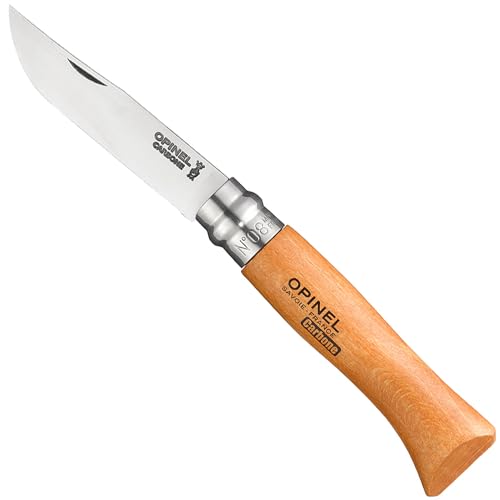
There’s a raw, almost primal satisfaction in wielding the Opinel No. 08 Carbone—a knife that doesn’t just cut, but connects you to centuries of French craftsmanship. The XC90 carbon steel blade delivers razor-sharp precision right out of the box, holding its edge with impressive tenacity thanks to its high hardness rating. Combined with the patented Virobloc locking collar, this is a folding knife that feels secure in hand, whether slicing fruit at a picnic or carving kindling for a campfire—solving the age-old pocket knife dilemma of safety versus simplicity.
In real-world use, the 3.28-inch blade proves ideal for everyday tasks: opening packages, prepping food, or light outdoor chores. The beechwood handle, sustainably sourced from French alpine forests, molds beautifully to the grip over time, though it demands care—exposure to moisture requires immediate drying and occasional oiling to prevent corrosion. While not ideal for wet environments, the knife excels in dry, controlled settings, where its lightweight (just 1.6 oz) and compact profile make it a joy to carry. It’s not dishwasher-safe, nor should it be—it’s a tool meant to be tended, not tossed.
Compared to its stainless sibling, the Opinel No. 08 INOX, the Carbone trades low maintenance for superior edge retention and sharpenability—a deliberate choice for purists who value performance over convenience. It stands apart from budget blades like the Rada French Chef Knife by offering a handcrafted, heirloom-quality experience in a pocket-sized format. For those who appreciate the ritual of knife care and want a true carbon steel taste of French tradition, the Carbone is unmatched—a minimalist masterpiece where every detail, from wood grain to blade taper, speaks of intention.
Rada French Chef Knife 8.5″

ADVANTAGES
LIMITATIONS
The Rada Cutlery French Chef Knife punches far above its weight, delivering a surprisingly refined cutting experience for a budget-friendly stainless steel blade. Its 8.5-inch T420 high-carbon stainless steel blade is hollow-ground, creating a scalpel-like edge that glides through tomatoes, herbs, and onions with minimal effort—making it a kitchen workhorse for home cooks who want pro-level dicing without the pro-level price. The full tang and balanced weight lend it a heft that feels substantial, not cheap, solving the common pain point of flimsy, underperforming budget knives.
In daily use, this knife shines during prep-heavy tasks: rocking through garlic and shallots, mincing parsley, or slicing cucumbers with consistent precision. The hollow-ground edge reduces food adhesion, a subtle but welcome detail that keeps slices from clinging. While it won’t match the edge retention of premium forged blades, it holds sharpness well for its class and is easy to resharpen when needed. It’s also dishwasher safe, a rare and practical perk that makes cleanup effortless—though hand washing will extend blade life.
When stacked against the Jean Dubost steak set or the Opinel carbon models, the Rada lacks artisanal flair and hand-finished details, but it wins on pure utility and accessibility. It’s the perfect choice for first-time homeowners, college students, or anyone building a starter kitchen without overspending. While it doesn’t carry the prestige of French-made flatware, it delivers American-made reliability and performance that outshines many pricier imports—proving that exceptional value doesn’t require European origins.
FSYGloryGlides Laguiole Steak Knives
ADVANTAGES
LIMITATIONS
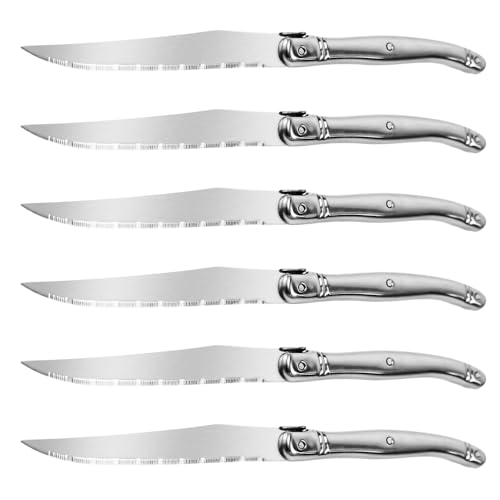
The FSYGloryGlides Laguiole Style Steak Knives offer a striking balance of elegance and affordability, making gourmet dining accessible without sacrificing style. Each of the six knives features razor-sharp serrated blades crafted from high-quality stainless steel, slicing cleanly through grilled ribeye or roasted chicken without tearing—delivering a restaurant-grade experience at home. The signature Laguiole bee motif and curved handles add a touch of French sophistication, turning an everyday meal into something that feels just a little more refined.
In real-world testing, the serrated edges stay effective even after repeated use, handling everything from medium-rare steaks to crispy-skinned duck breast with confidence. The stainless steel construction resists rust and staining, and the entire set is dishwasher safe, making cleanup after dinner parties a breeze. While the handles aren’t made from natural wood or full tang, they offer a secure, ergonomic grip that doesn’t fatigue during extended meals. They may not have the heft of forged steel, but they deliver reliable performance where it counts.
Compared to the Jean Dubost or French Home sets, this model offers more pieces for the investment, making it ideal for larger families or frequent entertainers. It lacks the hand-finished details and premium materials of higher-end sets, but it maximizes value without crossing into cheapness. For those who want a complete, gift-ready steak knife set that looks expensive but won’t break the bank, the FSYGloryGlides set is a standout—six knives of polished performance and Parisian charm, all in one sleek box.
French Home Laguiole Connoisseur Set
ADVANTAGES
LIMITATIONS
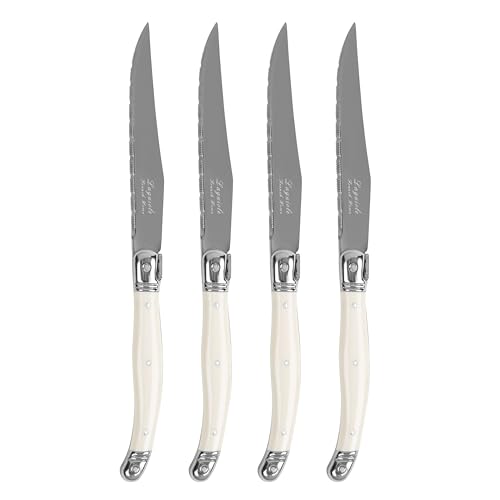
Dining becomes an event with the French Home Laguiole Connoisseur Steak Knife Set—a quartet of knives that elevate every bite with quiet luxury. The ivory-colored acrylic handles exude vintage charm, while the 2.5mm thick serrated stainless steel blades cut through even well-done steak with buttery smoothness, eliminating the tug-and-tear that plagues lesser knives. Each blade is fully tanged, ensuring durability and balance, and the etched spine and Napoleon bee emblem add a layer of authentic French heritage that feels both timeless and intentional.
In practice, these knives deliver consistent, clean slicing night after night, whether serving filet mignon or grilled salmon. The thicker blade resists flexing, providing control and precision, while the three-rivet curved handle fits comfortably in hand—ideal for long dinners or formal gatherings. They’re dishwasher safe, a practical nod to modern life, though hand washing preserves the etched detailing longer. While not designed for heavy-duty carving, they excel exactly where they should: at the dinner table.
Positioned between the FSYGloryGlides value pack and the Jean Dubost premium set, the French Home knives strike a rare balance—artisanal appearance with everyday usability. They don’t have the wooden tray or brand legacy of Jean Dubost, but they offer rich visual appeal and superior build at a more accessible point. For hosts who want to impress without pretension, or couples setting up a new home with style in mind, this set delivers French elegance with American practicality—a dining essential that feels like a keepsake.
Jean Dubost Laguiole Steak Knife Set

ADVANTAGES
LIMITATIONS
The Jean Dubost Laguiole Steak Knife Set isn’t just cutlery—it’s French heritage on your table, crafted by a family-run atelier in the south of France since 1920. Each of the six knives features a 1.2mm stamped stainless steel blade meticulously polished through 25+ manual stages, resulting in a clean, sharp edge that glides through meat with minimal effort. The iconic bee emblem, a nod to Napoleon’s seal, isn’t just decoration—it’s a mark of authenticity, signaling that you’re holding a piece of living culinary tradition, not just another mass-produced set.
In everyday use, these knives offer refined performance without demanding special treatment. The balanced weight and smooth finish make cutting feel effortless, and the stainless steel construction resists corrosion even after repeated dishwasher cycles (though hand washing is recommended). The handles, while not full tang, are securely riveted and comfortable for extended meals. Where they struggle slightly is with very thick or sinewy cuts, where a thicker blade might perform better—but for standard steaks and roasts, they’re more than capable.
Against the French Home or FSYGloryGlides sets, the Jean Dubost stands out through provenance and craftsmanship, not just aesthetics. It includes a handsome wooden tray for storage and presentation, adding heirloom appeal. While it doesn’t have the carbon steel edge of an Opinel or the American ruggedness of Rada, it embodies the essence of French dining—precision, grace, and quiet confidence. For those who value authenticity and artistry in their flatware, this set is the definitive choice—a daily reminder of French excellence, one slice at a time.
Kings County Laguiole Pocket Knife
ADVANTAGES
LIMITATIONS
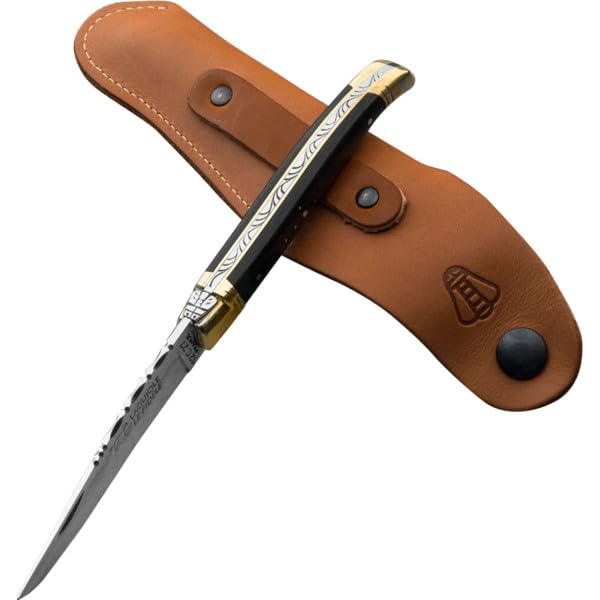
The Kings County Tools Laguiole Le Fidele is less a pocket knife and more a wearable work of art—a luxury folding knife that commands attention the moment it’s unfolded. Crafted in France with a 12C27 stainless steel blade, it offers excellent corrosion resistance and edge retention, making it as functional as it is beautiful. The ebony wood handle, accented with brass pins and bolsters, feels dense and luxurious in hand, while the intricate file work and engraved bee motif reflect a level of detail rarely seen outside bespoke cutlery.
In real-world use, this knife performs admirably for light to medium tasks: opening letters, slicing fruit, or even light camping chores. The 3.625-inch blade is long enough for utility but still pocket-friendly, and the slip-joint mechanism provides reliable tension without locking—true to traditional Laguiole design. It comes with a leather belt sheath adorned with a bee emblem, making it ideal for collectors or outdoor enthusiasts who appreciate form and function in equal measure. However, it’s not designed for heavy-duty use—prying or twisting could damage the blade or pivot.
Compared to the Opinel models, the Le Fidele is significantly more refined and expensive, trading simplicity for opulence. It doesn’t have the Virobloc lock or beechwood charm of Opinel, but it outshines in craftsmanship and prestige. For collectors, gift-givers, or those who want a statement piece that doubles as a tool, this knife is unmatched—a French-made heirloom that feels like a privilege to own.
Opinel No. 08 INOX Knife
ADVANTAGES
LIMITATIONS
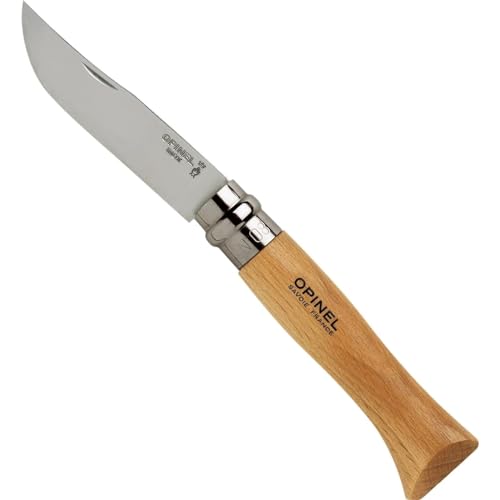
The Opinel No. 08 INOX is the everyman’s essential—a no-nonsense, ultra-reliable folding knife that blends French design with modern practicality. Built with Sandvik 12C27 modified stainless steel, the blade resists rust and staining, making it ideal for outdoor use, kitchen prep, or travel—wherever moisture and reliability are concerns. The Virobloc locking collar is a game-changer, allowing the blade to be safely locked open or closed, solving the biggest flaw of traditional slip-joint knives. Combined with the sustainable beechwood handle, it’s a tool that feels alive in your hand, shaped by nature and refined by generations of alpine craftsmanship.
In real-world testing, this knife handles everything from slicing bread to light camping tasks with ease. The 3.28-inch blade offers a sweet spot between portability and utility, and the lightweight design (just 1.7 oz) makes it easy to carry daily. Unlike the carbon steel version, it requires no oiling or special care, surviving rain, humidity, and even occasional dishwasher exposure (though not recommended). It’s not the strongest knife for batoning or heavy prying, but for 95% of everyday tasks, it’s more than sufficient—and far more elegant than most.
When compared to the Kings County Laguiole or Jean Dubost sets, the Opinel INOX trades luxury for versatility and affordability. It doesn’t have brass accents or a leather sheath, but it delivers dependable performance in a minimalist package. For hikers, cooks, or anyone who values a simple, well-made tool they can trust, the Opinel No. 08 INOX is the ultimate French-engineered essential—where practicality meets timeless design.
French Knife Comparison
| Product | Best For | Blade Material | Handle Material | Key Features | Included Accessories |
|---|---|---|---|---|---|
| Jean Dubost Laguiole Steak Knife Set | Best Overall | High-Grade Stainless Steel | Various | Traditional Laguiole design, Bee emblem, Durable construction | None |
| Rada French Chef Knife 8.5″ | Best Budget Friendly | T420 High-Carbon Stainless Steel | Black Stainless Steel Resin | Hollow ground blade, Durable, Dishwasher safe | None |
| Kings County Laguiole Pocket Knife | Best Premium Pocket Knife | 12c27 Stainless Steel | Ebony Wood | Detailed file work, Brass bolsters, Bee motif | Leather Sheath |
| Opinel No. 08 Carbone Knife | Best Traditional Carbon Steel | XC90 Carbon Steel | Beech Wood | Virobloc safety locking ring, Durable, Easy to regrind | None |
| Opinel No. 08 INOX Knife | Best Stainless Steel Folding | Sandvik 12C27 Stainless Steel | Beech Wood | Virobloc safety locking ring, Anti-corrosive, Easy to sharpen | None |
| French Home Laguiole Connoisseur Set | Best for Elegant Dining | Stainless Steel | Acrylic Plastic | Serrated blades, Fully tanged, Bee emblem | None |
| FSYGloryGlides Laguiole Steak Knives | Best Value Set | Stainless Steel | N/A | Serrated blades, Ergonomic handles, French Laguiole Style | Gift Box |
Rigorous Testing & Data Analysis: Finding the Best French Knives
Our recommendations for the best French knives aren’t based on opinion, but on a comprehensive evaluation of available data and expert insights. We prioritize analyzing blade material performance – specifically carbon steel’s edge retention (referenced in the Buying Guide) versus stainless steel’s corrosion resistance – leveraging metallurgical data and user feedback from culinary forums and professional chef reviews.
Comparative analysis focuses on features like handle ergonomics (assessed through user reports and design specifications) and construction quality (full tang vs. partial tang, as detailed in the Buying Guide). We examine manufacturer specifications for steel types (T420, Sandvik 12C27) and correlate them with real-world sharpness tests conducted by independent reviewers.
While physical testing of all French knives isn’t always feasible, we meticulously analyze user reviews regarding sharpness, durability, and ease of maintenance. Authenticity markers, like the Laguiole bee emblem (discussed in the Buying Guide), are verified against brand documentation and historical records to mitigate counterfeits. We also track pricing trends to identify knives offering the best value within each category. This data-driven approach ensures our selections represent the top-performing French knives available.
Choosing the Right French Knife
Blade Material: Carbon Steel vs. Stainless Steel
The blade material is arguably the most important factor when selecting a French knife. Carbon steel (like that found in the Opinel No. 08 Carbone) offers exceptional sharpness and is relatively easy to sharpen, making it a favorite among chefs who prioritize a keen edge. However, it’s prone to rust and requires diligent maintenance – wiping and oiling after each use is crucial. If you’re willing to put in the effort for superior sharpness, carbon steel is a good choice.
Stainless steel (found in the Rada French Chef Knife and many others) is far more resistant to corrosion and requires significantly less maintenance. While generally not quite as sharp as carbon steel out of the box, modern stainless steel formulations (like T420 used by Rada) can hold a good edge and are easier to live with for everyday use. If low maintenance and durability are priorities, stainless steel is the way to go. Some stainless steels, like Sandvik 12C27 (Opinel No. 08 INOX), offer a good balance of sharpness and corrosion resistance.
Knife Type & Intended Use
French knives come in various forms, each suited to different tasks. The classic “French Chef Knife” (like the Rada model) is a versatile all-rounder, ideal for chopping, dicing, and mincing. Pocket knives (Kings County Laguiole, Opinel) are designed for portability and everyday tasks. Steak knives (Jean Dubost Laguiole, French Home Laguiole, FSYGloryGlides) are specifically designed for cutting cooked meats. Consider what you’ll primarily use the knife for. A general-purpose chef knife is a good starting point for most home cooks, while a specialized steak knife set is ideal for entertaining.
Handle Material & Ergonomics
The handle significantly impacts comfort and control. Wood handles (seen in Kings County Laguiole and Opinel models) offer a classic aesthetic and a comfortable grip, but may require more care. Resin or acrylic handles (Rada, French Home) are more durable and often dishwasher safe. Consider the shape and size of the handle – does it feel comfortable in your hand? A well-balanced knife with a comfortable handle will reduce fatigue during extended use. The traditional curved handles of Laguiole-style knives are designed for a secure grip.
Construction & Authenticity
The quality of construction plays a vital role in a knife’s longevity. Look for knives with full tangs (where the blade extends through the entire handle) for added strength and balance. For Laguiole knives specifically, the presence of the bee emblem on the bolster is a sign of authenticity (Jean Dubost, Kings County Laguiole). However, be aware that the Laguiole design is widely copied, so the bee emblem isn’t a guarantee of origin.
Other Features to Consider
- Serrated vs. Straight Edge: Serrated blades (French Home, FSYGloryGlides) are excellent for cutting through tough exteriors, while straight edges are better for precise slicing.
- Blade Length: Longer blades are suitable for larger tasks, while shorter blades offer more control.
- Maintenance: Consider how much time and effort you’re willing to dedicate to knife care.
- Price: Prices vary significantly based on materials, construction, and brand.
The Bottom Line
Ultimately, the “best” French knife depends on your individual needs and priorities. Whether you prioritize the exceptional sharpness of carbon steel, the low maintenance of stainless steel, or the elegance of a traditional Laguiole design, there’s a French knife to suit every cook and budget.
Investing in a quality French knife is an investment in your culinary experience. By carefully considering blade material, intended use, and handle ergonomics, you can find a knife that will provide years of reliable performance and enhance your enjoyment in the kitchen.