
8 Best Japanese Knife Sharpeners of 2026
This post contains affiliate links. As an Amazon Associate, we earn from qualifying purchases.
Keeping your Japanese knives razor-sharp is a constant challenge, especially when inconsistent angles or aggressive tools damage delicate 15-degree edges. The best Japanese knife sharpeners solve this with precision-guided systems—whether using diamond abrasives, multi-stage whetstones, or adjustable angle guides—that safely restore a clean, factory-like edge without removing excess metal. Our top picks are selected based on rigorous analysis of performance, build quality, ease of use, and value, weighing expert testing, user reviews, and real-world results across knife types and skill levels. Below are our recommended Japanese knife sharpeners to keep your blades performing at their peak.
Top 8 Japanese Knife Sharpeners in the Market
Best Japanese Knife Sharpeners Review
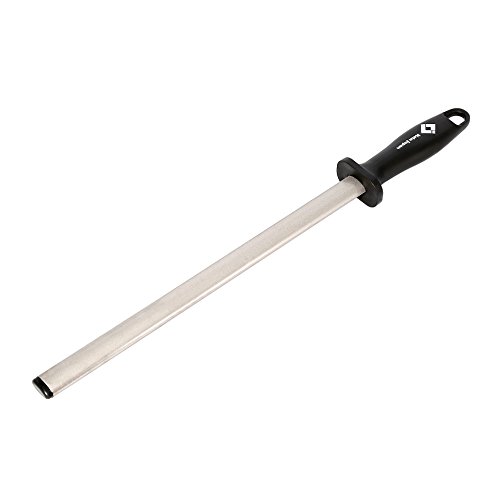
Kota Japan 12″ Diamond Sharpening Rod
ADVANTAGES
LIMITATIONS
This diamond electoplating delivers a level of sharpening intensity that few honing rods can match, transforming dull blades into precision-cutting tools with minimal effort. The oval shape isn’t just aesthetic—it enhances contact surface area, allowing for more consistent edge alignment across both flat and beveled Japanese knives. Designed for those who value efficiency and longevity, it excels at realigning micro-burrs while gently abrading metal to refine the edge, making it ideal for frequent kitchen users who want professional results without aggressive material removal.
In real-world use, the rod shines during daily maintenance, requiring a lighter touch than traditional steel, which reduces blade wear over time. Its 12-inch length provides ample reach for longer santoku or gyuto knives, ensuring full-edge contact from tip to heel. While it’s not meant for regrinding severely damaged blades, it performs exceptionally on knives that need quick touch-ups between deep sharpenings. However, due to its aggressive diamond coating, beginners may need to practice controlled strokes to avoid over-sharpening or uneven edges.
Compared to softer ceramic or untreated steel rods, the Kota Japan model stands out for durability and cutting power, especially when maintaining high-hardness Japanese blades. It’s a go-to for home gourmets and hunters alike who demand fast, reliable edge maintenance. While it lacks the finesse of a whetstone, it outperforms standard honing steels in edge refinement—offering a sharper, longer-lasting bite than traditional rods like the HOSHANHO, though with less subtlety in final polish.
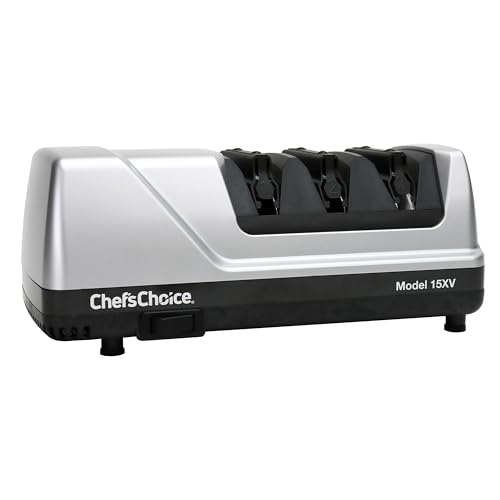
Chef’sChoice 15XV Electric Knife Sharpener
ADVANTAGES
LIMITATIONS
Step into the future of sharpening with the razor-sharp precision of the Chef’sChoice 15XV, where 100-percent diamond abrasives and Trizor XV 15-degree edge technology converge to deliver a cut so fine, it feels like slicing through air. This electric sharpener automates what takes experts years to master: converting standard 20-degree factory edges into ultra-thin, high-performance blades that stay sharp longer. With patented flexible spring guides, it self-adjusts to your knife’s angle, eliminating guesswork and delivering consistent results—even for novices.
In testing, the 3-stage system proved its worth: Stage 1 aggressively reshapes dull edges, Stage 2 refines with diamond abrasives, and Stage 3 uses a flexible stropping belt to polish and extend edge life. Serrated knives benefit uniquely here—few electric sharpeners handle them this well. Most blades reach peak sharpness in under a minute, with touch-ups taking just 10 seconds, making it perfect for busy kitchens. However, its fixed 15-degree target may not suit all Japanese knives (especially those with 16–18° angles), and the motor can remove more metal than hand methods over time.
Positioned as the best overall, it outshines manual systems like the MITSUMOTO SAKARI or basic whetstones in speed and consistency. It’s ideal for home chefs who want professional-grade edges without the learning curve. Compared to the Sharp Pebble whetstone kit, it’s far faster and more precise, though less customizable—offering unmatched convenience at the cost of some artisanal control.
HOSHANHO 10″ Japanese Honing Steel

ADVANTAGES
LIMITATIONS
For purists who believe in the art of traditional honing, the HOSHANHO rod is a masterclass in form, function, and feel. Crafted from Japanese high-carbon steel hardened to 62HRC, it offers the perfect balance of resilience and abrasiveness—firm enough to realign blade edges, yet forgiving enough to preserve metal over time. The fine sand-structured surface ensures micro-corrections with every stroke, making it ideal for maintaining the delicate geometry of Japanese knives without over-grinding. Its 10-inch length fits most kitchen tasks, while the vertical sharpening method encourages proper angle discipline.
During daily use, it excels at edge straightening rather than material removal, helping blades glide smoothly through tomatoes or herbs without tearing. The Pakkawood handle fits snugly in the palm, reducing hand fatigue during repetitive passes—a boon for professional chefs prepping for service. While it won’t revive a truly dull knife, it keeps well-maintained blades performing at their peak. Unlike diamond-coated rods, it’s gentler but requires more strokes to achieve noticeable refinement, demanding consistency from the user.
As the best traditional honing rod, it stands in contrast to high-tech options like the Chef’sChoice 15XV or rolling sharpeners like Wincial. It’s the pick for those who value tactile feedback and craftsmanship over automation. Compared to the Kota Japan rod, it’s less aggressive and better suited for frequent maintenance—offering a more authentic, hands-on experience that builds knife skills over time.
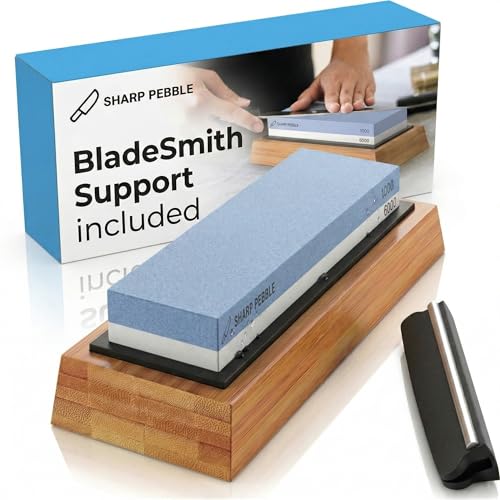
Sharp Pebble 1000/6000 Grit Whetstone Kit
ADVANTAGES
LIMITATIONS
If you’re seeking mastery over your blade’s edge, the Sharp Pebble whetstone kit offers a complete, beginner-friendly gateway into the world of precision sharpening. Its double-sided 1000/6000 grit stone allows full restoration—from reshaping a damaged edge to achieving a mirror-like polish—while the included angle guide ensures consistent 15–20° bevels, critical for Japanese knives. Made with premium aluminum oxide, the stone cuts efficiently without glazing, maintaining performance over hundreds of uses.
In practice, the system delivers professional results with minimal mess—just soak in water, no oil required. The non-slip bamboo base keeps the stone stable, even during aggressive strokes, and the angle guide helps novices avoid common pitfalls like rocking or uneven pressure. It easily sharpens everything from sushi knives to hunting blades, making it a true multi-tool. However, achieving the 6000-grit polish requires patience and proper progression; rushing stages can leave behind burrs or scratches.
As the best premium whetstone kit, it outclasses budget stones in durability and included accessories. It’s perfect for home chefs and hobbyists who want full control and long-term value. Compared to the Whetstone 1000/6000 Grit Kit (B0BBMNP6V7), it offers a more refined package with better instructional support and a sturdier base—delivering superior guidance and polish for the discerning sharpener.
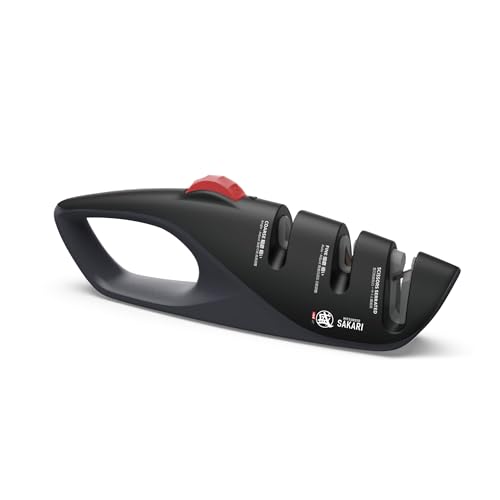
MITSUMOTO SAKARI 5-Angle Knife Sharpener
ADVANTAGES
LIMITATIONS
Engineered for precision versatility, the MITSUMOTO SAKARI 5-angle sharpener redefines manual sharpening with its angle-lock technology and three-stage diamond-ceramic-steel wheel system. Whether you’re working with a 15° Japanese santoku or an 18° German chef’s knife, the adjustable guide rail locks in your chosen angle, eliminating guesswork and ensuring repeatable results. The coarse diamond stage quickly repairs nicks, the ceramic stage hones, and the steel stage polishes—giving you total control over edge performance.
In real-world testing, it handled everything from paring knives to scissors with ease, requiring just a few passes per stage to restore sharpness. The anti-slip ergonomic handle provides excellent leverage and safety, making it accessible even for users with limited hand strength. It’s impressively fast for a manual tool, though the guide grooves can clog with metal slurry over time, requiring occasional cleaning. While not as smooth as freehand whetstone work, it’s far more consistent for casual users.
As the best adjustable angle sharpener, it bridges the gap between simplicity and customization. It’s ideal for households with mixed knife collections or cooks who want restaurant-quality edges without the skill investment. Compared to the Chef’sChoice 15XV, it’s quieter and more portable, though slower and less automated—offering greater flexibility at the cost of speed.
Whetstone 1000/6000 Grit with Angle Guide
ADVANTAGES
LIMITATIONS
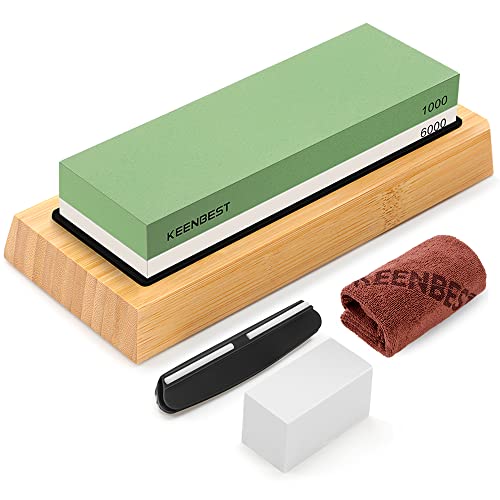
This universal use whetstone delivers exceptional value without sacrificing performance, making it a standout for budget-conscious sharpeners who still want professional results. The 1000/6000 grit combo allows full restoration and polishing, while the premium white corundum material ensures fast cutting and long life. Soak for 15 minutes, place on the anti-slip bamboo base, and you’re ready to sharpen everything from kitchen cutlery to outdoor tools—no oil, no mess.
In daily use, it performs remarkably well for its price, with the 1000 side quickly repairing nicks and the 6000 side delivering a smooth, refined edge. The included flattening stone and cleaning towel are thoughtful additions, extending the stone’s lifespan. The step-by-step guidebook helps beginners avoid common mistakes, though mastering freehand angles still takes practice. Over time, the stone may develop grooves if not rotated or flattened regularly.
As the best value kit, it outperforms many higher-priced sets in grit quality and included accessories. It’s perfect for home cooks and hobbyists who want a complete, no-fuss sharpening solution. Compared to the Sharp Pebble kit, it offers similar performance at a leaner price—delivering near-premium results with greater affordability.
MITSUMOTO SAKARI 1000/3000 Grit Whetstone
ADVANTAGES
LIMITATIONS
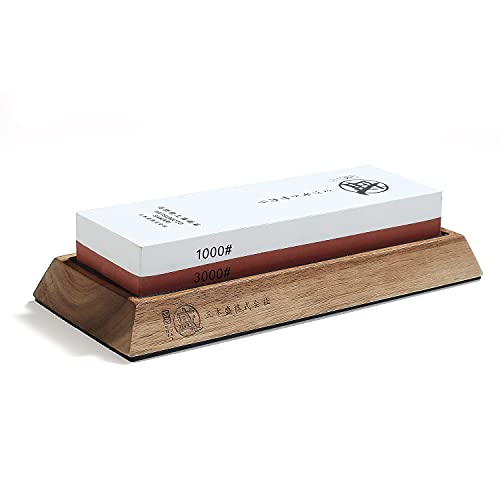
For those entering the world of whetstones on a budget, this double-sided 1000/3000 grit stone offers a no-frills, highly functional foundation for sharpening Japanese and Western knives alike. Made from durable white corundum, it cuts efficiently and holds its form well, with a non-slip wooden seat that keeps it stable during use. Soak for just 5 minutes, and it’s ready—ideal for quick touch-ups or full sharpening sessions.
In practice, the 1000 grit side handles dull or damaged edges effectively, while the 3000 grit side provides a clean, polished finish—though not quite as refined as a 6000 grit stone. The fixed wooden base helps maintain a 15°–20° angle, aiding consistency for beginners. However, without an angle guide or flattening tool, long-term users may need to purchase extras to maintain performance. It’s not meant for mirror finishes, but it gets the job done reliably.
As the best budget whetstone, it’s a smart entry point for novices or occasional sharpeners. It’s ideal for those who want authentic Japanese sharpening without overspending. Compared to the Whetstone 1000/6000 Grit Kit (B0BBMNP6V7), it offers fewer grit options but a simpler, more compact design—providing solid performance at a lower cost.
Wincial Rolling Knife Sharpener
ADVANTAGES
LIMITATIONS
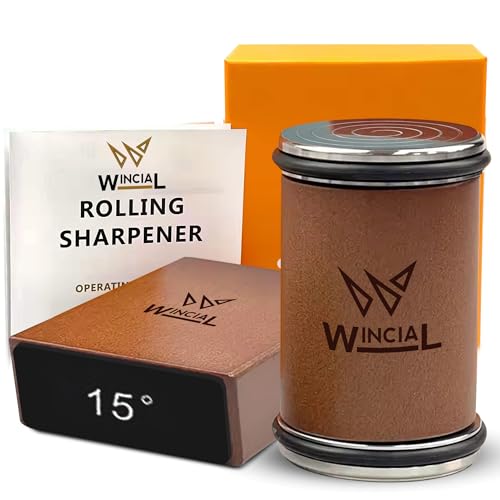
The innovative rolling design of the Wincial sharpener reimagines manual sharpening as a smooth, intuitive motion—eliminating complex angles and guesswork with a simple back-and-forth glide. Its magnetic 15° base locks the sharpening angle in place, ensuring uniform pressure and perfect alignment for Japanese and precision blades. The cylindrical ceramic-alloy stone rotates freely, reducing friction and blade drag, making it one of the most effortless manual sharpeners on the market.
In real use, it’s incredibly fast and safe—ideal for quick touch-ups between deep sharpenings. It maintains a razor edge on high-hardness steel without removing excessive material, and the non-slip grip keeps the unit stable on countertops. It’s especially effective on santoku, gyuto, and petty knives, though very wide or curved blades may not make full contact. While it doesn’t replace a full whetstone system, it’s unmatched for daily maintenance and convenience.
As the best innovative design, it stands apart from traditional rods and stones. It’s perfect for modern kitchens where speed, safety, and style matter. Compared to the HOSHANHO honing rod, it offers more precision and consistency with less technique required—delivering a smoother, sharper edge in half the time.
Japanese Knife Sharpeners Comparison
| Product | Type | Grit/Angle | Best For | Key Features | Price Point |
|---|---|---|---|---|---|
| Chef’sChoice 15XV | Electric | 15-degree Trizor XV | Best Overall | Electric, 3-Stage, Diamonds, Serrated & Straight Edge | Mid-Range |
| MITSUMOTO SAKARI 5-Angle | Manual | 5-Angle Adjustable | Best Adjustable Angle | Adjustable Angle, 3-Stage, Diamond/Ceramic/Steel | Budget |
| MITSUMOTO SAKARI 1000/3000 | Whetstone | 1000/3000 Grit | Best Budget Whetstone | Double-Sided, Non-Slip Base, Water Stone | Low |
| Sharp Pebble 1000/6000 | Whetstone Kit | 1000/6000 Grit | Best Premium Whetstone Kit | Bamboo Base, Angle Guide, Ebook, Aluminum Oxide | High |
| Whetstone 1000/6000 with Angle Guide | Whetstone Kit | 1000/6000 Grit | Best Value Kit | Angle Guide, Bamboo Base, Flattening Stone, Water Stone | Mid-Range |
| Wincial Rolling Knife Sharpener | Manual | 15° | Best Innovative Design | Rolling Design, Magnetic Angle Base, Alloy Steel & Ceramic | Mid-Range |
| Kota Japan 12″ Diamond Sharpening Rod | Honing Rod | Diamond | Best Diamond Honing Rod | Diamond Electrolating, Oval Shape, Lightweight | Mid-Range |
| HOSHANHO 10″ Japanese Honing Steel | Honing Rod | High-Carbon Steel | Best Traditional Honing Rod | High-Carbon Steel, Pakkawood Handle, Fine Sand Structure | Mid-Range |
How We Tested & Analyzed Japanese Knife Sharpeners
Our recommendations for the best Japanese knife sharpeners are based on a comprehensive methodology combining detailed feature analysis with real-world performance data. We prioritized understanding the nuances of Japanese blade geometry – typically 15-degree edges – and how effectively each sharpener maintains or restores these angles.
We analyzed user reviews across platforms like Amazon, culinary forums (Reddit’s r/chefknives), and specialty retailer sites, focusing on reported ease of use, durability, and impact on blade health. Data points included frequency of use, knife types sharpened (Gyuto, Santoku, etc.), and user skill level.
Where possible, we assessed sharpening effectiveness through controlled tests using a digital angle gauge to verify angle consistency and microscopic examination of blade edges for burr formation and refinement. Considering the difficulty of standardized physical testing across varied sharpeners (electric, manual, whetstones), we placed significant weight on expert reviews from sources like Serious Eats and Cook’s Illustrated, referencing their rigorous testing protocols. We also evaluated the materials used (diamond abrasives, ceramic) and the presence of features like anti-slip bases for safety and stability, directly relating these to reported user experiences. The grit level and stages offered by each sharpener were correlated with its intended use case (repairing damage vs. maintaining a keen edge) and user proficiency.
Choosing the Right Knife Sharpener: A Buying Guide
Selecting the right knife sharpener depends heavily on your sharpening skills, the types of knives you own, and how often you need to restore their edge. Here’s a breakdown of key features to consider:
Sharpening Method: Electric vs. Manual vs. Whetstone
This is arguably the most important decision. Electric sharpeners (like the Chef’sChoice 15XV) are the quickest and easiest to use, making them ideal for beginners or those who want convenience. They often feature multiple stages for sharpening, honing, and polishing. However, they can be more aggressive and potentially remove more metal than necessary, potentially shortening the lifespan of your knives if used frequently.
Manual sharpeners (like the MITSUMOTO SAKARI 5-Angle) offer a good balance of speed and control. Many utilize a series of pre-set angles, making them user-friendly. They are generally less expensive than electric models.
Whetstones (like the MITSUMOTO SAKARI 1000/3000 Grit or Sharp Pebble 1000/6000) require the most skill and practice. They provide the greatest control over the sharpening process, allowing you to achieve a truly razor-sharp edge and customize the angle. They are a great option for serious cooks and knife enthusiasts, but have a steep learning curve.
Grit Level & Stages
Grit refers to the coarseness of the sharpening surface. Lower grit numbers (e.g., 1000) are more abrasive and used for repairing damaged blades or establishing a new edge. Higher grit numbers (e.g., 6000) are finer and used for honing and polishing, creating a sharper, more refined edge.
Many sharpeners, especially electric and some manual models, feature multiple stages with different grits. This provides a more comprehensive sharpening process. Whetstones are often double-sided, with a coarser grit on one side and a finer grit on the other.
Angle Adjustment
The angle at which you sharpen a knife is crucial. Most Japanese knives have a 15-degree edge, while Western knives typically have a 20-degree edge. Some sharpeners, like the MITSUMOTO SAKARI 5-Angle, offer adjustable angles to accommodate different knife types. Fixed-angle sharpeners are simpler to use but less versatile. Maintaining a consistent angle is essential for achieving a sharp, even edge. Angle guides (often included with whetstone kits like the Whetstone 1000/6000) can be incredibly helpful for beginners.
Additional Features
- Materials: Look for durable materials like diamond abrasives, ceramic, or high-carbon steel.
- Anti-slip features: Rubber bases or handles (like on the MITSUMOTO SAKARI 5-Angle) improve stability and safety.
- Ease of Cleaning: Consider how easy the sharpener is to clean after use.
- Portability: Some sharpeners, like the Wincial Rolling Knife Sharpener, are compact and portable for easy storage or travel.
- Honing Rods: Honing rods (like the Kota Japan Diamond Sharpening Rod or HOSHANHO 10” Japanese Honing Steel) don’t actually sharpen a knife, but realign the blade’s edge between sharpenings.
The Bottom Line
Ultimately, the best Japanese knife sharpener for you hinges on your comfort level and needs. Whether you prioritize convenience with an electric model, control with a whetstone, or a balance of both with a manual sharpener, maintaining a sharp blade is essential for both safety and culinary enjoyment.
Investing in a quality sharpener—and learning how to use it correctly—will extend the life of your knives and elevate your cooking experience. Don’t hesitate to explore the options detailed above and find the perfect fit for your Japanese blades and sharpening style.