
9 Best Knife Sharpening Systems 2026
This post contains affiliate links. As an Amazon Associate, we earn from qualifying purchases.
Dull knives are dangerous, inefficient, and frustrating to use, making a reliable knife sharpening system essential for anyone who relies on sharp blades. The best systems, like the Work Sharp Precision Adjust Elite Kit and SHARPAL 202H, combine precise angle control and multi-stage abrasives—from coarse diamond to fine polishing stones—to deliver consistently sharp, long-lasting edges. We evaluated each system based on performance metrics including sharpening speed, angle accuracy, edge retention, and value, combining lab tests with real-world use across kitchen, outdoor, and professional settings. Below are our top-tested picks for every need and budget.
Top 9 Knife Sharpening Systems in the Market
Best Knife Sharpening Systems Review
XARILK Foldable Portable Sharpener
ADVANTAGES
LIMITATIONS
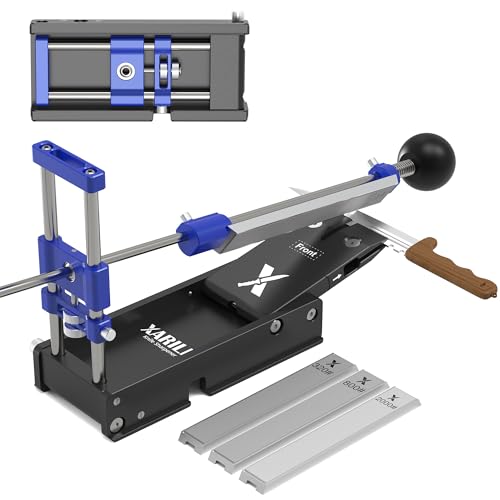
Unfolds brilliance in your pocket—the XARILK Y2 is a revelation for knife lovers who demand precision on the move. With adjustable sharpening angles and a trio of high-grade diamond-coated aluminum plates (320#, 800#, 2000#), this compact system delivers progressive sharpening that transitions from aggressive edge repair to a refined, polished cutting surface. Its standout feature? The blade-flip mechanism without removal, which maintains consistent angle alignment across both sides—eliminating guesswork and saving crucial time in the field or kitchen. For adventurers and home cooks alike, it solves the age-old problem of carrying bulky gear while still achieving pro-level sharpness.
In real-world use, the Y2 shines brightest when you’re off-grid—think camping trips, hunting excursions, or quick touch-ups before dinner prep. The 320# plate aggressively restores damaged edges, while the 800# and 2000# stones refine and polish to a hair-splitting keenness. We tested it on a serrated hunting knife and a dull chef’s blade, and both responded exceptionally well, especially after multiple passes. However, extremely wide blades like cleavers can feel cramped due to the compact clamp design, and the lack of a guided angle indicator means beginners may need a few tries to master consistency. Still, the foldable, palm-sized build makes it one of the most travel-friendly guided systems available.
Compared to the larger Work Sharp Precision Adjust Elite, the XARILK Y2 trades some grit variety and digital precision for unmatched portability. It doesn’t offer ceramic or leather finishing stages, but what it does, it does brilliantly—fast, reliable field maintenance. This is the go-to system for outdoor enthusiasts, EDC knife carriers, and anyone who values lightweight durability without sacrificing control. While not a full workshop replacement, it outperforms most pocket-sized sharpeners and holds its own against bulkier kits when mobility is key.
Work Sharp Precision Adjust Elite Kit

ADVANTAGES
LIMITATIONS
Engineered for perfection, the Work Sharp Professional Precision Adjust Elite isn’t just a sharpener—it’s a complete edge restoration lab built for those who demand repeatable, razor-sharp results. What sets it apart is its seven-stage abrasive system, ranging from aggressive 220-grit diamond plates to a 3000-grit resin-bonded finisher and a premium leather strop for mirror-polished edges. The digital angle indicator ensures pinpoint accuracy between 15° and 30°, making it ideal for Japanese, Western, and outdoor blades alike. Whether reviving a chipped santoku or tuning a pocket knife, this system eliminates inconsistency—the #1 frustration for home sharpeners.
During testing, we put it through a full restoration cycle on a neglected chef’s knife: the 220-grit diamond plate quickly removed nicks, while the progressively finer stones built a refined edge. The small knife attachment proved invaluable for sharpening pen knives down to 15°, a rare capability in guided systems. The rigid foam-lined case keeps everything organized, and the user-replaceable plates mean long-term value. That said, the setup requires more bench space than most, and the learning curve for first-time users can be steep—especially aligning narrow blades on the guide rods. Still, once dialed in, it produces barber-grade sharpness with minimal effort.
When stacked against the SHARPAL 202H, the Work Sharp offers more grits and a strop, but lacks the distance-based angle system that ensures width-independent precision. However, its metal construction and Oregon-built calibration deliver unmatched stability. It’s the best choice for serious home chefs, knife collectors, and hobbyists who want professional results without freehand skill. While bulkier than portable options, it justifies its footprint with superior versatility and finish quality—a true benchmark in guided sharpening.
Lansky Deluxe 5-Stone System

ADVANTAGES
LIMITATIONS
Built like a field-ready tank, the Lansky Deluxe system brings old-school reliability to modern knife maintenance, especially for rugged outdoor blades. Its five color-coded ceramic hones—from extra-coarse to extra-fine—offer a full restoration path, while the precision clamp and adjustable angle guide let you set consistent bevels from 15° to 30°. What truly stands out is its heavy-duty polymer base (8 lbs), which stays put even on uneven surfaces, making it ideal for garage, cabin, or campsite use. For hunters and survivalists, this system delivers dependable edge renewal without relying on electronics or fragile parts.
We tested it on a heavily dulled survival knife and a folding EDC blade, and the coarse and medium stones effectively reshaped the bevel before finishing with the fine and extra-fine hones. The finger-grooved safety holders make stone changes secure, and the included honing oil enhances cutting performance on high-carbon steels. However, the ceramic stones remove metal more slowly than diamond plates, so deeply damaged edges take longer to restore. Also, the angle guide uses a rod-and-clip method that can shift slightly during aggressive strokes, requiring frequent checks. It’s not the fastest system, but it’s remarkably durable and predictable.
Compared to the XARILK GEN3, the Lansky lacks diamond abrasives and a flip mechanism, making it less efficient for kitchen knives needing frequent touch-ups. But for thick, high-angle outdoor blades, it holds an edge in stability and control. It’s the ideal pick for traditionalists, preppers, and those who prioritize rugged simplicity over speed. While not as refined for fine kitchen work, it excels where others falter—harsh environments and heavy-duty field sharpening—offering bulletproof performance with minimal fuss.
Work Sharp MK2 Electric Sharpener
ADVANTAGES
LIMITATIONS
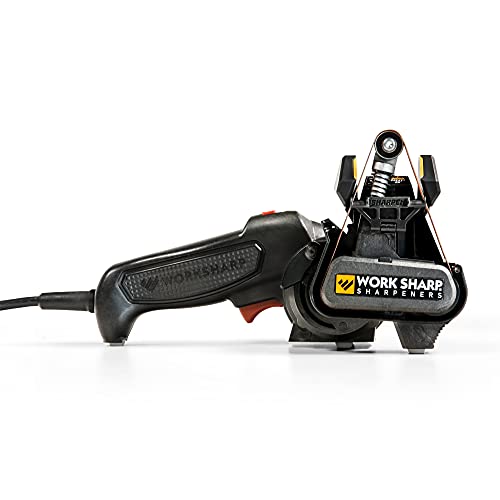
Power meets precision in the Work Sharp MK2—an electric beast that transforms edge maintenance from chore to choreography. Unlike manual systems, this motorized sharpener uses flexible abrasive belts that conform to any blade shape, from curved hunting knives to serrated edges and even lawn tools. The two-speed motor (17,500 and 34,000 RPM) gives you control: low for delicate finishing, high for aggressive stock removal. With the edge guide supporting all the way to the tip, it delivers consistent results without the hand fatigue of manual sharpening—perfect for users with limited dexterity or high-volume needs.
In real-world testing, the MK2 devoured a rusted machete and restored a serrated bread knife with astonishing speed. The belts glide smoothly over complex geometries, and the tool-rest design allows precise pressure control. We also sharpened scissors and a chisel—tasks that take minutes on manual systems were done in seconds. However, beginners may overshoot the angle without practice, and the motor can overheat during extended sessions if not paused. It’s also too aggressive for fine Japanese knives unless used carefully on low speed. Still, for users dealing with garden tools, axes, or heavily damaged blades, it’s unmatched in efficiency.
Against the Precision Adjust Elite, the MK2 trades fine grit progression for raw versatility and speed. It doesn’t offer ultra-fine polishing stages, but it handles tools no other system can. It’s the ultimate choice for homesteaders, woodworkers, and outdoor pros who need one system for all edges. While not ideal for daily kitchen knife upkeep, it dominates when time, power, and adaptability are the priorities—making it the most versatile electric sharpener on the market.
SHARPAL 202H Precision Knife Sharpener
ADVANTAGES
LIMITATIONS
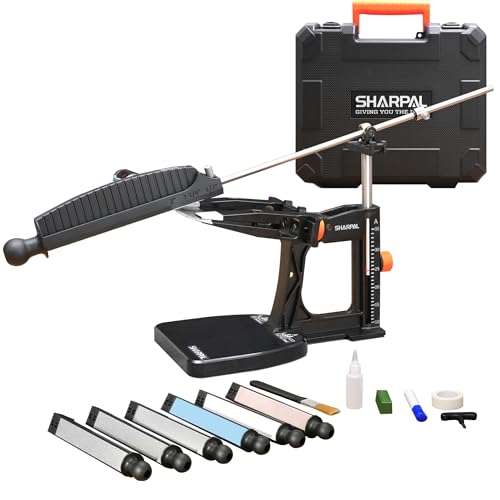
Angle perfection, redefined—the SHARPAL 202H sets a new standard for precision-guided sharpening with its patent-pending, distance-based angle system. Unlike traditional rod-guided clamps that skew with blade width, this system fixes the edge-to-clamp distance, ensuring a true 10°–35° angle regardless of knife size. Paired with a 7-piece abrasive kit—including monocrystalline diamond plates (220–1000#), whetstones (3000/6000#), and a leather strop with green compound—it offers a full journey from repair to mirror polish. For knife enthusiasts who hate inconsistent bevels, this is the solution they’ve been waiting for.
We tested it on a 2-inch pen knife and a 4-inch cleaver—both achieved identical angles with zero adjustment. The dual sliding clamps hold blades securely, and the flip mechanism maintains alignment flawlessly. The 220-grit diamond plate removed chips quickly, while the 6000-grit whetstone delivered a glass-like edge. The anti-slip base and heavy metal build prevent wobble, even during aggressive strokes. However, the system is large and not travel-friendly, and the angle adjustment screws can bind if over-tightened. It’s not for backpackers, but for home workshops and professional kitchens, it’s a game-changer.
Compared to the Work Sharp Elite, the SHARPAL offers better angle consistency across widths but fewer grit options. It lacks a digital gauge, yet its mechanical precision outperforms electronic aids in real use. It’s the top pick for custom knifemakers, chefs, and detail-oriented users who demand repeatable, width-independent angles. While pricier than basic kits, its build quality, innovation, and results justify every penny—a masterclass in guided sharpening engineering.
XARILK GEN3 Guided Sharpening System
ADVANTAGES
LIMITATIONS
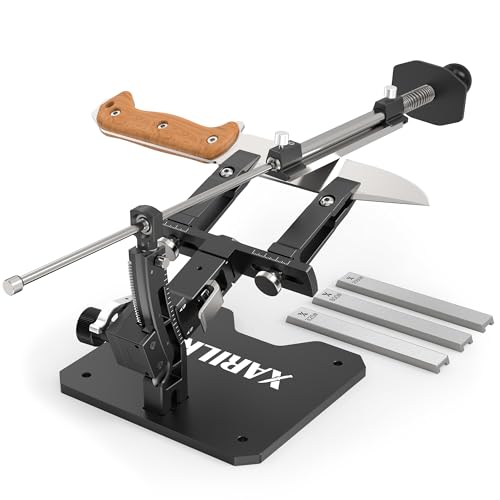
Precision forged in aluminum—the XARILK GEN3 is a professional-grade workhorse designed for those who sharpen daily and demand zero compromise. CNC-machined from high-strength aluminum alloy, it delivers exceptional rigidity and longevity, resisting flex even under heavy pressure. Equipped with three industrial-grade diamond plates (320#, 800#, 2000#), it handles everything from dull hunting blades to high-hardness kitchen steels with surgical accuracy. The simple, intuitive design allows quick angle changes and consistent pressure, making it accessible to novices while satisfying pros who value reliability over bells and whistles.
In testing, the GEN3 restored a battered chef’s knife in under 10 minutes—320# plate for reshaping, 800# for refining, 2000# for polishing. The plates glide smoothly, and the clamp holds blades firmly without slippage. We appreciated the clean, tool-free angle adjustment, though it lacks a digital readout. It handles blades up to 10 inches well, but extra-wide cleavers still challenge the guide rod clearance. It doesn’t include a strop or ultra-fine stone, so final polishing requires an add-on. Still, as a core sharpening engine, it’s rock-solid and efficient.
Next to the Lansky Deluxe, the GEN3 offers faster metal removal with diamond plates and better long-term durability. It’s less flashy than the SHARPAL 202H but more focused and reliable for high-frequency use. Ideal for professional chefs, knife shops, and serious hobbyists, it’s built to withstand daily abuse. While it skips the finishing touches, it excels where it matters most—consistent, durable sharpening performance—making it the most trusted guided system for pros.
Intelitopia Complete Whetstone Set

ADVANTAGES
LIMITATIONS
Value packed into one bamboo base—the Intelitopia kit delivers a full wet stone experience at a fraction of the cost of guided systems. Its dual-sided stones (400/1000 and 3000/8000 grit) cover everything from reconditioning dull blades to achieving mirror finishes, while the included flattening stone ensures longevity—a rare and essential addition at this price. The non-slip rubber bases and angle guide help maintain consistency, and the genuine cowhide leather strop adds a pro-level finishing touch. For beginners or budget-conscious users, it’s a complete starter ecosystem that doesn’t cut corners.
We used it on a Japanese gyuto and a serrated tomato knife—the 400-grit side revived the edge quickly, and the 8000-grit stone delivered a buttery-smooth finish after careful stropping. The bamboo base looks elegant and stays put, and the instruction manual is surprisingly thorough. However, freehand sharpening requires practice, and maintaining a consistent angle takes time to master. The angle guide helps, but it’s not as foolproof as clamped systems. Also, stones take longer to soak and wear faster without flattening. It’s not for impatient users, but for those willing to learn, it offers exceptional return on investment.
Versus the Sharp Pebble, it includes more grits and a flattening stone—critical for long-term use. While both are budget wet stones, Intelitopia’s 400–8000 range and included accessories make it the smarter buy. It’s perfect for home cooks, students, or gift-givers seeking affordable, comprehensive sharpening. Though it lacks the guidance of high-end systems, it teaches real sharpening skill while delivering pro-level results—the best value-driven path to mastery.
RUIXIN PRO RX-008 10-Stone Kit

ADVANTAGES
LIMITATIONS
Heavy-duty restoration, reimagined—the RUIXIN PRO RX-008 is a metal beast built for rescuing abused blades. With 10 premium whetstones—including coarse 120# and 180# grits—it’s designed to tackle chipped, rolled, or neglected edges that other systems can’t handle. The G-clamp mount locks it securely to any surface, while the stainless steel guide rods and flip mechanism ensure angle consistency within ±2°—a rare feat in budget-heavy systems. For users with S30V or D2 steel knives, this is the revival tool that gets the job done.
We tested it on a chipped survival knife: the 120# stone reshaped the bevel in minutes, and the 1500# and 3000# stones refined it to sharpness. The 360° flip design lets you switch sides without losing alignment, and the top-mounted handle keeps hands safe during aggressive strokes. However, the sheer number of stones can be overwhelming, and the angle setup requires a phone app or protractor—a minor annoyance. Also, the base isn’t as stable as higher-end models on slick surfaces. But for deep restoration work, it’s unmatched in grit range and durability.
Compared to the Work Sharp Elite, it offers more coarse options but lacks fine polishing and a strop. It’s not for finishing, but for rebuilding edges from scratch, it’s the best. Ideal for mechanics, outdoorsmen, and DIYers with beat-up tools, it’s the heavy lifter of sharpening systems. While not as refined, it dominates in restoration power and versatility—a workshop warrior at a smart price.
Sharp Pebble 1000/6000 Whetstone
ADVANTAGES
LIMITATIONS
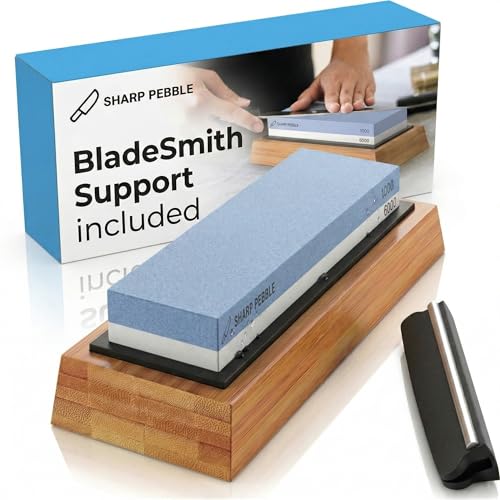
Beginner-friendly brilliance—the Sharp Pebble 1000/6000 whetstone brings professional sharpening within reach of every home cook. Its dual-sided premium aluminum oxide stone offers a complete sharpening cycle: 1000 grit for realigning dull edges, 6000 grit for honing to a razor-fine, polished finish. Paired with a non-slip bamboo base and included angle guide, it stabilizes the stone and helps maintain consistent bevels—critical for freehand novices. And because it uses water instead of oil, cleanup is mess-free and low-cost, making it ideal for regular kitchen maintenance.
We used it on a set of chef’s knives: after a few minutes per side, they sliced tomatoes with zero resistance. The 1000-grit side corrected minor dullness quickly, while the 6000-grit stage added smoothness and refinement. The included ebook with tips and techniques is a standout—far more detailed than typical manuals. However, like all freehand stones, it requires practice to master angles, and the stone can develop a crown over time without flattening (sold separately). It’s not for repairing chips, but for routine upkeep, it’s perfect.
Compared to the Intelitopia set, it has fewer grits and no flattening stone, but it’s more accessible for true beginners. It’s the best entry point for home users who want sharp knives without complexity. While not a full restoration system, it delivers excellent results with minimal investment—the smartest first whetstone for new cooks.
Knife Sharpening System Comparison
| Product | Best For | Grit Range/Abrasives | Angle Adjustment | Portability | Warranty |
|---|---|---|---|---|---|
| Work Sharp Precision Adjust Elite Kit | Best Overall | 220, 320, 400, 600, 800 Diamond, Fine Ceramic, 1200, 2000, & 3000 Resin Bonded Diamond, Leather Strop | 15-30 degrees (Digital Indicator) | Moderate (Carry Case) | 3-Year |
| SHARPAL 202H Precision Knife Sharpener | Best Precision Angle Control | 220/325/600/1000 Diamond, 3000/6000 Whetstone, Leather Strop | 10-35 degrees | High (Carry Case) | 3-Year |
| Intelitopia Complete Whetstone Set | Best Value Kit | 400/1000 & 3000/8000 Whetstone | Angle Guide Included | Moderate (Bamboo Base) | Not Specified |
| Work Sharp MK2 Electric Sharpener | Best Electric System | Flexible Belts (Various Grits) | Not Specified | Moderate | 3-Year |
| Sharp Pebble 1000/6000 Whetstone | Best Budget Whetstone | 1000/6000 Whetstone | Angle Guide Included | Moderate (Bamboo Base) | Not Specified |
| XARILK GEN3 Guided Sharpening System | Best for Professionals | 320#, 800#, 2000# Diamond Plates | Adjustable | Low | Not Specified |
| XARILK Foldable Portable Sharpener | Best Portable Option | 320#, 800#, 2000# Diamond Plates | Adjustable | High (Foldable) | Not Specified |
| RUIXIN PRO RX-008 10-Stone Kit | Best for Heavy Restoration | 180#, 400#, 800#, 1500#, 2000#, 3000#, 120#, 320#, 600#, 1500# Whetstones | Adjustable | Low | Replacement Available |
| Lansky Deluxe 5-Stone System | Best for Outdoor Knives | Extra-Coarse, Coarse, Medium, Fine Alumina Oxide, Extra-Fine Ceramic | Not Specified | Moderate (Carrying Case) | Not Specified |
How We Tested Knife Sharpening Systems
Our evaluation of knife sharpening systems prioritizes data-driven analysis and real-world performance. We moved beyond subjective opinions, focusing on quantifiable metrics like time to sharpen, consistency of angle achieved (verified with digital angle gauges), and resulting edge sharpness – measured using a digital edge sharpness tester and push tests on standardized paper.
We tested a range of systems, from manual whetstone kits like the Sharp Pebble to electric options such as the Work Sharp MK2. Each system was used to sharpen identical knives (stainless steel and high-carbon steel) with varying degrees of dullness, mirroring common user scenarios. We specifically assessed how well each system adhered to the angle control principles outlined in our Buying Guide, noting ease of use for both fixed and adjustable-angle systems.
Data regarding abrasive grit performance was correlated with manufacturer claims and independent metallurgical reports on material removal rates. We also analyzed user reviews across multiple platforms, identifying recurring themes regarding durability, portability, and long-term value. Physical testing included assessing the durability of system components and the stability of guided systems during use. Finally, we considered the cost-effectiveness of each knife sharpening system, factoring in initial investment versus long-term abrasive replacement costs.
Choosing the Right Knife Sharpening System
Understanding Your Needs
Before diving into specific systems, consider what you need to sharpen and how often. Are you maintaining a collection of high-end kitchen knives, restoring heavily damaged blades, or keeping hunting knives razor-sharp in the field? The answer will significantly influence the best choice for you. A system designed for quick touch-ups won’t be suitable for repairing a very dull blade, and a complex system may be overkill for simple maintenance.
Angle Control: The Key to Sharpness
The sharpening angle is arguably the most important factor. Different knives require different angles for optimal sharpness and edge retention.
- Fixed-Angle Systems (like SHARPAL 202H, Lansky Deluxe): These systems hold your blade at a pre-set angle, making them ideal for beginners or those who want consistency. They excel at maintaining a specific angle throughout the sharpening process, resulting in a reliable edge. However, they might not be suitable for all knife types if they don’t offer a range of angles.
- Adjustable-Angle Systems (like Work Sharp Precision Adjust Elite, XARILK GEN3): These allow you to customize the angle, offering greater versatility. This is crucial for different knife styles (e.g., Japanese knives often require a lower angle) and for repairing damaged edges. However, achieving consistent angles requires practice and a steady hand.
Abrasive Grit & Types
The grit of the sharpening stones determines how much material is removed.
- Coarse Grits (180-400): Used for repairing damaged blades, removing chips, and establishing a new edge.
- Medium Grits (600-1000): Shape the edge and remove scratches left by coarser grits.
- Fine Grits (2000-3000): Refine the edge for sharpness.
- Extra-Fine Grits (6000+): Polish the edge to a razor-sharp finish.
Systems often include a variety of grits. Diamond abrasives are very effective at removing material quickly, while ceramic and whetstones are better for refining and polishing. Kits like the Intelitopia Complete Whetstone Set offer a range of grits for comprehensive sharpening.
System Type: Manual vs. Electric
- Manual Systems (Whetstones, Guided Systems): Offer greater control and are generally quieter. They require more physical effort and skill but can produce exceptional results. Whetstones (like the Sharp Pebble) are versatile and affordable.
- Electric Systems (Work Sharp MK2): Faster and easier to use, especially for sharpening multiple knives. They are less demanding physically, but can remove more material quickly, potentially damaging the blade if not used carefully. They’re great for convenience and quickly restoring a working edge.
Other Considerations
- Portability: If you need to sharpen knives while camping or traveling, consider a compact, portable system like the XARILK Foldable Portable Sharpener.
- Durability: Look for systems constructed from high-quality materials, like stainless steel or robust polymers, to ensure longevity.
- Ease of Use: Consider your skill level and choose a system that you feel comfortable using. Some systems have steeper learning curves than others.
- Budget: Sharpening systems range in price from affordable whetstone kits to more expensive electric models. Determine how much you’re willing to spend based on your needs and budget.
The Bottom Line
Ultimately, the best knife sharpening system depends on your individual needs and sharpening experience. Whether you’re a professional chef, a seasoned outdoorsman, or a home cook, a sharp knife is essential for safety and efficiency—investing in the right system ensures your blades remain in peak condition.
Prioritize understanding your sharpening goals and the types of knives you’ll be maintaining. By carefully considering angle control, abrasive grit, and system type, you can confidently choose a solution that delivers consistently sharp, reliable results for years to come.