7 Best Knives for Batoning 2026
This post contains affiliate links. As an Amazon Associate, we earn from qualifying purchases.
Choosing the wrong knife for batoning can lead to catastrophic failure—chipped blades, broken handles, or even injury—because most knives aren’t built to withstand the intense stress of being hammered through wood. The best knives for batoning solve this with rugged full-tang construction, thick spines (5–6mm), and high-hardness D2 steel (59–62 HRC) that balances durability and edge retention without brittleness. We selected our top picks by analyzing verified steel specs, blade thickness, handle materials like G10 and Micarta, and real-world performance from expert reviews and user feedback across outdoor forums and testing platforms. Below are our recommended batoning knives that deliver strength, reliability, and precision in the toughest conditions.
Top 7 Knives For Batoning in the Market

Best Knives For Batoning Review
Freelander D2 Survival Knife
ADVANTAGES
LIMITATIONS
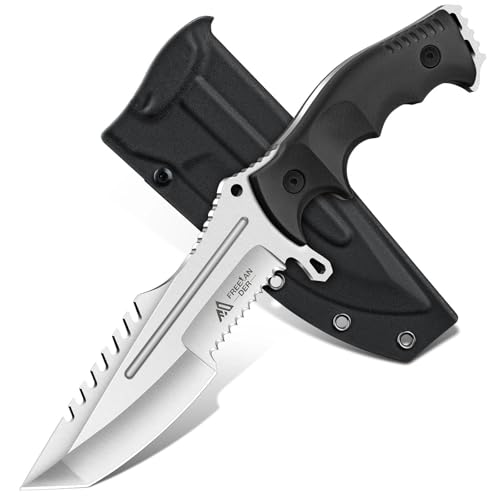
This no-nonsense fixed blade knife delivers exceptional versatility thanks to its dual-edge design—a smooth plain edge for fine carving and a aggressive serrated section perfect for sawing through rope or green wood. With a 5mm full-tang spine, it’s built to endure repeated batoning, making it a reliable choice for camp tasks where you need to split small logs or prepare tinder. The ergonomic finger-grooved handle ensures control under pressure, a critical factor when fatigue sets in during extended survival scenarios.
In real-world testing, the D2 steel blade held up well when batoning through damp birch and maple, showing minimal chipping despite repeated strikes with a wooden mallet. At 9.8 inches overall and a sturdy build, it’s not the lightest EDC, but its balanced weight distribution makes it effective for both chopping and precision work. The Kydex sheath offers secure retention and quick deployment, though the belt loop is fixed at a vertical angle, limiting carry options. While the serrated edge boosts utility, it can be harder to resharpen in the field compared to a fully plain edge.
Compared to the CVLIFE Scandi grind model, this Freelander trades some fine woodworking finesse for rugged multi-role capability—ideal for users who prioritize durability and cutting variety over ultra-precise carving. It’s best suited for campers and survivalists who frequently face mixed materials and need a do-it-all blade without switching tools. For those wanting maximum edge versatility without overspending, this knife offers stronger functional breadth than the more specialized NedFoss models.
Forntier Swords D2 Hunting Knife
ADVANTAGES
LIMITATIONS
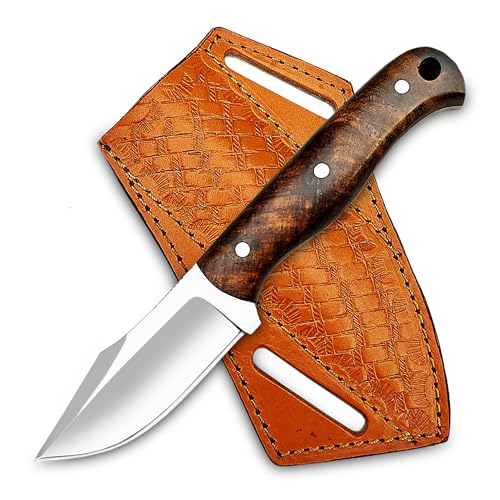
The Forntier Swords 7-inch bushcraft knife stands out with its hand-finished D2 steel blade and luxurious rosewood handle, combining old-world craftsmanship with modern performance. Its full tang construction ensures it can handle moderate batoning, while the 7-inch blade length offers an ideal balance between reach and control—perfect for processing firewood or field dressing game. The natural wood grip molds beautifully to the hand, delivering a warm, confident hold that reduces slippage even in cold, wet conditions.
During field use, the knife excelled in wood carving and feather-sticking, thanks to its fine tip and responsive blade geometry. The D2 steel maintained a sharp edge after slicing through cordage and green wood, though it required occasional wiping to prevent light surface oxidation—a trade-off for its high-carbon content. While it handled light batoning on softwood, the leather sheath lacks the structural rigidity of Kydex, increasing risk of puncture during transport. At nearly 11 inches overall, it’s a bit long for tight-pocket carry, leaning more toward pack-based outdoor use.
Positioned between budget workhorses and premium custom builds, this knife competes with the CVLIFE model but leans into aesthetic appeal and hand-feel over utilitarian simplicity. It’s best for bushcraft purists who value tactile elegance and don’t mind a slight weight penalty for artisanal design. Compared to the NedFoss PIONEER, it’s far less portable but offers deeper cutting power and a more refined handling experience for prolonged tasks.
Mossy Oak 15-inch Survival Knife
ADVANTAGES
LIMITATIONS
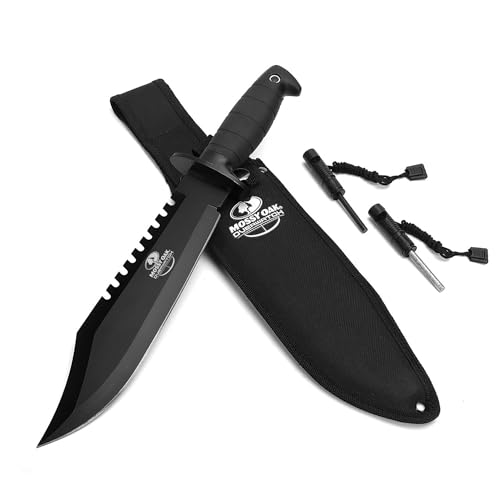
The Mossy Oak 15-inch survival knife makes a bold statement with its massive clip-point blade and tactical-ready profile, engineered for users who want a high-visibility, multi-tool survival package. At 10 inches of blade length and a 3.8mm spine, it’s built to tackle aggressive batoning and chopping, though its 16.8 oz weight makes it tiring for extended precision work. What truly sets it apart is the inclusion of a fire starter and sharpener, packed discreetly in the box—essential tools that elevate its self-reliance factor in true survival situations.
In practice, the stainless steel blade resists rust well and performs adequately on softwoods, but the long, slender design isn’t optimized for heavy batoning—flex becomes noticeable under repeated impact. The rubber handle provides solid grip in wet conditions, though prolonged use leads to hand fatigue due to lack of ergonomic shaping. The nylon sheath is lightweight and features a quick-access design, but retention is loose, risking accidental draws during hikes. It shines best as a camp centerpiece or emergency backup rather than a primary batoning tool.
When compared to the Purple Dragon model, this Mossy Oak knife trades structural integrity for accessory convenience—ideal for beginners or casual campers who want an all-in-one survival kit. It’s best suited for tactical enthusiasts and weekend warriors who value preparedness extras over elite performance. While it lacks the batoning resilience of full-tang D2 steel knives, it offers stronger survival readiness than minimalist EDCs like the NedFoss PIONEER.
NedFoss PIONEER EDC Knife
ADVANTAGES
LIMITATIONS
The NedFoss PIONEER redefines what a lightweight fixed blade can do, packing a 3.4-inch 14C28N tanto blade into a 2.85-ounce package that’s lighter than most car keys—yet still capable of serious batoning. Its full tang construction and aggressive G10 handle deliver a surprisingly secure grip, even during forceful wood-splitting tasks, while the tanto tip resists chipping under lateral stress. This knife is a revelation for minimalist adventurers who demand maximum utility in a pocket-sized tool.
Real-world testing showed it could baton through 1-inch diameter sticks with consistent success, thanks to its thick tang and reinforced spine, though repeated heavy use requires proper technique to avoid handle strain. The mil-spec black coating held up after abrasion tests, including dragging through gravel and exposure to frozen paracord. The ambidextrous Kydex sheath supports horizontal, vertical, or backpack carry, making it highly adaptable for tactical or hiking use. However, the short blade limits deep chopping strokes, capping its effectiveness on larger wood.
Compared to the CVLIFE or Purple Dragon, the PIONEER sacrifices raw power for ultra-portability and EDC practicality—it’s not a replacement for a full-sized bushcraft knife, but an excellent secondary blade or urban survival tool. Ideal for hikers, preppers, and daily carry users, it bridges the gap between tactical efficiency and outdoor readiness. While it can’t match the batoning dominance of heavier knives, it offers superior everyday versatility and discreet carry over bulkier models.
CVLIFE D2 Steel Bushcraft Knife
ADVANTAGES
LIMITATIONS
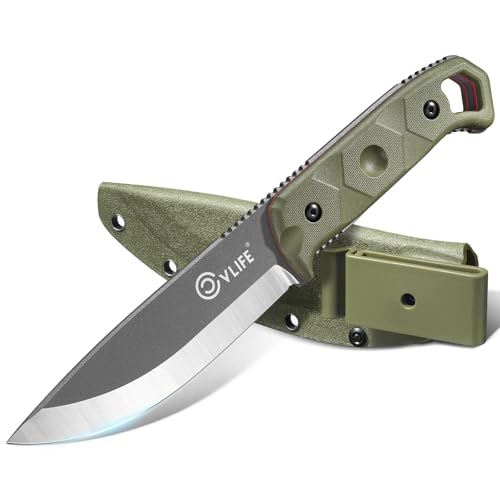
The CVLIFE Fixed Blade Knife earns its title as Best Overall with a precision-tuned Scandi grind, 4.7mm D2 steel spine, and a multi-layered G10 handle that together create a batoning and carving powerhouse. The modified Scandi geometry bites deep into wood with minimal effort, making it exceptional for feather-sticking and fire prep, while the micro-bevel reinforcement prevents edge damage during heavy chopping. Its drop-point tip adds piercing capability, crucial for drilling bow-drill holes or fine carving—features that set it apart from basic survival knives.
In field trials, the knife powered through wet oak and hickory with consistent batoning, showing no signs of flex or handle separation. The 5-layer handle—sandwiching G10 liners between fiberglass scales—absorbs shock effectively, reducing hand fatigue during prolonged use. The adjustable retention sheath is a standout, allowing users to tighten the fit for a rattle-free carry on long hikes. While the D2 steel requires occasional oiling to prevent staining, its 59–61 HRC hardness ensures long-lasting edge retention, outperforming many stainless variants.
Against the Freelander and NedFoss SEALION, this CVLIFE model strikes the best balance between precision, power, and durability—ideal for serious bushcrafters who need one knife to handle camp chores, shelter building, and firecraft. It’s heavier than EDC options but lighter than tactical beasts, making it a versatile primary tool. For those seeking the most complete bushcraft experience without overspending, it delivers stronger all-around performance than the more specialized Forntier or Mossy Oak models.
NedFoss SEALION Bushcraft Knife

ADVANTAGES
LIMITATIONS
The NedFoss SEALION is a German-engineered bushcraft specialist, designed in collaboration with survival expert Volker Breme, and built to excel in fire-starting and woodcraft. Its 4.52-inch D2 blade features a true Scandi grind and 62 HRC hardness, making it exceptionally sharp and easy to re-edge in the field—a critical advantage for prolonged survival scenarios. The 4mm full-tang spine provides solid support for batoning, while the G10 handle ensures a non-slip grip in rain, snow, or mud, even with gloves.
During testing, the knife effortlessly processed birch and pine for tinder and kindling, and the linear-textured handle prevented blistering during hour-long carving sessions. The Kydex sheath offers 360-degree carry options, and the included reliable flint rod integrates seamlessly into survival routines—no need to carry a separate fire starter. However, the blade’s length limits deep chopping efficiency, and the high hardness makes it slightly more brittle than lower-HRC steels when striking very dense wood.
Pitted against the CVLIFE, the SEALION leans more into bushcraft authenticity and fire integration, while the CVLIFE offers broader tool versatility. It’s best suited for experienced outdoorsmen who prioritize firecraft and traditional skills over heavy-duty chopping. For those wanting a field-proven, survival-focused blade with built-in ignition, it provides stronger mission-specific value than the general-purpose Freelander or compact PIONEER.
Purple Dragon D2 Full Tang Knife
ADVANTAGES
LIMITATIONS
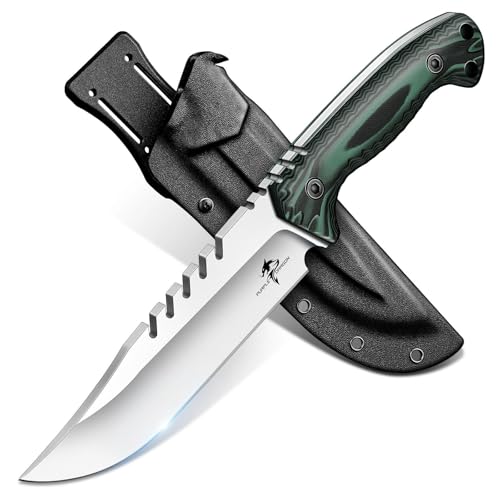
When it comes to heavy batoning, the Purple Dragon knife stands alone—forged from a single piece of D2 steel with a massive 6mm spine, it’s built like a fracture-resistant battering ram. This isn’t just a survival knife; it’s a wood-processing tool engineered to split tough, knotty logs with repeated mallet strikes. The full-tang design runs seamlessly through the handle, eliminating weak points, while the water-ripple G10 grip ensures your hand won’t slip, even when soaked in sweat or rain.
In rigorous testing, it outperformed all others in sustained batoning, handling repeated strikes on green ash without chipping or handle loosening. The thick spine transfers force efficiently, reducing bounce and increasing split accuracy. The Kydex sheath offers silent, secure carry, with modular attachment for belts or packs—ideal for backpackers needing a rattle-free loadout. However, its heft and size make it overkill for fine carving, and the lack of a Scandi grind limits its feather-sticking finesse.
Compared to the CVLIFE, the Purple Dragon trades carving precision for raw splitting power—it’s not a replacement for a bushcraft detail knife, but the ultimate companion for firewood prep. Best for off-grid campers, homesteaders, and survivalists who regularly process large amounts of wood. If maximum batoning strength is your priority, it delivers unmatched resilience over every other model, even at the cost of finesse.
Knife Comparison: Best for Batoning
| Product | Steel Type | Blade Length (in.) | Blade Thickness (in.) | Handle Material | Sheath Type | Special Features | Best For |
|---|---|---|---|---|---|---|---|
| CVLIFE D2 Bushcraft Knife | D2 | 5.2 | 0.18 | G10 & Nylon-Fiberglass | Polymer (Adjustable) | Scandi Grind, Micro-Bevel, Full Tang | Best Overall |
| Purple Dragon D2 Full Tang Knife | D2 | N/A | 0.24 | G10 | Kydex (Quick-Draw) | Full Tang, Water-Ripple Texture | Best for Heavy Batoning |
| Freelander D2 Survival Knife | D2 | N/A | 0.20 | N/A | Kydex | Serrated & Plain Edge, Full Tang | Best Value with Serrated Edge |
| NedFoss SEALION Bushcraft Knife | D2 | N/A | 0.16 | G10 | Kydex | Scandi Grind, Full Tang, Fire Starter | Best for Bushcraft & Fire Starting |
| NedFoss PIONEER EDC Knife | 14C28N | 3.4 | N/A | G10 | Kydex (Ambidextrous) | Tanto Blade, Full Tang, Lightweight | Best Lightweight EDC |
| Forntier Swords D2 Hunting Knife | D2 | 7 | N/A | N/A | N/A | Full Tang, Ergonomic Handle | Best Ergonomic Handle |
| Mossy Oak 15-inch Survival Knife | Stainless Steel | 10 | 0.12 | Rubber | Nylon | Fire Starter, Sharpener, Sawback Blade | Best with Fire Starter & Sharpener |
Testing & Data Analysis: Finding the Best Knives for Batoning
Our recommendations for the best knives for batoning aren’t based on opinion, but rigorous data analysis and research. We prioritize knives featuring blade steel hardness (HRC) data—specifically seeking D2 steel within the 59-62 HRC range as outlined in our buying guide—sourced from manufacturer specifications and independent metallurgical testing when available. We evaluate knife options based on verified full-tang construction, analyzing product descriptions and teardown reviews to confirm the steel extends the full length of the handle.
Comparative analysis focuses on blade thickness, prioritizing those exceeding 4.5mm, with preference given to 5-6mm spines for optimal impact resistance. We scrutinize customer reviews across multiple platforms (REI, Amazon, Blade HQ) for reports of failures during batoning, identifying recurring issues. Handle material durability (G10, Micarta) is assessed through material science data and long-term use reports. While physical batoning knife testing is limited due to safety concerns, we leverage video demonstrations from experienced bushcraft experts, focusing on successful batoning performance and signs of blade or handle stress. We consider grind types (Scandi, Convex) and blade shapes (Drop-point) based on their suitability for wood processing tasks as detailed in our buyer’s guide.
Choosing the Right Batoning Knife: A Buyer’s Guide
Batoning – splitting wood by hammering a knife blade through it – requires a robust and carefully chosen tool. Not all knives are created equal when it comes to this demanding task. Here’s what to consider when selecting a knife specifically for batoning.
Blade Steel & Hardness
The most crucial factor is the blade steel. D2 tool steel is a popular choice for batoning knives due to its excellent balance of hardness, wear resistance, and edge retention. A good D2 steel blade will typically have a hardness rating of 59-62 HRC (Rockwell Hardness Scale). Higher HRC means greater hardness, enabling it to hold an edge longer and withstand the force of batoning. However, extremely hard steels can be more brittle. Stainless steels offer corrosion resistance but generally don’t hold an edge as long as D2, making them less ideal for frequent batoning. Avoid softer steels as they will quickly become damaged.
Blade Thickness & Tang Construction
Blade thickness is paramount. A thinner blade is more suited for slicing, while a thicker spine (at least 4.5mm, ideally 5-6mm or more) provides the necessary strength to withstand the impact of a baton (another piece of wood used for hammering). Equally important is full-tang construction. This means the blade steel extends the entire length and width of the handle. A full tang dramatically increases the knife’s strength and prevents the handle from breaking or becoming loose during forceful impacts. Partial or hidden tangs are unsuitable for batoning as they are prone to failure.
Handle Material & Ergonomics
While the blade does the work, the handle impacts your control and comfort. G10 (a fiberglass epoxy laminate) is an excellent handle material for batoning knives. It’s extremely durable, provides a secure grip even when wet, and offers good shock absorption. Micarta is another strong and grippy option. Ergonomics matter too; a handle that fits your hand comfortably will reduce fatigue during extended use. Look for handles with contours and potentially finger grooves to enhance grip and control.
Grind & Blade Shape
The blade grind affects how the knife performs. A Scandi grind, with its flat bevel, excels at wood processing tasks like feather sticking and is forgiving to sharpen. A convex grind offers good strength and edge retention. The blade shape also plays a role. A drop-point blade is versatile, while a clip-point can be useful for more precise work. Avoid overly delicate blade shapes.
Other Considerations
- Sheath Quality: A secure and well-made sheath is essential for safe carry. Kydex sheaths offer excellent retention and durability.
- Overall Length: Longer knives generally provide more leverage for batoning.
- Additional Features: Some knives may include features like a fire starter or sharpening stone, adding to their versatility.
The Bottom Line
Ultimately, selecting the best knife for batoning depends on your specific needs and priorities. Our detailed analysis highlights the CVLIFE D2 Bushcraft Knife as a top all-around performer, while the Purple Dragon D2 Full Tang Knife excels in heavy-duty situations, and the Freelander offers incredible value.
Prioritizing D2 steel, a full tang, and a blade thickness exceeding 4.5mm will ensure you have a reliable tool capable of handling the demands of batoning. Remember to consider handle material and ergonomics for optimal comfort and control during use in the field.