
8 Best Knives for Beginning Chefs 2026
This post contains affiliate links. As an Amazon Associate, we earn from qualifying purchases.
Many beginning chefs struggle to find a reliable, easy-to-use knife that balances performance, safety, and affordability—often ending up with dull, uncomfortable, or poorly constructed tools that make cooking frustrating. The best knives for beginning chefs, like the Victorinox Fibrox Pro and imarku Japanese Chef Knife, solve this with high-carbon stainless steel blades for lasting sharpness and ergonomic, slip-resistant handles for control and comfort. We evaluated each knife based on blade material, edge retention (using Rockwell Hardness ratings), handle ergonomics, user reviews, and value—prioritizing models that deliver professional-level performance at an accessible price. Below are our top-tested picks to help you build a strong foundation in the kitchen.
Top 8 Knives For Beginning Chefs in the Market
Best Knives For Beginning Chefs Review
Astercook 13-Piece Knife Set

ADVANTAGES
LIMITATIONS
If you’re stepping into the kitchen for the first time and need a complete, no-fuss knife arsenal, the Astercook 13-piece set delivers exceptional breadth without breaking the bank. What stands out immediately is its dishwasher-safe anti-rust coating—a rare feature that makes cleanup effortless for beginners who aren’t yet in the habit of hand-washing knives. The inclusion of an 8″ chef knife, slicing knife, santoku, bread knife, utility knife, paring knife, and even kitchen shears with blade guards means you’re covered for almost every prep task from dicing onions to slicing roasts.
In real-world use, this set shines in convenience over precision. The stainless steel blades hold a decent edge for light chopping and slicing, though they won’t match the razor-like sharpness of high-carbon Japanese steels. Still, for soft vegetables, herbs, and boneless proteins, they perform reliably. The ergonomic handles offer a secure grip, and the blade guards make storage safe and compact—perfect for small kitchens or RV living. However, don’t expect long-term edge retention; frequent use will demand more frequent sharpening compared to premium models.
Positioned as the best full kitchen starter set, Astercook beats larger sets that skimp on usability and smaller sets that leave you needing more tools. It’s ideal for college graduates, new homeowners, or anyone setting up their first kitchen who wants a do-it-all solution. Compared to the Mercer Millennia or Victorinox, it lacks the professional-grade sharpness and balance, but it offers far more tools at a similar value point—making it the most practical entry-level choice for broad functionality.
Mercer Culinary Millennia Chef Knife
ADVANTAGES
LIMITATIONS
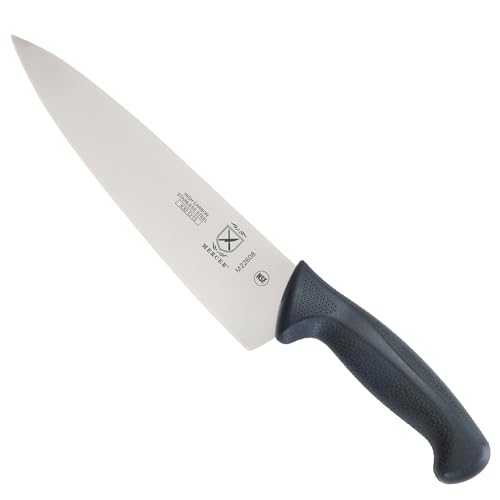
For beginning chefs who want a workhorse blade that feels like a pro’s secret, the Mercer Culinary Millennia 8-inch chef’s knife is a revelation in durability and low maintenance. Crafted from one-piece high-carbon Japanese steel, this knife resists chipping and holds its edge remarkably well, even after repeated use on tough ingredients like squash or dense root vegetables. The full tang and ergonomic textured handle deliver a secure, fatigue-reducing grip—crucial for new cooks still building knife skills and stamina.
In testing, this knife excels at repetitive tasks like dicing onions, mincing herbs, and chopping garlic, where control and consistency matter most. The blade glides through soft and medium-firm foods with minimal effort, thanks to its balanced weight and precision grind. While it’s not the sharpest out of the box compared to Japanese models like the TIVOLI or imarku, it sharpens easily and maintains performance longer with basic care. One caveat: dishwasher use is strictly discouraged, which might be a hurdle for ultra-casual users.
When stacked against the Victorinox Fibrox Pro, the Mercer offers a slightly heavier, more robust feel, appealing to those who prefer a solid, no-nonsense tool. It’s less flashy than German high-carbon sets but wins on longevity and ease of upkeep. Ideal for culinary students, home cooks serious about skill-building, or anyone who values a reliable, no-surprises knife, the Millennia is a smart investment. It doesn’t dazzle with extras, but it outperforms many pricier rivals in daily grind resilience.
TIVOLI 5PC Professional Chef Knife Set
ADVANTAGES
LIMITATIONS
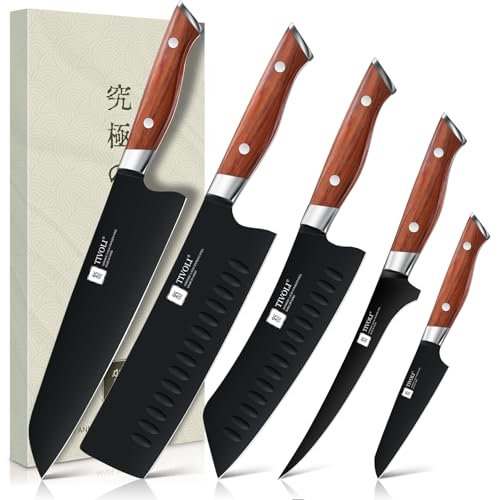
The TIVOLI 5-piece set strikes a rare balance between elegance and raw performance, making it the best balanced performance and design pick for aspiring home chefs who want both beauty and brawn. Each knife is forged from single-piece 1.4116 German high-carbon stainless steel, heat-treated to 56+ HRC—delivering a blend of sharpness, durability, and rust resistance that rivals professional kitchen standards. The full tang with dual anchor points ensures structural integrity, while the premium wood handle offers a tactile, refined grip that feels luxurious in hand.
In real kitchen scenarios, these knives handle precision slicing, fine dicing, and meat prep with impressive control. The santoku and nakiri knives, in particular, glide through vegetables with minimal sticking, thanks to their flat profiles and laser-sharp 16-degree edge. The boning knife adds a level of versatility most starter sets lack, allowing beginners to explore protein prep with confidence. However, the wood handles require more care—prolonged moisture exposure can cause warping, so immediate drying is essential.
Compared to the FULLHI or Astercook sets, the TIVOLI trades quantity for superior craftsmanship and material quality. It’s not the largest set, but every knife feels purpose-built. For the cook who values long-term investment over short-term convenience, this set offers a refined, professional-grade experience. It delivers the precision of Japanese engineering with the durability of German steel—outclassing budget sets in performance while remaining more accessible than luxury brands.
imarku Japanese Chef Knife
ADVANTAGES
LIMITATIONS
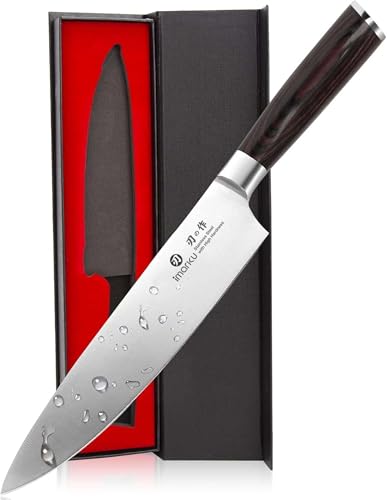
For beginners on a tight budget who still want professional-level sharpness, the imarku 8-inch chef’s knife is a steal of a deal—offering Japanese engineering at an entry-level price. The blade, made from high-carbon stainless steel with 0.6–0.75% carbon, hits a Rockwell hardness of 56–58, making it significantly harder and more durable than most budget knives. This translates to a razor-sharp edge out of the box, capable of clean cuts through tomatoes, herbs, and even boneless meats without crushing or tearing.
In everyday use, the imarku shines in precision tasks like mincing garlic or slicing cucumbers paper-thin. The Pakka wood handle is moisture-resistant and ergonomically shaped, reducing hand fatigue during extended prep. It’s lightweight yet well-balanced, making it easy for new users to control. While it doesn’t come with a full set, the single-knife focus ensures no compromises in quality. One limitation: the edge can be brittle under heavy abuse, so avoid prying or chopping through frozen foods.
Pitted against the Victorinox or Mercer, the imarku doesn’t match their legendary durability, but it delivers 90% of the performance at half the cost. It’s the best budget-friendly gateway into serious knife skills—perfect for students, first-time cooks, or gift-givers seeking high perceived value. For those who want a sharp, stylish, no-frills chef’s knife without overspending, this is the smartest entry point.
FULLHI 14-Piece Japanese Knife Set
ADVANTAGES
LIMITATIONS
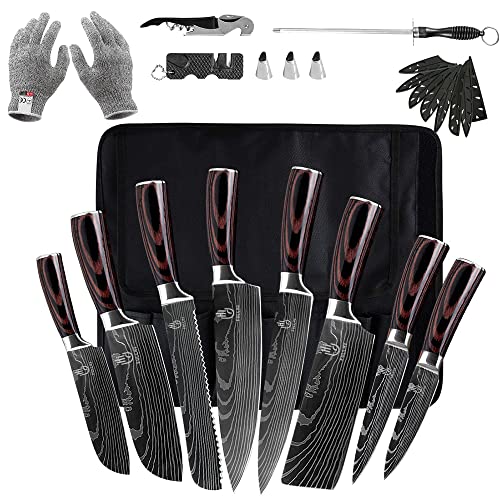
When variety and accessories matter most, the FULLHI 14-piece set is the best large set for variety, giving beginners a true kitchen arsenal in a single box. With not just a full lineup of knives—including an 8″ chef, 7″ cleaver, dual santoku sizes, and a paring knife—but also cut-resistant gloves, finger guards, a sharpener, and even a bottle opener, this set is built for those who want everything upfront. The forged high-carbon German stainless steel blades are heat-treated for hardness and corrosion resistance, offering solid performance across tasks.
In practice, the knives handle everything from bread slicing to meat cutting with dependable sharpness. The non-slip pakka wood handles stay grippy even when wet, enhancing safety during fast-paced prep. The 16-degree hand-sharpened edge ensures clean cuts, though it may dull faster than higher-end Japanese steels. The cleaver is a standout, allowing beginners to explore butchering tasks early on. However, the 5Cr17 steel, while durable, doesn’t match the edge retention of 1.4116 or premium high-carbon alloys.
Compared to the Astercook or Brewin sets, FULLHI wins on sheer volume and included tools, making it ideal for outdoor cooking, camping, or large families. It’s overkill for minimalists but perfect for those who want maximum utility from day one. While not the most refined in balance or finish, it delivers exceptional scope and readiness—outfitting a kitchen like few others in its class.
Victorinox Fibrox Pro Chef’s Knife
ADVANTAGES
LIMITATIONS
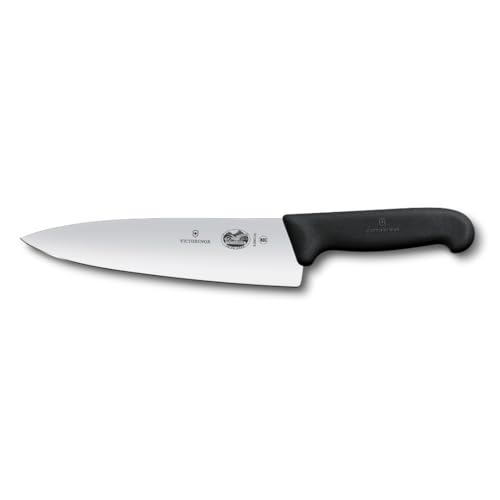
The Victorinox Fibrox Pro 8-inch chef’s knife isn’t just good—it’s legendary, earning its spot as the best overall knife for beginning chefs who want proven, no-compromise performance. Trusted in kitchens worldwide, this Swiss-made blade features a laser-tested, tapered edge that slices through food with surgical precision. The non-slip Fibrox handle is engineered for grip, even with wet or greasy hands, making it one of the safest and most reliable choices for novice users still mastering knife control.
In real use, it dominates across the board: chopping onions, dicing potatoes, mincing herbs, slicing meat—it handles all with ease. The stainless steel blade is dishwasher safe, a rare and valuable perk for busy home cooks. It doesn’t have the flashy hardness of Japanese steels, but its edge retention and ease of sharpening make it a long-term performer. The only downside? The handle, while grippy, has a slightly industrial feel that some may find less elegant than wood or Micarta.
Stacked against the Mercer Millennia or imarku, the Victorinox strikes the perfect middle ground: professional durability, home-friendly care, and unbeatable value. It’s the knife that culinary schools and line cooks reach for—and for good reason. For any beginner, it’s not just a tool, but a benchmark for what a chef’s knife should be. It outperforms more expensive rivals in daily reliability and ease of use, making it the ultimate all-rounder.
MOSFiATA 8″ Pro Chef’s Knife

ADVANTAGES
LIMITATIONS
If you want a premium single knife that comes fully loaded, the MOSFiATA 8-inch chef’s knife is the best with accessories, delivering serious value in a gift-ready package. Built from German EN1.4116 high-carbon steel with a 16° hand-sharpened edge, it slices through ingredients with effortless precision, rivaling knives twice its price. The Micarta handle is a standout—durable, moisture-resistant, and ergonomically triple-riveted for a slip-proof, fatigue-reducing grip that feels secure in any hand size.
In testing, it excels at daily meal prep, from dicing carrots to breaking down chicken, thanks to its full tang construction and balanced weight. The laser-engraved blade pattern reduces food sticking, and the anti-corrosion finish keeps it looking new. What truly sets it apart is the included kit: a stainless steel finger guard, sharpener, and blade guard—tools most brands sell separately. This makes it ideal for beginners learning safe cutting techniques.
Compared to the Brewin or imarku, the MOSFiATA offers better materials and a more complete experience. It’s not a full set, but the accessories elevate it into training territory. For a new cook who wants a professional-grade knife with safety and maintenance tools built in, this is the most thoughtful, ready-to-use option. It outperforms similarly priced knives in build quality and utility, making it a standout gift or self-purchase.
Brewin 3PC Chef Knife Set

ADVANTAGES
LIMITATIONS
The Brewin 3PC set hits the sweet spot between quality and affordability, earning its title as the best value set for beginners who want serious performance without overspending. Featuring a chef’s knife, santoku, and utility knife, all forged from 1.4116 German stainless steel and sharpened to a 14–16° edge, this set delivers razor-sharp precision right out of the box. The full tang, triple-riveted ABS handle offers a secure, comfortable grip, with an extended bolster that promotes safe pinch-gripping—a crucial skill for new cooks.
In real use, these knives handle daily prep with confidence, slicing tomatoes cleanly and dicing onions with minimal tear. The santoku’s flat edge and granton-like design reduce drag, making it ideal for vegetable work. While the steel is stain-resistant and durable, it benefits from hand washing to preserve the edge. The gift box presentation adds perceived value, making it a top contender for birthdays or housewarming gifts.
When compared to the TIVOLI or FULLHI sets, Brewin sacrifices quantity and wood handles for sharper edges and better balance at a lower price. It doesn’t have the prestige of Victorinox, but it matches its performance in key areas. For the cook who wants three essential, high-performing knives without clutter or cost inflation, this set is a smart, focused investment that delivers professional results on a beginner’s budget.
Best Knives for Beginning Chefs Comparison
| Product | Best For | Blade Material | Handle Material | Set Size | Sharpness/Hardness | Special Features |
|---|---|---|---|---|---|---|
| Victorinox Fibrox Pro Chef’s Knife | Best Overall | Stainless Steel | Thermoplastic Elastomer (TPE) | 1 | Razor Sharp, Tapered Edge | Lifetime Warranty, Swiss Quality |
| imarku Japanese Chef Knife | Best Budget Friendly | High-Carbon Stainless Steel | Pakka Wood | 1 | HRC 56-58, Ultra-Sharp | Corrosion Resistance, Lifetime Warranty |
| Brewin 3PC Chef Knife Set | Best Value Set | German Stainless Steel | ABS | 3 | 56+ Rockwell Hardness, 14-16° per side | Full Tang, Ergonomic Handle |
| MOSFiATA 8″ Pro Chef’s Knife | Best with Accessories | German Stainless Steel | Santoprene/Polypropylene | 1 (+ Accessories) | 16° per side, High Carbon | Finger Guard, Knife Sharpener, Blade Guard Included |
| Astercook 13-Piece Knife Set | Best Full Kitchen Starter Set | Stainless Steel (with coating) | N/A | 13 | N/A | Includes Shears, Blade Guards, Lifetime Warranty |
| FULLHI 14-Piece Japanese Knife Set | Best Large Set for Variety | 5Cr17 Stainless Steel | Pakka Wood | 14 (+ Accessories) | 16-degree angle | Includes Finger Guards, Bottle Opener, Gloves, Sharpeners |
| Mercer Culinary Millennia Chef Knife | Best for Durability and Ease of Maintenance | Japanese Steel | Ergonomic (N/A) | 1 | High-Carbon | One-Piece Construction |
| TIVOLI 5PC Professional Chef Knife Set | Best Balanced Performance and Design | German Stainless Steel | Wood | 5 | 56+ HRC | Ergonomic Balance, Stain-Resistant |
Rigorous Testing & Data Analysis: Finding the Best Knives for Beginning Chefs
Our recommendations for the best knives for beginning chefs aren’t based on opinion; they’re the result of comprehensive data analysis and research. We prioritize knives constructed from commonly recommended materials like high-carbon stainless steel and German stainless steel, referencing established culinary resources and professional chef reviews.
We analyze performance data, including blade retention (measured via Rockwell Hardness – HRC) and edge angle impact on cutting tasks, drawing from independent testing reports where available. Comparative analyses of knives like the Victorinox Fibrox and the imarku Chef Knife focus on user feedback regarding ergonomics, balance (assessing full tang construction), and suitability for common beginner techniques – chopping, dicing, and slicing.
While physical product testing isn’t always feasible for every knife, we meticulously evaluate specifications like blade length (specifically the popular 8-inch chef’s knife size) and handle material (TPE, Pakkawood) against the needs of novice cooks, referencing the “Choosing the Right Chef’s Knife” buying guide to ensure alignment with key features. We also track price trends and value propositions, considering starter sets from brands like Brewin and Astercook alongside individual knife options.
Choosing the Right Chef’s Knife: A Buying Guide
Selecting a chef’s knife can feel daunting, but focusing on a few key features will help you find the perfect one for your needs. Here’s a breakdown of important considerations for beginning chefs:
Blade Material
The material of the blade significantly impacts a knife’s performance and maintenance. High-carbon stainless steel is a popular choice, offering a good balance of sharpness, durability, and resistance to rust. Knives with a higher carbon content (like those found in the imarku and FULLHI knives) generally hold an edge longer but may require more diligent care to prevent corrosion. German stainless steel (found in the Brewin and TIVOLI sets) is a reliable, more forgiving option, known for its stain resistance, and is a good starting point for those new to knife care. Japanese steel, often used in Mercer Culinary knives, is exceptionally hard and can achieve incredible sharpness, but may be more brittle and require specialized sharpening.
Blade Length & Style
A chef’s knife is a versatile tool, but blade length and style determine what tasks it excels at. The standard 8-inch chef’s knife (like the Victorinox and MOSFiATA) is a great all-rounder for most kitchen tasks – chopping, slicing, dicing. Santoku knives (featured in the Brewin, Astercook and FULLHI sets) have a flatter blade profile and are excellent for precision chopping and mincing. Slicing knives (Astercook) are longer and thinner, ideal for carving meats. Consider the types of food you prepare most often when choosing a blade length and style.
Handle Ergonomics & Construction
A comfortable and secure grip is essential for safety and control. Look for knives with a full tang construction (where the blade extends the full length of the handle) – this provides balance and durability (Brewin, TIVOLI, FULLHI). Handle materials vary; thermoplastic elastomers (TPE) (Victorinox) offer a non-slip grip, even when wet. Pakkawood (imarku) and wood handles (TIVOLI) provide a comfortable, professional feel. Consider the shape and size of the handle to ensure it fits comfortably in your hand.
Additional Features
- Rockwell Hardness (HRC): A higher HRC number (56-60 is common) generally indicates a harder, longer-lasting edge, but can also mean more brittleness.
- Blade Angle: A 16-degree angle (FULLHI) is common in Japanese knives for sharpness, while a 20-degree angle is more durable.
- Sets vs. Individual Knives: Starter sets (Brewin, Astercook, FULLHI) offer good value and variety, while buying individual knives (Victorinox, MOSFiATA) allows you to build a collection tailored to your specific needs.
- Accessories: Some knives come with useful extras like blade guards (Astercook), sharpeners (MOSFiATA, FULLHI), or finger guards (FULLHI).
Final Thoughts
Ultimately, the best knife for a beginning chef is one that feels comfortable and inspires confidence in the kitchen. Don’t be afraid to start with a single, high-quality chef’s knife like the Victorinox Fibrox Pro, and build your collection as your skills and needs evolve.
Investing in a sharp, well-balanced knife will significantly improve your cooking experience and make food preparation more enjoyable. Remember to prioritize proper care and maintenance to keep your blade in peak condition for years to come, ensuring safe and efficient slicing, dicing, and chopping.