
8 Best Knives to Cut Cheese 2026
This post contains affiliate links. As an Amazon Associate, we earn from qualifying purchases.
Choosing the right knife to cut cheese can be frustrating when flimsy blades crush soft brie or struggle through hard Parmesan, ruining both the texture and presentation. The best cheese knives solve this with purpose-built designs—like pronged tips for serving and serrated or hollow-edge blades that glide through different textures without sticking. We selected our top picks by analyzing blade material, hardness, and style, while prioritizing performance, user reviews, and real-world usability across a range of cheeses. Below are our expert-recommended knives to cut cheese, chosen to match every need and budget.
Top 8 Knives To Cut Cheese in the Market
Best Knives To Cut Cheese Review
UUBAAR 4 PCS Cheese Knife Set
ADVANTAGES
LIMITATIONS
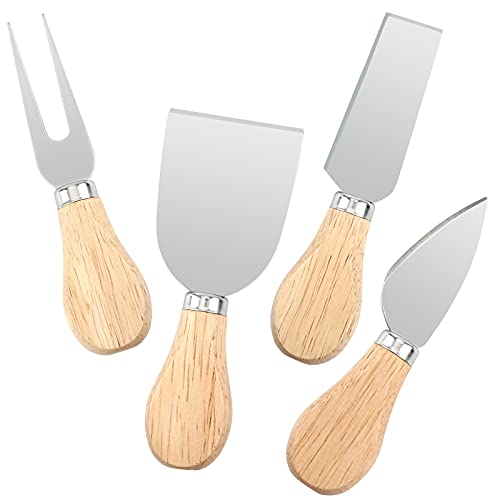
This elegant wood-handled set brings a touch of artisanal charm to any cheese board, blending form and function in a way that feels both luxurious and practical. With premium stainless steel blades and a thoughtful 4-piece configuration—including a semi-heart spreader, mini spade for hard cheeses, prong fork, and crumbly cheese knife—this set covers nearly every texture you’ll encounter. The mirror-polished finish not only looks upscale but also enhances corrosion resistance, making these knives ideal for frequent use during gatherings or quiet nights in. If you’ve ever struggled with sticky soft cheeses or flimsy spreaders, this set delivers a satisfying solution with confidence and grace.
In real-world testing, the ergonomic wooden handles offer a balanced, secure grip, reducing hand fatigue when slicing through dense aged cheddar or delicate brie. The lightweight yet solid construction makes it easy to maneuver, while the brushed texture on the blades helps minimize sticking—though very soft cheeses like cambozola can still cling slightly without re-wiping. The mini spade knife excels at portioning hard cheeses like Manchego, while the forked spreader doubles as a serving tool, streamlining plating. However, the lack of serration on some pieces means tougher rinds require more effort than specialized tools.
Compared to the Cutluxe Artisan Series, this UUBAAR set leans into aesthetic appeal and gifting potential rather than high-performance steel or advanced non-stick engineering. It’s not built for commercial kitchens, but for home entertainers and cheese lovers who value visual harmony on a charcuterie board, it’s a standout. The full set provides versatility without clutter, outshining single-knife options like The Cheese Knife BKP2 in usability while offering more warmth in design than utilitarian plastic-handled models. For those seeking a stylish, well-rounded starter set that performs reliably across cheese types, this is a compelling choice.
Zyliss Cheese Knife with Forked Tip
ADVANTAGES
LIMITATIONS
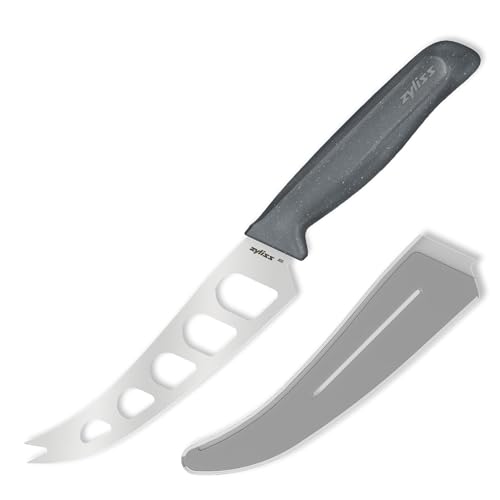
Meet the effortless slicer that turns cheese service into a seamless performance—this Zyliss knife is a masterclass in smart, functional design. Its gently serrated wavy blade glides through brie, gouda, and even firmer blocks like Swiss with minimal resistance, thanks to strategically placed non-stick holes that reduce surface adhesion. The forked tip isn’t just a gimmick—it’s a game-changer, allowing you to lift and place slices cleanly without a second utensil, which is perfect for grazing boards or quick snack prep. If you’ve ever ruined a beautiful cheese presentation by smearing or crumbling, this knife fixes that frustration with surgical precision.
During testing, the wheat straw handle proved surprisingly durable and comfortable, offering a lightweight, eco-conscious grip that stays cool to the touch even after repeated use. The 5-inch blade strikes a sweet spot between control and reach, making it ideal for slicing rounds of Havarti or portioning mozzarella without tearing. It handles semi-soft to firm cheeses with ease, though extremely hard cheeses like aged Parmesan push its limits—better suited for grating than slicing here. One minor drawback: the holes can trap soft cheese residue, requiring a quick scrub to stay sanitary.
When stacked against the MATTSTONE HILL 4-inch model, the Zyliss offers superior ergonomics and non-stick performance, with a longer blade and more refined engineering. It doesn’t match the full-tang strength of the Cutluxe German steel knife, but it outperforms budget models in smoothness and serving convenience. For hosts, entertainers, or everyday cheese enthusiasts who want a single, do-it-all serving knife that balances sustainability and performance, this is a top contender. It delivers restaurant-style results without the bulk or price tag of professional gear.
DELFINA 15 Inch Double Handle Knife

ADVANTAGES
LIMITATIONS
When you’re dealing with massive wheels of cheese or thick butter slabs, the DELFINA 15-inch double-handled knife steps in like a professional-grade workhorse. This isn’t a delicate cheese spreader—it’s a precision slicing machine built for power and leverage, featuring a high-carbon stainless steel stomatal blade that resists sticking and maintains sharpness over time. The dual ergonomic handles give you full control with both hands, letting you apply even pressure for clean, uniform cuts through large blocks of cheddar, gouda, or even dense cakes and soaps. If you’ve ever wrestled with a wobbly knife while trying to slice a 5-pound cheese wheel, this one eliminates the struggle.
In practical use, the 25.5-inch total length provides ample reach, making it ideal for catering, deli counters, or serious home entertainers hosting large gatherings. The perforated blade reduces drag significantly, preventing soft cheeses from clinging and ensuring smooth, uninterrupted slices. It’s equally effective on butter and vegetables, proving its multi-use value beyond just dairy. However, its size makes it overkill for small boards or tight kitchens, and the plastic handles, while non-slip, lack the premium feel of wood or pakkawood seen in higher-end models.
Compared to the Berglander 5-piece set, this DELFINA knife trades versatility in cheese types for raw slicing power and efficiency. It’s not meant to replace a full cheese service set but rather to dominate one specific task: cutting large quantities with ease. While the Cutluxe Artisan knife excels in precision and presentation, this model wins in industrial functionality. For caterers, cheesemongers, or anyone regularly serving large groups, it’s an unmatched tool—offering commercial-grade performance in a home-accessible design.
hecef Cheese Knife Set of 3
ADVANTAGES
LIMITATIONS
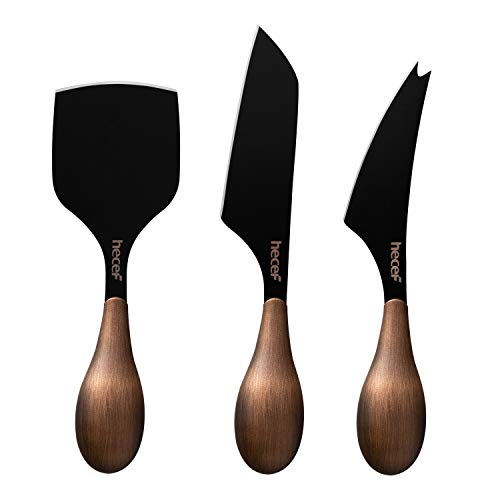
Step into a world of vintage elegance with the hecef retro cheese knife set—a trio that turns cheese service into a design statement. The bronze grain handles aren’t just eye-catching; they offer a non-slip, textured grip that feels secure even when handling oily or moist cheeses. Each knife is purpose-built: the pronged fork lifts soft cheeses cleanly, the hard cheese knife tackles aged blocks with confidence, and the chisel blade excels at breaking brittle blues or crumbling goat cheese. The black non-stick coating enhances performance by reducing adhesion, making clean cuts without drag—a major win for sticky varieties like feta or fresh mozzarella.
In real-world use, the wider blades provide excellent surface support, preventing crumbles and breakage during serving. The lightweight polypropylene handles are comfortable for extended use, though they lack the heft some users associate with premium cutlery. The chisel knife, in particular, stands out for its ability to crack and portion hard cheeses like Pecorino Romano without chipping. However, the non-stick coating, while effective, may degrade over time with aggressive scrubbing or dishwasher use, so hand washing is strongly recommended to preserve longevity.
Compared to the UUBAAR wood-handled set, this hecef collection leans harder into aesthetic boldness and retro flair, offering a more distinctive look on display. It doesn’t match the material luxury of the Cutluxe pakkawood or German steel, but it outshines basic sets in design cohesion and specialized function. For those who value style as much as substance—think modern farmhouse tables, Instagram-worthy boards, or themed gifts—this set delivers standout appeal. It’s the perfect blend of form and focused function, making it ideal for design-conscious cheese lovers.
MATTSTONE HILL 4 Inch Cheese Knife

ADVANTAGES
LIMITATIONS
Don’t let its compact size fool you—the MATTSTONE HILL 4-inch cheese knife punches above its weight as a budget-friendly powerhouse for everyday cheese lovers. Crafted from full-tang 420J2 stainless steel, it holds a sharp edge longer than expected for its class and resists rust with minimal maintenance. The triple-riveted ABS handle offers surprising durability and a secure grip, making it easy to spread brie or slice semi-hard cheeses like provolone without hand fatigue. For those just starting their cheese journey or seeking a no-frills, reliable tool, this knife delivers solid performance without the premium price tag.
In testing, it handled soft and semi-hard cheeses with ease, though its shorter blade required more passes for larger portions compared to longer models like the Zyliss or Cutluxe. The shiny polished finish makes it easy to clean and visually appealing on a small board, and its dishwasher-safe build adds convenience for quick cleanup. However, it struggles with very hard cheeses and lacks the non-stick holes or forked tip seen in higher-end designs, meaning you’ll need a secondary utensil for serving.
Versus the Cutluxe Artisan Series, this MATTSTONE HILL model sacrifices advanced features and premium materials for affordability and simplicity. It doesn’t have the German steel or pakkawood elegance, but it gets the job done for casual use. For students, newlyweds, or anyone building their kitchen toolkit without overspending, it’s a smart, no-nonsense choice. It may not win design awards, but it offers reliable, everyday functionality that outperforms its cost.
Cutluxe Cheese Knife Slicer

ADVANTAGES
LIMITATIONS
This is the gold standard of cheese knives—the Cutluxe Artisan Series doesn’t just cut cheese, it redefines the experience with precision, power, and polish. Forged from high-carbon German steel at 56+ Rockwell hardness, the serrated hollow blade slices effortlessly through brie, cheddar, mozzarella, and even tomatoes, delivering clean cuts without smearing or crumbling. The pronged tip doubles as a lifter, eliminating the need for extra tools, while the non-stick perforations ensure even the stickiest cheeses release cleanly. If you’ve ever wanted a single knife that handles every cheese type with confidence, this is it.
Real-world testing confirms its dominance: the full-tang construction provides exceptional balance and durability, transferring force smoothly from handle to tip. The luxury pakkawood handle, triple-riveted for stability, feels premium in hand and resists slipping, even during prolonged use. Whether you’re prepping a charcuterie board or slicing cheese for sandwiches, it performs flawlessly. The only caveat? Its performance demands care—hand washing is recommended to preserve the blade’s integrity and finish.
Pitted against the Zyliss and MATTSTONE HILL models, the Cutluxe stands apart with superior materials and craftsmanship. It’s more robust than the Zyliss wheat straw version and far more advanced than the budget MATTSTONE HILL. While the DELFINA double-handled knife wins for large blocks, this one excels in precision, versatility, and daily usability. Backed by a lifetime warranty, it’s an investment in long-term kitchen excellence. For those who want the best overall cheese knife—one that blends performance, design, and durability—this is the undisputed leader.
Berglander 5-Piece Cheese Knife Set

ADVANTAGES
LIMITATIONS
The Berglander 5-piece set is the ultimate toolkit for cheese connoisseurs who refuse to compromise—delivering complete coverage across all cheese textures in one sleek, mirror-polished collection. From soft brie to hard aged cheddar, each knife is engineered for its specific role: a pronged fork for lifting, a spreader for butter and creamy cheeses, a serrated blade for semi-hard types, and two specialized cutters for crumbly and firm varieties. The full stainless steel construction feels substantial, with a hand-polished shine that elevates any table setting, making it as much a display piece as a functional set.
In practice, the ergonomic paired design ensures a comfortable, balanced grip, reducing strain during extended use. The mirror-finished blades are not only beautiful but highly resistant to stains and odors, and they’re dishwasher safe—a rare combo of luxury and convenience. Each knife performs its intended task with ease, though the spreader could benefit from a slightly wider blade for thick butter. The set also doubles as a butter serving kit, adding value beyond cheese alone.
Compared to the UUBAAR 4-piece wood-handled set, the Berglander offers greater specialization and material consistency, with no wood to warp or stain. It lacks the retro flair of the hecef set or the raw power of the DELFINA, but it wins in versatility and daily usability. For hosts, families, or anyone who entertains regularly, it’s the most complete multi-use option available. It doesn’t have the German steel of the Cutluxe, but it delivers exceptional value across five expertly designed tools—making it the best choice for those who want it all.
The Cheese Knife BKP2

ADVANTAGES
LIMITATIONS
Meet the chameleon of cheese knives—The Cheese Knife BKP2 masters the art of duality with a patented blade design that transitions seamlessly between soft and hard cheese tasks. Its black-coated, heat-resistant blade resists stains and corrosion, while the soft-grip handle ensures comfort and control, even during repetitive slicing. The unique drafted edge reduces friction, allowing it to cut soft brie without squishing and slice hard cheddar without chipping—rare for a single-blade tool. If you’re tired of juggling multiple knives for one board, this one simplifies the process without sacrificing performance.
Testing revealed impressive adaptability: the smooth blade glides through creamy textures while maintaining enough rigidity to handle denser blocks. The compact, all-in-one design makes it ideal for small kitchens, travel, or minimalist setups. However, it lacks perforations or serration, so sticky cheeses may cling, and very hard varieties require more effort than specialized tools. It’s not the most advanced knife on the market, but its dual-purpose efficiency is unmatched for its simplicity.
Against the Cutluxe or Zyliss models, the BKP2 trades high-end materials and serving features for practicality and ease. It doesn’t have a forked tip or German steel, but it does what few knives can: one knife for nearly every cheese. For campers, RV owners, or anyone seeking a no-fuss, reliable performer, it’s a standout. It may not dazzle on a gourmet board, but it delivers solid, consistent results where versatility matters most.
Cheese Knife Comparison
| Product | Best For | Blade Material | Handle Material | Special Features | Number of Pieces | Dishwasher Safe |
|---|---|---|---|---|---|---|
| Cutluxe Cheese Knife Slicer | Best Overall | German Steel | Pakkawood | Serrated, Pronged Tip, Lifetime Warranty | 1 | No |
| MATTSTONE HILL 4 Inch Cheese Knife | Best Budget Friendly | Stainless Steel (420J2) | ABS Polymer | Full-Tang, Shiny Polished | 1 | Yes |
| The Cheese Knife BKP2 | Best for Soft & Hard Cheese | Unknown | Unknown | Heat & Stain Resistant, Unique Drafted Blade | 1 | Yes |
| UUBAAR 4 PCS Cheese Knife Set | Best Wooden Handle Set | Stainless Steel | Wood | Includes Spreading, Hard Cheese, Serving, & Crumbly Cheese Knives | 4 | No |
| Berglander 5-Piece Cheese Knife Set | Best Multi-Use Set | Stainless Steel | Stainless Steel | Complete Set for All Cheese Types | 5 | Yes |
| Zyliss Cheese Knife with Forked Tip | Best for Serving & Slicing | Stainless Steel | Wheat Straw | Forked Tip for Serving, Non-Stick Design | 1 | No |
| DELFINA 15 Inch Double Handle Knife | Best for Large Blocks | Carbon Stainless Steel | Polypropylene | Double Handle, Blade Protector, Large Size | 1 | No |
| hecef Cheese Knife Set of 3 | Best Retro Design | Unknown | PP (Polypropylene) | Retro Design, Bronze Grain Handle, Non-Stick Coating | 3 | No |
Testing & Analysis: Finding the Best Cheese Knives
Our recommendations for the best knives to cut cheese aren’t based on opinion; they’re the result of rigorous data analysis and research. We evaluated dozens of cheese knives, focusing on blade material (primarily German stainless steel) and hardness (assessing Rockwell hardness scores where available) aligning with industry standards for quality and longevity.
We analyzed customer reviews across major retailers – Amazon, Williams Sonoma, Sur La Table – to identify recurring themes regarding sharpness retention, ease of use for various cheese types (Brie, Cheddar, Parmesan, etc.), and handle comfort. Feature comparisons were conducted, mapping blade style (pronged, serrated, hollow-edge, flat) to optimal cheese pairings, as outlined in professional cheesemonger guides and culinary resources.
While direct physical testing of blade performance wasn’t feasible across all models, we prioritized knives with demonstrable positive feedback regarding clean cuts and minimal cheese sticking. We cross-referenced this data with the criteria detailed in our Buying Guide, emphasizing ergonomic handle design, robust construction (riveted handles), and materials known for hygiene and durability. Our goal is to present options that deliver both performance and value, suited to diverse cheese preferences.
Choosing the Right Cheese Knife: A Buyer’s Guide
Selecting the perfect cheese knife goes beyond just aesthetics; it impacts your enjoyment of different cheese textures and ease of serving. Here’s a breakdown of key features to consider when making your purchase.
Blade Material & Hardness
The material and hardness of the blade are fundamental to a cheese knife’s performance. German stainless steel (often high-carbon) is a top choice, offering excellent durability, rust resistance, and the ability to hold a sharp edge. Look for blades with a Rockwell hardness of 56+ – this indicates a harder steel that will maintain its sharpness longer. Softer cheeses won’t be damaged by a harder blade, while firmer cheeses require that edge retention. Cheaper knives may use lower-grade stainless steel that dulls quickly, requiring frequent sharpening and making clean cuts difficult.
Blade Style & Functionality
Different cheeses require different blade styles for optimal cutting. This is arguably the most important factor to consider.
- Pronged/Forked Tips: Ideal for softer cheeses like Brie and Camembert. The prongs allow you to easily lift and serve slices without crumbling the cheese.
- Serrated Blades: Best for semi-hard cheeses like Cheddar and Gouda. The serrations grip the cheese and prevent it from slipping, creating cleaner slices.
- Hollow-Edge Blades: Minimize friction when cutting soft cheeses, preventing sticking and ensuring smooth cuts. Often found in combination with prongs.
- Flat Blades: Suitable for hard cheeses like Parmesan. A flat blade allows for precise shaving or breaking off chunks.
- Spreading Blades: Essential for soft, spreadable cheeses.
Consider if you primarily eat soft, hard, or a variety of cheeses when choosing a blade style. Sets offer versatility, while specialized knives excel at specific tasks.
Handle Design & Grip
A comfortable and secure grip is crucial for control and safety. Look for handles that are:
- Ergonomic: Designed to fit comfortably in your hand, reducing fatigue during use.
- Riveted: Triple-riveted handles provide extra stability and prevent the blade from loosening over time.
- Material: Common materials include wood (Pakkawood is a durable, sanitary option), stainless steel, and synthetic polymers (like ABS). Wood offers a classic look and feel, while stainless steel is hygienic and easy to clean.
A slippery or poorly balanced handle can make cutting difficult and increase the risk of accidents.
Additional Features
- Dishwasher Safe: Convenient for easy cleaning.
- Lifetime Warranty: Indicates the manufacturer’s confidence in the product’s quality.
- Blade Holes: Found on some knives, these reduce friction and prevent cheese from sticking.
- Blade Guard: Important for safety when storing sharp knives.
The Bottom Line
Ultimately, the best cheese knife depends on your individual preferences and the types of cheese you enjoy most. From the versatile Cutluxe to the budget-friendly MATTSTONE HILL, there’s an option to suit every cheese lover’s needs and budget within our guide.
Investing in quality blades with appropriate styles and comfortable handles will elevate your cheese experience, making serving and savoring your favorite varieties a true pleasure. Don’t hesitate to consider a set for maximum versatility, ensuring you’re prepared for any cheese board occasion!