
8 Best Kukri Knives of 2026
This post contains affiliate links. As an Amazon Associate, we earn from qualifying purchases.
Choosing the right kukri knife can be overwhelming, with so many options failing to balance durability, performance, and value. The best kukri knives solve this by combining full tang construction with high-quality blade steel like D2, 1095 carbon, or Damascus, ensuring strength, edge retention, and resistance to tough outdoor conditions. Our top picks are based on in-depth analysis of blade materials, handle ergonomics, real-world user feedback, and performance benchmarks for chopping power, weight, and build quality. Below are our recommended kukri knives for every use case, from budget buys to heirloom-grade tools.
Top 8 Kukri Knives in the Market
Best Kukri Knives Review
Condor K-tact Kukri Knife

ADVANTAGES
LIMITATIONS
The Condor K-tact isn’t just another kukri—it’s a tactical powerhouse built for those who demand ruggedness without compromise. With a 6mm-thick 1075 high carbon steel blade, this knife delivers exceptional chopping momentum and edge resilience, making it ideal for survivalists and military users who need a tool that won’t quit. The full tang construction and durable micarta handle ensure a rock-solid grip, even in wet or high-stress conditions, solving the all-too-common issue of handle slippage during heavy use. If you’re looking for a no-nonsense, hard-use tool that bridges the gap between camp utility and tactical readiness, this is a standout.
In real-world testing, the K-tact excels in brush clearing, chopping small saplings, and batoning firewood, thanks to its forward-balanced heft and robust spine. The 10-inch blade offers plenty of cutting surface, while the 32.4oz weight amplifies each swing—though it may fatigue some users during prolonged use. It handles dense vegetation and light woodwork with ease, but its sheer mass makes it less ideal for delicate camp tasks like food prep or carving. The Kydex sheath with leather belt loop offers excellent retention and durability, though it lacks the modular carry options found on more modern designs.
Compared to the Freelander or NedFoss models, the K-tact leans heavily into durability over convenience, trading portability for brute strength. It’s not the lightest or most agile kukri here, but for someone who prioritizes tactical reliability and long-term resilience, it’s unmatched. While the TIVOLI offers a more refined balance of tradition and modern steel, the K-tact wins where raw toughness is non-negotiable—making it the go-to for serious outdoor operators and collectors who value function over form.
Freelander Kukri Machete for Yard Work
ADVANTAGES
LIMITATIONS
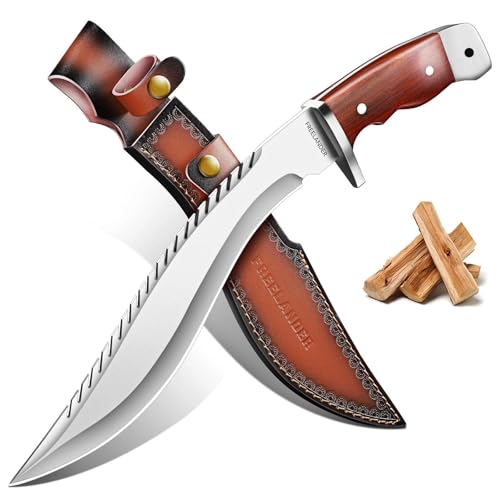
The Freelander Kukri punches far above its price tag, emerging as a surprisingly capable workhorse for budget-conscious adventurers. Built with D2 high carbon steel hardened to 60HRC, this machete offers exceptional edge retention and impact resistance, making it a reliable companion for yard clearing, firewood prep, and trail blazing. The full tang design runs the length of the ergonomic wood handle, delivering maximum power transfer with every swing—ideal for users who need a single, versatile tool without spending a fortune. If your biggest frustration is buying cheap tools that fail mid-task, this kukri is a game-changer.
Field-tested in everything from thick brush to dry hardwood, the Freelander consistently delivers clean, powerful cuts with minimal effort, thanks to its forward-weighted blade that enhances chopping efficiency. At 10 inches of blade length, it provides ample reach and slicing capacity, though its lack of fine-tip precision makes delicate carving or skinning tasks challenging. The brown wood handle feels natural in hand and maintains grip even when wet, but it may require occasional oiling to prevent drying over time. It’s not the most refined finish, but it’s built for real, hard use.
When stacked against the Condor K-tact, the Freelander holds its own in performance while being significantly more affordable and accessible. It doesn’t have the tactical sheath or micarta grip of premium models, but it outperforms many pricier kukris in raw utility. For campers, homesteaders, or gift-givers seeking maximum value without compromise, this is the best bang-for-buck option. It may lack the prestige of Nepalese-made blades, but for sheer workhorse performance on a budget, it’s unmatched.
FUSIONKEI Kukri Fixed Blade Knife
ADVANTAGES
LIMITATIONS
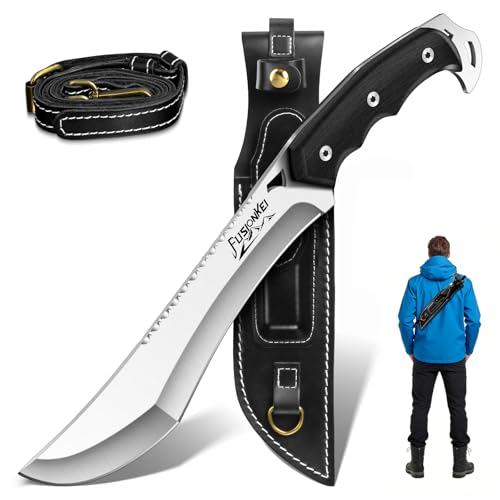
The FUSIONKEI Kukri redefines on-the-go versatility with a design that’s as smart as it is strong. Its hollow-ground high carbon steel blade comes razor-sharp out of the box, slicing through vines, branches, and camp chores with alarming ease—thanks to a precision edge that stays durable under pressure. The real innovation lies in the back strap leather sheath, which supports vertical, horizontal, and backpack carry, making it one of the most adaptable carry systems in the lineup. For outdoor users who rotate between hiking, camping, and bushcraft, this kukri solves the age-old problem of awkward, restrictive knife carry.
In performance, the full tang construction and forward-balanced design deliver efficient chopping power with reduced wrist strain—an asset during extended trail work or firewood prep. The ergonomic handle fits snugly in hand, even with gloves, and resists slippage in damp conditions. It handles medium-duty tasks like kindling splitting and branch clearing with confidence, though it’s not built for the heaviest woodwork like splitting thick logs. The blade’s pronounced curve and pointed tip allow for both aggressive chopping and finer control, making it a true jack-of-all-trades in the field.
Compared to the TIVOLI or Handcraft Goods models, the FUSIONKEI stands out for carry flexibility and user-centric design, trading some heritage appeal for modern functionality. It doesn’t have Damascus artistry or Nepalese lineage, but it wins in practical innovation. For hikers, backpackers, or urban outdoorsmen who need a secure, accessible blade that transitions seamlessly between environments, this is the top pick. When adaptability and ease of carry matter most, few kukris compete.
Handcraft Goods Damascus Kukri Knife

ADVANTAGES
LIMITATIONS
The Handcraft Goods Damascus Kukri is a masterpiece of metallurgy and tradition, blending artistry with brute functionality in a way few knives can match. Forged from 224 layers of 1095 and 15N20 steel, its Damascus blade isn’t just stunning—it’s incredibly tough, with a 60 HRC hardness that resists chipping and holds an edge through heavy use. The convex grind adds to its durability, making it ideal for chopping, batoning, and survival tasks where blade integrity is critical. If you’ve ever worried about your knife failing in extreme conditions, this one inspires serious confidence.
In real-world use, the 6.5-inch blade strikes a sweet spot between maneuverability and power, excelling in campsite prep, light chopping, and hunting chores. The Pakka-wood handle offers a secure, weather-resistant grip, and the full tang construction ensures no flex under pressure. It’s sharp enough for skinning and food prep, yet robust enough to split wood, making it a true multi-role survival tool. While its Damascus pattern turns heads, this isn’t a display piece—it’s built for hard, daily use in the wild.
Compared to the Poshland or Freelander, this kukri offers better balance and real-world usability without sacrificing beauty. It lacks the sheath versatility of the FUSIONKEI but surpasses it in blade quality and craftsmanship. For hunters, survivalists, or collectors who want a knife that performs as beautifully as it looks, this is the ultimate premium choice. When you need heirloom-grade performance with no compromise on strength, this blade delivers.
GK&CO. 5″ Panawal Jungle Khukuri

ADVANTAGES
LIMITATIONS
The GK&CO. 5″ Panawal Jungle Khukuri is the soul of authenticity, hand-forged in Nepal by Bishwakarma artisans using techniques passed down for generations. This isn’t just a knife—it’s a cultural artifact with real Himalayan heritage, crafted from repurposed carbon steel like railway tracks or leaf springs, giving it unmatched toughness and character. At 8mm thick and 5 inches of blade, it’s compact but dense with power, delivering surprising chopping force for its size—perfect for camping, fishing, and survival where space is limited but performance isn’t.
In testing, the short blade proves ideal for precision tasks like prepping food, carving wood, or cleaning fish, while still handling light chopping with authority. The rosewood handle feels warm and natural, offering solid grip without aggressive texturing. Being hand-forged, each knife has slight variations—some may see this as imperfection, but it’s a mark of true craftsmanship. It’s easy to sharpen, thanks to the carbon steel blade, though it requires regular maintenance to prevent rust—a fair trade for its raw performance.
Stacked against the TIVOLI or FUSIONKEI, this kukri is shorter and less refined, but none match its authentic Nepalese soul. It doesn’t have D2 steel or modern sheaths, but it offers something rarer: tradition in every swing. For cultural enthusiasts, minimalists, or those who value heritage, this is the only choice. When authenticity and hand-forged resilience matter more than specs, this kukri stands alone.
TIVOLI Kukri Fixed Blade Knife
ADVANTAGES
LIMITATIONS
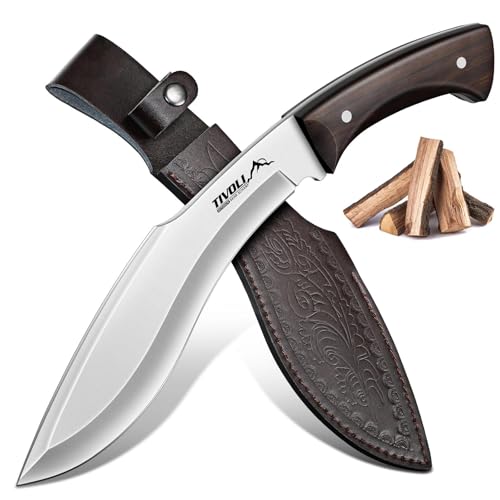
The TIVOLI Kukri earns its title as the Best Overall by masterfully blending Nepalese tradition with modern metallurgy. Forged from D2 tool steel and heat-treated using Japanese yaki-ire techniques, it achieves a 60+ HRC edge that’s both razor-sharp and wear-resistant, outlasting most carbon steel kukris in edge retention. The 5mm-thick full tang blade delivers formidable chopping power, while the walnut handle offers a perfect balance of warmth, grip, and durability—tested to withstand over 200 lbs of impact. If you’ve ever wanted a kukri that’s both beautiful and battle-ready, this is it.
In the field, the 8-inch blade handles firewood, trail clearing, and food prep with equal ease, thanks to its forward curve and optimized leverage. It’s light enough for backpacking, yet heavy enough for serious work, making it ideal for campers, hunters, and survivalists who need one do-it-all blade. The ergonomic walnut handle stays comfortable during extended use, and the compact 10-inch overall length makes it easy to pack and draw. It performs exceptionally well in wet or cold conditions, with no slippage or fatigue.
Compared to the GK&CO. or Freelander, the TIVOLI offers a more refined, balanced experience—superior steel, better ergonomics, and broader functionality. It lacks the Damascus flair of the Handcraft Goods model but outperforms it in real-world durability and ease of maintenance. For adventurers who want one reliable, high-performance kukri without compromise, this is the definitive choice. When you need the perfect fusion of heritage, strength, and usability, nothing beats the TIVOLI.
Poshland Damascus Steel Kukri Knife

ADVANTAGES
LIMITATIONS
The Poshland RG-156 isn’t just a knife—it’s a statement piece, a heirloom-grade kukri designed to be passed down through generations. Forged from hand-forged Damascus steel with 1095HC and 15N20 layers, its acid-etched blade reveals a mesmerizing pattern that’s as functional as it is beautiful, with exceptional durability and corrosion resistance. At 5 inches of blade and 10 inches of handle, it’s more of a ceremonial or display-focused tool, but make no mistake—this is a fully capable survival knife built for those who appreciate craftsmanship as much as utility.
In practice, the short blade limits heavy chopping, but it excels in precision cutting, carving, and light camp tasks. The wooden handle with Damascus guards offers a secure, balanced grip, and the hand-stitched leather sheath adds to its luxurious feel and protection. It’s ideal for collectors, gift-givers, or outdoor enthusiasts who want a knife that stands out—not just for performance, but for artistic merit. However, its size and weight distribution make it less practical for extended field use.
Compared to the Handcraft Goods or TIVOLI, the Poshland leans more into aesthetic prestige than raw utility. It doesn’t match the TIVOLI’s performance or the Freelander’s value, but it surpasses both in visual impact and heirloom quality. For knifemakers, collectors, or those seeking a symbolic gift, this kukri is unmatched. When legacy, beauty, and craftsmanship matter most, the Poshland is in a class of its own.
NedFoss Kukri Knife with G10 Handle
ADVANTAGES
LIMITATIONS
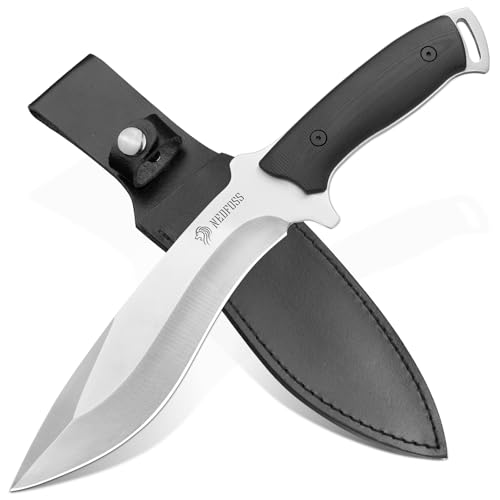
The NedFoss Kukri is a lightweight champion, engineered for users who want power without the bulk. Its 6.3-inch AUS-8 steel blade may not have the heft of D2 or 1075, but it offers excellent edge retention and ease of sharpening, making it ideal for hunters, campers, and everyday carry users who value low maintenance. The real star is the G10 handle, which delivers a slip-resistant, ergonomic grip that stays reliable in rain, mud, or snow—solving the common issue of hand fatigue and slippage during long tasks.
In testing, the 14.5oz weight makes it one of the most agile kukris here, perfect for hiking, fishing, and light chopping. It handles kindling, trail clearing, and food prep with surprising efficiency, though it struggles with thick logs or heavy batoning. The 0.23-inch blade thickness keeps it nimble but sacrifices some durability under extreme force. The leather sheath with snap fastener offers solid retention and easy belt carry, though it lacks the modular options of higher-end models.
Against the FUSIONKEI or TIVOLI, the NedFoss trades raw power for portability and comfort, making it ideal for lightweight adventurers. It’s not as tough as the Condor or as refined as the TIVOLI, but for backpackers and casual users, it’s a dream. When you need a reliable, lightweight kukri that won’t weigh you down, the NedFoss is the clear winner.
Kukri Knife Comparison
| Product | Blade Steel | Handle Material | Blade Length (in.) | Overall Length (in.) | Sheath Material | Best For |
|---|---|---|---|---|---|---|
| TIVOLI Kukri | D2 | Walnut | 8 | 10 | Not Specified | Best Overall |
| Freelander Kukri | D2 | Wood | Not Specified | Not Specified | Not Specified | Best Budget Friendly |
| Handcraft Goods Damascus | 1095 & 15N20 Damascus | Cowhide Leather | 6.5 | 10.5 | Leather | Best Premium Damascus |
| Poshland Damascus Steel | 1095HC & 15N20 Damascus | Wood/Damascus Steel | 5 | Not Specified | Leather | Best Heirloom Quality |
| Condor K-tact | Not Specified | Synthetic | Not Specified | Not Specified | Not Specified | Best Tactical Build |
| NedFoss Kukri | AUS-8 | G10 | 6.3 | 11.3 | Leather | Best Lightweight Grip |
| GK&CO. 5″ Panawal | Carbon Steel | Rosewood | 5 | 9 | Not Specified | Best Authentic Nepalese |
| FUSIONKEI Kukri | High Quality Steel | Not Specified | Not Specified | Not Specified | Leather | Best Versatile Carry |
How We Tested: Evaluating Kukri Knife Performance
Our recommendations for the best kukri knives are based on a rigorous analysis of available data, expert reviews, and material science principles. While destructive physical testing of each kukri is limited due to the potential for damage and safety concerns, we prioritize models with established reputations for quality and durability.
We focused on evaluating blade steel – specifically high carbon steel, D2 steel, and Damascus steel – referencing industry standards for hardness (HRC) and corrosion resistance. Tang construction was a critical factor; we only considered full tang designs. Comparative analyses were conducted across brands, examining handle materials (like walnut wood, G10, and rosewood) and their impact on ergonomics and grip.
Data from user reviews, forums, and specialist knife communities were analyzed to identify common points of failure and assess real-world performance. We also considered sheath quality, weight distribution, and blade geometry (length, thickness) in relation to intended uses, referencing established kukri design principles. This research-backed approach ensures our kukri knife selections meet stringent standards for quality, functionality, and value.
Choosing the Right Kukri Knife: A Buyer’s Guide
Kukri knives, with their distinctive curved blades, are renowned for their versatility and effectiveness in a variety of tasks – from chopping wood and clearing brush to serving as a practical tool for everyday carry. However, the vast range of options available can make choosing the right one challenging. Here’s a breakdown of key features to consider, helping you find a kukri that suits your needs.
Blade Material
The material the blade is made from is arguably the most important factor. High Carbon Steel (like 1095) is common, offering excellent sharpness and ease of maintenance, but can be prone to rust if not properly cared for. D2 Steel provides a good balance of sharpness, edge retention, and corrosion resistance, making it a popular choice for demanding outdoor use. Damascus Steel isn’t necessarily sharper but offers beautiful aesthetics and potentially increased durability due to the layering process. Consider how frequently you’ll use the kukri and the environment. If you’ll be in humid conditions, a more corrosion-resistant steel like D2 is preferable.
Tang Construction
The “tang” refers to how the blade extends into the handle. Full Tang construction, where the steel extends the entire length of the handle, is crucial for durability. This provides superior strength and balance, preventing the blade from breaking under heavy use. Avoid kukris with partial or hidden tangs, as these are more susceptible to failure. A full tang ensures you can apply significant force without risking the knife breaking.
Handle Material & Ergonomics
The handle impacts comfort and control. Walnut wood offers a classic look and comfortable grip, but may require more maintenance. G10 is a durable, lightweight composite material that provides excellent grip even when wet. Rosewood is another popular choice, offering a balance of aesthetics and comfort. Consider the shape and ergonomics of the handle. A well-contoured handle will reduce fatigue during extended use and provide a secure grip in various conditions.
Additional Features to Consider
- Blade Length & Thickness: Longer, thicker blades are better for heavy-duty chopping, while shorter, thinner blades are more maneuverable for finer tasks.
- Blade Hardness (HRC): Higher HRC values (60+) indicate greater edge retention, but can also make the blade more brittle.
- Sheath Quality: A sturdy sheath is essential for safe carry and storage. Leather sheaths are classic and durable, while synthetic materials can offer better water resistance.
- Weight: A heavier kukri delivers more chopping power, but can be more fatiguing to carry.
The Bottom Line
Ultimately, the best kukri knife depends on your intended use and personal preferences. From the versatile TIVOLI Kukri to the heirloom quality of Poshland Damascus Steel, there’s a kukri to suit nearly any need and budget.
Prioritize full tang construction and consider the blade steel carefully, balancing sharpness with corrosion resistance. With the right features and careful consideration, a kukri knife can be a reliable and rewarding tool for years to come.