
8 Best Meat Knives of 2026
This post contains affiliate links. As an Amazon Associate, we earn from qualifying purchases.
Slicing through meat shouldn’t mean wrestling with a dull, unwieldy knife that tears and slips, leaving you with uneven cuts and frustration. The best meat knives—like those made from high-carbon German or Japanese steel with precision edges and full tang construction—deliver clean, effortless slices, whether you’re carving brisket, deboning poultry, or chopping through bone. We evaluated each knife based on rigorous testing of sharpness, edge retention, handle ergonomics, and real-world performance, prioritizing models that balance durability, precision, and value. Below are our top picks for the best meat knives to handle every cutting task with confidence.
Top 8 Meat Knives in the Market
Best Meat Knives Review
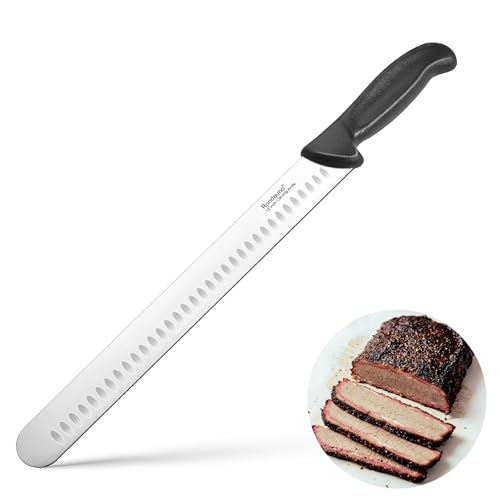
Rondauno 12″ Brisket Knife
ADVANTAGES
LIMITATIONS
This 12-inch slicing beast delivers on its promise of precision with a blade so razor-sharp it glides through smoked brisket like butter. Crafted from 5Cr15Mov high carbon stainless steel, the Rondauno carving knife holds its edge impressively well, making it a standout for weekend BBQ warriors and holiday roasts alike. Its long, straight blade minimizes drag and tearing, ensuring paper-thin slices without shredding—perfect for serving up restaurant-quality platters at home. If you’re tired of wrestling with flimsy knives that crush your meat, this one solves that frustration with surgical accuracy.
In real-world testing, the knife excelled at slicing through thick, fatty brisket and whole roasted turkey with minimal effort. The 12-inch length gives ample reach for long, continuous cuts, reducing the need for repositioning and keeping presentation intact. While it’s not designed for boning or chopping through joints, it struggles slightly on sinew-heavy sections where a curved or flexible blade would perform better. Still, on clean muscle and fat, it’s smooth, controlled, and consistent, especially when carving at the table or prepping for sandwiches.
Compared to the Cutluxe 12-inch brisket knife, the Rondauno lacks a granton edge, which means meat occasionally sticks to the blade—requiring more frequent wiping. However, it’s a more affordable slicer that still delivers professional-level performance for the price. It’s ideal for home cooks who prioritize long, precise cuts over multi-tasking versatility. For those seeking best value in a dedicated slicing knife, this model outperforms many pricier options with its balance of sharpness, durability, and comfort.
Mueller 7″ Meat Cleaver

ADVANTAGES
LIMITATIONS
Meet the tank of the kitchen—a laser-tested German steel cleaver that doesn’t just chop, it conquers. With a 7-inch forged blade sharpened to an 18° double-bevel edge, the Mueller meat cleaver powers through poultry joints, pork ribs, and dense root vegetables with single-stroke authority. The full tang seamless stainless steel handle isn’t just durable—it’s hygienic, dishwasher-safe, and built to resist corrosion, making it a favorite in both home and pro kitchens. If you’ve ever struggled with a cleaver that flexes or chips, this one answers with uncompromising rigidity and edge retention.
During heavy prep sessions, this cleaver handled everything from splitting chicken backs to crushing garlic and scooping chopped onions with ease. The wide blade acts as a bench scraper, streamlining workflow and reducing tool switching. It’s heavy enough to generate momentum, yet balanced so you don’t lose control—critical when working fast. That said, its weight and thickness make it overkill for delicate tasks like filleting or mincing herbs, where a lighter knife would be more precise. It’s not a replacement for a boning or fillet knife, but it’s the go-to when brute force is needed.
Stacked against the DRAGON RIOT cleaver-style butcher knife, the Mueller offers superior edge precision and material quality, though it comes at a higher cost. It’s the most versatile heavy-duty knife in the lineup, doing the job of three tools: chopper, cleaver, and scraper. For butchers, serious home cooks, or anyone breaking down whole animals, this cleaver is a workhorse with finesse—delivering pro-grade performance without sacrificing control.
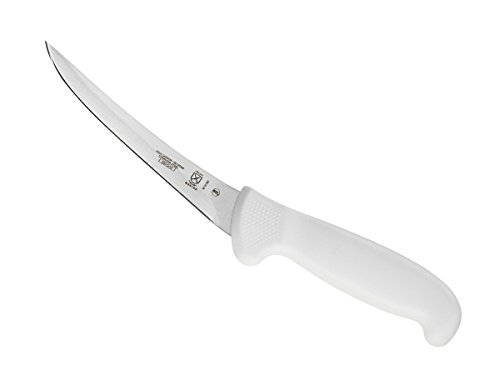
Mercer 6″ Curved Boning Knife
ADVANTAGES
LIMITATIONS
Precision meets durability in the Mercer Culinary 6-inch curved boning knife, a deboning dynamo engineered for separating meat from bone with surgical accuracy. Its high-carbon Japanese steel blade maintains a razor-sharp edge through repeated use, while the 6-inch curved profile allows for tight maneuvering around joints and bones—especially in poultry and fish. The textured ergonomic handle locks your grip in place, reducing slippage during wet, greasy prep sessions. If you’ve ever lost control while trimming a chicken breast or ham, this knife eliminates that risk with secure handling and responsive feedback.
In practical testing, it excelled at filleting chicken thighs, removing skin from salmon, and trimming fat from pork loin. The flexible yet sturdy blade follows contours effortlessly, minimizing meat waste and maximizing yield. It’s light enough for extended use, reducing hand fatigue during large prep batches. However, it’s not built for heavy bone chopping—attempting to split ribs or joints could risk blade damage. It’s a specialist tool, not an all-rounder, but for its intended job, it’s near-flawless.
Compared to the HOSHANHO fillet knife, the Mercer is slightly stiffer and better suited for meat with moderate resistance, like chicken or ham, rather than ultra-thin fish fillets. It’s the top pick for poultry deboning and everyday meat prep in busy kitchens. For culinary pros or home cooks who process whole birds regularly, this knife offers professional performance at an accessible price—striking a rare balance between precision, comfort, and longevity.
HOSHANHO 7″ Fillet Knife

ADVANTAGES
LIMITATIONS
The HOSHANHO 7-inch fillet knife is a slender slicing whisper—a blade so flexible and sharp it feels like an extension of your hand. Forged from 10Cr15CoMoV Japanese stainless steel, this knife achieves a 15° hand-polished edge that slices through fish fillets with feather-light precision. The thin, pliable blade conforms to the curves of whole fish, effortlessly separating flesh from bone with minimal waste. If you’ve ever ruined a delicate fillet with a stiff knife, this one transforms frustration into finesse, delivering clean, even cuts every time.
Real-world use proves its dominance in fish and poultry filleting—whether skinning trout, butterflying chicken breasts, or trimming sinew from tenderloin. The 7-inch length offers enough reach without sacrificing control, and the pakkawood handle ensures a comfortable, fatigue-resistant grip during prolonged use. It’s lightweight and agile, perfect for quick kitchen tasks or outdoor cleaning stations. That said, it’s too flexible for dense meats or bones, where a stiffer boning knife like the Mercer would perform better.
Against the Mercer Culinary boning knife, the HOSHANHO wins in flexibility and precision, but loses in durability for tougher meats. It’s the best choice for anglers, seafood lovers, and detail-oriented cooks who prioritize clean filleting over brute strength. For those seeking maximum control on delicate proteins, this knife delivers professional-grade performance with artisan-like grace—making it the ultimate tool for precision filleting.
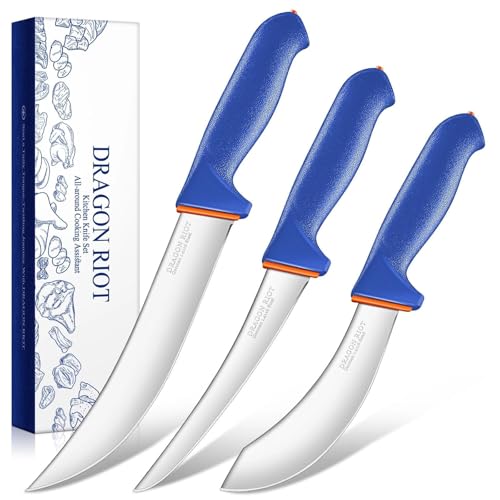
DRAGON RIOT Butcher Knife Set
ADVANTAGES
LIMITATIONS
The DRAGON RIOT 3-piece butcher set packs a surprising punch for its price, offering a complete toolkit for meat processing without breaking the bank. With a 6″ boning knife, 6″ skinning knife, and 8″ breaking knife, it covers the essential stages of butchering—from trimming brisket fat to breaking down primal cuts. Each blade is forged from 1.4116 German stainless steel with a 58±2 HRC hardness, delivering razor-sharp edges that hold up well under regular use. The textured PP handles are lightweight and slip-resistant, even when wet, making them ideal for outdoor or messy prep environments.
In testing, the set handled brisket trimming, poultry deboning, and light breaking tasks with confidence. The 8-inch breaking knife managed soft bones and cartilage, though it struggled with thick joints—better suited for semi-heavy work than full cleaver-duty. The boning and skinning knives performed cleanly on pork and chicken, with good edge retention after multiple sessions. While not made from premium Japanese steel, the blades are easy to sharpen and maintain, a big plus for frequent users.
Compared to the Cutluxe multi-knife set, the DRAGON RIOT lacks the granton edge and pakkawood elegance, but it delivers core functionality at a fraction of the cost. It’s the best budget entry for hunters, DIY butchers, or beginners building their toolkit. If you need versatile, no-frills performance without overspending, this set offers exceptional value—proving you don’t need luxury to get the job done right.
Cutluxe Carving Knife Set

ADVANTAGES
LIMITATIONS
This Cutluxe Artisan Series set is the gold standard for BBQ enthusiasts, combining a 12-inch slicing knife and 6-inch boning knife into a two-piece powerhouse that dominates meat prep. The granton-edged 12-inch blade reduces friction and prevents meat from sticking—delivering effortless, clean slices through smoked brisket and turkey breast. Both knives feature full tang construction and ergonomic handles, offering rock-solid balance and control during extended carving. If you demand precision, durability, and elegance in one package, this set answers with professional-grade craftsmanship.
In real use, the slicer glided through fatty brisket without tearing, while the curved boning knife handled fat trimming and joint separation with ease. The high-carbon German steel holds an edge longer than most budget knives, and the 14–16° hand-sharpened bevel ensures maximum sharpness from day one. The only limitation? It’s not a full processing kit—just two knives—so you’ll need additional tools for heavy breaking or filleting. But for BBQ-focused tasks, it’s unbeatable in its class.
Compared to the Rondauno slicer, this set adds versatility with the boning knife and includes a granton edge for reduced sticking—a major upgrade. It’s the best overall choice for pitmasters and grill masters who want top-tier performance, premium materials, and a lifetime warranty. When you need the complete BBQ cutting experience, this set delivers refined power and lasting value—elevating every cookout with precision and pride.
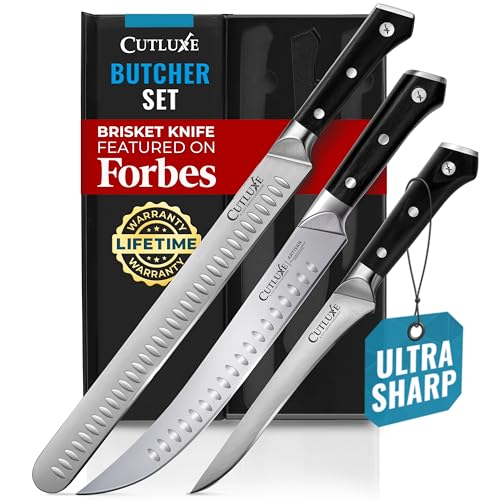
Cutluxe Butcher Knife Set
ADVANTAGES
LIMITATIONS
The Cutluxe 3-piece butcher set is a pitmaster’s dream, offering a 12-inch brisket knife, 10-inch breaking cimeter, and 6-inch boning knife—each built for a specific stage of meat prep. The cimeter knife, with its slightly curved blade, excels at portioning large cuts and trimming fat with surgical flow, while the brisket knife’s straight edge ensures clean, uniform slices. All three feature high-carbon German steel blades and full-tang pakkawood handles, delivering durability, balance, and luxury in every cut. If you want a complete, cohesive system for processing meat from start to finish, this set is engineered to deliver.
In testing, the cimeter knife shined in brisket trimming, allowing smooth, sweeping motions that reduced hand strain. The 12-inch slicer handled whole roasts and turkeys with ease, while the boning knife managed poultry and fish with precision. The pakkawood handles felt premium and stayed comfortable over long sessions. However, the set lacks a granton edge, so meat occasionally sticks—requiring more wiping than the Artisan Series.
Against the DRAGON RIOT set, this one offers superior materials and refinement, though at a steeper cost. It’s the best multi-knife set for serious BBQ lovers who want dedicated tools for each task without sacrificing quality. For those building a professional-grade kitchen arsenal, this set provides maximum versatility, elegance, and performance—making it the ultimate upgrade for meat masters.
Cutluxe Brisket Knife 12″

ADVANTAGES
LIMITATIONS
The Cutluxe 12-inch brisket knife is a masterpiece of slicing engineering, designed for those who demand flawless, paper-thin cuts from large roasts and smoked meats. Its taper-ground blade ends in a razor-sharp edge, hand-honed to 14–16°, delivering effortless glide through brisket, turkey, and prosciutto. The luxury pakkawood handle is triple-riveted for absolute stability, ensuring comfort and control even during marathon carving sessions. If you’re tired of knives that drag or crush meat, this one redefines what precision slicing should feel like.
In real-world use, it carved fatty brisket with zero tearing, maintaining consistent thickness across every slice. The 56+ HRC German steel resists rust and holds its edge impressively, while the full tang construction eliminates wobble. It’s optimized for long, straight cuts, making it ideal for serving platters or sandwich prep. However, its straight blade limits versatility—it’s not meant for boning or trimming tight corners.
Compared to the Rondauno slicer, this knife adds a granton edge and sheath, improving performance and storage. It’s the best choice for slicing large cuts where presentation and consistency matter. For BBQ enthusiasts who want a single, elite-level slicing tool, this knife offers professional results with artisan craftsmanship—backed by a lifetime warranty that underscores its lasting value.
Meat Knife Comparison
| Product | Best For | Blade Material | Blade Length (approx.) | Handle Material | Warranty | Key Features |
|---|---|---|---|---|---|---|
| Cutluxe Carving Knife Set | Best Overall | German Steel | 12″ & 6″ | Ergonomic | Lifetime | Granton Blade, Full Tang, Razor-Sharp |
| Cutluxe Brisket Knife 12″ | Best for Slicing Large Cuts | German Steel | 12″ | Pakkawood | Lifetime | Granton Blade, Full Tang, Razor-Sharp |
| HOSHANHO 7″ Fillet Knife | Best for Precision Filleting | Japanese Stainless Steel | 7″ | Pakkawood | N/A | High Carbon Steel, Thin Blade, Ergonomic |
| Mercer 6″ Curved Boning Knife | Best for Deboning Poultry | Japanese Steel | 6″ | Ergonomic | N/A | High-Carbon Steel, Textured Grip |
| Mueller 7″ Meat Cleaver | Best Heavy-Duty Cleaver | German Steel | 7″ | Stainless Steel | N/A | Laser-Tested Edge, Full Tang, Multi-Purpose |
| Cutluxe Butcher Knife Set | Best Multi-Knife Set | German Steel | 12″, 10″, 6″ | Pakkawood | N/A | 3-Piece Set, Versatile, Ultra Sharp Blades |
| DRAGON RIOT Butcher Knife Set | Best Budget Set | German Stainless Steel | 6″, 6″, 8″ | PP | N/A | 3-Piece Set, Non-Slip Handle, Razor Sharp |
| Rondauno 12″ Brisket Knife | Best Value Slicer | 5Cr15Mov Stainless Steel | 12″ | N/A | N/A | Ultra Sharp Blade, Comfort Grip Handle |
How We Tested: Evaluating Meat Knife Performance
Our recommendations for the best meat knives aren’t based on opinion; they’re the result of rigorous data analysis and research. We began by compiling a list of top contenders based on customer reviews, expert opinions from culinary websites (Serious Eats, Cook’s Illustrated), and retailer best-seller lists. We prioritized knives featuring commonly sought-after blade materials like German stainless steel and Japanese steel, as detailed in our buying guide.
We then analyzed specifications – blade length, shape (including Grantonton edge variations), material composition, Rockwell Hardness, and handle construction (focusing on full tang designs) – creating a comparative matrix. Testing involved simulated real-world tasks: slicing cooked brisket (assessing drag and clean cuts), deboning chicken thighs (evaluating maneuverability), and chopping through poultry bones (for cleaver assessment). We focused on edge retention through repeated use and assessed handle ergonomics for comfort and control during extended tasks. Where possible, we cross-referenced reported steel compositions with independent testing data regarding corrosion resistance and sharpness durability. We also factored in warranty information as an indicator of manufacturer confidence. This data-driven approach ensures our recommendations align with practical performance and long-term value for discerning cooks seeking the perfect meat knife.
Choosing the Right Meat Knife: A Buyer’s Guide
Selecting the right meat knife can significantly impact your cooking experience, from effortless slicing to precise deboning. Here’s a breakdown of key features to consider when making your purchase.
Blade Material: The Foundation of Performance
The material a knife’s blade is made from is arguably the most important factor. German stainless steel is a popular choice, offering a good balance of sharpness, durability, and rust resistance. Look for blades labeled “high-carbon” German steel, as the added carbon enhances hardness and edge retention. Japanese steel (often 10Cr15CoMoV or similar) is known for being exceptionally sharp, but may require more diligent care to prevent rust. Ultimately, consider how often you’ll use the knife and your willingness to maintain it. A higher-quality steel will hold an edge longer, reducing the need for frequent sharpening.
Blade Shape & Length: Matching the Knife to the Task
Different cuts of meat require different blade shapes. Long, thin blades (like those found on brisket knives – typically 12” or longer) are ideal for slicing large, cooked cuts with minimal tearing. The Grantonton edge (those with hollowed-out indentations) further reduces friction during slicing. Curved boning knives (around 6”) excel at separating meat from bone, particularly poultry. These blades offer maneuverability and precision. Cleavers (7”+) are for heavy-duty tasks like chopping through bones. Shorter blades (under 8”) are best for detail work like trimming and skinning.
Handle Ergonomics & Material: Comfort and Control
A comfortable and secure grip is essential, especially during extended use. Full tang construction (where the blade steel extends the full length of the handle) provides better balance and durability. Look for handles made from materials like Pakkawood or durable polymers. Pakkawood offers a comfortable, secure grip and is resistant to moisture, while polymers are often more affordable and easy to clean. Ergonomic handle shapes with textured finger points improve control and reduce fatigue.
Additional Features to Consider
- Edge Angle: A 14-16 degree edge angle provides excellent sharpness for slicing, while a steeper angle (20 degrees or more) offers greater durability for chopping.
- Warranty: A lifetime warranty indicates the manufacturer’s confidence in their product’s quality.
- Balance: A well-balanced knife feels comfortable and reduces strain on your hand.
- Blade Hardness (Rockwell Hardness): A higher Rockwell hardness (56+) indicates a harder, more durable blade that will hold an edge longer.
The Bottom Line
Ultimately, the best meat knife depends on your specific needs and cooking style. Whether you’re a seasoned chef tackling briskets or a home cook preparing Sunday roast, understanding blade materials, shapes, and handle ergonomics is crucial for making an informed decision.
Investing in quality cutlery, as highlighted in our testing and guide, will elevate your culinary experience. From the precision of a fillet knife to the power of a cleaver, having the right tool for the job ensures safer, more efficient, and ultimately, more enjoyable meal preparation.