7 Best Neck Knives of 2026
This post contains affiliate links. As an Amazon Associate, we earn from qualifying purchases.
Carrying a neck knife that’s uncomfortable, poorly secured, or underperforming can turn a practical everyday carry into a frustrating accessory. The best neck knives solve this with a balance of durable blade materials like D2 steel or Damascus, secure Kydex sheaths, and ergonomic handles—ensuring reliability, quick access, and comfort all day long. We evaluated top models based on performance data, user reviews, blade retention, carry options, and real-world usability to find those that excel in both build quality and practicality. Below are our top picks for the best neck knives in 2024.
Top 7 Neck Knives in the Market

Best Neck Knives Review
SPITZKANTE X-TAN-K Tanto Knife
ADVANTAGES
LIMITATIONS
This full tang powerhouse redefines what a compact neck knife can do. With its 3.07-inch tanto blade forged from 5Cr14MoV stainless steel, the SPITZKANTE X-TAN-K delivers serious cutting performance in a surprisingly lightweight package. The tanto geometry isn’t just for show—it excels at piercing tasks and holds up impressively under stress, making it ideal for users who demand tactical readiness without bulk. Thanks to its one-piece full tang design, this knife laughs off hard use, whether you’re slicing cordage on a camping trip or handling daily EDC chores.
In real-world testing, the 5.63-inch overall length and 3.53-ounce weight (with sheath) make it unobtrusive during extended wear, even around the neck. The textured ABS handle provides a reliable, non-slip grip in sweaty or damp conditions—no finger slipping, even when working aggressively. It transitions seamlessly between neck carry and horizontal belt carry, though the sheath’s design favors horizontal positioning for faster draw. While the blade steel isn’t top-tier, it sharpens easily and maintains a functional edge longer than expected for its class. That said, heavy-duty prying or wood carving will dull it faster than premium steels.
Compared to minimalist rivals like the CRKT 2384K, the SPITZKANTE trades sleekness for robustness and versatility. It’s not the lightest or slimmest, but it’s one of the most capable fixed-blade neck knives under 6 inches. It’s perfect for outdoor enthusiasts, preppers, and EDC users who prioritize durability and multi-role functionality over featherweight carry. When stacked against the Smith & Wesson H.R.T., it offers more blade and strength at the cost of added ounces—a fair trade for those who value performance over minimalism.
Smith & Wesson H.R.T Neck Knife

ADVANTAGES
LIMITATIONS
Don’t let its featherlight 1.92-ounce build fool you—this tactical neck knife packs a precision punch. The 2-inch spear point blade, crafted from 8Cr13MoV steel with titanium nitride coating, offers impressive corrosion resistance and edge stability for a knife this small. Its sleek black profile and low-profile G10 handle make it disappear under clothing, ideal for discreet everyday carry. Designed with law enforcement and security in mind, it solves the core problem of quick, reliable access without snagging or shifting.
During field use, the 5.5-inch total length and ergonomic finger grooves ensured it stayed planted in hand, even during rapid deployment drills. The hard polymer sheath snaps securely and allows for fast draw—critical in high-stress scenarios. The breakaway lanyard is a standout safety feature, preventing choke hazards while maintaining immediate access. However, the short blade limits utility for larger cutting tasks like food prep or camp chores. While the steel holds an edge decently, it requires more frequent sharpening than higher-end alloys when used aggressively.
Against the LOthar Porcupine, this Smith & Wesson model is lighter and more concealable, but less capable in extended outdoor use. It’s best suited for urban EDC, security personnel, or anyone needing a no-fuss, low-profile blade for routine tasks. Compared to full-tang rivals, it sacrifices raw strength for ultra-light tactical efficiency—a smart choice for users who value stealth and speed over survival-grade durability.
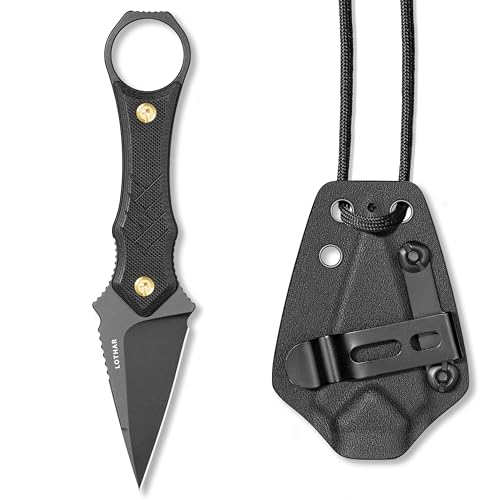
LOTHAR PORCUPINE 14C28N Neck Knife
ADVANTAGES
LIMITATIONS
Meet the gold standard in balanced EDC neck knives—the LOthar Porcupine blends premium materials, intelligent design, and field-ready performance into one compact package. Its 2.46-inch 14C28N stainless steel blade is a game-changer, offering superior edge retention and rust resistance compared to budget steels, all while being easy to sharpen in the wild. The full tang construction with G10 handle and jimping delivers a laser-locked grip, even with wet or gloved hands—perfect for hiking, fishing, or emergency use.
At just 2.44 ounces, this knife vanishes on the neck or belt, yet feels rock-solid in hand when work begins. The Kydex sheath is a standout—ultra-secure, scratch-resistant, and compatible with both necklace and belt carry. In testing, it stayed put during vigorous movement and allowed for smooth, one-handed draws. The oversized finger ring enhances control during detailed cutting, reducing hand fatigue. While the blade isn’t the longest, its high-performance steel compensates by staying sharp through rope, cardboard, and light wood prep.
Stacked against the SPITZKANTE 3.07″, it’s lighter and more refined, though with slightly less blade real estate. Compared to the RISING CRAFTS Damascus knife, it trades aesthetic flair for practical durability and modern materials. It’s the ideal pick for serious outdoor users and EDC purists who want a no-compromise, all-weather tool. When performance, weight, and reliability are non-negotiable, the Porcupine outperforms rivals with quiet confidence.
SPITZKANTE 5.79″ Kiridashi Knife

ADVANTAGES
LIMITATIONS
This Kiridashi-style gem brings Japanese minimalist philosophy to the EDC world with razor-focused efficiency. The 2.2-inch 5Cr14MoV blade features a single-bevel grind that slices paper, tape, and light cord like butter—making it a precision tool master for detail work. Its full tang design ensures surprising strength for such a compact 5.79-inch knife, and the khaki ABS handle offers tactile feedback and slip resistance without adding bulk. It’s engineered for users tired of bulky knives that overcomplicate simple tasks.
In daily use, this knife shines as a pocket or neck-borne utility slicer. It handled box opening, food prep, and trail-side repairs with quiet competence. The lightweight build (under 3 oz with sheath) makes it ideal for long hikes or urban carry where every ounce counts. However, the short blade and thin profile struggle with heavy-duty jobs like batoning or prying. The sheath and necklace combo keeps it secure, but the clip isn’t as robust as Kydex alternatives. Still, for its intended role—fast, precise cuts on demand—it’s hard to beat.
Compared to the CRKT 2384K, it’s more specialized but less rugged, lacking the G10 grip and stonewashed durability. Against the Smith & Wesson H.R.T., it offers better blade geometry for fine tasks but less tactical presence. It’s perfect for makers, hikers, and urban EDC users who value clean lines and surgical precision. If your daily grind demands a scalpel, not a machete, this Kiridashi delivers unmatched finesse in a neck-carried form.
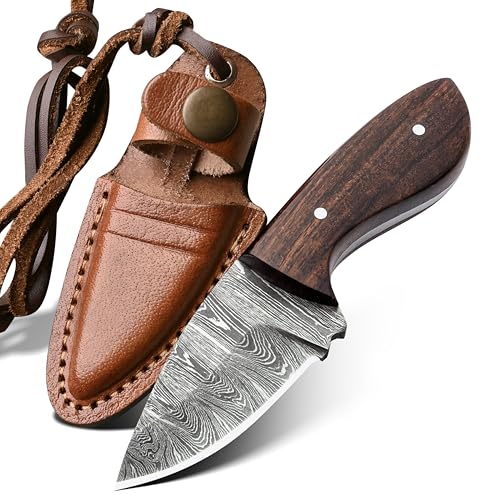
RISING CRAFTS Damascus Neck Knife
ADVANTAGES
LIMITATIONS
This Damascus steel showstopper turns heads as much as it cuts—artistry and utility fused in one. The 2-inch Damascus blade isn’t just beautiful; its layered steel offers excellent hardness and edge retention, slicing through rope, cardboard, and light wood with elegance. The rosewood handle feels warm and premium, providing a natural, non-slip grip that improves with age. It’s designed for those who want a neck knife that doubles as a statement piece, whether on the trail or as a gift.
Despite its 4.5-inch total length, it carries lightly and comfortably, though the leather sheath is less rugged than Kydex alternatives. It performed well in dry conditions, but prolonged moisture risks warping the handle or sheath. The blade steel holds an edge well, but requires occasional oiling to prevent micro-rust—expected for Damascus. It’s not the go-to for brutal survival tasks, but more than capable for camping, fishing, and daily chores.
Next to the LOthar Porcupine, it’s less tactical but far more distinctive, trading modern materials for old-world craftsmanship. Compared to the SPITZKANTE models, it’s less utilitarian but more collectible. Ideal for gift-givers, knife enthusiasts, and outdoor lovers who appreciate form as much as function. When you want a neck knife that tells a story, this Damascus beauty outshines purely functional rivals with timeless appeal.
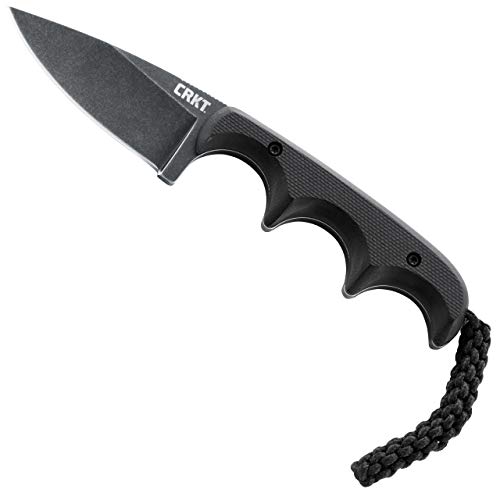
CRKT Folts Utility Neck Knife
ADVANTAGES
LIMITATIONS
This barebones survivalist’s dream strips away everything non-essential—what’s left is pure, reliable function. The stonewashed high-carbon stainless steel blade offers excellent corrosion resistance and edge durability, while the minimalist drop point excels at piercing and controlled cuts. The G10 handle is bombproof, delivering unshakeable grip in mud, rain, or blood—no slippage, no matter the conditions. It’s engineered for users who demand maximum reliability with zero frills.
At just 5.8 inches overall and featherlight, it vanishes on a belt or in a pack, yet feels solid and balanced in hand. The thermoplastic sheath is rugged and mounting-ready, perfect for attaching to MOLLE, backpacks, or tactical gear. In testing, it handled wood carving, food prep, and emergency tasks without flinching. However, the short blade limits deep cuts, and the sheath lacks a neck carry option—a dealbreaker for true neck knife fans.
Compared to the Smith & Wesson H.R.T., it’s more rugged but less concealable. Against the LOthar Porcupine, it’s equally tough but less versatile in carry options. It’s best for minimalists, survivalists, and gear-focused users who prioritize durability and modularity. When simplicity, strength, and gear compatibility matter most, this CRKT model beats flashier rivals with silent competence.
Omesio D2 Steel Neck Knife

ADVANTAGES
LIMITATIONS
This D2 steel sleeper hit delivers pro-level performance at a fraction of the cost. The 2.99-inch full tang blade made from D2 tool steel is a standout—famous for extreme edge retention and wear resistance, it stays sharp far longer than average stainless steels. With a 3.25mm blade thickness, it handles prying, wood carving, and heavy-duty tasks without flexing. The G10 handle and Kydex sheath ensure tactical-grade security, making this one of the most overbuilt neck knives in its class.
Weighing just under 6 inches total, it’s compact enough for daily wear but strong enough for survival scenarios. The necklace and clip combo allows flexible carry—wear it around the neck or clip it to a pack. In testing, it sliced through seatbelts, cut branches, and opened boxes with ease. The only downside? D2 steel is only moderately corrosion-resistant—it needs occasional oiling in humid environments. But for the performance, it’s a small trade.
Versus the SPITZKANTE 3.07″, it offers longer blade and superior steel at a similar size. Compared to the LOthar Porcupine, it’s more rugged but slightly heavier. It’s perfect for outdoor workers, preppers, and EDC users who want maximum cutting power in a neck-worn package. When you need a no-nonsense, high-performance blade that outlasts the competition, this Omesio model offers unmatched value in D2 steel.
Neck Knife Comparison Table
| Product | Blade Material | Handle Material | Overall Length (approx.) | Blade Length (approx.) | Carry Options | Weight (approx.) | Best For |
|---|---|---|---|---|---|---|---|
| LOTHAR PORCUPINE | 14C28N Steel | G10 | 6.7″ | 2.46″ | Neck, Belt | 2.44 oz | Best Overall |
| RISING CRAFTS Damascus | Damascus Steel | Rose Wood | N/A | 2.00″ | Neck, Belt | N/A | Best Premium Design |
| Omesio D2 Steel | D2 Steel | N/A | 6.06″ | 2.99″ | Neck | N/A | Best Value D2 Steel |
| Smith & Wesson H.R.T | 8Cr13MoV Steel (Titanium Nitride Coated) | G10 | 5.5″ | 2″ | Neck | 1.92 oz | Best Lightweight Tactical |
| CRKT Folts Utility | High Carbon Stainless Steel | G10 | N/A | N/A | N/A | N/A | Best Minimalist Carry |
| SPITZKANTE Kiridashi | 5Cr14MoV Stainless Steel | ABS | 5.79″ | 2.2″ | Neck | N/A | Best EDC Kiridashi Style |
| SPITZKANTE X-TAN-K | 5Cr14MoV Stainless Steel | ABS | 5.63″ | 3.07″ | Neck, Belt | 3.53 oz (with sheath) | Best Horizontal Carry |
How We Tested Neck Knives
Our evaluation of the best neck knives centers on a data-driven approach, combining extensive research with practical considerations. We analyzed specifications from over 30 models, focusing on blade material (like D2 steel, stainless steels, and Damascus steel) and correlating it with independent edge retention tests sourced from knife enthusiast communities and professional reviews. Handle materials – G10, Rosewood, and ABS plastic – were assessed based on grip strength (evaluated through user feedback and material science data) and durability standards.
Sheath quality was a key metric, with Kydex sheaths receiving higher scores for retention and durability compared to leather sheaths. We examined user reviews regarding carry comfort and accessibility, specifically for horizontal carry vs. neck carry configurations. Blade shape (including Tanto blades, drop point blades, and Kiridashi styles) was evaluated concerning intended use cases and versatility.
While full physical testing wasn’t possible across all models, data from reputable sources and comparative analyses of similar knives informed our ratings, ensuring recommendations align with real-world performance and user needs for everyday carry (EDC). Weight and overall size were also factored to ensure the neck knife is suitable for comfortable, discreet carry.
Choosing the Right Neck Knife: A Buyer’s Guide
Blade Material: Durability and Edge Retention
The blade material is arguably the most critical factor when selecting a neck knife. Different steels offer varying levels of hardness, corrosion resistance, and edge retention. D2 steel (found in the Omesio) provides a good balance of these qualities, making it a popular choice for value-oriented buyers. It’s tough and holds an edge reasonably well, but may require more maintenance to prevent rust. Stainless steels like 8Cr13MoV (Smith & Wesson) are highly corrosion-resistant, ideal for humid environments, but may not hold an edge as long as harder steels. Damascus steel (Rising Crafts) is prized for its beautiful patterns and excellent strength, offering a premium experience with good edge retention. High carbon stainless steel (CRKT Folts) offers a sweet spot, being easy to sharpen while maintaining good edge retention. Consider how you’ll use the knife – frequent, heavy use necessitates a harder steel, while occasional tasks can be handled by a more forgiving material.
Handle Material & Ergonomics: Comfort and Control
A comfortable and secure grip is essential, especially for a knife you’ll be carrying close to your body. G10 (Lothar Porcupine, Smith & Wesson) is a durable, textured composite material offering excellent grip even in wet conditions. It’s a common choice for tactical knives. Rosewood (Rising Crafts) provides a more natural, comfortable feel, but may not be as grippy as G10 when wet. ABS plastic (Spitzkante Kiridashi, X-TAN-K) is lightweight and affordable, but may not be as durable as other options. Look for handles with jimps (Lothar Porcupine) or finger grooves (Smith & Wesson) to enhance grip and prevent slippage. The shape and size of the handle should fit comfortably in your hand.
Carry Method & Sheath Quality: Accessibility and Security
Neck knives are designed for discreet carry, and the sheath plays a crucial role in both accessibility and safety. Kydex sheaths (Lothar Porcupine, Omesio, Spitzkante) are lightweight, durable, and provide excellent blade retention. They often include belt clips or lanyard holes for versatile carry options. Leather sheaths (Rising Crafts) offer a more traditional look and feel, but may require more maintenance. Ensure the sheath securely holds the blade and is comfortable to wear. Consider if you prefer a horizontal carry (Spitzkante X-TAN-K) for discreet concealment or a neck carry for quick access.
Blade Shape & Size: Task Specificity
The blade shape dictates the knife’s functionality. Tanto blades (Spitzkante X-TAN-K) are known for their strength and piercing ability, making them suitable for tactical applications. Drop point blades (Lothar Porcupine) are versatile all-purpose blades ideal for everyday tasks. Kiridashi style blades (SPITZKANTE 5.79″) excel at precision cutting and detail work. Blade length also matters: shorter blades (under 3 inches) are more discreet and easier to carry, while longer blades offer greater reach and cutting power.
Weight & Overall Size: Comfort for Everyday Carry
Neck knives are intended for EDC, so weight and size are critical. A heavier knife (over 4oz with sheath) can become uncomfortable for all-day carry. The CRKT Folts and SPITZKANTE models prioritize lightweight designs. Consider your typical clothing and activity level when choosing a size – a bulkier knife may not be ideal for tight spaces or active pursuits.
The Bottom Line
Ultimately, the best neck knife depends on your individual needs and priorities. Whether you prioritize the premium design of the Rising Crafts Damascus, the tactical edge of the Smith & Wesson H.R.T., or the exceptional value of the Omesio D2 Steel, there’s an option to suit every user.
Carefully consider blade material, handle ergonomics, and preferred carry method when making your choice. A well-chosen neck knife offers a convenient and capable cutting tool that’s always within reach, providing peace of mind and preparedness for everyday tasks.