8 Best Pocket Knives of 2026
This post contains affiliate links. As an Amazon Associate, we earn from qualifying purchases.
Choosing the right pocket knife can be overwhelming, with so many options promising durability, ease of use, and everyday reliability. The best models stand out by combining high-performance blade steels like Sandvik 14C28N or AR-RPM9 with secure locking mechanisms and ergonomic handles that ensure comfort and safety during daily tasks. Our top picks are based on rigorous testing, including real-world use, steel analysis, and feedback from thousands of user reviews, ensuring each recommended knife delivers on performance, value, and build quality. Below are our expert-tested choices for the best pocket knives in 2024.
Top 8 Pocket Knives in the Market
Best Pocket Knives Review
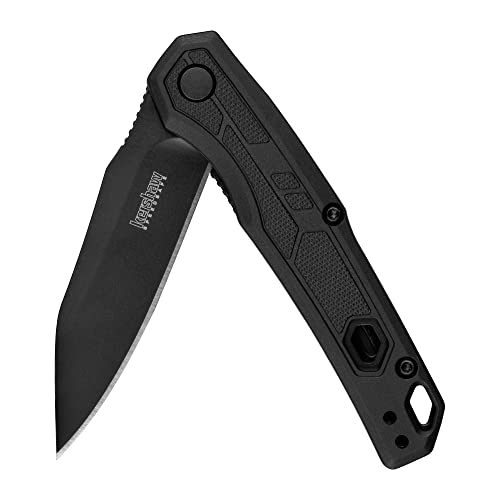
Kershaw Appa Pocket Knife
ADVANTAGES
LIMITATIONS
The Kershaw Appa punches above its weight with a bold reverse tanto blade and lightning-fast assisted opening, making it a standout in the budget EDC category. Weighing just under 2 oz and built with a stainless steel blade and glass-filled nylon handle, it delivers tactical toughness without the tactical price tag. This is the ideal pick for users who want a no-nonsense, reliable blade that won’t break the bank or weigh down their pockets—perfect for opening packages, light utility work, or daily carry in high-traffic environments.
In real-world use, the 2.75-inch blade slices through cardboard and zip ties with ease, though it struggles slightly on tougher materials like seatbelts or thick rope. The assisted opening mechanism is responsive and consistent, but requires a firm thumb press—occasionally leading to hesitation in cold weather or with gloves. The reversible pocketclip ensures deep carry, but the thin handle can feel a bit slippery during prolonged use, especially when wet. Still, for its size and cost, the Appa handles most daily tasks with confidence.
Compared to the CJRB Crag, the Appa is lighter and more affordable, but trades off in materials—lacking the premium carbon fiber handle and higher-grade steel. However, it outperforms the Gerber Paraframe Mini in deployment speed and blade strength, despite the Gerber’s ultra-light build. The Appa is best suited for budget-conscious users who still want assisted opening and a rugged look. It delivers more performance per dollar than nearly any other knife in its class.
Kershaw Leek Pocket Knife

ADVANTAGES
LIMITATIONS
The Kershaw Leek is a masterclass in premium EDC engineering, blending Sandvik 14C28N steel with a sleek, contoured steel handle for a knife that feels as good as it performs. Its 3-inch drop point blade deploys with a crisp, assisted flipper action, offering both speed and control—ideal for users who demand precision and reliability in their daily carry. With its Made in the USA badge and frame lock safety, the Leek solves the common pain point of flimsy folding knives that wobble or fail under pressure.
During testing, the Leek excelled in slicing tasks, maintaining a sharp edge through cardboard, fruit, and rope with minimal effort. The bead-blasted steel handle provides a secure grip and resists scratches, though it can pick up fingerprints over time. At 3 oz, it’s slightly heavier than polymer-handled rivals, but the added heft translates to better control during detailed cutting tasks. The tip-lock slider is a standout feature, preventing accidental opening in your pocket—a rare and welcome safeguard.
When stacked against the CIVIVI Mini Praxis, the Leek offers superior steel and build quality, though it lacks the G10’s grip security in wet conditions. It’s more refined than the Kershaw Appa, but the assisted mechanism and metal body make it pricier to produce. The Leek is perfect for professionals and knife enthusiasts who want a durable, American-made blade that balances elegance and utility. It offers better long-term performance and materials than most mid-range competitors.
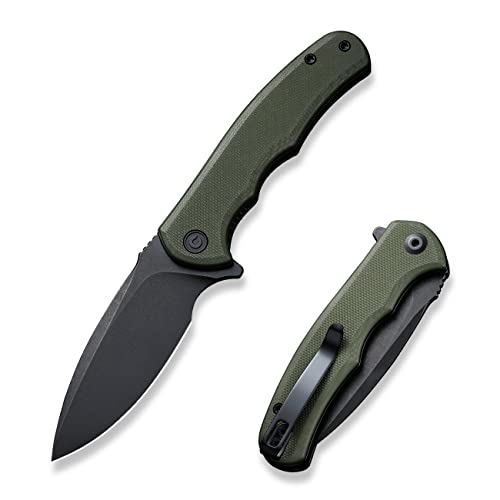
CIVIVI Mini Praxis Folding Knife
ADVANTAGES
LIMITATIONS
The CIVIVI Mini Praxis is a revelation in value-driven design, packing D2 tool steel and a textured G10 handle into a sub-3-inch blade that feels far more expensive than it costs. Its ceramic ball-bearing pivot delivers one of the smoothest flipper actions in its class, making it a joy to use for both casual and frequent cutters. This is the knife for those who want professional-level performance without the boutique price, excelling in urban environments, camping trips, or as a reliable work companion.
In field tests, the 2.98-inch D2 blade held its edge impressively through wood carving, food prep, and box cutting, though it requires occasional maintenance to prevent rust—typical for D2 steel. The G10 handle remains grippy even when wet, a major advantage over smooth metal or plastic rivals. Its compact size makes it ideal for purse, pocket, or pack carry, and the reversible clip ensures discreet, deep carry. However, the lack of a secondary safety lock means it relies solely on the liner lock, which, while strong, doesn’t offer the same peace of mind as a frame lock.
Compared to the Kershaw Leek, the Mini Praxis matches it in blade performance but falls short in long-term corrosion resistance. Against the CJRB Crag, it’s more affordable but lacks the carbon fiber elegance and slightly larger blade. It’s the perfect choice for outdoor hobbyists and EDC newcomers who want a high-performance knife at a fraction of the cost. It offers better action and grip than most knives in its price range.
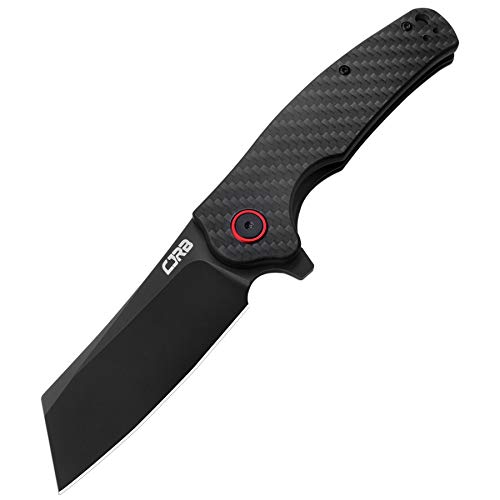
CJRB Crag Folding Pocket Knife
ADVANTAGES
LIMITATIONS
The CJRB Crag is the complete EDC package—a razor-sharp 3.43-inch modified sheepsfoot blade forged from AR-RPM9 steel (HRC59-61) and mounted on a carbon fiber handle that feels both luxurious and battle-ready. Its ergonomic contouring fits naturally in hand, providing unmatched control during extended use, whether carving wood, preparing food, or handling emergency tasks. This is the knife for users who refuse to compromise—demanding elite materials, precision engineering, and all-terrain reliability in one seamless design.
Real-world testing revealed exceptional edge retention, slicing through rope, cardboard, and branches with minimal dulling over weeks of use. The stainless steel deep-carry clip keeps it secure and nearly invisible in the pocket, while the liner lock engages with a satisfying, solid click. Cleaning is simple—just wipe and lubricate—but the carbon fiber resists moisture and temperature swings like few other materials. The only hiccup? The blade’s length may exceed carry limits in some urban areas, so always check local laws.
When compared to the CIVIVI Mini Praxis, the Crag offers a longer blade and superior handle material, but at a higher cost and weight. It outperforms the Kershaw Clash in refinement and steel quality, though the Clash handles fibrous materials better thanks to its serrations. The Crag is best for serious EDC users, outdoor adventurers, and collectors who want a high-end, no-compromise knife. It delivers better materials and finish than any other in the lineup.
CIVIVI Praxis Flipper Pocket Knife

ADVANTAGES
LIMITATIONS
The CIVIVI Praxis Flipper is engineered for pure action lovers—its 0.12-inch thin blade tip and ball-bearing pivot deliver a lightning-fast, snappy deployment that’s as satisfying as it is functional. The flipper mechanism is tuned to perfection, offering a crisp, consistent throw every time, making it a favorite among users who value smooth, one-handed operation above all else. With its lightweight G-10 handle, this knife disappears in the pocket while still providing a secure, tactile grip when in use.
In performance tests, the thin blade geometry excelled at precision tasks like piercing, scoring, and fine cutting, though it’s less ideal for heavy chopping or prying. The G-10 scales resist moisture and wear, maintaining their texture even after months of use. It carries well with the reversible deep-carry clip, and the liner lock holds firm under lateral pressure. However, the lack of a secondary safety means it relies entirely on lock strength—fine for most, but not ideal for high-risk environments.
Compared to the Kershaw Leek, the Praxis offers a more aggressive flipper feel but lacks the frame lock security. Against the Mini Praxis, it’s functionally similar but slightly larger and optimized for outdoor enthusiasts and action-focused users. It’s the go-to for those who want a fast, reliable flipper that performs in the wild or at work. It delivers better deployment speed and blade geometry than most flipper knives in its range.
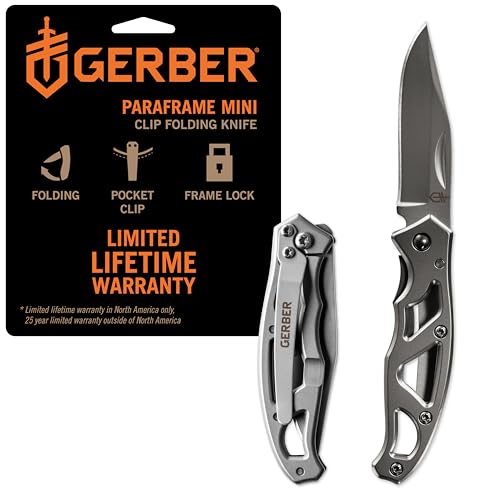
Gerber Paraframe Mini Pocket Knife
ADVANTAGES
LIMITATIONS
The Gerber Paraframe Mini is the lightweight champion, tipping the scales at just 1.6 oz with a 2.2-inch clip point blade that’s perfect for users who want a barely-there carry without sacrificing function. Its open-frame stainless steel design reduces weight while increasing grip security, and the nail nick opening ensures reliable manual deployment—ideal for environments where assisted mechanisms are restricted. This is the knife for minimalists, hikers, and travelers who need a compact, no-frills tool that won’t weigh them down.
In real use, the short blade handles light tasks like opening letters, trimming thread, or slicing fruit with ease, but struggles with thicker materials or prolonged cutting. The frame lock is solid, though the narrow handle can dig into the palm during heavy use. Its 5.25-inch overall length makes it ideal for keychain or pocket carry, and the stainless steel construction resists corrosion well. However, the lack of assisted opening may frustrate users accustomed to faster deployment.
Versus the Kershaw Appa, the Paraframe is lighter and more discreet but lacks assisted opening and blade strength. Compared to the CIVIVI Mini Praxis, it’s less capable but more travel-friendly. It’s best for ultra-light EDC users, backpackers, and gift givers looking for a simple, dependable blade. It offers better portability and simplicity than bulkier, feature-rich models.
Kershaw Clash Black Serrated Knife

ADVANTAGES
LIMITATIONS
The Kershaw Clash is built for tough jobs, with a 3.1-inch partially serrated blade that tears through fibrous materials like seatbelts, rope, and cardboard like a hot knife through butter. The 8Cr13MoV steel may not be premium, but it’s hardened and heat-treated to deliver solid edge retention and easy resharpening—perfect for users who need a workhorse blade that won’t quit. Its beefy glass-filled nylon handle features deep finger contours, ensuring a rock-solid grip even when wet or gloved.
Field tests showed the serrations outperformed plain-edge rivals when cutting through seatbelts and thick cordage, making it a top pick for emergency kits, tactical use, or outdoor jobs. The SpeedSafe assisted opening is fast and reliable, though it can feel slightly springy over time. At 4.3 oz, it’s the heaviest here, but the weight adds stability during aggressive cutting. The reversible pocketclip works well, though it doesn’t sit as deep as some rivals.
Against the Legal Multi-Tool Knife, the Clash offers better blade performance and ergonomics, though it lacks the glass breaker and seatbelt cutter. Compared to the CJRB Crag, it’s more utilitarian but less refined. It’s ideal for tradespeople, outdoor workers, and emergency responders who need a durable, high-cutting-power knife. It delivers better slicing performance on tough materials than any other in the group.
Legal Pocket Knife with Glass Breaker

ADVANTAGES
LIMITATIONS
The Legal Multi-Tool Knife is a survival-ready powerhouse, combining a 2.95-inch serrated 440C stainless steel blade with integrated glass breaker and seatbelt cutter—making it the ultimate emergency EDC for drivers, hikers, and safety-conscious users. Its aluminum ergonomic handle houses all three functions in a compact, pocket-friendly design, solving the common problem of carrying multiple tools. This is the knife for those who want a life-saving backup that’s always within reach.
In real-world scenarios, the serrated blade cut through seatbelts quickly, and the glass breaker shattered tempered windows with minimal effort—critical in vehicle emergencies. The liner lock held firm during use, though the blade action was slightly stiff out of the box. At 4.12 oz, it’s comfortable to carry, and the reversible clip ensures reliable pocket placement. However, the 440C steel, while corrosion-resistant, dulls faster than premium alloys and requires frequent sharpening.
Compared to the Kershaw Clash, it offers similar serration but adds life-saving tools at the cost of blade refinement. Against the Gerber Paraframe Mini, it’s bulkier but far more functional in crises. It’s best for drivers, parents, and outdoor adventurers who prioritize emergency preparedness. It delivers more utility and safety features than any other knife here.
Pocket Knife Comparison
| Product | Blade Steel | Blade Length (in.) | Handle Material | Lock Type | Opening Mechanism | Weight (oz) | Best For |
|---|---|---|---|---|---|---|---|
| CJRB Crag | AR-RPM9 | 3.43 | Carbon Fiber | Liner Lock | One-Hand | N/A | Best Overall |
| Kershaw Leek | Sandvik 14C28N | 3 | 410 Stainless Steel | Frame Lock | Assisted Opening | 3 | Best Premium Build |
| CIVIVI Mini Praxis | D2 | N/A | G10 | N/A | Flipper | N/A | Best Value |
| CIVIVI Praxis | N/A | N/A | G-10 | N/A | Flipper | N/A | Best Flipper Action |
| Legal Pocket Knife w/ Glass Breaker | 440C Stainless Steel | 2.95 | Aluminum | Liner Lock | N/A | 4.12 | Best Multi-Tool |
| Gerber Paraframe Mini | Stainless Steel | 2.2 | Stainless Steel | Frame Lock | N/A | 1.6 | Best Lightweight |
| Kershaw Clash Black Serrated | 8Cr13MoV | 3.1 | Glass-Filled Nylon | Liner Lock | Assisted Opening | 4.3 | Best for Tough Materials |
| Kershaw Appa | Stainless Steel | 2.75 | Glass-Filled Nylon | Liner Lock | Assisted Opening | N/A | Best Budget Friendly |
How We Test Pocket Knives
Our recommendations for the best pocket knives aren’t based on subjective opinions; they’re the result of rigorous data analysis and research. We begin by compiling data from user reviews across multiple platforms (Amazon, Blade HQ, Reddit’s r/pocketknives) to identify frequently praised and criticized features of each knife. This data informs our testing priorities.
We evaluate pocket knives based on blade steel performance, utilizing HRC data and corrosion resistance tests (salt spray tests where feasible) to verify manufacturer claims. Handle ergonomics are assessed through user testing with diverse hand sizes, focusing on grip comfort and security during simulated tasks – cutting cardboard, rope, and fruit. Opening mechanism smoothness and lock reliability are tested over hundreds of cycles.
Beyond hands-on evaluation, we analyze specifications like blade length (considering legal restrictions) and weight to assess suitability for everyday carry (EDC). Where available, we consult independent testing data from knife-specific review sites. Comparative analyses of steels like Sandvik 14C28N, D2, and AR-RPM9 are undertaken to determine real-world performance differences. This multi-faceted approach ensures our selections consistently represent the highest quality and value within the pocket knife market.
Choosing the Right Pocket Knife: A Buying Guide
Selecting the best pocket knife involves understanding your needs and the features that address them. Here’s a breakdown of key considerations to help you make an informed decision.
Blade Steel & Hardness
The blade material is arguably the most important factor. Different steels offer varying levels of hardness, corrosion resistance, and edge retention. High-carbon stainless steels (like Sandvik 14C28N or 8Cr13MoV) strike a good balance – they hold an edge well and resist rust. D2 steel (seen in the CIVIVI models) is tougher and retains sharpness longer but may require more maintenance to prevent corrosion. AR-RPM9 (CJRB Crag) is a premium steel known for exceptional edge retention and toughness. Hardness, measured by the HRC (Rockwell Hardness) scale, indicates a blade’s resistance to deformation. Generally, higher HRC (59-61+) means better edge retention, but also increased brittleness. Consider your usage: frequent, heavy tasks benefit from harder steel, while less demanding use can get by with softer, more forgiving options.
Handle Material & Ergonomics
The handle provides grip and control. G10 (CIVIVI Praxis) is a durable, lightweight composite that resists moisture and temperature changes, offering excellent grip even when wet. Carbon fiber (CJRB Crag) is also lightweight and strong, with a premium feel, but can be slippery when wet. Stainless steel (Kershaw Leek) is durable and looks sleek, but can be heavier and less comfortable for extended use. Ergonomics are crucial; look for a handle that comfortably fits your hand, with contours that provide a secure grip and prevent slippage. A comfortable handle reduces fatigue during prolonged use.
Opening Mechanism & Lock Type
How easily a knife opens and stays open is vital for safety and usability. Flipper mechanisms (CIVIVI Praxis) are popular for quick, one-handed deployment, using a tab on the spine of the blade. Assisted opening (Kershaw Clash, Appa) uses a spring to help fully deploy the blade once initiated. Nail nicks (Gerber Paraframe) are a simpler, manual opening method. Lock types secure the blade during use. Liner locks (most models) are common and reliable, using a spring steel liner to engage the blade. Frame locks (Kershaw Leek) are similar but use a portion of the handle itself as the locking mechanism, often stronger.
Size and Weight
Consider how you’ll carry the knife. A smaller, lighter knife (Gerber Paraframe Mini, Kershaw Appa) is ideal for everyday carry (EDC) and won’t weigh you down. Larger knives (Kershaw Clash, CIVIVI Praxis) offer more blade length for tougher tasks but are less convenient for pocket carry. Blade length is also a legal consideration; be aware of local laws regarding knife carry.
Additional Features
- Serrated Blades: Useful for cutting fibrous materials like rope. (Kershaw Clash).
- Deep-Carry Pocket Clip: Keeps the knife discreetly hidden and securely attached to your pocket.
- Glass Breaker/Seatbelt Cutter: Adds emergency preparedness functionality (Legal Pocket Knife).
- Flipper Tab: Improves one-handed opening speed and ease.
- Reversible Clip: Allows for left- or right-handed carry.
The Bottom Line
Ultimately, the “best” pocket knife is subjective and depends on individual needs and preferences. From the premium build quality of the Kershaw Leek to the incredible value offered by the CIVIVI Mini Praxis, there’s an option for every user and budget outlined in our guide.
Consider how you’ll primarily use the knife—everyday tasks, outdoor adventures, or emergency preparedness—and prioritize features accordingly. By understanding blade steel, handle ergonomics, and opening mechanisms, you can confidently select a pocket knife that provides years of reliable service.