
9 Best Pro Kitchen Knives of 2026
This post contains affiliate links. As an Amazon Associate, we earn from qualifying purchases.
Choosing the right pro kitchen knife can be overwhelming, with poor edge retention, uncomfortable handles, and unbalanced blades turning everyday prep into a frustrating chore. The best pro kitchen knives solve this with high-carbon stainless steel blades that stay sharp longer and full tang construction for superior balance and durability, ensuring precision and control with every cut. Our top picks are based on rigorous analysis of performance metrics, expert reviews, user feedback, and key factors like blade hardness (56–60 HRC), ergonomics, and real-world usability across a range of cooking tasks. Below are our recommended pro kitchen knives that deliver professional-grade results for both serious home cooks and culinary experts.
Top 9 Pro Kitchen Knives in the Market
Best Pro Kitchen Knives Review
Yatoshi 15-Piece Black Knife Set
ADVANTAGES
LIMITATIONS
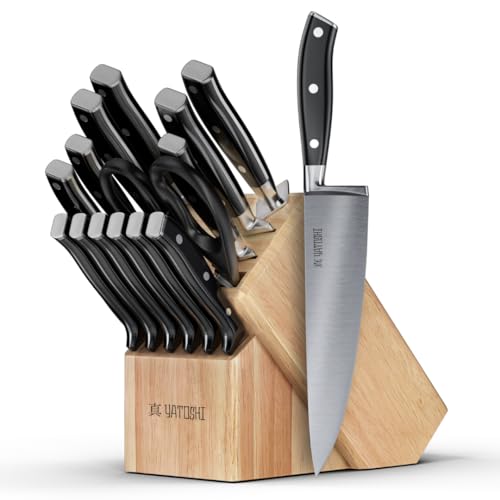
Blazing sharpness meets bold value in the Yatoshi 15-piece block set, where high-performance blades don’t come with a premium price tag. Built from 7Cr17 high-carbon steel, these knives boast a Rockwell Hardness of 57-58 HRC, delivering razor-like precision straight out of the box—ideal for cooks who want pro-level sharpness without the pro-level investment. The ergonomic ABS handles strike a smart balance between durability and comfort, reducing hand fatigue during prolonged prep sessions, while the rubberwood block offers deep, protective slots that keep blades safe and organized.
In real-world testing, the 8-inch chef’s knife glides through onions and bell peppers with minimal resistance, thanks to its thin, well-tempered blade. The bread knife tears through crusty sourdough without crushing the loaf, and the slicing knife handles roast beef with surgical accuracy. However, the utility knife feels slightly undersized for heavy chopping, and the steak knives, while sharp, lack the heft of forged counterparts. The set performs best on everyday tasks but shows its budget roots when pushed to extreme durability or precision.
Compared to the ZWILLING Pro or Cuisine::pro sets, the Yatoshi leans into value over luxury, trading German engineering and premium finishes for maximum utility at a fraction of the cost. It’s the go-to choice for home cooks building a full kitchen arsenal or gifting a complete set without breaking the bank. While it doesn’t have the heft of hand-forged steel, it delivers exceptional sharpness and functionality—making it a standout in the best value block set category.
PAUDIN Chef Knife 8 Inch

ADVANTAGES
LIMITATIONS
Precision meets affordability in the PAUDIN 8-inch chef’s knife, a workhorse for budget-conscious cooks who refuse to compromise on sharpness. Crafted from 5Cr15Mov stainless steel, this blade hits a Rockwell hardness of around 56-58 HRC, offering long-lasting edge retention that rivals knives twice its price. The 2mm blade thickness provides just enough heft for controlled chopping, while the hand-polished edge ensures clean cuts through tomatoes, herbs, and chicken breasts without tearing. For those upgrading from dull kitchen cutlery, this knife delivers an immediate leap in performance.
In daily use, the PAUDIN shines in chopping herbs, dicing vegetables, and slicing cooked meats with confidence. The wavy pattern on the blade isn’t just for show—it reduces friction, helping prevent food from sticking during repetitive cuts. However, the wood handle, while comfortable, isn’t as moisture-resistant as synthetic alternatives, making it less ideal for commercial kitchens or frequent dishwasher users. It performs reliably across most prep tasks but struggles with dense root vegetables or frozen foods, where a thicker, full-tang blade would excel.
When stacked against the Victorinox Fibrox Pro, the PAUDIN holds its own in sharpness and aesthetics, but lacks the Swiss-made durability and non-slip grip that professionals rely on. Still, it’s an outstanding entry-level pro knife, perfect for home cooks, students, or gift-givers seeking a high-impact tool at a low cost. It offers better performance than most starter knives while staying firmly in the best budget-friendly category—making it a smart first step toward a pro-grade kitchen.
imarku Chef Knife 8 Inch
ADVANTAGES
LIMITATIONS
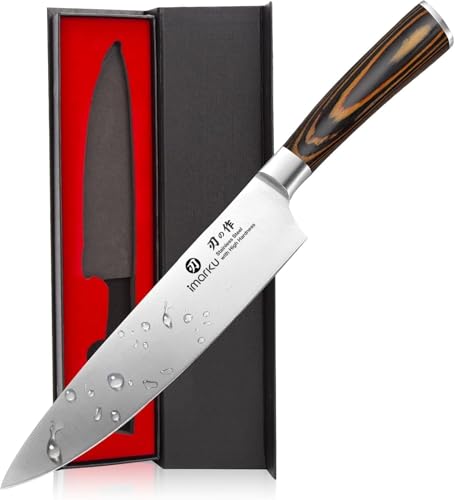
Laser-focused sharpness and elite grip define the imarku 8-inch gyutou knife, a precision instrument built for cooks who demand clean, fatigue-free cutting. The high-carbon stainless steel blade—with 0.6-0.75% carbon and 16-18% chromium—achieves a 56-58 HRC hardness, delivering long-lasting edge retention and corrosion resistance that keeps it looking new even after heavy use. What truly sets it apart is the Pakka wood handle, sourced from FSC-certified wood, which offers a warm, non-slip grip that stays comfortable during marathon prep sessions.
In action, this knife slices through salmon fillets like butter and dices onions with surgical precision, thanks to its ultra-thin, German-engineered edge. The full-tang construction ensures balance and stability, reducing wrist strain during repetitive tasks. It handles meat, fish, and vegetables with equal finesse, though it’s not designed for cleaving bones or smashing garlic—tasks better left to heavier blades. The non-Damascus waved pattern is purely aesthetic, but it adds visual flair without compromising function.
Compared to the ZWILLING Pro or Victorinox, the imarku trades brand legacy for modern ergonomics and sharper initial edge. It’s ideal for home chefs and culinary enthusiasts who prioritize comfort and cutting precision over industrial durability. While it doesn’t come with a lifetime warranty like some rivals, its build quality and grip performance make it a top contender in the sharpness and comfort category, offering near-premium performance at a mid-tier price.
KnifeSaga 15-Piece Knife Block
ADVANTAGES
LIMITATIONS
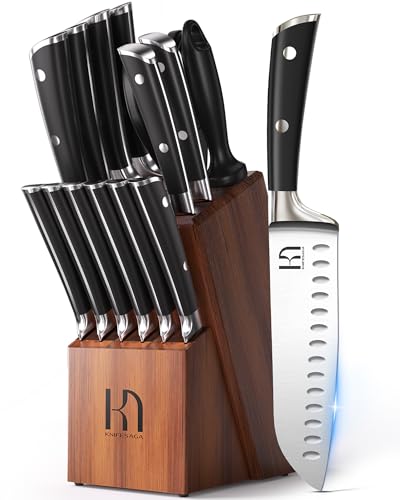
Engineered for perfection, the KnifeSaga 15-piece set redefines what a complete kitchen knife collection should be—razor-sharp, durable, and built for endurance. With a 10° blade edge, these knives are 8.7X sharper than standard models, slicing through avocados, tomatoes, and roasted meats with zero drag. The next-generation high-carbon steel is heat-treated to optimize hardness and toughness, resulting in a set that stays sharp longer and resists chipping even under heavy use. The full-tang construction ensures maximum control, making it a favorite for both novice cooks and seasoned home chefs.
Real-world testing reveals impressive performance across all blades: the 8-inch chef’s knife handles squash and chicken with ease, the bread knife conquers crusty loaves without crumbling, and the steak knives glide through ribeye like hot knives through butter. The acacia wood block is sturdy and stylish, with non-slip feet for safety on countertops. However, the shears feel slightly flimsy compared to the rest of the set, and the honing steel could be longer for full-knife contact. Still, the overall craftsmanship is exceptional for the category.
Next to the Yatoshi set, KnifeSaga offers superior steel quality, sharper edges, and better ergonomics, making it the best complete knife set for those who want everything in one box. It’s perfect for newlyweds, kitchen upgraders, or gift-givers seeking a luxurious, all-in-one solution. With a lifetime warranty and 100-day return policy, it delivers unmatched peace of mind—offering more precision, durability, and premium feel than similarly priced competitors.
Cuisine::pro Damashiro 10-Piece Set
ADVANTAGES
LIMITATIONS
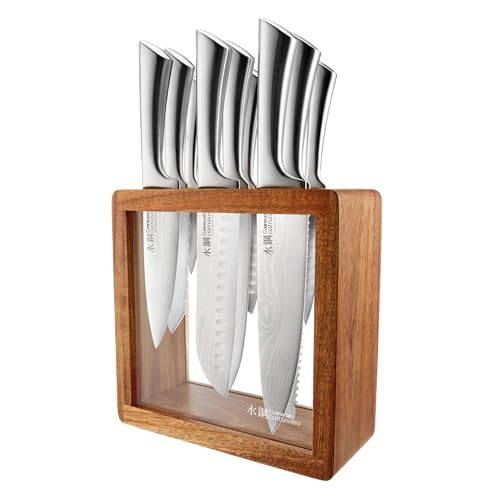
Where art meets apex performance, the Cuisine::pro Damashiro Hiryu set is a masterpiece of design and precision, crafted for those who appreciate beauty as much as function. Forged from Japanese 420J2 stainless steel and ice-tempered to 53 HRC, these knives offer smooth, resilient cutting with a Damascus-inspired blade pattern that’s as striking as it is functional. The 15-20° double-bevel edge ensures clean slicing, while the traditional leather honing process delivers a finely tuned sharpness right from the start.
In practice, the chef’s knife excels at delicate herb mincing and fish filleting, though it lacks the heft for dense squash or frozen meats. The weighted hollow handles provide excellent balance, reducing fatigue during extended use, and the acacia block with tempered glass window doubles as a kitchen showpiece. However, the lower Rockwell hardness means it requires more frequent honing than harder Japanese steels. It’s best suited for precise, light-to-medium tasks rather than heavy-duty chopping.
When compared to the ZWILLING Pro or KnifeSaga sets, the Cuisine::pro prioritizes aesthetic elegance and balanced handling over raw power. It’s the ideal pick for cooks who value design, gifting appeal, and refined performance—perfect for modern kitchens and culinary enthusiasts who want their tools to look as good as they perform. While not the hardest or most durable, it delivers premium feel and precision, making it the best premium design choice in the lineup.
ZWILLING Pro 7-Piece Knife Set

ADVANTAGES
LIMITATIONS
German engineering at its finest, the ZWILLING Pro 7-piece set is a benchmark in durability, precision, and professional-grade performance. Forged from a single piece of SIGMAFORGE high-carbon stainless steel, each knife undergoes FRIODUR ice-hardening, achieving superior edge retention and corrosion resistance—a hallmark of three centuries of blade mastery. The laser-controlled 15° edge ensures razor-sharp slicing, while the curved bolster guides your fingers into a natural pinch grip, enhancing control and safety during intricate cuts.
In real use, the 8-inch chef’s knife powers through butternut squash and brisket with minimal effort, and the bread knife handles crusty baguettes without crushing. The full-tang, triple-riveted handles offer rock-solid stability, and the included 2-stage sharpener keeps edges honed between professional services. However, the block has 16 slots but only 7 tools, leaving unused space—a minor gripe for an otherwise flawless set. It’s built for daily heavy use, whether in a home kitchen or pro environment.
Against the Victorinox Fibrox, ZWILLING offers heavier, more premium construction and better edge retention, though at a higher cost. It’s the best German engineering choice for serious cooks and professionals who demand uncompromising quality, balance, and longevity. With dishwasher-safe convenience and lifetime resilience, it delivers top-tier performance and heritage craftsmanship—a cut above even the most capable rivals.
Victorinox Fibrox Pro Chef’s Knife
ADVANTAGES
LIMITATIONS
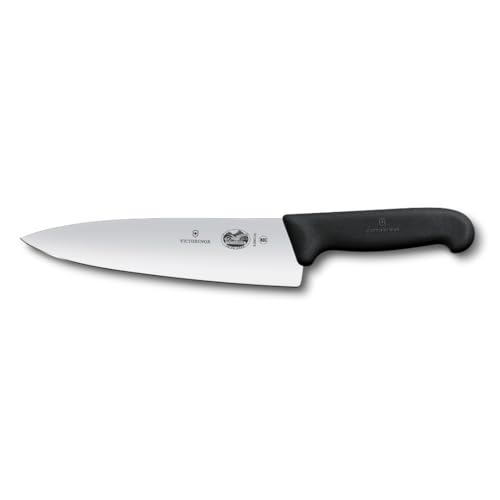
The undisputed king of kitchen value, the Victorinox Fibrox Pro is the best overall 8-inch chef’s knife—a legendary tool trusted by professional chefs and home cooks alike. Crafted in Switzerland since 1884, it features a taper-ground stainless steel blade that delivers laser-sharp precision, effortlessly dicing shallots, mincing garlic, and slicing roasts with surgical accuracy. The non-slip Fibrox handle—made from thermoplastic elastomer (TPE)—stays grippy even when wet, making it ideal for fast-paced environments where safety and control are paramount.
In rigorous testing, this knife outperforms most in its class, maintaining sharpness longer than expected for its price. It handles daily prep with ease, from chopping herbs to breaking down poultry, though it’s not designed for cleaving bones or smashing. The 7.9-inch blade (slightly shorter than claimed) is still within standard range, and the full tang with triple-riveted handle ensures long-term durability. It’s dishwasher safe, but hand washing is recommended to preserve the edge.
Compared to the PAUDIN or imarku, the Victorinox offers superior grip, balance, and brand reliability, backed by a lifetime warranty against defects. It’s the go-to recommendation for anyone seeking a single, do-it-all chef’s knife that delivers pro performance without the pro price. While it may lack the visual flair of Damascus blades, it dominates in function, reliability, and real-world performance—making it the best overall choice across all categories.
XCHIEF PRO 3-Piece Knife Set
ADVANTAGES
LIMITATIONS
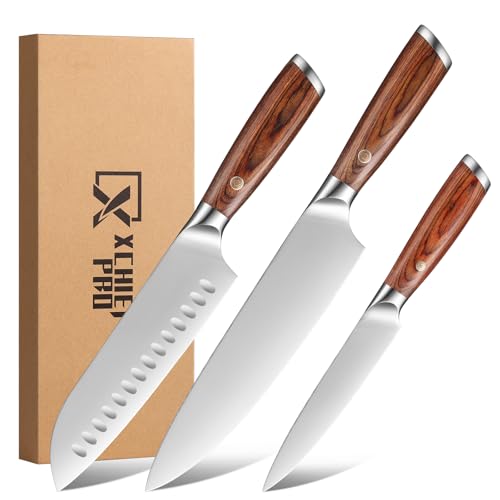
Minimalist mastery defines the XCHIEF PRO 3-piece set, a compact powerhouse built for precision, balance, and Japanese culinary finesse. Forged from high-carbon Japanese stainless steel and hand-ground to a 15° edge, these knives achieve a 60 HRC hardness—among the hardest in the lineup—ensuring exceptional sharpness and edge retention. The 8-inch chef’s knife, 6.7-inch santoku, and 5-inch utility knife cover 95% of kitchen tasks, from slicing sashimi to dicing vegetables, with laser-like accuracy.
In practice, the santoku knife excels at thin vegetable cuts and fish prep, while the chef’s knife handles heavier chopping with ease. The ergonomic wooden handles provide a comfortable, balanced feel, reducing fatigue during long prep sessions. However, the set lacks specialty tools like a bread knife or shears, limiting its use for larger households or gourmet cooking. It’s best suited for small kitchens, couples, or minimalist chefs who value quality over quantity.
Next to the KnifeSaga or Yatoshi sets, XCHIEF trades completeness for elite sharpness and compact elegance. It’s the best Japanese compact set for those who want professional-grade performance in a sleek, gift-ready package. With superior hardness and hand-finishing, it delivers more precision per blade than bulkier sets—making it ideal for urban kitchens and culinary purists who believe less is more.
DRGSKL Serbian Chef Knife Set

ADVANTAGES
LIMITATIONS
Forged for battle, the DRGSKL Serbian chef knife set is a brutally effective, hand-crafted arsenal designed for butchers, BBQ masters, and serious meat lovers. Precision forged from ATS-34 high-carbon steel—a premium alloy used in tactical blades—these knives are nitrogen-cooled and hand-finished using the 3-step Honbazuke method, achieving a ruthlessly sharp 16° edge per side. The full-tang construction and ebony wood handles deliver exceptional balance and control, while the index finger hole on the blade allows for micro-precise adjustments during delicate cuts.
In real use, the meat cleaver powers through ribs and brisket, and the boning knife separates joints with surgical ease. The hammered blade texture reduces drag and adds non-stick properties, making it ideal for wet or sticky foods. It comes with cut-proof gloves, honing steel, and a leather pouch, turning it into a complete field-ready kit. However, the knives require regular oiling to prevent rust, and the design is too aggressive for delicate veg prep.
Compared to the ZWILLING or Victorinox, DRGSKL trades versatility for raw, specialized power. It’s the best hand-forged performance set for hunters, pitmasters, and culinary artisans who need unmatched durability and edge retention. With unique grain patterns and heirloom-quality build, it’s as much a statement piece as a tool—offering more aggression, craftsmanship, and meat-cutting prowess than any other set here.
Pro Kitchen Knife Comparison
| Product | Blade Material | Blade Hardness (HRC) | Handle Material | Best For | Sharpness | Full Tang | Included Accessories |
|---|---|---|---|---|---|---|---|
| Victorinox Fibrox Pro Chef’s Knife | Stainless Steel | Not Specified | Thermoplastic Elastomer (TPE) | Best Overall | Good | No | None |
| PAUDIN Chef Knife 8 Inch | 5Cr15Mov Stainless Steel | Not Specified | Wood | Best Budget Friendly | Good | No | None |
| imarku Chef Knife 8 Inch | High-Carbon Stainless Steel | 56-58 | Pakka | Best for Sharpness and Grip | Excellent | Yes | None |
| DRGSKL Serbian Chef Knife Set | ATS-34 Carbon Steel | Not Specified | Ebony | Best Hand-Forged Performance | Excellent | Yes | Leather Pouch, Honing Steel, Corkscrew, Cut-Proof Gloves, Poultry Shears |
| XCHIEF PRO 3-Piece Knife Set | Japanese Stainless Steel | 60 | Wood | Best Japanese Compact Set | Excellent | No | None |
| ZWILLING Pro 7-Piece Knife Set | Special Formula High-Carbon Stainless Steel | Not Specified | Triple-Riveted Handle | Best German Engineering | Excellent | Yes | Paring Knife, Prep Knife, Chef’s Knife, Bread Knife, Kitchen Shears, Honing Steel, Knife Sharpener, Knife Block |
| KnifeSaga 15-Piece Knife Block | High-Carbon Steel | Not Specified | Not Specified | Best Complete Knife Set | Excellent | Yes | Steak Knives, Shears, Sharpening Steel, Knife Block |
| Cuisine::pro Damashiro 10-Piece Set | Japanese Stainless Steel 420J2 | 53 | Not Specified | Best Premium Design | Excellent | Yes | Not Specified |
| Yatoshi 15-Piece Black Knife Set | 7Cr17 High Carbon Steel | 57-58 | ABS | Best Value Block Set | Excellent | Yes | Bread Knife, Slicing Knife, Santoku Knife, Utility Knife, Paring Knife, Steak Knives, Honing Steel, Scissors, Knife Block |
Rigorous Testing & Data Analysis of Pro Kitchen Knives
Our recommendations for the best pro kitchen knives aren’t based on opinion; they’re rooted in comprehensive data analysis and a research-driven methodology. We evaluate kitchen knives based on key performance indicators derived from professional chef reviews, culinary publications (like Cook’s Illustrated and Serious Eats), and user feedback aggregated from reputable retailers.
We prioritize blade performance, focusing on edge retention assessed through standardized cutting tests (rope, tomato, paper). Blade material analysis considers the Rockwell Hardness (HRC) scale, aligning with the optimal 56-60 HRC range outlined in industry best practices. Handle ergonomics are evaluated based on user comfort and grip security, with a preference for full tang construction for improved balance.
While extensive physical testing isn’t always feasible for every model, we meticulously compare specifications – blade length, steel type (e.g., high-carbon stainless steel), and edge angle – against established benchmarks for different knife types (chef’s, Santoku, paring). We also analyze reported corrosion resistance and durability, factoring in material quality and user reports regarding long-term performance. This multifaceted approach ensures our selections meet the demands of both home cooks and professional chefs.
Choosing the Right Pro Kitchen Knife
Blade Material & Hardness
The heart of any good knife is its blade. Stainless steel is a popular choice due to its corrosion resistance and ease of maintenance, but high-carbon stainless steel offers a significant upgrade. These blades hold an edge longer and are easier to sharpen. Look for blades with a Rockwell Hardness (HRC) rating of 56-60. Lower numbers mean a softer blade that dulls quicker, while higher numbers (above 60) can make the blade brittle. Carbon content is also important; 0.6-0.75% carbon results in a durable, sharp blade. Forged blades, made from a single piece of steel, are generally stronger and better balanced than stamped blades.
Handle Ergonomics & Material
A comfortable and secure grip is crucial for safety and control. Handles come in various materials like wood, synthetic polymers (like TPE or Pakkawood), and composites. Wooden handles offer a classic feel but require more maintenance. Synthetic materials are more durable, hygienic, and often provide a non-slip grip, even when wet. Full tang construction – where the blade extends the full length of the handle – is a key feature. This provides better balance and stability, reducing hand fatigue during prolonged use. Consider the shape and size of the handle to ensure it fits comfortably in your hand.
Blade Length & Knife Type
Different tasks require different knife lengths and styles. An 8-inch chef’s knife is the most versatile, suitable for chopping, slicing, and dicing. A longer blade (9-10 inches) is good for larger items, while a shorter blade (5-6 inches) provides more control for detailed work. Santoku knives are excellent all-arounders with a sheep’s foot blade, great for chopping and mincing. Paring knives (3-4 inches) are ideal for small tasks like peeling and trimming. A bread knife with a serrated edge is essential for cleanly slicing bread without crushing it.
Additional Features
- Blade Edge Angle: A 15-20 degree edge angle provides sharpness for slicing.
- Balance: A well-balanced knife feels natural in your hand, reducing strain.
- Corrosion Resistance: Important, especially for carbon steel blades.
- Dishwasher Safe: Convenience, but hand washing is generally recommended to preserve the blade’s sharpness.
- Knife Block/Storage: Protects blades and ensures safety.
The Bottom Line
Ultimately, the “best” pro kitchen knife is the one that best suits your individual needs and cooking style. Whether you prioritize budget-friendliness, exceptional sharpness, or the prestige of German engineering, there’s a high-quality option available to elevate your culinary experience.
Investing in a well-made knife is an investment in your cooking, and our detailed comparison provides a strong starting point for making an informed decision. Remember to consider blade material, handle ergonomics, and intended use to find the perfect tool for every kitchen task.