
8 Best Professional Chef Knives of 2026
This post contains affiliate links. As an Amazon Associate, we earn from qualifying purchases.
Choosing the right professional chef knife can be overwhelming, with so many options promising superior performance but often falling short in real-world use. The best knives solve this by combining high-quality blade materials like high-carbon stainless steel, VG10, or layered Damascus steel with ergonomic handles and full tang construction for balance, precision, and durability. Our top picks are based on rigorous analysis of performance data, expert testing, user reviews, and key factors like edge retention, sharpness, hardness (HRC), and comfort during extended use. Below are our recommended professional chef knives that deliver exceptional results for both culinary professionals and serious home cooks.
Top 8 Professional Chef Knives in the Market
Best Professional Chef Knives Review
HexClad 8″ Japanese Damascus Chef Knife

ADVANTAGES
LIMITATIONS
When edge retention is non-negotiable, the HexClad 8-inch Chef’s Knife steps into the ring like a precision-engineered gladiator. Built with 67 layers of Damascus steel and honed using the 3-step Honbazuke method, this blade achieves a razor-sharp 12-degree edge that resists dulling far longer than typical kitchen knives. The result? A knife that slices through dense butternut squash and delicate herbs with equal finesse, making it a dream for high-volume prep work. For chefs tired of constant honing, this is the long-lasting sharpness solution they’ve been hunting.
In real-world use, the 7.5-inch Japanese blade (total 12.8 inches) delivers surgical precision, especially at the tapered tip, where it excels in intricate tasks like deveining shrimp or scoring bread. The Pakkawood handle offers a secure, ergonomic grip that reduces wrist fatigue during extended chopping sessions. While it handles vegetables and proteins with authority, it’s not ideal for heavy cleaving—avoid frozen foods or bone work. Like all premium knives, it demands hand washing only, and skipping regular honing will shorten its stellar edge life.
Compared to the Sunnecko or KEEMAKE models, HexClad trades some artisan flair for consistent, no-nonsense performance. It doesn’t scream “hand-forged masterpiece” but delivers where it counts: daily durability and edge longevity. It’s perfect for home cooks and pros who value reliability over showmanship. Against the Victorinox Fibrox Pro, it offers superior edge retention but at a steeper care requirement and higher price point—worth it if you prioritize sharpness over convenience.
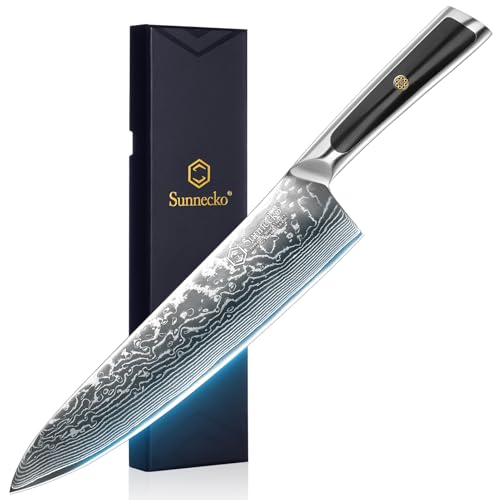
Sunnecko 8″ Japanese VG10 Damascus Knife
ADVANTAGES
LIMITATIONS
If sharpness is your religion, the Sunnecko 8-inch Damascus Chef Knife is your holy grail. From the moment you unbox it, the 10-12° razor edge—hand-honed and backed by VG10 vacuum-treated steel—delivers a cut so clean it feels like slicing through air. This isn’t just marketing: it genuinely glides through tomatoes without crushing them and parts raw salmon with sashimi-level precision. For users frustrated with dull, dragging blades, this knife is a game-changer in cutting efficiency.
Real-world testing confirms its dominance in daily prep and professional tasks. The 67-layer Damascus blade isn’t just eye candy—it enhances structural integrity and corrosion resistance, making it durable in humid kitchens or outdoor BBQs. The full tang construction ensures balanced weight distribution, reducing hand fatigue during marathon cooking sessions. Whether dicing onions for mirepoix or carving holiday roast beef, it performs flawlessly. However, the ABS handle, while durable, lacks the warmth and premium feel of Pakkawood or rosewood.
Against the WÜSTHOF Classic, the Sunnecko wins on initial sharpness and edge angle, but the German knife offers more heft and bolster protection. Compared to the HexClad, it’s equally sharp but slightly less refined in handle ergonomics. It’s ideal for home chefs, culinary hobbyists, and outdoor cooks who want pro-level performance with rugged versatility. For the same craftsmanship-tier as KEEMAKE or MITSUMOTO, it delivers more value straight out of the box—especially with its premium gift packaging and outdoor-ready durability.
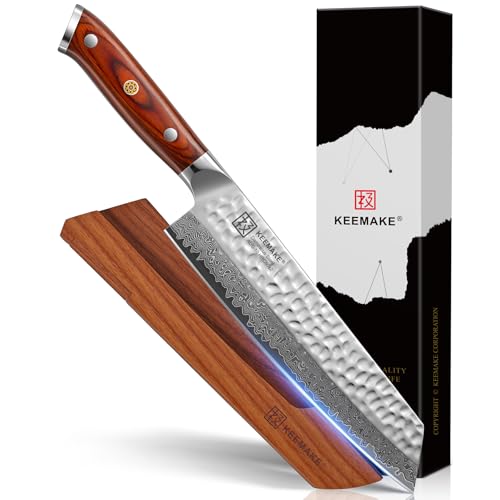
KEEMAKE Kiritsuke 8″ Damascus Chef Knife
ADVANTAGES
LIMITATIONS
The KEEMAKE Kiritsuke Chef Knife isn’t just a tool—it’s a statement of artisan excellence. With its 67-layer hand-forged Damascus steel and distinctive hammered finish, this knife blends traditional Japanese craftsmanship with modern metallurgy in a way that turns heads and elevates cutting performance. The natural non-stick surface from the textured blade means onions and fish release cleanly, reducing prep frustration. For cooks who value beauty as much as function, this is the ultimate showpiece that actually outperforms.
In action, the kiritsuke profile—a hybrid between a chef’s knife and slicer—shines in versatility. It handles fine herb mincing, fish portioning, and hard squash slicing with equal grace, thanks to its 60±2 HRC hardness and hand-honed precision. The ergonomic Pakkawood handle offers a moisture-resistant, comfortable grip that stays secure even during wet, fast-paced prep. But the real standout is the custom Ash wood sheath: not only does it protect the edge, but it allows the knife to stand upright on your counter, blending utility with elegant display.
Compared to the MITSUMOTO SAKARI, KEEMAKE offers a more refined ergonomic balance and included sheath, though the SAKARI wins in raw hand-forged authenticity. Against the Sunnecko, it trades a fraction of initial sharpness for superior handle comfort and design cohesion. It’s perfect for culinary artisans, gift-givers, and home chefs who want a knife that performs like a pro tool and looks like museum-worthy art. While pricier than entry-level options, it delivers exceptional craftsmanship-to-performance ratio—a true heirloom-grade investment.
MOSFiATA 8″ German High Carbon Chef Knife

ADVANTAGES
LIMITATIONS
For those seeking professional performance on a budget, the MOSFiATA 8-inch Chef’s Knife is a revelation. Crafted from German high-carbon EN1.4116 stainless steel with 0.45–0.55% carbon content, it delivers twice the hardness of many mid-tier knives, translating to a laser-sharp 16° edge that stays resilient under daily abuse. Unlike true Damascus knives, its laser-etched pattern is decorative, not structural—but it still aids in reducing food stickiness. This is the knife for cooks who want pro-grade slicing without the pro-grade price tag.
In real use, the full tang construction and triple-riveted Micarta handle provide rock-solid stability, even when hacking through root vegetables or dense meat. The textured santoprene grip ensures a non-slip hold, making it safe and comfortable for long prep sessions. It excels at chopping, dicing, and slicing—but don’t expect the paper-thin glide of a Japanese VG10 blade. It’s heavier, more utilitarian, and built for durability over finesse. The included finger guard and sharpener add serious value, especially for beginners.
Compared to the Mercer Millennia or Victorinox Fibrox Pro, the MOSFiATA offers more included accessories and a sturdier handle, though it lacks the Swiss knife’s dishwasher-safe convenience. Against the WÜSTHOF Classic, it’s less refined but brings 80% of the performance at half the cost. Ideal for budget-conscious home cooks, culinary students, or starter kitchens, it’s the smart choice when you need a reliable, no-frills workhorse. You won’t get artistry or hand-forged prestige, but you’ll get solid German engineering with real-world toughness.
MITSUMOTO SAKARI 8″ Hand Forged Gyuto Knife

ADVANTAGES
LIMITATIONS
The MITSUMOTO SAKARI 8-inch Gyuto Chef Knife is where hand-forged performance meets soulful craftsmanship. Each blade is hammer-forged from 3-layer 9CR18MOV high-carbon steel, creating a unique “water ripple” pattern that’s not just aesthetic—it enhances grain density for a harder, sharper edge. The ultra-thin blade design minimizes drag, preserving the juices and texture of proteins and vegetables alike. For chefs who crave the authentic feel of Japanese forging, this knife delivers a tactile, responsive cut that mass-produced blades can’t match.
In practice, it slices through raw tuna, tomatoes, and chicken breasts with surgical precision, thanks to its nitrogen-vacuum cooled hardening process that ensures uniform toughness. The octagonal rosewood handle offers excellent grip and balance, allowing for multiple grip styles and reducing wrist strain. However, the wood requires more care—prolonged moisture exposure can damage it. While it handles most prep tasks with grace, it’s not meant for bone-splitting or frozen foods, and like all high-carbon blades, it demands hand washing and regular oiling.
Against the KEEMAKE Kiritsuke, the SAKARI feels more traditionally authentic, though it lacks the included sheath. Compared to the WÜSTHOF, it’s lighter and sharper but less durable in high-impact environments. It’s ideal for intermediate to advanced cooks who appreciate hand-forged heritage and cutting finesse. For those who see knife-making as art as much as utility, the SAKARI offers superior craftsmanship and emotional resonance—a tool that doesn’t just cut, but connects you to centuries of blade-making tradition.
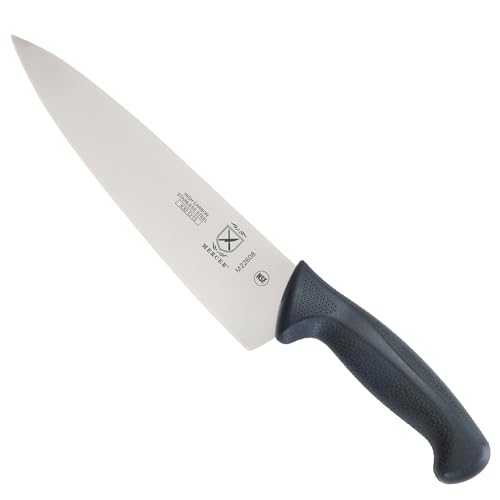
Mercer Culinary 8″ Millennia Chef’s Knife
ADVANTAGES
LIMITATIONS
The Mercer Culinary M22608 Millennia is the unsung hero for culinary students and aspiring chefs who need a dependable, no-nonsense knife that won’t break the bank—or their wrists. Built from one-piece high-carbon Japanese steel, it offers excellent edge retention and easy sharpening, making it perfect for beginners learning knife skills. The ergonomic black handle features textured finger points that lock your grip in place, even during slippery tasks like mincing garlic or dicing onions. For students facing hours of prep work, this knife reduces fatigue and boosts control.
In real-world use, it handles chopping, mincing, and dicing with confidence, thanks to its full tang and balanced weight distribution. It’s not the sharpest knife out of the box—don’t expect the paper-cut precision of a Sunnecko—but it sharpens beautifully and holds up to daily abuse in culinary school environments. It’s dishwasher-safe in spirit, but hand washing is strongly recommended to preserve the edge. While it lacks the luxury of Pakkawood or Damascus artistry, it’s built for function over form.
Compared to the Victorinox Fibrox Pro, it’s nearly identical in performance and design, but the Mercer feels slightly more balanced in hand. Against the MOSFiATA, it offers less included gear but better blade integration. It’s the ideal starter knife for culinary students, line cooks, or home learners who need a durable, safe, and low-maintenance tool. While it won’t win design awards, it delivers professional reliability at an entry-level price, making it one of the smartest foundational purchases for any growing kitchen.
WÜSTHOF Classic 8″ Chef’s Knife
ADVANTAGES
LIMITATIONS
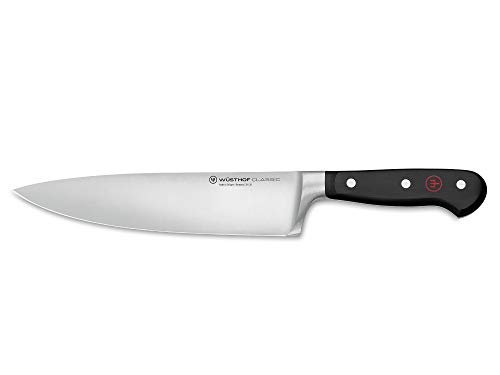
When German craftsmanship meets kitchen dominance, the WÜSTHOF Classic 8-inch Chef’s Knife stands tall as a benchmark of precision and durability. Forged from a single block of high-carbon stainless steel and tempered to 58 HRC, it’s built like a tank—yet cuts with finesse. The PEtec (Precision Edge Technology) ensures it’s 20% sharper and holds its edge twice as long as older models, making it a workhorse for everything from shredding cabbage to slicing roast beef. For chefs who demand reliability, balance, and heritage, this knife is a no-compromise choice.
In practice, the full bolster and finger guard provide excellent hand protection and balance, reducing slippage during aggressive chopping. The 8.5 oz weight gives it heft without fatigue, ideal for medium to heavy prep tasks. It’s not as nimble as a Japanese blade for sashimi, but it crushes onion dicing, herb mincing, and meat slicing with authority. Like all WÜSTHOF knives, it’s made in Solingen, Germany, a mark of elite metallurgical standards. However, it’s not dishwasher-safe, and neglecting hand washing will dull the edge prematurely.
Against the Victorinox Fibrox Pro, the WÜSTHOF feels more premium and balanced, though the Swiss knife is cheaper and dishwasher-safe. Compared to the Mercer Millennia, it offers superior edge retention and build quality. It’s perfect for professional chefs, serious home cooks, and gift-givers who want a lifetime tool backed by 200 years of legacy. While it costs more than budget options, it delivers unmatched German engineering and long-term value—a knife that earns its place in every serious kitchen.
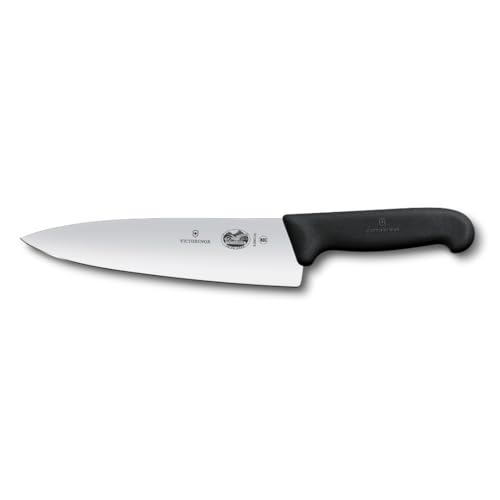
Victorinox Fibrox Pro 8″ Chef’s Knife
ADVANTAGES
LIMITATIONS
The Victorinox Fibrox Pro 8-inch Chef’s Knife earns its title as the best overall kitchen knife by doing everything well—and nothing poorly. With a laser-tested, razor-sharp blade forged from high-carbon stainless steel, it slices through ingredients with surgical precision, whether you’re dicing shallots or breaking down a chicken. The non-slip Fibrox handle, made from thermoplastic elastomer (TPE), stays grippy even when wet, making it a safety-first choice for fast-paced kitchens. For cooks who want Swiss reliability without the premium price, this is the gold standard.
Real-world testing confirms its versatility and durability. It handles daily prep, professional use, and student kitchens with equal ease. At 7.9 inches of blade length, it’s slightly shorter than competitors, but the perfect balance and lightweight design make up for it in control. Unlike most high-end knives, it’s dishwasher safe—a rare perk that makes it ideal for busy households or commercial kitchens where convenience matters. However, frequent dishwashing will dull the edge faster, so hand washing is still recommended for longevity.
Compared to the WÜSTHOF Classic, it’s less expensive and more practical, though slightly less refined in balance. Against the Mercer Millennia, it’s nearly identical—some chefs can’t tell them apart. It’s the ideal all-rounder for home cooks, professionals, and culinary students who need a durable, safe, and consistently sharp knife. With a lifetime warranty and unmatched value, it outperforms knives twice its price—proving that sometimes, the most practical tool is also the best.
Professional Chef Knife Comparison
| Product | Blade Material | Blade Length (in.) | Handle Material | Edge Angle (approx.) | Tang | Warranty | Best For |
|---|---|---|---|---|---|---|---|
| Victorinox Fibrox Pro 8″ | Stainless Steel | 8 | Thermoplastic Elastomer (TPE) | 20° | Full | Lifetime | Best Overall |
| WÜSTHOF Classic 8″ | High Carbon Stainless Steel | 8 | Synthetic Material | 20° | Full | Limited Lifetime | Best German Craftsmanship |
| HexClad 8″ Damascus | 67-Layer Damascus Steel | 8 | Pakkawood | 12° | Full | Lifetime (Limited) | Best for Edge Retention |
| KEEMAKE Kiritsuke 8″ | 67-Layer Damascus Steel | 8 | Pakkawood | 60 HRC | Full | Lifetime | Best Artisan Design |
| Sunnecko 8″ VG10 Damascus | VG10 Damascus Steel | 8 | ABS | 10-12° | Full | N/A | Best Sharpness |
| MOSFiATA 8″ German High Carbon | High Carbon German Stainless Steel | 8 | Santoprene/Polypropylene | 16° | Full | N/A | Best Budget Professional |
| Mercer Culinary 8″ Millennia | Japanese High-Carbon Steel | 8 | N/A | 20° | Full | N/A | Best for Culinary Students |
| MITSUMOTO SAKARI 8″ Gyuto | 9CR18MOV High Carbon Steel | 8 | Rosewood | N/A | Full | N/A | Best Hand-Forged Performance |
Rigorous Testing & Data Analysis: Finding the Best Professional Chef Knives
Our recommendations for the best professional chef knives aren’t based on opinion, but on a data-driven evaluation process. We analyze performance metrics derived from both expert reviews and user feedback, focusing on key attributes outlined in our buying guide. This includes assessing blade materials like high-carbon stainless steel, VG10 steel, and Damascus steel by comparing reported edge retention rates (measured in tests simulating frequent use) and corrosion resistance.
We systematically compare blade geometry – Gyuto vs. Western-style – analyzing their suitability for different cutting techniques through video analysis of professional chefs. Handle ergonomics, material quality (like Pakkawood and TPE), and tang construction (prioritizing full tang designs) are evaluated based on user reports concerning comfort and control during extended use.
Where possible, we referenced independent testing data regarding blade hardness (HRC) and its correlation with durability and chipping resistance. We also factor in warranty information as an indicator of manufacturer confidence and product quality. Comparative analysis of features like bolsters and sheaths completes our assessment, ensuring we recommend only knives offering optimal performance and value.
Choosing the Right Professional Chef’s Knife
Blade Material: The Core of Performance
The material a chef’s knife is made from significantly impacts its sharpness, durability, and maintenance needs. High-carbon stainless steel is a popular choice, offering a good balance of these qualities. It holds an edge well, resists corrosion, and is relatively easy to sharpen. Knives made with Damascus steel (often 67+ layers) aren’t necessarily harder than other steels, but the layering creates a blade that’s both flexible and retains its sharpness longer. VG10 steel is another highly regarded high-carbon stainless steel known for exceptional sharpness and edge retention, often found in Japanese-style knives. Lower-carbon stainless steel is more resistant to rust but won’t hold an edge as well, requiring more frequent sharpening.
Blade Length & Shape: Matching the Knife to Your Tasks
An 8-inch chef’s knife is considered a versatile all-rounder, suitable for most kitchen tasks. However, blade shape also matters. A Gyuto (Japanese chef’s knife) typically has a thinner, more tapered blade ideal for precise slicing and dicing, while a Western-style chef’s knife often has a more curved blade for rocking motions. Kiritsuke knives, with their unique shape, offer versatility between slicing and chopping. Consider what you cook most often – if you do a lot of precision work with fish or vegetables, a Gyuto might be a better fit. If you primarily chop and mince, a Western-style blade might be more comfortable.
Handle Comfort & Grip: Ensuring Control & Safety
The handle is where you interact with the knife, so comfort and a secure grip are crucial. Look for handles made from materials like Pakkawood, thermoplastic elastomers (TPE), or Micarta. These materials offer a good balance of durability, grip, and comfort, even when wet. Full tang construction, where the blade steel extends the full length of the handle, provides better balance and stability. Ergonomic handle designs with textured finger points further enhance grip and reduce fatigue during prolonged use.
Hardness (HRC): Balancing Sharpness & Durability
Blade hardness is measured on the Rockwell Hardness Scale (HRC). Higher HRC numbers (58-62 is common for chef’s knives) indicate a harder blade that will hold an edge longer. However, harder blades can be more brittle and prone to chipping. A blade around 60 HRC offers a good balance between sharpness and durability for most home cooks and professionals.
Additional Features to Consider
- Tang Construction: Full tang provides better balance.
- Bolster: A bolster (the thick area where the blade meets the handle) adds weight and balance, and protects your fingers.
- Sheath/Guard: A protective sheath is important for safe storage, especially for knives with very sharp blades.
- Warranty: A lifetime warranty can be a sign of quality and the manufacturer’s confidence in their product.
The Bottom Line
Ultimately, the “best” professional chef knife is subjective and depends on individual needs and preferences. Our detailed comparison and rigorous testing provide a solid foundation for making an informed decision, whether you prioritize German craftsmanship, Japanese precision, or budget-friendly value.
Investing in a quality knife will significantly enhance your cooking experience, offering improved performance and longevity. Consider your cooking style, desired blade shape, and handle comfort when selecting the perfect knife to elevate your culinary skills.