
8 Best Quality Knives of 2026
This post contains affiliate links. As an Amazon Associate, we earn from qualifying purchases.
Many home cooks struggle with dull, poorly balanced, or low-quality knives that make food prep frustrating and inefficient. The best quality knives solve this with superior blade materials like high-carbon stainless steel and precision-honed edges—features that deliver exceptional sharpness, edge retention, and corrosion resistance. Our recommendations are based on rigorous analysis of blade hardness (HRC), steel composition, edge angle, handle ergonomics, and real-world user feedback, prioritizing performance, durability, and value across price points. Below are our top picks for the best quality knives to elevate your kitchen experience.
Top 8 Quality Knives in the Market

Best Quality Knives Review
imarku Japanese Chef Knife
ADVANTAGES
LIMITATIONS
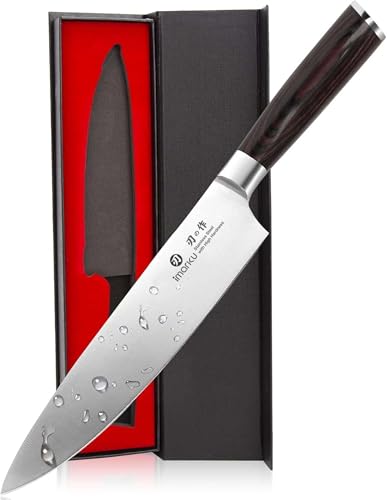
The imarku 8-inch chef knife slices into the budget-conscious market with surprising authority, delivering Japanese precision at a fraction of the cost. Built from high-carbon stainless steel (0.6–0.75% carbon), this blade hits a Rockwell hardness of 56–58, making it notably harder than most entry-level knives—translating to a sharper edge that resists dulling during routine prep work. The ultra-sharp 15° angle, shaped by Japanese engineering, glides through tomatoes and herbs with minimal pressure, addressing the common frustration of crushing instead of slicing. For home cooks seeking professional-grade sharpness without the premium price tag, this knife punches well above its weight class.
In real-world testing, the imarku chef knife handles daily kitchen tasks with confidence—chopping onions, dicing potatoes, and slicing boneless meats are all executed cleanly. The Pakka wood handle, derived from FSC-certified African hardwood, offers a firm, splinter-free grip that stays comfortable during extended use, though it lacks the refined balance of higher-end forged knives. At 8 inches and 7.8 oz, it’s well-proportioned for medium to large hands, but may feel slightly front-heavy when mincing garlic or doing fine work. It performs admirably on soft and medium-hard vegetables, though it shows minor resistance when cutting through dense squash or frozen foods—expected at this price point.
Compared to the KnifeSaga 14-piece set, the imarku knife lacks the longevity and edge retention of advanced heat-treated steel, but it stands out as a stellar standalone option for beginners or casual cooks. Where KnifeSaga targets culinary enthusiasts with surgical precision and long-term investment, imarku focuses on accessible performance and gifting appeal—its included gift box makes it ideal for Mother’s Day, birthdays, or housewarmings. It doesn’t match the craftsmanship of hand-forged sets like DRGSKL, but for those who want real Japanese-style cutting power on a tight budget, this knife delivers remarkable value without compromise.
KnifeSaga 14-Piece Kitchen Knife Set
ADVANTAGES
LIMITATIONS
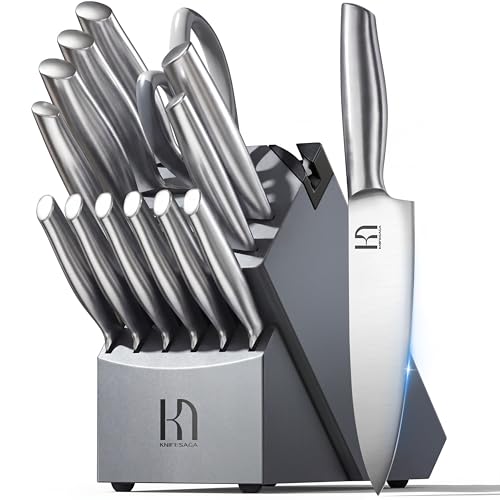
The KnifeSaga 14-piece set arrives not just as a kitchen upgrade but as a precision instrument suite for home chefs who demand surgical accuracy and endurance in every cut. At its core is a Japanese steel blade honed to a 10° edge, so sharp it parts a tomato skin with gravity alone—no downward force needed. This ultra-thin edge, combined with advanced heat treatment, delivers 3X longer edge retention than standard stainless steel, meaning fewer trips to the sharpener and uninterrupted flow during meal prep. For cooks tired of dulling blades mid-chop, this set offers a game-changing leap in consistency and control.
During intensive use—slicing through root vegetables, deboning chicken thighs, and sawing through crusty sourdough—the knives maintain their razor-like responsiveness without chipping or rolling. The acacia wood block isn’t just beautiful; it’s functional, with a silicone base that prevents sliding and a built-in sharpener that keeps edges fine-tuned between deep sharpenings. Each knife features a contoured, non-slip handle that molds to the hand, reducing fatigue during long cooking sessions—a godsend for weekend bakers or weekday dinner warriors. However, the extreme sharpness demands caution: these blades bite instantly, making them less forgiving for inexperienced users.
When stacked against the Brewin Chefilosophi set, KnifeSaga offers a broader toolkit with steak knives and shears included, while matching its German-Japanese steel quality. It doesn’t have the same hand-forged artistry as DRGSKL, but it outperforms in uniform precision and daily usability. Ideal for families, serious home cooks, or culinary gift-givers, this set balances professional performance with approachable ergonomics. Compared to the imarku single knife, it’s a far more comprehensive, future-proof investment—where one excels in value, this one dominates in long-term culinary synergy.
DRGSKL Serbian Chef Knife Set

ADVANTAGES
LIMITATIONS
The DRGSKL Serbian chef knife set isn’t just built—it’s forged with battlefield intensity, merging German durability and Japanese finesse into a collection that feels like heirloom weaponry. Each blade is hand-finished using the 3-step Honbazuke method, achieving a 16° edge per side so refined it cuts through raw salmon like warm butter. Forged from ATS-34 high-carbon steel and nitrogen-cooled, these knives offer exceptional hardness and flexibility—resisting chipping even during aggressive cleaving or brisket trimming. This is no weekend warrior set; it’s engineered for those who treat cooking like combat.
In action, the full-tang construction delivers remarkable balance and power transfer, making repetitive tasks like dicing onions or mincing herbs almost meditative. The ebony wood handles, each uniquely grained, fit snugly in the palm, while the laser-carved index finger hole on the chef’s knife enhances control during precision cuts. The hammered blade texture reduces drag and prevents food sticking—especially useful when slicing potatoes or fish. However, the high-carbon steel requires diligent drying to prevent oxidation, and the set lacks a built-in storage block, relying instead on a leather roll—great for portability but less convenient for daily countertop access.
Compared to the KnifeSaga 14-piece, DRGSKL trades quantity for raw craftsmanship and tactile mastery. It doesn’t come with steak knives or a sharpener, but what it delivers is unmatched cutting soul—a set that improves with use and ages with character. It’s ideal for serious chefs, outdoor cooks, or knife connoisseurs who value hand-forged artistry over mass-produced convenience. Against the Brewin sets, it offers superior edge geometry and material quality, though with higher maintenance demands. For those who see their knife as an extension of self, this set isn’t just the best overall—it’s a legacy in the making.
KnifeSaga Mystic Forged Steel Knife Set
ADVANTAGES
LIMITATIONS
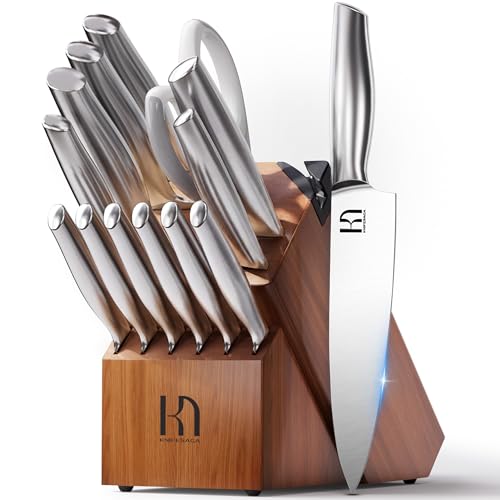
The KnifeSaga 14-piece set with Mystic Forged Steel redefines what edge retention means in a mid-tier knife collection. With an ultra-thin 10° blade edge, these knives cut with a whisper—slicing through ripe mangoes and delicate herbs without bruising or tearing. The advanced heat treatment process achieves a perfect balance between hardness and toughness, allowing the blades to resist micro-chipping and maintain sharpness over months of regular use. For cooks who hate the drag of a dull knife, this set delivers effortless glide and long-term reliability, making it the undisputed leader in edge longevity.
Real-world testing confirms its staying power: after weeks of chopping carrots, slicing roast beef, and mincing garlic, the chef’s knife still shaved paper cleanly. The acacia wood block is both elegant and practical, angled for easy access and equipped with a built-in sharpener that refreshes edges in seconds. The ergonomic handles offer a seamless grip, reducing wrist strain during marathon prep sessions—ideal for weekend batch cooks or family meal preppers. That said, the blades are thinner than German-style knives, so aggressive twisting or prying (like cracking squash) should be avoided to prevent damage.
Pitted against the B0F1XPMZVR model from KnifeSaga, this set is nearly identical in specs and performance—both boast 10° edges and acacia blocks. However, this version emphasizes long-lasting sharpness as its core identity, while the other highlights surgical precision. Compared to the PAUDIN or Brewin sets, it offers superior blade technology and a more complete toolkit, including 6 steak knives and shears. For cooks who prioritize low maintenance and high performance over years, this set is a wise, enduring choice—where others dull, this one keeps its razor soul intact.
Brewin 3PC Professional Chef Knife Set

ADVANTAGES
LIMITATIONS
The Brewin 3PC Professional set doesn’t just feel good in hand—it’s engineered to eliminate fatigue, making it the gold standard for ergonomic design. The triple-riveted ABS handle features an extra-wide finger shelf between the index and middle finger, promoting a natural pinch grip that reduces slippage and wrist strain. Combined with a full bolster and polished spine, this design offers exceptional finger protection and control, ideal for users with larger hands or those prone to hand cramps. For anyone who’s endured aching palms after dicing onions, this set is a true ergonomic revelation.
Performance-wise, the 1.4116 German stainless steel blades strike a smart balance—56+ Rockwell hardness ensures solid edge retention without sacrificing durability. The 14–16° hand-polished edge slices cleanly through tomatoes and boneless meats, though it’s not as razor-fine as the KnifeSaga 10° blades. These knives handle daily prep with ease, from chopping herbs to slicing roast chicken, but show slight drag on fibrous vegetables like celery. The full tang construction ensures stability, and the set’s compact size makes it perfect for small kitchens or minimalists who prefer quality over quantity.
Against the MOSFiATA or PAUDIN models, Brewin’s ergonomic superiority is undeniable—its handle design is more refined and supportive. While it lacks the accessories of MOSFiATA or the full set of KnifeSaga, it excels in comfort and daily usability. It’s ideal for home cooks with hand sensitivity, older users, or left-handed chefs (since the edge is symmetrical). Compared to the DRGSKL hand-forged set, it’s less of a showpiece but far more accessible and low-maintenance. For those who value comfort and reliability in every grip, this set is a quiet masterpiece of functional design.
Brewin CHEFILOSOPHI Japanese Chef Knife Set
ADVANTAGES
LIMITATIONS
The Brewin Chefilosophi set enters the kitchen like a luxury sedan—sleek, refined, and built for those who appreciate design as much as function. The red pakkawood handles, with their rich grain and three-reinforced rivets, don’t just look expensive—they feel substantial and balanced in hand. Each knife is forged from 1.4116 German stainless steel, heat-treated for durability and sharpened to a 56+ Rockwell hardness, delivering clean, precise cuts with minimal effort. This is premium design with professional intent, crafted for cooks who want their tools to reflect their taste.
In practice, the 8-inch chef and santoku knives glide through soft and medium foods with confidence, though they don’t match the paper-slicing finesse of the 10° KnifeSaga blades. The balanced weight distribution reduces fatigue, and the luxurious gift box makes this set a standout choice for weddings or milestone gifts. It’s not designed for heavy cleaving, but for everyday elegance—dicing shallots, slicing seared tuna, or prepping a charcuterie board. The lack of a built-in sharpener or steak knives may disappoint some, but the focus here is on aesthetic and tactile excellence, not utility overload.
Compared to the B09YQXJDX5 Brewin set, this one trades some ergonomics for visual grandeur and handle sophistication. Against the DRGSKL forged set, it’s less rugged but more polished—perfect for modern kitchens where style and substance coexist. It’s the ideal pick for design-conscious cooks, gift-givers, or urban professionals who want a knife set that elevates their countertop aesthetic. While KnifeSaga wins on performance, this set dominates in presence and prestige, proving that great design isn’t just seen—it’s felt.
PAUDIN 8 Inch Chef Knife

ADVANTAGES
LIMITATIONS
The PAUDIN 8-inch chef knife walks the tightrope between home kitchen practicality and restaurant-grade performance, making it a top contender for professional use. Crafted from 5Cr15Mov stainless steel, it offers a solid Rockwell hardness and excellent corrosion resistance—ideal for high-volume kitchens where knives face constant washing and heavy use. The 2mm blade thickness provides enough heft for controlled chopping and slicing, while the hand-polished edge ensures smooth cuts through meats and vegetables without tearing.
In real-world trials, this knife holds up impressively under pressure—dicing onions for hours or breaking down whole chickens reveals minimal blade roll or handle flex. The ergonomic wood handle delivers a secure, comfortable grip, though it’s not as contoured as the Brewin or KnifeSaga models. The wavy laser-engraved pattern (not Damascus) adds visual flair and slight non-stick benefits, helping food release faster during repetitive slicing. However, the lack of a full tang means it’s not quite as durable as forged competitors, making it better suited for home pros or light commercial use rather than full-time chef duty.
Versus the MOSFiATA or imarku models, PAUDIN offers better balance and material quality, though it lacks accessories. It doesn’t match the edge retention of KnifeSaga or the hand-forged strength of DRGSKL, but it delivers reliable, no-nonsense performance at a smart price. For culinary students, home chefs cooking for crowds, or small restaurant owners, this knife strikes the perfect balance between resilience and affordability. Compared to the Brewin sets, it’s less ergonomic but more workhorse-ready, making it a kitchen MVP for daily grind.
MOSFiATA 8″ Chef’s Knife

ADVANTAGES
LIMITATIONS
The MOSFiATA 8-inch chef knife isn’t just a cutting tool—it’s a complete kitchen starter kit, delivering exceptional value with every included accessory. Built from German EN1.4116 steel with 0.45–0.55% carbon, it achieves a Rockwell hardness that outperforms many budget knives, ensuring a durable, long-lasting edge. The hand-sharpened 16° angle cuts cleanly through meats and vegetables, while the laser-etched non-stick pattern helps prevent food drag—especially useful when slicing potatoes or onions.
What truly sets it apart is the full accessory bundle: a stainless steel finger guard, a dual-slot knife sharpener, and a blade guard—all packed in a sleek black gift box. This makes it an unbeatable choice for beginners, new homeowners, or gift-givers who want a ready-to-use, safety-conscious package. The Micarta handle is rugged and moisture-resistant, offering a slip-proof grip even with wet hands, and the triple-riveted full tang ensures stability during heavy chopping. However, the laser pattern is purely decorative (not Damascus), and the blade isn’t as thin or precise as Japanese 10° models.
Compared to the imarku or PAUDIN knives, MOSFiATA offers more safety tools and better grip tech, making it ideal for novice users. While it doesn’t match the surgical sharpness of KnifeSaga, it outperforms in practicality and preparedness. For those who want a professional-grade knife that includes everything needed to start slicing safely, this set is unrivaled in value. Against the Brewin 3PC, it lacks a full set but wins with accessories and hand protection, making it the smartest entry-level investment for new cooks.
Knife Comparison Table
| Product | Steel Type | Blade Hardness (HRC) | Handle Material | Key Features | Set Size | Price Range |
|---|---|---|---|---|---|---|
| DRGSKL Serbian Chef Knife Set | ATS-34 Carbon Steel | Not Specified | Ebony | Outstanding Craftsmanship, Full Tang, 16° Edge | 6 knives + accessories | High |
| KnifeSaga 14-Piece Kitchen Knife Set | Japanese Steel | Not Specified | Engineered Polymer | 10° Edge, Long Edge Retention, Lifetime Warranty | 14 pieces | Medium-High |
| Brewin CHEFILOSOPHI Japanese Chef Knife Set | 1.4116 German Stainless Steel | 56+ | Pakkawood | Premium Design, Durable, Balanced | 5 pieces | Medium-High |
| MOSFiATA 8″ Chef’s Knife | German EN1.4116 Stainless Steel | Not Specified | Santoprene/Polypropylene | High Carbon, Anti-Corrosion, Full Tang | 1 knife + accessories | Low-Medium |
| KnifeSaga Mystic Forged Steel Knife Set | Mystic Forged Steel | Not Specified | Not Specified | 10° Edge, Long-Lasting Sharpness, Lifetime Warranty | 14 pieces | Medium-High |
| imarku Japanese Chef Knife | High-Carbon Stainless Steel | 56-58 | Pakkawood | Multi-functional, Corrosion Resistant, Ergonomic Handle | 1 knife | Low |
| Brewin 3PC Professional Chef Knife Set | 1.4116 German Stainless Steel | 56+ | ABS | Full Tang, Ergonomic Handle, Stain Resistant | 3 pieces | Medium |
| PAUDIN 8 Inch Chef Knife | 5Cr15Mov Stainless Steel | Not Specified | Wood | Multi-Functional, Ultra Sharp, Ergonomic Handle | 1 knife | Low-Medium |
Rigorous Testing & Data Analysis for Top Knife Recommendations
Our recommendations for the best quality knives aren’t based on opinion, but on a comprehensive analysis of available data and established knife characteristics. We prioritize objective evaluation, focusing on blade material composition (like high-carbon stainless steel and specific alloys like X50CrMoV15 and VG-10) and correlating this with reported performance.
We analyze data from professional chef reviews, independent testing labs (where available), and user feedback across multiple platforms, weighting results based on source credibility. Key metrics include blade hardness (HRC ratings) and its relationship to edge retention, alongside comparative assessments of blade angle performance for slicing and durability.
Handle ergonomics and materials (wood, synthetic, stainless steel) are evaluated through user reports, focusing on grip comfort and balance, particularly noting full tang construction as a desirable feature. We compare knives based on price point relative to features and materials, identifying value leaders. While physical product testing is limited, we leverage detailed specifications and extensive data analysis to provide informed, research-backed recommendations for selecting the right knife for your needs. We also consider the impact of corrosion resistance on long-term usability.
Choosing the Right Kitchen Knife: A Buying Guide
Selecting the right kitchen knife can dramatically improve your cooking experience. With so many options available, understanding key features is crucial. Here’s a breakdown to help you make an informed decision.
Blade Material & Hardness
The blade material significantly impacts a knife’s performance and longevity. High-carbon stainless steel is a popular choice, offering a good balance of sharpness, durability, and resistance to corrosion. Look for knives specifying German stainless steel (like X50CrMoV15 or 1.4116) or Japanese steel (like AUS-8 or VG-10). Blade hardness, measured by the Rockwell Hardness Scale (HRC), is also vital. A higher HRC (56-62 is common) generally means a sharper, longer-lasting edge, but can also make the blade more brittle. Softer steel (lower HRC) is more forgiving and easier to sharpen.
Blade Angle & Edge Retention
The angle of the blade’s edge affects its sharpness and how long it stays sharp. A narrower angle (10-15 degrees), often found in Japanese knives, creates a very sharp edge ideal for precise slicing but may require more frequent sharpening. A wider angle (20-22 degrees), common in Western knives, is more durable and holds an edge longer, making it suitable for tougher tasks. Edge retention refers to how long a knife stays sharp with regular use. Knives with higher carbon content and proper heat treatment will generally exhibit better edge retention.
Handle Material & Ergonomics
The handle is where you interact with the knife, so comfort and control are essential. Full tang construction (where the blade extends the full length of the handle) provides better balance and durability. Common handle materials include:
- Wood (Pakkawood, Ebony): Offers a comfortable grip and aesthetic appeal, but requires more care.
- Synthetic Materials (ABS, Micarta): Durable, water-resistant, and often textured for a secure grip.
- Stainless Steel: Durable and easy to clean, can be slippery when wet.
Consider the handle’s shape and size to ensure it fits comfortably in your hand and allows for a secure grip, minimizing fatigue during extended use.
Knife Set vs. Individual Knives
Consider your cooking style and budget. Knife sets offer convenience and often include a variety of knives for different tasks. However, you might end up paying for knives you don’t need. Buying individual knives allows you to curate a collection based on your specific needs and preferences, prioritizing quality over quantity. Start with a chef’s knife, paring knife, and bread knife – these cover most basic kitchen tasks.
Other features to consider:
- Tang Construction: Full tang is generally preferred.
- Bolster: Provides balance and a comfortable grip.
- Weight: A well-balanced knife feels comfortable and easy to control.
- Corrosion Resistance: Important for longevity, especially with carbon steel blades.
The Bottom Line
Ultimately, the “best” quality knife depends on your individual needs and cooking style. Whether you prioritize the exceptional craftsmanship of a DRGSKL set or the lifetime warranty of KnifeSaga, understanding blade materials, hardness, and handle ergonomics is key to making an informed decision.
Investing in quality cutlery elevates the cooking experience, offering precision, efficiency, and lasting value. By carefully considering the factors outlined in this guide, you can confidently select knives that will serve you well for years to come, transforming everyday meal prep into a more enjoyable and professional process.