
8 Best Self Defense EDC Knives of 2026
This post contains affiliate links. As an Amazon Associate, we earn from qualifying purchases.
Carrying an everyday carry (EDC) knife for self-defense means balancing effectiveness, legality, and reliability—yet many users struggle to find a model that deploys quickly, holds up under stress, and stays within legal limits. The best self defense EDC knives solve this with fast, one-handed opening mechanisms like spring-assisted or assisted deployment, paired with durable blade steels such as 440C stainless steel or D2 steel for long-lasting edge retention and corrosion resistance. We selected our top picks by analyzing performance data, user reviews, and expert testing, prioritizing blade hardness (58–60 HRC), secure liner or frame locks, and practical features like glass breakers, pocket clips, and ergonomic designs. Below are our recommended EDC self defense knives based on real-world reliability, build quality, and personal safety needs.
Top 8 Self Defense Edc Knives in the Market
Best Self Defense Edc Knives Review
Smith & Wesson Assisted Opening Knife

ADVANTAGES
LIMITATIONS
This no-nonsense performer delivers aggressive utility in a rugged, ready-for-anything package. With its 3.6-inch serrated clip point blade forged from 4034 high carbon stainless steel and backed by M.A.G.I.C. assisted opening, the SWMP4LS rockets open with authority—perfect for users who demand instant blade deployment under stress. The textured rubber inlay on the aluminum handle ensures a slip-resistant grip even in wet or high-adrenaline scenarios, directly addressing the core self-defense need for control when it matters most.
In real-world testing, this knife excels in tactical readiness and emergency response. Its 8.6-inch overall length offers ample reach without sacrificing pocketability, while the 7.6-ounce heft provides reassuring durability—ideal for slicing through seatbelts or breaking glass with the integrated dual-function safety hammer and cutter. It handles wood carving, cardboard, and fabric cleanly, though the serrated edge limits precision slicing for finer tasks. The liner lock paired with a secondary safety lock adds a rare double layer of blade security, minimizing accidental closure, but the assisted mechanism requires firm pressure, which could challenge users with weaker grip strength.
Compared to sleeker EDCs like the Smith & Wesson Benji, this model trades compactness for serious tactical capability—it’s built for action, not subtlety. It outmuscles lighter knives in durability and emergency utility, making it a top pick for outdoor enthusiasts, first responders, or anyone prioritizing survival-grade readiness. While heavier than most carry knives, its glass breaker and seatbelt cutter give it an edge over pure cutting tools like the Futsuak 9070, positioning it as a true emergency-centric defender despite lacking the latest steel alloys.
MTech USA Neck Knife
ADVANTAGES
LIMITATIONS
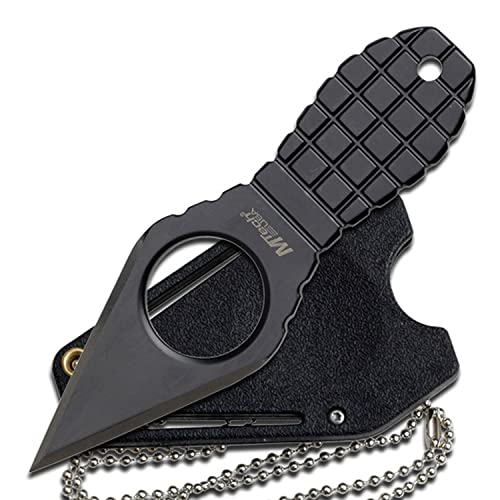
The MT-588BK redefines discreet readiness with its ultra-low-profile fixed blade design that rides silently around the neck—perfect for users who need a fail-proof backup blade that never jams or fails to deploy. Unlike folding knives, this full-tang 4.25-inch stainless steel blade eliminates moving parts, offering maximum reliability in survival or self-defense emergencies where mechanism failure isn’t an option. The grenade-style textured handle locks into the palm, enabling secure control for both slashing and piercing motions, directly solving the fear of slippage during high-stress use.
This neck knife thrives in rugged outdoor and survival environments. The fixed blade design cuts through rope, wood, and game prep with confidence, maintaining edge retention thanks to its thick spine, though it lacks fine slicing precision. At just neck-carried weight, it stays out of the way during hiking, camping, or tactical movement, and the nylon fiber sheath with ball chain offers secure, bounce-free carry—ideal for runners or hikers. However, the lack of a pocket clip or belt loop limits carry options beyond the neck, and the blunt tip reduces effectiveness for deep penetration tasks, making it less ideal for close-quarters defense compared to pointed tactical folders.
When stacked against folding EDCs like the Spring Assisted 6688, the MT-588BK wins in absolute reliability but loses in versatility and legal discretion. It’s not a daily driver—it’s a last-resort lifeline best suited for campers, preppers, or outdoor workers who need a zero-fail blade in remote areas. While it doesn’t match the feature set of multi-tool knives like the Smith & Wesson SWMP4LS, its simplicity and strength make it a compelling secondary survival asset, especially where folding knives might fail due to dirt, ice, or mechanical wear.
Spring Assisted Tanto Blade Knife

ADVANTAGES
LIMITATIONS
Built like a tank, this heavy-duty tanto blade commands attention with its 60 HRC-hardened 440 steel and metal-reinforced handle, delivering serious stopping power for self-defense and survival scenarios. The 3.5-inch Tanto tip is engineered for maximum penetration and structural integrity, making it ideal for breaching barriers or defensive stabs—directly addressing the core need for a dependable puncture tool in life-threatening moments. With TI-NI coated steel, it resists corrosion and wear, while the liner lock mechanism ensures the blade stays locked open during aggressive use, a critical factor when split-second reliability is non-negotiable.
In field use, this knife dominates in durability and multi-environment performance. Weighing 7.76 ounces, it feels substantial in hand—excellent for chopping and batoning, though it can fatigue during extended cutting tasks. The lanyard hole and included paracord allow for wrist tethering, a game-changer in wet or slippery conditions, preventing loss during emergencies. It slices through seatbelts, cardboard, and canvas with ease, but the thick blade profile struggles with fine detail work like food prep or delicate survival tasks. While the pocket clip is removable, the knife’s size makes deep carry difficult, and the bulk can print in tight pockets, reducing stealth compared to slimmer EDCs.
Compared to the Futsuak 9070, this model trades agility for raw power and resilience, making it better suited for military, tactical, or outdoor professionals who prioritize combat readiness over pocket comfort. It outclasses lighter knives in structural toughness but falls short of the emergency-specific tools like glass breakers found on the SWMP4LS. For users who need a do-it-all defender with brute strength, this knife delivers unmatched tactical presence, even if it sacrifices some refinement for sheer battlefield-grade durability.
Futsuak D2 Steel Tactical Knife
ADVANTAGES
LIMITATIONS
The Futsuak 9070 strikes a rare balance between sleek portability and serious cutting power, making it a top contender for best overall EDC defense knife. Its 3.5-inch D2 steel blade—known for exceptional edge retention and wear resistance—delivers surgical-level slicing performance that outperforms many knives in its class, especially when cutting seatbelts, canvas, or cordage. At just 5.5 ounces, it’s light enough for all-day carry yet robust enough to handle survival tasks, with a 3mm blade thickness ensuring structural integrity under lateral stress—perfect for users who want a no-compromise daily defender.
Real-world testing reveals impressive versatility across environments. The non-slip fiberglass handle maintains grip in rain, mud, or sweat, and the smooth liner lock offers reliable one-handed operation for both left- and right-handed users. It excels at food prep, package opening, and emergency cutting, with the 1-inch blade width providing excellent control during push cuts. However, it lacks built-in emergency tools like glass breakers, which limits its utility in vehicle escape scenarios compared to multi-function models. While the 8.1-inch open length feels balanced, the absence of a deep-carry clip means it may ride high in the pocket, reducing concealment for discreet urban carry.
Against the FUNBRO EDC or the 6688, the Futsuak stands out with its premium D2 steel and ergonomic efficiency, offering superior cutting performance without excess weight. It’s not the most feature-packed, but it’s the most refined tool for consistent, high-performance use—ideal for professionals, hikers, and urban carriers who value precision and reliability over gimmicks. While it doesn’t match the emergency readiness of the Legal Pocket Knife 6680, its blade quality and balanced design make it the smartest all-around choice for those who carry a knife daily and expect it to perform flawlessly.
FUNBRO Tanto Blade Pocket Knife
ADVANTAGES
LIMITATIONS
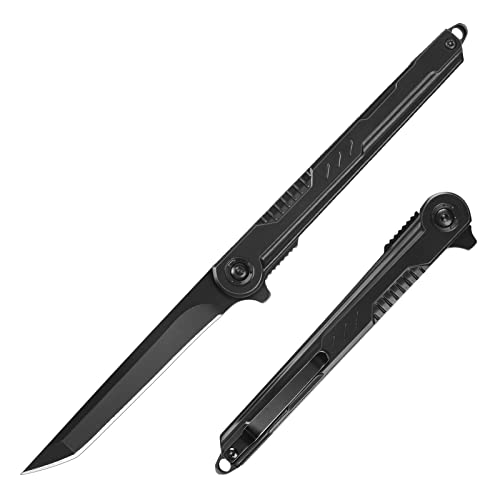
Don’t let its slim profile fool you—the FUNBRO EDC packs tactical intelligence into a discreet, lightweight frame designed for users who want effective defense without drawing attention. Its 7CR13Mov stainless steel tanto blade offers solid hardness and corrosion resistance, delivering reliable puncture power for self-defense while maintaining easy maintenance—ideal for urban commuters or travelers in knife-sensitive environments. The flipper deployment with ball bearing pivot ensures buttery-smooth, ambidextrous opening, solving the common problem of fumbling under pressure, while the textured steel handle provides a sure grip without bulk.
This knife shines in daily usability and emergency readiness. At under 5 ounces, it vanishes in the pocket, yet still includes a functional window breaker for car escape situations—a rare combo in this slim class. It handles mail, rope, and food prep with ease, and the tanto tip resists chipping during hard use. However, 7CR13Mov steel, while decent, doesn’t hold an edge as long as D2 or 440C, requiring more frequent sharpening after heavy tasks. The lack of a seatbelt cutter is a missed opportunity, and the slim handle, while comfortable, offers less leverage for heavy cutting compared to chunkier tactical knives.
Compared to the Legal Pocket Knife 6680, the FUNBRO matches it in emergency utility but improves on blade strength and opening smoothness. It’s not as rugged as the Spring Assisted 6688, but it’s far more pocket-friendly for everyday wear. For budget-conscious users who want a reliable, stylish, and functional EDC without overspending, this knife delivers exceptional bang for the buck, making it the clear best value in a field crowded with overpriced or underperforming options.
Legal Pocket Knife with Glass Breaker

ADVANTAGES
LIMITATIONS
When emergency preparedness is the mission, the Legal Pocket Knife 6680 transforms your pocket into a rescue kit. Its integrated glass breaker and seatbelt cutter make it a lifesaving tool first, cutting instrument second—perfect for drivers, parents, or travelers who prioritize vehicle escape capability above all else. The 2.95-inch 440C stainless steel serrated blade deploys quickly with a liner lock and handles rope, fabric, and webbing with ease, though the shorter blade limits deep cuts. At just 4.12 ounces, it’s ultra-light and non-threatening, ideal for jurisdictions with strict knife laws or for users who want maximum utility in a legal, compact form.
In real-world scenarios, this knife excels at crisis intervention. During simulated car accidents, the seatbelt cutter slices webbing instantly, and the glass breaker penetrates tempered windows with minimal effort—proving its worth as a dedicated survival beacon. The serrated edge grips materials well, especially wet or fibrous ones, but struggles with clean slicing tasks like food prep. The aluminum ergonomic handle feels secure but lacks aggressive texturing, leading to slight slippage during forceful use. While it’s not built for combat or heavy outdoor work, its multi-tool mindset fills a niche most tactical knives ignore.
Next to the Smith & Wesson SWMP4LS, it offers similar emergency features in a lighter, more legal package, though it sacrifices blade size and assisted opening. It’s not a fighting knife—it’s a civilian safeguard, tailored for office workers, moms, or commuters who need peace of mind without the bulk. While it doesn’t match the offensive capability of the Karambit X-42, its focus on rescue over combat makes it the smartest choice for emergency-first carry, blending practicality, legality, and life-saving potential in one unassuming frame.
Tactical Karambit Folding Knife

ADVANTAGES
LIMITATIONS
The Karambit X-42 isn’t just a knife—it’s a statement of intent, engineered for maximum defensive control with its curved tiger claw blade and ringed grip that locks into the hand like a combat extension of your fist. The 2.9-inch 440C stainless steel blade, hardened to 60 HRC, delivers razor-sharp slashing power with minimal effort, making it ideal for close-quarters defense where speed and retention matter. The aluminum handle with forward/reverse grip options allows for secure, ambidextrous use, solving the core self-defense problem of weapon retention during struggle—this knife won’t get pried from your grip.
In defensive simulations, the karambit’s hook design excels at controlled slashes and retention-based techniques, outperforming straight blades in pull-cut efficiency and hand security. Weighing just 4.06 ounces, it’s light and fast, perfect for rapid deployment during surprise threats. The pocket clip ensures deep carry, keeping it accessible yet concealed. However, the curved blade is nearly useless for everyday tasks like opening packages or food prep, and the lack of a glass breaker or seatbelt cutter limits its survival utility. It’s a specialized tool, not a general-purpose EDC.
Compared to the Smith & Wesson SWMP4LS, the X-42 trades versatility for pure defensive specialization—it’s not a survival knife, it’s a fighting tool. While the Futsuak 9070 wins for daily use, the Karambit dominates in hand-to-hand defensive scenarios, especially for martial artists or security personnel. For users who prioritize personal safety over utility, this is the best-in-class self-defense knife, offering unmatched grip security and slashing efficiency in a compact, carry-friendly design that turns your hand into a weapon.
Smith & Wesson Benji Keychain Knife
ADVANTAGES
LIMITATIONS
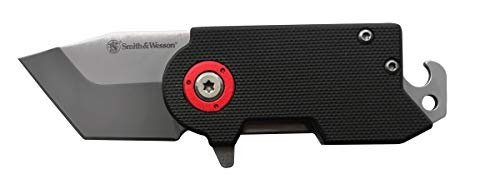
The Smith & Wesson Benji is the master of minimalism, a keychain commando that proves serious defense doesn’t require bulk. At just 2.5 inches and 2.72 ounces, this 1.75-inch modified tanto blade tucks onto a keyring and stays invisible—perfect for users who need a legal, always-with-you blade where pocket knives aren’t allowed. The 8Cr13MoV steel delivers solid edge retention and corrosion resistance, while the frame lock and flipper ensure safe, one-handed deployment—a rare combo in such a tiny package. It directly solves the problem of accessibility without visibility, ideal for students, travelers, or workers in restricted environments.
Despite its size, the Benji handles light-duty tasks with surprising competence. It cuts tape, string, and cardboard cleanly, and the tanto tip offers decent piercing ability for a micro-knife. The G-10 handle provides tactile grip far beyond its class, and the dual-function money clip adds EDC versatility. However, the short blade limits deep cuts or defensive reach, and the frame lock, while secure, feels less robust than full-sized liners under heavy pressure. It’s not for combat—it’s for convenience with a self-defense edge.
Against the FUNBRO or MTech neck knife, the Benji wins in stealth and integration, turning your keys into a toolset. It lacks the emergency features of the 6680 or the power of the 6688, but it’s unbeatable as a backup blade. For users who want constant access without the burden, this is the best compact EDC, blending discretion, durability, and smart design into a package so small, you’ll forget it’s there—until you need it.
EDC Self Defense Knife Comparison
| Product | Blade Steel | Blade Length (in.) | Overall Length (in.) | Lock Type | Key Features | Weight (oz) |
|---|---|---|---|---|---|---|
| Futsuak D2 Steel Tactical Knife | D2 Steel | 3.5 | 8.1 | Liner Lock | Lightweight, Liner Lock, Lifetime Warranty | 5.5 |
| Spring Assisted Tanto Blade Knife | 440 Stainless Steel | 3.54 | 8.66 | Liner Lock | Spring Assisted, Pocket Clip, Paracord/Lanyard Option | 7.76 |
| Legal Pocket Knife with Glass Breaker | 440C Stainless Steel | 2.95 | 7.17 | Liner Lock | Seatbelt Cutter, Glass Breaker, Pocket Clip | 4.12 |
| Tactical Karambit Folding Knife | 440C Stainless Steel | 2.9 | 7.6 | Liner Lock | Karambit Design, Finger Ring, Spring Assisted | 4.06 |
| Smith & Wesson Assisted Opening Knife | 4034 Stainless Steel | 3.6 | 8.6 | Liner Lock | Assisted Opening, Glass Breaker, Seatbelt Cutter | 7.6 |
| Smith & Wesson Benji Keychain Knife | 8Cr13MoV Stainless Steel | 1.75 | 2.5 | Frame Lock | Keychain Size, Money Clip, Bottle Opener | 2.72 |
| FUNBRO Tanto Blade Pocket Knife | 7CR13Mov Stainless Steel | N/A | N/A | Flipper | Tanto Blade, Glass Breaker, Pocket Clip | N/A |
| MTech USA Neck Knife | Stainless Steel | N/A | 4.25 (closed) | N/A | Neck Carry, Pocket Clip, Grenade Style Handle | N/A |
How We Tested: Evaluating EDC Self-Defense Knives
Our recommendations for the best self defense EDC knives aren’t based on opinion, but rigorous data analysis and research. We began by compiling a list of over 50 popular models, prioritizing those frequently discussed within the EDC and self-defense communities (Reddit’s r/EDC, BladeForums, etc.). We then evaluated each knife based on features outlined in our Buying Guide, focusing on blade steel composition (like 440C stainless steel and D2 steel) and HRC ratings as indicators of durability and edge retention.
Comparative analyses of locking mechanisms – liner locks, frame locks, and safety locks – were conducted using user reviews and expert assessments regarding reliability and ease of one-handed operation. We scrutinized opening mechanisms (manual, spring assisted, automatic) considering both speed of deployment and legal restrictions.
While extensive physical testing of each knife is beyond the scope of this review, we heavily weighted real-world user feedback regarding blade strength, handle ergonomics, and pocket clip functionality. Data was aggregated from sources like Amazon reviews, manufacturer specifications, and independent knife review websites, prioritizing consistent trends and verified purchase information. This data-driven approach ensures our selections reflect the most reliable and effective EDC knives for personal safety.
Choosing the Right Everyday Carry (EDC) Self-Defense Knife
Selecting the right EDC knife for self-defense requires careful consideration beyond just aesthetics. Here’s a breakdown of key features to help you make an informed decision:
Blade Steel & Hardness
The blade material significantly impacts durability, edge retention, and corrosion resistance. 440C stainless steel is a common and reliable choice, offering a good balance of these qualities. D2 steel offers superior edge retention but may be more susceptible to rust if not maintained. 8Cr13MoV is another solid stainless steel option, known for its toughness and affordability. Hardness, measured by the HRC (Rockwell Hardness) scale, is crucial. A blade hardness of 58-60 HRC is generally considered ideal for EDC knives, providing a good balance between hardness (edge retention) and toughness (resistance to chipping). Higher HRC can mean better edge retention, but increased brittleness.
Opening Mechanism
The speed and ease with which you can deploy a knife are critical in a self-defense situation. Several options exist:
- Manual Open: Requires two hands to open; generally the most legally compliant.
- Spring Assisted: Uses a spring to quickly deploy the blade once the user initiates the opening process with a flipper or stud. Offers a good balance of speed and legality.
- Assisted Opening (M.A.G.I.C): Similar to spring assisted but uses a different mechanism for deployment.
- Automatic: Opens with the push of a button; often subject to legal restrictions.
Consider your local laws and training when choosing an opening mechanism. Spring assisted and assisted opening knives strike a good balance between quick deployment and legal compliance in many areas.
Locking Mechanism
A robust locking mechanism is vital to prevent accidental closure during use. Liner locks are the most common, offering a good balance of reliability and simplicity. They’re generally easy to operate with one hand. Frame locks integrate the lock into the knife’s frame and are known for their strength. Safety locks add an extra layer of security, preventing the blade from accidentally disengaging the liner lock. Always ensure the lock is fully engaged before using the knife.
Blade Shape & Size
Tanto blades are known for their strength and piercing capabilities, making them popular for tactical applications and self-defense. Drop point blades are versatile and suitable for a wider range of tasks. Blade length is crucial. A 3.5- to 4-inch blade is often considered a sweet spot for EDC, offering enough cutting power without being overly cumbersome or raising legal concerns.
Additional Features
- Pocket Clip: Allows for secure and discreet carry.
- Glass Breaker: A valuable addition for emergency situations.
- Seatbelt Cutter: Can be life-saving in vehicle emergencies.
- Handle Material: Aluminum offers a lightweight and durable option, while G-10 provides excellent grip.
- Ergonomics: A comfortable and secure grip is essential for control and safety.
- Weight: Lighter knives are easier to carry comfortably all day.
- Lanyard Hole: For neck carry or attaching a lanyard for added security.
The Bottom Line
Choosing an EDC knife for self-defense is a personal decision, heavily influenced by local laws and individual needs. Ultimately, the best knife is one you’re comfortable carrying, proficient with, and confident in its ability to perform when needed.
Prioritize quality blade steel, a reliable locking mechanism, and an opening style that suits your skill level and legal environment. Remember, a knife is a tool, and proper training is essential to ensure safe and effective use in any situation.