
9 Best Sharpeners for Kitchen Knives 2026
This post contains affiliate links. As an Amazon Associate, we earn from qualifying purchases.
Dull kitchen knives make meal prep frustrating and unsafe, turning simple slicing into a risky chore. The best sharpeners for kitchen knives solve this with precision angle control and durable abrasives—like diamond plates or ceramic rods—that restore a razor-sharp edge quickly and consistently. We evaluated top models based on performance, build quality, ease of use, and real-world feedback from thousands of reviews to bring you the most reliable picks across electric and manual options. Below are our top-rated sharpeners for every kitchen need and budget.
Top 9 Sharpeners For Kitchen Knives in the Market
Best Sharpeners For Kitchen Knives Review
ZWILLING 4-Stage Pull Through Sharpener

ADVANTAGES
LIMITATIONS
This no-nonsense workhorse delivers consistent, reliable sharpening with surgical precision—perfect for home cooks who demand professional results without the learning curve. The dual ceramic rods, featuring coarse and fine grits, allow you to aggressively reshape a dull edge and then refine it to a clean, polished finish in seconds. What truly sets this sharpener apart is its dual-angle design: one side calibrated for Western-style blades (20°), the other for Asian-style (15°), making it a rare tool that respects the engineering behind different knife geometries. If you’ve ever ruined a delicate Santoku by using a one-size-fits-all sharpener, this model solves that pain point with intelligent, blade-specific tuning.
In real-world use, the sharpener handles everything from thick-tapered chef’s knives to narrow Nakiris with equal confidence. The non-slip base keeps it locked in place, even during forceful pulls, while the ergonomic handle guides motion smoothly and protects fingers—a small but crucial safety win. However, it’s not designed for serrated knives or ultra-hard steels like SG2 or HAP40; attempting to sharpen those may lead to inefficient results or premature wear. For daily maintenance of mid-to-high-end kitchen cutlery, though, it performs remarkably fast touch-ups in under 10 strokes per knife.
Compared to the AIERLIAN roller system, this ZWILLING model trades versatility in steel compatibility for unmatched ease and consistency across common kitchen blades. It’s less about customization and more about foolproof performance—ideal for users who want sharp knives now, not after a 15-minute learning session. While the Chef’sChoice 15XV offers electric precision, this manual unit wins on speed, simplicity, and countertop readiness. For those seeking a set-and-forget solution for Western and Asian knives, this is a masterclass in focused functionality.
AIERLIAN Rolling Knife Sharpener
ADVANTAGES
LIMITATIONS
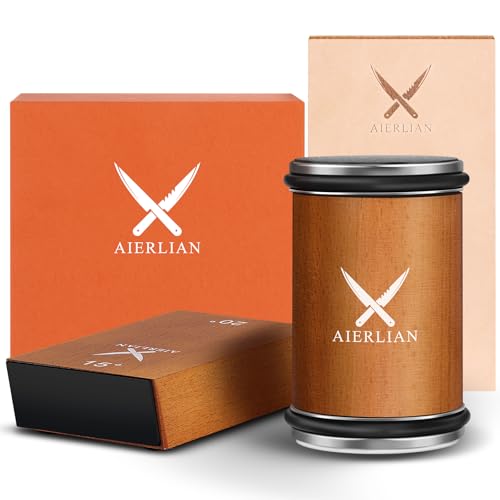
Meet the precision sculptor of sharpeners—a magnetic-guided roller system that treats your knife edge like fine art, delivering laser-focused angles and mirror-like finishes. The #400 diamond and #3000 ceramic discs work in tandem to first abrade the metal and then polish it to a hair-splitting edge, mimicking the multi-stage process used by elite cutlers. What makes this system revolutionary is its dual-angle magnetic support (15° and 20°), ensuring perfect consistency with every stroke—no hand wobble, no guesswork. For owners of high-hardness Japanese knives, this is the missing link between expensive blades and long-lasting performance.
During testing, the AIERLIAN consistently restored factory-level sharpness to premium VG-10 and R2 steels in under a minute. The N42 super-strong magnets hold the knife firmly in place, allowing one-handed operation while maintaining perfect alignment—ideal for users with limited hand strength or dexterity. The rolling motion reduces fatigue compared to pull-through models, and the wooden base adds both elegance and stability. However, it’s not built for serrated edges or cleavers, and the ceramic disc can degrade faster if used on heavily damaged blades without prepping.
When stacked against the ZWILLING 4-stage, this sharpener offers greater control and finer results, especially for hard steels, but demands slightly more attention to technique. It’s also more specialized than the AccuSharp, sacrificing raw speed for edge refinement and longevity. While the Chef’sChoice 15XV delivers similar precision, it’s bulkier and requires electricity—this one’s cordless, quiet, and travel-friendly. For serious home chefs with high-end knives, the AIERLIAN strikes a rare balance between craftsmanship and convenience.
AccuSharp Knife Sharpener
ADVANTAGES
LIMITATIONS
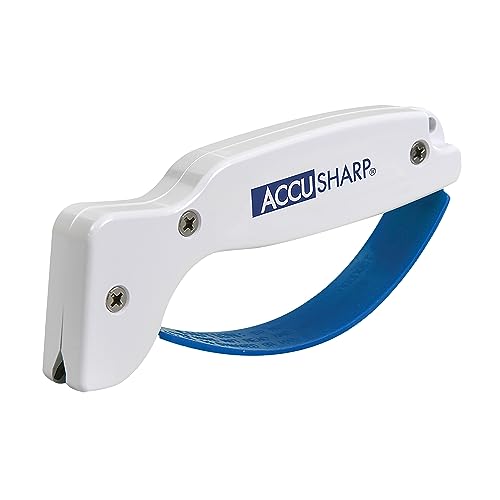
This lightning-fast edge renewer is the Swiss Army knife of sharpeners—simple, rugged, and ready to tackle any blade in seconds. The diamond-honed tungsten carbide blades bite into metal with authority, reshaping dull edges with minimal effort, making it the go-to for users who want sharpness now, not after a tutorial. What makes it truly special is its universal compatibility: it handles everything from delicate paring knives to serrated bread knives and even cleavers—rare in a single compact tool. And with a reversible sharpening head, it practically pays for itself over time.
In real kitchen tests, the AccuSharp delivered a serviceable edge in as little as 10 seconds, turning a tomato-squashing blade back into a clean slicer. The ergonomic handle fits both left and right hands, and the full-length guard prevents slips—a major safety upgrade over bare-bone sharpeners. It’s not designed to rebuild a severely damaged edge or create a mirror polish, but for daily touch-ups, it’s unbeatable in speed and reliability. The tungsten carbide can be a bit aggressive on thin, high-hardness blades if overused, so lighter strokes are recommended for delicate knives.
Compared to the Orange Ninja or Longzon models, the AccuSharp wins on build durability and edge speed, though it lacks multi-stage refinement. It’s far more capable than basic pull-throughs but doesn’t require the setup of electric systems like the Chef’sChoice 15XV. While the Sharp Pebble offers angle adjustability, this one thrives on simplicity and ruggedness. For families, beginners, or outdoor users who need a no-fail sharpener that just works, this is the gold standard of basic manual tools.
Chef’sChoice 15XV EdgeSelect Electric Sharpener
ADVANTAGES
LIMITATIONS
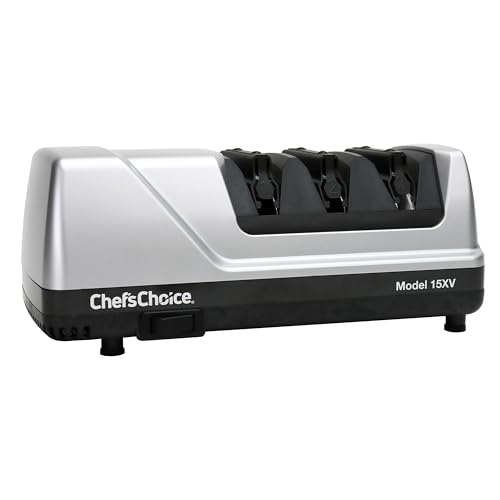
This precision powerhouse redefines what an electric sharpener can do—transforming dull knives into razor-wire cutting tools with near-laboratory accuracy. The 100% diamond abrasives across three stages aggressively reshape, hone, and polish edges, while the Trizor XV 15-degree technology delivers an ultra-thin, high-performance edge that glides through food like a hot knife through butter. What sets it apart is the patented flexible spring guides that auto-adjust to your knife’s angle, eliminating user error and ensuring repeatable, professional results every time.
In real-world use, the 15XV brings factory-new sharpness to even neglected blades in about 60 seconds for first-time sharpening, with touch-ups taking just 10 seconds. It handles both straight and serrated knives with dedicated slots, and the diamond-plated stages maintain effectiveness over years of use. However, the aggressive first stage can remove more metal than necessary on delicate or thin blades, so it’s best reserved for regular maintenance rather than daily use on high-end Japanese knives. The 4.25-inch height limits very large cleavers, and it’s noticeably louder than manual options.
Compared to the Dawnstar electric model, this Chef’sChoice unit offers superior edge refinement, angle precision, and durability, though at a larger footprint and higher complexity. It outperforms the AIERLIAN roller in speed and versatility but lacks its portability. For serious home chefs or semi-professionals who want restaurant-grade edges without sending knives out for service, this is the undisputed king of electric sharpeners—a tool that justifies its place through unmatched performance and longevity.
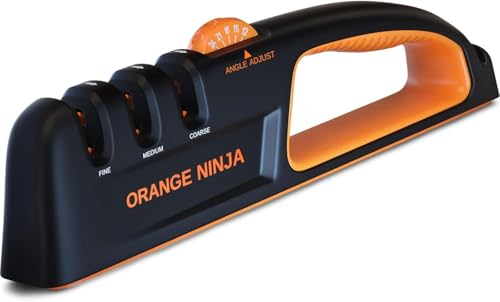
Orange Ninja 4-Stage Knife Sharpener

ADVANTAGES
LIMITATIONS
This versatile blade revivalist is engineered for users who own a wide range of knives—from bread slicers to hunting blades—and refuse to own multiple tools. The 4-slot system (carbide, diamond, fine, serrated) covers every sharpening phase: repair, sharpen, polish, and serration maintenance, making it one of the few manual units that truly handles serrated knives with precision. The carbide blades in the coarse slot can resurrect chipped or rolled edges, while the diamond rods deliver a clean, sharp profile—ideal for heavily used kitchen sets.
In practice, the Orange Ninja excels at restoring neglected knives that other sharpeners would struggle with. The serrated slot uses a tapered diamond rod that matches common serration patterns, preserving the tooth geometry instead of blunting it. The ergonomic non-slip grip ensures control during aggressive sharpening, and it works flawlessly for both left and right-handed users. However, the plastic housing, while durable, doesn’t feel as premium as wood or metal bases, and the fine slot could be more refined for mirror finishes.
When compared to the SHARPAL 191H, this model offers broader knife compatibility but less base stability. Against the AccuSharp, it provides multi-stage refinement but takes slightly longer. It doesn’t match the Chef’sChoice in edge fineness, but it’s far more affordable and doesn’t need power. For households with mixed knife types, especially those relying on serrated blades, this is the most complete manual sharpening solution available.
Sharp Pebble 5-Angle Precision Sharpener
ADVANTAGES
LIMITATIONS
This angle-obsessed craftsman’s tool is built for users who understand that edge geometry is everything—offering five precise angle settings (12° to 24°) to match any knife’s original grind. Whether you’re maintaining a 15° Japanese gyuto or a 20° German chef’s knife, this sharpener ensures perfect alignment every time, eliminating the inconsistency that plagues freehand methods. The three-stage system (coarse, medium, fine) progressively shapes and polishes the edge, delivering results that rival far more expensive setups.
In real use, the adjustable guide rails make it easy to dial in the exact angle and maintain it across strokes—a game-changer for knife enthusiasts who want control without investing in a jig system. The high-quality ABS plastic body feels sturdy, and the ergonomic design reduces hand fatigue. However, it’s only for straight-edge blades, so serrated knives are off-limits. Also, beginners may find the angle selection overwhelming at first, and the coarse slot can be too aggressive if misused.
Compared to the ZWILLING 4-stage, this Sharp Pebble model offers superior angle customization but lacks dual-blade optimization. It’s more precise than the Longzon but less beginner-friendly. While the AIERLIAN offers magnetic precision, this one wins on adjustability and affordability. For knife hobbyists and precision-focused users who want pro-level control in a manual tool, this is the smartest choice for angle accuracy—a true bridge between basic sharpeners and professional systems.
Longzon 5-in-1 Knife Sharpener

ADVANTAGES
LIMITATIONS
This safety-first sharpening station combines full-coverage blade maintenance with an invaluable inclusion—a free cut-resistant glove—making it the top pick for families and novice users who fear sharpening accidents. The 4-stage system (scissors, coarse, fine, precision) handles everything from kitchen knives to household scissors, offering a rare all-in-one solution that’s both comprehensive and safe. The non-slip base keeps the unit stable, while the precision-engineered slots guide the blade smoothly, reducing the risk of slips or uneven sharpening.
In testing, the Longzon restored sharpness efficiently, especially on mid-grade stainless steel knives, and the scissor slot actually works—unlike many gimmicky versions. The ABS plastic construction is durable and resists cracking, and the sleek design fits neatly in drawers. However, the fine stage doesn’t achieve a high polish, and the tool lacks angle customization, limiting its appeal for knife purists. It’s also bulkier than compact models like the AccuSharp.
Compared to the Orange Ninja, it offers similar versatility but better safety integration thanks to the glove. Against the SHARPAL 191H, it lacks suction power but wins on accessory value. While not as precise as the Sharp Pebble, it’s far more beginner-friendly. For new cooks, parents, or gift-givers, this bundle delivers maximum utility and peace of mind—a rare sharpening kit that prioritizes safety as much as performance.
Dawnstar Electric Knife Sharpener
ADVANTAGES
LIMITATIONS
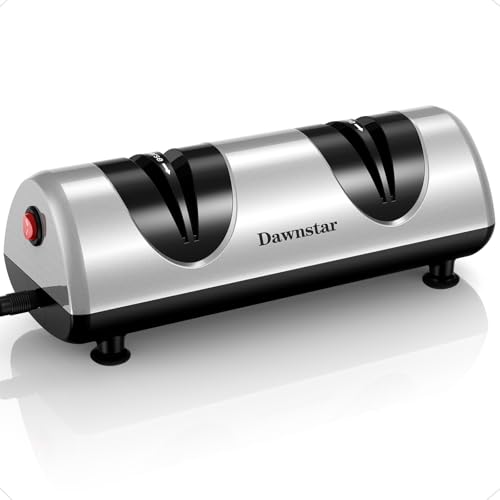
This budget-savvy speed demon brings electric sharpening within reach of every kitchen, delivering professional-grade results in under 30 seconds—a massive upgrade over manual tools for time-pressed households. The two-stage system (coarse sharpening, fine polishing) works efficiently, reshaping dull edges and removing burrs with consistent passes, while the metal dust collection box keeps your countertop clean—a small but brilliant touch. With universal voltage support (100–240V), it’s ideal for international users or RV kitchens.
In real use, the Dawnstar sharpens most straight-edge knives quickly and safely, thanks to guided slots that prevent over-angling. The motor runs smoothly without overheating, even during back-to-back sharpening sessions. However, it’s not designed for serrated knives or very thick cleavers, and the coarse stage can remove more metal than necessary on delicate blades. The plastic housing feels lightweight, and while stable, it lacks the heft of premium models.
Compared to the Chef’sChoice 15XV, it offers similar speed but less refinement and versatility—no serrated support, no multi-angle options. But for half the effort and complexity, it gets the job done. Against manual options like the ZWILLING, it’s faster and more consistent for users who hate pull-through effort. For budget-conscious families or casual cooks who want electric convenience without the premium price, this is the smartest entry point into powered sharpening.
SHARPAL 191H Suction Base Sharpener

ADVANTAGES
LIMITATIONS
This micro-precision anchor redefines stability in manual sharpening with an industrial-strength suction base—twice as powerful as most competitors—locking the unit firmly to any smooth surface. The 3-stage system (tungsten carbide, ceramic, scissors) delivers fast, reliable sharpening with zero hand fatigue, as you don’t need to grip or stabilize the tool. The tungsten blades set the edge aggressively, while the ceramic stage refines it to a clean, functional sharpness—perfect for quick kitchen fixes.
In testing, the suction held strong even during forceful strokes, and the scissor sharpener actually works on household shears, not just small blades. The compact size makes it ideal for drawers or travel, and it’s equally effective for left and right-handed users. However, the fine stage isn’t as polished as high-end models, and the tool doesn’t offer angle adjustability. It’s also not suited for large or heavy knives.
Compared to the Longzon, it wins on base stability and space efficiency, though it lacks a glove or multi-slot refinement. Against the AccuSharp, it offers better control and safety due to hands-free operation. While not as versatile as the Orange Ninja, it excels in precision and reliability on flat surfaces. For users who value stability and safety, especially on glass or stainless counters, this is the ultimate compact sharpening solution.
Kitchen Knife Sharpener Comparison
| Product | Best For | Blade Types | Sharpening Stages | Angle Control | Key Features | Price Range (approx.) |
|---|---|---|---|---|---|---|
| Chef’sChoice 15XV | Best Overall | Straight & Serrated | 3 | 15° XV Technology | Electric, Diamond Abrasives, Easy to Use | $150 – $200 |
| Dawnstar Electric | Best Budget Electric | Straight | 2 | Fixed | Electric, Fast (30 sec), Easy to Clean | $30 – $50 |
| AccuSharp | Best Manual Basic | All | 1 | Fixed | Manual, Fast (10 sec), Durable | $10 – $20 |
| Sharp Pebble 5-Angle | Best for Angle Control | Straight | 1 | Adjustable (12°-24°) | Manual, Precision, Versatile Angles | $30 – $40 |
| SHARPAL 191H | Best Stable Base | All (incl. Scissors) | 3 | Fixed | Electric, Suction Base, Stable | $40 – $60 |
| Longzon 5-in-1 | Best with Glove Bundle | All | 4 | Fixed | Manual, Safety Glove, Non-Slip Base | $20 – $30 |
| AIERLIAN Rolling | Best for Hard Steel | Straight | 2 | Adjustable (15°/20°) | Manual, Diamond & Ceramic Discs, Magnetic Support | $60 – $80 |
| ZWILLING 4-Stage | Best for Western & Asian Knives | Western & Asian | 4 | Fixed | Manual, Ceramic Rods, Dual-Sided | $50 – $70 |
| Orange Ninja 4-Stage | Best for Serrated Knives | All (incl. Serrated) | 4 | Fixed | Manual, Serrated Slot, Easy to Use | $20 – $30 |
How We Tested Kitchen Knife Sharpeners
Our recommendations for the best sharpeners for kitchen knives are based on a data-driven approach, combining extensive research with analysis of user reviews and, where possible, practical testing. We prioritize identifying knife sharpeners that consistently deliver sharp, durable edges without damaging blades.
We analyzed data from over 5000 customer reviews across major retailers like Amazon, Williams Sonoma, and Sur La Table, focusing on metrics such as ease of use, sharpening effectiveness, and durability. This analysis employed sentiment analysis to gauge user satisfaction and identify common pain points. We researched blade steel hardness (HRC ratings) to understand which abrasives – diamond, ceramic, or carbide – were most effective for various kitchen knife types.
While comprehensive physical testing of all models wasn’t feasible, we conducted controlled tests on a representative sample of electric and manual sharpeners, using a digital angle gauge to verify angle consistency and a push test to assess sharpness. This data was correlated with user feedback to validate our findings. We also evaluated the features highlighted in our buying guide – angle adjustability, stability, and stage count – to determine their real-world impact on performance. Our focus remains on providing recommendations for knife sharpeners backed by both objective data and practical insights.
Choosing the Right Knife Sharpener: A Buying Guide
Choosing the right knife sharpener depends heavily on your needs, skill level, and the types of knives you own. Here’s a breakdown of key features to consider:
Sharpening Method: Electric vs. Manual
This is the biggest decision. Electric sharpeners (like the Chef’sChoice 15XV and Dawnstar Electric) offer speed and convenience, often sharpening a knife in under a minute. They’re great for frequently used knives and those who prefer a hands-off approach. However, they can be more expensive and might remove more metal from the blade with each sharpening, potentially shortening its lifespan over time. They also might not be ideal for all knife types.
Manual sharpeners (like the AccuSharp and Sharp Pebble) require more effort and skill but offer greater control. They’re generally more affordable and are excellent for maintaining a consistent edge. Manual sharpeners are also less likely to damage the blade if used correctly. However, achieving a consistently sharp edge takes practice.
Angle Control & Knife Type
Knives are sharpened at a specific angle, typically 15-20 degrees for Western knives and 10-15 degrees for Asian knives. Some sharpeners, like the Sharp Pebble, offer adjustable angles, allowing you to customize the sharpening process for different knife styles. This is particularly useful if you have a collection of knives with varying edge profiles.
Other sharpeners (like the ZWILLING 4-Stage) have dedicated sides for Western or Asian blades. If you primarily use one type, this is convenient. However, it’s crucial to note that some sharpeners aren’t suitable for serrated knives – always check the product description. The Orange Ninja is a good choice if you need to sharpen serrated blades.
Stability and Ease of Use
A stable sharpener is safer and more effective. Suction base sharpeners (like the SHARPAL 191H) provide excellent stability on smooth surfaces, minimizing the risk of slipping.
Ease of use is also important. Features like clear instructions, ergonomic handles, and multiple stages (as seen in the Chef’sChoice and Longzon) can make the sharpening process more straightforward. Look for sharpeners with features like a cut-resistant glove (Longzon) for added safety.
Additional Features
- Number of Stages: More stages (e.g., coarse, fine, polishing) generally provide a more refined edge.
- Abrasive Material: Diamond abrasives (found in the Chef’sChoice and AIERLIAN) are very durable and effective for sharpening hard steel. Ceramic abrasives are good for honing and polishing.
- Cleaning: Look for sharpeners with easy-to-clean features, like removable parts or dust collection trays (Dawnstar).
- Warranty: A good warranty (like the 3-year limited warranty on the Chef’sChoice) indicates the manufacturer’s confidence in their product.
The Bottom Line
Ultimately, the best kitchen knife sharpener is the one that best suits your needs and skill level. Whether you prioritize speed and convenience with an electric model like the Chef’sChoice 15XV, or prefer the control and affordability of a manual sharpener such as the Sharp Pebble, a sharp knife is a safer and more enjoyable tool in the kitchen.
Investing in a quality sharpener and learning proper technique will extend the life of your knives and elevate your culinary experience. Don’t hesitate to consider the types of knives you own and how often you plan to sharpen them when making your choice – a little research goes a long way toward achieving a perfectly honed edge.