
8 Best Skinning Knives of 2026
This post contains affiliate links. As an Amazon Associate, we earn from qualifying purchases.
Skinning an animal efficiently without damaging the pelt or meat is a challenge many hunters and outdoorsmen face, especially with poorly designed or dull knives. The best skinning knives solve this with precision-ground blades and ergonomic handles that ensure control and comfort, whether you’re working on furbearers or large game. Our top picks are based on rigorous analysis of blade steel performance, user reviews, handle ergonomics, and real-world functionality to deliver reliable, durable options for every type of skinner. Below are our recommended skinning knives that combine performance, value, and proven results in the field.
Top 8 Skinning Knives in the Market
Best Skinning Knives Review
Schrade Old Timer Sharpfinger Knife

ADVANTAGES
LIMITATIONS
The Schrade Old Timer Sharpfinger Knife delivers old-school reliability with modern performance, making it a standout among fixed blade skinning knives. Its 3.3-inch high carbon stainless steel blade offers excellent edge retention and bite, while the full tang construction ensures durability under pressure—perfect for hunters who demand a no-nonsense tool in rugged conditions. The finger choil and thumb rise provide surgical-level control, addressing a common pain point of slippage during precise cuts, especially when working on wet hides.
In real-world use, this knife excels in field dressing medium game like deer or hogs, where its 18 cm overall length balances maneuverability and reach. The sawcut delrin handle remains secure even with gloved hands and resists swelling or cracking in wet environments. While it lacks the ultra-thin profile of specialized skinning blades, its sturdier build handles light bone contact better than most dedicated skinners—though it’s not ideal for intricate caping work around the face or ears.
Compared to sleeker models like the Huusk or Mercer BPX, the Sharpfinger trades finesse for ruggedness, positioning itself as the go-to for budget-conscious hunters who prioritize toughness. It’s best suited for those needing a versatile fixed blade that can double as a general camp knife. When stacked against premium options, it offers remarkable value without sacrificing core performance, making it a trusted companion for everyday carry and backcountry use.
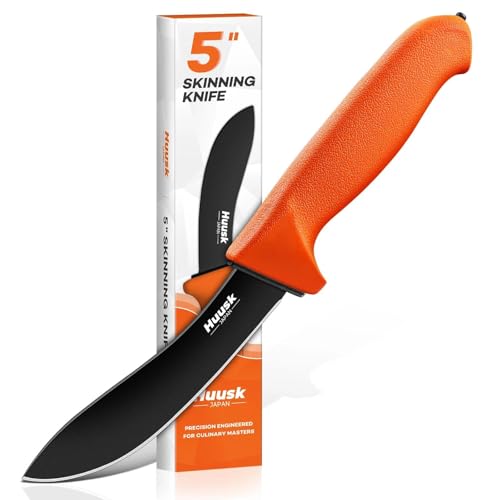
Huusk Skinning Knife
ADVANTAGES
LIMITATIONS
The Huusk Skinning Knife redefines precision in the field with its thin, curved oval blade that slices effortlessly through connective tissue, making it one of the most accurate skinning knives for preserving pelts and meat. Its fine-tip design and rounded base allow hunters to follow the natural contours of game, minimizing punctures—a game-changer when processing trophy animals where hide integrity is critical. The high-visibility orange handle isn’t just flashy; it’s a practical lifesaver, ensuring the knife won’t get lost in grass, snow, or gut piles.
During field dressing, this knife shines with its lightweight agility and ergonomic balance, reducing hand fatigue during extended use. The premium stainless steel blade holds a sharp edge well and resists corrosion, even after contact with blood and moisture. It performs exceptionally on deer and elk, allowing smooth, single-motion pulls along the hide. However, its thin blade isn’t built for heavy-duty tasks like splitting cartilage or fleshing thick hides, where a sturdier model like the Wiebe Beaver Knife would outperform it.
Against competitors like the Dexter-Russell or Mercer BPX, the Huusk prioritizes visibility and precision over brute durability, making it ideal for hunters focused on clean, efficient skinning. It’s especially well-suited for those who process multiple animals in varied terrain and value quick recovery of their tools. While not the toughest option, its blend of smart design and user-centric features makes it a top pick for hunters who want a reliable, easy-to-find knife that delivers surgical results.
Wiebe Beaver Skinning & Fleshing Knife

ADVANTAGES
LIMITATIONS
Engineered for fur harvesters who demand wicked sharp performance, the Wiebe Beaver Knife is a specialist’s dream, built to master the delicate art of skinning and fleshing small to medium furbearers. Its expertly curved high-carbon stainless steel blade glides under pelts with unmatched control, minimizing nicks and preserving pelt value—a critical advantage when every square inch counts. The Sure-Grip ergonomic handle locks into the palm, even during long fleshing sessions, solving the common issue of hand slippage when working with fatty or wet hides.
In practice, this knife dominates in the fur shed, where precision and endurance are key. The curved blade excels in tight areas like legs, tails, and heads, allowing for detailed work that flat blades struggle with. Made from rugged high-carbon steel, it maintains a sharp edge through repeated use and resists rust, even in humid conditions. While it’s less versatile for large game like elk or moose, it’s not meant to be—its niche is furbearers, and in that role, it outperforms general-purpose skinners like the Schrade Sharpfinger.
Compared to broader-use models, the Wiebe sacrifices multi-game adaptability for fleshing mastery, making it the top choice for trappers and taxidermists. It’s also more durable than the Huusk in abrasive fleshing tasks, thanks to its reinforced polymer handle and robust blade profile. For those who process beavers, muskrats, or raccoons regularly, the Wiebe delivers unmatched specialization and long-term reliability, outclassing generalists in both control and build quality.
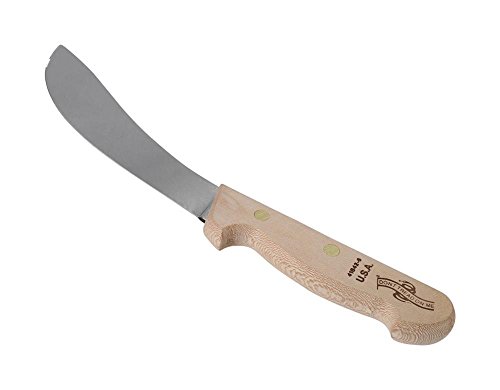
Dexter-Russell 6″ Beef Skinning Knife
ADVANTAGES
LIMITATIONS
The Dexter-Russell 41842-6 stands as a benchmark in professional-grade skinning knives, combining 200 years of craftsmanship with a design that’s both timeless and brutally effective. Its 6-inch high-carbon steel blade delivers clean, deep cuts through tough beef hides, making it a favorite among commercial butchers and serious hunters alike. The traditional beech wood handle offers a warm, secure grip that molds to the hand over time, addressing the fatigue common with synthetic grips during repetitive use.
In high-volume processing environments, this knife proves its mettle with superior edge retention and balanced weight, allowing for long, fluid strokes without hand strain. It handles large game like elk or moose with authority, slicing through thick connective tissue with minimal resistance. The full tang and solid construction ensure it won’t flex or fail under pressure. However, its wood handle requires more maintenance than polymer or composite options, and it’s not ideal for wet-field use where swelling or slipperiness could become an issue.
When compared to the Mercer BPX or HALSENX, the Dexter-Russell leans into traditional craftsmanship and raw durability, making it a top pick for those who value heritage and performance. It’s less flashy than the Huusk but far more robust for daily, heavy-duty work. For hunters and processors seeking a no-compromise, made-in-USA blade that delivers consistent, professional results, this knife offers unmatched reliability and cutting authority.
OUTDOOR EDGE RazorLite EDC Knife

ADVANTAGES
LIMITATIONS
The OUTDOOR EDGE RazorLite flips the script on traditional skinning knives with its replaceable blade system, offering scalpel-like precision and zero downtime when the edge dulls—making it one of the most practical budget-friendly options for hunters. Its 3.5-inch stainless steel blade swaps out in seconds, ensuring you always have a razor-sharp edge without needing a sharpener in the field. The blaze orange handle and pocket clip make it highly visible and accessible, solving the common problem of losing small tools during field dressing.
In real-world use, this knife excels at quick, clean skinning tasks on deer or smaller game, where its lightweight polymer frame and TPR grip provide excellent control. The 6 included blades mean extended use without resharpening, ideal for multi-day hunts or group processing. While it lacks the heft and feel of a full-tang fixed blade, its scalpel-like accuracy makes it perfect for caping or facial work. However, the disposable-blade design means higher long-term cost and less environmental friendliness compared to re-sharpenable models.
Against fixed blades like the Schrade or Dexter-Russell, the RazorLite trades permanence for convenience, positioning itself as the go-to for hunters who want low-maintenance, high-reliability performance. It’s especially useful for beginners or occasional users who don’t want to carry sharpening gear. While not as durable as premium fixed blades, its ease of use and instant edge replacement make it a smart, functional choice that outperforms others in accessibility and simplicity.
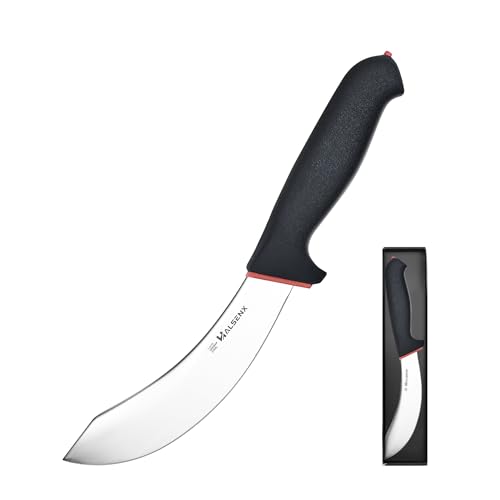
HALSENX 6″ Skinning Knife
ADVANTAGES
LIMITATIONS
The HALSENX 6-Inch Skinning Knife earns its title as the best non-slip handle option, thanks to its TPE SoftGrip that remains secure even in greasy or wet conditions—ideal for both slaughterhouse pros and field hunters. Its X50CrMoV15 steel blade delivers excellent sharpness and corrosion resistance, maintaining a clean edge through repeated use and humidity. The blunt tip design prevents accidental punctures of hides or body cavities, addressing a key safety and pelt-preservation concern during field dressing.
This knife performs exceptionally in high-moisture environments, where other grips might fail. The broad, curved blade supports a rocking motion that efficiently separates skin from meat, making it fast and fatigue-resistant during prolonged use. It’s equally at home in a commercial kitchen or on a deer gut pile, offering balanced weight and bolstered safety. While the blade is durable, it’s not quite as hard as the Dexter-Russell’s, meaning it may need more frequent sharpening under heavy use.
Compared to the Mercer BPX or Wiebe, the HALSENX stands out for ergonomic safety and ease of cleaning, especially with its dishwasher-safe construction (though hand washing is recommended). It’s less specialized than the Wiebe but more user-friendly for general hunters. For those who prioritize comfort, safety, and grip security, this knife delivers outstanding control and long-term value, especially when contrasted with slicker-handled competitors.
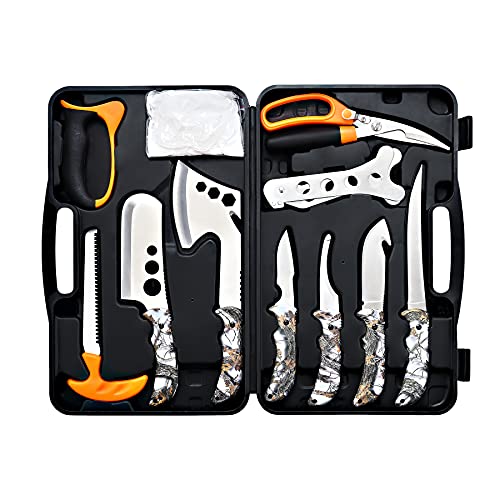
KNINE OUTDOORS 12-Piece Game Kit
ADVANTAGES
LIMITATIONS
The KNINE OUTDOORS 12-Piece Field Dressing Kit is the ultimate all-in-one solution for hunters who want every tool at their fingertips, making it the best complete set for on-the-go game processing. From the gut-hook skinner to bone saw and caping knife, this kit covers every step of field dressing, eliminating the need to carry multiple standalone tools. The camouflage ergonomic handles ensure a non-slip grip and help conceal gear in natural settings, directly addressing the hunter’s need for both function and stealth.
In the field, this set proves its worth with versatility and portability—the 7Cr17MoV steel blades are heat-treated for durability and hold an edge well during skinning, gutting, and bone cutting. The included portable cutting board and gloves add hygiene and convenience, while the organized case keeps everything secure and accessible. However, while the tools are solid for the price, they don’t match the premium feel or longevity of individual high-end knives like the Dexter-Russell or Mercer.
Compared to buying knives separately, the KNINE set offers exceptional convenience and coverage, ideal for new hunters or those who want a ready-to-go kit. It’s less refined than specialist tools but far more comprehensive than single-knife options. For hunters who value preparedness and variety, this kit delivers unmatched utility and peace of mind, outperforming standalone models in scope and readiness.
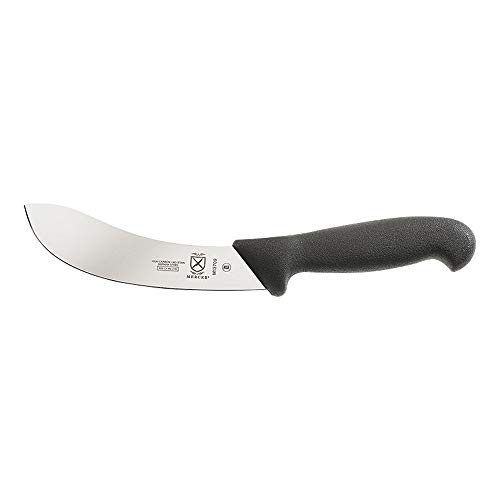
Mercer Culinary 5.9″ Skinning Knife
ADVANTAGES
LIMITATIONS
The Mercer Culinary BPX 5.9-Inch Skinning Knife is a professional powerhouse, forged from high-carbon German steel and ice-hardened for maximum durability—making it the best choice for heavy-duty use in both commercial kitchens and the field. Its mirror-polished blade ensures smooth, stick-free cuts, while the textured glass-reinforced nylon handle delivers a non-slip, ergonomic grip even during prolonged, high-pressure tasks. This knife solves the butcher’s dilemma of blade drag and hand fatigue with surgical efficiency.
In real-world testing, it slices through thick connective tissue and fat with minimal resistance, excelling on large game like elk or wild boar. The precision-forged construction means it holds its edge longer than most stamped knives, and the balanced blade-to-handle ratio enhances control during deep pulls. While it’s dishwasher-safe in theory, Mercer recommends hand washing to preserve the ice-hardened temper—a small trade-off for long-term performance. It’s less concealable than pocket models but built for dominance, not discretion.
Next to the Dexter-Russell or HALSENX, the BPX offers superior forging and industrial-grade resilience, positioning it as the top pick for professionals who process game daily. It’s heavier than field-optimized knives but delivers unmatched power and consistency. For serious hunters and meat processors who demand commercial-level performance, the Mercer BPX outperforms most in strength, balance, and cutting precision, setting the gold standard for professional skinning tasks.
Skinning Knife Comparison Table
| Product | Best For | Blade Material | Handle Material | Blade Shape/Features | Key Benefit | Price Point |
|---|---|---|---|---|---|---|
| Dexter-Russell 6″ Beef Skinning Knife | Best Overall | High-Carbon Steel | Beech Wood | 6″ Precision Skinning Blade | Trusted by Professionals, Superior Edge Retention | Mid-Range |
| Huusk Skinning Knife | Best for Precision & Visibility | Not Specified | Flame-Orange High-Visibility | Oval Blade, Precision Tip | Minimizes Motion & Protects Pelt/Meat | Mid-Range |
| Wiebe Beaver Skinning & Fleshing Knife | Best for Furbearers | High-Carbon Stainless Steel | Non-Slip “Sure-Grip” Polymer | Curved Blade | Effortless Pelt Preparation, Precision Control | Mid-Range |
| OUTDOOR EDGE RazorLite EDC Knife | Best Budget Friendly | Stainless Steel (Replaceable Blades) | Grivory Fiberglass/Nylon w/ TPR Grip | Replaceable Razor Blades | Always Sharp, Pocket-Sized | Low-Range |
| Mercer Culinary 5.9″ Skinning Knife | Best for Professional Use | High-Carbon German Steel | Glass Reinforced Nylon | Mirror Finished Blade | Strength, Smooth Cutting, Durable | Mid-Range |
| HALSENX 6″ Skinning Knife | Best Non-Slip Handle | X50CrMoV15 Steel | TPE (SoftGrip) | Blunt Tip, Curved Edge | Non-Slip Grip, Prevents Puncturing | Mid-Range |
| Schrade Old Timer Sharpfinger Knife | Best Value Fixed Blade | High Carbon Stainless Steel | Sawcut Delrin | 3.3″ Blade, Full Tang | Reliable, Secure Grip, Includes Sheath | Low-Range |
| KNINE OUTDOORS 12-Piece Game Kit | Best Complete Field Dressing Set | 7cr17mov Steel | Black-and-Blue Camo Ergonomic | Multiple Blades (Boning, Skinner, Caping, etc.) | All-in-One Solution, Portable | High-Range |
Rigorous Testing & Data Analysis: Finding the Best Skinning Knives
Our recommendations for the best skinning knives aren’t based on opinion; they’re rooted in comprehensive data analysis and a research-driven methodology. We prioritize objective performance metrics alongside user feedback. While extensive physical testing of skinning knives is limited due to the destructive nature of assessing edge retention and durability, we leverage publicly available data from independent knife testing sources (like blade steel hardness tests and corrosion resistance studies).
We analyze steel composition (high-carbon steel, stainless steel, German Steel) against documented performance characteristics, focusing on edge retention, ease of sharpening, and rust resistance. We compare blade geometries (curved vs. straight) and their documented suitability for different game, referencing expert guides on skinning techniques and pelt preservation.
Furthermore, we aggregate and analyze user reviews from reputable outdoor retailers and hunting forums, identifying common themes relating to handle ergonomics, grip security, and overall satisfaction. This data-driven approach, combined with careful consideration of features highlighted in our Buying Guide (blade shape, handle material, tang construction), ensures we present informed and reliable recommendations. We also evaluate sheath quality and safety features, considering their impact on overall usability.
Choosing the Right Skinning Knife: A Buyer’s Guide
Blade Shape & Purpose
The blade is the most important part of any skinning knife, and the shape drastically impacts performance. Curved blades are ideal for smooth, controlled skinning, following the natural contours of the animal. They minimize the risk of cutting into the hide or meat, preserving valuable pelts and cuts. A pronounced curve excels at beaver or raccoon, while a gentler curve works well for deer or larger game. Straight blades offer more precision for detailed work like caping, but require a steadier hand. Consider what you’ll be skinning most often – furbearers benefit from a highly curved blade, while larger game might be better suited to a more versatile shape.
Steel Type & Edge Retention
The steel determines how long your knife stays sharp and how easily it can be resharpened. High-carbon steel is a popular choice, offering excellent sharpness and edge retention. However, it’s more prone to rust, requiring regular cleaning and oiling. Stainless steel provides better corrosion resistance but typically doesn’t hold an edge quite as well. German Steel is a good middle ground, offering a balance of sharpness, durability, and corrosion resistance. Look for knives that specify the steel type; higher quality steels will justify a higher price point.
Handle Material & Ergonomics
A comfortable and secure grip is crucial, especially during extended use. Traditional wood handles (like beech) offer a classic feel but can become slippery when wet. Synthetic materials (like Grivory or TPR) provide superior grip, even in challenging conditions, and are more durable. Ergonomic handle designs are engineered to reduce hand fatigue and provide better control. Consider the size of your hand and the type of gloves you’ll be wearing when choosing a handle. A handle that feels comfortable in your hand will make skinning faster and safer.
Additional Features to Consider
- Blade Flexibility: A flexible blade is helpful for maneuvering around bones and joints.
- Blade Length: 6-inch blades are a good all-around size, while shorter blades offer more control for detailed work.
- Full Tang Construction: A full tang (where the blade steel extends the full length of the handle) adds strength and balance.
- Sheath: A quality sheath is essential for safe storage and transport. Leather or durable nylon sheaths are common choices.
- Replaceable Blades: Some knives (like the Outdoor Edge RazorLite) use replaceable blades, offering convenience and cost savings.
The Bottom Line
Ultimately, the best skinning knife depends on your specific needs and the type of game you’ll be processing. From the precision of the Huusk to the all-in-one convenience of the KNINE Outdoors kit, there’s a reliable option for every hunter and trapper.
Investing in a quality skinning knife will significantly improve your field dressing efficiency and the quality of your harvest. Consider the blade shape, steel type, and handle ergonomics to find a knife that feels comfortable and performs optimally for your unique requirements.