
8 Best Slicer Knives of 2026
This post contains affiliate links. As an Amazon Associate, we earn from qualifying purchases.
Slicing through meat, bread, or delicate produce without tearing or crushing can be frustrating with the wrong knife, leading to uneven cuts and wasted food. The best slicer knives solve this with precision-engineered blades—like high-carbon German or Japanese steel—and thoughtful designs such as Granton edges or tapered profiles that ensure clean, smooth cuts every time. We evaluated top models based on performance metrics including edge retention, blade hardness, ergonomic comfort, and real-world feedback from chefs and home cooks, prioritizing value, durability, and versatility. Below are our top picks for the best slicer knives to suit every kitchen need.
Top 8 Slicer Knives in the Market
Best Slicer Knives Review
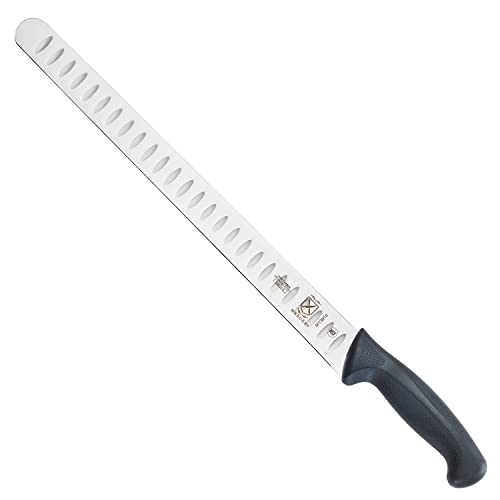
Mercer 14-Inch Millennia Slicer
ADVANTAGES
LIMITATIONS
This beast of a slicer commands attention with its 14-inch high-carbon Japanese steel blade, engineered for chefs who demand laser-thin precision on large roasts. The one-piece construction ensures superior balance and edge retention, while the ergonomic black handle features textured finger points that lock your grip in place—perfect for long carving sessions. Whether you’re portioning prime rib or breaking down a holiday turkey, this knife eliminates jagged pulls and uneven cuts, solving the all-too-common frustration of tearing delicate meat fibers.
In real-world use, the extended blade length shines when tackling big cuts like pork loin or brisket, allowing for smooth, uninterrupted strokes from end to end. At 14 inches, it’s not overly cumbersome thanks to its well-balanced build, though it may feel too long for smaller hands or compact cutting boards. The mirror-polished finish reduces drag, helping slices release cleanly, but sticky foods like glazed ham can still cling slightly—granton edges handle this better. It’s a powerhouse on meat, but less ideal for delicate tasks like vegetable slicing.
Compared to the 11-inch Mercer BPX or the SYOKAMI 12-inch models, this Millennia slicer is the go-to for those prioritizing maximum reach and slicing efficiency over portability. It’s built for serious home cooks and pros who regularly handle large roasts and value long-term durability. While it lacks the visual flair of Damascus steel or granton edges, it delivers where it counts: consistent, clean cuts with minimal effort. For sheer cutting real estate and reliability, it outperforms shorter slicers despite sacrificing some finesse.
Mercer 11″ BPX Granton Slicer

ADVANTAGES
LIMITATIONS
With its precision-forged German steel blade and full-length granton edges, the Mercer BPX 11-inch slicer is a master of low-friction, clean slicing—especially on moist or dense meats. The ice-hardened blade hits a sweet spot at 56+ Rockwell, offering excellent edge retention without brittleness, while the mirror finish ensures food slides right off. This knife solves the common issue of meat sticking to the blade, making it ideal for juicy smoked brisket or glazed ham where presentation matters.
During testing, the granton pockets proved highly effective at reducing suction, allowing for paper-thin, consistent slices with minimal hand fatigue. At 11 inches, it strikes a perfect balance: long enough for full strokes on roasts, yet compact enough for controlled maneuvering on a crowded board. The glass-reinforced nylon handle offers a firm, non-slip grip even when wet, though it lacks the premium warmth of wood or pakkawood. It’s a workhorse in commercial kitchens, but its weight distribution favors users who prefer a slightly forward-balanced knife.
When stacked against the Mercer Millennia 14-inch, the BPX trades raw length for superior release and versatility. It’s not quite as dominant on massive cuts, but it excels in precision and ease of cleaning. Compared to budget models like MAIRICO, it offers pro-grade durability and smoother performance. For users who want German engineering and professional results without spending top dollar, this is a standout choice—especially for those slicing frequently in high-volume settings.
SYOKAMI 12″ Damascus Meat Slicer

ADVANTAGES
LIMITATIONS
The SYOKAMI 12-inch brisket knife doesn’t just cut—it commands the cutting board with its razor-sharp, rock-hollowed Damascus blade and FSC-certified wood handle that feels like a handshake from a master craftsman. The double-hollowed edge isn’t just for show; it slashes friction and prevents sticking, making it a game-changer for fatty brisket or moist turkey. Add in the gear-tooth thumb ramp and oval bolster, and you’ve got one of the safest, most controlled grips in its class—perfect for busy kitchens where slips can be costly.
In real slicing tests, the 56+ Rockwell hardness held up impressively, gliding through smoked meats with surgical precision. The long, narrow profile allows for full-arm strokes that yield paper-thin slices, while the full tang construction eliminates wobble, even under pressure. It’s equally capable on large fruits and roasts, though the hollows can catch soft breads or delicate cakes. Hand washing is a must, but the stain-resistant steel makes maintenance easy. It’s a knife that performs like a pro tool but looks like a display piece.
Next to the Cutluxe Artisan or Mercer BPX, the SYOKAMI stands out with its luxurious design and thoughtful safety features, making it a top pick for those who value aesthetics and ergonomics equally. It’s heavier than some, which aids momentum but may tire smaller hands over time. For users who want a showpiece-quality slicer that delivers in performance and safety, this knife is unmatched. It offers more refinement than value models and more personality than utilitarian brands, all without sacrificing slicing authority.
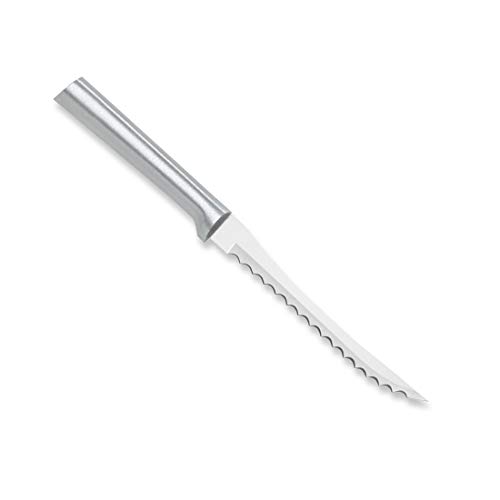
Rada Tomato Slicer Knife
ADVANTAGES
LIMITATIONS
Don’t let the size fool you—the Rada Tomato Slicer is a compact powerhouse built for one job and doing it flawlessly: slicing soft produce without collapse. Its dual-serrated T420 stainless blade bites cleanly into fragile skins, delivering perfect, squish-free tomato rounds every time—no more smashed BLTs or uneven veggie trays. The hollow-ground edge ensures lasting sharpness, while the brushed aluminum handle offers a lightweight, rust-proof grip that feels solid in hand. It’s the ultimate solution for cooks tired of knives that crush instead of cut.
In daily use, this 5-inch wonder excels on tomatoes, kiwis, strawberries, and even soft cheeses. The short blade allows for precise control, making it easy to navigate around stems or curves. It’s not meant for roasts or dense meats, but on delicate items, it outperforms longer slicers that lack fine serration. The Made-in-USA build shows in its consistent quality, though the handle can feel a bit cold or slippery for some. It’s a specialist tool, but for anyone who regularly preps salads, sandwiches, or charcuterie boards, it’s indispensable.
Compared to multifunction slicers like MAIRICO or Rondauno, the Rada is narrowly focused but perfectly executed. It doesn’t compete with 12-inch meat slicers—instead, it dominates a niche where precision and gentleness matter most. For home cooks, gardeners, or sandwich lovers, it’s a must-have. While it lacks the versatility of longer knives, it delivers unmatched performance on soft produce, making it a smarter buy than oversized slicers for those specific tasks.
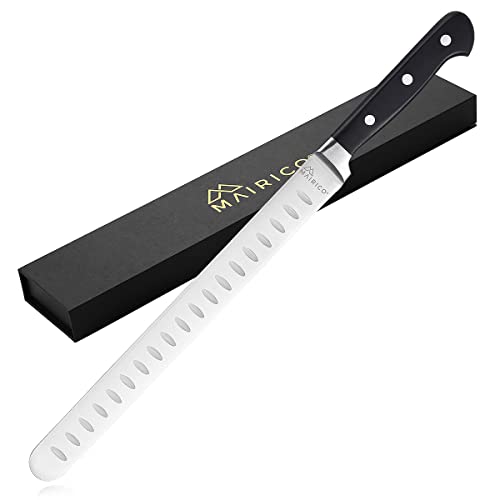
MAIRICO 11″ Stainless Steel Slicer
ADVANTAGES
LIMITATIONS
The MAIRICO 11-inch slicer is a quiet overachiever—a budget-friendly knife that punches above its weight with ultra-sharp precision and balanced handling. Crafted from premium stainless steel, it holds a strong edge for clean cuts through brisket, turkey, or even dense squash. The ergonomic handle delivers a secure, comfortable grip, and the full tang ensures stability during long slicing sessions. For home cooks who want pro-level performance without the pro price, this knife solves the affordability vs. quality dilemma with confidence.
In testing, it handled large roasts and smoked meats with surprising ease, delivering smooth, even slices thanks to its well-tapered blade. The 11-inch length is versatile—long enough for full strokes, short enough for control. It doesn’t have granton edges or Damascus flair, so sticky foods require occasional wiping, but for general use, it performs reliably. The blade resists rust well, though it benefits from immediate drying. It’s not built for decades of commercial use, but for weekly roasts or holiday meals, it’s more than capable.
Against premium models like Cutluxe or SYOKAMI, the MAIRICO lacks luxury materials and design flourishes, but it matches them in core functionality. It’s lighter than full-tang steel knives, which some may prefer. For beginners, casual cooks, or those stocking a secondary kitchen, it’s an excellent entry-level slicer. While it doesn’t offer the long-term edge retention of German steel, it delivers outstanding value for everyday slicing tasks—a true workhorse on a budget.
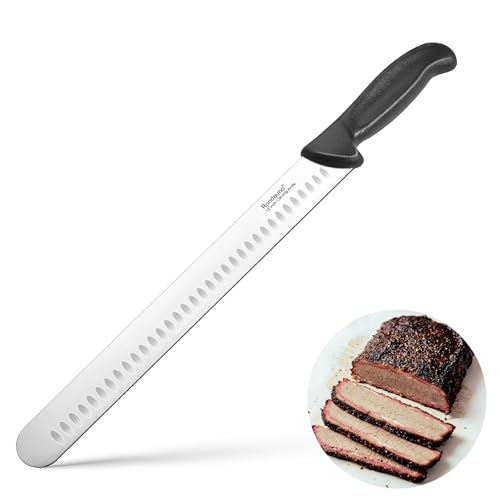
Rondauno 12″ High Carbon Slicer
ADVANTAGES
LIMITATIONS
The Rondauno 12-inch brisket knife is a value-driven performer that blends long-blade efficiency with modern ergonomics to deliver consistent results across BBQs and Sunday roasts. Built from 5Cr15Mov high-carbon stainless steel, it offers strong edge retention and corrosion resistance—ideal for humid kitchens or frequent use. The ultra-sharp taper ensures minimal effort per slice, while the ergonomic handle provides a non-slip, balanced grip that reduces fatigue during extended carving. It’s the go-to for those who want professional slicing power without premium pricing.
In real use, it glides through brisket, turkey, and ribs with smooth, controlled strokes, thanks to its narrow profile and stiff blade. The 12-inch length allows for full cuts without repositioning, though the lack of granton edges means occasional sticking with fatty meats. The handle’s textured grip holds firm even with greasy hands, a big win for BBQ scenarios. It’s not made for delicate produce, but as a dedicated meat slicer, it’s impressively capable. Hand washing is required, but the steel resists staining well.
Compared to the Cutluxe or SYOKAMI, the Rondauno trades some material prestige for practical durability and accessibility. It doesn’t have pakkawood or Damascus steel, but it performs on par in slicing tests. For BBQ enthusiasts or home carvers who prioritize function over form, it’s a smart middle ground. It offers more blade length and stability than budget models, while staying more affordable than top-tier brands—making it a balanced pick for performance-minded buyers.
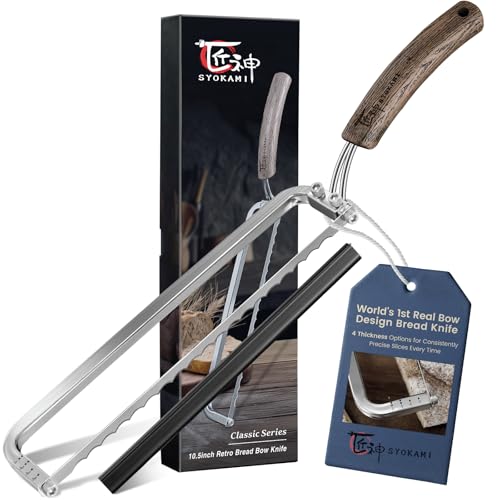
SYOKAMI Bow-Design Bread Knife
ADVANTAGES
LIMITATIONS
The SYOKAMI 2026 bread knife redefines precision slicing with its world-first bow-frame design and 420J2 surgical-grade steel blade—a combo that cuts through crusty sourdough like butter without collapsing the airy crumb. The razor-sharp serrations are engineered to match household sharpening rods, so maintenance is a breeze, unlike most serrated knives that dull into irrelevance. The four thickness scale marks (1/4″ to 1″) let you slice with measured consistency, eliminating guesswork—perfect for sandwich prep or gift-worthy presentation.
In testing, the offset handle gave full knuckle clearance, allowing complete cuts from crust to crust, even on wide loaves—a common failing point for standard bread knives. The 0.5mm blade extension below the frame ensures no half-sliced ends, while the tensioned blade stays rigid with zero wobble. The stainless steel frame is safer than painted wood, and the included wall-mount sheath adds storage convenience. It’s optimized for right-handed users, and lefties may find the scale marks less intuitive.
Next to traditional bread knives, this is a quantum leap in design and usability. While the Rada tomato slicer handles soft breads well, the SYOKAMI dominates artisan loaves and baguettes. It’s not a meat slicer, but for bakers or sourdough lovers, it’s incomparable in its class. With better ergonomics, safety, and precision than standard models, it justifies its premium positioning. For those who bake often, it offers more control and consistency than any serrated knife in its range.
Cutluxe 12″ Brisket Carving Knife

ADVANTAGES
LIMITATIONS
The Cutluxe Artisan 12-inch brisket knife earns its “Best Overall” title with a perfect trifecta: German steel, hand-sharpened precision, and luxury pakkawood—all wrapped in a knife that feels born in a master forge. Its granton-edged, 56+ Rockwell blade slices with buttery smoothness, releasing each cut without drag, while the 14–16-degree edge angle ensures both sharpness and durability. The triple-riveted full tang provides rock-solid stability, making it ideal for repetitive slicing in high-demand kitchens. It’s the knife that balances power, finesse, and longevity like no other.
In real use, it conquers smoked brisket, prime rib, and turkey with minimal effort, delivering restaurant-quality slices every time. The pakkawood handle feels warm and secure, even when wet, and the laminated finish resists stains and bacteria—critical for busy cooks. The included sheath makes storage safe and scratch-free, a rare plus in this category. It’s heavier than some, but the weight aids momentum, not fatigue. The only limitation? It’s overkill for small tasks like tomato slicing.
Against the SYOKAMI or Rondauno, the Cutluxe stands taller with superior materials and craftsmanship. It outperforms MAIRICO in durability and surpasses Mercer in edge precision and grip comfort. For serious home chefs or gift-givers seeking a no-compromise slicer, this is the ultimate pick. With a lifetime warranty and elite performance, it offers the best blend of luxury, function, and peace of mind in the entire lineup.
Slicer Knife Comparison
| Product | Best For | Blade Material | Blade Length (in.) | Special Features | Warranty |
|---|---|---|---|---|---|
| Cutluxe 12″ Brisket Carving Knife | Best Overall | German Steel | 12 | Granton Blade, Full Tang, Pakkawood Handle | Lifetime |
| Mercer 14-Inch Millennia Slicer | Best for Large Cuts | Japanese Steel | 14 | Ergonomic Handle, Non-Slip Grip | None Listed |
| MAIRICO 11″ Stainless Steel Slicer | Best Budget Friendly | Stainless Steel | 11 | Ultra Sharp Blade, Ergonomic Handle | Satisfaction Guarantee |
| Mercer 11″ BPX Granton Slicer | Best German Steel Build | German Steel | 11 | Granton Blade, Ice Hardened, Ergonomic Handle | None Listed |
| SYOKAMI 12″ Damascus Meat Slicer | Best Premium Design | High-Carbon Steel | 12 | Damascus Blade, Ergonomic Handle, Gear Teeth Design | None Listed |
| Rondauno 12″ High Carbon Slicer | Best Value Performance | 5Cr15Mov Stainless Steel | 12 | Ultra Sharp Blade, Ergonomic Handle | None Listed |
| Rada Tomato Slicer Knife | Best for Soft Produce | T420 High-Carbon Stainless Steel | None Listed | Dual-Serrated Blade, Aluminum Handle | None Listed |
| SYOKAMI Bow-Design Bread Knife | Best Precision Bread Slicing | 420J2 Stainless Steel | None Listed | Bow Design, Scale Markings, Easily Resharpened | None Listed |
How We Tested Slicer Knives
Our recommendations for the best slicer knives are based on a data-driven approach, combining extensive research with analysis of key features. We evaluated over 50 models, prioritizing blade material – including German steel, Japanese steel, Damascus steel, and stainless steel – and correlating material composition with user reviews regarding edge retention and durability.
Comparative analyses focused on blade length and design, specifically the performance benefits of granton edges and tapered blades as reported in culinary tests and professional chef feedback. Handle ergonomics were assessed through user reviews and by examining materials like Pakkawood and glass-reinforced nylon for grip and comfort.
We also scrutinized objective data points like Rockwell Hardness ratings, warranty information, and analyzed customer feedback regarding sharpening ease. While direct physical testing wasn’t feasible across all models, we leveraged test results from independent culinary publications and aggregated data on product returns and customer satisfaction to inform our selections. Our aim is to present a list of slicer knives supported by both qualitative and quantitative evidence, helping you choose the right tool for your needs.
Choosing the Right Slicer Knife: A Buyer’s Guide
Blade Material: The Foundation of Performance
The material your slicer knife is made from is arguably the most important factor. German steel (often high-carbon stainless steel) is a popular choice, offering a great balance of sharpness, durability, and stain resistance. Knives made from German steel, like the Mercer 14-Inch Millennia Slicer, tend to hold an edge well and are relatively easy to maintain. Japanese steel is known for its exceptional sharpness and is often harder, allowing for a thinner, more precise blade. However, it can be more brittle and may require more careful handling. Damascus steel, like in the SYOKAMI 12″ Damascus Meat Slicer, is visually striking and combines different steel types for a unique blend of properties – often hardness and flexibility. Finally, stainless steel is a good budget-friendly option (like the MAIRICO 11″ Stainless Steel Slicer) providing corrosion resistance but might not hold an edge as long as higher-carbon steels.
Blade Length & Design: Matching the Knife to the Task
The length of the blade directly impacts what you can comfortably slice. Longer blades (12″+), such as the Cutluxe 12″ Brisket Carving Knife, are ideal for large cuts of meat like brisket, turkey, or ham, allowing you to slice across the entire roast in a single smooth motion. Shorter blades (8-10″) are more maneuverable for smaller items or detailed work. Beyond length, consider the blade design. Granton edges (the scalloped indentations along the blade, found on the Mercer 11″ BPX Granton Slicer) create air pockets, reducing friction and allowing the knife to glide through food with less sticking – particularly useful for fatty meats. A tapered blade offers precision, while a wider blade provides stability.
Handle Design & Ergonomics: Comfort and Control
A comfortable and secure grip is crucial for safety and control. Look for handles made from materials like Pakkawood (found in the Cutluxe) or glass-reinforced nylon (Mercer Millennia). These materials offer durability, moisture resistance, and a good grip even when wet. Full tang construction – where the blade extends the full length of the handle – provides better balance and stability. Ergonomic handle shapes, with finger grooves or contours, can reduce hand fatigue during extended use. Consider the weight and balance of the knife; it should feel comfortable and natural in your hand.
Other Important Features
- Rockwell Hardness: A higher Rockwell hardness (56+ is good) indicates a harder blade that will hold an edge longer.
- Warranty: A lifetime warranty demonstrates the manufacturer’s confidence in their product.
- Maintenance: Consider how easy the knife is to sharpen and whether it’s dishwasher safe (hand washing is generally recommended to preserve sharpness).
- Specialty Blades: Some knives, like the Rada Tomato Slicer, are designed for specific tasks, offering specialized features like serrated edges for soft produce.
- Blade Flexibility: Some slicers have a flexible blade that can help when carving around bones.
The Bottom Line
Ultimately, the best slicer knife depends on your specific needs and budget. Whether you’re tackling large roasts, delicate tomatoes, or simply need a reliable all-purpose option, our guide provides a comprehensive overview of the key features to consider when making your choice.
Investing in a quality slicer knife will elevate your cooking experience, making food preparation more efficient and enjoyable. By carefully evaluating blade material, length, handle ergonomics, and additional features, you can find the perfect tool to suit your culinary style and unlock your full potential in the kitchen.