
7 Best Starter Knives of 2026
This post contains affiliate links. As an Amazon Associate, we earn from qualifying purchases.
Starting out in the kitchen often means struggling with dull, uncomfortable, or poorly balanced knives that make food prep frustrating and inefficient. The best starter knives solve this with sharp, durable blades—typically made from high-carbon or German stainless steel—and ergonomic handles that offer control and comfort for everyday tasks. We selected our top picks based on rigorous analysis of blade material, construction (forged vs. stamped), essential knife types, user reviews, and value across price points to ensure reliable performance for beginner cooks. Below are our top recommended starter knife sets to build a strong foundation in your kitchen.
Top 7 Starter Knives in the Market

Best Starter Knives Review
Kibbidea Kids Safe Knife Set

ADVANTAGES
LIMITATIONS
If you’ve ever winced at the thought of handing a child a real knife, the Kibbidea Kids Safe Knife Set flips that fear on its head with smart, safety-first engineering that doesn’t sacrifice real functionality. These aren’t toy knives—they’re food-grade stainless steel blades with serrated edges, rounded tips, and built-in finger guards, making them ideal for young chefs learning to chop apples or slice bread under supervision. The thoughtful design tackles the core parental concern: how to teach essential kitchen skills without the constant anxiety of cuts.
In real kitchen testing, the trio of knives—3.5” paring, 4.7” chef’s, and 5” bread—performed impressively on soft fruits, vegetables, and sandwich loaves. The ergonomic BPA-free handles fit small hands perfectly, promoting proper grip and control, while the smooth blade action encourages confident, controlled cuts. However, they struggle with denser foods like raw carrots or thick-skinned produce, which is expected given their safety-focused edge geometry. Still, for guided learning sessions, they strike a rare balance between real cooking utility and injury prevention.
Compared to adult knives with safety sheaths or blunt training tools that feel fake, the Kibbidea set stands out by offering authentic kitchen engagement without compromise. It’s a far better first step than dull plastic knives that frustrate kids or full-size blades that scare parents. Ideal for families introducing children ages 5+, homeschool cooking classes, or special education kitchens, this set builds long-term confidence and muscle memory. It’s not a replacement for adult cutlery—but as a gateway to real cooking, it outperforms any beginner alternative in safety, design, and usability.
Brewin 8-Knife Block Set

ADVANTAGES
LIMITATIONS
The Brewin Kitchen Knife Set doesn’t whisper “professional”—it announces it with a sleek block full of razor-sharp German 1.4116 stainless steel blades that slice through tomatoes like butter. With a full seven-piece lineup—including an 8” chef’s, slicing, and bread knife plus a 5” santoku and utility blade—this set covers every core prep task a home cook could face. The real magic? A non-stick coated blade surface that reduces food drag, making it a dream for sticky doughs or moist meats, while the 56+ Rockwell hardness ensures edge retention that outlasts cheaper stamped steel sets.
During daily use, the ergonomic anti-slip handles proved invaluable during prolonged chopping sessions, offering a secure grip even with wet hands or greasy fingers. The 8” chef’s knife handled everything from dicing onions to breaking down a chicken with minimal effort, while the santoku excelled at precision veggie work. The dishwasher-safe block with drainage holes keeps everything hygienic and dry—no more musty wooden blocks harboring moisture. That said, while the non-stick coating helps, it may wear over time with aggressive scrubbing or dishwasher heat cycles, potentially affecting long-term performance.
Stacked against the HENCKELS Classic, the Brewin set offers broader tool variety and modern hygiene features but lacks the forged blade durability and legacy craftsmanship. It’s a better fit for apartment dwellers, new homeowners, or gift-givers wanting a complete, no-fuss kitchen starter kit with style and function. While it may not age like a forged heirloom, it delivers professional-tier performance right out of the box at a fraction of the maintenance. For those who want a full arsenal without splurging on high-end German steel, this set brings serious prep power with modern convenience.
HENCKELS Classic 3-Piece Knife Set

ADVANTAGES
LIMITATIONS
When it comes to no-nonsense, lifelong kitchen reliability, the HENCKELS Classic 3-Piece Set feels like the grown-up answer to starter knife chaos. These fully forged German stainless steel blades don’t just cut—they command the cutting board with heft, balance, and precision, making prep feel effortless rather than exhausting. The 8” chef’s knife glides through squash and herbs alike, while the 6” utility and 4” paring knives handle delicate tasks with surgical accuracy. This is engineered sharpness, honed to last, backed by over a century of cutlery mastery.
Real-world testing revealed why forged knives remain the gold standard: they resist flexing when hacking through root vegetables and maintain their satin-finished edge even after weeks of daily use. The full tang construction eliminates weak points, while the seamless bolster-to-handle transition ensures durability and comfort during repetitive tasks. Whether mincing garlic or portioning chicken, these knives deliver consistent, controlled performance. That said, their weight may feel overwhelming for absolute beginners or those with smaller hands, and the lack of a bread or santoku knife limits versatility for specialized prep.
Compared to the Rada Starter Set, the HENCKELS offers superior durability and balance, though at a higher entry cost. It’s not the most feature-packed set, but it’s built for cooks who value long-term quality over quantity. Ideal for culinary newcomers ready to invest in tools that won’t dull in months, it bridges the gap between budget sets and professional kits. If you want three essential knives that outlive trends and replace disposable cutlery, this set is a masterclass in German engineering and timeless design.
Rada 7-Piece Starter Knife Set
ADVANTAGES
LIMITATIONS
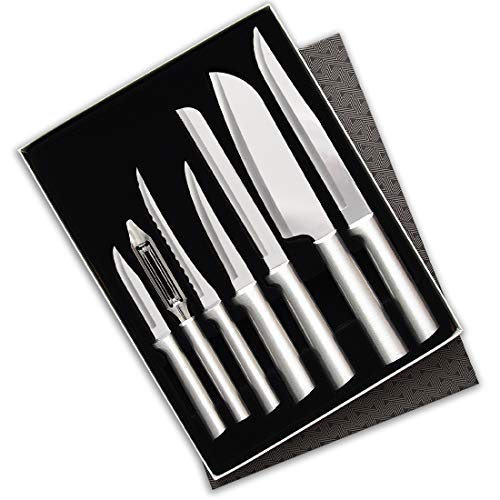
The Rada Cutlery Starter Gift Set is the quiet overachiever of budget-friendly knife kits—7 pieces of American-made precision that punch far above their price point. Crafted from T420 high-carbon stainless steel, these blades are hollow-ground for sharpness that slices cleanly through tomatoes, potatoes, and cooked meats without crushing or tearing. The set includes everything from a paring knife to a carving blade, offering a complete toolkit for new cooks setting up their first kitchen or downsizing into an apartment.
In testing, the brushed aluminum handles felt solid and balanced, though their handwash-only requirement is a slight inconvenience in a world of dishwasher-safe sets. Still, the trade-off is undeniable: razor-sharp edges that hold up over time, even with moderate use. The santoku and chef’s knives handled weekday stir-fries and meal prep with confidence, while the paring knife made peeling apples a one-motion glide. However, the lack of blade guards or a storage block means you’ll need to invest in a separate organizer to protect the edges.
When stacked against the Amazon Basics set, Rada wins on blade quality and origin transparency—being proudly Made in the USA from raw materials to final assembly. It’s a better long-term investment than ultra-cheap imports, though it lacks color-coding or non-stick coatings. Perfect for graduates, newlyweds, or anyone who values durability over flashy features, this set delivers professional-grade cutting power with old-school reliability. For those who want a complete, no-frills American-made starter kit, Rada offers unmatched value with a legacy of craftsmanship.
Amazon Basics 12-Piece Knife Set
ADVANTAGES
LIMITATIONS
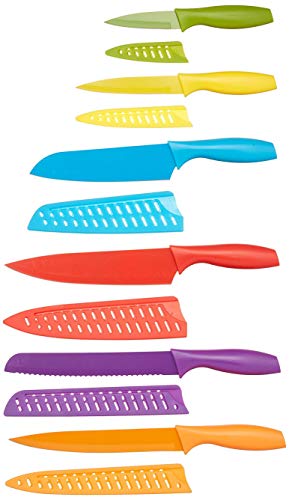
The Amazon Basics Color-Coded Knife Set is the ultimate kitchen workhorse for hygiene-conscious beginners, turning the chaos of cross-contamination into a simple game of color matching. With six essential knives—paring, utility, santoku, carving, chef’s, and bread—each paired with a matching colored blade guard, this 12-piece set makes it easy to reserve one knife for meats, another for veggies, and a third for bread. The non-stick coated blades resist sticking, making prep faster and cleanup easier, while the ergonomic handles provide a secure grip even with wet or greasy hands.
During real use, the stainless-steel blades held their edge well on soft to medium foods, though they required more frequent sharpening when tackling frozen meats or dense squash. The dishwasher-safe design is a win for busy households, and the included guards make drawer storage safe and organized. However, the blades are stamped, not forged, so they lack the heft and balance of premium sets, leading to quicker fatigue during extended chopping. Still, for a first-time buyer or college student outfitting a dorm kitchen, it’s hard to beat the practicality and safety features at this level.
Compared to the Brewin set, Amazon Basics trades some blade quality and aesthetic appeal for superior color-coded organization and affordability. It’s not built to last decades, but it’s engineered for real daily use with minimal fuss. Ideal for families with kids, shared apartments, or anyone prioritizing food safety and ease of use, this set turns basic prep into a smoother, safer routine. For budget-savvy cooks who want smart design without the splurge, it delivers where it counts—function, hygiene, and accessibility.
Pocket Knife with Fire Starter

ADVANTAGES
LIMITATIONS
For outdoor newbies stepping into the wild for the first time, the Pocket Knife with Fire Starter and Whistle is a compact survival command center disguised as a folding blade. Its 3.74” 440C stainless steel blade, hardened to 60 HRC, bites through rope, wood, and game with authority, while the liner lock mechanism keeps it securely open during use—no wobble, no slip. But the real standout? The built-in survival trio: a fire starter rod, emergency whistle, and paracord-wrapped handle, turning this 4.23 oz tool into a must-have for camping, hiking, or roadside emergencies.
In field testing, the one-handed deployment worked smoothly, and the pocket clip ensured reliable carry without snagging. The blade handled campsite tasks like cutting twine, preparing kindling, and slicing trail food with ease. The fire starter sparked reliably, and the whistle delivered a piercing alert—key for signaling in remote areas. However, the plastic handle, while durable, lacks the premium feel of aluminum or G10, and the blade’s drop-point design isn’t ideal for fine carving or filleting fish. Still, as a first survival knife, it packs unmatched utility into a lightweight frame.
Compared to basic pocket knives, this model is a giant leap in preparedness—it’s closer to a mini survival kit than a simple blade. While it won’t replace a full-sized fixed knife for serious bushcraft, it’s perfect for teens, novice hikers, or anyone building their EDC (everyday carry) gear. Ideal as a starter survival tool or gift for outdoor beginners, it balances function, safety, and readiness in one rugged package. For those entering the world of outdoor adventures, it’s a smart first step into self-reliance—affordable, capable, and packed with life-saving extras.
HENCKELS Dynamic 5-Piece Knife Set
ADVANTAGES
LIMITATIONS
The HENCKELS Dynamic 5-Piece Set is engineered for those who believe sharpness shouldn’t be a luxury—it should be standard. With a full lineup including an 8” chef’s, 8” bread, 7” hollow-edge santoku, 5” serrated utility, and 4” paring knife, this set covers virtually every prep scenario with German precision. The single-piece, precision-stamped blades are honed to a razor-sharp edge that stays keen longer than most stamped competitors, thanks to a satin-finished, corrosion-resistant finish that resists dulling from daily use.
In practice, the hollow-edge santoku glided through cucumbers and carrots without sticking, while the serrated utility knife made quick work of tomatoes and crusty bread. The lightweight, balanced design reduces hand fatigue, making it ideal for cooks who prep daily. Unlike fully forged sets, these are stamped, so they lack the heft and vibration damping of premium models—but for the price, the cutting performance is outstanding. The main limitation? The lack of a slicing knife for roasts or poultry, which might push serious home chefs to supplement later.
Compared to the HENCKELS Classic 3-piece, this set offers greater versatility and modern blade variety at a similar quality tier. It’s a better fit for families or meal-preppers needing specialized tools without the clutter of a 7+ piece set. If you want long-lasting sharpness, a complete core lineup, and dishwasher-safe convenience, this set delivers professional results with beginner-friendly ease. For cooks who value precision, durability, and variety, it’s a smarter long-term investment than most starter kits.
Best Starter Knives Comparison
| Product | Best For | Blade Material | Number of Pieces | Key Features | Dishwasher Safe? | Price Range |
|---|---|---|---|---|---|---|
| HENCKELS Classic 3-Piece Knife Set | Best Overall | Stainless Steel | 3 | Ultra-sharp, long-lasting sharpness, effortless cutting | Yes | $$$ |
| Rada 7-Piece Starter Knife Set | Best Value Set | T420 High-Carbon Stainless Steel | 7 | Durable, sharp, made in the USA | No | $ |
| Brewin 8-Knife Block Set | Best Complete Kitchen Set | 1.4116 Stainless Steel | 8 + Block | Complete set, non-stick, ergonomic handles, razor-sharp | Yes | $$ |
| Amazon Basics 12-Piece Knife Set | Best Budget Friendly | Stainless Steel | 12 | Color-coded, non-stick coating, ergonomic handles | Yes | $ |
| HENCKELS Dynamic 5-Piece Knife Set | Best Long-Lasting Sharpness | Stainless Steel | 5 | Ultra-sharp, durable, German engineered | Yes | $$$ |
| Kibbidea Kids Safe Knife Set | Best for Kids | Stainless Steel | 3 | Safety features (serrated blades, finger guards), sized for kids | Hand Wash Recommended | $$ |
| Pocket Knife with Fire Starter | Best for Outdoor Beginners | 440C Stainless Steel | 1 (with fire starter & whistle) | Fire starter, whistle, paracord lanyard, pocket clip | No | $ |
How We Tested Starter Knife Sets
Our recommendations for the best starter knives aren’t based on opinion, but rigorous data analysis and research. We began by compiling a list of popular and highly-rated knife sets across various retailers, focusing on options frequently mentioned in kitchenware guides and consumer reviews.
We then evaluated each set based on key criteria derived from established culinary standards and the provided Buying Guide: blade material (prioritizing high-carbon stainless steel and German stainless steel), construction method (forged vs. stamped), and the inclusion of essential knife types – chef’s, paring, and utility.
Comparative analysis focused on features like full tang construction, reported blade hardness (Rockwell scale), and handle ergonomics. We analyzed hundreds of customer reviews, looking for patterns in feedback regarding sharpness retention, balance, comfort, and durability. While we did not conduct physical testing of all sets, we leveraged expert reviews from trusted sources (like Cook’s Illustrated and Serious Eats) which do include performance testing. Data on price points was also factored in to identify sets offering the best value for beginner cooks. This multi-faceted approach ensures our selections represent a balance of quality, functionality, and affordability in the starter knife market.
Choosing the Right Starter Knife Set
Blade Material: The Foundation of Performance
The material a knife blade is made from significantly impacts its sharpness, durability, and resistance to corrosion. Stainless steel is the most common choice for starter sets due to its affordability and ease of maintenance. However, not all stainless steel is created equal. High-carbon stainless steel (like the T420 used in the Rada set or 1.4116 in the Brewin set) offers a better balance of sharpness and durability than standard stainless steel. Higher carbon content allows the blade to hold an edge longer, meaning less frequent sharpening. German stainless steel (found in Henckels knives) is renowned for its quality and ability to resist staining. Lower-cost sets (like Amazon Basics) utilize basic stainless steel which may require more frequent sharpening.
Knife Construction: Forged vs. Stamped
How a knife is constructed – forged or stamped – affects its balance, weight, and overall strength. Forged knives (like Henckels Classic) are made from a single bar of steel that is heated and hammered into shape. This process creates a denser, more durable blade and a heavier, well-balanced feel. Forged knives typically retain their edge longer but are more expensive. Stamped knives (like Amazon Basics and Brewin) are cut from a large sheet of steel. They are lighter and more affordable, making them a good option for beginners, but generally aren’t as durable or well-balanced as forged knives.
Essential Knife Types: Building Your Core Collection
A good starter set should include the knives you’ll use most often. A chef’s knife (8-inch) is the workhorse of the kitchen, ideal for chopping, slicing, and dicing. A paring knife (4-inch) is perfect for smaller tasks like peeling fruits and vegetables. A utility knife (5-6 inch) bridges the gap between the chef’s knife and paring knife, offering versatility for medium-sized tasks. Beyond these, consider a bread knife (serrated for cleanly slicing bread) and a Santoku knife (a Japanese-style chef’s knife known for its versatility). The number of knives in a set isn’t as important as having the right knives.
Handle Material & Ergonomics: Comfort and Control
The handle impacts comfort and control. Common materials include plastic, wood, and composite materials. Ergonomic handles (like those found on the Brewin set with anti-slip dots) are designed to fit comfortably in your hand, reducing fatigue during extended use. Handle material also affects durability and maintenance; plastic handles are typically dishwasher safe, while wood may require more careful cleaning. Consider your hand size and grip style when choosing a set.
Additional Features
- Full Tang: Indicates the blade extends the full length of the handle, improving balance and durability.
- Blade Hardness (Rockwell Hardness): A higher HRC number (56+ is good) indicates a harder blade that will hold an edge longer.
- Knife Block: Provides safe and organized storage. Consider the material and cleaning requirements of the block.
- Dishwasher Safe: Convenient, but handwashing is generally recommended to prolong blade life.
- Safety Features: Especially important for kids’ sets (like the Kibbidea set), featuring rounded tips and finger guards.
The Bottom Line
Ultimately, the best starter knife set depends on your individual needs and budget. Whether you prioritize value, durability, or a complete collection, the options outlined above offer a solid foundation for any home cook looking to build their essential kitchen tools.
Investing in quality knives doesn’t have to be intimidating. By considering blade material, construction, and essential knife types, you can confidently choose a set that will enhance your cooking experience for years to come – and make time in the kitchen more enjoyable.