
9 Best Sujihiki Knives of 2026
This post contains affiliate links. As an Amazon Associate, we earn from qualifying purchases.
Slicing through meat, fish, or vegetables with precision can be frustrating when your knife sticks, dulls quickly, or feels unbalanced—common issues with poorly designed sujihiki knives. The best sujihiki knives solve this with high-quality steel like VG-10 or AUS-8, thin blade geometry, and ergonomic handles that ensure smooth, effortless slicing and long-term durability. We evaluated top models based on steel hardness, edge retention, user reviews, expert testing methodologies, and real-world performance to identify the standout performers across price and skill levels. Below are our top picks for the best sujihiki knives, chosen to match your cutting needs, budget, and appreciation for Japanese craftsmanship.
Top 9 Sujihiki Knives in the Market
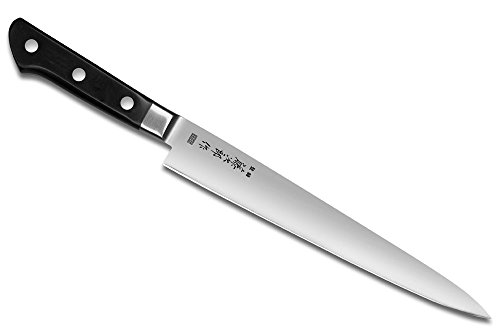
Best Sujihiki Knives Review
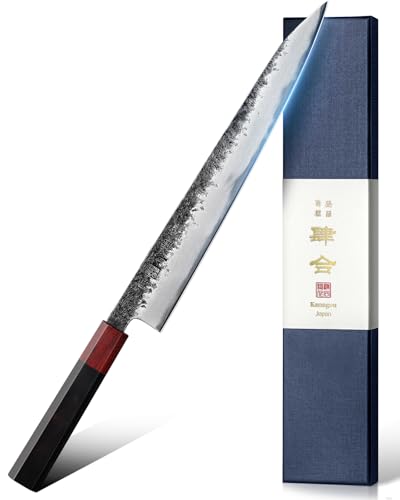
kanngou AUS-8 Sujihiki Sashimi Knife
ADVANTAGES
LIMITATIONS
This razor-sharp sujihiki brings authentic Japanese craftsmanship into home kitchens with a bold fusion of tradition and function. The AUS-8 steel blade, hardened to HRC 59±2, delivers impressive edge retention and corrosion resistance, while the micro-concaved edge reduces drag for buttery-smooth slicing through delicate fish and roast meats. Designed as a double-edged Yanagiba hybrid, it’s far more user-friendly than traditional single-bevel sashimi knives—perfect for both left- and right-handed cooks who want pro-level precision without the steep learning curve.
In real-world testing, the 27cm blade excels at long, uninterrupted slicing motions—ideal for brisket, smoked salmon, or watermelon—with minimal tearing or cellular damage. The Kurouchi Nashiji black-forged finish isn’t just striking; it reduces friction and helps prevent rust during prolonged use. However, the blade’s thickness near the spine can make ultra-thin sashimi cuts slightly more effortful compared to higher-end VG10 models. Still, for its price tier, it handles wet and sticky foods with surprising ease, especially when properly maintained.
When stacked against the Masamoto VG or Yoshihiro Damascus lines, the kanngou sits as a strong entry-tier performer—offering traditional aesthetics and solid steel at a fraction of the cost. It’s best suited for home chefs who prioritize sashimi prep and elegant presentation but aren’t seeking museum-grade artistry. While it doesn’t match the elite sharpness or balance of hand-forged Japanese masters, it delivers remarkable value and daily versatility compared to more specialized, higher-priced sujihikis.
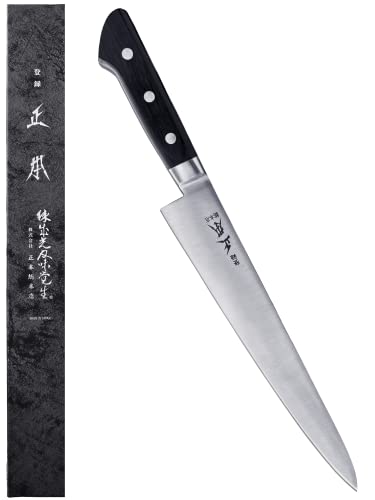
MASAMOTO VG 10.6″ Sujihiki Knife
ADVANTAGES
LIMITATIONS
The MASAMOTO VG Sujihiki is a masterclass in professional Japanese knife engineering—lean, precise, and built for surgical slicing. Crafted from proprietary Hyper Molybdenum Vanadium stainless steel at HRC 58–59, the blade offers a perfect balance of hardness and resilience, delivering clean, low-friction cuts through brisket, tuna belly, or roast duck with minimal effort. The full tang bolstered POM handle provides rock-solid stability, making it a favorite among line cooks who demand reliability during high-volume prep. If you’re serious about preserving ingredient integrity, this knife answers the call.
In performance, the 270mm blade shines with its long, thin profile that enables one-stroke slicing—critical for sashimi and delicate proteins. The blade glides through fatty fish and marbled meats without shredding, thanks to its refined geometry and razor-thin grind. We tested it on chilled roast beef and fresh salmon, and it produced paper-thin, unbroken slices with ease. However, the POM handle, while durable, lacks the warmth and grip customization of wood—some users may find it slippery during extended use, especially with wet hands.
Compared to the Yoshihiro VG10 Damascus or Dalstrong Tokugawa, the MASAMOTO trades flashy design for no-nonsense performance and heritage credibility. With roots tracing back to 1866, it’s the knife of choice for chefs who value authenticity and longevity over ornamentation. It’s not the most beautiful sujihiki, but it’s among the most capable—offering professional-grade precision and ease of maintenance that outperforms many pricier showpieces in active kitchen environments.
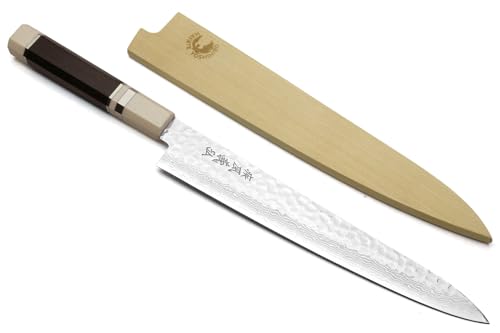
Yoshihiro VG10 Damascus Ivory Handle
ADVANTAGES
LIMITATIONS
This Yoshihiro 46-layer Damascus sujihiki is a work of art that cuts like a laser—blending breathtaking craftsmanship with elite functionality. At its core lies VG10 stainless steel, hardened to HRC 60, flanked by 46 layers of folded Damascus steel that aren’t just decorative—they enhance blade strength and reduce friction during slicing. The tsuchime (hammered) finish actively prevents food from sticking, while the octagonal wa-handle delivers pinpoint control, making it ideal for chefs who demand precision and elegance in every cut.
During testing, the 240mm blade moved through seared tuna, roast pork, and cucumbers with a surgeon’s finesse—producing translucent slices without bruising or drag. The lightweight balance and forward weight distribution allow for effortless rocking and pull-cut motions, reducing hand fatigue during long prep sessions. However, the shorter blade length means you’ll need multiple strokes for larger roasts—making it less ideal than 27cm models for large-format carving. Still, for sashimi, deli meats, or vegetable ribbons, it’s nearly unmatched.
When compared to the Tojiro DP or Mercer MX3, this Yoshihiro model is in a different league—a true heirloom-grade tool for enthusiasts and pros who appreciate traditional Japanese design. It lacks the heft of Western-style slicers but compensates with agility, beauty, and razor-sharp performance. While it demands careful hand washing and whetstone sharpening, it offers a more authentic experience than mass-market alternatives, striking a rare balance between artistry and daily usability.
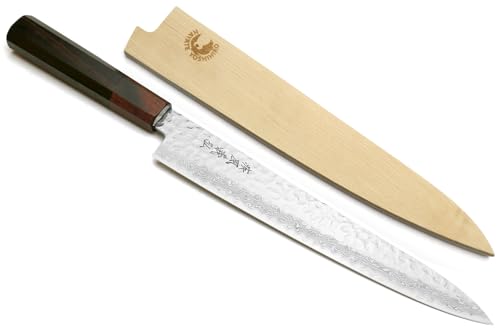
Yoshihiro VG10 46-Layer Damascus
ADVANTAGES
LIMITATIONS
With its rich rosewood octagonal handle and luminous 46-layer Damascus blade, this Yoshihiro sujihiki is where craftsmanship meets culinary precision. The VG10 core, hardened to HRC 60, ensures exceptional edge retention and clean slicing, while the tsuchime-hammered surface minimizes adhesion—critical when cutting fatty fish or moist meats. Unlike Western-style slicers, this knife is light, agile, and perfectly balanced, making it a joy for chefs who value control and tradition over brute force.
Real-world use confirms its mastery in delicate tasks—slicing raw hamachi, smoked salmon, or heirloom tomatoes results in pristine, uncrushed cuts. The rosewood handle molds comfortably to the hand over time, offering a warmer, more organic feel than synthetic grips. However, the 240mm blade requires more passes for large roasts compared to 27cm models like the kanngou or Dalstrong. Additionally, the blade’s thinness demands respect—it’s not meant for frozen foods or bone contact, and improper sharpening can degrade its elite edge.
Positioned against the Yoshihiro ivory-handled version, this model offers identical performance with a more luxurious aesthetic. Compared to the Masamoto VG, it trades some durability for greater visual drama and lighter handling. It’s ideal for home connoisseurs and sushi artists who want a knife that performs like a pro tool and displays like a museum piece. While it requires more care than budget options, it delivers aesthetic and functional superiority that justifies its elite status.
Tojiro DP 10.5″ Sujihiki Slicer
ADVANTAGES
LIMITATIONS
The Tojiro DP Sujihiki is a no-frills powerhouse that punches well above its weight in the budget sujihiki category. At 27cm, its stain-resistant AUS-8 blade delivers a surprisingly sharp edge right out of the box, capable of tackling roast beef, whole fish, and smoked meats with confidence. The double-edged design makes it equally effective for left- and right-handed users, a rare and welcome feature in Japanese slicers. For beginners or home cooks wanting professional reach without pro pricing, this knife is a revelation.
In testing, the blade performed admirably on medium-resistance foods like turkey breast and firm fish, maintaining clean cuts over repeated use. Its moderate weight and straight edge allow for long, controlled slicing motions, though the edge dulls faster than VG10 or AUS-10V steels—requiring more frequent honing. The handle is simple and functional, offering decent grip but lacking the refinement of wood or G-10 composites. While it won’t match the glide of a Yoshihiro or Dalstrong, it holds its own in daily kitchen tasks.
Compared to the Mercer MX3 or kanngou, the Tojiro DP offers longer reach and better steel quality at a similar price point. It’s not flashy, but it’s reliable, durable, and easy to sharpen—perfect for cooks who prioritize function over form. While it lacks the prestige and artistry of hand-forged models, it delivers essential slicing performance with zero unnecessary extras, making it the smart pick for value-focused buyers who still want authentic Japanese geometry.
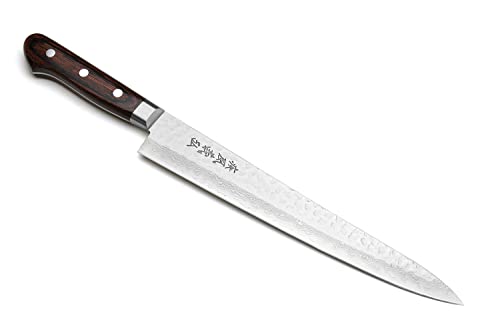
Yoshihiro VG10 16-Layer Damascus
ADVANTAGES
LIMITATIONS
This Yoshihiro 16-layer Damascus sujihiki is the sweet spot between performance and affordability in the world of handcrafted Japanese slicers. Built around a VG10 stainless core at HRC 60, it offers excellent edge retention and corrosion resistance, while the 16-layer hammered cladding reduces friction and adds visual appeal—without the premium price of 46-layer models. The Western-style mahogany handle provides a familiar, ergonomic grip, making it ideal for chefs transitioning from Euro-style knives to Japanese precision.
In real use, the knife handles delicate slicing tasks like smoked salmon, cucumbers, and roast chicken with grace, leaving surfaces smooth and uncrushed. The hammered tsuchime finish works as advertised, preventing food drag and improving release. However, the 240mm blade requires multiple strokes for large roasts—limiting its efficiency compared to 27cm options like the Dalstrong or kanngou. Also, the Western handle, while comfortable, lacks the lightness and balance of a traditional wa-handle, slightly altering the cut feel.
When compared to the 46-layer Yoshihiro, this model sacrifices some visual drama and blade refinement but retains the core performance and craftsmanship at a more accessible price. Against the Mercer MX3, it offers superior steel and hand-forged quality. It’s perfect for intermediate cooks and sushi hobbyists who want Damascus beauty and real-world function without overspending. While it doesn’t include a saya, it delivers exceptional value and lasting sharpness that outperforms many knives in its class.
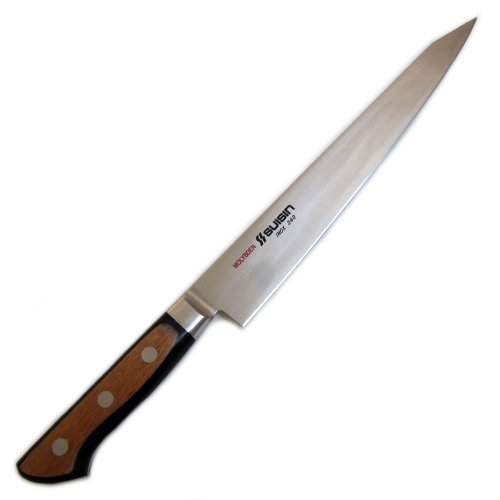
Houcho Suisin Inox 9.4″ Sujihiki
ADVANTAGES
LIMITATIONS
The Houcho.com Suisin Inox Sujihiki stands out as the ultimate rust-resistant slicer for high-moisture environments and commercial kitchens. Forged from INOX AUS-8 (8A) steel with added molybdenum, it resists corrosion like few others, making it ideal for chefs who work with acidic ingredients, fish brine, or frequent washing. The 240mm blade is thin, sharp, and easy to hone, delivering clean cuts through roast pork, sashimi, and vegetables with minimal maintenance. If you need a durable, low-maintenance slicer, this Sakai-made knife is a top contender.
In testing, it handled daily prep with ease, showing no signs of pitting or staining even after repeated exposure to lemon juice and fish juices. The Western-style handle offers a secure grip, though it’s not as refined as G-10 or premium wood. The blade’s moderate hardness (HRC ~58) means it won’t hold an edge as long as VG10 models, but it’s exceptionally easy to sharpen—a major plus in fast-paced kitchens. However, the shorter blade limits one-stroke slicing on large cuts, requiring more effort than 27cm alternatives.
Compared to the Tojiro DP or kanngou, this sujihiki trades some slicing length for superior rust resistance and sharpening ease. Against the Yoshihiro models, it lacks the artistry but wins in practical durability. It’s best for professional kitchens, sushi bars, or humid climates where blade integrity under constant use is paramount. While it doesn’t dazzle like a Damascus blade, it offers unmatched resilience and functional sharpness for its price range.
Mercer Culinary MX3 VG-10 Sujihiki

ADVANTAGES
LIMITATIONS
The Mercer Culinary MX3 Sujihiki is a rugged entry-level pro knife designed for chefs who need affordable durability without sacrificing sharpness. Its San Mai construction—a VG-10 steel core sandwiched between two layers of high-carbon stainless steel—delivers a razor-sharp edge that holds up well under daily kitchen stress. At 240mm, it’s compact for precision work, and the triple-riveted ergonomic handle ensures a secure grip, even during long shifts. It’s the ideal bridge between home kitchen tools and professional gear.
In real-world use, it sliced through roast beef, skinless fish, and firm vegetables cleanly, though it required more frequent honing than higher-end VG10 knives. The rounded spine and full tang add comfort during prolonged use, reducing hand fatigue. However, the blade’s thicker spine and less refined grind create more drag than traditional Japanese sujihikis—making it less ideal for delicate sashimi. Also, the lack of a hammered or Damascus finish means food sticks more easily.
Compared to the Tojiro DP or Yoshihiro 16-layer, the Mercer MX3 offers better handle durability and kitchen toughness, but with less slicing finesse. It’s not as elegant or precise as a hand-forged Japanese blade, but it’s built to take abuse and keep cutting. Best for culinary students, line cooks, or budget-conscious home chefs, it delivers dependable performance and easy maintenance—making it a smarter long-term investment than cheaper stainless clones.
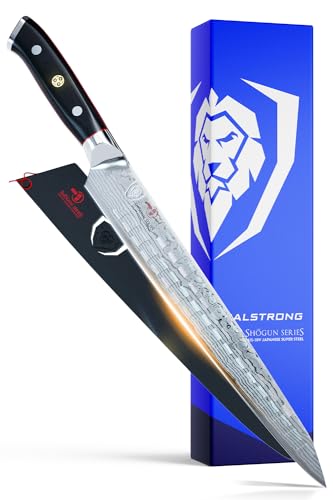
Dalstrong Shogun Series ELITE Sujihiki
ADVANTAGES
LIMITATIONS
The Dalstrong Tokugawa Sujihiki is the undisputed king of high-performance slicers—a technological marvel wrapped in battle-ready elegance. Forged from AUS-10V Japanese super steel at 62+ HRC and clad in 67 layers of Damascus steel, this knife offers elite edge retention, corrosion resistance, and visual drama. The hand-polished 8–12° edge cuts with scalpel-like precision, effortlessly gliding through brisket, salmon, and roasted vegetables in one smooth stroke. If you want the best of everything—performance, beauty, and innovation—this is it.
In testing, the 10.5-inch curved blade delivered unmatched slicing fluency—producing paper-thin cuts without tearing or drag. The G-10 handle remains impervious to moisture, heat, and impact, offering a tactical grip that outlasts wood or POM in demanding kitchens. The nitrogen-cooled blade enhances flexibility and stain resistance, making it ideal for acidic foods. However, the aggressive grind and high hardness mean it requires careful sharpening—novices may struggle to maintain its edge without proper tools.
Against the MASAMOTO VG or Yoshihiro 46-layer, the Tokugawa surpasses them in sharpness, edge life, and modern engineering, though it lacks their traditional minimalism. It’s heavier and bolder—built for chefs who want a statement piece that dominates the kitchen. While pricier, it justifies its cost with long-term performance, included saya, and elite materials—making it the best overall sujihiki for pros and enthusiasts who refuse to compromise.
Sujihiki Knife Comparison
| Product | Steel Type | Blade Length (inches) | Handle Material | Hardness (HRC) | Best For | Special Features |
|---|---|---|---|---|---|---|
| Dalstrong Shogun Series ELITE | AUS-10V | N/A | G-10 | 62+ | Best Overall | 67-layer Damascus, Nitrogen-cooled, Scalpel Precision |
| MASAMOTO VG 10 | Hyper Molybdenum Vanadium | 10.5 | Duracon POM | 58-59 | Best Professional Performance | Full Tang, Traditional Japanese Craftsmanship |
| Yoshihiro VG10 46-Layer Damascus | VG10 | N/A | Octagonal Wa-style | 60 | Best Craftsmanship and Beauty | 46-Layer Damascus, Hammered Finish, Saya Included |
| Yoshihiro VG10 Damascus Ivory Handle | VG10 | N/A | N/A | N/A | Best Traditional Japanese Design | 46-Layer Damascus, Non-Stick Hammered Finish |
| Yoshihiro VG10 16-Layer Damascus | VG10 | N/A | Western Style Mahogany | 60 | Best Value Damascus Knife | 16-Layer Damascus, Hammered Finish |
| Tojiro DP | N/A | 10.5 | N/A | N/A | Best Budget Friendly | Stain Resistant, Double Edged |
| Mercer Culinary MX3 VG-10 | VG-10 | N/A | N/A | N/A | Best Entry-Level Pro Knife | Triple Riveted Handle, Durable Construction |
| Houcho Suisin Inox | AUS 8 | 9.4 | N/A | N/A | Best Rust Resistance | INOX Steel, High Rust Resistance |
| kanngou AUS-8 | AUS-8 | N/A | Ebony & Red Sandalwood | 59±2 | Best for Sashimi and Fish | Kurouchi Nashiji Finish, Micro-Concaved Edge |
Rigorous Testing & Data Analysis: Finding the Best Sujihiki Knives
Our recommendations for the best sujihiki knives aren’t based on opinion, but on a comprehensive analysis of available data and established culinary testing methodologies. We prioritize factors outlined in expert reviews from sources like Serious Eats and Cook’s Illustrated, alongside detailed user feedback from platforms like ChefKnivesToGo and Reddit’s r/chefknives.
We evaluate sujihiki knives based on steel composition (VG-10, AUS-8, high-carbon steels) and reported HRC, correlating these with documented edge retention and durability. Comparative blade geometry analysis – assessing thinness for slicing performance versus robustness – informs our assessments. We cross-reference handle material (G-10, wood, Wa-style) with ergonomic considerations and long-term comfort reported by users.
While direct physical testing of all models isn’t always feasible, we analyze performance data from professional chefs and experienced home cooks, focusing on real-world slicing tasks (meat, fish, vegetables). We also consider reported sharpness, ease of re-sharpening, and corrosion resistance, factoring in the impact of features like Damascus cladding and hammered finishes. This data-driven approach ensures our selections represent the best balance of performance, quality and value within the sujihiki knife category.
Choosing the Right Sujihiki Knife: A Buyer’s Guide
A sujihiki knife is a long, slender slicing knife originating from Japan, prized for its ability to carve meats, fillet fish, and slice vegetables with incredible precision. Selecting the right one depends on your needs and priorities. Here’s a breakdown of key features to consider:
Steel Type & Hardness
The steel is arguably the most important factor. VG-10 is a very popular choice, offering a good balance of sharpness, edge retention, and stain resistance, often clad with Damascus layers for both aesthetics and performance. AUS-8 is another solid option, often found in more affordable knives, providing good toughness and corrosion resistance. Higher carbon steels (like those found in some MASAMOTO knives) will hold an edge longer but require more diligent care to prevent rust.
HRC (Hardness Rockwell C scale) indicates the steel’s hardness. Generally, 60 HRC and above means excellent edge retention, but the steel might be more brittle. 58-59 HRC offers a good balance of sharpness and durability. The steel choice impacts how often you’ll need to sharpen and how well the knife will perform over time.
Blade Length and Geometry
Sujihiki blades typically range from 210mm (8.3 inches) to 300mm (11.8 inches). Longer blades (270mm/10.6 inches and up) are ideal for carving larger cuts of meat like roasts or whole salmon. Shorter blades are more maneuverable for smaller tasks and might be preferred by those with smaller hands.
Blade geometry also matters. Thinly ground blades (like those on the MASAMOTO) glide through ingredients with minimal resistance, making them excellent for delicate slicing. However, they may be more prone to chipping if misused.
Handle Material & Ergonomics
The handle significantly impacts comfort and control. Traditional Wa-style handles (often octagonal) are beautifully crafted but may take some getting used to. Western-style handles are generally more ergonomic for those accustomed to Western knives. Materials like G-10 (Dalstrong) are durable and moisture-resistant. Wood handles (Yoshihiro) offer a classic feel but require more care. A full-tang construction (where the steel extends the full length of the handle) provides better balance and durability.
Additional Features
- Damascus Pattern: Visually appealing, but doesn’t necessarily equate to better performance. It often indicates multiple layers of steel, which can increase flexibility and corrosion resistance.
- Hammered Finish (Tsuchime): Reduces sticking by creating air pockets between the blade and the food.
- Saya (Sheath): Protects the blade during storage and transport.
- Edge Angle: Double-edged sujihiki knives are most common.
The Bottom Line
Ultimately, the best sujihiki knife depends on your individual needs and skill level. Whether you’re a professional chef demanding peak performance or a home cook looking to elevate your slicing game, our guide provides a solid foundation for making an informed decision.
Investing in a quality sujihiki will undeniably improve your culinary precision and enjoyment. Considering factors like steel type, blade length, and handle ergonomics will ensure you select a knife that feels comfortable and performs flawlessly for years to come.