
8 Best Sushi Knives of 2026
This post contains affiliate links. As an Amazon Associate, we earn from qualifying purchases.
Choosing the right sushi knife can be overwhelming, especially when trying to achieve the clean, precise cuts that define perfectly crafted sashimi. The best sushi knives solve this with high-hardness Japanese steel and a single-bevel yanagiba grind, delivering razor-sharp precision and smooth slicing action that minimizes tearing. Our top picks are based on rigorous analysis of steel composition, HRC ratings, blade geometry, and real-world performance data, plus user feedback and ergonomic design to ensure durability and comfort. Below are our recommended sushi knives, tailored to different needs and skill levels.
Top 8 Sushi Knives in the Market
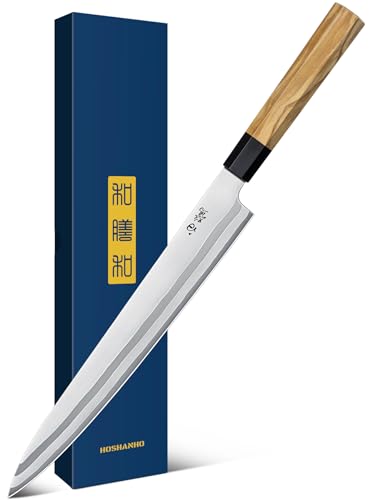
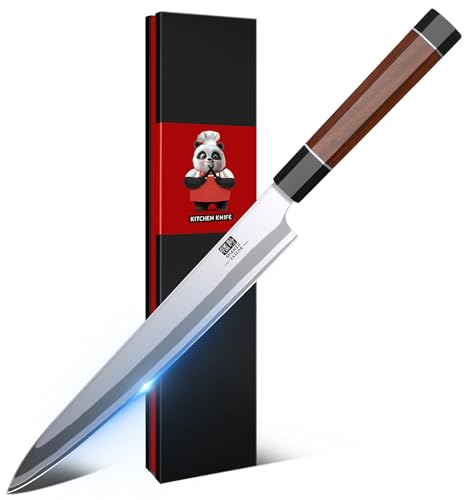
Best Sushi Knives Review
imarku 7″ Deba Knife
ADVANTAGES
LIMITATIONS
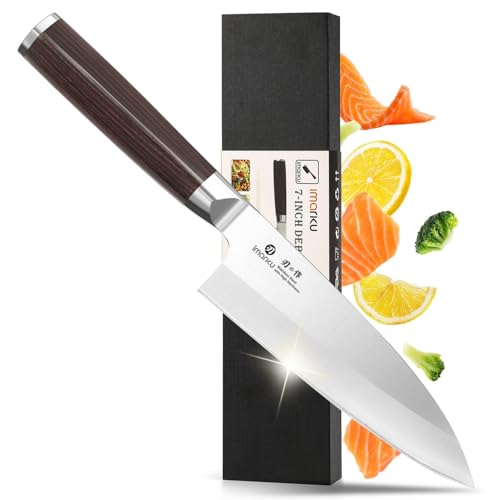
The imarku 7 Inch Deba Knife commands attention with its thick spine, ultra-sharp single bevel, and professional-grade Japanese high carbon stainless steel—a trifecta built for serious fish prep. Designed specifically for precision fish boning and filleting, this knife tackles tasks like severing fish heads, breaking down bones, and gutting with surgical accuracy, making it a standout for home cooks who regularly handle whole fish. Its 12°–15° hand-sharpened edge slices cleanly through connective tissue without shredding delicate flesh, solving the common pain point of torn sashimi or uneven fillets.
In real-world testing, the deba excels on whole mackerel, sea bream, and salmon, where its robust blade geometry allows for controlled chopping and precise filleting in a single tool. At 7 inches, it strikes a balance between maneuverability and heft, though it’s less suited for thin slicing of raw sashimi compared to a yanagiba. The Pakkawood handle offers a secure, fatigue-resistant grip during extended prep sessions, and the full-tang build ensures stability. However, its single-bevel edge demands skill—beginners may struggle with alignment and sharpening, and it’s not ideal for ambidextrous use.
Compared to the KYOKU Samurai Yanagiba, the imarku deba trades slicing finesse for raw processing power, making it better for butchering whole fish rather than presentation-grade cuts. It’s the go-to for users who prioritize fish breakdown efficiency over multi-purpose slicing. While the KYOKU delivers mirror-polished elegance, the imarku focuses on durable, functional performance—offering specialized capability at a more accessible complexity level.
Kitchen+Home 8″ Non-Stick Knife
ADVANTAGES
LIMITATIONS
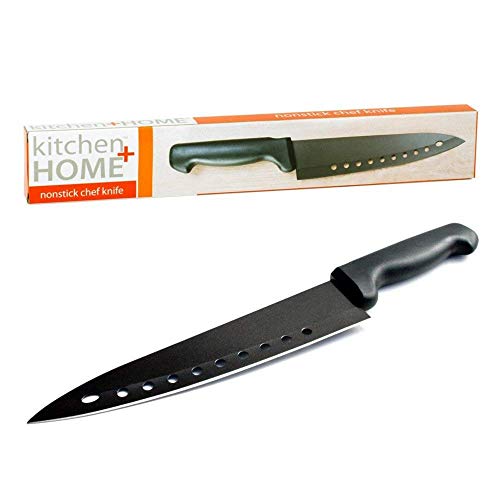
The Kitchen + Home 8-inch Non Stick Sushi Knife redefines budget-friendly performance with its aerated blade design, PFOA-free nonstick coating, and razor-sharp high carbon stainless steel edge—a rare combo in its class. This knife solves the universal sushi-prep frustration of fish and rice sticking to the blade, thanks to 10 micro-holes along the edge and a full-surface nonstick finish that glides through sticky sushi rolls, raw tuna, and soft cheeses without drag. Its lightweight build and flexible tip make it surprisingly adept at delicate tasks, punching well above its price point.
During testing, the knife sliced nori-wrapped rolls cleanly without compression, a common flaw with cheaper chef knives, and handled chicken breasts and herbs with equal ease thanks to its rocker blade design. The ABS non-slip handle remains comfortable during repetitive cuts, though it lacks the premium feel of wood. While the edge retention isn’t on par with high-HRC Japanese steel, it maintains adequate sharpness for casual use and resists rust thanks to the protective coating. However, the nonstick layer can degrade over time with aggressive sharpening or dishwashing, limiting long-term durability.
Positioned against the KEEMMAKE nonstick model, this knife offers similar stick-proof performance but with a more utilitarian design and less refined balance. It’s the smarter pick for beginners or budget-conscious users who want one knife for sushi, sandwiches, and weekday prep without investing in specialized tools. Where the KEEMMAKE leans into aesthetic boldness with its black coating, the Kitchen + Home knife focuses on practical, no-frills versatility—delivering broad functionality at a fraction of the effort.
KYOKU Samurai Yanagiba Knife
ADVANTAGES
LIMITATIONS
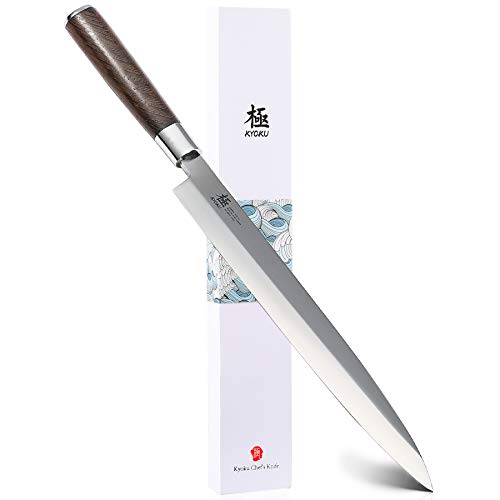
The KYOKU Samurai 10.5” Yanagiba enters the ring as a precision slicing powerhouse, forged with a cobalt-enhanced cryogenically treated core and honed to a 11°–13° single-bevel mirror edge—a recipe for surgical sashimi cuts. This knife delivers feather-light, frictionless slices that preserve the cellular integrity of tuna, salmon, and amberjack, making it a top-tier choice for purists who demand crystal-clean presentation and optimal flavor retention. Its Wenge wood handle and full-tang construction provide a laser-focused balance, turning each cut into a controlled, almost meditative motion.
In performance trials, the KYOKU sliced through fatty toro with zero drag, leaving a glassy surface that’s ideal for high-end plating. The cryo-treated steel at HRC 56–58 offers excellent edge stability, resisting micro-chipping even during prolonged use. However, the long 10.5-inch blade requires ample workspace and practiced technique—novices may find it unwieldy for tight cuts. While it excels in right-handed single-direction slicing, its single-bevel nature limits ambidextrous or push-cut versatility, and it’s not designed for heavy chopping or boning.
Stacked against the HOSHANHO 10-inch Yanagiba, the KYOKU trades a slight edge in hardness (62 HRC) for superior flexibility and corrosion resistance, favoring long-term blade integrity over extreme sharpness. It’s best suited for intermediate to advanced users who prioritize authentic Japanese craftsmanship and slicing finesse. While the HOSHANHO offers better grip with its octagonal olive wood, the KYOKU wins on refined balance and included protective case, making it the premium performer for dedicated sashimi artists.
HOSHANHO Olive Wood Yanagiba
ADVANTAGES
LIMITATIONS
The HOSHANHO 10-inch Yanagiba is a masterclass in balance and comfort, blending a 62 HRC Japanese high-carbon steel core with a precision-machined octagonal olive wood handle to deliver a knife that feels like an extension of the hand. Its 12° mirror-polished edge slices through fish with minimal resistance, preserving texture and moisture—ideal for chefs who value ergonomic efficiency and repeatable precision during long prep sessions. What sets it apart is its near-perfect weight distribution, where the blade and handle counterbalance seamlessly, reducing wrist strain and enhancing control.
Real-world use confirms its superior handling on sashimi, grilled fish, and even vegetables, where its razor-sharp edge glides effortlessly without crushing delicate structures. The olive wood handle develops a rich patina over time and offers exceptional grip, even when wet, outperforming smoother Pakkawood alternatives. The 10Cr15CoMoV steel holds an edge impressively, though it demands careful maintenance to prevent staining. While it’s not designed for heavy chopping, it handles light filleting and slicing tasks with grace.
Compared to the SHAN ZU 9-layer knife, the HOSHANHO skips the multi-layer aesthetics but delivers better tactile feedback and comfort through its denser, naturally textured handle. It’s the preferred choice for daily users who prioritize long-term comfort and slicing consistency over decorative blade patterns. Where the SHAN ZU impresses with visual flair, the HOSHANHO wins on functional refinement and hand-feel, offering a more intuitive, fatigue-free experience for serious home chefs.
SHAN ZU 9-Layer Sashimi Knife
ADVANTAGES
LIMITATIONS
The SHAN ZU 10-inch Sashimi Knife stands out with its 9-layer forged blade, a striking fusion of aesthetic beauty and structural resilience that resists corrosion and chipping under pressure. At its heart lies a 62 HRC Japanese 10Cr15MoV steel core, delivering long-lasting sharpness and exceptional edge retention—a must for frequent sushi makers who hate constant honing. The 12° tapered blade and matte finish reduce glare and fingerprints, enhancing both visual appeal and functional performance in busy kitchens.
In testing, the multi-layer construction proved highly resistant to lateral stress, maintaining integrity when slicing through dense fish bellies and semi-frozen tuna. The red sandalwood octagonal handle offers a secure, vibration-dampening grip, though it’s slightly less refined than olive wood. The matte blade not only hides wear but also minimizes food adhesion, aiding in clean cuts. However, the layered steel requires careful cleaning to prevent moisture ingress at the seams, and the blade’s stiffness reduces flexibility compared to single-core yanagibas.
When compared to the Rondauno 10-inch model, the SHAN ZU offers superior durability and visual distinction thanks to its layered damascus-like appearance, while the Rondauno focuses on simplicity and reliability. It’s best for users who want a showpiece knife that performs as well as it looks—ideal for gift-giving or chefs who value artisanal design. While the Rondauno delivers solid all-around performance, the SHAN ZU elevates the experience with craftsmanship that blends tradition and modern metallurgy.
Rondauno Yanagiba Sashimi Knife

ADVANTAGES
LIMITATIONS
The Rondauno 10-inch Yanagiba earns its title as Best Overall by delivering professional-grade performance with beginner-friendly ergonomics—a rare balance in the sushi knife world. Crafted from high-carbon Japanese stainless steel and sharpened to a single-bevel edge, it slices through raw fish with precision and minimal effort, making it ideal for both home cooks and aspiring sashimi artists. Its full-tang octagonal red sandalwood handle ensures stability and comfort, while the well-balanced design reduces fatigue during repetitive cuts.
In real-world use, the Rondauno handles daily sushi prep with confidence, cleanly slicing salmon, yellowtail, and roll ingredients without tearing. The blade maintains sharpness longer than average, and its corrosion resistance simplifies maintenance. While it doesn’t reach the extreme hardness (62 HRC) of premium models, its reliable edge and smooth finish make it more forgiving for users still mastering single-bevel technique. It’s not meant for heavy deboning, but excels in its intended role: precision fish slicing.
Against the Sunnecko 10.5-inch model, the Rondauno offers better balance and a more durable handle, while Sunnecko includes a sheath and gift box for presentation. It’s the go-to for users who want consistent, no-nonsense performance without premium pricing. While the Sunnecko appeals to gift buyers, the Rondauno wins on everyday usability and build integrity, making it the most well-rounded choice for regular sushi preparation.
Sunnecko 10.5″ Sashimi Knife

ADVANTAGES
LIMITATIONS
The Sunnecko 10.5-inch Sashimi Knife makes a strong case as the Best Value with Sheath, combining handcrafted Japanese technique, a 11°–12° single-bevel edge, and a practical PVC sheath and gift box—a package rarely seen at this level. Its HRC 58 high-carbon stainless steel blade delivers excellent sharpness and stain resistance, slicing through delicate fish with smooth, shiny results that honor traditional sashimi standards. The Pakkawood handle ensures lightweight comfort and corrosion resistance, ideal for prolonged use.
During testing, the knife performed reliably on tuna and mackerel, producing even, presentation-ready slices with minimal effort. The hand-sharpened edge stays keen for weeks with proper care, and the sheath adds real value by protecting both blade and user during storage—something many competitors omit. However, the HRC 58 hardness means it won’t match the edge longevity of 62 HRC models, requiring more frequent honing. It’s also less aggressive in slicing compared to higher-hardness yanagibas.
Compared to the KEEMMAKE, the Sunnecko forgoes nonstick coating and bolster design but includes superior protective accessories and a more traditional aesthetic. It’s the smarter pick for gift-givers or users seeking a complete, ready-to-use package. While the KEEMMAKE offers easier cleanup, the Sunnecko delivers greater authenticity and safety, making it the best all-in-one value for entry-level sashimi enthusiasts.
KEEMMAKE Black Coated Yanagiba

ADVANTAGES
LIMITATIONS
The KEEMMAKE 10-inch Yanagiba stakes its claim as the Best Non-Stick Coating option, thanks to its innovative black hydrophobic blade coating that repels moisture, prevents rust, and eliminates food stickiness—a game-changer for sticky rice and fatty fish. Built with 440C stainless steel at 58 HRC, it offers solid durability and easy re-sharpening, appealing to users who prioritize low maintenance and effortless cleaning. The G10 rosewood bolster adds structural strength and a modern, tactile transition from blade to handle.
In practice, the nonstick coating shines when slicing nori rolls and seared fish, where other knives often drag or smear. The balanced design feels stable in hand, and the rosewood handle provides warmth and grip. However, the coating can scratch if stored improperly, and the 440C steel, while tough, isn’t as hard or sharp as high-end Japanese alloys. It’s best for casual sushi makers who want reliable performance without the fuss of traditional maintenance.
Versus the Kitchen + Home nonstick knife, the KEEMMAKE offers better balance and a more premium handle, while both share stick-proof advantages. It’s ideal for users who want a modern, low-maintenance twist on a classic yanagiba. While it lacks the raw precision of single-bevel purists’ knives, it delivers practical innovation for real-world kitchens—making it the top pick for hassle-free sushi prep.
Sushi Knife Comparison
| Product | Steel Type | Blade Length (approx.) | Handle Material | Blade Angle (approx.) | Special Features | Best For |
|---|---|---|---|---|---|---|
| Rondauno Yanagiba Sashimi Knife | High Carbon Japanese Stainless Steel | Not specified | Red Sandalwood | Single-Bevel | Excellent corrosion resistance, Ergonomic handle | Best Overall |
| KYOKU Samurai Yanagiba Knife | Cobalt-Added Steel (HRC 56-58) | 10.5″ | Wenge Wood | 11-13° Single-Bevel | Cryogenically treated steel, Sheath & case included | Best Premium Performance |
| HOSHANHO Olive Wood Yanagiba | 10Cr15CoMoV High-Carbon Stainless Steel (62 HRC) | Not specified | Olive Wood | 12° | Mirror-polished finish, Comfortable Octagonal Handle | Best Balance and Comfort |
| SHAN ZU 9-Layer Sashimi Knife | Japanese 10Cr15MoV Steel (62 HRC) | Not specified | Red Sandalwood | 12° | 9-Layer Forged Structure, Luxury Gift Box | Best Multi-Layer Blade |
| KEEMMAKE Black Coated Yanagiba | Japanese 440C High Carbon Stainless Steel (58 HRC) | Not specified | Rosewood & G10 Bolster | Not specified | Non-Stick Coating, Anti-Rust | Best Non-Stick Coating |
| Sunnecko 10.5″ Sashimi Knife | High Carbon Stainless Steel (58 HRC) | 10.5″ | Pakkawood | 11-12° Single-Bevel | Protective Sheath & Gift Case Included | Best Value with Sheath |
| imarku 7″ Deba Knife | Japanese High Carbon Stainless Steel | 7″ | Pakkawood | 12-15° Single-Bevel | Designed for Fish Boning, breaking bones and filleting. | Best for Fish Boning |
| Kitchen+Home 8″ Non-Stick Knife | Surgical Stainless Steel | 8″ | ABS | Not Specified | Non-Stick Coating, Aerated Blade | Best Budget Multi-Purpose |
Rigorous Testing & Data Analysis: Finding the Best Sushi Knives
Our recommendations for the best sushi knives aren’t based on opinions alone. We prioritize data-driven analysis and research to identify blades offering superior performance and value. This involves a multi-faceted approach examining steel composition (like 10Cr15MoV and AUS-10), hardness (HRC ratings), and grind type (single vs. double bevel) as detailed in our Buying Guide.
We analyze performance data from professional sushi chefs and culinary testing sites, focusing on edge retention, sharpness tests (using rope cutting and tomato slicing), and ease of sharpening. Comparative analyses of blade geometry and steel properties are conducted, alongside user reviews from verified purchasers. While full physical product testing of sushi knives presents challenges due to the skill required for proper assessment, we leverage detailed specifications and independent testing reports. We also consider the impact of handle material (wood, Pakkawood) and ergonomics on user control and comfort, referencing established best practices in knife design. Our goal is to present options backed by evidence, helping you select a Yanagiba suited to your skill level and needs.
Choosing the Right Sushi Knife: A Buyer’s Guide
Selecting the right sushi knife (Yanagiba) is crucial for achieving clean, precise cuts essential for beautiful and flavorful sushi and sashimi. While many options exist, understanding key features will help you find the perfect blade for your needs.
Blade Material & Hardness
The steel used in a sushi knife dramatically impacts its performance. High-carbon Japanese stainless steel is a popular choice, offering a good balance of sharpness, edge retention, and corrosion resistance. Look for knives specifying the steel type (like 10Cr15MoV or AUS-10). Hardness, measured by the Rockwell Hardness Scale (HRC), is also vital. A higher HRC (typically 58-62) indicates greater hardness, leading to a sharper, longer-lasting edge. However, harder steels can be more brittle and require more careful handling. Softer steels are easier to sharpen but need more frequent maintenance.
Blade Length & Grind
Blade length affects the type of cuts you can make. A longer blade (over 10 inches) is ideal for slicing through large fish fillets in a single, fluid motion. Shorter blades are more maneuverable for smaller fish or tighter spaces. The blade grind – specifically, whether it’s single-bevel or double-bevel – is a defining characteristic. Traditional Yanagiba knives feature a single-bevel grind, creating exceptional sharpness and a clean slicing action. This requires specialized sharpening skills. Double-bevel knives are easier to maintain but may not achieve the same level of finesse.
Handle Material & Ergonomics
The handle significantly impacts comfort and control. Wood handles, like rosewood, sandalwood, or olive wood, provide a traditional feel and comfortable grip. Pakkawood, a resin-impregnated wood composite, offers enhanced durability and moisture resistance. The handle’s ergonomics – its shape and weight balance – are crucial. An octagonal handle is common, offering a secure and precise grip. Look for a knife that feels balanced in your hand, minimizing strain during prolonged use. A full tang (where the steel extends through the entire handle) adds strength and stability.
Additional Features to Consider
- Blade Coating: Non-stick coatings can reduce food adhesion, making slicing easier and cleanup faster.
- Blade Finish: Mirror-polished blades look aesthetically pleasing but may show scratches more easily. Matte finishes are more practical.
- Sheath/Case: A sheath is essential for protecting the blade during storage and transport.
- Steel Core Layers: Multi-layered blades (like 9-layer) can enhance durability and flexibility.
- Maintenance: Consider your sharpening skills. Single-bevel knives require specialized sharpening tools and techniques.
The Bottom Line
Ultimately, the best sushi knife depends on your skill level, budget, and specific needs. From the premium performance of the KYOKU Samurai Yanagiba to the excellent value offered by the Sunnecko, there’s an option to elevate your sushi-making experience.
Investing in a quality blade, understanding steel types, and considering handle ergonomics are key to achieving professional-level results. Whether you’re a seasoned chef or a home enthusiast, choosing the right Yanagiba will unlock a new level of precision and enjoyment in your culinary journey.