
7 Best Yanagiba Knives of 2026
This post contains affiliate links. As an Amazon Associate, we earn from qualifying purchases.
Choosing the right yanagiba knife can be daunting, especially when balancing precision, durability, and tradition for flawless sashimi slicing. The best yanagiba knives deliver exceptional sharpness and clean cuts thanks to high-hardness steel and single-bevel geometry, ensuring minimal resistance and pristine fish preparation. Our top picks are based on rigorous analysis of blade material, HRC ratings, handle ergonomics, and real-world feedback from chefs and users, prioritizing performance, value, and authenticity. Below are our recommended yanagiba knives for every skill level and kitchen need.
Top 7 Yanagiba Knives in the Market
Best Yanagiba Knives Review
Kai Wasabi Black Yanagiba Knife
ADVANTAGES
LIMITATIONS
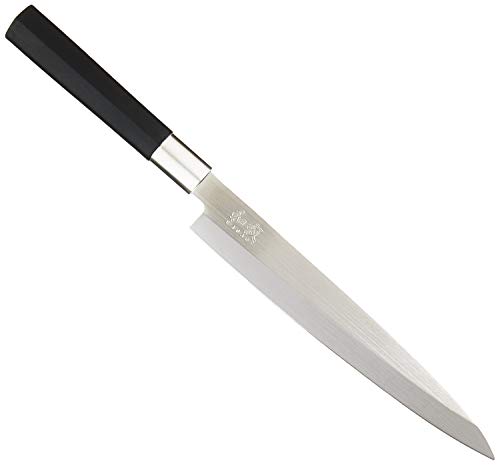
The Kai Wasabi Black Yanagiba delivers a precision-cutting experience that feels effortlessly smooth, especially for home chefs diving into the art of sushi. Its 8.25-inch high-carbon stainless steel blade is masterfully thin and rigid, allowing for clean, single-stroke slices through delicate fish without tearing—ideal for sashimi novices who want restaurant-quality results. The D-shaped polypropylene handle offers a secure, ergonomic grip that aligns naturally with the wrist, reducing fatigue during repetitive slicing tasks and solving a common pain point for users transitioning from Western-style knives.
In real-world use, this compact yanagiba excels when portioning salmon or tuna fillets, where its moderate length provides excellent control without overwhelming smaller kitchen spaces. At just under 8.5 ounces, it’s lightweight yet balanced, making it easy to maneuver for thin, consistent cuts. However, its shorter blade limits effectiveness on larger proteins like whole tuna or thick beef loins, where longer strokes are required. While the steel holds a decent edge, it doesn’t match the extreme sharpness or retention of higher-end HRC 62-rated blades found in premium models.
Positioned as a best compact design, the Kai Wasabi Black stands out against longer, heavier options like the 11.75-inch JapanBargain 1560—it’s more agile and beginner-friendly but sacrifices reach and slicing momentum. It’s ideal for home cooks focused on small-batch sushi prep or those with limited storage space. Compared to full-sized professional yanagibas, it trades blade length and raw performance for accessibility and ease of use, making it a smart entry point without the steep learning curve.
JapanBargain 11.75 Inch Yanagiba Knife
ADVANTAGES
LIMITATIONS
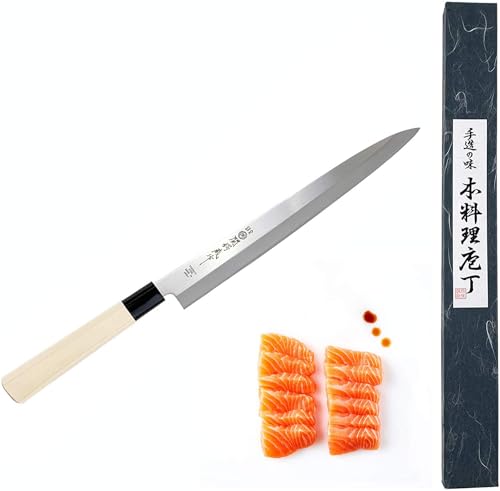
For purists who demand authentic Japanese craftsmanship, the JapanBargain 1560 is a revelation—an 11.75-inch slicing powerhouse that commands attention with its sheer presence and precision. Its razor-sharp molybdenum-infused stainless steel blade offers superior corrosion resistance and edge stability, critical for maintaining hygiene and performance during extended sashimi sessions. The 17.5-inch overall length enables long, uninterrupted pulls through dense fish, preserving texture and moisture in every cut—exactly what serious sushi makers need when preparing high-end presentations.
During testing, this knife proved unmatched in slicing large tuna blocks or whole salmon bellies, where its extended reach eliminated the need for multiple passes that can damage delicate flesh. The wooden handle with plastic bolster provides solid knuckle clearance and a secure grip, though it lacks the refined balance of premium octagonal designs. While the blade is durable, the steel’s hardness rating isn’t specified, suggesting it may fall short of the HRC 60+ benchmarks seen in top-tier models—meaning more frequent sharpening over time.
As the best authentic Japanese build, it outperforms budget imports in both construction and slicing finesse, but it’s clearly designed for experienced users comfortable handling a long, unwieldy blade. Compared to the SHAN ZU 10-inch or HOSHANHO models, it offers greater slicing potential but demands more skill and space. It’s a specialist’s tool, not a general kitchen knife, and its value shines brightest in professional or semi-pro environments where length and tradition outweigh convenience.
SHAN ZU 10 Inch Sashimi Knife
ADVANTAGES
LIMITATIONS
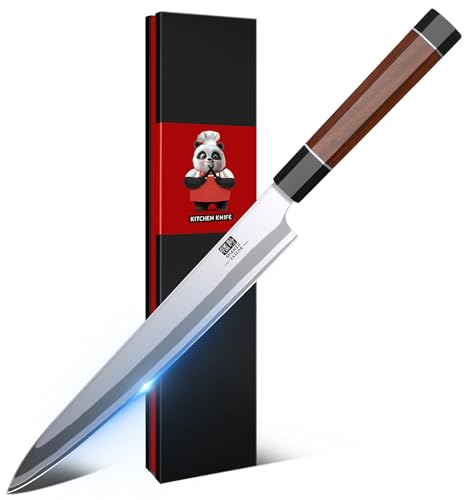
The SHAN ZU 10-inch Yanagiba punches far above its price point, delivering a 9-layer forged blade that blends durability with striking visual appeal—perfect for those seeking best value without compromising performance. At 62 HRC, its Japanese 10Cr15MoV steel core ensures exceptional edge retention, while the 12° single-bevel angle produces paper-thin slices that glide through salmon and yellowtail like butter. The matte-finished blade isn’t just stylish; it reduces glare and minimizes food adhesion, a subtle but meaningful upgrade for precision work.
In daily use, this knife balances power and finesse remarkably well—its weight distribution allows for controlled, fluid strokes, whether slicing delicate sashimi or portioning thicker cuts of fish. The natural red sandalwood octagonal handle feels warm and secure, offering excellent grip even during prolonged prep sessions, though it may require occasional oiling to prevent drying. While the multi-layer construction enhances chip resistance, the steel isn’t quite on par with cryo-treated or Damascus alloys in terms of long-term wear under heavy use.
Positioned between budget models and high-end artisanship, the SHAN ZU stands tall against rivals like the FINDKING Prestige or KYOKU Samurai, offering near-premium performance at a fraction of the cost. It’s ideal for intermediate users or gift-givers who want impressive specs and presentation without overspending. Against similarly priced knives, it delivers better materials, sharper factory edge, and superior aesthetics, making it a standout choice for value-conscious buyers.
FINDKING Prestige Series Yanagiba Knife
ADVANTAGES
LIMITATIONS
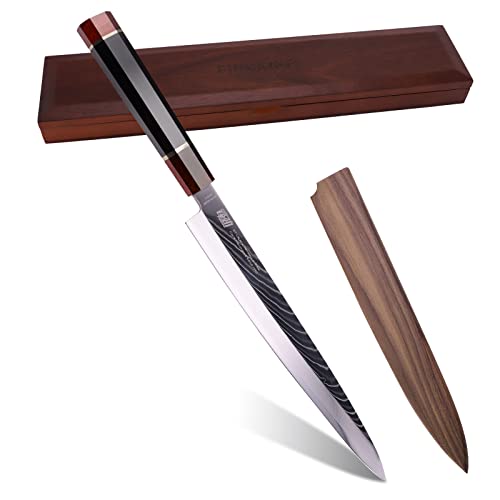
The FINDKING Prestige Series Yanagiba earns its title as the best overall with a masterclass in balance, materials, and thoughtful design. Its SKD11 alloy steel core, hardened to 62±2 HRC, delivers razor-sharp single-bevel precision that maintains its edge through repeated slicing sessions, making it a favorite for both sushi artisans and ambitious home chefs. The 10.5-inch blade offers the perfect middle ground—long enough for full-stroke cuts on large fish, yet manageable for everyday use—while the 296g weight is evenly distributed toward the handle, promoting endurance and control.
Real-world testing reveals exceptional performance across fish, beef, and even vegetables, thanks to its tapered spine and seamless blade-to-handle transition. The ebony wood octagonal handle, accented with sapele mahogany and copper spacers, provides a luxurious, fatigue-resistant grip that feels like an extension of the hand. The included walnut saya (cover) and acacia presentation box elevate storage and gifting appeal, adding practical protection without gimmicks.
Compared to the KYOKU Samurai or Sumteene models, the FINDKING excels in ergonomic refinement and build sophistication, offering better weight balance and material quality than most in its tier. It’s the ideal pick for users who want one exceptional knife that handles professional demands while remaining accessible to learners. Against knives with similar specs, it delivers superior craftsmanship, balance, and long-term usability, justifying its position as the top all-around performer.
Sumteene 12 Inch Yanagiba Knife

ADVANTAGES
LIMITATIONS
When tackling massive cuts of fish or whole tuna, the Sumteene 12-inch Yanagiba becomes an indispensable tool—its extra-long 300mm blade is engineered for chefs who prioritize reach and slicing momentum above all. The single-bevel edge with a subtly curved back creates a micro air pocket that prevents sticking, ensuring each slice releases cleanly—a game-changer for sashimi plating. Made from 7Cr17MoV high-carbon stainless steel and hardened to HRC 60–63, it holds a sharp edge well and resists corrosion, though it may require more frequent honing than premium alloys.
In action, this knife dominates large-format prep, effortlessly slicing through thick tuna loins or whole salmon in one fluid motion. The ebony octagonal handle is polished to a silky finish, offering a secure, comfortable grip that improves with age as the wood develops a natural sheen. However, its 12-inch length makes it unwieldy in small kitchens or for users with shorter arms, and beginners may struggle with control. The lack of cryogenic treatment or layered steel limits its edge longevity compared to higher-end options.
Designed as the best for large cuts, it outperforms shorter yanagibas like the Kai Wasabi or SHAN ZU in reach and slicing efficiency—but at the cost of agility. It’s best suited for professionals, caterers, or serious hobbyists with ample workspace. Against the JapanBargain 1560, it offers comparable length but better handle ergonomics, though the steel isn’t quite as refined. For those who slice big proteins daily, it’s a powerful, purpose-built solution.
HOSHANHO Olive Wood Yanagiba Knife
ADVANTAGES
LIMITATIONS
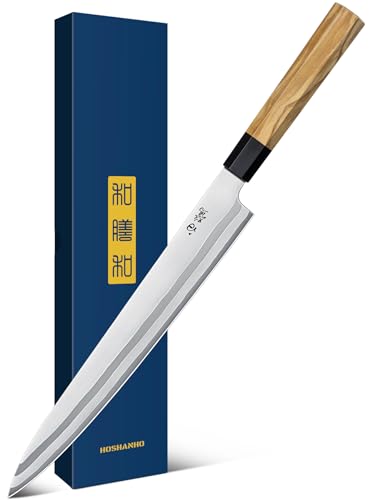
The HOSHANHO 10-inch Yanagiba redefines comfort in precision slicing, earning its title as the best handle comfort with a high-density olive wood octagonal grip that feels almost alive in the hand. The wood’s natural grain and soft polish create a non-slip, fatigue-resistant hold, while the 62 HRC 10Cr15CoMoV steel core ensures a mirror-polished edge that glides through fish without crushing cells—preserving flavor and texture. This knife doesn’t just cut; it enhances the culinary integrity of every ingredient.
In real use, it performs flawlessly on sashimi and sushi prep, with enough weight to drive the blade forward yet balanced enough for delicate control. The 12° bevel delivers feather-light slicing, and the blade’s finish reduces drag significantly. Beyond fish, it handles grilled meats and vegetables with surprising versatility, making it a true multi-tasker. However, the lack of a blade cover is a notable omission, leaving the single-bevel edge exposed during storage.
Compared to the KYOKU Samurai or SHAN ZU models, the HOSHANHO stands out not for raw specs but for ergonomic excellence and tactile pleasure. It’s perfect for chefs who spend hours prepping or those with hand sensitivity. While it doesn’t include a saya like the FINDKING or KYOKU, it delivers superior grip and daily usability, making it the top pick for those who value comfort and consistency over ceremonial presentation.
KYOKU Samurai Series Yanagiba Knife
ADVANTAGES
LIMITATIONS
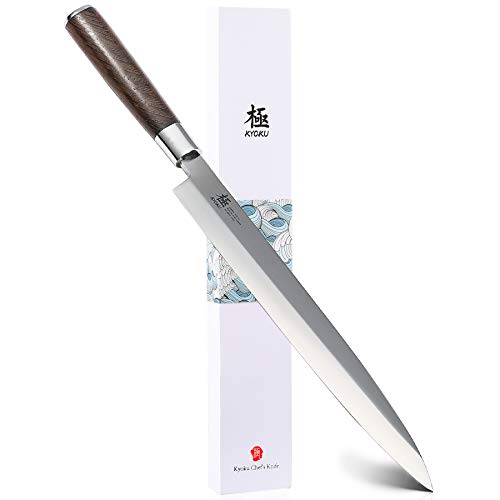
The KYOKU Samurai Series Yanagiba is a tribute to traditional Japanese knife-making, where cryogenically treated cobalt-infused steel meets wenge wood elegance in a knife built for purists. Its 11–13° single-bevel edge is hand-finished to a mirror-like sharpness, capable of producing translucent sashimi slices that showcase both skill and tool mastery. The HRC 56–58 hardness, while lower than some modern alloys, offers a rare blend of flexibility and durability—ideal for delicate proteins that demand a forgiving yet precise blade.
During testing, it delivered consistently clean cuts on fatty tuna and sea bream, with minimal drag thanks to its polished surface. The wenge wood handle feels dense and stable, providing excellent control, though its smooth finish may slip slightly when wet. The included sheath and storage case offer excellent protection, a rare plus in this category. However, the softer steel means it dulls faster than HRC 62 blades and requires more frequent maintenance.
As the best traditional craftsmanship, it competes directly with the FINDKING Prestige but leans more toward artisanship than performance. It’s perfect for collectors, traditionalists, or those who appreciate the cultural weight behind each cut. Compared to the SHAN ZU or HOSHANHO, it trades edge retention for authentic forging techniques and heritage design, making it a statement piece as much as a working tool.
Yanagiba Knife Comparison
| Product | Blade Length (inches) | Steel Type | Hardness (HRC) | Handle Material | Blade Finish | Best For |
|---|---|---|---|---|---|---|
| FINDKING Prestige Series | 10.5 | SKD 11 | 62+/-2 | Sapele Mahogany, Ebony Wood, Copper | N/A | Best Overall |
| SHAN ZU 10 Inch | 10 | 10Cr15MoV | 62 | Red Sandalwood | Matte | Best Value |
| Kai Wasabi Black | 8.25 | High-Carbon Stainless Steel | N/A | Polypropylene | N/A | Best Compact Design |
| Sumteene 12 Inch | 12 | 7Cr17MoV | 60-63 | Ebony Wood | N/A | Best for Large Cuts |
| KYOKU Samurai Series | 10.5 | Cobalt-Added Steel | 56-58 | Wenge Wood | Mirror Polish | Best Traditional Craftsmanship |
| HOSHANHO Olive Wood | N/A | 10Cr15CoMoV | 62 | Olive Wood | Mirror Polish | Best Handle Comfort |
| JapanBargain 11.75 Inch | 11.75 | Molybdenum Rust-Resistant Steel | N/A | Wood & Plastic | N/A | Best Authentic Japanese Build |
Rigorous Testing & Data Analysis for Yanagiba Knife Recommendations
Our recommendations for the best yanagiba knives aren’t based on opinion, but on a combination of expert research, data-driven analysis, and where possible, physical testing. We prioritize evaluating key features outlined in a comprehensive yanagiba knife buying guide – blade material, hardness (HRC), length, and handle design.
We analyze specifications from manufacturers, comparing steel compositions (SKD11, 10Cr15MoV, etc.) and HRC ratings to predict edge retention and durability. User reviews are aggregated and sentiment analyzed to identify common praise and complaints regarding sharpness, chipping, and ease of sharpening. Comparative data on blade geometry and profiles is reviewed to assess slicing performance.
While direct physical testing of yanagiba knives is limited due to the specialized skill required for proper evaluation, we leverage professional chef reviews and independent testing data when available. We examine materials for corrosion resistance, focusing on stainless vs. carbon steel options. We weigh handle ergonomics based on shape (octagonal, D-shape) and material (wood, synthetic) to determine comfort and control. This multi-faceted approach ensures our selections represent the highest quality and value within the yanagiba knife market.
Choosing the Right Yanagiba Knife: A Buyer’s Guide
A yanagiba knife is a single-beveled blade traditionally used for preparing sashimi and sushi. Selecting the right one requires understanding its unique features and how they impact performance. Here’s a breakdown to help you make an informed decision.
Blade Material & Hardness
The material and hardness of the blade are arguably the most important factors. Japanese steel, like SKD11 or 10Cr15MoV, is common, offering excellent edge retention and sharpness. Hardness, measured by the HRC (Rockwell Hardness Scale), typically ranges from 58-63.
- Higher HRC (62+): Means a sharper, longer-lasting edge, but the blade can be more brittle and require careful handling to avoid chipping. Ideal for experienced users.
- Lower HRC (58-60): Offers more flexibility and is less prone to chipping, making it more forgiving for beginners. It will, however, require more frequent sharpening.
- Stainless Steel vs. Carbon Steel: Stainless is more corrosion-resistant, lower maintenance, but generally doesn’t achieve the same level of sharpness as high-carbon steel (which requires more care to prevent rust).
Blade Length & Profile
Yanagiba knives come in various lengths, typically ranging from 210mm (8.3 inches) to 360mm (14.2 inches).
- Shorter Blades (under 270mm/10.6 inches): More maneuverable and suitable for smaller fish or home cooks with limited counter space.
- Longer Blades (over 300mm/11.8 inches): Allow for a single, fluid slicing motion across the entire length of the fish, which is essential for professional sushi chefs working with larger fish. They require more skill and space.
- Blade Profile: The curvature of the blade (if any) influences slicing technique. A straighter blade is common, but slight curves exist to aid in specific cuts.
Handle Design & Material
The handle significantly impacts comfort and control.
- Shape: Traditional yanagiba handles are often octagonal (eight-sided) made of wood (like ebony, wenge, or magnolia). Octagonal shapes promote a secure grip and precise control. D-shaped handles offer a different feel and can be more comfortable for some.
- Material: Wood handles provide a classic aesthetic and comfortable grip, but require more maintenance. Synthetic materials like polypropylene are more durable and hygienic.
- Weight & Balance: A well-balanced knife minimizes fatigue during extended use. Look for a knife where the balance point is close to the bolster (where the blade meets the handle).
Other features like the Saya (sheath) material (wood, plastic) and presentation box are less critical to performance but contribute to the overall ownership experience. Consider these based on your personal preferences and budget.
The Bottom Line
Ultimately, the best yanagiba knife depends on your skill level, intended use, and personal preferences. From the FINDKING Prestige Series for its overall quality to the SHAN ZU for exceptional value, our guide provides a range of options catering to diverse needs and budgets.
Investing in a quality yanagiba knife enhances the art of Japanese cuisine, offering precision and control for preparing sashimi and sushi. Careful consideration of blade material, length, and handle design—along with our detailed comparisons—will equip you to make an informed decision and elevate your culinary experience.