
Ritual And Ceremonial Knives Across Cultures
This post contains affiliate links. As an Amazon Associate, we earn from qualifying purchases.
Ritual and ceremonial knives carry profound significance in various cultures, serving as vital symbols that connect individuals to their heritage and beliefs. These knives are not merely tools; they embody unique stories and craftsmanship that reflect the values of the communities they represent. For those interested in a deeper understanding, this article will explore the roles these knives play in modern ceremonies and their artistic value within their respective cultures.
Essential Facts in 30 Seconds
- Ritual and ceremonial knives symbolize cultural heritage and connections to ancestors.
- Indigenous cultures, such as the Inuit and Native Americans, use knives in sacred ceremonies to honor nature and community.
- Knives serve as sacred items in rituals, bridging the physical and spiritual realms.
- European knives like the Athame and Dirk signify clan identity, loyalty, and cultural transitions.
- Modern ceremonial knives blend artistic craftsmanship with cultural significance, serving practical and artistic purposes.
The Significance of Ritual Knives in Cultural Practices
Ritual knives are special in many cultures. They’re more than just tools. These ceremonial daggers hold deep spiritual meaning.
In indigenous cultures, they connect people to their heritage and ancestors. For instance, the kris in Indonesia is thought to have magical powers. In Mesoamerica, sacrificial daggers help people talk to the gods during rituals.
These knives also mark big life changes. In Africa, they’re part of initiation ceremonies. They show the move into adulthood.
The Inuit ulu is used for the first catch, showing how important hunting is to their culture. Ritual knives represent the values, beliefs, and traditions that shape communities worldwide. They aren’t just objects; they carry powerful stories and meanings.
Indigenous Ceremonial Knives and Their Uses

Indigenous ceremonial knives are important in many cultures. They’re used in rituals and ceremonies. The Inuit ulu is one example. It’s used during the first catch ceremony. This shows the strong connection the Inuit have with nature.
Native American tribes also use ceremonial knives. They use them in sacred ceremonies for healing and offerings. Each knife has deep symbolic meaning. These tools help honor traditions and connect with ancestors.
Ceremonial knives aren’t just tools. They represent culture, history, and community. Each knife tells a story. They’re a vital part of many rituals.
Understanding these knives helps us appreciate the rich traditions of Indigenous peoples.
Ritualistic Functions of Knives
Knives have important roles in many cultures. They aren’t just tools but also sacred items in rituals. For example, the Inuit ulu is a ceremonial knife. It’s used in the first catch ceremony. This connects hunters to animal spirits.
In Africa, knives mark significant life events. They’re used in initiation ceremonies. This symbolizes growth and change for young people.
The Apache people also value knives. They use ceremonial knives in healing rituals. These knives help connect the physical and spiritual worlds.
Mesoamerican cultures had sacrificial knives for religious ceremonies. They believed these knives spoke to the gods. They hoped for blessings like fertility through these acts.
The design and materials of each knife show its cultural meaning. They connect people to their ancestors and traditions. These practices have lasted for generations, keeping stories alive. Additionally, knives like those from Native American traditions illustrate the multifaceted roles they play in daily life and spirituality.
Symbolic Significance in Ceremonies
Ceremonial knives hold great importance in many cultures. They connect people to their traditions and beliefs. These knives often represent deeper meanings in rituals. They show the cultural identity of indigenous groups.
For instance, the Inuit ulu is essential in the first catch ceremony. Native American ritual knives honor ancestors during spiritual practices. The Maasai use ceremonial knives to mark bravery in rites of passage. The Balinese have the kris, a knife with special significance in their culture.
Here is a table of different ceremonial knives and their cultural meanings:
| Culture | Knife Type |
|---|---|
| Inuit | Ulu |
| Native American | Ritual Knife |
| Maasai | Ceremonial Knife |
| Balinese | Kris |
These knives symbolize beliefs about life, death, and rebirth. They remind us of the values and stories within each culture.
African Knife Traditions in Rites and Rituals
Knives hold a special place in many African cultures. They mark important life events and traditions. Here are some key points about African knife traditions:
- Rites of Passage: Knives signal the move from childhood to adulthood. This is especially true in circumcision ceremonies.
- Zulu Spear-Knife: The Zulu people use a knife called “iklwa.” It stands for protection and bravery in warrior rituals.
- West African Ceremonial Knives: These knives have beautiful designs. They’re used in sacrifices and offerings to honor ancestors. This shows their deep spiritual meaning.
- Maasai Knives: Known as “enkangs,” these knives are vital in cattle rituals. They reflect the Maasai’s way of life and traditions.
Knives often feature unique carvings. They carry the spirit of the community. Their cultural importance strengthens identity and heritage. The utility of knives in various rituals not only serves practical purposes but also enhances their symbolic significance within the community.
This makes them vital in many ceremonies across Africa.
Asian Spiritual Knives: Symbolism and Function
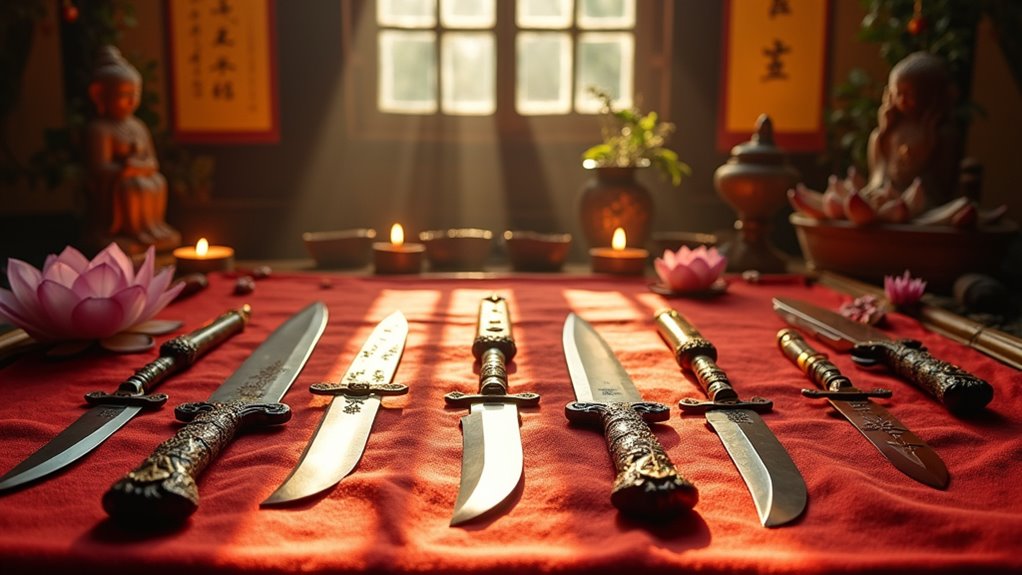
Knives have deep meanings in many Asian cultures. They are more than tools; they are symbols of beliefs and traditions. Each type of knife serves a special purpose in ceremonies and rituals.
| Knife Type | Symbolism and Function |
|---|---|
| Katana (Japan) | Signifies honor, discipline, and a warrior’s integrity. |
| Kris (Indonesia) | A ceremonial dagger with magical powers, used for protection in rituals. |
| Jian (China) | Represents moral integrity and scholarly values, showing personal discipline. |
| Krabi (Thailand) | Important in weddings, symbolizing the break from past ties. |
These knives connect to cultural values. They show respect, protection, and honor. Each knife tells a story about its culture. Understanding these symbols helps us appreciate the rich traditions of Asia.
European Ritual Knives and Historical Context

European ritual knives, like the athame and boline, hold special meaning in spiritual practices. These knives represent important elements, such as air. They also connect people to rich historical traditions.
The athame often symbolizes the element of fire. It’s a double-edged knife used in rituals. The boline is a single-edged knife, used for cutting herbs and plants.
Each knife has a unique story. The stiletto from the Renaissance shows elegant design and craftsmanship. The seax, used in Norse culture, is a powerful tool with a wide blade.
These knives reflect various regional styles. They aren’t just tools; they carry deep cultural significance. Many people still use them today in spiritual ceremonies.
Understanding these knives helps us appreciate the past and its traditions.
Historical Significance of Knives
Knives have a special place in European rituals and ceremonies. They connect people to their traditions and heritage. Here are some important points about their historical significance:
- The ceremonial athame is important in Wiccan practices. It symbolizes intent and helps in casting circles.
- The dirk, a Scottish dagger, shows clan identity and loyalty among warriors.
- Ornate daggers in knighting ceremonies mark the change from commoner to knight. They reflect chivalric values.
- The seax, used by Anglo-Saxons, had ritual meaning. Warriors were often buried with it as part of their grave goods.
Knives also link to folklore and mythology. Excalibur, the famous sword, represents authority and power.
These tools carry cultural heritage and shared beliefs. They tell stories of identity, loyalty, and tradition throughout history.
Ceremonial Uses in Rituals
Rituals use special tools to create powerful experiences. Ceremonial knives are important in many European traditions. The boline is one such knife. Wiccans use it to cut herbs and mark sacred spaces. It helps connect with nature.
The athame is another ceremonial knife. This knife directs energy during rituals. It represents fire and embodies your will and intention.
Historically, knives held great meaning. In ancient Rome, people used sacrificial daggers to please the gods.
Medieval Europe saw ornate ceremonial knives. These knives served practical purposes and showed status during events like weddings.
Ceremonial knives are more than tools. They’re cultural artifacts. They reflect beliefs and practices across various European traditions. Each knife tells a story, connecting people to their heritage.
Regional Variations and Styles
Exploring ceremonial knives reveals many unique styles across Europe. Each region has its own designs and uses. Here are some examples:
- Boline: This knife is used in pagan ceremonies. It cuts herbs and shows a connection to nature and spirituality.
- Misericorde: This dagger comes from medieval times. It symbolizes mercy and is meant for compassionate deaths.
- Sgian-dubh: A small knife worn in the sock. It’s part of ceremonial dress and symbolizes trust and safety.
- Athame: This double-edged dagger is used in Wiccan practices. It helps direct energy and balance male and female forces.
These ritual knives are full of symbols and engravings. They represent authority and protection in their cultures.
Each knife tradition showcases the rich variety found across Europe.
The Role of Knives in Religious Ceremonies
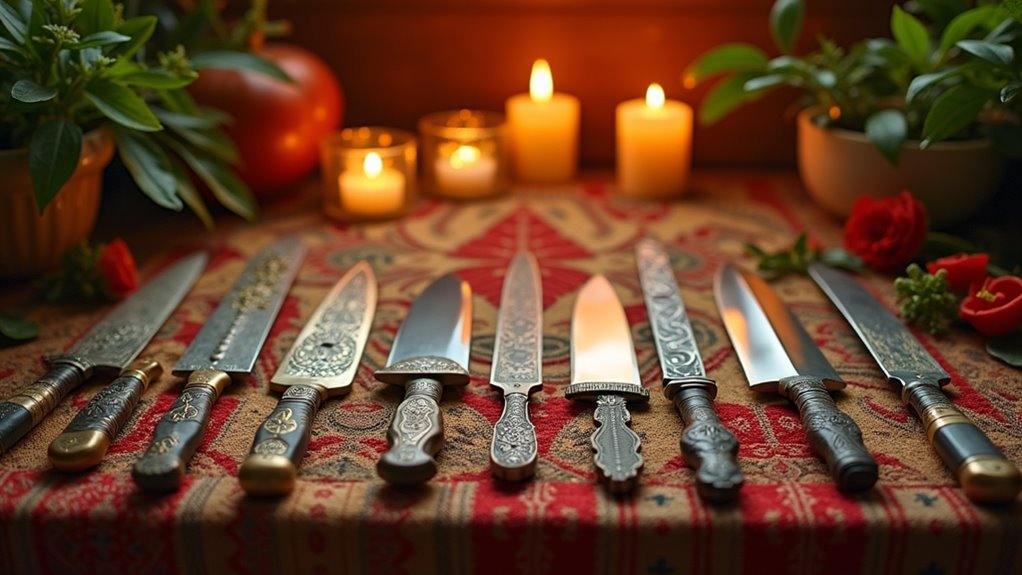
Throughout history, many cultures have used knives in religious ceremonies. These knives help connect the physical world with the spiritual world.
For example, Mesoamerican cultures used ceremonial daggers for human sacrifices. They believed these sacrifices would please their gods.
In Hindu traditions, the sacred kris knife represents cutting ties with the material world. It shows a move towards spiritual enlightenment.
Native American tribes also use knives in sacred rites. During the Sun Celebration, knives symbolize life, death, and connections to ancestors.
In Japan, the katana holds significant spiritual meaning in Shinto practices. It represents purity and the spirit of the warrior. People use this blade in rituals to honor deities and ancestors.
Across cultures, knives are more than just tools. They’re powerful symbols. They help people connect with deeper meanings during important religious ceremonies.
Modern Interpretations of Ceremonial Knives
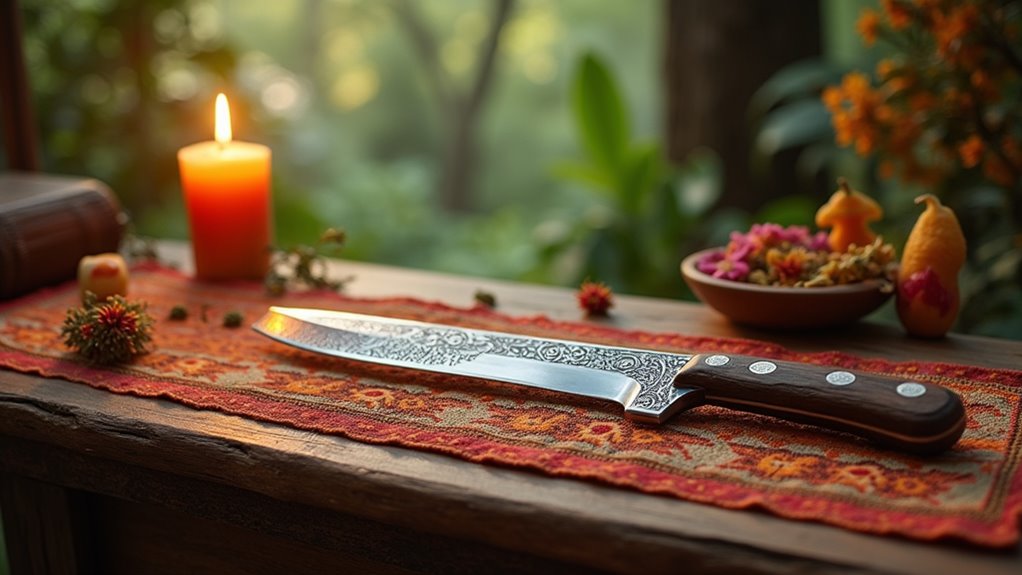
Ceremonial knives have changed a lot over time. Today, they mean a great deal to many cultures. These knives play important roles in traditional rituals. They mark special moments in life, like weddings or coming-of-age ceremonies.
Here are some key points about modern ceremonial knives:
- Cultural Heritage: The designs show community identity. They often use symbols and materials from history.
- Craftsmanship: Many knives are made with great care. This makes them beautiful and artistic.
- Collectible Ceremonial Knives: People collect these knives for their stories, not just their use.
- Symbolic Meanings: Giving a ceremonial knife can strengthen relationships, connecting old traditions to new ones.
These aspects make ceremonial knives valuable today, both as tools and as symbols of culture.
The Artistic and Cultural Value of Ritual Knives

Ritual knives are not just tools. They hold deep artistic and cultural value. These ceremonial knives are made with high-quality materials. Many have beautiful designs that show the skill of their makers. In various cultures, they include symbols that add meaning to their art.
Here’s a quick look at their importance:
| Aspect | Description | Examples |
|---|---|---|
| Artistic Expression | Unique designs showing beliefs | Balinese and Mesoamerican knives |
| Cultural Heritage | Represents traditions and identities | Inuit and African tribal knives |
| Significant Events | Used in ceremonies marking life events | Weddings, births, and rituals |
Ritual knives are valued art pieces. They hold the history and significance of their communities. Each knife combines function with beauty during ceremonies.
Frequently Asked Questions
How Are Ritual Knives Crafted and Who Makes Them?
Artisans craft ritual knives using traditional methods. They add cultural meaning and symbols in their designs. Each knife tells a story. The styles differ by region. This shows unique designs and deep spiritual ties. Each piece connects to its culture and history. These artisans understand the importance of their work. They create not just tools, but sacred items. Each knife reflects beliefs and traditions. This is why ritual knives are special.
What Materials Are Commonly Used in Ceremonial Knives?
Ceremonial knives use special materials for their blades. Obsidian is one common choice. It is a natural volcanic glass. High-carbon steel is another popular option. This metal is strong and durable.
Different regions have unique styles. Each area shows its own craft techniques. Cultural practices add meaning to these knives. They are often used in rituals and ceremonies.
The materials must be tough. Knives need to last through different events. This durability helps them serve their important roles. Ceremonial knives are not just tools; they hold history and significance.
Can Ritual Knives Be Used in Non-Religious Contexts?
Ritual knives can be used outside of religious practices. They hold cultural meaning and show artistic talent. People often use them in personal ceremonies. These events can be about empowerment or celebration.
Using ritual knives in a non-religious way requires respect. It’s important to understand their history. Avoid taking elements from cultures you don’t belong to. This helps prevent cultural appropriation.
Ritual knives can inspire creativity. They can be part of art or storytelling. This makes them valuable in many settings. They connect people to traditions while allowing for new expressions.
How Do Collectors Ensure the Authenticity of Ceremonial Knives?
Collectors ensure the authenticity of ceremonial knives in several ways. First, expert appraisals help verify the knife’s origin and craftsmanship. Provenance tracking is crucial too. This means knowing the knife’s history and previous owners. Engaging with collector communities can provide insights and support. Staying updated on market trends keeps collectors informed. Understanding regional variations also matters. It helps recognize what is genuine and what is not. Ethical considerations are important too. Respecting the cultural significance of these knives enriches the collector’s experience.
Are There Modern Artists Who Create Ritual Knives Today?
Many modern artisans make ritual knives today. About 60% of these creators mix designs and symbols. They blend old techniques with new ideas. Their work shows contemporary art and traditions. Each piece honors cultural meanings in special ways. These knives serve both as tools and as art. They connect with history while being unique. Artists focus on craftsmanship and personal expression. The result is beautiful and meaningful creations.
Conclusion
Ritual and ceremonial knives are important in many cultures. They serve as more than just tools. They represent identity and tradition. These knives connect to deep meanings and rich histories.
Many indigenous groups use these knives in their rituals. Each knife has a story. They show beliefs, values, and customs. Modern cultures also find new ways to use these knives. This brings fresh interpretations and practices.
People admire these knives for their beauty and history. They reflect human creativity and expression. These knives are treasures that tell stories. They are as essential as the air we breathe. Understanding them helps us appreciate different cultures.