
Balance And Weight: How They Influence Knife Use
This post contains affiliate links. As an Amazon Associate, we earn from qualifying purchases.
Balance and weight significantly influence knife use, with a well-balanced knife enhancing control and reducing fatigue, while the design varies based on the knife’s purpose. For instance, chef knives are usually neutral in balance, while hunting knives are often front-heavy for precision tasks. Heavier knives are advantageous for cutting through tough materials, whereas lighter knives facilitate quick, agile movements. Further details on how to choose the right knife for your needs will be provided later in the article.
Essential Facts in 30 Seconds
- Knife balance is influenced by weight distribution between the handle and blade, affecting control and comfort.
- A well-balanced knife helps reduce hand fatigue during prolonged use.
- Heavier knives are better for cutting dense materials; lighter knives allow for quicker movements.
- The alignment of the balance point with the user’s grip enhances cutting precision and stability.
- Blade thickness affects performance; thicker blades can cause fatigue, while thinner blades are better for delicate tasks.
Understanding Knife Balance
Understanding knife balance is important for good knife use. Knife balance means how weight is shared between the handle and the blade. A pinch grip helps find the best balance. The perfect spot is usually at the bolster. This setup gives you better control and comfort. You can make precise cuts without tiring your hand.
A well-balanced knife helps you work efficiently and reduces fatigue. You can test a knife’s balance with the rocking motion test. A balanced knife will glide smoothly. This shows that weight is well distributed.
Different knives need different balances. Chef knives work best with a neutral balance. Hunting knives might need a front-heavy design for certain tasks. Additionally, understanding the edge angle and sharpness of a knife can further enhance its usability and performance.
The Importance of Balance in Different Knife Types

Balance is very important when using a knife. A well-balanced chef knife allows you to chop and dice easily. It feels comfortable in your hand. This helps you cut with precision.
Hunting knives are different. They often have more weight at the front. This design helps when skinning game. It gives you better control for tough tasks.
Folding knives also need balance. A stable folding knife makes cutting safe and easy. It should feel steady while you work.
Understanding the balance of different knives helps you improve your skills. Choose the right knife for each job. You’ll notice the difference in your cutting abilities. A full tang knife design enhances overall knife longevity, ensuring that the balance remains consistent even under heavy use.
Chef Knives and Balance
Understanding knife balance helps improve cooking skills. A well-balanced chef knife gives you better control and comfort. This reduces hand fatigue during long tasks. Good balance lets you move smoothly while cutting. Most chef knives have a balance point that matches your grip. This is great for precise cutting. Additionally, the weight and feel preferences of different knife materials, such as carbon steel and stainless steel, can greatly influence your comfort and effectiveness during use.
| Knife Type | Weight Distribution | Ideal Use |
|---|---|---|
| Heavier Knives | Forward-weighted | Cutting dense foods |
| Lighter Knives | Back-weighted | Quick, agile movements |
| Neutral Balance | Evenly distributed | Versatile cooking methods |
Each type of knife serves a purpose. Heavier knives work well for tough foods. Lighter knives help with fast and delicate cuts. A neutral balance knife is perfect for many cooking tasks. It’s all about finding the right knife for your needs.
Hunting Knives Design Features
Hunting knives have special design features that boost their performance. They often feel front-heavy. This front balance helps you control the knife better. It’s especially useful for skinning and filleting game. The balance point is closer to the blade. This design allows for precise movements on tough materials.
A well-balanced knife reduces hand fatigue. You can do repetitive tasks without straining your hands. The choice of materials matters too. Heavier blade steel adds weight and strength to the knife. The use of high-carbon steel enhances edge retention, making it ideal for cutting through tough materials.
The handle design is also important. An ergonomic handle gives a secure grip. This helps you control the knife and prevents slipping.
All these features make hunting knives great tools for outdoor activities.
Folding Knives Stability Factors
Folding knives are portable tools, but their stability is key for effective use. Balance is all about the weight between the blade and handle. A knife that is well-balanced feels comfortable in your hand. This balance helps you make precise cuts without straining.
Here’s an easy overview of stability factors:
| Stability Factor | Importance | Impact on Use |
|---|---|---|
| Balance Point | Improves stability | Enhances precision |
| Handle Weight | Provides comfort | Reduces wrist strain |
| Locking Mechanism | Secures the blade | Supports smooth cuts |
A good balance and weight distribution lead to easier cuts. You will feel less tired even after using the knife for a long time. Additionally, the practicality of folding knives makes them an essential tool for various activities, enhancing your overall experience. Enjoy your folding knife with confidence.
The Role of Weight in Performance
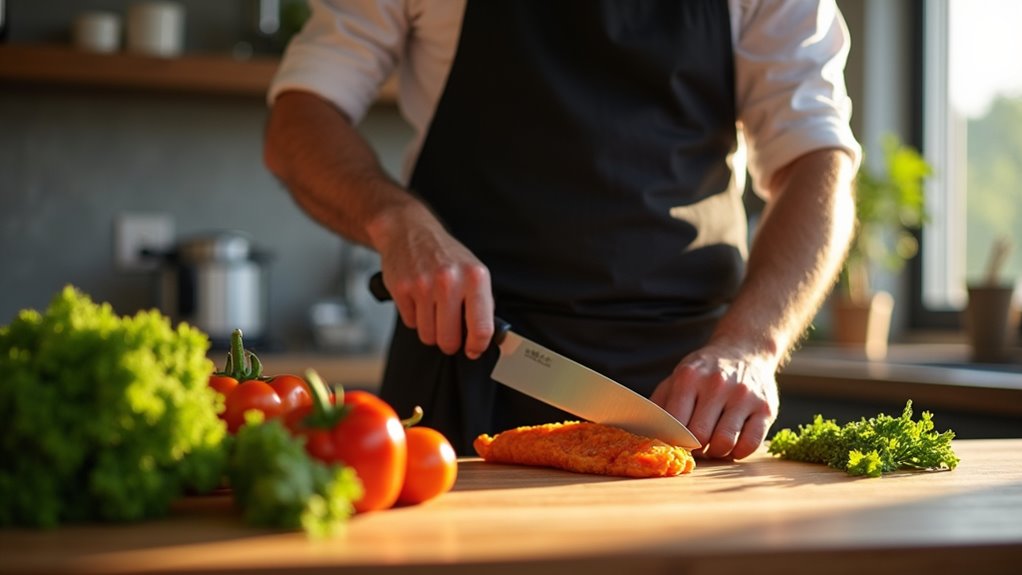
Weight is important in knife performance. Heavier knives provide momentum. They chop dense foods like meat more easily. Their weight adds force, improving cutting efficiency.
On the other hand, lightweight knives are great for precision cutting. They allow quick, controlled movements. This is perfect for slicing herbs or delicate veggies. Utility knives, with their ergonomic grip, also facilitate comfort during extended use.
Understanding knife balance and weight distribution is key. For frequent chopping, heavier knives work well. But they can cause user fatigue over time.
Lightweight knives are better for comfort and agility. The right knife depends on your cooking style and tasks. Choose wisely for the best results.
Factors to Consider When Choosing a Knife
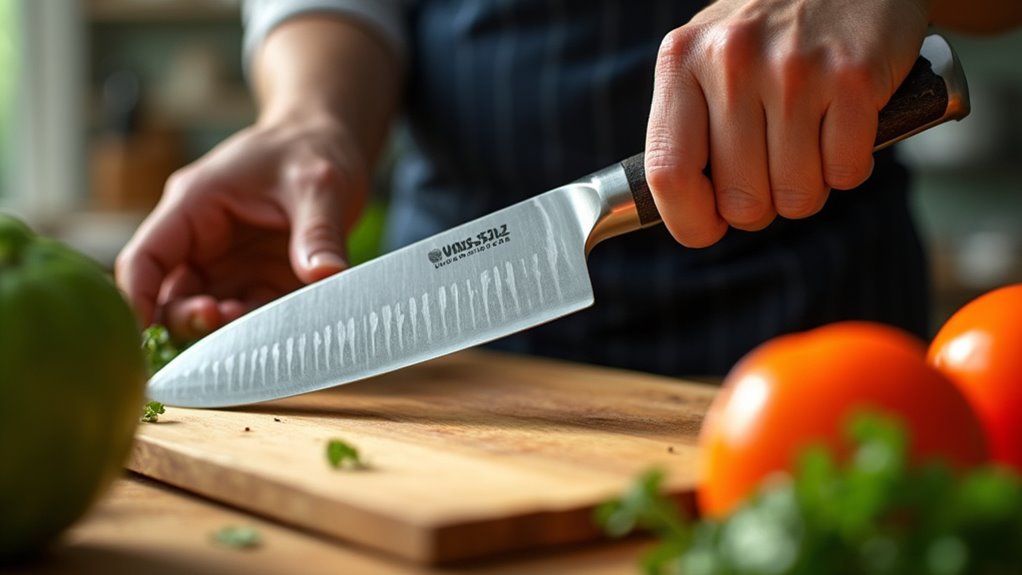
Choosing a knife involves careful thought about the handle material. Wood handles feel warm and comfortable, while plastic offers a sturdy grip.
The blade shape is also important. A curved blade works well for chopping. A straight edge is best for slicing.
Think about your needs. A chef’s knife is great for many tasks. A paring knife is small and good for detail work. A serrated knife is perfect for bread.
Weight matters too. A heavy knife can feel solid but may tire your hand. A lighter knife can be easier to control. Forged knives provide added weight and stability for heavy-duty tasks, making them ideal for chopping and slicing.
Remember to hold the knife before buying. It should feel good in your grip. A knife that fits your hand makes cooking easier.
Look for good quality. A sharp blade lasts longer and makes cooking more fun. A well-made knife can be a great investment.
Choose wisely, and you’ll enjoy cooking more!
Handle Material Importance
Picking the right handle material for your knife is important. It affects how you grip, feel, and control the knife. High-quality materials include wood, plastic, and metal. Each type has its own benefits.
Wood gives a warm, classic feel. It looks nice but needs care. Regular oiling keeps it in good shape.
Plastic is strong and light. It’s great for quick, nimble tasks. Plus, it’s easy to clean.
Metal handles look modern and stylish. They might change the knife’s balance because they’re heavy.
Many knife handles are designed to fit your hand. This reduces hand fatigue. Comfort matters during long use.
Non-slip surfaces help you keep control. This is key when your hands are wet.
Different materials need different care. Choose wisely to enhance your knife experience! Additionally, understanding the pros and cons of each material can further guide your selection process.
Blade Shape Considerations
Selecting the right blade shape for your knife is crucial. It directly influences how well you can tackle different tasks. Blade shape impacts knife balance and weight distribution. This affects cutting performance.
Curved blades excel at heavy-duty chopping. They allow a rocking motion, which improves control and stability.
Straight blades, on the other hand, are ideal for slicing. They provide a stable edge for clean cuts.
Thinner blade shapes are great for delicate tasks. They help with precision.
Wider shapes offer better overall control, making them versatile. The angle of the blade edge matters too. Sharper angles create finer cuts. More obtuse angles add durability to the blade.
Choosing the right blade thickness is essential for optimizing performance based on the material type being cut.
Choose a blade shape that fits your needs. This ensures efficiency, comfort, and top performance in the kitchen.
Testing and Assessing Knife Balance
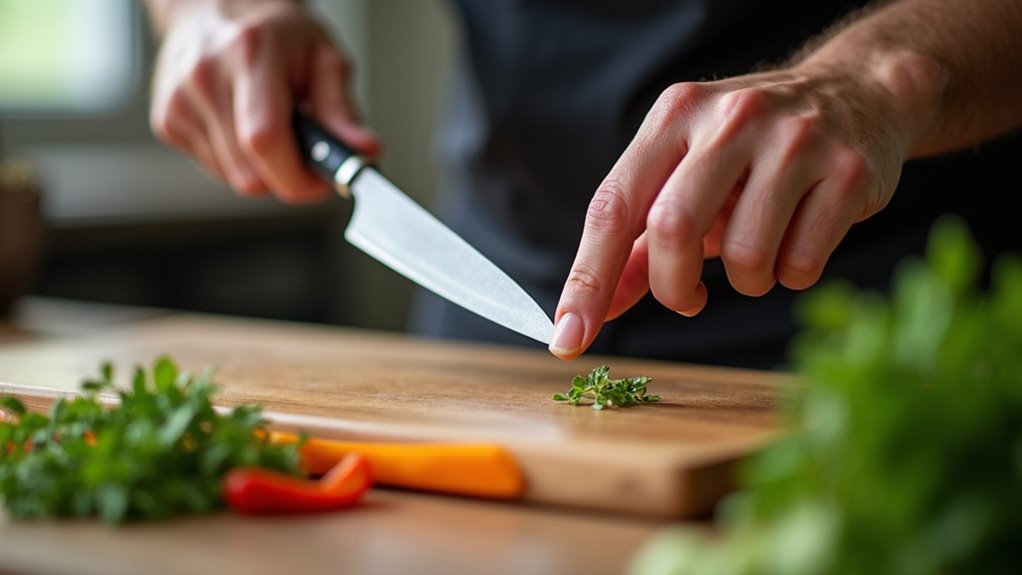
Testing knife balance is important for cooking. Start with the rocking motion test. Move the knife back and forth. A good knife glides easily. Next is the stability test. Chop through dense items. The knife should cut with little effort.
For slicing ability, use the paper test. A balanced knife should slice through paper smoothly. Lastly, try the fatigue test. Use the knife for a long time. Check if your wrist feels tired or strained. A well-maintained knife ensures effective cutting and enhances your overall experience in the kitchen.
Compare different knives to find what feels best. Each knife has its own weight and balance. This helps you make precise cuts.
| Test Type | Purpose | Key Observation |
|---|---|---|
| Rocking Motion | Assess fluidity | Moves smoothly without slowing |
| Stability Test | Evaluate chopping power | Needs manageable force |
| Fatigue Test | Check comfort over time | No strain on wrist or arm |
The Impact of Blade Thickness on Knife Performance
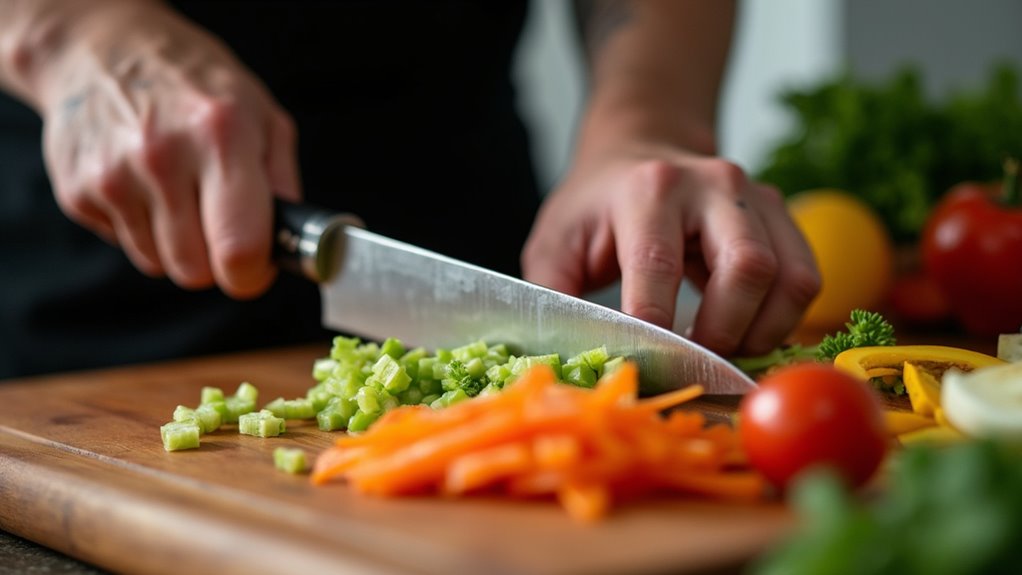
Blade thickness greatly affects how well a knife performs.
Thicker blades can make a knife feel heavy in the handle. This can tire your hand during use.
Thin blades are perfect for precision tasks. They allow for detailed cuts and intricate movements.
Medium-thickness blades offer versatility. They work well for many different uses.
Heavier blades excel in tough jobs. Yet, they need more effort to control effectively.
Selecting the right blade thickness boosts your knife’s performance. It helps you work more efficiently and comfortably.
Maintaining Your Knife’s Balance and Weight

Maintaining your knife’s balance and weight is important for good performance.
Clean your knife often. Use mild soap and a towel to dry it. This stops rust, which can change how your knife feels.
Keep the blade sharp by honing it regularly. A sharp blade cuts better and helps keep balance.
Store your knife safely. Use magnetic strips or knife blocks to protect the blade and handle. This lowers the risk of damage that can affect balance and weight.
Use your knife gently. Heavy force can harm its integrity.
Invest in good tools. Sharpening stones and protective sheaths help keep your knife’s balance and weight for years.
Finding Your Perfect Knife
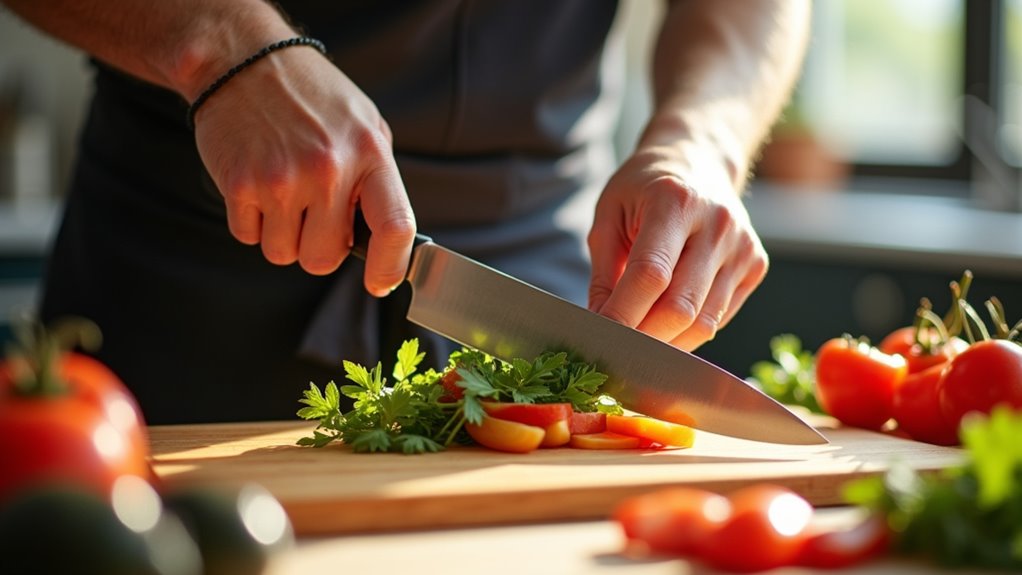
The right knife can make cooking much easier. Finding the perfect knife means thinking about a few key things.
Balance is important. A stable knife feels good in your hand.
Weight matters too. Heavier knives are great for chopping. Lighter ones give you more control for delicate tasks.
Handle comfort is key. Try different shapes to find what feels best for you.
Control is essential. A good knife should let you cut easily and safely.
Preferences play a role. Everyone has different cooking styles. What works for one person may not work for another.
Visit a store to try different knives. Pay attention to how each one feels.
Focus on balance and weight. This will help you pick the perfect knife for your needs.
Frequently Asked Questions
How Does Knife Balance Affect Safety During Use?
Knife balance plays a big role in safety. It helps align the blade properly and distributes weight evenly. A well-balanced knife feels comfortable in your hand. This comfort makes it easier to grip the handle securely.
Good knife balance lowers wrist fatigue. Less fatigue means you can cut for longer without strain. This boosts your confidence while using the knife. Better confidence leads to safer cuts and improved control over the blade.
With a balanced knife, you can make precise cuts. This reduces the risk of slips and accidents. Remember, a well-balanced knife is key for good knife handling. Safety is always important in the kitchen.
Can Balance Improve My Cutting Technique?
Proper balance greatly improves your cutting technique. It helps with grip comfort and weight distribution. This means you can hold the knife better. Good balance keeps the blade aligned and stable. You gain better control over your slices. Your cutting precision also increases. Plus, balance makes it easier to adapt while cutting. Overall, good balance boosts your knife handling skills.
What Materials Influence Knife Weight and Balance?
Blade materials and the way handles are made play a big role in a knife’s weight and balance. The type of metal used affects how heavy or light the blade feels. A heavier metal can shift the balance point, making it feel different in your hand.
The shape of the handle also matters. An ergonomic design fits comfortably in your hand. A good grip texture helps you hold the knife securely. This makes cutting easier and safer.
Composite handles can feel just right. They balance weight well and can feel neutral. This helps the knife work better for its main tasks.
Choosing the right materials is important for any knife. It affects how you use it and how comfortable it feels. A well-balanced knife gives you more control. That makes a big difference in your cooking or any cutting task.
Are Lighter Knives Better for Beginners?
Lighter knives help beginners feel more confident. They are easy to move and make slicing simple. These knives reduce tiredness and allow for better control. You can make precise cuts with ease. A comfortable grip also keeps you safe while you work. This makes lighter knives a great choice for those just starting out!
How Do I Properly Hold a Balanced Knife?
To hold a balanced knife, start by placing your fingers for a firm grip. Your thumb should wrap around the handle. Keep your wrist straight and aligned with the knife. This helps with control and comfort.
Hold the knife at a slight angle. This angle improves stability while cutting. Make sure to keep your hand relaxed. A tense grip can lead to mistakes or accidents.
Practice makes perfect. The more you use the knife, the better your grip will become. Remember, safety is key. Always cut away from your body. Enjoy your cooking with confidence!
Conclusion
Finding the right knife is all about balance and weight. A good knife feels just right in your hands. A well-balanced knife gives you better control and precision. This makes meal prep easier and more enjoyable.
Weight also matters. A knife that feels comfortable helps you work faster. Think about how it fits your style. With practice, you will learn what works best for you.
Pick a knife that feels good. Let your cooking skills shine with the right tools!