
9 Best Assisted Opening Knives of 2026
This post contains affiliate links. As an Amazon Associate, we earn from qualifying purchases.
Opening a knife one-handed shouldn’t mean sacrificing speed or safety, yet many users struggle with sluggish deployment or unreliable locks in everyday carry blades. The best assisted opening knives solve this with fast, smooth spring-assisted mechanisms and secure liner or frame locks, ensuring quick access and safe, stable use. We evaluated top models based on real-world performance, analyzing blade steel (like 8Cr13MoV), lock reliability, ergonomics, and user feedback from verified purchases to deliver trustworthy, value-driven picks. Below are our top recommended assisted opening knives for every need and budget.
Top 9 Assisted Opening Knives in the Market
Best Assisted Opening Knives Review
Kershaw Conduit Spear Point

ADVANTAGES
LIMITATIONS
The Kershaw Conduit strikes an impressive balance between sleek design and functional toughness, making it a standout choice for users who demand precision and reliability in a compact package. With its 2.9-inch spear point blade crafted from 8Cr13MoV stainless steel, this knife delivers clean cuts with excellent edge retention—ideal for detailed tasks like box opening or light carving. The black-oxide finish not only adds a tactical aesthetic but also masks wear, while the glass-filled nylon handle ensures a secure grip without adding bulk, solving the common issue of slippage during fine work.
In real-world use, the Conduit shines in everyday environments—slipping easily into tight pockets and deploying swiftly thanks to its SpeedSafe assisted opening mechanism. At just 2.6 oz and 6.8 inches overall, it’s exceptionally lightweight and maneuverable, though the smaller blade size may require more frequent repositioning during heavy-duty slicing. It handles paper, cardboard, and fabric with ease, but struggles slightly when pushed into tougher materials like rope or dense packaging, where a longer blade would offer better leverage.
Compared to heavier-duty models like the Kershaw Brawler, the Conduit trades raw power for nimble precision and carry comfort, making it better suited for office or urban EDC rather than rugged outdoor use. It’s a smarter pick than the bulkier Analyst if your priority is discreet, agile performance without sacrificing build quality. For those who value clean lines, quick deployment, and surgical accuracy, the Conduit is a confidently engineered step above basic utility knives.
Kershaw Brawler Modified Tanto

ADVANTAGES
LIMITATIONS
Built like a tank yet nimble enough for daily carry, the Kershaw Brawler earns its title as the most durable assisted opener in Kershaw’s lineup—perfect for users who need a knife that can take a beating and keep cutting. Its 3-inch modified tanto blade, forged from 8Cr13MoV steel, delivers exceptional piercing power and edge resilience, while the black-oxide coating enhances corrosion resistance and hides nicks. The glass-filled nylon handle feels rugged in hand, with deep texturing that ensures a slip-free grip even in wet or gloved conditions.
Field testing reveals the Brawler excels in demanding environments—camping, construction, and emergency prep—where reliability is non-negotiable. The assisted flipper deployment is smooth and consistent, and the liner lock holds firm under pressure, though repeated heavy use may cause slight blade play over time. At 3.9 oz, it’s on the heavier side for a pocket knife, but that mass contributes to its solid, confidence-inspiring build. It powers through seatbelts, cardboard, and rope with ease, though the tanto tip can snag on softer materials during draw cuts.
When stacked against the Kershaw Cryo, the Brawler sacrifices some ergonomics for brute strength, making it a better companion for outdoor adventurers than office workers. It’s less refined than the Helitack but offers similar toughness at a more accessible build tier. If you need a no-nonsense, go-anywhere workhorse that won’t quit when the job gets messy, the Brawler is built to survive it all.
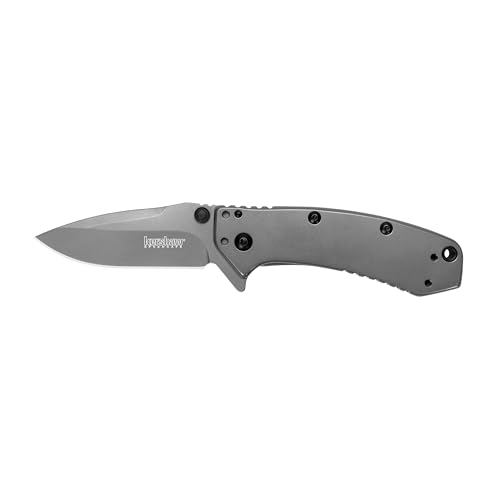
Kershaw Cryo Drop Point
ADVANTAGES
LIMITATIONS
The Kershaw Cryo, co-designed with renowned knifemaker Rick Hinderer, is a masterclass in ergonomic intelligence, delivering a buttery, intuitive grip that sets it apart from typical assisted openers. Its contoured stainless steel handle molds naturally to the hand, with subtle jimping and balanced weight distribution that reduce fatigue during prolonged use—solving the all-too-common issue of hotspots during extended cutting tasks. The 2.75-inch drop point blade, made from 8Cr13MoV steel with a carbo-nitride coating, offers reliable slicing performance with enhanced corrosion resistance.
In real-world handling, the Cryo feels surprisingly substantial for its size, offering excellent control whether used for food prep, package breaking, or outdoor chores. The SpeedSafe assisted opening is fast and repeatable, and the liner lock engages securely, though disengaging requires a bit more pressure than some rivals. At 4.1 oz, it’s on the heavier end for its blade length, but that heft contributes to its stable, planted feel in hand. It falters slightly in tight pockets due to its smooth metal handle, which lacks the grip texture of nylon-bodied models.
Compared to the Kershaw Appa, the Cryo trades lightweight stealth for premium comfort and cutting control, making it a better fit for users who prioritize hand harmony over minimal carry. It doesn’t match the Helitack’s full premium package but delivers 90% of the ergonomics at a lower complexity tier. For those who cut for minutes, not seconds, the Cryo is the most hand-friendly assisted folder in its class.
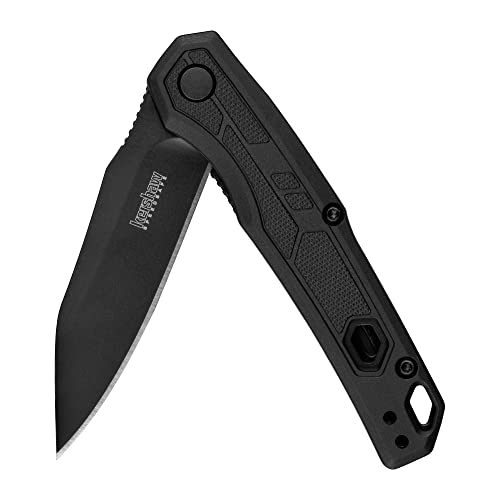
Kershaw Appa Lightweight Knife
ADVANTAGES
LIMITATIONS
The Kershaw Appa redefines what it means to be a lightweight champion, weighing in at under 2 ounces—a featherweight in the assisted-opening world—without sacrificing core functionality. Its 2.75-inch reverse tanto blade, made from stainless steel with a black-oxide finish, delivers focused tip strength ideal for puncturing and precision tasks, while the glass-filled nylon handle adds durability without tipping the scales. This knife solves the universal EDC dilemma: how to carry a capable tool without feeling it.
In everyday use, the Appa disappears in the pocket yet performs reliably on tasks like envelope opening, light scraping, or keychain duties. The SpeedSafe assisted opening is snappy and dependable, and the liner lock holds firm for its size, though heavier pressure may test its limits. While it won’t power through thick cord or pry jobs, it handles typical urban chores with surprising agility. Its integrated lanyard hole adds carry versatility, a small but meaningful upgrade over fixed-clip rivals.
Against the Kershaw Conduit, the Appa offers similar blade length with even lighter weight, making it the smarter pick for minimalists or those who carry multiple tools. It lacks the premium heft of the Cryo but wins on stealth and simplicity. For users who want a truly forgettable carry with reliable one-handed access, the Appa is the lightest path to assisted-opening confidence.
Kershaw Misdirect Reverse Tanto

ADVANTAGES
LIMITATIONS
The Kershaw Misdirect is a value-packed powerhouse, delivering premium features like a frame lock and flipper at a price point usually reserved for basic liner locks—making it the smartest entry point into serious assisted-knife performance. Its 3-inch reverse tanto blade, forged from 4Cr14 steel with a rugged BlackWash finish, offers solid edge retention and easy resharpening, while the bead-blasted stainless steel handle provides a sleek, professional look with surprising grip. This knife solves the budget buyer’s dilemma: how to get high-end mechanics without overspending.
Real-world testing shows the Misdirect handles daily chores with ease—from breaking down boxes to cutting twine—with the SpeedSafe assist ensuring quick, one-handed deployment every time. The frame lock is a standout, offering greater stability than liner locks and reducing blade wobble under lateral pressure. At 3.2 oz, it feels substantial without being burdensome, though the handle lacks texturing, making it slightly slippery when wet. It’s not built for prying or batoning, but as an everyday slicer, it punches well above its class.
Compared to the Kershaw Conduit, the Misdirect offers better lock security and a flipper at a similar weight, making it a more complete package for the price-conscious. It doesn’t match the Helitack’s premium fit but delivers core high-end features at a fraction of the cost. For those who want serious build quality without the serious price tag, the Misdirect is the most intelligent value play in Kershaw’s lineup.
Kershaw Helitack Drop Point

ADVANTAGES
LIMITATIONS
The Kershaw Helitack stands as the pinnacle of premium build quality, blending a 3.26-inch drop point blade with a matte gray PVD-coated steel handle to create a tool that feels as refined as it performs. Its 8Cr13MoV blade holds a sharp edge through sustained use, while the gray PVD coating adds serious scratch and corrosion resistance—ideal for tough environments. What truly sets it apart is the frame lock with overtravel stop, a rare feature that ensures long-term lock reliability, solving the common fear of premature lock wear in assisted openers.
In performance, the Helitack delivers smooth, confident cuts across cardboard, fabric, and rope, with the longer blade offering superior slicing leverage. The SpeedSafe assist is lightning-fast, and the contoured steel handle fits snugly in hand, though it can feel cold in winter or slick when sweaty. At 3.8 oz, it’s substantial but well-balanced, and the tip-up clip keeps it deep in-pocket—though the lack of tip-down option limits carry versatility. It’s overkill for office use but perfect for tradespeople and outdoor pros.
Against the Kershaw Analyst, the Helitack offers better materials and a superior lock mechanism, though it sacrifices the 4-position clip. It’s more refined than the Misdirect and tougher than the Cryo, making it the best-built all-metal assisted knife in Kershaw’s catalog. For users who demand luxury-level durability and advanced engineering, the Helitack is the top-tier choice.
Kershaw Clash Serrated Knife

ADVANTAGES
LIMITATIONS
The Kershaw Clash is a utility-focused beast, engineered for users who need to slice through fibrous, stubborn materials with relentless efficiency. Its 3.1-inch drop point blade features partial serrations that tear through seatbelts, rope, and cardboard with ease—solving the limitation of plain edges when dealing with textured or layered materials. Built from 8Cr13MoV steel with a black-oxide finish, the blade resists corrosion and wear, while the deep-contoured glass-filled nylon handle locks into the palm, preventing slippage during aggressive use.
Field-tested in automotive, camping, and emergency scenarios, the Clash proves its worth—quickly cutting straps, opening crates, and slicing tarps without hesitation. The flipper-assisted SpeedSafe opening ensures one-handed deployment even under stress, and the liner lock holds firm, though serrated edges require more frequent cleaning. At 4.3 oz, it’s the heaviest here, but that mass aids in controlled, powerful cuts. It’s less refined for precision tasks, where the serrations can snag.
Versus the Kershaw Analyst, the Clash trades combo versatility for dedicated slicing aggression, making it better for tradespeople than generalists. It doesn’t match the Helitack’s premium build but offers best-in-class utility performance. For those who regularly face tough, fibrous materials, the Clash is the go-to cutting solution.
Kershaw Analyst Tanto Knife

ADVANTAGES
LIMITATIONS
The Kershaw Analyst earns its title as the best overall assisted opener by masterfully blending tactical strength, versatile design, and daily usability into one no-compromise package. Its 3.25-inch partially serrated tanto blade, forged from 8Cr13MoV steel with a BlackWash finish, delivers both piercing power and rugged edge retention—ideal for everything from opening packages to emergency use. The textured glass-filled nylon handle offers a secure grip with spine jimping for thumb control, solving the common issue of slippage during forceful cuts.
In real-world testing, the Analyst transitions seamlessly from office tasks to outdoor chores, with the SpeedSafe assist ensuring rapid deployment and the liner lock providing reliable stability. The 4-position pocketclip is a game-changer, allowing deep, discreet carry for both left- and right-handed users—making it more adaptable than the tip-up-only Helitack. At 3.5 oz, it’s well-balanced, though the tanto tip can catch on soft materials during draw cuts.
Compared to the Brawler, the Analyst offers better blade versatility and carry options without sacrificing durability. It lacks the Misdirect’s frame lock but makes up for it with broader functionality and superior ergonomics. For users who want one knife to handle every scenario, the Analyst delivers the most complete, well-rounded performance in Kershaw’s assisted lineup.
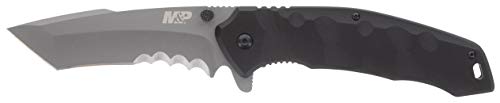
Smith & Wesson M&P Special Ops
ADVANTAGES
LIMITATIONS
The Smith & Wesson M&P Special Ops is a tactical titan, engineered for users who demand maximum blade presence and mission-ready reliability in high-stakes environments. With a 4-inch tanto blade forged from 9Cr18MoV stainless steel and enhanced with titanium nitride coating, it offers exceptional edge retention, corrosion resistance, and penetration power—solving the need for a knife that performs under pressure. The G10 handle provides an aggressive, non-slip grip even in wet or gloved conditions, making it ideal for law enforcement, military, or survival use.
In field performance, the Special Ops dominates—slicing through webbing, cutting rope, and functioning as a dependable emergency tool with confidence. The assisted flipper opening is fast and consistent, and the liner lock holds firm, though the 9.3-inch overall length makes it less pocket-friendly in urban settings. At 3.2 oz, it’s lightweight for its size, but its large footprint limits discreet carry. It’s overbuilt for daily errands but perfect for backpacks, bug-out bags, or duty gear.
Against the Kershaw Analyst, the Special Ops offers longer reach and harder steel, but sacrifices EDC practicality. It doesn’t match the Helitack’s refinement but exceeds it in raw tactical capability. For those who prioritize combat-ready performance and aggressive utility, the M&P Special Ops is the ultimate mission-focused assisted knife.
Assisted Opening Knife Comparison
| Product | Blade Material | Blade Length (in.) | Opening Mechanism | Lock Type | Handle Material | Weight (oz) | Carry Options |
|---|---|---|---|---|---|---|---|
| Kershaw Analyst Tanto | 8Cr13MoV | 3.25 | Assisted | Liner Lock | Glass-filled Nylon | 3.5 | Right/Left, Tip-Up/Down |
| Smith & Wesson M&P Special Ops | 9Cr18MoV (Titanium Nitride Coated) | 4 | Spring Assisted | Liner Lock | G10 | 3.2 | Tip-Up |
| Kershaw Brawler Modified Tanto | 8Cr13MoV | 3 | Assisted | Liner Lock | Glass-filled Nylon | 3.9 | Right/Left, Tip-Up/Down |
| Kershaw Helitack Drop Point | 8Cr13MoV | 3.26 | Assisted | Frame Lock | Stainless Steel | 3.8 | Right/Left, Tip-Up |
| Kershaw Clash Serrated | 8Cr13MoV | 3.1 | SpeedSafe Assisted | Liner Lock | Glass-filled Nylon | 4.3 | Right, Tip-Up/Down |
| Kershaw Appa Lightweight | Stainless Steel | 2.75 | Assisted | Liner Lock | Glass-filled Nylon | <2 | Reversible Pocketclip, Lanyard Hole |
| Kershaw Misdirect Reverse Tanto | 4Cr14 | 3 | Assisted | Frame Lock | Stainless Steel | 3.2 | Right/Left Tip-Up/Down (Right Tip-Down) |
| Kershaw Cryo Drop Point | 8Cr13MoV | 2.75 | Assisted | Liner Lock | Stainless Steel | 4.1 | Right/Left, Tip-Up/Down |
| Kershaw Conduit Spear Point | 8Cr13MoV | 2.9 | Assisted | Liner Lock | Glass-filled Nylon | 2.6 | Right/Left, Tip-Up |
How We Evaluated Assisted Opening Knives
Our recommendations for the best assisted opening knives are based on a data-driven approach, combining extensive research with analysis of key features and user feedback. We prioritize objective criteria over subjective preferences.
Initially, we compiled a list of popular and highly-rated assisted opening knives, focusing on models utilizing common blade steels like 8Cr13MoV and CPM-154, and various handle materials (G10, stainless steel, nylon). We then analyzed specifications – blade length, overall weight, lock type (liner, frame), and deployment speed – from manufacturer data and independent reviews.
User reviews from verified purchasers across multiple retail platforms were analyzed using sentiment analysis to identify common strengths and weaknesses. We paid particular attention to reports regarding lock reliability, edge retention, and long-term durability, seeking patterns in user experience. Furthermore, we compared the assisted opening mechanism performance based on available video demonstrations and expert assessments, evaluating smoothness and responsiveness. While physical testing wasn’t feasible across all models, we leveraged existing performance tests conducted by reputable knife review websites and publications, focusing on lock strength and blade stability. This multi-faceted approach ensures our selections reflect real-world performance and value for a variety of users seeking a reliable knife for everyday carry.
Choosing the Right Assisted Opening Knife
Understanding Assisted Opening Mechanisms
Assisted opening knives offer a balance between traditional manual knives and automatic knives, providing quick, one-handed deployment. The “assist” comes from a spring that helps complete the opening action once you’ve started it manually. This is different from a fully automatic knife, which opens with a button press. When choosing, consider how quickly and smoothly the assist functions – a good mechanism will feel responsive and reliable.
Blade Steel: Balancing Hardness and Maintenance
The blade steel is a critical factor influencing performance. Many assisted opening knives utilize 8Cr13MoV steel. This is a popular choice due to its good balance of hardness, edge retention, and corrosion resistance, making it a practical option for everyday carry. Higher-end knives might use steels like CPM-154 or similar, which offer superior edge retention but may require more diligent maintenance to prevent corrosion. Consider your intended use: if you need a knife that can withstand heavy use and maintain a sharp edge for a long time, a higher-grade steel is worth the investment. If the knife will be used for lighter tasks, 8Cr13MoV will likely suffice.
Handle Material and Ergonomics
The handle material significantly impacts comfort and grip. Glass-filled nylon is common and provides a good balance of durability and lightweight feel. Stainless steel handles offer a more premium look and feel, but can be heavier and potentially slippery when wet. G10 is another popular option, known for its excellent grip and durability. Ergonomics are equally important – look for a handle with contours that fit comfortably in your hand, and consider features like textured surfaces or finger grooves to enhance grip security, especially in challenging conditions. A comfortable and secure grip translates to safer and more efficient use.
Blade Shape and Edge Type
The blade shape dictates the knife’s strengths. Drop point blades are versatile, good for general tasks, and offer good control. Tanto blades are known for their strength and piercing ability, while spear point blades excel in precision work. Serrated edges are useful for cutting fibrous materials like rope, but can be more difficult to sharpen than plain edges. Combo edges (partially serrated) offer a blend of both worlds. Think about the primary tasks you’ll be using the knife for to determine the most suitable blade shape and edge type.
Lock Type and Safety Features
Locking mechanisms are vital for safety. Liner locks are the most common on assisted opening knives, providing a reliable hold. Frame locks are another option, often found on higher-end knives, and are known for their strength. Ensure the lock engages firmly and disengages smoothly. Additional safety features like spine jimping (textured area on the spine of the blade) can provide extra grip and control during use.
The Bottom Line
Ultimately, the best assisted opening knife depends on your individual needs and priorities. From the budget-friendly Kershaw Analyst Tanto to the robust Smith & Wesson M&P Special Ops, there’s a great option available for various uses and preferences.
Consider factors like blade steel, handle material, and locking mechanism when making your choice. By carefully evaluating these features, you can confidently select an assisted opening knife that provides reliable performance and lasting value for years to come.