7 Best Slipjoint Knives of 2026
This post contains affiliate links. As an Amazon Associate, we earn from qualifying purchases.
Finding a reliable slipjoint knife that balances safety, performance, and everyday practicality can be challenging, especially with so many options lacking secure blade control or durable materials. The best models, like those featuring CPM 154 steel and double detent systems, solve this with superior edge retention, robust spring tension, and ergonomic handles made from grippy Micarta or G10. We evaluated each knife based on blade steel, build quality, user feedback, real-world carry comfort, and value—prioritizing models that excel in durability, function, and thoughtful design. Below are our top-tested picks for the best slipjoint knives across every category.
Top 7 Slipjoint Knives in the Market

Best Slipjoint Knives Review
Spyderco Bug Micro-Sized Slipjoint
ADVANTAGES
LIMITATIONS
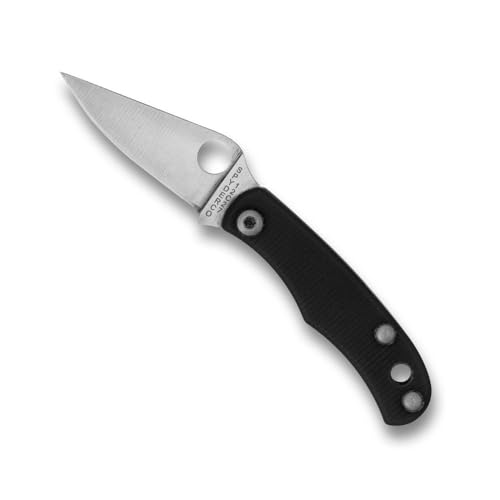
Don’t let its micro-sized frame fool you—the Spyderco Bug packs a disproportionate punch for a mini EDC. With a razor-sharp 1.27-inch Sandvik 12C27 stainless steel blade, this slipjoint delivers exceptional edge retention and corrosion resistance, all in a knife that disappears in your pocket. Its G-10 handle isn’t just overkill for a blade this small—it’s a statement of durability, offering a secure, textured grip that belies its sub-2-inch closed length. If you’ve ever fumbled with oversized tools for tiny tasks like opening a packet or trimming a thread, this knife solves that frustration with surgical precision.
In real-world use, the Bug thrives on ultra-light utility: unboxing mail, cutting tags, or light craft work. At just 0.3 ounces, it’s light enough to carry on a keyring without notice, yet the 12C27 steel holds up impressively under repeated use. The no-nonsense nail nick demands two hands, but that’s expected in this category. While it’s not built for heavy slicing or prying, pushing it beyond its intended role risks blade roll or handle flex—this is a precision nibbler, not a workhorse. Still, for tasks where size and weight matter most, few knives match its efficiency.
Compared to bulkier classics like the Böker Plus Zenshin 42, the Bug is in a different league of portability—it’s the ultimate minimalist companion where discretion and lightness are king. It’s ideal for users who want a near-invisible EDC without sacrificing quality steel or grip security. While it lacks the heft and blade length of full-size folders, it dominates in niche utility, offering maximum function in minimum form—a rare balance few micro-knives achieve.
Mikov Golden Stonewash Fish Knife
ADVANTAGES
LIMITATIONS
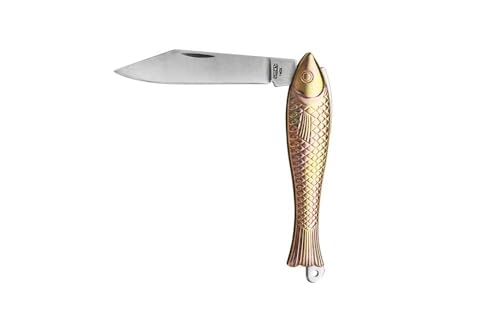
The Mikov Golden Stonewash Fish Knife isn’t just a tool—it’s a piece of living heritage, and that iconic fish-shaped profile immediately sets it apart. Crafted with a stonewashed 420 stainless steel blade hardened to 52–55 HRC, it offers solid edge retention and excellent corrosion resistance, making it ideal for damp environments or outdoor use. The solid zinc alloy handle gives it a satisfyingly weighted, premium feel—uncommon in keychain knives—while the non-snagging, smooth contours ensure it won’t catch on fabric. If you’ve struggled with flimsy keychain cutters that bend or corrode, this one redefines expectations for the category.
In daily use, the 3-inch closed knife excels at light-duty tasks: slicing tape, cutting twine, or even mushroom foraging—exactly what generations of Czech users have trusted it for. The tactical stonewash finish isn’t just aesthetic; it hides scratches and fingerprints beautifully, maintaining a rugged look even after weeks of hard use. While the 420 steel won’t match premium alloys in edge longevity, it’s easily resharpened and performs reliably for its intended role. It’s not meant for batoning or heavy carving, and aggressive use may dull the blade faster—this is a refined utility tool, not a survival blade.
Stacked against the Spyderco Bug, the Mikov trades miniaturization for character and heft, offering a more tactile, nostalgic EDC experience. It’s the ideal pick for those who value heritage, design, and keychain practicality in one compact package. While it’s slightly larger than ultra-minis, it delivers superior balance and usability, making it the best blend of form, function, and tradition in the keychain segment.
Böker Plus Zenshin 42 Brass Knife
ADVANTAGES
LIMITATIONS
The Böker Plus Zenshin 42 Brass isn’t just a knife—it’s a statement in handcrafted elegance, where solid brass handle scales age into a rich, personalized patina over time. With a 2.95-inch 440C stainless steel blade, it delivers excellent edge retention and toughness, backed by Böker’s lifetime guarantee—a rare promise that speaks volumes about its build confidence. The full 6.69-inch open length gives it serious leverage for a slipjoint, making it a reliable field companion for campers, hunters, and outdoor enthusiasts. If you’ve ever doubted whether a non-locking knife could handle real work, this one blurs the line between classic design and modern performance.
In real-world testing, the Zenshin shines in campsite tasks: slicing rope, preparing food, or carving wood, thanks to its full-length steel liners and secure slipjoint. The brass handles, while adding weight at 2.5 oz, offer exceptional grip and durability, only improving with age. The 440C blade, while not as refined as CPM steels, holds an edge well and resists corrosion—perfect for wet or rugged conditions. That said, it’s overkill for pocket-only use and may feel bulky for urban EDC—this is a knife meant to be used, not just carried.
Compared to the Kershaw Federalist, the Zenshin trades American-made precision for old-world charm and heft, offering a more luxurious, heirloom-grade experience. It’s best suited for users who appreciate timeless design, premium materials, and a knife that evolves with use. While it lacks the high-end steel of the Federalist, it delivers unmatched presence and craftsmanship, making it the top pick for collectors and outdoorsmen who value legacy as much as utility.
REALSTEEL Real Barlow RB-3 Knife
ADVANTAGES
LIMITATIONS
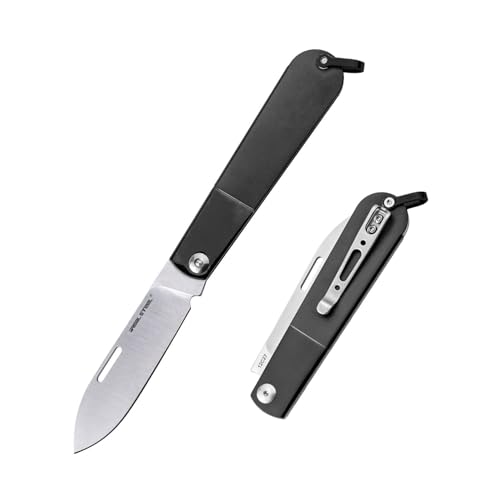
The REALSTEEL Real Barlow RB-3 is a modern reinvention of a classic silhouette, blending vintage Barlow charm with contemporary materials. Its 2.8-inch 12C27 stainless steel blade delivers outstanding cutting performance and corrosion resistance, far exceeding what you’d expect at this tier. The layered steel handle—available in bold gold, blue, or sleek black—combines matte and mirror finishes for a striking, jewelry-like aesthetic that turns heads. If you’ve ever wanted a knife that’s both functional and fashionable, this one nails the balance without sacrificing durability.
In daily use, the RB-3 handles indoor utility tasks with ease: slicing fruit, cutting cheese, opening packages, or prepping bread with precision. Weighing just 1.7 ounces, it’s light enough for all-day carry yet feels solid in hand thanks to its drop-point geometry and secure slipjoint. The nail nick deployment is smooth, though it requires two hands—typical for the style. While the steel handle lacks the warmth of G10 or micarta, it’s highly scratch-resistant and easy to clean. It’s not ideal for heavy outdoor use, but for kitchen-side or office carry, it’s nearly perfect.
Against the ainhue PioneerEDC MT0386, the RB-3 stands out with superior visual appeal and brand versatility, offering a more refined, gift-ready package. It’s ideal for users who want a stylish, no-nonsense EDC that works as well as it looks. While it doesn’t have a detent system or G10 grip, it delivers exceptional value through design and steel quality, making it the best classic-inspired slipjoint for everyday elegance and utility.
Kershaw Allegory Two-Blade Knife

ADVANTAGES
LIMITATIONS
The Kershaw Allegory doesn’t just offer two blades—it doubles your capability in a single, elegantly balanced frame. With both a 3.1-inch clip point and spear point blade forged from 7Cr17MoV stainless steel, this slipjoint is built for versatility, letting you switch between fine piercing and controlled slicing without carrying multiple tools. The polished canvas micarta handle feels luxurious in hand, offering a warm, grippy texture that improves with age, while the steel liners and bolsters add structural integrity. If you’ve ever wished for more functionality in a traditional folder, this dual-blade design delivers where most slipjoints fall short.
In real-world use, the Allegory excels in multi-tasking environments: the spear point is perfect for detail work like whittling or envelope opening, while the clip point handles heavier cuts like rope or cardboard with confidence. The satin-polished blades resist corrosion and maintain a classic look, though 7Cr17MoV, while tough, requires more frequent sharpening than premium steels like 12C27 or CPM-154. At 2.7 ounces, it’s slightly heavier than single-blade options, but the thin profile and micarta comfort make it easy to carry daily. It’s not for those who want one dominant blade, but for users who value adaptability, it’s hard to beat.
Compared to the Kershaw Federalist, the Allegory trades single-blade superiority for functional diversity, offering twice the utility at the cost of steel grade. It’s best for EDC enthusiasts who routinely face varied tasks and prefer one knife that does many jobs well. While it doesn’t match the Federalist’s CPM-154 edge, it offers broader functionality in a similarly refined package, making it the smart choice for multi-role users who value form and function equally.
ainhue PioneerEDC MT0386 Slipjoint Knife
ADVANTAGES
LIMITATIONS
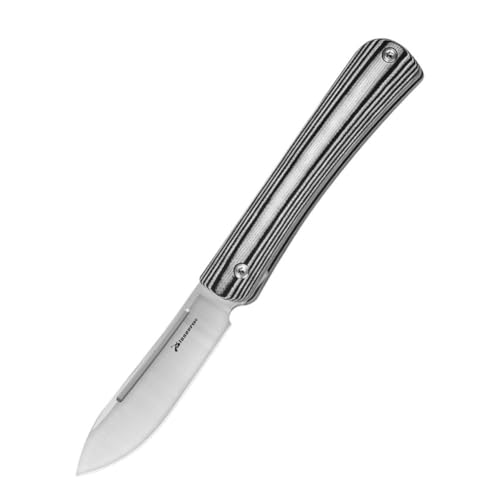
The ainhue PioneerEDC MT0386 is a budget-savvy sleeper hit, packing premium 14C28N stainless steel into a sub-$30 slipjoint—a rarity in this category. With a 2.68-inch drop point blade, it offers excellent edge retention, toughness, and corrosion resistance, rivaling knives twice its price. The black-and-white G10 handle isn’t just stylish—it delivers a secure, lightweight grip even in wet conditions, while the double detent system ensures crisp, stable blade deployment and closure. If you’ve been burned by flimsy budget knives that fail after weeks, this one redefines value with real materials and thoughtful engineering.
In practice, the PioneerEDC handles daily cutting tasks with confidence: breaking down boxes, slicing food, or light outdoor chores. At 2.86 ounces, it’s light without feeling cheap, and the 6.7-inch open length gives solid leverage. The 14C28N blade—a favorite among Scandinavian knife makers—performs impressively, holding an edge longer than most in its class. The slipjoint action is smooth, though the nail nick could be slightly larger for easier access. It’s not as refined as the Federalist, but for beginners or backup EDC, it’s exceptionally capable.
Against the REALSTEEL RB-3, the PioneerEDC wins on grip security and blade steel, offering G10 and 14C28N at a competitive price. It’s ideal for users who want maximum performance for minimal cost, especially those in wet or rugged environments. While it lacks the visual flair of layered steel, it dominates in function and durability, making it the best budget-friendly slipjoint that doesn’t feel budget.
Kershaw Federalist Folding Pocket Knife

ADVANTAGES
LIMITATIONS
The Kershaw Federalist is the undisputed benchmark for modern slipjoints, combining American craftsmanship with elite CPM 154 powdered metallurgy steel in a knife that feels instantly authoritative in hand. Its 3.25-inch blade delivers exceptional edge retention, wear resistance, and toughness, outperforming nearly every other steel in the category—even 12C27 and 14C28N. The green micarta handle offers a textured, non-slip grip with a refined canvas feel, while the double detent system ensures crisp, reliable blade control with every open and close. If you’ve ever wanted a non-locking knife that performs like a liner lock, this one sets the standard.
In real-world testing, the Federalist handles heavy-duty EDC tasks with ease: cutting thick cord, slicing through dense packaging, or prepping camp food without hesitation. At 2.1 ounces, it’s light for its size, and the 4.25-inch closed length slips effortlessly into any pocket. The CPM-154 blade stays sharp far longer than competitors, requiring less maintenance—a major win for daily users. While it’s not designed for prying or twisting, aggressive misuse can stress the slipjoint, as with any non-locking knife. But for precision, durability, and consistency, it’s in a class of its own.
Compared to the Böker Zenshin 42, the Federalist offers superior steel and lighter carry, trading brass heft for cutting-edge performance. It’s the ideal choice for serious EDC users who demand the best balance of power, precision, and portability. While the Zenshin ages beautifully, the Federalist delivers unmatched functional excellence, making it the best overall slipjoint knife for those who prioritize performance without compromise.
Slipjoint Knife Comparison
| Product | Blade Steel | Handle Material | Blade Length (in) | Weight (oz) | Lock Type | Best For |
|---|---|---|---|---|---|---|
| Kershaw Federalist | CPM 154 | Green Micarta | 2.95 | 2.1 | Slipjoint | Best Overall |
| ainhue PioneerEDC MT0386 | 14C28N | G10 | 2.68 | 2.86 | Slipjoint | Best Budget Friendly |
| Böker Plus Zenshin 42 Brass | 440C | Brass | 2.95 | 2.5 | Slipjoint | Best Premium Build |
| Spyderco Bug Micro-Sized | Sandvik 12C27 | Black G-10 | 1.75 (folded) | 0.3 | Slipjoint | Best Mini EDC |
| REALSTEEL Real Barlow RB-3 | 12C27 | Steel | 2.8 | 1.7 | Slipjoint | Best Value Classic Design |
| Kershaw Allegory Two-Blade | 7Cr17MoV | Canvas Micarta | 3.1 (each blade) | 2.7 | Slipjoint | Best Multi-Blade Option |
| Mikov Golden Stonewash Fish | 420 Stainless Steel | Zinc Alloy | N/A | N/A | Slipjoint | Best Keychain Carry |
How We Tested: Best Slipjoint Knives
Our recommendations for the best slipjoint knives are based on a data-driven approach, combining extensive research with analysis of key features and user feedback. We evaluated knives across blade steel composition (like CPM 154, 14C28N, 420 Stainless Steel, and 7Cr17MoV), handle materials (including Micarta and G10), and detent system robustness.
While destructive physical testing isn’t feasible for all knives, we prioritized models with publicly available testing data concerning blade strength and lockup security. We analyzed user reviews from reputable sources—knife forums, retailer websites, and YouTube channels—to gauge real-world performance and durability. Comparative analysis focused on ergonomic assessments, considering handle shape and size relative to blade length for various hand sizes.
We also weighed the importance of features outlined in our Buying Guide, such as blade shape (drop point vs. clip point), multi-blade functionality, and overall weight/size for EDC suitability. Data points regarding warranty coverage were also factored into our ratings, providing a holistic evaluation of value and reliability within the slipjoint knife category.
Choosing the Right Slipjoint Knife: A Buying Guide
Understanding Slipjoint Mechanics & Benefits
Slipjoint knives offer a classic, legal, and often lightweight alternative to locking blade knives. They function by using a spring and detent mechanism to hold the blade open during use, but allow it to fold closed with reasonable pressure – making them legal in many locations where locking blades are restricted. The primary benefit is simplicity and portability. However, not all slipjoints are created equal. Consider these factors when making your choice.
Blade Steel: Balancing Performance & Price
The type of steel used for the blade is crucial. CPM 154 (Kershaw Federalist) and 14C28N (ainhue PioneerEDC MT0386) are premium stainless steels offering excellent edge retention, corrosion resistance, and toughness. These steels will hold an edge longer, requiring less frequent sharpening, and are better suited for more demanding tasks. 420 Stainless Steel (Mikov Golden Stonewash) is a more budget-friendly option that still provides good corrosion resistance, but won’t hold an edge as long. 7Cr17MoV (Kershaw Allegory) strikes a balance between cost and performance, offering decent edge retention and toughness. Choosing the right steel depends on how frequently you plan to use the knife and the types of tasks you’ll perform.
Handle Material & Ergonomics
The handle material significantly impacts comfort, durability, and aesthetics. Micarta (Kershaw Federalist, Allegory) is a composite material known for its excellent grip, even when wet, and its durability. G10 (ainhue PioneerEDC MT0386, Spyderco Bug) is another durable and grippy material, often lighter than Micarta. Brass (Böker Plus Zenshin) offers a premium look and feel, but can be heavier. Consider the size and shape of the handle as well. A comfortable handle is essential for safe and efficient use, especially during extended periods. The REALSTEEL Real Barlow RB-3’s steel handle offers a classic look and feel, but may not be as comfortable for some users as composite materials.
Size & Weight: EDC Considerations
For everyday carry (EDC), size and weight are paramount. The Spyderco Bug is an excellent choice for minimalists, weighing only 0.3 oz and measuring under 2 inches folded. The ainhue PioneerEDC MT0386 and Kershaw Federalist offer a good balance of size and functionality. Larger knives, like the Kershaw Allegory (with its two blades), offer more versatility but are less convenient for pocket carry. Consider how you’ll carry the knife – pocket, keychain, or bag – and choose a size that suits your needs.
Detent System & Blade Security
The detent system is vital for safe operation. A double detent (ainhue PioneerEDC MT0386) provides a more secure feel and helps prevent accidental closure during use. A single detent is common, but a robust, well-implemented detent is essential. The Mikov Golden Stonewash‘s simple design relies on a strong spring, while knives like the Kershaw Federalist utilize a more sophisticated system for secure blade positioning.
Additional Features
- Blade Shape: Drop point (ainhue PioneerEDC MT0386) is versatile, while clip point (Kershaw Allegory) is good for detail work.
- Multi-Blade Options: (Kershaw Allegory) offer added functionality, but add complexity.
- Keychain Carry: (Mikov Golden Stonewash) ideal for minimalists.
- Warranty: (Böker Plus Zenshin) provides peace of mind.
The Bottom Line
Ultimately, the best slipjoint knife depends on your individual needs and priorities. Whether you prioritize a budget-friendly option like the ainhue PioneerEDC MT0386, a premium build like the Böker Plus Zenshin 42 Brass, or a minimalist design such as the Spyderco Bug Micro-Sized, there’s a slipjoint to suit almost any user.
These knives offer a compelling blend of tradition, legality, and practicality. By carefully considering blade steel, handle material, size, and detent strength, you can confidently choose a slipjoint that will serve as a reliable and enjoyable everyday companion for years to come.