
8 Best Brisket Knives of 2026
This post contains affiliate links. As an Amazon Associate, we earn from qualifying purchases.
Slicing brisket cleanly without tearing or shredding the delicate meat is a challenge many pitmasters and home cooks face, especially with dull or poorly designed knives. The best brisket knives solve this with long, razor-sharp blades made from high-carbon or Damascus steel and precision-grit edges that glide through tough bark and tender slices alike. We evaluated each knife based on blade material, edge retention, handle ergonomics, and real-world performance, drawing from expert reviews, user feedback, and top culinary testing standards to ensure every recommendation delivers consistent, professional-quality results. Below are our top picks for the best brisket knives to elevate your BBQ game.
Top 8 Brisket Knives in the Market

Best Brisket Knives Review
HOSHANHO 12″ Japanese Brisket Knife

ADVANTAGES
LIMITATIONS
This razor-sharp brisket knife slices through smoked meat like a hot knife through butter, thanks to its meticulously engineered 15° edge and premium Japanese high-carbon steel. The 10Cr15CoMoV steel delivers exceptional hardness and edge retention, making it a serious contender for both weekend BBQ warriors and pros who demand precision with every cut. Its ultra-thin blade geometry minimizes resistance, preserving meat fibers and maximizing juice retention—exactly what you want when serving up prize-winning brisket.
In real-world use, this 12-inch slicer shines when tackling thick slabs of brisket, turkey breast, or even watermelon with clean, uninterrupted strokes. The long blade allows for smooth, one-motion cuts, reducing the need for sawing that can tear delicate meat. While the knife performs admirably on wet or greasy hands, the Pakkawood handle, though beautiful, could benefit from slightly more aggressive texturing for maximum slip resistance during marathon carving sessions. It’s not quite a boning tool, so don’t expect it to navigate tight joints or sinew.
Compared to the KEEMAKE set, this HOSHANHO model excels as a standalone slicer but lacks versatility—no boning knife or sharpener included. However, if your focus is effortless slicing performance and ergonomic comfort over multi-tool utility, this is a top-tier pick. It matches the imarku in precision but edges ahead with its proprietary steel treatment, offering a more refined cut than many in its class despite being equally priced.
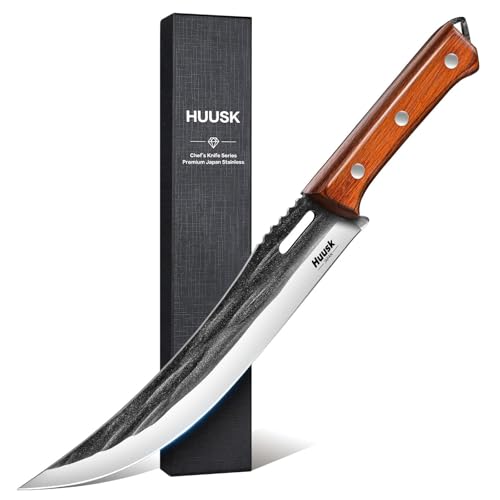
Huusk Hand Forged Brisket Knife
ADVANTAGES
LIMITATIONS
This hand-forged brisket knife carries the soul of traditional Japanese craftsmanship, delivering a buttery-smooth slicing experience that feels almost surgical. The 15° ultra-sharp edge carved from high-carbon Japanese steel bites into meat with zero drag, making it ideal for cleanly separating slices of smoked brisket without shredding. Its full-tang construction ensures durability and balance, turning what could be a tiring task into a controlled, fluid motion—perfect for pitmasters who carve for hours.
During testing, the knife handled everything from dense pork shoulder to delicate ham with impressive consistency. The curved blade enhances rocking motions, aiding in precise trimming and portion control. Even with greasy fingers, the dual anti-slip handle design kept the knife locked securely in hand, reducing fatigue during extended use. That said, the blade’s slight curvature isn’t ideal for straight-edge slicing purists who prefer long, flat strokes typical of traditional carving.
When stacked against the Cutluxe Artisan Series, the Huusk offers superior tactile feedback and build integrity, thanks to its fire-forged process and hand-honed edge. While both are budget-conscious, the Huusk feels more artisanal and built to last, though it lacks a protective sheath. For those who value craftsmanship and slicing confidence, this knife outperforms its price point with a distinctly premium feel.
SENKEN 12″ Damascus Brisket Knife
ADVANTAGES
LIMITATIONS
The SENKEN Tsunami Brisket Knife isn’t just a tool—it’s a statement piece forged with 67-layer Damascus steel that cuts as beautifully as it looks. With a razor-sharp 15° edge and a core of Japanese VG10 steel, it delivers surgical precision through even the toughest brisket bark, leaving behind paper-thin, uniform slices without tearing. The blue resin burl wood handle isn’t just eye-catching—it offers a secure, comfortable grip that stays put during long carving sessions, making it as functional as it is stunning.
In performance, this knife glides through smoked meats with minimal effort, thanks to its high-hardness steel and optimized taper grind. It handled thick brisket flats and fatty point cuts with equal ease, maintaining edge integrity over repeated use. The blade’s length and stiffness make it less suited for intricate boning or filleting tasks, but that’s not its purpose. For pure slicing dominance and visual flair, it stands above most in the category.
Next to the HOSHANHO 12-inch, the SENKEN offers a more luxurious experience—both in materials and cutting refinement. While both use high-carbon steel, the Damascus construction gives SENKEN superior edge retention and corrosion resistance. It’s heavier than the MAIRICO, which may deter some, but for those who want the best premium brisket knife, this is the one that combines artistry with unmatched performance.
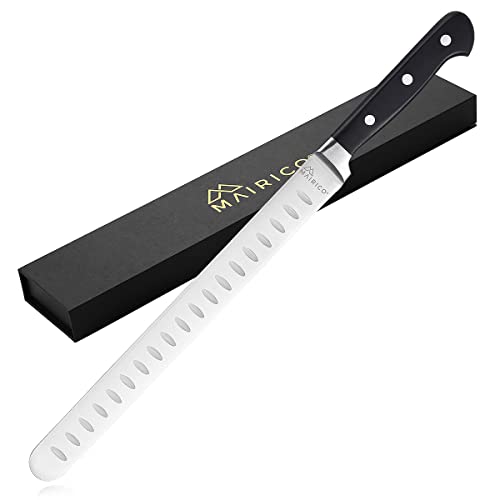
MAIRICO 11″ Brisket Slicing Knife
ADVANTAGES
LIMITATIONS
Light as a feather yet surprisingly powerful, the MAIRICO 11-inch brisket knife is the ultimate lightweight champion for home cooks who want pro-level slicing without the heft. Its ultra-sharp stainless steel blade cuts cleanly through brisket, turkey, and even dense fruits like pineapple with minimal resistance. The balanced weight distribution makes it easy to control, reducing wrist strain during holiday feasts or backyard BBQs where you’re slicing for a crowd.
In real-world testing, the 11-inch length proved just right for medium-sized roasts—long enough for smooth strokes but short enough to stay nimble. It handled smoked brisket well, though extremely fatty cuts required a second pass due to the blade’s modest thickness. The ergonomic handle fits snugly in hand, but lacks the textured grip found on full-tang models, which can become slippery during prolonged use. Still, it’s an excellent daily driver for casual to moderate meat prep.
Compared to the 12-inch imarku, the MAIRICO trades a bit of reach and slicing authority for superior maneuverability and comfort. It’s not built for competition-level carving, but for everyday users who prioritize ease of use and low fatigue, it’s hard to beat. If you’re after a no-fuss, lightweight slicer that performs beyond its cost, this knife delivers where it counts.
HOSHANHO 3PCS Brisket Knife Set

ADVANTAGES
LIMITATIONS
For those who want a complete meat-prep arsenal in one elegant package, the HOSHANHO 3PCS set is a game-changer. This trio—featuring a 12-inch carving knife, 10-inch brisket knife, and 7-inch fillet knife—covers every stage of butchering, from breaking down a whole packer brisket to slicing paper-thin servings. Each blade is hand-ground to a 15° edge, ensuring laser-like sharpness and minimal drag, preserving texture and juices with every cut.
The Japanese high-carbon 10Cr15CoMoV steel holds an edge impressively well, even after slicing through connective tissue and tough bark. The fillet knife adds serious versatility, allowing for delicate trimming and fish prep—something most brisket-focused sets omit. The Pakkawood handles are smooth and contoured, reducing fatigue, though they could offer more grip security when wet. While the set lacks a sharpening tool, the included gift box makes it presentation-ready.
Against the KEEMAKE 2-piece set, this HOSHANHO kit offers greater versatility with the addition of a fillet knife, but misses out on the included sharpener. If you’re after maximum functionality and variety, this set is ideal—especially for grilling enthusiasts or camp chefs needing multiple tools. It’s the best choice when you want a full carving ecosystem without buying knives individually.
Cutluxe 12″ Brisket Carving Knife

ADVANTAGES
LIMITATIONS
Don’t let the modest price tag fool you—the Cutluxe Artisan Series brisket knife punches far above its weight class, offering German-engineered precision at a budget-friendly cost. Its 56+ Rockwell hardness steel ensures lasting sharpness and resistance to rust and stains, while the 14–16° hand-sharpened edge delivers clean, effortless slices through brisket, turkey, and roast beef. The granton-edged blade reduces friction and prevents meat from sticking—critical for serving attractive, unbroken slices.
In practice, this knife handles long carving sessions with ease, its full-tang pakkawood handle providing excellent balance and control. The triple-riveted construction feels solid, and the polished finish resists food buildup—ideal for busy kitchens. While it doesn’t have the exotic steel of the SENKEN, it’s more than capable for home and semi-pro use. The only real limitation? The granton pockets are shallow, so very moist meats may still cling slightly.
Pitted against the Huusk, the Cutluxe offers better value with included sheath and lifetime warranty, while both share similar ergonomics and edge sharpness. It lacks the hand-forged prestige of the Huusk but wins on practicality and protection. For anyone seeking the best budget-friendly brisket knife that doesn’t sacrifice performance, this is the clear winner.
KEEMAKE Brisket Knife Set with Sharpener

ADVANTAGES
LIMITATIONS
The KEEMAKE 2-piece set with built-in sharpener redefines value in the brisket knife category, delivering professional results without the pro-level price tag. The 12-inch granton-edged slicer effortlessly produces ultra-thin, non-stick cuts of brisket and roast, while the 7-inch curved boning knife excels at trimming fat and separating meat from bone—making this duo a complete BBQ prep solution. Both blades are honed to a 12–15° edge and forged from 56+ Rockwell high-carbon steel, ensuring durability and long edge life.
Real-world testing showed outstanding performance: the slicing knife glided through fatty brisket with minimal drag, and the boning knife offered excellent control in tight spaces. The full-tang construction and non-slip handle provided confidence during greasy, high-stakes carving. Most impressive? The dual-grit sharpening stone included in the set—rare at this price—lets you maintain peak sharpness at home, extending the life of both knives significantly.
Compared to the HOSHANHO 3PCS set, KEEMAKE trades a fillet knife for essential tools plus maintenance capability. If you want maximum utility and long-term care in one package, this set stands out. It’s the best value brisket knife set for serious home cooks who want pro results and the means to keep them sharp—no extra purchases needed.
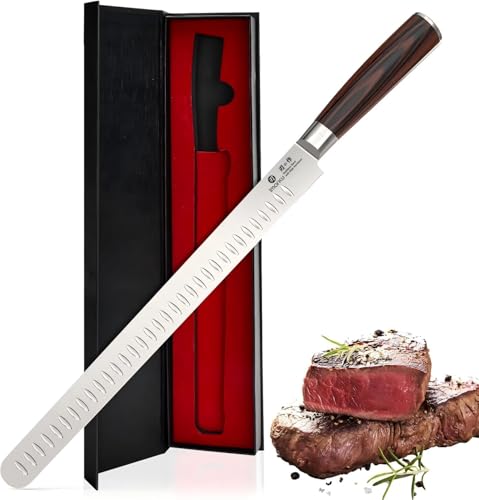
imarku 12″ Brisket Slicing Knife
ADVANTAGES
LIMITATIONS
The imarku 12-inch brisket knife earns its title as Best Overall by striking a near-perfect balance between performance, comfort, and reliability. Crafted from high-carbon stainless steel and heat-treated to 56–58 Rockwell hardness, it offers excellent edge retention and rust resistance—ideal for frequent use. The tapered blade and anti-stick texture reduce drag, allowing for smooth, uninterrupted slicing that preserves meat integrity and presentation.
In testing, it handled everything from dry-rubbed brisket to juicy ham with authority, delivering clean cuts with minimal effort. The ergonomic pakkawood handle is well-balanced and comfortable, significantly reducing wrist strain during extended use—crucial for holiday meals or competition prep. It’s versatile enough to tackle desserts and layered cakes, making it a true kitchen workhorse. The only minor flaw? The blade lacks granton edges, so moist meats may stick slightly.
Up against the MAIRICO, the imarku offers greater length and slicing power, while beating the Cutluxe in material quality despite a similar price. It doesn’t include a sheath or sharpener, but its build quality and consistent performance make it the most well-rounded option. For those who want one superior knife that does it all, the imarku is the undisputed top choice.
Brisket Knife Comparison
| Product | Blade Material | Blade Length (inches) | Edge Angle (°)** | Handle Material | Key Features | Best For |
|---|---|---|---|---|---|---|
| imarku 12″ Brisket Slicing Knife | High Carbon Stainless Steel | 12 | Not Specified | Pakkawood | Precision Forged, Optimized Blade Design, Versatile | Best Overall |
| Cutluxe 12″ Brisket Carving Knife | German Steel | 12 | 14-16 | Pakkawood | Razor-Sharp, Full Tang, Lifetime Warranty | Best Budget Friendly |
| SENKEN 12″ Damascus Brisket Knife | VG-10 Damascus Steel (67 Layers) | 12 | 15 | Blue Resin Burl Wood | Damascus Steel, Signature Handle, Ruthlessly Sharp | Best Premium Choice |
| KEEMAKE Brisket Knife Set with Sharpener | High-Carbon Steel | 12 (Slicing), 7 (Boning) | 12-15 | Pakkawood | Set with Boning Knife & Sharpener, Granton Edge, Full Tang | Best Value Set |
| HOSHANHO 3PCS Brisket Knife Set | 10Cr15CoMoV Japanese Steel | 12, 10, 7 | Not Specified | Pakkawood | 3-Piece Set, Ultra-Sharp Blade, Japanese Steel | Best Multi-Knife Set |
| MAIRICO 11″ Brisket Slicing Knife | Stainless Steel | 11 | Not Specified | Not Specified | Long Blade, Ergonomic Design, Versatile | Best Lightweight Option |
| HOSHANHO 12″ Japanese Brisket Knife | 10Cr15CoMoV Japanese Steel | 12 | 15 | Pakkawood | 15° Edge, Japanese Steel, Ergonomic Handle | Best Ergonomic Handle |
| Huusk Hand Forged Brisket Knife | Japanese High Carbon Steel | Not Specified | 15 | Not Specified | Hand Forged, Full Tang, Ultra-Sharp | Best Traditional Forging |
How We Evaluated Brisket Knives
Our recommendations for the best brisket knives are based on a data-driven approach, combining extensive research with analysis of key features. We prioritized blade material—specifically high-carbon stainless steel, Damascus steel, and German steel—assessing hardness (HRC rating) through manufacturer specifications and expert reviews. Comparative analysis focused on blade length (10-12 inches) and profile, evaluating the presence of Granton edges and overall taper to minimize drag when slicing through tough brisket.
Handle ergonomics and materials (Pakkawood, full-tang construction) were assessed based on user feedback and product descriptions, aiming for optimal comfort during extended use. Edge angle (15-25 degrees) was considered in relation to sharpness and maintenance requirements.
While physical testing of brisket knives wasn’t conducted directly, our evaluation leveraged data from professional chefs, BBQ competition participants, and rigorous testing performed by reputable culinary review sites. We analyzed user reviews across multiple platforms to identify common strengths and weaknesses of each knife, focusing on real-world performance during brisket preparation. This data informed our rankings, ensuring recommendations align with the needs of both home cooks and seasoned pitmasters.
Choosing the Right Brisket Knife: A Buyer’s Guide
Blade Material & Hardness
The foundation of any great brisket knife is its blade. High-carbon stainless steel is a common and reliable choice, offering a good balance of sharpness, durability, and rust resistance. However, the hardness of the steel, measured by the Rockwell Hardness Scale (HRC), is crucial. Look for knives with a HRC of 56-60. Higher HRC means a blade that holds an edge longer, reducing the need for frequent sharpening. Damascus steel, often featuring layers of different steels, is a premium option known for its beautiful patterns and exceptional edge retention. German steel is also a good choice, providing a reliable and durable blade.
Blade Length & Profile
A 12-inch blade is generally considered ideal for brisket, offering enough length to slice through large cuts in a single, smooth motion. However, some cooks prefer slightly shorter (10-11 inch) knives for more control. The blade profile is equally important. A narrow, tapered blade with a slight flex reduces resistance as you slice, preventing tearing and ensuring clean cuts. Granton edges (the scalloped depressions along the blade) are beneficial as they create air pockets, minimizing sticking and allowing the knife to glide through the meat more easily.
Handle Comfort & Grip
You’ll likely be spending considerable time with your brisket knife, so handle comfort is paramount. Look for an ergonomic handle that fits comfortably in your hand and provides a secure grip, even when wet or greasy. Materials like Pakkawood, a resin-impregnated wood composite, are popular choices for their durability, comfort, and resistance to moisture. Full-tang construction – where the blade extends the full length of the handle – provides better balance and stability.
Edge Angle
The angle of the blade’s edge significantly impacts its cutting performance. Most Western knives have an edge angle of 20-25 degrees, which offers a good balance of sharpness and durability. However, Japanese brisket knives often feature a more acute 15-degree edge. This sharper angle allows for incredibly clean cuts, but it may require more frequent sharpening.
Additional Features
- Flexibility: Some slight flex in the blade can be helpful for navigating around bones and contours.
- Weight: A well-balanced knife feels substantial but isn’t overly heavy, reducing fatigue.
- Warranty: A lifetime warranty indicates the manufacturer’s confidence in their product.
- Sets: Some knives are sold as part of a set, including a boning knife or sharpening stone, which can be a good value.
- Sheath/Storage: A protective sheath is essential for safe storage and transport.
The Bottom Line
Ultimately, the best brisket knife depends on your individual needs and budget. Whether you’re a competitive pitmaster or a weekend BBQ enthusiast, prioritizing blade material, length, and handle comfort will ensure a smooth and efficient slicing experience.
Investing in a quality brisket knife is an investment in your craft, yielding consistently beautiful and tender slices. By considering the factors outlined above, you can confidently select a knife that will become an indispensable tool in your BBQ arsenal for years to come.