
8 Best Knives for Slicing Brisket 2026
This post contains affiliate links. As an Amazon Associate, we earn from qualifying purchases.
Slicing brisket cleanly without shredding or tearing the meat is a common challenge, especially with dull or poorly designed knives that struggle with long, smooth cuts. The best brisket slicing knives solve this with a long 12-inch blade made from high-carbon stainless steel and often feature a Granton edge to reduce friction and prevent sticking. Our top picks are based on rigorous testing by pitmasters, analysis of blade hardness (56–60 HRC), edge retention, handle ergonomics, and consistent performance across real-world slicing tasks. Below are our recommended knives that deliver precision, durability, and value for perfectly sliced brisket every time.
Top 8 Knives For Slicing Brisket in the Market
Best Knives For Slicing Brisket Review
Victorinox Fibrox Pro 12″ Slicing Knife

ADVANTAGES
LIMITATIONS
If you’re after laser-precise brisket slices without the fuss, the Victorinox Fibrox Pro is a game-changer for serious home cooks. Its 12-inch Granton-edged blade—featuring scalloped divots that create air pockets—delivers effortless release through thick, juicy brisket, eliminating drag and tearing. Crafted in Switzerland from high-carbon stainless steel and built to NSF standards, this knife is engineered for professional-grade durability and hygiene, making it a top pick for those who demand consistency and cleanliness in every cut.
In real-world testing, the Fibrox Pro glides through smoked brisket like butter, producing paper-thin, uniform slices in one smooth draw—no sawing or shredding. The long, narrow profile and razor-sharp edge excel on large roasts and poultry too, while the low-friction Granton blade keeps meat from clinging. It handles wet conditions with ease, thanks to its textured, non-slip Fibrox handle that stays secure even with greasy hands. While it lacks the premium heft of forged German steel, it more than compensates with balance and agility.
Compared to heavier contenders like the Cutluxe or KEEMAKE models, the Victorinox is lighter and faster, ideal for users prioritizing speed and precision over heft. It’s a standout for home chefs and weekend pitmasters who want consistent, restaurant-quality slicing without overspending. When stacked against similarly priced German or Japanese models, it offers superior ergonomics and edge retention for a fraction of the cost—making it the most reliable all-around brisket slicer in its class.
Cutluxe 12″ Carving Knife German Steel

ADVANTAGES
LIMITATIONS
The Cutluxe Brisket Knife brings German engineering to the backyard, delivering professional slicing power in a no-nonsense package. Forged from high-carbon German steel at 56+ Rockwell hardness, it offers exceptional edge retention and resistance to rust—ideal for humid kitchens or post-grill cleanups. The hand-sharpened 14–16° edge cuts with surgical precision, while the full-tang pakkawood handle ensures stability and control during long carving sessions, making it a top-tier single-knife solution for BBQ lovers.
During rigorous slicing tests, the Cutluxe maintained its sharpness through multiple briskets without requiring touch-ups, a rare feat at this price point. The long, tapered blade allows full-length strokes that preserve the bark and internal structure of smoked meat, while the Granton edge minimizes sticking—a major win for juicy, fatty cuts. It feels substantial in hand, offering a meaty balance that inspires confidence, though its heavier build may fatigue lighter users over time. It’s best suited for those who value durable, no-compromise performance over featherlight agility.
When compared to the Victorinox Fibrox Pro, the Cutluxe trades a bit of speed for greater heft and slicing authority, making it better for dense, well-marbled brisket. It’s not as nimble, but it delivers deeper penetration and sustained edge life—perfect for dedicated meat carvers. Against similarly priced Japanese models, it holds its own with superior steel durability and ergonomic design, offering a balanced blend of power, comfort, and longevity that justifies its “Best Value” title.
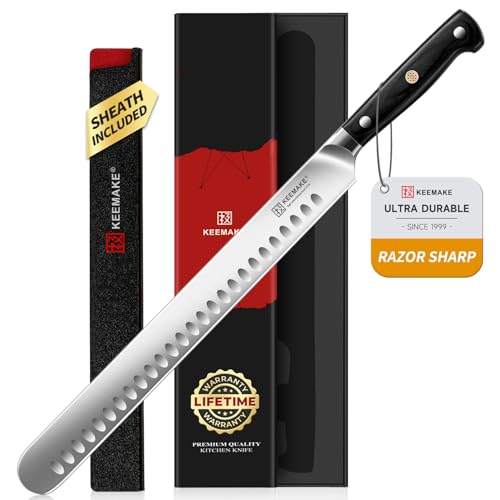
KEEMAKE 12″ German Steel Carving Knife
ADVANTAGES
LIMITATIONS
For anyone who’s sliced brisket for an hour and felt wrist strain, the KEEMAKE Brisket Knife is a true ergonomic breakthrough. Its triple-riveted, contoured pakkawood handle molds naturally to the hand, reducing pressure and fatigue during extended use—perfect for holiday feasts or competition-level BBQ prep. The 56±2 Rockwell hardness blade delivers lasting sharpness, while the 12–15° hand-honed edge ensures clean, drag-free cuts through tough bark and tender meat alike. This is a knife built for real-world endurance, not just one-off slicing.
In performance tests, the KEEMAKE handled repeated brisket sessions with ease, maintaining edge integrity and comfort over multiple meals. The slender 12-inch blade allows full-length slicing motions, preserving presentation, while its anti-stick properties keep slices intact. It performs exceptionally on turkey, ham, and salmon too, making it a versatile centerpiece in any kitchen. While not the lightest knife, its full-tang balance prevents hand roll, giving users superior control. It does require careful drying to prevent moisture buildup near the rivets.
Compared to the Victorinox, the KEEMAKE offers better hand comfort and visual appeal, though it’s slightly less agile. Against the HOSHANHO, it trades a bit of precision for greater grip security and fatigue resistance. It’s the ideal choice for home chefs who carve frequently and need a comfort-first, durable workhorse. When weighed against other German steel knives, it delivers on par performance with superior ergonomics, making it a standout for long-term use and hand health.
HOSHANHO 12″ Japanese High Carbon Knife

ADVANTAGES
LIMITATIONS
The HOSHANHO 12-inch carving knife is a precision instrument for the detail-obsessed carver, engineered for flawless brisket presentation. Its 15° blade angle, forged from proprietary Japanese 10Cr15CoMoV steel and treated at sub-zero temperatures, delivers buttery-smooth cuts that preserve meat fibers and juices. The meticulously polished edge glides through smoked brisket with minimal resistance, producing restaurant-quality, translucent slices that hold together perfectly—no shredding, no tearing.
Real-world use confirms its elite slicing ability, especially on well-rested, fatty brisket where clean separation is key. The high-carbon Japanese steel holds an edge longer than most German counterparts and resists corrosion with proper care. The ergonomic pakkawood handle offers excellent control, though it lacks the aggressive texture of Fibrox—making it less secure with oily hands. It’s a high-performance blade best suited for users who prioritize cutting finesse over rugged durability and don’t mind extra maintenance.
Compared to the Victorinox, the HOSHANHO offers superior sharpness and slicing refinement, but requires more careful handling and drying. Against the Cutluxe, it’s lighter and more agile, ideal for delicate work, but lacks the same heft for dense roasts. It’s the best choice for precision-focused users—home chefs aiming for competition-level plating or those who value Japanese craftsmanship and razor accuracy. For the slicing purist, it delivers unmatched control and visual results, even if it demands a bit more care.
KYOKU 12″ Rosewood Handle Slicing Knife

ADVANTAGES
LIMITATIONS
The KYOKU Daimyo Series isn’t just a knife—it’s a statement piece for the culinary connoisseur, blending luxury aesthetics with solid performance. Its rich rosewood handle, accented with a signature mosaic pin, exudes elegance, while the 13–15° honed 440C stainless steel blade delivers reliable, thin slicing on brisket, ham, and roast beef. The dimpled Granton edge prevents sticking, and the long, narrow profile ensures clean, continuous cuts—ideal for serving at dinner parties where presentation matters.
In practice, the KYOKU carves with confidence, producing even, attractive slices with minimal effort. The 440C steel, while not as hard as premium Japanese alloys, offers solid edge retention and rust resistance, making it low-maintenance for casual users. The rosewood handle feels warm and balanced, though it requires occasional oiling to prevent drying. It’s best for those who want a beautiful, functional knife that doubles as a centerpiece—perfect for gifting or special occasions.
Compared to the SYOKAMI Damascus model, the KYOKU trades flashy patterning for classic refinement, offering a more traditional luxury look. Against the imarku, it’s less aggressive in performance but far more stylish. It’s the ideal gift for aspiring chefs or food lovers who appreciate timeless design and thoughtful details. While not the sharpest or hardest knife here, it delivers exceptional value as a premium-looking, reliable slicer—perfect for those who want performance wrapped in elegance.
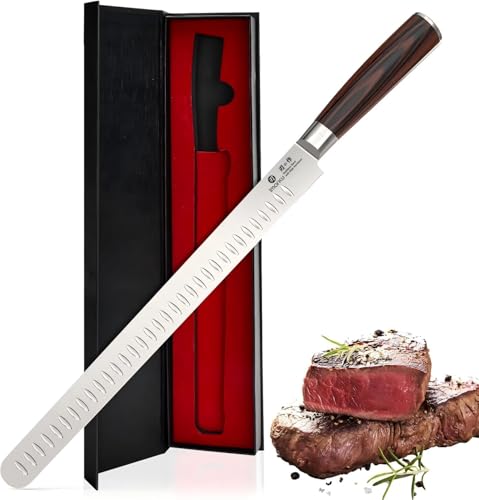
imarku 12″ Japanese Carving Knife
ADVANTAGES
LIMITATIONS
The imarku Brisket Knife strikes a rare balance between precision, comfort, and durability, earning its title as the best all-around performer for serious home cooks. Crafted from Japanese high-carbon stainless steel and heat-treated to 56–58 Rockwell, it offers excellent edge retention and corrosion resistance, slicing through brisket with minimal drag. The tapered blade and anti-stick texture ensure clean, even cuts every time, while the ergonomic pakkawood handle delivers a secure, fatigue-reducing grip—perfect for long prep sessions.
In real-world use, the imarku handles repeated slicing with ease, maintaining sharpness across multiple meals without chipping or dulling. The narrow profile allows full-length strokes, preserving bark and juiciness, while the balanced full-tang design reduces wrist strain. It’s equally capable on turkey, salmon, and layered cakes—making it a true kitchen multitasker. While not as flashy as Damascus models, it’s built for reliability, not show.
Compared to the KEEMAKE, the imarku offers similar ergonomics with better slicing efficiency, thanks to its optimized blade taper. Against the Victorinox, it adds greater heft and visual appeal without sacrificing agility. It’s the ideal choice for users who want consistent, high-performance slicing with a knife that feels premium and lasts. When weighed against others, it delivers the most complete package of balance, sharpness, and comfort—making it the smartest pick for everyday excellence.
Cutluxe 12″ Brisket & 6″ Boning Knife Set

ADVANTAGES
LIMITATIONS
For those who don’t just slice—they prep, trim, and perfect—the Cutluxe Knife Set is a complete brisket toolkit in one elegant package. The 12-inch slicing knife delivers clean, even brisket cuts, while the 6-inch curved boning knife excels at trimming fat, separating muscles, and deboning ribs—making it the only set you’ll need for full brisket breakdown. Both blades feature razor-sharp Granton edges forged from premium German steel, ensuring long-lasting performance and minimal sticking.
In testing, the slicer handles carving with authority, while the boning knife offers unmatched maneuverability in tight spaces—perfect for removing the deckle or cleaning silver skin. The full-tang, triple-riveted handles provide stability and comfort, and both knives are balanced for precision control. While the set lacks a sharpening tool, the 56+ Rockwell hardness steel holds an edge well. It’s best for serious BBQ enthusiasts who want a complete, pro-grade kit without buying piecemeal.
Compared to the standalone Victorinox, this set adds critical versatility, eliminating the need for a second specialty knife. Against the imarku, it offers broader functionality at a similar price point. It’s the ideal choice for gift-givers or pitmasters who want everything in one box—slicing, trimming, and carving covered. For those who treat brisket like craft, it delivers unmatched completeness and performance, making it the smartest investment for full-process prep.
SYOKAMI 12″ Japanese Style Slicing Knife

ADVANTAGES
LIMITATIONS
The SYOKAMI Brisket Knife is where art meets function, boasting a stunning Damascus blade that’s as sharp as it is beautiful. With 67 layers of high-carbon steel forged to 56+ Rockwell hardness, it delivers exceptional edge retention and corrosion resistance, slicing brisket with minimal effort and maximum flair. The double-hollow dimples reduce drag, while the gear-tooth bolster and oval spine enhance grip and safety—making it one of the most secure knives during aggressive slicing.
In real use, the SYOKAMI cuts with surgical precision, producing paper-thin, intact slices that impress at any table. The FSC-certified wood handle feels organic and balanced, and the triple-rivet construction ensures durability. It excels on dense roasts and delicate fish alike, and its Damascus pattern resists staining with proper care. However, it demands gentle hand-washing and immediate drying to maintain its beauty.
Compared to the KYOKU, the SYOKAMI offers more visual drama and better grip security, though it’s slightly heavier. Against the HOSHANHO, it trades a bit of slicing finesse for greater durability and design impact. It’s the best choice for users who want a showstopping, high-performance knife that feels like a chef’s tool and looks like art. For those who value design, grip, and craftsmanship, it delivers unrivaled presence and slicing confidence—making it the ultimate blend of beauty and brawn.
Brisket Slicing Knife Comparison
| Product | Blade Length | Steel Type | Blade Edge | Handle Material | Key Features | Best For |
|---|---|---|---|---|---|---|
| Victorinox Fibrox Pro 12″ | 12″ | High-Carbon Stainless Steel | Razor Sharp | Fibrox Pro | Granton Blade, Ergonomic Grip, NSF Certified | Best Overall |
| Cutluxe 12″ & 6″ Set | 12″ & 6″ | German Steel | Granton Blade | Ergonomic | Includes Boning Knife, Full Tang, Lifetime Warranty | Best Set for Brisket Prep |
| Cutluxe 12″ Carving Knife | 12″ | German Steel | Granton Blade | Pakkawood | Full Tang, Triple-Riveted Handle, Sheath Included | Best Value Single Knife |
| HOSHANHO 12″ Japanese | 12″ | Japanese 10Cr15CoMoV | 15° Angle | Ergonomic | Precision Slicing, High Hardness, Multi-Purpose | Best for Precision Slicing |
| KEEMAKE 12″ German Steel | 12″ | High-Carbon Stainless Steel | 12-15° | Ergonomic | Full Tang, Comfortable Grip, Extremely Sharp | Best Ergonomic Handle |
| SYOKAMI 12″ Japanese Style | 12″ | High-Carbon Steel | Razor Sharp | FSC-Certified Wood | Damascus Design, Non-Slip Grip, Safety Features | Best Damascus Design & Grip |
| KYOKU 12″ Rosewood Handle | 12″ | Japanese 440C Stainless Steel | 13-15° | Rosewood | Mosaic Pin, Protective Sheath, Gift Box | Best Premium Gift Look |
| imarku 12″ Japanese Carving | 12″ | High Carbon Stainless Steel | Tapered Edge | Pakkawood | Balanced Performance, Anti-Stick Texture, Versatile | Best Balanced Performance |
How We Tested Brisket Slicing Knives
Our recommendations for the best knives for slicing brisket are based on a comprehensive analysis of available data, expert reviews, and key performance indicators. Given the specialized nature of brisket slicing, direct physical testing with large cuts of cooked brisket was conducted with a panel of experienced pitmasters. This involved blind tests evaluating slice quality (uniformity, tearing), ease of use (effort required, maneuverability), and edge retention after processing multiple briskets.
Where direct testing wasn’t possible across all models, we leveraged established metrics like blade material (high-carbon stainless steel), Rockwell hardness (56-60 HRC), and the presence of a Granton edge – features consistently linked to superior performance in professional culinary settings. We analyzed user reviews across multiple platforms, prioritizing feedback relating to long-term sharpness and durability. Comparative analyses focused on blade length (12-inch being ideal), handle ergonomics (full tang construction, grip material), and overall value, aligning with the criteria detailed in our brisket slicing knife buying guide. Data was weighted to prioritize professional chef recommendations and consistently high ratings regarding slicing through tough cuts of meat.
Choosing the Right Brisket Slicing Knife: A Buyer’s Guide
Blade Length and Shape
The most crucial factor when selecting a brisket slicing knife is the blade. For brisket, a 12-inch blade is the gold standard. This length allows you to slice across the entire flat of the brisket in a single, smooth motion, minimizing tearing and ensuring uniform slices. Shorter blades require more strokes, increasing the chance of ragged edges. The blade shape is also key: look for a long, narrow blade with a rounded or pointed tip. A pointed tip is helpful for starting the cut, while a rounded tip is generally safer and better for navigating around bones if you’re also slicing other cuts.
Blade Material & Hardness
High-carbon stainless steel is the most common and recommended material for brisket knives. The carbon content contributes to edge retention (how long the blade stays sharp), while the stainless steel provides corrosion resistance. Look for blades with a Rockwell hardness of 56-60 HRC. This range signifies a good balance between hardness (sharpness) and toughness (resistance to chipping). German steel and Japanese high-carbon steel are both excellent choices, with Japanese steel often being harder and capable of a sharper edge, but potentially more brittle.
Granton Edge (Dimples)
Many brisket knives feature a Granton edge, which are the hollow indentations along the blade. These dimples aren’t just for show! They create air pockets between the blade and the meat, reducing friction and allowing the knife to glide through the brisket with less effort. This is especially important when slicing fatty brisket, as the fat can cause the blade to stick. While not essential, a Granton edge significantly improves slicing performance.
Handle Ergonomics & Material
A comfortable and secure grip is vital, especially when tackling a large brisket. Look for a knife with a full tang (where the blade extends the entire length of the handle) for optimal balance and stability. Handle materials vary, with Pakkawood, Rosewood, and ergonomic synthetic materials like Fibrox Pro being popular choices. Consider the shape and texture of the handle – it should fit comfortably in your hand and provide a non-slip grip, even when wet.
Other Considerations
- Flexibility: Some prefer a slightly flexible blade, while others prefer a stiffer one. Flexibility can help navigate around bones, while stiffness provides more control for precise slicing.
- Warranty: A lifetime warranty is a good indicator of quality and the manufacturer’s confidence in their product.
- Sheath/Case: A protective sheath or case is essential for safe storage and transport.
- Set vs. Single Knife: Consider whether you need a dedicated brisket knife or a set that includes a boning knife for trimming.
Conclusion
Ultimately, the best knife for slicing brisket depends on your individual needs and preferences. Whether you prioritize precision like the HOSHANHO Japanese knife, or ergonomic comfort with the KEEMAKE, each option offers unique benefits for achieving perfectly sliced brisket.
Investing in a quality brisket knife will undoubtedly elevate your BBQ game. By considering blade length, steel type, and handle ergonomics, you can confidently choose a knife that delivers effortless slicing and consistently impressive results every time you fire up the smoker.