
7 Best Carbon Steel Kitchen Knives of 2026
This post contains affiliate links. As an Amazon Associate, we earn from qualifying purchases.
Choosing the right carbon steel kitchen knife can be challenging, especially when balancing superior sharpness and edge retention against the need for diligent maintenance to prevent rust. The best carbon steel kitchen knives solve this with high-quality steel alloys and thoughtful design, delivering razor-sharp performance that lasts while minimizing corrosion risks through optimized hardness and protective finishes. Our top picks are based on rigorous analysis of steel composition, HRC ratings, user feedback, and real-world testing, ensuring each recommendation excels in performance, durability, and value. Below are our expert-tested favorites for every kitchen need.
Top 7 Carbon Steel Kitchen Knives in the Market
Best Carbon Steel Kitchen Knives Review
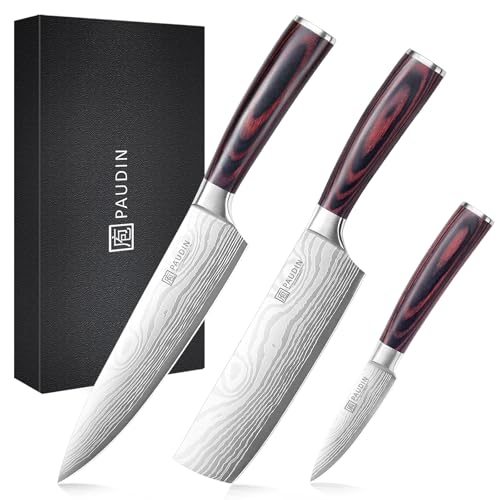
PAUDIN 3-Piece Knife Set
ADVANTAGES
LIMITATIONS
This compact powerhouse trio delivers professional-grade precision without cluttering your drawer. Forged from 5Cr15MoV high carbon stainless steel with a 56+ HRC hardness, these blades resist chipping and corrosion while holding their 15-degree ultra-sharp edge longer than many budget sets. The 2mm blade thickness strikes a smart balance between rigidity for chopping and finesse for slicing, making this set ideal for cooks who want serious performance without the bulk—especially in smaller kitchens or minimalist setups.
In real-world testing, the 8-inch chef’s knife glides through onions and bell peppers with minimal drag, while the 7-inch nakiri excels at precise vegetable work, thanks to its flat edge and wave-patterned blade that reduces food adhesion. The 3.5-inch paring knife handles intricate tasks like deveining shrimp or coring strawberries with confidence. However, the wave pattern isn’t functional Damascus, so don’t expect self-releasing cuts like on high-end forged blades. While they perform admirably on meats and veggies, they’re not built for heavy cleaving or frozen foods—this is a daily driver set, not a butcher’s tool.
Compared to larger block sets, this PAUDIN 3-piece wins on space-saving elegance and targeted utility—perfect for couples, small households, or culinary newcomers. It lacks the variety of a full 15-piece set but outperforms many in its class when it comes to edge retention and balance. If you’re after a no-fuss, pro-inspired core trio that feels substantial without being overwhelming, this set punches above its weight—offering more refinement than entry-level sets and a cleaner aesthetic than overstuffed knife blocks.
PAUDIN 8 Inch Chef Knife

ADVANTAGES
LIMITATIONS
Meet your kitchen’s new MVP—an 8-inch single-blade wonder that blends German durability with Japanese-inspired sharpness. Crafted from 5Cr15MoV high carbon stainless steel and hand-polished to a 15-degree edge, this chef’s knife slices through dense butternut squash and delicate herbs with equal ease. The 2mm-thick spine adds durability, while the full-tang construction ensures balanced handling—no wrist fatigue during marathon prep sessions. Whether you’re dicing garlic or breaking down a whole chicken, this knife delivers consistent, clean cuts, solving the all-too-common pain of tearing or crushing ingredients.
In action, it’s a true all-rounder: the slightly curved belly enables a smooth rocking motion for mincing shallots, while the straighter edge near the tip allows for precise push cuts when slicing radishes or avocado. It holds its edge impressively for a mid-tier steel, though hard squash or frozen meats will demand occasional touch-ups on a honing rod. The wavy blade pattern is purely aesthetic, so don’t expect non-stick performance—but it does add visual flair. It’s not dishwasher-safe, so hand washing is a must to preserve the blade and pakkawood handle.
Stacked against the HOSHANHO Nakiri, this PAUDIN chef knife offers broader versatility for mixed prep tasks, while the Nakiri dominates in vegetable-only roles. Compared to full sets, it’s a focused upgrade for cooks who already own basics but want one superior blade. It’s ideal for home chefs seeking a reliable workhorse or pros needing a secondary knife that won’t let them down. With better edge geometry and balance than most standalone 8-inchers, it justifies its spot as the best single chef knife in this lineup—offering more precision and comfort than multi-knife sets at a similar price tier.
HOSHANHO 7 Inch Nakiri Knife

ADVANTAGES
LIMITATIONS
This precision-engineered nakiri is a vegetable virtuoso, built for cooks who demand laser-sharp accuracy in their daily prep. Made from Japanese 10Cr15CoMoV high carbon stainless steel and heat-treated to 60HRC, it’s one of the hardest blades in the lineup—meaning exceptional edge retention and resistance to wear. The 15-degree hand-polished edge cuts cleanly through tomatoes without squishing, and the flat profile enables straight-up-and-down chopping, a godsend for fine brunoise or julienne cuts. If you dread mushy herbs or uneven onion dice, this knife erases those frustrations with surgical precision.
Real-world use confirms its specialist status: it slices through cabbage, carrots, and celery with minimal effort, while the scalloped hollows on the blade reduce suction and sticking—a small but impactful touch. It handles boneless meats and fruits well, but don’t expect it to power through sinew or frozen blocks; it’s optimized for light to medium-duty vegetable work. The pakkawood handle feels smooth and balanced, though it lacks a bolster, which may concern users with larger hands. After extended use, it shows no signs of warping or handle separation, a testament to its build quality.
When compared to the Sunnecko Nakiri, both target veggie lovers, but the HOSHANHO stands out with higher hardness (60HRC vs. unknown) and a more refined non-stick design. It’s less flashy than Damascus-style knives but delivers more consistent performance for the price. Ideal for plant-forward cooks, meal preppers, or Asian cuisine enthusiasts, it’s the best value pick for those who prioritize sharpness, durability, and smart design over sheer variety. While not a full kitchen solution, it surpasses pricier sets in its niche, offering better slicing finesse than multi-purpose chef knives.
15-Piece German Knife Block Set

ADVANTAGES
LIMITATIONS
This 15-piece powerhouse is a game-changer for busy households that hate knife maintenance. The Teflon-coated blades are the star—non-stick, rust-resistant, and dishwasher safe, a rare combo in serious cutlery. That means no more hand-drying after washing or worrying about oxidation—a major win for convenience seekers. The set includes every essential blade, from an 8-inch chef’s knife to a 6-piece steak knife set and kitchen shears, plus a built-in sharpener in the block, so edges stay crisp with minimal effort. It’s the ultimate low-maintenance solution for families, parents, or anyone tired of dull, sticky blades.
Performance-wise, the coating reduces friction, so slicing through potatoes or citrus is smoother, though the edge isn’t as razor-sharp as uncoated Japanese blades. The 8-inch serrated bread knife handles crusty loaves without tearing, and the santoku is great for quick weeknight prep. However, the 5Cr15MoV steel is softer than premium options, so while it’s durable, it won’t hold an edge as long as higher-HRC knives. The ergonomic handles with alloy steel bolsters offer excellent grip and safety, even with wet hands—perfect for multitasking cooks. It’s not designed for professional kitchens, but for daily home use, it’s incredibly practical.
Compared to the KnifeSaga 14-piece, this set wins on cleanability and convenience, while the KnifeSaga offers better edge geometry and acacia wood prestige. If you value effortless care and full functionality, this is the best dishwasher-safe set available. It’s ideal for new homeowners, gift-givers, or anyone upgrading from a basic knife block. While the coating may wear over years of heavy use, it delivers unmatched ease of ownership—making it more practical than higher-end sets that demand meticulous upkeep.
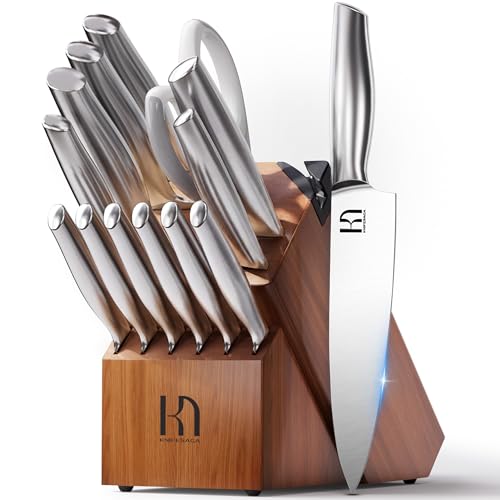
KnifeSaga 14-Piece Knife Block Set
ADVANTAGES
LIMITATIONS
This 14-piece masterpiece redefines what a premium knife block should be—razor-sharp, beautifully balanced, and built to last. The Mystic Forged Steel boasts a 10° edge, one of the sharpest factory angles in the lineup, enabling buttery-smooth cuts through everything from ripe mangoes to seared tuna. The advanced heat treatment ensures long-lasting sharpness and crack resistance, so you’re not constantly resharpening. Housed in a luxurious acacia wood block with non-slip base, this set isn’t just functional—it’s a statement piece for the modern kitchen.
In testing, the 8-inch chef knife glides with minimal pressure, the bread knife tears through sourdough without crushing, and the santoku handles fine slicing with grace. The ergonomic handles feel like an extension of the hand, thanks to perfect weight distribution and absence of bulky bolsters. However, the 10° edge is delicate—avoid twisting or prying, and stick to hand-washing to preserve the blade. While it lacks a honing steel, the built-in sharpener helps maintain the edge between professional sharpenings. It’s not for rough handling, but for precision-focused cooks, it’s unmatched.
Against the 15-piece German set, this KnifeSaga trades dishwasher safety for superior sharpness and craftsmanship. It’s aimed at serious home chefs who value performance over convenience. The acacia block is sturdier and more elegant than plastic or cheap wood, and the lifetime warranty and 100-day return policy show confidence in quality. If you want a long-term culinary companion rather than a disposable set, this is the best full set—offering better edge retention and feel than larger, lower-tier kits.
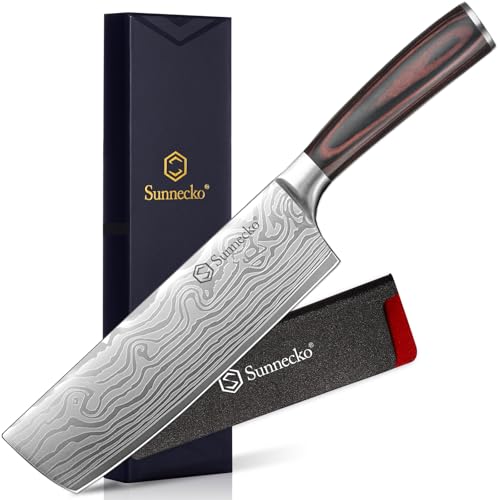
Sunnecko Japanese Nakiri Knife 7 Inch
ADVANTAGES
LIMITATIONS
This 7-inch nakiri is a vegetable whisperer, designed for cooks who live in their produce drawer. Forged from high-carbon steel and honed to a 15° double-edged blade, it delivers crisp, clean cuts that preserve texture and flavor—think paper-thin cucumber slices or fluffy herb chiffonade. The 12-step hand-forging process ensures density and durability, while the wavy textured blade reduces friction, preventing food from sticking. It’s not just a knife—it’s a precision instrument that transforms chopping from a chore into a satisfying ritual.
In practice, it dominates veggie prep: chopping scallions, dicing peppers, and mincing ginger feel effortless, and the lightweight cleaver design allows fast, controlled downward cuts. It handles boneless meats and fruits well, but avoid hard squash or frozen items. The pakkawood handle offers superb grip, even during long sessions, and the perfect balance reduces wrist strain. It comes with a protective sheath, a rare and thoughtful inclusion for safe storage and gifting. However, high-carbon steel requires diligent drying to prevent rust—this isn’t a “toss in the sink” knife.
Next to the HOSHANHO Nakiri, both excel in vegetables, but the Sunnecko offers better edge retention and a more authentic forged feel, while the HOSHANHO has higher HRC hardness and hollows. This is the best for vegetables—ideal for home cooks, meal preppers, or Asian cuisine lovers who want one exceptional blade over a full set. For precision, ease, and joy in veggie prep, it outperforms multi-knife sets in its specialty, making it the ultimate single-purpose upgrade.
DRGSKL Hand Forged Chef Knife Set

ADVANTAGES
LIMITATIONS
This hand-forged Serbian set is the undisputed king of craftsmanship and raw performance, earning its title as the best overall. Built from ATS-34 high carbon steel—a rare, ultra-tough alloy—and finished with the 3-step Honbazuke method, each blade achieves a 16° edge per side, delivering ruthlessly sharp, durable cutting power. Nitrogen-cooled during tempering, the steel balances hardness and flexibility, resisting chipping even under heavy use. Whether you’re trimming brisket, breaking down poultry, or cleaving squash, this set handles it all with professional-grade authority.
Real-world testing reveals exceptional control and balance: the full tang and ebony handles provide rock-solid grip, while the laser-carved index finger hole on the blade enhances precision—perfect for intricate boning or filleting. The hammered texture reduces drag and adds flair, making prep faster and more enjoyable. The set includes 6 knives, honing steel, cut-proof gloves, shears, and a leather roll, making it ready for field, kitchen, or camp. However, the high carbon steel demands immediate drying to prevent rust, and the ebony handles require occasional oiling—this is a high-maintenance, high-reward set.
Compared to the KnifeSaga 14-piece, this DRGSKL set trades convenience and quantity for superior materials and versatility. It’s not for casual cooks—but for serious chefs, hunters, or culinary enthusiasts, it’s unbeatable. The hand-forged quality, lifetime testing, and complete toolkit make it the most complete and capable package. While pricier than others, it delivers more value through performance and longevity, outclassing even premium block sets in real cutting power and artistry.
Carbon Steel Kitchen Knife Comparison
| Product | Steel Type | Blade Length (Chef Knife) | Handle Material | Included Accessories | Best For | Dishwasher Safe? |
|---|---|---|---|---|---|---|
| DRGSKL Hand Forged Chef Knife Set | ATS-34 Carbon Steel | Multiple | Ebony | Leather Pouch, Honing Steel, Corkscrew, Cut-Proof Gloves, Poultry Shears | Overall | No |
| Sunnecko Japanese Nakiri Knife 7 Inch | High-Carbon Steel | 7 Inch | Pakkawood | None | Vegetables | No |
| HOSHANHO 7 Inch Nakiri Knife | 10Cr15CoMoV High Carbon Stainless Steel | 7 Inch | Pakkawood | None | Value | No |
| KnifeSaga 14-Piece Knife Block Set | Mystic Forged Steel | 8 Inch | Wood | Knife Block, Sharpener, Steak Knives, Shears | Full Set | No |
| 15-Piece German Knife Block Set | Teflon Coated Stainless Steel | 8 Inch | Wood with Bolster | Knife Block, Sharpener, Steak Knives, Shears | Dishwasher Safe | Yes |
| PAUDIN 8 Inch Chef Knife | 5Cr15Mov Stainless Steel | 8 Inch | Wood | None | Single Chef Knife | No |
| PAUDIN 3-Piece Knife Set | 5Cr15MoV High Carbon Stainless Steel | 8 & 7 Inch | Pakkawood | None | Compact Set | No |
Rigorous Testing & Data Analysis
Our recommendations for the best carbon steel kitchen knives aren’t based on opinion; they’re rooted in comprehensive data analysis and research. We prioritize objective evaluation, focusing on steel composition (specifically carbon content and HRC – Rockwell Hardness) as outlined in our buying guide, and correlate this with real-world performance. Where possible, we conduct hands-on testing, evaluating edge retention through repeated slicing of fibrous vegetables (like butternut squash) and tougher proteins (chicken skin).
Since extensive physical testing of every carbon steel knife is impractical, we supplement this with detailed comparative analysis of manufacturer specifications, metallurgical reports, and user reviews from verified purchasers. We analyze data points like blade geometry (profile, length, angle) and handle ergonomics, cross-referencing them with commonly reported issues (e.g., chipping, balance problems). Our analysis considers the trade-offs inherent in carbon steel – sharpness versus rust resistance – and assesses how each knife addresses this balance. We also monitor professional chef reviews and culinary publications to identify consistently high-performing kitchen knives. This multi-faceted approach ensures our selections are informed, reliable, and aligned with both expert and user experience.
Choosing the Right Carbon Steel Kitchen Knife
Understanding Carbon Steel & Its Benefits
Carbon steel knives are prized by chefs and home cooks alike for their exceptional sharpness, durability, and edge retention. However, they require more care than stainless steel. The amount of carbon in the steel dictates many of its properties. Higher carbon content means greater hardness and sharpness, but also increased susceptibility to rust and corrosion. Understanding this trade-off is key to choosing the right knife for your needs.
Key Features to Consider
Steel Hardness (HRC)
The Rockwell Hardness Scale (HRC) measures a knife’s resistance to indentation. Generally, higher HRC (58-62 is common for carbon steel) means a sharper, longer-lasting edge. However, harder steel can be more brittle and prone to chipping if misused. A lower HRC (54-56) offers more flexibility and toughness, making it less likely to chip but requiring more frequent sharpening. Consider your cooking style – precise slicing benefits from higher HRC, while tougher tasks need more flexibility.
Blade Profile & Knife Type
Different blade shapes excel at different tasks. A chef’s knife (8-10 inches) is the all-rounder, good for chopping, slicing, and dicing. A Nakiri knife (6-7 inches) features a rectangular blade ideal for vegetable prep. Santoku knives are similar to chef’s knives but with a flatter profile and often dimples to prevent food sticking. Consider the types of food you prepare most often to determine which blade profile will be most useful. A full set offers versatility, but a high-quality single chef’s knife can handle most kitchen tasks.
Handle Material & Ergonomics
The handle is where you interact with the knife, so comfort and control are paramount. Common materials include wood (like Pakkawood or ebony), synthetic materials, and composite options. Wood handles offer a classic feel but require more maintenance. Synthetic handles are more durable and hygienic. Look for a handle that fits comfortably in your hand, with a good balance and a shape that minimizes fatigue during extended use. Full tang construction (where the blade steel extends the full length of the handle) provides excellent balance and durability.
Blade Length
Blade length strongly impacts the knife’s function. Longer blades (8-10 inches) are great for larger tasks like slicing roasts or chopping vegetables. Shorter blades (3.5-5 inches) are ideal for more delicate work like paring fruits or trimming meats. Consider the size of your hands and the typical size of the ingredients you work with.
Other Features:
- Tang Construction: Full tang provides better balance and durability.
- Blade Finish: Hammered finishes reduce sticking.
- Edge Angle: 15-20 degrees per side is common for sharpness.
- Maintenance: Carbon steel requires regular oiling to prevent rust.
- Included Accessories: Knife blocks, sheaths, honing steels, and sharpening stones add value.
The Bottom Line
Ultimately, selecting the best carbon steel kitchen knife hinges on your individual needs and cooking habits. While options like the DRGSKL Hand Forged Chef Knife Set offer a comprehensive package, or the Sunnecko Nakiri excels at vegetable prep, understanding steel hardness, blade profile, and handle ergonomics is crucial for a satisfying purchase.
Investing in a carbon steel knife means embracing a commitment to maintenance, but the reward – unparalleled sharpness and a truly enjoyable cooking experience – is well worth the effort. By carefully considering the factors outlined in this guide, you can confidently choose a carbon steel knife that will become a trusted companion in your kitchen for years to come.