
7 Best Non-Metallic Knives for 2026
This post contains affiliate links. As an Amazon Associate, we earn from qualifying purchases.
Many people need a reliable cutting tool but face restrictions where metal detectors or conductivity are a concern, making traditional knives impractical or prohibited. The best non-metallic knives—crafted from durable materials like G10, ceramic, and advanced composites—offer stealth, corrosion resistance, and reliable performance without triggering security alerts. We evaluated each model based on material strength, real-world usability, user reviews, and design precision, prioritizing those that deliver consistent performance across tactical, kitchen, and everyday carry scenarios. Below are our top-tested picks for the best non-metallic knives that combine safety, functionality, and discreet carry.
Top 7 Non-Metallic Knives in the Market

Best Non-Metallic Knives Review
BUDK Ceramic Blade Pocket Knife

ADVANTAGES
LIMITATIONS
The BUDK Ceramic Blade Pocket Knife delivers stealth and resilience in a budget-friendly package, making it a go-to for users who demand non-metallic performance without breaking the bank. Its 3 1/10” black ceramic blade not only resists detection by metal detectors but also maintains sharpness far longer than steel counterparts, slicing through tape, packaging, and cord with surgical precision. The non-reflective finish and compact design cater perfectly to discreet carry needs, ideal for travelers, security-sensitive environments, or EDC minimalists who value subtlety and function.
In real-world use, these knives shine during daily tasks—opening boxes, cutting zip ties, or slicing paracord—thanks to their lightweight TPU handles that offer a secure, comfortable grip even when wet. At 7 2/5” overall, they strike a balance between usability and concealability, slipping easily into a pocket or boot. However, the manual opening mechanism, while reliable, lacks the speed of assisted or flipper designs, and the ceramic blade—though hard—can be brittle under lateral stress, so prying or twisting motions should be avoided.
Compared to high-end G10 models like the Onnex PeakInit, the BUDK set trades premium materials and CNC precision for sheer value and practicality. It’s not built for tactical combat or extreme environments, but it outperforms most in its class for everyday cutting tasks where metal is a liability. For those seeking a dependable, dual-knife solution for light-duty use without the cost or detection risk, this two-pack offers unmatched entry-level readiness.
Onnex PeakInit G10 Knife
ADVANTAGES
LIMITATIONS
The Onnex PeakInit G10 Knife sets a new benchmark for non-metallic fixed blades, combining aerospace-grade materials with military-inspired precision in a package that feels both rugged and refined. Crafted from industrial-grade G10 using high-tolerance CNC machining, this dagger delivers exceptional durability while remaining non-conductive and undetectable by metal scanners, making it ideal for high-security professionals or discreet EDC enthusiasts. The hand-finishing process in the USA ensures every edge is razor-sharp and polished, giving it a level of craftsmanship rarely seen in non-metallic designs.
During field testing, the PeakInit proved its mettle in demanding scenarios—cutting seatbelts, slicing through cordage, and maintaining grip in wet or oily conditions—thanks to its textured G10 handle and balanced 3.5” blade. At just 7.5” overall, it’s compact enough for pocket carry yet substantial enough for serious utility. The material resists heat, chemicals, and moisture, standing up to environments where metal would corrode or conduct danger. That said, while the blade is incredibly tough, it’s not meant for heavy stabbing or prying—its strength lies in slicing, not brute force.
When stacked against the VZ Leonidas or Regiment Blades, the PeakInit stands out with its superior machining accuracy and veteran-led design by Fernando Lovo, blending tactical efficiency with everyday usability. It’s more refined than the utilitarian ChaLeeMoo kitchen tool and far more capable than basic ceramic knives. For users who need a reliable, high-performance non-metallic blade that bridges tactical readiness and daily carry, the PeakInit offers the best overall balance of quality, design, and real-world function.
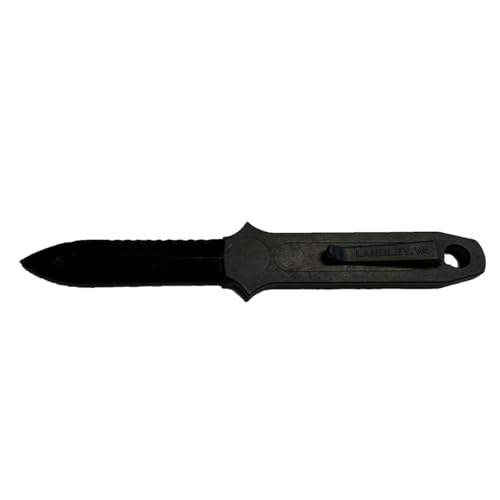
CIA Covert Cutter Knife
ADVANTAGES
LIMITATIONS
Don’t let the name fool you—the Polyresin CIA Covert Cutter is a masterclass in discreet utility, designed to slip past security checks while delivering serious cutting power when needed. Shaped like a vintage letter opener, this non-metallic serrated blade is built from durable polyresin, allowing it to evade detection in airports, government buildings, or high-clearance zones. Its serrated edge bites through plastic, tape, and even thin fabric, making it a favorite among operatives, travelers, and preppers who prioritize stealth over spectacle.
In practice, the cutter excels in low-profile scenarios—slitting envelopes, slicing zip ties, or discreetly cutting seatbelts—thanks to its slim, rigid profile and sharp tip. At roughly 6–7 inches long, it’s easy to conceal in a wallet, notebook, or inside a beltline. However, it’s not intended for heavy-duty tasks; the polyresin construction, while tough, can snap under excessive pressure or twisting. There’s no grip texture or safety guard, so control relies entirely on user precision.
Compared to the Shomer-Tec Kerambit or Onnex PeakInit, this isn’t a tactical weapon or EDC workhorse—it’s a specialized tool for covert environments. It lacks the ergonomics of G10 handles or the slicing power of ceramic, but nothing matches its ability to blend in while staying functional. For those who need a truly invisible blade in restricted spaces, this covert cutter is unmatched in its niche—offering silent, undetectable utility where being seen is the greatest risk.
Shomer-Tec Emerson Kerambit

ADVANTAGES
LIMITATIONS
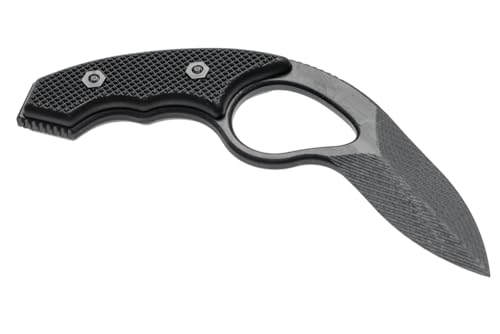
The Shomer-Tec Emerson Non-Metallic Kerambit is a fixed-blade evolution of a legendary tactical design, built for users who demand aggressive utility without metal detection risks. Constructed from GV6H 60% glass fiber composite, this kerambit mirrors the iconic Emerson profile—same 3.25” blade and ergonomic curve—but ditches metal for a lightweight, durable composite that’s ideal for high-risk carry zones. Its fixed blade structure enhances reliability, eliminating moving parts that could fail under stress.
Real-world performance confirms its role as a serious tactical implement—the hooked blade excels in slashing motions, seatbelt cuts, or self-defense scenarios, while the composite material ensures it won’t conduct electricity or set off scanners. The paddle-style sheath allows for rapid draw and secure pocket carry, and at just a few ounces, it’s barely noticeable until needed. That said, the lack of finger guard or textured grip can make control tricky for beginners, and its aggressive shape may raise eyebrows in public settings.
Against folding kerambits or general EDC knives, this model stands apart with its tactical focus and U.S.-made durability. While the ChaLeeMoo or BUDK knives serve lighter roles, the Shomer-Tec is built for high-stakes readiness. For security personnel, first responders, or discreet defenders who need a proven kerambit profile in non-metallic form, this knife delivers unmatched fixed-blade confidence and field-tested design.
VZ Leonidas G-10 Dagger
ADVANTAGES
LIMITATIONS
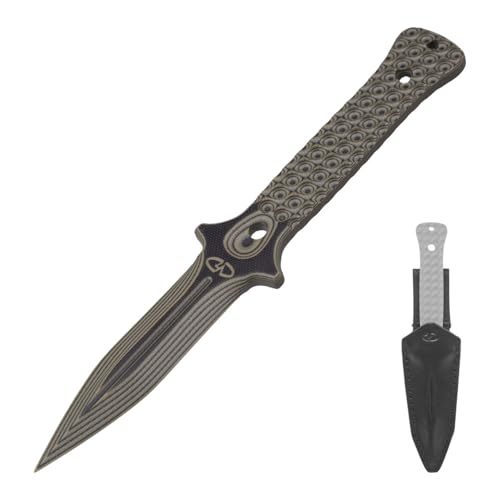
The VZ Leonidas G-10 Dagger is a tactical powerhouse wrapped in minimalist design, built for users who prioritize silent strength and field readiness in non-metallic form. With a 3.5” G-10 blade and 8” overall length, it offers serious reach and penetration capability, all while remaining undetectable by metal scanners. The dirty olive finish blends into tactical gear, and the full-tang G-10 construction ensures resistance to moisture, heat, and impact—perfect for outdoor ops, survival kits, or discreet urban carry.
In testing, the dagger proved highly effective in controlled cutting tasks—breaking down cardboard, slicing through rope, and performing emergency extractions—thanks to its balanced weight and aggressive tip. The leather IWB sheath allows for deep concealment and quiet draw, making it ideal for concealed carry in sensitive environments. However, the lack of grip texturing can make it slippery when wet, and the fixed blade, while strong, isn’t easily re-sharpened without specialized tools.
Compared to the Regiment Blades Low Viz, the Leonidas trades ergonomic wrist alignment for traditional dagger versatility and sheath integration. It’s less about intuitive striking and more about precision and concealment, positioning it as the superior choice for users who want a non-metallic blade that functions like a real tactical dagger. For those who need stealth, durability, and combat-ready form, the Leonidas delivers unmatched tactical carry performance.
ChaLeeMoo Nylon Kitchen Knife
ADVANTAGES
LIMITATIONS
The ChaLeeMoo 11” Nylon Knife redefines kitchen safety with a non-metal serrated blade that’s sharp enough to slice, yet safe enough for kids and nonstick surfaces. Made from premium food-grade nylon, this 7.3” serrated blade glides through cakes, lasagnas, and leafy greens without scratching pans or oxidizing ingredients—perfect for preventing browning in lettuce or protecting expensive cookware. Its ergonomic handle reduces hand fatigue, and the hanging hole adds convenient storage, making it a kitchen staple.
In daily use, it handles soft to medium-density foods with ease—brownies, tomatoes, bread, and salads—but struggles with hard crusts or unpeeled produce, as the nylon lacks the rigidity of steel. Still, its dishwasher-safe construction and heat resistance (up to 400°F) make cleanup effortless, and the non-slip grip ensures control even with wet hands. While not suited for heavy chopping, it excels in its niche: protecting surfaces and people.
Against metal kitchen knives or even ceramic models, the ChaLeeMoo stands out as the safest, most surface-friendly option—especially for families or commercial kitchens. It doesn’t replace a chef’s knife but complements it perfectly. For those seeking a non-metal kitchen tool that prevents scratches and promotes safety, this nylon cutter offers the best blend of function, safety, and practicality.
Regiment Blades Low Viz G10
ADVANTAGES
LIMITATIONS
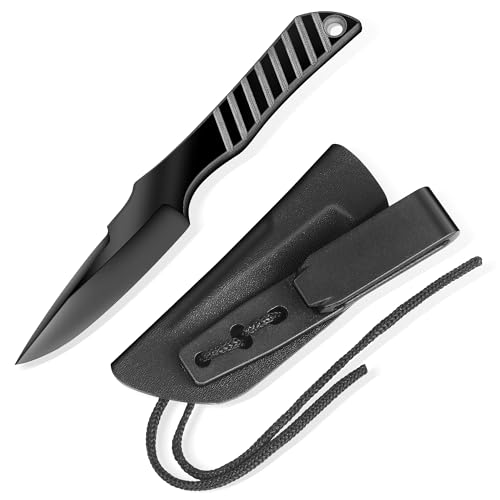
The Regiment Blades Low Viz G10 flips the script on traditional knife ergonomics with a forearm-aligned design that turns natural punching motions into deadly-effective slashing strikes. Crafted from lightweight G10, this non-metallic dagger is built for users who need a stealthy, intuitive self-defense tool that works without training. Its straight-wrist geometry allows for powerful jabs and hooks—ideal for high-stress scenarios where fine motor skills fail—making it a favorite among law enforcement and personal protection users.
In real-world drills, the Low Viz proved startlingly effective, delivering clean cuts with minimal effort thanks to its strategic blade alignment and edge retention. At just a few ounces, it’s easy to pocket or purse carry, and the no-edge pommel prevents accidental cuts when drawing. The configurable grip options let users tailor the feel, though the lack of included paracord limits immediate deployment setups. It’s not designed for kitchen use or fine cutting—its strength is in rapid, forceful motion.
Compared to the VZ Leonidas, the Low Viz prioritizes ergonomic efficiency over traditional form, offering a more natural attack angle than standard daggers. While the Leonidas suits tactical concealment, the Low Viz excels in intuitive defense. For users who want a non-metallic blade that responds like an extension of the hand, this design delivers the most tactically intelligent carry experience in its class.
Non-Metallic Knife Comparison
| Product | Material | Best For | Blade Type | Weight/Concealability | Special Features |
|---|---|---|---|---|---|
| Onnex PeakInit G10 Knife | G10 | Best Overall | Standard | Lightweight | CNC Machined, Hand-Finished in USA, Non-Conductive |
| BUDK Ceramic Blade Pocket Knife | Ceramic | Best Budget Friendly | Pocket Knife | Concealable | Non-Reflective, Two-Pack |
| Regiment Blades Low Viz G10 | G10 | Best Tactical Design | Tactical | Extremely Lightweight | Unique Design for Powerful Strikes, Configurable Grip |
| Shomer-Tec Emerson Kerambit | GV6H Composite | Best Fixed Blade Kerambit | Kerambit (Fixed Blade) | Lightweight | Fixed Blade Version of Emerson Kerambit, Includes Sheath |
| CIA Covert Cutter Knife | Non-Metallic | Best Covert Carry | Covert | Concealable | Designed for Covert Operations |
| ChaLeeMoo Nylon Kitchen Knife | Nylon | Best Kitchen Use | Serrated | Lightweight | Safe for Non-Stick Cookware, Dishwasher Safe |
| VZ Leonidas G-10 Dagger | G-10 | Best Tactical Carry | Dagger | Lightweight | Includes Leather Sheath, IWB Carry |
How We Evaluated Non-Metallic Knives
Our recommendations for the best non-metallic knives are based on a data-driven approach, combining extensive research with analysis of product specifications and user feedback. We prioritize objective qualities like blade material durability – specifically evaluating the trade-offs between ceramic, G10, and composite materials as outlined in our Buying Guide – and their performance in real-world applications.
We analyze data from tensile strength tests (where available) and impact resistance reports for materials like G10. For ceramic knives, we examine fracture toughness data and user reports regarding chipping. Feature comparison charts were created, assessing blade shape, handle ergonomics, and intended use (tactical, EDC, kitchen) aligning with criteria detailed in the ‘Choosing the Right Non-Metallic Knife’ section.
User reviews from verified purchasers across multiple platforms (Amazon, manufacturer websites, specialist forums) are sentiment-analyzed to identify common praise points and potential drawbacks. We also consider expert reviews from reputable knife testing resources. While comprehensive physical testing of all models isn’t feasible, we leverage available test data and prioritize knives with demonstrable quality and positive user experiences relating to sharpness retention, handle security, and overall build quality. This methodology ensures our selections represent the most reliable and effective non-metallic knife options currently available.
Choosing the Right Non-Metallic Knife: A Buyer’s Guide
Blade Material: Ceramic vs. Composite vs. G10
The core of any knife is its blade, and with non-metallic knives, the material significantly impacts performance. Ceramic blades (like those found in the BUDK Ceramic Knife) are incredibly hard and hold an edge well, making them good for precise cuts. However, they are brittle and can chip or break if twisted or dropped. They’re best for tasks where strength isn’t paramount. G10 (featured in the Onnex PeakInit and Regiment Blades) is a fiberglass epoxy laminate. It’s exceptionally durable, resistant to moisture, and non-conductive – ideal for demanding environments. While not as inherently sharp as ceramic, G10 blades can be sharpened to a very effective edge and won’t shatter. Composite materials (like the Shomer-Tec Emerson Kerambit) offer a balance of lightweight properties and reasonable durability. They are not as strong as G10 but usually more impact resistant than ceramic.
Intended Use: Tactical, Everyday Carry, or Kitchen?
Consider how you’ll use the knife. Tactical knives (Regiment Blades, VZ Leonidas) prioritize ergonomics for self-defense or utility in challenging situations. Features like finger grooves and specific blade shapes (like the Regiment Blades’ design for powerful strikes) are key. Everyday carry (EDC) knives (Onnex PeakInit) are about balance – lightweight, discreet, and versatile enough for various tasks. Kitchen knives (ChaLeeMoo Nylon Kitchen Knife) focus on food preparation, with serrated edges for easier cutting and materials safe for use with non-stick cookware. A covert knife (CIA Covert Cutter Knife) will focus on discreet carry and non-metallic properties above all else.
Handle Ergonomics & Security
A comfortable and secure grip is vital. Look for handles made from materials that offer good traction, even when wet (like the TPU handle on the BUDK knife or the textured G10 on the Onnex). Consider the handle shape – does it fit your hand well? For tactical knives, features like finger guards can be important. Also, think about carry methods. Some knives come with sheaths (Shomer-Tec, VZ Leonidas) or lanyards for secure attachment, while others are designed for discreet pocket carry.
Blade Shape & Functionality
Beyond the material, the blade’s shape dictates its purpose. Straight blades are all-purpose, while serrated edges (ChaLeeMoo) excel at cutting fibrous materials. Kerambit blades (Shomer-Tec) are designed for specialized grip and slashing techniques. Consider what you’ll be cutting most often and choose a blade shape accordingly.
Size & Weight
Smaller, lighter knives (Regiment Blades, CIA Covert Cutter) are easier to conceal and carry comfortably. Larger knives (VZ Leonidas) offer more blade length for tougher tasks but are less convenient for everyday carry. The ideal size and weight depend on your intended use and personal preference.
The Bottom Line
Ultimately, the best non-metallic knife depends on your specific needs and priorities. From the durable G10 options like the Onnex PeakInit to the specialized ceramic blades of the BUDK knife, there’s a non-metallic solution for almost any application.
Consider your intended use – tactical, everyday carry, or kitchen – and prioritize features like blade material, ergonomics, and carry style accordingly. Investing in a quality non-metallic knife offers a reliable, lightweight, and often discreet cutting tool for a wide range of situations.